Fairwater, a residential suburb to the west of Cardiff city centre, has in recent years featured in several high‑profile police operations linked to organised drug networks and serious crime. Public interest in these raids often centres on one key question: What charges were brought against those involved? Using official court summaries, Crown Prosecution Service (CPS) releases, and South Wales Police‑linked reporting, this article unpacks what is known about major Fairwater‑linked police operations and the specific offences that resulted.
- Context: Why Fairwater Draws Police Attention
- Typical Charges Seen After Cardiff Drug Raids
- 1. Conspiracy to supply Class A drugs
- 2. Possession with intent to supply
- 3. Money‑laundering and cash‑possession offences
- 4. Firearms and weapons‑related offences
- 5. Public‑order and riot‑style offences
- Fairwater‑Linked Case Examples and Charges
- 1. Fairwater links in the “EncroChat‑style” Cardiff‑based OCG
- 2. Fairwater‑based individuals in wider Cardiff drug‑network prosecutions
- 3. Youth‑linked riot and drug‑offence charges near Fairwater
- How the Police Decide Which Charges to Bring
- What Happens After the Charges Are Laid?
- 1. Appearance at magistrates’ court
- 2. Transfer to Crown Court for trial or sentencing
- 3. Sentencing and public‑benefit statements
- Why This Matters for the Cardiff Daily Audience
- How To Think About “Raids” vs “Charges”
- Online and SEO‑Friendly Search Tips for Cardiff Readers
- Long‑Term Community Impact
Because details tend to recur across similar South Wales investigations—especially around cocaine, cannabis and heroin supply chains—this piece is written as evergreen guidance for readers in Cardiff and beyond who want a clear, SEO‑friendly explanation of how such raids translate into criminal charges.
Context: Why Fairwater Draws Police Attention
Fairwater sits just south of the River Ely and borders districts such as Ely, Caerau and Llandaff. Statistically and operationally, it has, alongside neighbouring areas, been identified as a concentration point for certain types of organised drug‑related activity. South Wales Police public‑benefit reports and CPS bulletins note repeat targeting of postcodes in Fairwater during “Operation Soros”, “Operation Fairfax” and related narcotics‑focused operations.
These operations typically begin with intelligence‑led surveillance, often involving EncroChat‑style encrypted‑messaging intercepts or financial‑behaviour analysis, which then culminates in coordinated raids across multiple properties over a short period. The Fairwater raids discussed here are not isolated incidents but part of wider, multi‑year crackdowns on Cardiff‑area drug networks.

Typical Charges Seen After Cardiff Drug Raids
Before focusing specifically on Fairwater‑linked cases, it helps to understand the standard categories of charges that South Wales Police and the CPS use where drugs and organised crime intersect.
1. Conspiracy to supply Class A drugs
This is the most common “umbrella” charge in Cardiff‑area drug raids. It does not require proof that every defendant actually physically handed over drugs, only that there was an agreement to supply them and that each person willingly participated in that plan. In Fairwater‑linked cases, the key substances are usually:
- Cocaine (often measured in kilograms).
- Crack cocaine, which is treated as Class A.
- Heroin, again Class A.
In one recent operation, two men with Fairwater links—Daniel Lewis of Caerau and Lewis Hicks of Fairwater—were charged with conspiracy to supply crack cocaine and heroin, signalling that Fairwater remains a node in the wider Cardiff‑area supply map.
2. Possession with intent to supply
This charge appears when officers find quantities of drugs that clearly exceed what would be for personal use, plus evidence of packaging, scales, mobile phones linked to buyers, or cash. In older Cardiff cases involving families and gangs, individuals from Fairwater have previously been convicted of possession with intent to supply cannabis and other controlled substances.
3. Money‑laundering and cash‑possession offences
Drug‑related raids often uncover large bundles of cash alongside drugs and digital devices. In some Cardiff‑area prosecutions, defendants have faced charges under the Proceeds of Crime Act 2002, including:
- Possession of criminal property (cash suspected as the proceeds of supply).
- Concealment or transfer of criminal property.
- Use of bank accounts or prepaid cards to launder money.
Where the Crown Prosecution Service has authorised charges, these financial‑crime counts frequently sit alongside drug‑supply conspiracy charges to reflect the full economic life of the network.
4. Firearms and weapons‑related offences
In the most serious operations, especially those involving “store‑in” or “runner” style activity, police may also deploy section‑firearms or offensive‑weapons‑related charges. These include:
- Possession of firearms or imitation firearms in connection with a drug‑supply enterprise.
- Possession of offensive weapons (such as knives, machetes or similar items) in circumstances suggesting intimidation or protection of the supply chain.
Such charges elevate the risk of lengthy custodial sentences because they touch upon public‑safety and gang‑related violence concerns.
5. Public‑order and riot‑style offences
In some Ely and wider Cardiff operations—where Fairwater individuals are occasionally named—authorities have applied broader public‑disorder charges such as riot and affray, particularly when disorder or violence erupts around the policing of these areas. These are distinct from the drug‑specific charges but show how neighbourhood‑level tensions can intersect with criminal‑justice responses.
Fairwater‑Linked Case Examples and Charges
Although South Wales Police and the CPS do not always publish exhaustive charge‑lists for every individual, patterns from several recent operations allow us to outline the kinds of Fairwater‑linked charges being brought.
1. Fairwater links in the “EncroChat‑style” Cardiff‑based OCG
In a major national investigation focused on an encrypted‑messaging‑based organised crime group (OCG) centred on Cardiff, multiple defendants pleaded guilty or were found guilty of offences including:
- Conspiracy to supply cocaine (multi‑kilogram quantities).
- Conspiracy to supply heroin and crack cocaine in related supply‑chain roles.
Within this group, Saswal Abdullah, from Fairwater, was identified by the main OCG leader as a close associate and “right‑hand man” who handled day‑to‑day logistics. The charges against him and his co‑defendants reflected long‑term, high‑volume drug‑supply activity rather than isolated street‑level dealing.
In such a case, the charges are not just about one raid on one property; they capture months or years of coordinated behaviour, with the police raid forming the enforcement‑phase evidential “snapshot” of the criminal enterprise.
2. Fairwater‑based individuals in wider Cardiff drug‑network prosecutions
Newer operations, including those under banners such as “Operation Fairfax” or similar organised‑crime‑disruption drives, have seen:
- Multiple defendants charged with conspiracy to supply Class A drugs (cocaine and heroin), with Fairwater or bordering postcodes cited in the CPS press releases.
- Confiscation‑order‑related follow‑ups, where courts freeze or seize cash, vehicles, and even property linked to drug‑related earnings.
These operations are instructive because they repeat the same charge‑types despite changing operation names: the legal framework around “conspiracy” and “possession with intent to supply” remains the backbone of the prosecutions.
3. Youth‑linked riot and drug‑offence charges near Fairwater
In a separate but geographically adjacent case, the CPS authorised charges relating to the Ely riots in 2023, covering 31 people. Among those charged was Harvey James, from Fairwater, Cardiff, who faced:
- Riot (a public‑order offence under the Public Order Act 1986).
- Possession of cannabis on 17 July 2023.
This shows that Fairwater is not only a locus for planned drug‑supply operations but also a place where youth‑related disorder and minor drug‑possession charges can intersect with heavy policing responses.
How the Police Decide Which Charges to Bring
The final set of charges is not left to the arresting officers alone; it is the Crown Prosecution Service (CPS) that reviews police evidence and decides which offences to authorise against which individuals. In Wales, the CPS publishes “case‑specific” authorisation bulletins for major operations, including those in Ely and wider Cardiff.
Key factors in charging decisions include:
- Evidence of agreement or conspiracy (texts, call data, CCTV, or witness statements showing coordination).
- Scale of drugs seized and the associated “street value” (larger quantities attract more serious charges and higher likely sentences).
- Role within the network (leaders, organisers, “runners”, or store‑in roles are treated differently under sentencing guidelines).
For Fairwater‑linked defendants, the CPS often stresses that even those not directly touching the drugs—such as “middle‑men” or cash handlers—still face serious conspiracy‑drug‑supply charges if they knowingly participate in the network’s structure.
What Happens After the Charges Are Laid?
Once charges are formally authorised, the process looks like this for those linked to Fairwater raids:
1. Appearance at magistrates’ court
Initially, defendants are brought before Cardiff Magistrates’ Court where they see the charges listed in the “information” (the formal document setting out offences). At this stage, the focus is on bail conditions, legal representation, and preliminary pleas (guilty or not guilty). Public‑facing CPS bulletins often appear after this early‑stage confirmation of charges.
2. Transfer to Crown Court for trial or sentencing
Most serious drug‑conspiracy and large‑scale possession cases are moved to Cardiff Crown Court, where juries decide guilt or not. In cases where the accused pleads guilty early, the Crown Court still acts as the venue for sentencing, with judges applying the Sentencing Council’s guidelines for drug‑offence seriousness.
3. Sentencing and public‑benefit statements
When sentences are handed down, the CPS usually issues a summary showing:
- The offence types (e.g., “conspiracy to supply Class A drugs”).
- The total custodial term (individual and sometimes group‑wide).
- Whether confiscation orders or asset‑recovery measures apply.
For example, in an earlier Cardiff‑area drugs gang case featuring a Fairwater‑linked defendant, the group received a combined total of over 50 years in prison for offences centred on cocaine supply, with the CPS explicitly listing “conspiracy to supply cocaine” and “money‑laundering”‑related charges.
Such summaries are valuable because they translate the internal legal language into accessible statements about what the charges actually meant for the community.
Why This Matters for the Cardiff Daily Audience
For readers of Cardiff Daily, the Fairwater police‑raid‑related charges are not just legal technicalities; they reflect broader questions about:
- Neighbourhood safety and perceptions of policing.
- How local courts are handling serious and organised crime.
- The role of intelligence‑led operations versus street‑level stop‑and‑search.
By explaining that the core charges are typically:
- Conspiracy to supply Class A drugs (cocaine, crack, heroin).
- Possession with intent to supply.
- Money‑laundering and cash‑possession‑related offences.
- Occasional public‑order or riot‑linked charges,
…this article helps residents understand why certain raids are followed by multi‑year sentences and why Fairwater is periodically named in CPS press releases.
How To Think About “Raids” vs “Charges”
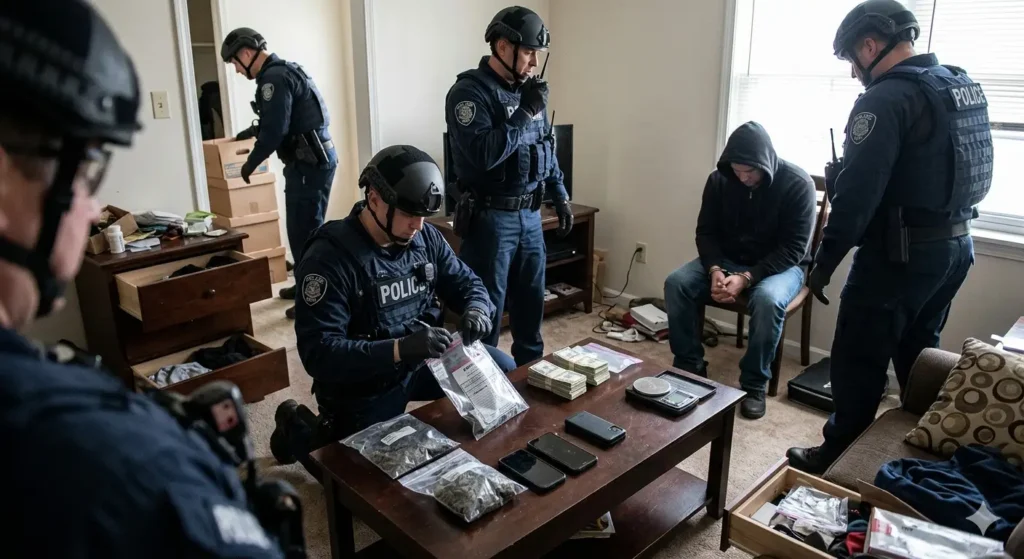
It is also important to distinguish the raid itself from the charges that follow. A raid is simply the enforcement action—officers entering properties, seizing drugs, cash, phones, and arresting suspects. The charges are the legal categorisations that are decided later, often after forensic analysis of digital evidence and interviews under caution.
In Fairwater‑linked operations, the CPS emphasises that:
- Not everyone present during a raid will necessarily be charged.
- Different people in the same property may face different charges, depending on their role.
- Some charges may be added or dropped as the case develops, especially if defendants provide evidence or cooperate.
These dynamics mean that an initial news‑headline about a “Fairwater police raid” usually only hints at the fuller picture that emerges months later in court and CPS bulletins.
Online and SEO‑Friendly Search Tips for Cardiff Readers
For Cardiff residents who want to follow up on Fairwater‑related cases or understand what charges were brought, useful search patterns include:
- “Fairwater Cardiff police raid CPS charges”.
- “South Wales Police operation [operation‑name] Cardiff Crown Court”.
- “Crown Prosecution Service authorises charges relating to Ely Cardiff”.
These queries tend to surface official CPS announcements and local‑news outlets’ summaries, which are the most reliable sources for up‑to‑date information on specific defendants and counts.
Long‑Term Community Impact
Finally, for an evergreen piece aimed at the Card Vest Daily audience, it is worth underlining that the charges emerging from Fairwater‑linked raids are not just about punishing individuals; they are part of a longer‑term strategy to:
- Disrupt established drug‑supply networks.
- Deter younger people from entering entrenched gang‑type structures.
- Signal to the public that the justice system is prepared to use the full range of offences—conspiracy, money‑laundering, public‑order—to counter organised crime.
Fairwater’s name will likely continue to surface in such operations, but understanding what charges are actually being brought helps residents move beyond sensational headlines and engage with the real‑world mechanics of policing and prosecution in Cardiff.