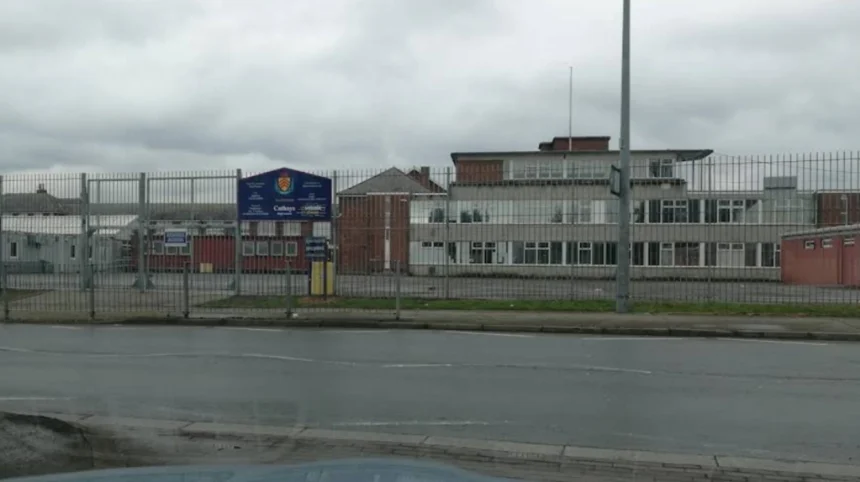
Cathays High School serves as a comprehensive 11-19 mixed school in the heart of Cardiff, Wales, with origins dating back to 1929 when the first stones were laid, welcoming pupils in September 1931. The institution represents a merger of four separate schools in 1969, creating the unified educational establishment that continues operating today at Crown Way, Cardiff CF14 3XG.
- What Is Cathays High School?
- When Was Cathays High School Founded?
- How Did Cathays High School Evolve Through Mergers?
- Where Is Cathays High School Located?
- What Educational Philosophy Guides Cathays High School?
- How Many Students Attend Cathays High School?
- What Recent Developments Have Occurred at Cathays High School?
- Why Does Cathays High School Matter to Cardiff?
What Is Cathays High School?
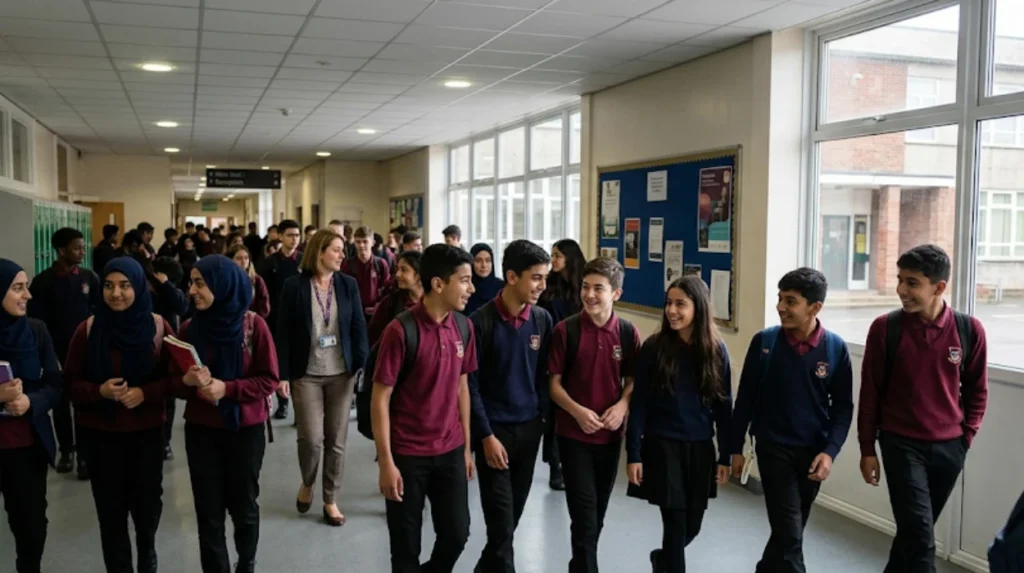
Cathays High School operates as an 11-19 mixed comprehensive school serving approximately 1,050 pupils from Cardiff and surrounding areas, functioning as a multicultural educational institution with deep historical roots.
The school maintains its position as a central educational provider in Cardiff’s Cathays district, offering secondary education to students aged 11 through 19 years. The institution operates from its Crown Way location, maintaining contact through telephone number +44 29 2054 4426 and its official website at www.cathays.cardiff.sch.uk. Sixty-one percent of pupils attending Cathays High School come from other areas of Cardiff, choosing the institution through parental preference rather than catchment area assignment. This statistic demonstrates the school’s reputation extending beyond its immediate geographic boundaries, attracting families from across the Welsh capital.
The school describes itself as steeped in history and tradition, maintaining educational continuity while adapting to modern comprehensive education requirements. Cathays High School caters for a full comprehensive mix of students, reflecting Cardiff’s diverse population and serving as a multicultural hub within the city’s educational landscape.
When Was Cathays High School Founded?
Cathays High School traces its foundation to 1929 when construction began on the original buildings, with the first pupils arriving in September 1931 to begin their education at the newly established institution.
The laying of the first stones in 1929 marked the physical beginning of what would become a significant educational institution in Cardiff. Two years elapsed between the commencement of construction and the arrival of the inaugural student body, allowing for completion of the necessary facilities and preparation for educational operations. September 1931 represents the date when the school officially opened its doors to students, beginning its continuous operation that extends through the present day.
The original configuration consisted of two separate schools operating on the same site: one designated for boys and another for girls. This separation reflected the educational practices prevalent in early twentieth-century Wales, where single-sex education remained the standard approach for secondary schooling. The physical infrastructure constructed between 1929 and 1931 accommodated this dual-school arrangement, with separate facilities and administrative structures for male and female students.
How Did Cathays High School Evolve Through Mergers?
Cathays High School achieved its current comprehensive form in 1969 through the amalgamation of four separate institutions: Cathays High School for Boys, Cathays High School for Girls, Gladstone Secondary Modern School, and Allensbank Secondary Modern School.
The 1969 merger represented a transformative moment in the school’s history, consolidating four distinct educational entities into a single unified institution. This amalgamation aligned with broader educational reforms occurring across Wales and the United Kingdom during the 1960s, which saw the transition from selective secondary education to comprehensive schooling.
Cathays High School for Boys and Cathays High School for Girls, the two original institutions established in 1931, ceased to operate as separate entities. Gladstone Secondary Modern School and Allensbank Secondary Modern School joined the merger, bringing their own student bodies, staff, and educational traditions into the newly formed comprehensive school. Secondary Modern Schools represented a category of secondary education in the post-war British system, designed for students who did not pass the eleven-plus examination for grammar school entry.
The integration of these four schools created the comprehensive model that defines Cathays High School today. This restructuring eliminated the selective barriers that had previously determined educational pathways, providing all students from the catchment area access to the same educational opportunities regardless of examination performance at age eleven. The merger required significant administrative coordination, curriculum alignment, and cultural integration to successfully combine the distinct institutional identities into a cohesive educational community.
Where Is Cathays High School Located?
Cathays High School occupies its established site at Crown Way, Cardiff CF14 3XG, situated within the Cathays district that forms part of northern Cardiff’s educational and residential landscape.
The Crown Way address places the school within the CF14 postcode district, which encompasses the Cathays area and surrounding neighborhoods in northern Cardiff. This location positions the institution within walking distance of Cathays railway station, providing public transport connectivity for students and staff traveling from across the city and beyond. The school’s placement in Cathays reflects the area’s development as a significant residential and educational zone within Cardiff’s urban expansion during the twentieth century.
Cathays itself represents a district with historical significance in Cardiff’s growth, extending from the medieval farmland that once lay outside Cardiff Castle’s boundaries. The area’s northern limit of medieval Cardiff was marked by the crossroads of Fairoak Road and Crwys Road, with subsequent development transforming agricultural land into the urban neighborhood that exists today. The establishment of Cathays High School in 1931 contributed to this transformation, cementing the area’s role as an educational hub within the Welsh capital.
The school’s location serves students from across Cardiff, with 61 percent of pupils traveling from areas beyond the immediate catchment zone. This geographic reach demonstrates the accessibility of the Crown Way site and the school’s reputation attracting families from diverse Cardiff neighborhoods.
What Educational Philosophy Guides Cathays High School?
Cathays High School operates under a purpose-led curriculum framework centered on learner progression, holistic development, and the Four Purposes established by Wales’s new national curriculum, emphasizing identity, challenge, responsiveness, and opportunity for all students.
The school’s curriculum philosophy development, and the Four Purposes established by Wales’s new national curriculum, emphasizing identity, challenge, responsiveness, and opportunity for all students.
The school’s curriculum philosophy places learner progression at its heart, aiming to obtain a holistic picture of each student’s strengths, learning styles, and areas requiring development. This approach reflects contemporary educational research emphasizing personalized learning pathways and comprehensive student assessment beyond traditional academic metrics. The curriculum maintains broad, balanced, and highly effective characteristics that ensure development of knowledge, skills, and wellbeing across the entire student body.
The Four Purposes form the foundational framework guiding curriculum delivery at Cathays High School. These purposes establish that education should develop learners who are ambitious, capable individuals ready to learn throughout their lives; enterprising, creative contributors ready to play a full part in life and work; ethical, informed citizens of Wales and the world; and healthy, confident individuals ready to live fulfilling lives as valued members of society.
School leaders and teachers undertook extensive reading, research, and professional learning on the new curriculum, including meetings with pioneer schools and various educational organizations. New curriculum leads developed checklists ensuring that curriculum planning remains a regular feature of INSET (In-Service Education and Training) and staff meetings at all organizational levels, maintaining consistent focus in curriculum design. This systematic approach to curriculum development includes focus on the Four Purposes and the What Matters Statements and Progression Steps for each Area of Learning and Experience (AOLE).
The school emphasizes teaching and learning approaches at the heart of curriculum development, leading to the creation of the Cathays 5 as a foundation for lesson planning, evaluation, and ongoing professional learning for all staff members. The curriculum aims to challenge all learners appropriately, develop pupils’ sense of their identity locally, nationally, and globally, remain responsive to the needs and experiences of learners, and promote opportunities for all students regardless of background or ability.
How Many Students Attend Cathays High School?
Cathays High School currently educates approximately 1,050 pupils aged 11 to 19, with 61 percent of students traveling from other areas of Cardiff to attend the school through parental choice rather than catchment assignment.
The student body of around 1,050 pupils represents a substantial secondary school within Cardiff’s educational landscape. This enrollment figure positions Cathays High School as a significant educational institution serving the Welsh capital, with capacity to provide comprehensive education across the 11-19 age range including sixth form provision. The multicultural composition of the student body reflects Cardiff’s diverse population and the school’s role as an inclusive educational provider.
The 61 percent statistic regarding pupils coming from other areas of Cardiff demonstrates the school’s draw beyond its designated catchment area. This figure indicates that approximately 641 students (61 percent of 1,050) choose Cathays High School through parental preference, traveling from various Cardiff neighborhoods to access the education provided at the Crown Way site. Only 39 percent of students, approximately 409 pupils, attend from the immediate catchment area surrounding the school.
This enrollment pattern reflects several factors: the school’s reputation for educational quality, its multicultural environment, specific curricular offerings, and accessibility via public transport from across Cardiff. The high proportion of choice-based enrollment indicates strong parental confidence in the school’s educational provision and suggests that Cathays High School maintains competitive appeal within Cardiff’s secondary education market.
Explore More Area Guide
Llanishen High School Guide for Cardiff Families and Students
Rumney Primary School Guide for Cardiff Parents and Local Families
What Recent Developments Have Occurred at Cathays High School?
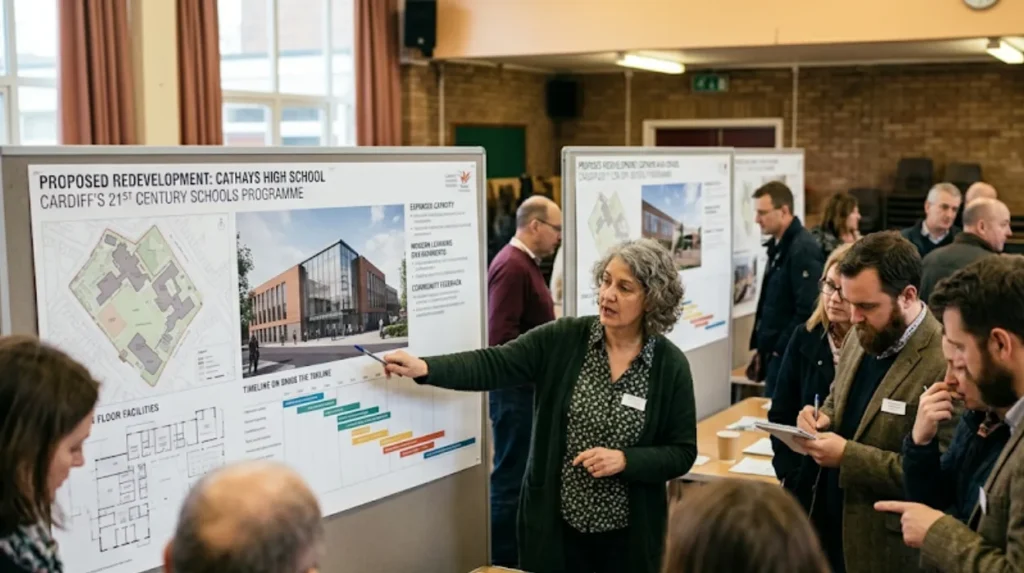
Cathays High School has undergone consultation processes regarding expansion and redevelopment through Cardiff’s 21st Century Schools programme, reflecting ongoing investment in the institution’s infrastructure and educational capacity.
The 21st Century Schools programme represents a joint investment by the Welsh Government and local authorities to rebuild and refurbish schools across Wales, ensuring modern, fit-for-purpose educational facilities for twenty-first century learning requirements. Cathays High School’s inclusion in this programme indicates recognition of the need for infrastructure development to support contemporary educational delivery and accommodate student enrollment patterns.
Consultation documents regarding the expansion and redevelopment of Cathays High School have been prepared and analyzed, with summary analyses of consultation responses documented in Cardiff’s modern governance records. These consultations engage stakeholders including parents, students, staff, and local community members to gather input on proposed development plans and their implications for the school community.
Inspection reports from Estyn, Wales’s education and training inspectorate, provide regular assessment of the school’s performance and identify areas for improvement. The 2022 inspection report offers contemporary evaluation of educational standards, leadership quality, and student outcomes at Cathays High School. Previous inspection reports from 2013 and other years create a historical record of the school’s performance trajectory and ongoing development.
The school publishes regular editions of Cathays Eye, its internal publication documenting school activities, achievements, and developments. These publications provide ongoing documentation of the school’s educational journey, student accomplishments, and institutional evolution, contributing to the historical record of Cathays High School’s continuous operation since 1931.
Why Does Cathays High School Matter to Cardiff?
Cathays High School matters to Cardiff as a historically significant educational institution serving over 1,050 students since 1931, representing educational continuity through multiple systemic reforms and functioning as a multicultural hub reflecting the city’s diverse population.
The school’s 95-year continuous operation from 1931 to 2026 establishes it as a cornerstone institution within Cardiff’s educational landscape. Multiple generations of Cardiff residents have received their secondary education at Cathays High School, creating deep community connections and alumni networks extending throughout the city and beyond. This longevity provides institutional stability and accumulated educational expertise that benefits current and future students.
The multicultural character of Cathays High School reflects and serves Cardiff’s increasingly diverse population. As a comprehensive school accepting students from across the city, with 61 percent traveling from various Cardiff neighborhoods, the institution functions as a meeting point for families from different backgrounds, ethnicities, and socioeconomic circumstances. This diversity enriches the educational experience for all students, preparing them for participation in a multicultural society and global economy.
The 1969 merger that created the current comprehensive school represents Cathays High School’s adaptation to Wales’s evolving educational philosophy, eliminating selective barriers and providing equal educational opportunity to all students regardless of background. This transition from selective to comprehensive education aligned with broader social democratic principles that shaped post-war British education policy, demonstrating the school’s responsiveness to changing societal values and educational research.
The school’s inclusion in the 21st Century Schools programme indicates continued public investment in its infrastructure and educational capacity. This investment recognizes Cathays High School’s ongoing importance to Cardiff’s educational provision and ensures that facilities meet contemporary standards for teaching and learning. The purpose-led curriculum emphasizing learner progression and holistic development positions the school to prepare students effectively for twenty-first century challenges and opportunities.
Cathays High School’s location in the Cathays district contributes to the area’s identity as an educational and residential hub within northern Cardiff. The school’s presence supports local community cohesion, provides employment opportunities, and contributes to the neighborhood’s character and vitality. As students travel from across Cardiff to attend, the school also functions as a destination drawing families into the Cathays area, supporting local businesses and community life.
The school’s documented history, from the laying of first stones in 1929 through the 1969 merger to contemporary curriculum development, provides a case study in Welsh educational evolution. This institutional history intersects with broader narratives of educational reform, social change, and urban development in twentieth and twenty-first century Cardiff, making Cathays High School a significant subject for understanding the city’s educational and social history.