Pontcanna Fields Walk is a city-centre walking route through one of Cardiff’s largest historic urban green spaces. The route combines open parkland, the River Taff, the Taff Trail, sports facilities, mature trees, allotments and connections towards Bute Park, Llandaff Fields and Sophia Gardens.
- What is the Pontcanna Fields Walk?
- Where does the Pontcanna Fields Walk start and finish?
- How long does the Pontcanna Fields Walk take?
- What can you see on a Pontcanna Fields Walk?
- What is the history of Pontcanna Fields?
- How does the Taff Trail connect with Pontcanna Fields?
- Is Pontcanna Fields suitable for families, runners and cyclists?
- How accessible is Pontcanna Fields for visitors?
- What should you know before walking around Pontcanna Fields?
- How can you extend the Pontcanna Fields Walk?
- Why is Pontcanna Fields important to Cardiff’s green-space network?
- What makes the Pontcanna Fields Walk a useful Cardiff visitor route?
Pontcanna Fields sits on the western side of the River Taff in Cardiff. The park forms part of a substantial connected landscape of public open space close to the city centre. Its location makes it suitable for short walks, longer riverside routes, running, cycling and recreational visits.
The wider Pontcanna Fields and Llandaff Fields landscape received Grade II* registration on the Cadw Register of Parks and Gardens of Special Historic Interest in Wales in 2022. Cadw identifies the landscape as a well-preserved central urban public park with historic development phases dating from 1879 and 1899–1901.
The following guide explains the route, history, landscape, access, facilities and practical considerations for walking through Pontcanna Fields.
What is the Pontcanna Fields Walk?
Pontcanna Fields Walk is a riverside urban walking route through Cardiff’s Pontcanna Fields, linking open parkland with the River Taff and Taff Trail. It provides access to sports grounds, mature landscapes, nearby parks, city attractions and longer Cardiff walking routes.
Pontcanna Fields is a large public green space in western central Cardiff. It lies between Pontcanna, Llandaff, Sophia Gardens and the River Taff. The park is managed as part of Cardiff’s network of parks and green spaces.
The walk itself is not a single officially fixed circular trail with one prescribed distance. Instead, visitors use the park’s paths to create routes of different lengths. A short visit can remain within Pontcanna Fields. A longer walk can follow the Taff Trail towards Bute Park, Llandaff, Hailey Park or other parts of Cardiff.
The Taff Trail provides the main long-distance walking connection. Outdoor Cardiff states that the complete trail extends for 55 miles between Cardiff and Brecon. Within Cardiff, it follows the River Taff through areas including Sophia Gardens, Pontcanna Fields, Hailey Park, Forest Farm and Tongwynlais.
This makes Pontcanna Fields particularly useful for visitors who want a flexible walking experience rather than a fixed-distance hiking route.
Where does the Pontcanna Fields Walk start and finish?
A practical Pontcanna Fields Walk starts near Fields Park Road and continues towards the River Taff and Taff Trail. The walk can finish within Pontcanna Fields or continue through Sophia Gardens, Bute Park, Llandaff Fields and northern Cardiff.
Fields Park Road provides a useful access point to Pontcanna Fields. Cardiff Council lists Pontcanna Fields car park at CF11 9HY, while Outdoor Cardiff identifies the park at Fields Park Road, Cardiff, CF5 2AX.
The riverside section provides another important access point. The Taff Trail passes through the park and creates a continuous pedestrian and cycling corridor beside the River Taff.
Visitors can therefore select a starting point according to their transport arrangements.
A short route can begin at Fields Park Road, cross the parkland and reach the riverside. A longer route can continue south-east towards Sophia Gardens and central Cardiff. Walking north takes visitors towards Llandaff, Hailey Park and further sections of the Taff corridor.
The route does not require a formal start or finish point. This flexibility is important because Pontcanna Fields forms part of a much larger connected green-space system.
For visitors arriving by car, Cardiff Council currently lists 149 spaces at Pontcanna Fields car park, including five Blue Badge spaces and two electric-vehicle charging bays. Parking charges and conditions should be checked before travelling because council tariffs and arrangements can change.
How long does the Pontcanna Fields Walk take?
A short Pontcanna Fields Walk takes about 30 to 60 minutes, while a longer riverside route takes several hours. Walking time depends on the chosen paths, stops, pace and extensions towards Bute Park, Llandaff or northern Cardiff.
There is no single official duration because Pontcanna Fields supports multiple walking combinations.
A 30-minute visit works well for visitors who want to experience the central parkland and reach the River Taff without completing a long-distance route.
A 45-to-60-minute walk provides more time to explore the open fields, riverside path and surrounding landscape.
A longer walk can incorporate the Taff Trail and neighbouring green spaces. Bute Park lies across the River Taff and connects through pedestrian crossings, including the Blackweir area. Walking north creates opportunities to continue towards Llandaff and further along the Taff corridor.
A practical visitor route can therefore be structured around three stages:
Short park walk
Start near Fields Park Road and walk through the open areas towards the river. Continue along the riverside before returning through the park.
Riverside extension
Follow the Taff Trail north or south after reaching the river. This adds distance while keeping the route relatively straightforward.
Longer Cardiff green-space route
Combine Pontcanna Fields with Sophia Gardens, Bute Park and Llandaff Fields. This creates a substantially longer urban park walk without requiring a separate transport connection.
Actual walking time depends on route choice and pace. Visitors should also allow additional time for photographs, rest stops and attractions along the route.
What can you see on a Pontcanna Fields Walk?
A Pontcanna Fields Walk includes open parkland, the River Taff, mature trees, sports pitches, historic landscape features, allotments and access to the Taff Trail. Nearby attractions include Sophia Gardens, Bute Park, Llandaff Fields, Cardiff Riding School and Cardiff city-centre landmarks.
The landscape is varied despite its location within an urban area.
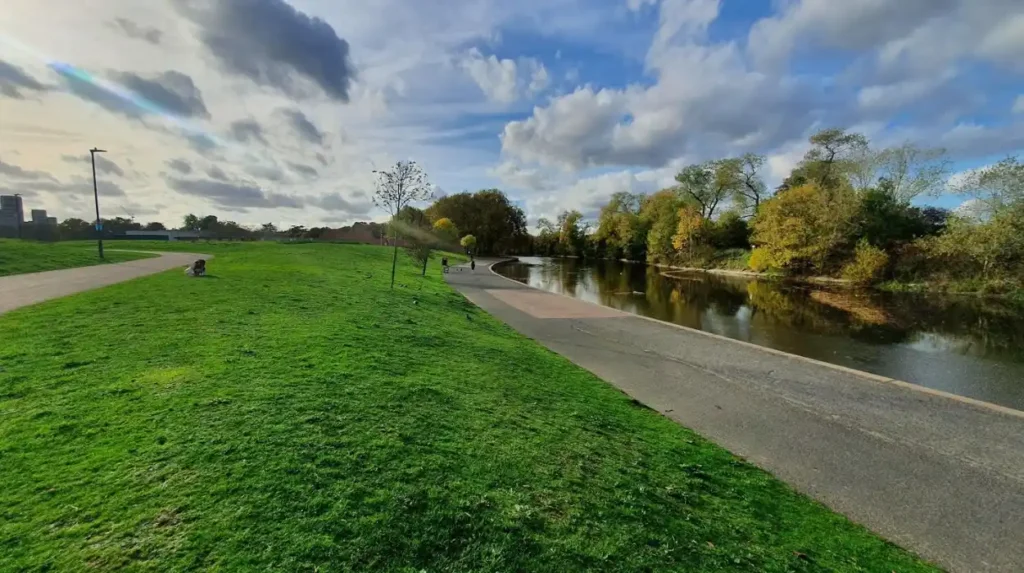
The River Taff provides the main natural feature. The river runs through Cardiff and forms the backbone of the Taff Trail. Its riverside environment creates a clear contrast with the open sports fields further inland.
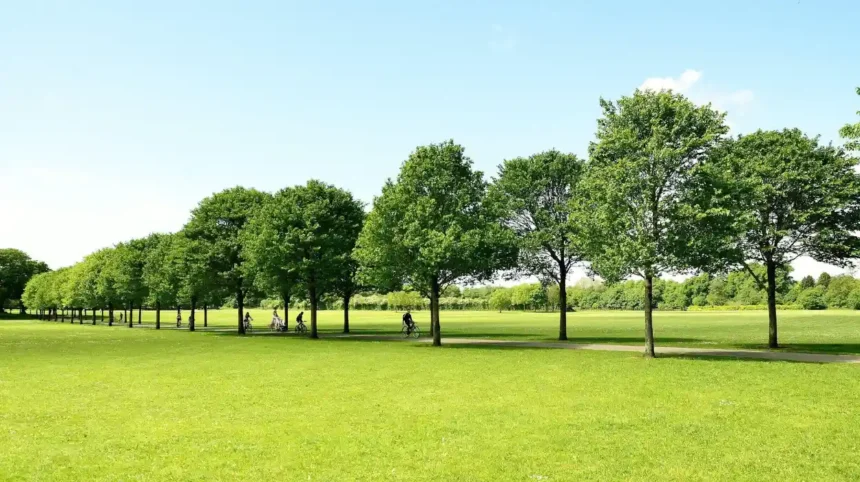
The park also contains mature trees and broad grassed areas. These spaces support recreation and provide the visual character associated with traditional urban parkland.
The historic landscape is another important feature. Cadw describes Pontcanna Fields and Llandaff Fields as a well-preserved central urban public park. The registration identifies the historic interest of the combined landscape and its relationship with other major green spaces in Cardiff.
The park also contains sporting infrastructure. Cardiff Council’s Outdoor Cardiff information identifies sports facilities within the wider Pontcanna Fields and Sophia Gardens parkland, including sports pitches and facilities associated with organised recreation.
The Cardiff Riding School is another distinctive feature. The facility is located within Pontcanna Fields and provides equestrian activities. Cardiff Council information identifies the riding school as a venue for horse riding and animal-care education.
The surrounding landscape adds further points of interest. Sophia Gardens lies towards the south-east. Bute Park is across the river. Llandaff Fields adjoins Pontcanna Fields towards the north-western side of the wider parkland.
This interconnected structure gives the walk greater variety than a route confined to one park.
What is the history of Pontcanna Fields?
Pontcanna Fields has a documented historic parkland character dating from the late nineteenth century. Cadw identifies major landscape development phases in 1879 and 1899–1901, with the adjoining fields forming a significant historic public park landscape beside the River Taff.
The historical importance of Pontcanna Fields is closely connected to the development of public parks in Cardiff during the nineteenth and early twentieth centuries.
Cadw registered Pontcanna Fields and Llandaff Fields as a Grade II* historic park and garden on 1 February 2022. The designation recognises the landscape’s special historic interest.
The registered area is identified as an urban public park. Cadw records 1879 and 1899–1901 as significant phases of construction and development.
The park is also important because of its relationship with other historic open spaces. Cadw identifies Pontcanna Fields and Llandaff Fields as part of a large tract of open space in the heart of Cardiff that also includes nearby Bute Park and Sophia Gardens.
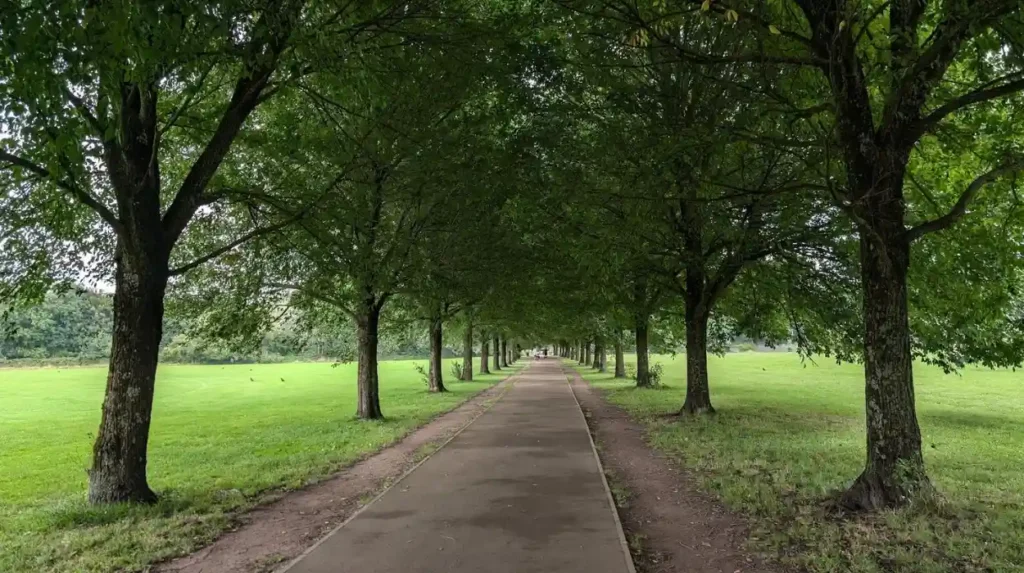
One of the most significant landscape features is the axial lime avenue. An axial avenue is a deliberately aligned tree-lined route that creates a strong visual axis through a designed landscape. Cadw identifies this lime avenue as a particularly striking feature.
The park’s history therefore extends beyond individual paths or sports grounds. Its significance comes from the relationship between landscape design, public recreation, urban development and the River Taff corridor.
The historic designation also places Pontcanna Fields within the wider heritage story of Cardiff’s urban parks.
How does the Taff Trail connect with Pontcanna Fields?
The Taff Trail passes directly through Pontcanna Fields and connects the park with Cardiff Bay, Sophia Gardens, Hailey Park, Forest Farm, Tongwynlais and Brecon. The 55-mile route provides the main long-distance walking and cycling connection through the park.
The Taff Trail is one of the most important transport and recreation routes associated with Pontcanna Fields.
Outdoor Cardiff describes the trail as a 55-mile route between Cardiff and Brecon. It uses a mixture of riverside paths, former railway paths and forest roads.
Within Cardiff, the trail follows the River Taff through several major districts and green spaces. Pontcanna Fields forms one of its central sections.
For walkers, this means Pontcanna Fields can function as both a destination and a route junction.
A visitor can walk through the park and join the Taff Trail for a longer riverside journey. The same trail can also provide a route towards central Cardiff and Cardiff Bay.
Cyclists use the trail as well. Walkers should therefore remain aware that the Taff Trail accommodates more than one type of non-motorised travel.
The route also creates access to attractions beyond Pontcanna Fields. Continuing north connects the park with Hailey Park, Forest Farm and Tongwynlais. The wider Taff corridor eventually reaches Brecon.
Walking south connects with the Cardiff urban area and Cardiff Bay.
This makes the Pontcanna Fields section particularly useful for visitors who want to combine a park visit with a longer Cardiff walking itinerary.
Is Pontcanna Fields suitable for families, runners and cyclists?
Pontcanna Fields supports family walks, recreational running, cycling and organised sport because it combines broad open spaces with established paths and direct access to the Taff Trail. Visitors should share routes responsibly and follow Cardiff Council park guidance and local restrictions.
The scale of Pontcanna Fields gives it a broad recreational function.
Families can use the open parkland for walking and outdoor recreation. The relatively direct relationship between the park and the Taff Trail also allows families to build routes according to available time.
Runners benefit from the connected path network. The Taff Trail provides a longer-distance corridor, while Pontcanna Fields offers open sections suitable for running and exercise.
Cyclists can use the Taff Trail as part of longer journeys. The route continues well beyond Pontcanna Fields, making the park a useful point on Cardiff-to-northern-Wales cycling itineraries.
Organised sport is another important use. Outdoor Cardiff identifies a large number of sporting facilities within the wider Pontcanna Fields and Sophia Gardens landscape.
Visitors should avoid walking directly across marked sports areas when organised activities are taking place. Established paths provide a better option for through-walking.
Dog walkers also use the surrounding green spaces. Responsible dog ownership remains important, particularly around sports facilities, wildlife areas and busy shared paths.
The Taff Trail is a shared-use environment. Walkers should keep to appropriate sides of paths, allow faster users to pass safely and remain alert at junctions.
The combination of recreational space and long-distance infrastructure makes Pontcanna Fields one of Cardiff’s important urban outdoor destinations.
How accessible is Pontcanna Fields for visitors?
Pontcanna Fields has several access points, including Fields Park Road and the riverside Taff Trail. Cardiff Council operates a car park at CF11 9HY, while nearby streets, public transport connections and pedestrian routes provide additional access.
Accessibility depends on the exact section of the park selected.
Fields Park Road provides direct access to the park and its car park. Cardiff Council currently lists Pontcanna Fields car park as open 24 hours, with charging hours from 9am to 6pm. The council lists 149 spaces, including five Blue Badge bays.
The riverside section is accessible through the Taff Trail. This creates a practical walking connection from surrounding neighbourhoods and nearby parks.
The park’s generally open character makes route planning relatively straightforward. However, conditions vary according to weather, maintenance, events and river conditions.
Visitors with mobility requirements should select routes according to current ground conditions. Flat parkland does not guarantee identical conditions across every path.
The historic parkland is also connected with neighbouring green spaces. The wider landscape includes routes towards Sophia Gardens, Bute Park and Llandaff Fields.
Public transport is another practical option. Pontcanna is close to Cardiff’s central urban area, and visitors can combine walking with Cardiff’s wider bus and rail network.
For drivers, parking arrangements should be checked before arrival. Cardiff Council states that event-day tariffs can differ from standard parking charges.
Visitors should also distinguish between park access and facility access. The public park is open continuously, while individual facilities such as the Cardiff Riding School operate according to their own schedules and booking requirements.
What should you know before walking around Pontcanna Fields?
Before walking Pontcanna Fields, check weather conditions, park notices, parking rules and any event restrictions. Wear suitable footwear, remain alert on shared paths, avoid active sports areas and take additional care beside the River Taff during poor conditions.
The River Taff is a natural watercourse and should be treated accordingly. Visitors should keep a safe distance from the river edge, particularly during periods of heavy rainfall or high river levels.
Ground conditions can also change. Wet weather affects grass, paths and open sports areas. Appropriate footwear improves comfort on longer walks.
Shared paths require awareness. The Taff Trail accommodates walkers and cyclists, so visitors should avoid sudden changes of direction and remain aware of approaching users.
Large events can affect access. Pontcanna Fields has hosted organised sporting events and major activities. Cardiff Council has previously managed event-related arrangements to protect parkland and sporting infrastructure.
Parking conditions also change. Cardiff Council publishes current car-park charges and restrictions, so visitors should check the latest information before travelling.
Night-time walking requires separate planning. The route contains open parkland and riverside sections, and lighting conditions differ from surrounding streets. Daylight provides clearer visibility across the park and along the river.
The park is also an active sporting environment. Football, rugby and other organised activities can occupy parts of the open space. Visitors should follow signs and avoid interfering with scheduled activities.
These considerations do not change the fundamental character of the walk. They simply help visitors choose an appropriate route and timing.
How can you extend the Pontcanna Fields Walk?
The Pontcanna Fields Walk can be extended towards Bute Park, Sophia Gardens, Llandaff Fields, Hailey Park and northern sections of the Taff Trail. These connections allow visitors to create longer urban walking routes without repeating the same park section.
The strongest extension is the Taff Trail.
Walking north from Pontcanna Fields provides a riverside route towards Llandaff and further green spaces. The trail continues through Hailey Park and Forest Farm before reaching Tongwynlais.
Bute Park provides another important extension. The park lies on the opposite side of the River Taff and connects with the Pontcanna area through pedestrian crossings.
Sophia Gardens provides a southern extension. It sits immediately beside the wider Pontcanna Fields landscape and contains major sporting and recreational facilities.
Llandaff Fields forms another direct continuation. Pontcanna Fields and Llandaff Fields adjoin one another and together create a substantial historic parkland landscape.
Visitors interested in architecture and heritage can continue towards Llandaff and Llandaff Cathedral. Those seeking a longer riverside walk can continue along the Taff Trail.
The route can also form part of a wider Cardiff city walk. The central city is accessible from the park, allowing visitors to combine green space with Cardiff Castle, shopping streets, cultural venues and other city-centre attractions.
The key advantage is flexibility. The visitor does not need to complete the full 55-mile Taff Trail to benefit from it. Pontcanna Fields provides a convenient central section for short and long-distance walking.
Explore More Area Guide
Historic Pubs in Llandaff: Heritage and Architecture in Llandaff, Cardiff 2026
Local Florists in Penylan Guide – Penylan 2026
Why is Pontcanna Fields important to Cardiff’s green-space network?
Pontcanna Fields is important because it links historic parkland, the River Taff and the Taff Trail with major Cardiff green spaces. Its connections with Bute Park, Sophia Gardens and Llandaff Fields create a continuous recreational landscape close to the city centre.
Cardiff’s urban green-space network is significant because parks provide recreation within a densely developed capital city.
Pontcanna Fields forms part of that network through its physical connections with neighbouring parks and the River Taff corridor.
Cadw’s Grade II* registration demonstrates the historic importance of the combined Pontcanna Fields and Llandaff Fields landscape. The designation also recognises its relationship with Bute Park and Sophia Gardens.
The park provides several functions simultaneously.
It is a recreational space. It supports walking, running, cycling and organised sport.
It is a transport corridor. The Taff Trail provides a non-motorised route through Cardiff and towards Brecon.
It is a heritage landscape. Its historic design features and development phases form part of Cardiff’s public-park history.
It is also a community facility. The Cardiff Riding School operates within the park and provides equestrian activities and educational opportunities.
The combination of these roles gives Pontcanna Fields significance beyond its immediate recreational use.
For visitors, the most important practical point is that the park works as a gateway. A short walk through Pontcanna Fields can become a longer riverside journey, a historic parks itinerary or a city-centre walking route.
What makes the Pontcanna Fields Walk a useful Cardiff visitor route?
Pontcanna Fields Walk combines a historic urban landscape, the River Taff, the Taff Trail and nearby Cardiff attractions in one accessible area. Its flexible route structure supports short visits, longer walks, running, cycling, family recreation and heritage exploration.
Pontcanna Fields provides a strong example of how Cardiff’s historic green spaces function within the modern city.
Its location close to central Cardiff makes it practical for visitors who want outdoor activity without travelling outside the city. The River Taff provides a natural route through the urban environment, while the Taff Trail creates a direct connection with longer-distance landscapes.
The park’s Grade II* historic designation adds a heritage dimension. The recorded development phases from 1879 and 1899–1901 show that the landscape has a documented history extending well beyond its present recreational role.
The surrounding network adds further value. Sophia Gardens, Bute Park and Llandaff Fields sit within the same broader green-space system.
The Cardiff Riding School adds a distinctive equestrian function. Cardiff Council has also identified the facility as an educational and recreational venue.
For walkers, the principal advantage is flexibility. A visitor can complete a short park-and-river walk or continue along the Taff Trail for several hours.
Pontcanna Fields therefore works as both a destination and a connection point. It provides access to Cardiff’s river corridor, historic parks, sporting spaces and longer walking routes.
For a Cardiff walking itinerary, it offers a practical combination of heritage, open space and riverside access without leaving the urban area.
What is the Pontcanna Fields Walk?
Pontcanna Fields Walk is a flexible walking route through Pontcanna Fields in Cardiff. It includes open parkland, the River Taff, the Taff Trail, sports facilities and connections to nearby green spaces such as Bute Park, Sophia Gardens and Llandaff Fields.