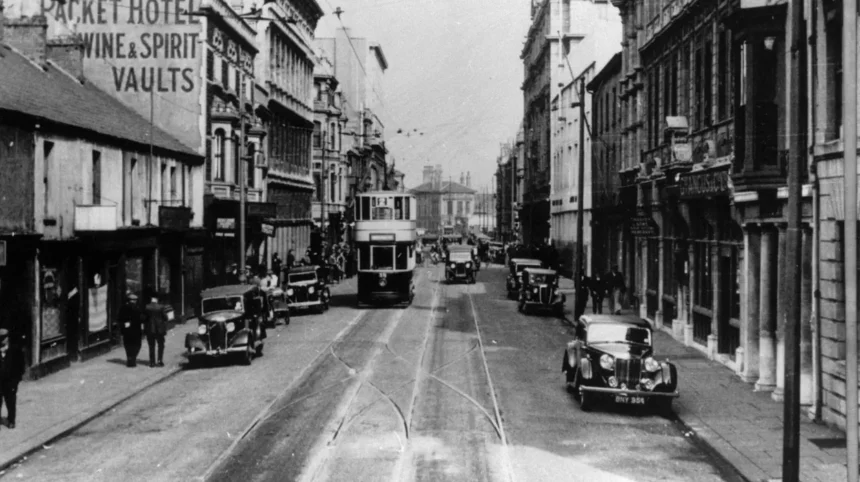
Butetown, in Cardiff, developed from a nineteenth-century dock settlement into one of Wales’s most significant multicultural communities. Often associated with the name “Tiger Bay,” the district connected Cardiff with global maritime trade and attracted seafarers, dock workers, traders, families and migrants from across the world.
- Why did Butetown become one of Cardiff’s most diverse communities?
- Which migrant communities established roots in historic Butetown?
- How did Somali and Yemeni sailors shape Butetown?
- How did Black and mixed-heritage families contribute to Butetown?
- What role did religion play in Butetown’s hidden communities?
- How did maritime work create community networks in Butetown?
- How did women and families shape the history of Butetown?
- Why is the name Tiger Bay important to Butetown’s history?
- How did music, food and cultural traditions develop in Butetown?
- What happened to the original Tiger Bay communities during redevelopment?
- Which surviving places help explain Butetown’s hidden community history?
- How can historical records reveal communities that are often overlooked?
- Why does Butetown’s hidden community history still matter today?
The history of Butetown is therefore larger than its docks, warehouses and famous waterfront buildings. Its social history was created by communities that lived in streets around Bute Street, Loudoun Square, Mount Stuart Square and the surrounding docklands.
The National Library of Wales describes Tiger Bay as Wales’s oldest multi-ethnic community and records settlement involving people from Africa, Asia, the Middle East, Europe, the Caribbean and rural Wales. By the early twentieth century, residents represented more than 50 nationalities.
The communities behind this history included Somali and Yemeni sailors, Greek and Mediterranean families, Black and mixed-heritage residents, Caribbean migrants, Irish and Welsh workers, Norwegian seafarers and many other groups. Their influence appeared in religion, employment, food, music, family life, businesses, maritime culture and community organisations.
Why did Butetown become one of Cardiff’s most diverse communities?
Butetown became diverse because Cardiff’s expanding docks connected the city to international shipping routes, attracting sailors, merchants, dock workers and families from Africa, Asia, Europe, the Middle East and the Caribbean.
Cardiff’s transformation began with industrialisation and the growth of the South Wales coal trade. The demand for coal from the industrial valleys created the economic foundation for Cardiff Docks.
New dock infrastructure developed during the 1830s. The expanding port required ships, crews, dock labour, warehouses, shipbrokers, merchants, engineers, suppliers and service businesses.
Glamorgan Archives records that Cardiff exported 13.7 million tons of cargo in 1913, including 10.5 million tons of coal. The scale of this trade explains why the docks required an international workforce.
The port did not simply receive goods. It received people.
Ships arrived from international ports carrying crews whose origins stretched across continents. Some sailors settled permanently in Cardiff. Others returned repeatedly and established relationships with local residents. Families developed around these maritime connections.
This produced a community that was different from many industrial districts in nineteenth-century Wales. Butetown contained people with different languages, religions, ethnic backgrounds and cultural traditions.
The term “Tiger Bay” became associated with the wider dockland district. The National Library of Wales records that the name was also used in maritime slang for dock or waterfront neighbourhoods associated with danger and nightlife.
The historical community was not defined by one migrant group. Its defining characteristic was interaction between multiple communities.
Which migrant communities established roots in historic Butetown?
Historic Butetown included Somali, Yemeni, Greek, Italian, Irish, Norwegian, Spanish, Caribbean, African, Asian and Welsh communities, alongside people of mixed heritage whose families developed through generations of maritime migration and local settlement.
Somali and Yemeni sailors became particularly important within Butetown’s maritime history. The Royal Commission on the Ancient and Historical Monuments of Wales records that the Muslim community in Butetown was established as early as the mid-nineteenth century by Somali and Yemeni sailors.
Greek and Mediterranean communities also formed part of Cardiff’s international dock population. European migration included people from Greece, Italy, Ireland, Norway and Spain.
African and Caribbean residents also became an important part of the docklands population. Their presence reflected Cardiff’s position within international maritime networks rather than a single migration event.
Welsh residents were equally important. Butetown was not simply a foreign settlement inside Cardiff. Welsh workers, families and businesses formed part of the same urban environment.
This produced mixed households and intermarriage. The National Library of Wales records that residents from different races and backgrounds worked together, socialised and intermarried.
The result was a community whose identity developed through contact between different populations.
Historical photographs provide direct evidence of this diversity. Glamorgan Archives holds a collection of photographs taken by Fred Petersen at his studio at 232 Bute Street between 1910 and 1920. The collection includes Black and mixed-heritage children and families from Cardiff’s historic docks community.
These photographs are important because they document ordinary residents rather than only prominent buildings or industrial leaders.
How did Somali and Yemeni sailors shape Butetown?
Somali and Yemeni sailors helped establish one of Britain’s earliest Muslim communities in Butetown, creating family networks, religious institutions and cultural connections that became permanent parts of Cardiff’s docklands history.
The maritime economy created direct connections between Cardiff and ports across the Red Sea, Indian Ocean and wider trading world.
Somali and Yemeni sailors arrived through these international shipping networks. Some established permanent homes in Butetown instead of treating Cardiff as a temporary port of call.
Their settlement produced a Muslim community with its own institutions.
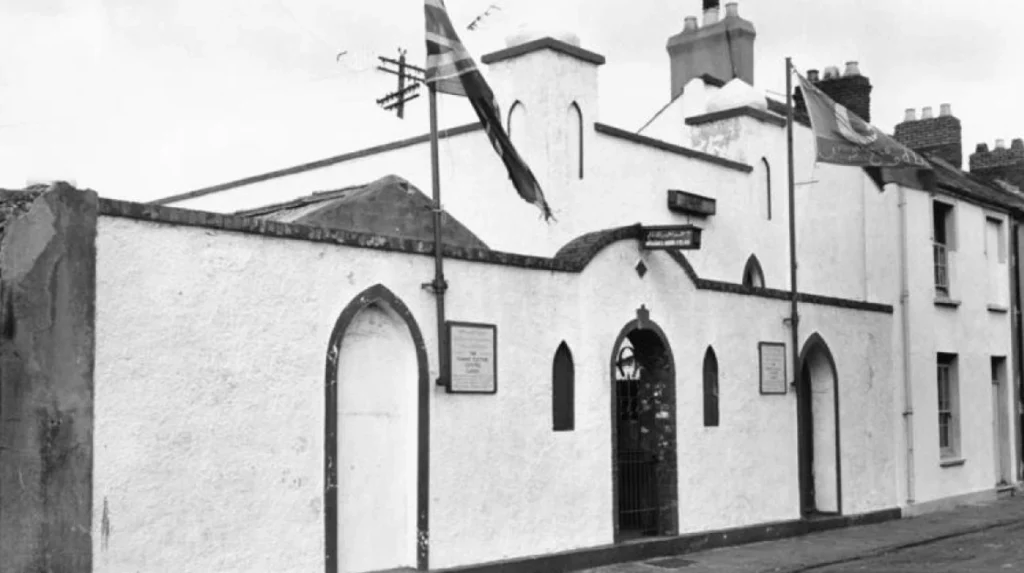
The history of the Noor ul Islam Mosque is especially significant. The Royal Commission records that the Butetown Muslim community existed from the mid-1800s and that a mosque and cultural centre developed in Peel Street during the 1930s. Planning permission was granted on 11 November 1938 for a purpose-built mosque behind existing houses.
This institution demonstrates how migration became permanent community life.
Religion also provided social infrastructure. A mosque was not simply a place of worship. Religious institutions created meeting spaces and helped maintain connections between families, generations and cultural traditions.
The Muslim community also survived major disruption. The purpose-built mosque was damaged during an air raid on 2 January 1941. The same raid caused extensive damage elsewhere in Cardiff.
The history of Somali and Yemeni residents therefore connects Butetown’s maritime past with the longer history of Islam in Wales.
The Welsh Parliament has also recognised the historical contribution of Somali and Yemeni sailors who settled in the docks of Butetown and Barry.
How did Black and mixed-heritage families contribute to Butetown?
Black and mixed-heritage families formed a long-established part of Butetown’s social fabric, with archival photographs documenting children, parents and family groups living in the docklands during the early twentieth century.
The history of Black Wales is often presented through twentieth-century migration, but Butetown demonstrates a much longer history.
Its maritime economy created links between Cardiff and ports across Africa, the Caribbean and other parts of the world. Sailors settled, married locally and raised families.
Fred Petersen’s photographs provide particularly valuable evidence. His Bute Street studio operated between 1910 and 1920, and his surviving collection contains portraits of Black and mixed-heritage children and families.
The photographs are significant because they show that multicultural family life was established in Cardiff’s docklands before the post-war Windrush era.
The collection also demonstrates the limitations of historical records. Most of the people photographed by Petersen remain unidentified because the archive received the collection in the 1970s with little contextual information.
This creates an important distinction between documented presence and documented identity. Archives can prove that communities existed while still lacking complete information about individual lives.
Community history projects help address this gap. Glamorgan Archives has worked with contemporary writers and young people connected to Butetown to interpret the historical photographs and reconnect archival material with present-day communities.
This approach places ordinary families alongside better-known landmarks in the history of Butetown.
What role did religion play in Butetown’s hidden communities?
Religion gave Butetown’s migrant communities durable institutions, including mosques, churches and other places of worship that supported identity, social connection, family life and cultural continuity across generations.
Religious life reflected the international character of the docks.
The Muslim community developed institutions connected to Somali and Yemeni residents. Christianity also remained important among Welsh, Irish, Norwegian and other European communities.
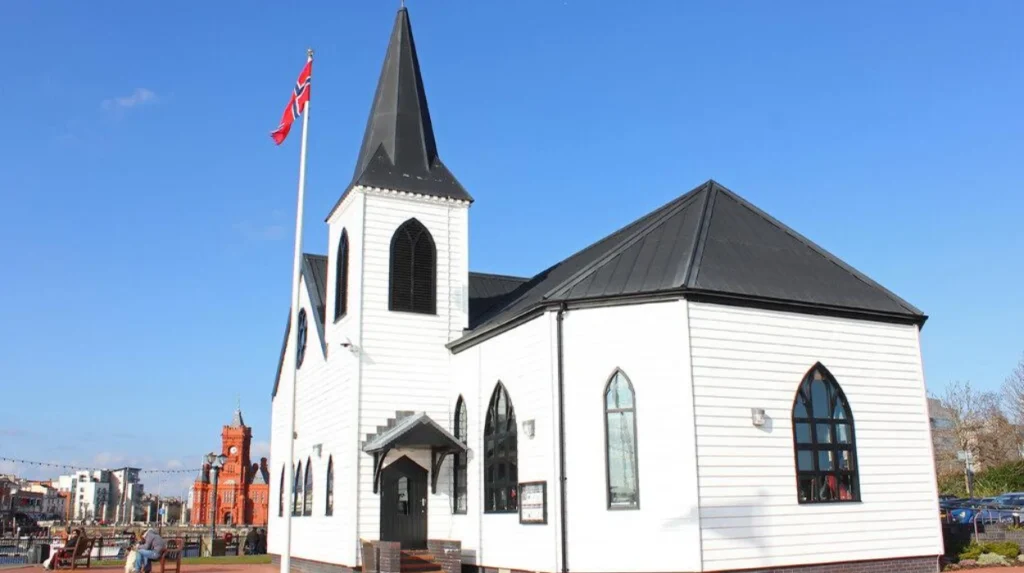
The Norwegian Church is one of the most visible surviving reminders of this international maritime population. Norwegian seafarers and merchants formed part of Cardiff’s wider dock community, while the church served the Norwegian population connected with the port.
Religion also created physical landmarks.
The Noor ul Islam Mosque demonstrates the institutional development of Islam in Wales. Its history reaches back to nineteenth-century Muslim settlement and continued through twentieth-century community organisation.
The Museum Wales archive provides another direct record of religious life. Its historical material includes photographs from Butetown showing worshippers’ shoes inside the Alice Street Mosque in 1999.
This demonstrates that Muslim community life continued in Butetown after the decline of the traditional dock economy.
Religious buildings also show how communities adapted to changing circumstances. The purpose-built mosque established before the Second World War was lost through wartime bombing, while later institutions continued the community’s religious presence.
How did maritime work create community networks in Butetown?
Maritime employment connected Butetown residents through shipping, dock labour, shipbuilding, coal exports, brokerage, hospitality and related services, creating economic networks that supported migration and long-term settlement around Cardiff Docks.
The docks required a large and specialised workforce.
Coal exports generated employment across Cardiff. Shipowners, shipbrokers, coal merchants, dock workers, engineers, pilots and service businesses operated around the waterfront.
Glamorgan Archives records that many businesses were established in the heart of Butetown because of the scale of Cardiff’s maritime economy.
Crew records provide evidence of the international nature of this workforce. Glamorgan Archives holds surviving crew agreements for Cardiff-registered ships covering 1863 to 1913, with additional records held by the National Archives and National Maritime Museum.
These records are important historical sources because they identify sailors, ships and employment relationships.
Maritime work also encouraged repeat migration. Sailors who knew Cardiff could return to the same port and develop local connections. Businesses serving sailors created additional employment.
The community therefore operated as an interconnected economic system.
Bute Street became an important commercial street. Historical photographs from the early twentieth century show businesses, families and social spaces operating within the same neighbourhood. Glamorgan Archives’ Petersen collection places an active photographic studio at 232 Bute Street between 1910 and 1920.
The survival of these records demonstrates how commerce, migration and community life developed together.
How did women and families shape the history of Butetown?
Women and families transformed a transient maritime population into permanent neighbourhoods by creating households, raising children, maintaining cultural traditions and building intergenerational relationships across ethnic and religious communities.
The story of docklands migration is often dominated by sailors because maritime employment generated much of the original migration.
Family history provides a wider perspective.
When sailors settled permanently, their lives increasingly involved households, partners and children. Intermarriage between people from different backgrounds contributed to the development of mixed-heritage families.
The National Library of Wales specifically records intermarriage and shared social life among residents of different races and backgrounds in Tiger Bay.
Women also helped establish continuity between generations.
Children grew up in the same streets, attended local schools and participated in community institutions. Their identities reflected both local Welsh life and the international backgrounds of their families.
The archival record supports this interpretation. Fred Petersen photographed children and families, not only adult sailors. His collection therefore captures the transition from maritime migration to settled community life.
Later community projects also demonstrate the importance of women and intergenerational history. Glamorgan Archives records a Cardiff Women’s Workshop based in Butetown that explored the lives of women across generations and operated as a multiracial and intergenerational project.
Family history therefore forms an essential part of understanding Butetown.
Why is the name Tiger Bay important to Butetown’s history?
Tiger Bay describes the historic multicultural docklands associated with Butetown and Cardiff Docks, while the name carries contrasting historical meanings involving maritime identity, migration, community pride, poverty and negative outside perceptions.
Tiger Bay was not simply another name for a collection of streets.
It became a cultural term associated with Cardiff’s international waterfront.
The National Library of Wales describes the area as Wales’s oldest multi-ethnic community and records settlement by people from at least 50 nationalities.
The term also carried negative associations.
People outside the community often described Tiger Bay as rough or dangerous. Residents remembered it differently, emphasising community relationships and multicultural upbringing.
This difference matters when interpreting historical sources.
Newspaper reports, official records and outside descriptions often focused on crime, poverty or social problems. Community memories provide evidence about family life, solidarity and cultural activity.
The term also reflects the international nature of docklands culture. Sailors used “Tiger Bay” as a broader expression for certain waterfront districts associated with nightlife and danger.
Modern references to Tiger Bay therefore need historical context.
Butetown is the formal neighbourhood name, while Tiger Bay remains a powerful historical and cultural term connected to the wider docklands community.
How did music, food and cultural traditions develop in Butetown?
Music, food, festivals, religious practices and social traditions developed through contact between Welsh residents and migrant communities, producing a distinctive docklands culture influenced by African, Caribbean, Middle Eastern, European and Asian traditions.
Cultural exchange developed naturally from daily interaction.
Residents worked together, lived near each other and formed families across community boundaries. These relationships created opportunities for traditions to move between households.
Food was an important expression of this diversity. Different communities introduced ingredients, cooking methods and dishes associated with their countries of origin.
Music also became part of community life.
The Butetown Carnival provides a clear example. The Senedd records that the carnival has roots in traditions brought by seamen during the early twentieth century. Different cultural traditions later merged with local community celebrations.
Carnival therefore represents more than entertainment. It demonstrates how maritime migration influenced cultural practices in Butetown.
The historical process was cumulative. New arrivals added traditions to an already diverse neighbourhood. Local residents incorporated elements into shared celebrations.
The result was a culture that did not belong exclusively to one nationality.
The Museum Wales archive similarly documents community events in Butetown, including a 1999 baptism gathering at Butetown Community Centre.
These records demonstrate that cultural identity continued through community events, religious ceremonies and shared spaces.
What happened to the original Tiger Bay communities during redevelopment?
The original Tiger Bay neighbourhood experienced major disruption during the 1960s and 1970s when urban renewal demolished large areas of older housing, displaced residents and replaced traditional streets with new housing and infrastructure.
The decline of the coal industry changed Cardiff Docks fundamentally.
As coal exports fell, employment declined and the economic purpose of the docklands weakened. Some housing had deteriorated significantly, with poor facilities and limited indoor sanitation in parts of the community.
Urban renewal followed.
Large sections of historic Tiger Bay were demolished during the 1960s and 1970s. High-rise housing replaced parts of the older terraced streets, while residents were relocated to other parts of Cardiff.
This changed the physical geography of community life.
When streets disappear, established relationships between homes, shops, schools, religious institutions and social venues also change.
The redevelopment of Cardiff Bay continued this transformation.
The Royal Commission records that the Bute West Dock was filled in during 1964 and that its former basin later became Roald Dahl Plass. It also records the demolition of buildings around Bute Place, Bute Street and Bute Crescent during construction of the Butetown Link Road in 1993.
The Welsh Industrial and Maritime Museum operated in Cardiff Bay from 1977 to 1998 before the area developed further as a waterfront destination.
The physical landscape therefore changed repeatedly while elements of the community remained.
Which surviving places help explain Butetown’s hidden community history?
Surviving places such as the Pierhead, Norwegian Church, Mount Stuart Square, Loudoun Square, Bute Street and religious sites provide physical evidence of the industries, institutions and communities that developed around Cardiff’s historic docks.
The Pierhead is one of Cardiff Bay’s most recognisable historic buildings.
Opened in 1897, it became the headquarters of the Cardiff Railway Company and replaced earlier Bute Dock Company offices destroyed by fire in 1892.
Although the Pierhead represents commercial and administrative power, its existence also reflects the dock economy that supported Butetown’s diverse population.
Mount Stuart Square provides another important historical setting. Cardiff Council identifies the square as part of Butetown’s conservation heritage.
Loudoun Square is particularly relevant to social history because historical photographs document housing, businesses and everyday activity there. Museum Wales holds images of four-storey flats and other buildings around Loudoun Square from the early 1980s.
Bute Street also survives as a major reference point for community history. The Glamorgan Archives photographs show the street as a place of family, commerce and social activity during the early twentieth century.
These places demonstrate that Butetown’s history is not confined to museums. The neighbourhood itself remains an important historical source.
Explore More Area Guide
Strongest Community Areas in Cardiff: Local Guide 2026
How Grangetown Became Cardiff’s Most Diverse Community
How can historical records reveal communities that are often overlooked?
Historical records reveal overlooked Butetown communities through photographs, census returns, maps, crew agreements, trade directories, school records, oral histories and religious records that document everyday residents alongside the better-known dock infrastructure.
Glamorgan Archives identifies several major source types for researching Cardiff Docks.
These include census returns, maps, photographs, trade directories and shipping records.
Each source reveals a different part of community life.
Census records identify households and occupations. Maps show where streets, homes and businesses stood. Trade directories reveal shops and commercial organisations. Crew agreements identify maritime workers. Photographs show appearance, clothing, buildings and family groups.
Oral history provides another layer.
Museum Wales research into Cardiff Docklands during the Second World War found that people who grew up in Tiger Bay remembered the area differently from external accounts. Oral histories recorded positive community experiences alongside evidence of everyday and institutional racism.
This evidence is important because community history cannot be reconstructed from official records alone.
Photographic collections also require careful interpretation. The Fred Petersen archive contains numerous unidentified people despite their images surviving more than a century later.
Modern historical research therefore combines archival evidence with community knowledge.
This process helps recover the lives of people whose names were absent from major institutional histories.
Why does Butetown’s hidden community history still matter today?
Butetown’s hidden community history matters because its multicultural docklands heritage explains Cardiff’s long-standing international identity, preserves the experiences of overlooked residents and connects modern Cardiff Bay with its nineteenth- and twentieth-century communities.
Modern Cardiff Bay is a major cultural and visitor destination, but its contemporary landscape developed from an industrial dock system.
The transformation did not erase the social history of the area.
Museums, archives, historic buildings, community centres and cultural events preserve evidence of the former communities.
Museum Wales identifies Cardiff Bay as a place where people from at least 50 nationalities settled during the development of the docklands.
That history gives Butetown a distinctive position within Cardiff.
The community also provides an important case study in migration history. Its development predates many twentieth-century migration narratives and demonstrates that multicultural Wales has deep nineteenth-century roots.
The history also challenges a narrow definition of heritage.
Heritage is not limited to listed buildings. It includes family relationships, religious institutions, businesses, languages, food, music, photographs, memories and community organisations.
The Butetown Carnival Archive demonstrates the continued relevance of this cultural inheritance. Its records connect present-day celebrations with traditions brought to Cardiff by seafarers in the early twentieth century.
Butetown’s history therefore remains relevant to Cardiff’s understanding of migration, multiculturalism, maritime trade and urban regeneration.
The most important historical lesson is that Cardiff’s global identity developed through people as well as commerce. Coal ships created the economic connection, but residents transformed that connection into permanent communities.
What is Butetown famous for?
Butetown is famous for its historic docks, multicultural population and connection to Tiger Bay. The area became home to communities from Africa, Asia, Europe, the Caribbean, the Middle East and Wales.