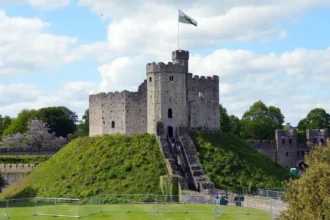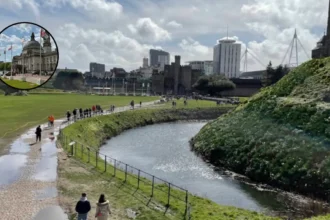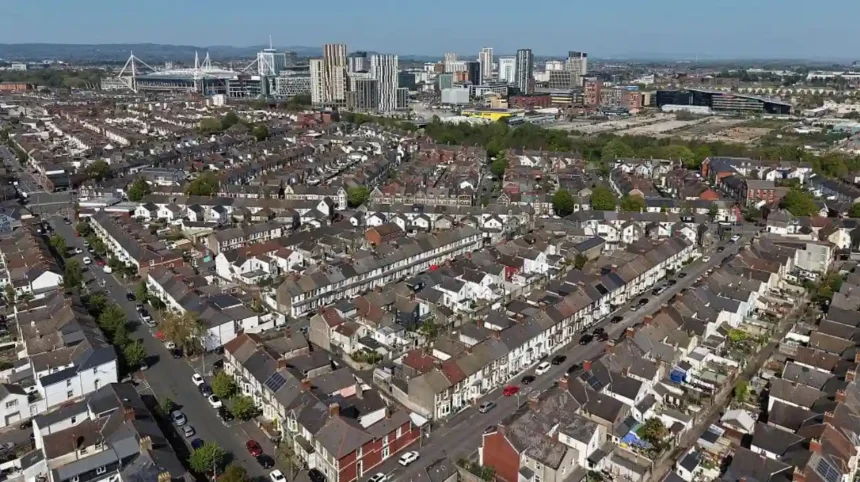
Grangetown is a densely populated inner-city community in southern Cardiff, positioned between the Rivers Taff and Ely and close to Cardiff Bay. Its diversity developed through industrial migration, dockland employment, international maritime connections, family settlement, community institutions, and continued cultural exchange.
- What is Grangetown and where is it located?
- How did Cardiff’s docks influence Grangetown’s diversity?
- When did Grangetown become a multicultural community?
- Which communities contributed to Grangetown’s diversity?
- How did migration become permanent settlement in Grangetown?
- Why is Grangetown associated with Cardiff’s Somali community?
- How did South Asian migration shape Grangetown?
- How did African and Caribbean communities influence Grangetown?
- What role did local businesses play in Grangetown’s multicultural identity?
- How has Grange Pavilion strengthened community connections?
- What role has Cardiff University played in Grangetown?
- How have young people shaped Grangetown’s identity?
- How does Welsh culture fit into Grangetown’s multicultural identity?
- Why is Grangetown considered one of Cardiff’s most diverse communities?
- What does Grangetown’s history mean for Cardiff’s future?
The community’s identity is closely connected to Cardiff’s transformation from a major coal-exporting port into a modern Welsh capital. Grangetown sits beside areas historically associated with Cardiff’s docks, including Butetown and the former Tiger Bay district. These docklands connected Cardiff with people, goods and cultures from across the world.
Today, Grangetown is recognised as one of Cardiff’s most ethnically diverse areas. Cardiff University describes it as the most ethnically diverse ward in Wales, while research into Cardiff’s ethnic geography has identified Grangetown as the city’s most diverse ward.
The story of Grangetown’s diversity is therefore not based on one migration period or one ethnic community. It developed through successive waves of movement and settlement and through the institutions, businesses, schools, religious organisations and public spaces that connected residents.
What is Grangetown and where is it located?
Grangetown is an inner-city Cardiff community south of the city centre, bordered by the Rivers Taff and Ely and closely connected to Cardiff Bay, Butetown and Riverside. Its location placed it near major transport routes, dockland employment, industrial activity and established migrant communities.
Grangetown occupies an important geographical position in Cardiff. The community sits south of the city centre and forms part of the wider southern Cardiff urban area. Its position between the River Taff and River Ely connects it geographically with Cardiff Bay and the historic docklands.
The modern electoral ward had a population of approximately 20,800 at the 2021 Census. The population increased from 19,385 in 2011.
The distinction between Grangetown as a community and Grangetown as an electoral ward is important. Census and administrative statistics frequently refer to specific geographical boundaries, while local identity extends across neighbourhood streets and connections with surrounding communities.
Grangetown’s location also explains part of its social history. It developed beside Cardiff’s expanding industrial and maritime economy rather than as an isolated residential settlement.
That geographical relationship created sustained contact between local residents and people arriving through Cardiff’s port. Employment, housing and transport then helped turn temporary movement into longer-term settlement.
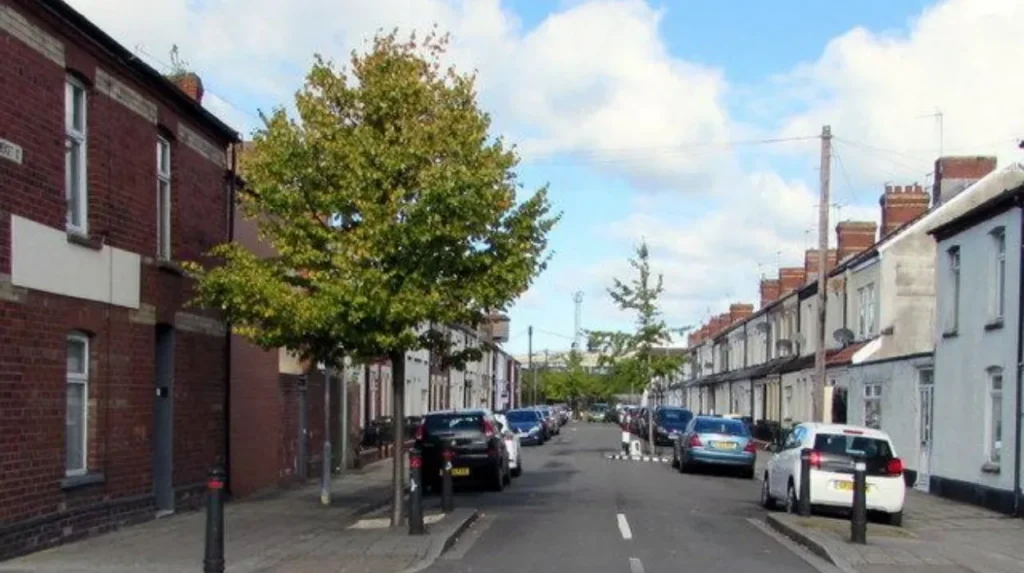
How did Cardiff’s docks influence Grangetown’s diversity?
Cardiff’s docks created employment and international connections that brought sailors, workers, traders and families from different regions into the city. Grangetown’s proximity to the docklands helped connect the community with Cardiff’s long-established African, Arab, Asian and European populations.
Cardiff became one of Britain’s major coal-exporting ports during the industrial era. Coal from the South Wales Valleys travelled through Cardiff’s dock system to international markets.
The dock economy required workers across many occupations. Sailors, dock workers, engineers, merchants, railway workers and service workers all contributed to the port economy.
Cardiff University research describes the development of Grangetown and neighbouring Riverside and Butetown as closely tied to global trading routes from Cardiff’s docklands. The research identifies communities with Welsh, Somali, Bangladeshi, African-Caribbean, Pakistani, Indian, European and multi-ethnic Welsh backgrounds.
This history also connects Grangetown to the wider story of Tiger Bay. Tiger Bay was the historic name associated with Cardiff’s dockland communities around Butetown and Cardiff Bay. It became known for its international population and maritime culture.
Historical research records residents and workers connected with countries and regions including Greece, Spain, Italy, Somalia, India and the Arab world. Cardiff’s port also attracted African, Caribbean and Arab seafarers.
Grangetown benefited from this surrounding demographic environment because workers and families needed nearby housing, services and community networks.
Diversity therefore became embedded through geography and economic development rather than appearing suddenly in the late twentieth or twenty-first century.
When did Grangetown become a multicultural community?
Grangetown became multicultural during Cardiff’s industrial and maritime expansion, when international workers settled around the docks and nearby residential districts. Later migration from South Asia, Africa and other regions expanded this established multicultural population and strengthened its long-term community institutions.
The foundations of modern Grangetown developed during the nineteenth century. The area was constructed on former tidal land as Cardiff expanded towards its docks.
The growth of Cardiff’s port created demand for housing near employment. Grangetown became part of this expanding urban landscape.
The twentieth century brought further demographic change. Maritime employment continued to connect Cardiff with international communities, while migration patterns across Britain changed after the Second World War.
Migration from South Asia became increasingly important. Pakistani, Indian and Bangladeshi communities established families, businesses and community networks across Cardiff.
African communities also became an important part of the city’s demographic landscape. Cardiff’s longstanding Somali connections have particular relevance because Somali sailors and workers formed part of the city’s maritime history.
The result was cumulative demographic development.
One generation established homes. A later generation established businesses, religious organisations and community groups. Children attended local schools and developed identities combining Welsh, British and international cultural influences.
This process produced a neighbourhood where diversity became part of everyday life rather than a temporary feature of population change.
Which communities contributed to Grangetown’s diversity?
Grangetown’s diversity includes Welsh and Welsh-language residents alongside Somali, Pakistani, Bangladeshi, Indian, African, Caribbean, Arab, European, mixed-heritage and other communities. The area’s demographic character developed through successive settlement patterns rather than one single migration group.
Research published by the University of Manchester’s Centre on Dynamics of Ethnicity found that Grangetown was Cardiff’s most diverse ward using 2011 Census data. The ward had 56% White British residents, 8% Pakistani residents, 5% Indian residents, 5% African residents and 6% residents classified as Other White.
The same research identified nine additional ethnic groups accounting for more than 2% of the population. It recorded 113 ethnic groups represented in Grangetown.
The 2021 Census demonstrates the continued scale of diversity. One analysis of the ward reports approximately 54.16% White residents, 23.63% Asian, Asian British or Asian Welsh residents, and 10.83% Black, Black British, Black Welsh, Caribbean or African residents, with other categories making up the remainder.
These figures demonstrate that Grangetown’s diversity extends across several major ethnic classifications.
The community also contains significant religious diversity. Muslim communities include people with Pakistani, Bangladeshi, Somali, Arab and other backgrounds. Christian communities include residents from Welsh, African, Caribbean and other traditions.
Language adds another dimension.
A Cardiff planning assessment based on Census 2021 data recorded 3,268 Grangetown residents aged three and over with some Welsh-language skills. That represented 16.41% of the population aged three and over in the electoral ward.
This means Grangetown’s diversity is not simply ethnic. It includes linguistic, religious, cultural and generational diversity.
How did migration become permanent settlement in Grangetown?
Migration became permanent settlement when workers established households, families and community networks close to employment and services. Over generations, residents created businesses, schools, religious institutions and social organisations that transformed migration into established neighbourhood life.
Employment provided the initial connection between many migrants and Cardiff. Permanent settlement followed when people established homes and families.
Family formation is particularly important in understanding long-term demographic change. A migrant community becomes geographically established when children grow up locally and families remain in the area across generations.
Businesses reinforced this process. Shops, restaurants, professional services and specialist retailers created places where residents could access familiar products and services.
Community organisations provided another layer of stability.
Religious organisations offered worship, education and social support. Cultural groups preserved languages, traditions and connections between generations.
Schools became important spaces for interaction between different communities.
The resulting network created social infrastructure around diversity. Residents did not simply live alongside one another. They developed organisations and public spaces where different groups interacted.
This distinction explains why Grangetown’s diversity has remained visible across generations.
Why is Grangetown associated with Cardiff’s Somali community?
Grangetown has longstanding connections with Cardiff’s Somali population, reflecting the city’s maritime history and later family settlement. Somali residents have contributed to local community life through businesses, youth initiatives, cultural organisations, education, faith networks and wider civic participation.
Somali connections with Cardiff extend back into the city’s maritime history. Somali sailors were among the international seafarers connected with Cardiff’s port.
Later generations established permanent communities in Cardiff. Grangetown became one of the areas where Somali families lived and developed local networks.
The community’s Somali presence is part of the wider relationship between Grangetown and Cardiff’s international history.
Modern community initiatives recognise the importance of Somali residents. Evidence presented to the Welsh Parliament in 2024 referred specifically to a significant Somali population in Grangetown and described a Somali needs project operating through community development work.
Somali identity also forms part of Cardiff’s wider multicultural heritage. The history of Cardiff’s port created connections between Wales and East Africa that continued beyond the decline of the traditional dock economy.
This is an important reason why Grangetown’s diversity has historical depth.
How did South Asian migration shape Grangetown?
South Asian migration strengthened Grangetown’s diversity through family settlement, businesses, religious networks, education and community organisations. Pakistani, Bangladeshi and Indian residents became significant parts of the neighbourhood’s demographic structure and contributed to its commercial and cultural identity.
South Asian migration transformed many parts of post-war Cardiff. Grangetown became one of the areas where Pakistani, Bangladeshi and Indian families established long-term homes.
The 2011 demographic data illustrates this pattern. Pakistani residents represented 8% of Grangetown’s population, while Indian residents represented 5%.
Bangladeshi residents also formed an important part of the area’s wider South Asian population.
Migration patterns were not identical between communities. Families arrived during different periods and from different regions. Their settlement experiences were shaped by employment, housing availability, family networks and wider immigration patterns.
Community institutions helped establish continuity.
Restaurants and food businesses introduced regional cuisines into the local commercial landscape. Religious institutions supported worship and community activity. Family networks connected new arrivals with established residents.
The result was a South Asian presence that became integrated into the broader multicultural character of Grangetown.
How did African and Caribbean communities influence Grangetown?
African and Caribbean residents contributed to Grangetown’s multicultural identity through family settlement, maritime connections, churches, cultural activity, businesses and community participation. Their presence forms part of Cardiff’s longer history of African, Caribbean and international migration.
Cardiff’s port history created early connections with African and Caribbean communities. International seafarers worked through the docks and established relationships with the city.
The First World War also changed Cardiff’s population. Historical research records African, Arab and West Indian men working in Cardiff after ships connected with African trade were requisitioned for wartime service.
Later post-war migration strengthened African and Caribbean communities across Cardiff.
Grangetown became part of this wider demographic network. Residents established families, participated in local organisations and contributed to schools, churches, businesses and civic life.
The 2021 Census figures show the continuing importance of Black communities in the ward, with Black, Black British, Black Welsh, Caribbean or African residents accounting for approximately 10.83% of the population in one ward-level analysis.
This diversity demonstrates that Grangetown’s demographic identity developed through multiple migration histories rather than a single community narrative.
What role did local businesses play in Grangetown’s multicultural identity?
Local businesses turned demographic diversity into everyday community infrastructure through food, retail, professional services and markets. They created places where residents purchased products, met neighbours, supported independent traders and shared cultural traditions across different communities.
Commercial activity is an important part of Grangetown’s identity.
A diverse population creates demand for different foods, products, services and cultural goods. Local entrepreneurs respond to those needs.
Cardiff University’s Community Gateway worked with local businesses and residents to develop the Grangetown Business Forum. The forum began in 2017 and provided a platform for businesses to collaborate and influence local decision-making.
The programme also supported the development of a Grangetown business map listing 22 local businesses.
The first Grangetown World Market took place on 22 July 2017. It featured 17 stalls, including nine Grangetown businesses, and attracted more than 200 residents.
Markets provide more than retail opportunities. They create shared public settings where different communities interact.
Food is particularly significant because it provides a visible expression of cultural diversity. Grangetown’s commercial environment reflects the communities living within and around the neighbourhood.
How has Grange Pavilion strengthened community connections?
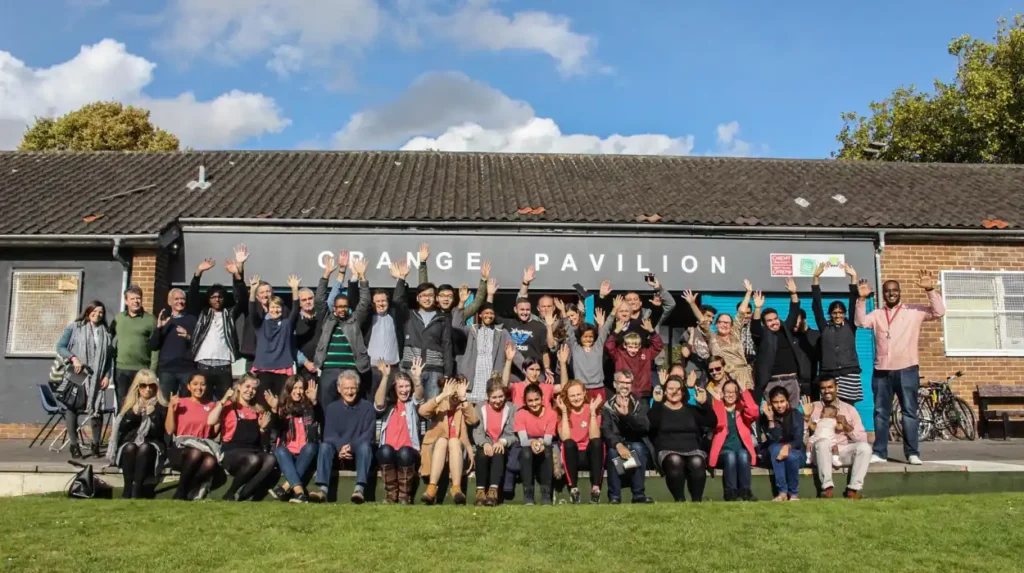
Grange Pavilion became a major community hub after residents proposed redeveloping a deteriorating bowls pavilion. The project created shared facilities for events, youth activities, businesses, learning, volunteering, gardening and cultural programmes across Grangetown.
Grange Pavilion demonstrates how community infrastructure can support social cohesion.
Residents proposed activating the vacant and deteriorating bowls pavilion and green in 2012. A formal partnership between Grange Pavilion Project, Grangetown Community Action and Cardiff University was established in 2014.
A temporary licence in 2016 allowed more than 3,000 residents to use the pavilion and green during the pilot period.
The building was subsequently redeveloped into a multifunctional community facility.
The modern pavilion includes a café, co-working facilities, rooms for community events and a garden and green space. Cardiff University reports that the redevelopment involved approximately £2 million of investment.
The significance of Grange Pavilion extends beyond its physical structure.
It provides a neutral shared environment for residents from different backgrounds. It supports activities involving young people, families, businesses, schools, community organisations and cultural groups.
That role is particularly important in a neighbourhood where residents identified a lack of common spaces as an early community challenge.
What role has Cardiff University played in Grangetown?
Cardiff University has supported Grangetown through Community Gateway, a long-term partnership linking residents, community organisations, academics and students. The programme has developed projects involving education, business, public space, youth participation, research, culture and community development.
Community Gateway began building its long-term relationship with Grangetown residents in the early 2010s, with the partnership formally developing in 2014.
The approach focused on listening to residents and supporting community-led priorities.
Cardiff University reports that Community Gateway has launched more than 85 community-university projects.
Earlier phases included 44 projects across a three-year period, including the Grangetown Youth Forum, Business Forum, World Street Market, running groups, arts programmes, Citizen Scientists and safety initiatives.
The partnership model is significant because projects were developed with local residents rather than imposed entirely from outside.
Community Gateway also supported the transformation of Grange Pavilion.
The programme demonstrates how universities can contribute local knowledge, research capacity, student participation and professional expertise while residents provide knowledge about neighbourhood priorities.
How have young people shaped Grangetown’s identity?
Young people have shaped Grangetown through youth forums, schools, cultural projects, community planning and volunteering. Their participation has strengthened connections between generations and ensured that local development reflects the experiences and priorities of children and young residents.
Young people form a major part of Grangetown’s future.
The Grangetown Youth Forum provides a structured platform for young people aged 14 to 25 to participate in community activities and projects. Cardiff University identifies the forum as one of the visible outcomes of Community Gateway.
In 2023, Cardiff University published A Grangetown to Grow Up In, a plan created by children and young people alongside university researchers.
This type of participation changes the understanding of diversity.
A diverse community is not simply defined by statistics. It also depends on whether different groups participate in decisions about public space, education, culture and local services.
Young people from different backgrounds share schools, parks and community facilities. Their interactions create new forms of local identity.
This helps explain why Grangetown’s multicultural character continues across generations.
How does Welsh culture fit into Grangetown’s multicultural identity?
Welsh culture forms an important part of Grangetown’s identity alongside international cultures. Welsh-language education, community activities, schools, music, poetry and cultural events demonstrate that multiculturalism and Welsh identity operate together within the neighbourhood.
Grangetown’s diversity does not replace Welsh identity. Both exist within the same community.
Census data recorded 3,268 residents aged three and over with some Welsh-language skills in 2021, representing 16.41% of the relevant ward population.
In June 2026, Grangetown hosted its first Eisteddfod Grangetown. The event included Welsh-language activities, music, poetry, dance, food, exhibitions and Welsh taster sessions.
Cardiff University reported 69 entrants competing across nine categories for children, young people and adults.
The event was delivered through collaboration involving Community Gateway, Y Gymdeithas Gymraeg Grangetown, Dysgu Cymraeg Caerdydd and Grange Pavilion.
This development provides a clear example of how Welsh cultural identity operates within a highly multicultural neighbourhood.
Grangetown’s identity is therefore both Welsh and international.
Explore More Area Guide
The Changing Identity of Splott Through the Decades
What Makes Pontcanna Different? Cardiff Neighbourhood Guide 2026
Why is Grangetown considered one of Cardiff’s most diverse communities?
Grangetown combines a long history of international migration with substantial ethnic, linguistic and religious diversity, established community institutions, mixed neighbourhood networks and continued cultural participation. These factors explain why it consistently ranks among Cardiff’s most diverse communities.
The evidence is strongest when demographic and historical information are considered together.
The 2011 Census identified Grangetown as Cardiff’s most diverse ward, with 113 ethnic groups represented.
The 2021 Census shows continued demographic diversity, with large Asian and Black populations alongside a White majority.
Historical research explains why these communities developed. Cardiff’s docks created international connections and employment opportunities.
Community infrastructure explains how diversity became established. Businesses, schools, religious institutions, youth organisations and community centres created long-term networks.
Grange Pavilion provides a contemporary example of this process.
The neighbourhood’s diversity is therefore the product of history, geography, migration, settlement and community organisation.
These factors operate together.
What does Grangetown’s history mean for Cardiff’s future?
Grangetown demonstrates how industrial migration can develop into long-term multicultural urban identity. Its future depends on maintaining inclusive community spaces, supporting local participation, recognising cultural history and ensuring that regeneration benefits the diverse population that has shaped the neighbourhood.
Grangetown’s history provides an important case study for Cardiff.
The community demonstrates how international migration can become part of a city’s permanent social structure.
Its story also shows the importance of community-led development. The Grange Pavilion project demonstrates how residents can identify a local problem, develop a shared vision and work with institutions to deliver a practical solution.
Current cultural initiatives continue this process.
The first Eisteddfod Grangetown in 2026 demonstrates the continued development of Welsh cultural activity within a multicultural neighbourhood.
Community Gateway’s continuing work demonstrates the importance of long-term partnerships between residents, universities and organisations.
Grangetown’s diversity is therefore not simply a demographic statistic. It is the result of more than a century of urban development and migration, followed by generations of family settlement and community building.
Its history connects Cardiff’s industrial past with its multicultural present.
The community’s continuing significance lies in the way Welsh identity, international heritage, local enterprise, education and community participation exist within the same urban environment.
For Cardiff, Grangetown provides a clear example of how diversity becomes embedded in the physical, economic and social structure of a neighbourhood.
Why is Grangetown one of Cardiff’s most diverse communities?
Grangetown became highly diverse through Cardiff’s industrial and maritime history, international migration, family settlement and community development. Somali, Pakistani, Bangladeshi, Indian, African, Caribbean, Arab, European, Welsh and mixed-heritage communities all contribute to its identity.