Cardiff is the capital of Wales and one of the strongest places in the country to experience Welsh food culture in an urban setting. Traditional Welsh cafés in Cardiff connect everyday café dining with foods that have long been associated with Welsh households, markets, farms, mining communities and coastal areas.
- What makes a café traditionally Welsh in Cardiff?
- Which traditional Welsh foods should you try in Cardiff cafés?
- Where can you find traditional Welsh cafés and food venues in Cardiff?
- Why are Welsh cakes important to Cardiff café culture?
- Where can you eat bara brith and other Welsh baked goods in Cardiff?
- Which Cardiff cafés serve substantial traditional Welsh food?
- What is the best heritage setting for a traditional Welsh café experience?
- How does Cardiff Market preserve traditional Welsh café food?
- How can visitors build a traditional Welsh café day in Cardiff?
- Why are traditional Welsh cafés important to Cardiff’s food identity?
Welsh café culture is not limited to tea and cakes. A traditional Welsh café experience can include Welsh cakes, bara brith, Welsh rarebit, cawl, Glamorgan sausage, laverbread, cockles and locally produced cheese. Some cafés focus on baked goods, while others serve substantial Welsh meals alongside coffee and tea.
The strongest examples combine traditional recipes with Cardiff’s historic markets, arcades, museums, parks and cultural institutions. This makes Welsh café food relevant to both residents and visitors exploring the capital.
What makes a café traditionally Welsh in Cardiff?
A traditional Welsh café in Cardiff serves recognisable Welsh foods, uses Welsh culinary traditions, and connects its menu with local culture through dishes such as Welsh cakes, bara brith, cawl, rarebit and laverbread.
The term “traditional Welsh café” does not describe one legally defined type of business. Instead, it describes a café or casual food venue where Welsh food traditions form an important part of the experience.
Traditional Welsh food developed from the ingredients and working lives of communities across Wales. Museum Wales records traditional foods through oral histories, recipes, photographs and fieldwork conducted with older generations. The research programme at St Fagans began documenting traditional food practices in the 1970s.
Cardiff provides a particularly useful setting for this food culture because the city brings together rural Welsh traditions, South Wales industrial history, coastal ingredients and modern hospitality.
A traditional café menu therefore often includes several recognisable Welsh items. Examples include Welsh cakes as a griddle-baked sweet food, bara brith as a tea-infused fruit loaf, cawl as a slow-cooked soup or broth, Welsh rarebit as a cheese-based dish served on toast, and laverbread as a preparation made from edible seaweed.
The setting also matters. Cafés inside historic markets, museums, arcades and heritage attractions provide a stronger cultural connection than venues that simply add one Welsh dish to an otherwise international menu.
Cardiff Market is particularly important because it is a Victorian indoor market where visitors can buy local produce and traditional Welsh baked goods. Visit Wales specifically highlights Cardiff Bakestones for freshly prepared Welsh cakes served from the market.
Which traditional Welsh foods should you try in Cardiff cafés?
The main Welsh café foods to try in Cardiff are Welsh cakes, bara brith, cawl, Welsh rarebit, Glamorgan sausage, laverbread and Welsh breakfasts containing cockles and bacon. Each reflects a distinct Welsh culinary tradition.
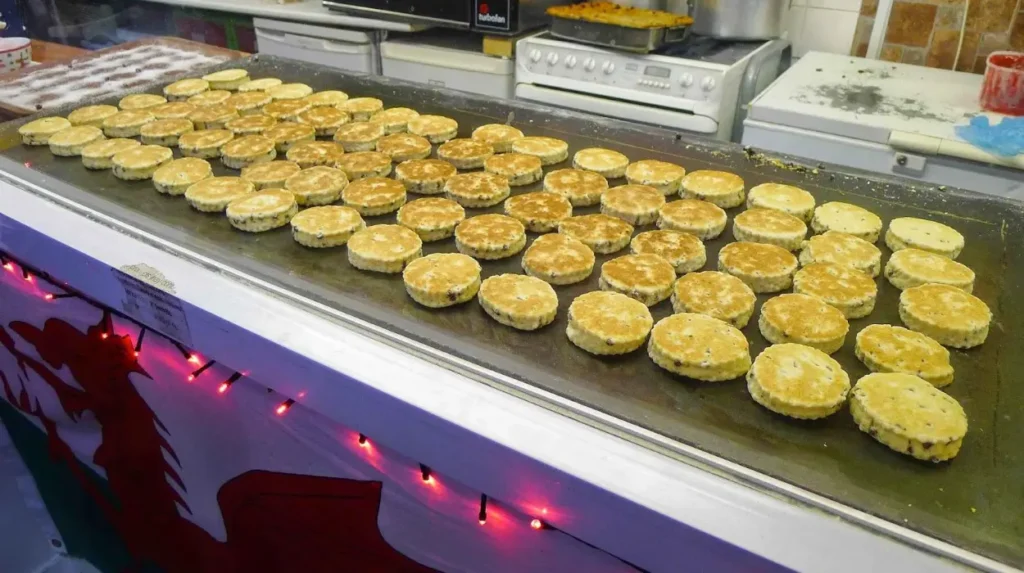
Welsh cakes are one of the most recognisable café foods in Wales. Museum Wales records them as tea-time favourites from the second half of the nineteenth century. They were traditionally cooked on a bakestone and were known by different Welsh names in different regions.
Bara brith is another essential choice. The name means “speckled bread” and refers to the dried fruit distributed throughout the loaf. Modern versions commonly use tea to soak the fruit before baking. It is normally sliced and served with butter alongside tea or coffee.
Cawl is a traditional Welsh broth associated with slow cooking and simple ingredients. Modern Cardiff venues serve versions containing ingredients such as lamb, vegetables and Welsh cheese.
Welsh rarebit is a savoury dish based on a rich cheese mixture served over toast. It is a practical café food because it works as a light lunch, brunch or substantial snack.
Glamorgan sausage is a vegetarian Welsh speciality made traditionally with Caerphilly cheese, leek and breadcrumbs. Despite its name, it contains no meat.
Laverbread provides a different connection with Welsh food history. It is made from edible laver seaweed and has a particularly strong association with South Wales. Historical records from Museum Wales describe laver gathering and preparation in coastal communities, including Glamorgan.
A traditional Welsh breakfast can also include laverbread and cockles alongside bacon, eggs and other cooked breakfast ingredients. Visit Cardiff identifies this combination as an important part of the city’s Welsh food offering.
Where can you find traditional Welsh cafés and food venues in Cardiff?
Cardiff’s strongest locations for traditional Welsh café food include Cardiff Market, Castle Arcade, Cardiff Bay, Bute Park, St Fagans and central Cardiff. These areas combine Welsh food with markets, heritage sites, parks and cultural attractions.
Cardiff Market is one of the most practical starting points for visitors seeking traditional Welsh cakes. The Victorian indoor market operates as a major food and retail destination in the city centre, with independent traders selling fresh produce and baked goods.
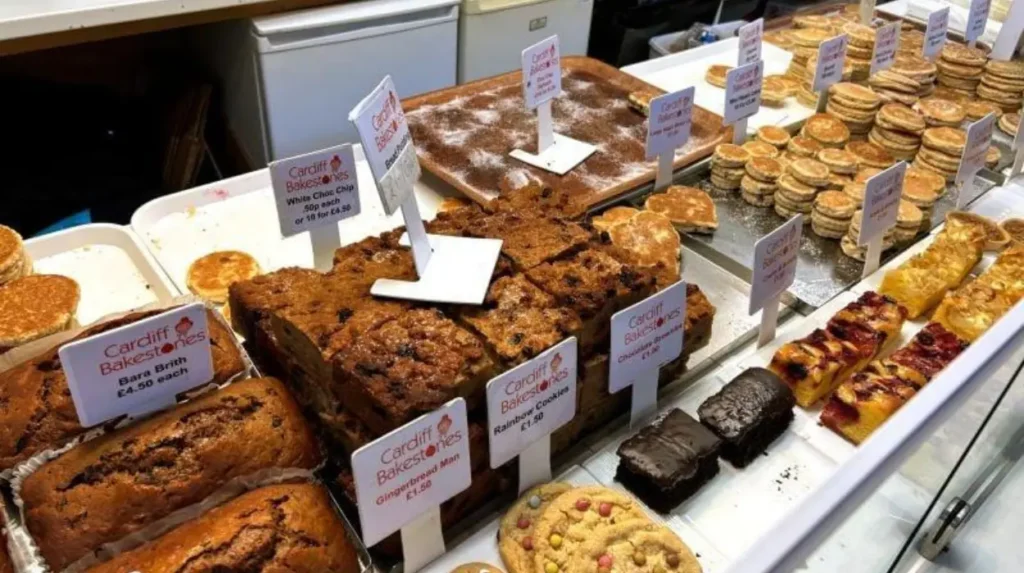
Cardiff Bakestones is particularly associated with traditional Welsh cakes. Its cakes are cooked on a traditional griddle and prepared in view of customers. The business also sells bara brith and several variations of Welsh cakes.
Castle Arcade provides another central location for Welsh baking. Fabulous Welshcakes operates a shop in the arcade, where visitors can buy freshly griddled Welsh cakes. The business also operates in Cardiff Bay at Mermaid Quay.
Bute Park provides a different café environment. Pettigrew Tearooms sits at the southern end of the park and has been included by Museum Wales in its South East Wales food itinerary. The venue provides tea-room dining near the River Taff and Cardiff Castle.
St Fagans National Museum of History is another important location for traditional Welsh food. The museum preserves historic buildings and everyday Welsh life, making its food facilities particularly relevant to visitors interested in the background of traditional dishes.
St Fagans currently has several food outlets, including Y Gegin, Gweithdy Café, Castle Buttery and PysgOdyn. Museum Wales states that the site uses local Welsh products whenever possible and provides cafés, cakes, light meals and traditional food options.
Why are Welsh cakes important to Cardiff café culture?
Welsh cakes are central to Cardiff café culture because they combine nineteenth-century Welsh baking traditions with modern city-centre café life. They are griddle-baked, portable, inexpensive and commonly served fresh, making them ideal for visitors.
Welsh cakes have a documented history stretching back to the latter part of the nineteenth century. Museum Wales records their popularity throughout Wales and describes their preparation on bakestones. Different Welsh-language names developed from regional terms for the baking surface.
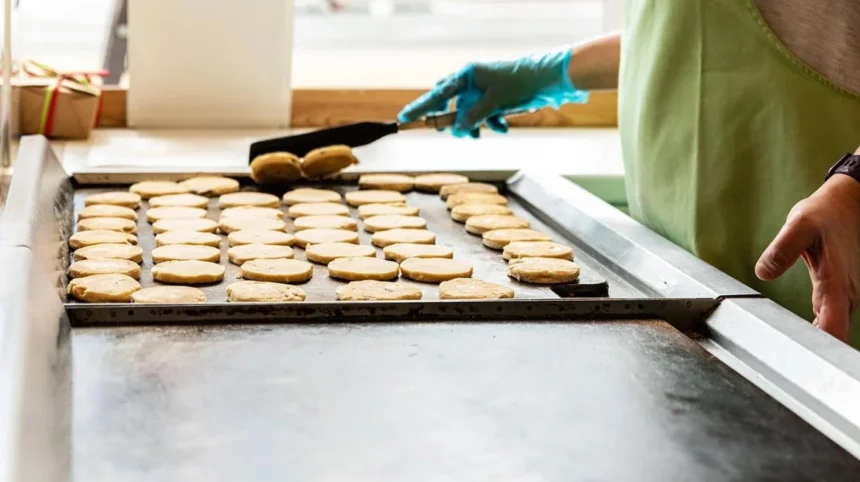
The traditional cake is relatively simple. Flour, fat, sugar, currants and flavourings form the basic mixture. The dough is rolled, cut into rounds and cooked on a heated bakestone or griddle.
This method distinguishes Welsh cakes from oven-baked sponge cakes. The cooking surface gives the cake its characteristic browned exterior while retaining a softer centre.
The association with working communities also gives Welsh cakes cultural significance. Museum Wales records their use in farmhouses, cottages and miners’ food boxes in Glamorgan. They were therefore both domestic food and practical food for workers.
Cardiff’s modern food scene preserves this tradition through specialist Welsh cake businesses and market stalls.
Cardiff Bakestones uses public-facing preparation, allowing customers to see the cakes being rolled, cut and cooked. Fabulous Welshcakes similarly focuses its business on Welsh cakes, including freshly griddled products from its Cardiff city-centre and Cardiff Bay locations.
This combination of historical preparation and modern retail makes Welsh cakes one of the easiest Welsh foods for visitors to understand and experience directly.
Where can you eat bara brith and other Welsh baked goods in Cardiff?
Bara brith is widely associated with Welsh tea-time food and appears in Cardiff cafés, bakeries, markets and cultural venues. It is traditionally sliced and served with butter, providing a direct link between Welsh baking history and modern café culture.
Bara brith is a traditional Welsh fruit loaf prepared using dried fruit, spices and tea. Modern recipes often soak the fruit in tea before combining it with the other ingredients.
Wales.com describes bara brith as a traditional Welsh tea bread and notes its continuing presence on café and coffee-shop counters across Wales.
Its relationship with tea makes it particularly suitable for cafés. A slice works as a morning snack, afternoon treat or accompaniment to hot drinks.
Cardiff’s market culture also supports this type of food. Cardiff Market provides access to independent food traders and local baked goods, while specialist Welsh cake businesses sell bara brith alongside their signature products.
Cardiff Bay offers another setting for Welsh baked goods. Fabulous Welshcakes operates at Mermaid Quay and sells Welsh food products alongside its freshly cooked cakes.
St Fagans provides an especially strong heritage context. Its food facilities include cafés serving cakes and traditional food, while the museum’s collections document Welsh food traditions through recipes, photographs and oral history.
Visitors looking for authentic Welsh baking should therefore consider both specialist bakeries and heritage cafés. The distinction is useful because a specialist bakery focuses on the product itself, while a heritage café connects food with a wider historical setting.
Which Cardiff cafés serve substantial traditional Welsh food?
Cardiff has cafés and casual food venues serving substantial Welsh dishes such as cawl, Welsh rarebit, Glamorgan sausage and Welsh breakfasts with laverbread and cockles, extending the traditional café experience beyond cakes and afternoon tea.
Traditional Welsh café food includes savoury dishes as well as baked goods.
Cawl is one of the strongest examples. Visit Cardiff describes it as a slow-cooked broth commonly prepared with lamb and root vegetables. It represents the hearty cooking tradition associated with Welsh households.
Welsh rarebit provides another classic option. It consists of a rich cheese mixture served over toast and works naturally as a café lunch.
Glamorgan sausage represents Welsh vegetarian food heritage. Its traditional combination of Caerphilly cheese, leek and breadcrumbs provides a meat-free dish rooted in Welsh ingredients.
Laverbread connects café menus with South Wales coastal history. Museum Wales records laver as a traditional food gathered from the shore and prepared by extensive washing, boiling and chopping. It was commonly combined with oatmeal and bacon in South Wales.
Cardiff’s food guides specifically identify Welsh breakfasts with laverbread and cockles as part of the city’s traditional food offer.
Caffi Cymru provides a particularly direct example of a Welsh-themed café in central Cardiff. The café describes itself as a traditional Welsh-themed Caffi and serves a menu including cawl, faggots and rarebit. It is located above the City Arms on Quay Street near the Principality Stadium.
The existence of venues with specifically Welsh menus demonstrates that Cardiff’s café culture extends beyond sweet baked goods into complete meals based on Welsh culinary traditions.
What is the best heritage setting for a traditional Welsh café experience?
St Fagans National Museum of History provides Cardiff’s strongest heritage setting for traditional Welsh food because its historic buildings, food research, traditional recipes, cafés and reconstructed environments connect modern eating with everyday Welsh life.
St Fagans is part of Amgueddfa Cymru – Museum Wales and opened to the public on 1 July 1948. It became the United Kingdom’s first national open-air museum and developed around the everyday lives of Welsh people.
Its importance for food history increased during the twentieth century. Museum Wales began researching and recording traditional foods at St Fagans during the 1970s. Researchers collected information from older generations whose memories extended back to the late nineteenth century.
The museum’s food research provides historical context for dishes now found in Cardiff cafés.
Its current food facilities include Y Gegin, Gweithdy Café and Castle Buttery. Y Gegin serves hot meals between midday and 3pm, while Gweithdy Café provides light lunches, coffee and cakes. Castle Buttery offers beverages, sandwiches and cakes when operating seasonally.
St Fagans also provides an opportunity to understand traditional Welsh domestic life before and during industrialisation. Historic buildings represent homes, workplaces, shops and community spaces from different periods.
The museum’s admission is free, although some activities and exhibitions carry separate charges. Its current published opening hours are 10am to 5pm daily, with food outlets operating according to their own schedules.
For visitors interested in food heritage rather than simply finding a café, St Fagans provides the clearest connection between Welsh recipes and the communities that produced them.
How does Cardiff Market preserve traditional Welsh café food?
Cardiff Market preserves Welsh café food culture by bringing independent food traders and traditional baked products into a historic Victorian market environment. Welsh cakes, local produce and prepared foods connect modern visitors with Cardiff’s longstanding market culture.
Cardiff Market is one of Cardiff’s most important food destinations. The market occupies a Victorian structure in the city centre and provides a concentrated setting for independent food businesses.
Its significance extends beyond shopping. Markets historically provided access to fresh food, baked products, meat, fish and household supplies. Cardiff’s modern market continues this function while supporting specialist food businesses.
Welsh cakes are particularly visible within the market environment. Visit Wales identifies Cardiff Bakestones as a destination for traditional Welsh cakes served fresh from the hot plate.
The preparation method is part of the experience. Cardiff Bakestones states that its Welsh cakes are cooked on a traditional griddle and made in public, allowing visitors to observe the rolling, cutting and griddling process.
This creates a direct connection between traditional food production and contemporary tourism.
Cardiff Market also works well as a starting point for a broader Welsh food itinerary. Visitors can combine Welsh cakes with local produce before continuing towards Cardiff Castle, the arcades, Bute Park or the National Museum Cardiff.
The market therefore functions as both a retail environment and a cultural food destination.
Explore Area Guide
Green Corridors Connecting Cardiff Communities
Pollinator Projects Across Cardiff: Bees, Wildflowers and Nature Recovery
How can visitors build a traditional Welsh café day in Cardiff?
A traditional Welsh café day in Cardiff can combine Welsh cakes and coffee at Cardiff Market, Welsh food in the city centre, a heritage café at St Fagans, and tea or cakes near Bute Park for a complete Welsh food itinerary.
A practical itinerary starts in central Cardiff.
Cardiff Market provides an early stop for a freshly prepared Welsh cake. Visitors can then walk through the city’s historic arcades and continue towards Cardiff Castle.
Castle Arcade provides another opportunity to try freshly griddled Welsh cakes at Fabulous Welshcakes. Its central location makes it suitable for combining Welsh food with shopping and sightseeing.
The next stage can focus on a substantial Welsh meal. Caffi Cymru provides cawl, faggots and rarebit in a dedicated Welsh-themed café environment.
For a heritage-focused afternoon, St Fagans provides the strongest setting. Visitors can explore historic buildings before using one of the museum’s cafés or food outlets.
Bute Park provides a quieter final stop. Pettigrew Tearooms sits near the southern end of the park and offers tea-room dining close to the River Taff. Museum Wales includes it among its South East Wales food recommendations.
Cardiff Bay provides another alternative. Fabulous Welshcakes at Mermaid Quay combines Welsh cakes with access to the waterfront and surrounding attractions.
This type of itinerary works because Cardiff’s Welsh food venues are distributed across distinct cultural areas rather than concentrated in one neighbourhood.
Why are traditional Welsh cafés important to Cardiff’s food identity?
Traditional Welsh cafés strengthen Cardiff’s food identity by preserving recipes, cooking methods and regional ingredients while presenting them through accessible modern venues. They connect food heritage with tourism, local markets, museums, parks and everyday city life.
Food is an important part of cultural heritage because recipes preserve information about ingredients, work, agriculture, trade and domestic life.
Museum Wales’ traditional food research demonstrates this relationship. Researchers collected oral histories from older Welsh residents because many traditional food practices were not recorded adequately in written sources.
Welsh cakes demonstrate how a simple food can carry several layers of history. They were associated with domestic kitchens, farmhouses and industrial workers before becoming a nationally recognised Welsh speciality.
Laverbread demonstrates the same process through coastal food traditions. Its history connects seaweed gathering with South Wales communities and later commercial food production.
Bara brith connects household baking with modern café culture. Its tea-infused fruit loaf remains recognisable while recipes and presentation continue to evolve.
Cardiff provides an ideal urban environment for these traditions because it serves as Wales’s capital and combines heritage attractions with a substantial modern hospitality sector.
The result is a food culture in which traditional dishes remain visible without requiring visitors to leave the city.
Traditional Welsh cafés therefore serve more than food. They provide practical access to Welsh cultural heritage through ingredients, recipes, language, preparation methods and local settings.
For visitors, the strongest experience combines several elements: a freshly cooked Welsh cake, a traditional savoury dish, bara brith or another Welsh bake, and a heritage destination such as Cardiff Market or St Fagans.
For residents, these cafés provide everyday access to foods associated with Welsh identity.
Cardiff’s traditional Welsh café scene remains relevant because it combines historical continuity with contemporary hospitality. The recipes are traditional, but the settings are modern, accessible and integrated into the city’s visitor economy.
What is a traditional Welsh café in Cardiff?
A traditional Welsh café in Cardiff is a café or food venue that serves Welsh dishes and baked goods linked to Welsh culinary heritage. Typical choices include Welsh cakes, bara brith, cawl, Welsh rarebit, Glamorgan sausage and laverbread.