Cardiff’s industrial identity was built by more than coal alone. The city developed through a connected economy of iron, steel, railways, docks, shipping, flour milling, engineering, quarrying and maritime services. These industries transformed Cardiff from a relatively small port into an international commercial centre.
- How did industry transform Cardiff from a small port into a major city?
- Why was coal so important to Cardiff’s industrial development?
- How did Cardiff Docks create an industrial economy beyond coal?
- What role did iron production play in building Cardiff?
- How did steel manufacturing change Cardiff’s East Moors?
- Why were railways essential to Cardiff’s industrial economy?
- What happened to Cardiff’s forgotten flour-milling industry?
- How did quarrying and limestone support Cardiff’s heavy industries?
- How did shipping companies turn Cardiff into an international business centre?
- What other industrial activities developed around Cardiff’s docks?
- Why did Cardiff’s old industries decline?
- How can Cardiff’s forgotten industries still be seen today?
- What does Cardiff’s industrial history mean for the city today?
The strongest phase of this transformation occurred during the 19th and early 20th centuries. Cardiff’s location on the Bristol Channel gave it maritime access, while canals and railways connected the port with the industrial valleys of South Wales. The result was an integrated industrial system in which raw materials moved into Cardiff, manufactured goods and coal moved through its docks, and capital, labour and international trade accumulated around the waterfront.
Cardiff’s industrial landscape changed repeatedly. Iron initially drove the development of transport links. Coal then became the dominant export. Steel manufacturing expanded at East Moors. Flour milling served the port and its growing population. Railways moved coal and people. Shipping companies connected Cardiff with international markets. Quarrying supplied essential minerals for heavy industry.
Many of these industries disappeared during the 20th century. Their physical sites were demolished, redeveloped or incorporated into modern Cardiff. Their economic influence, however, remains visible in Cardiff Bay, Butetown, East Moors, Mount Stuart Square, railway corridors, dock structures and surviving industrial buildings.
How did industry transform Cardiff from a small port into a major city?
Cardiff became a major industrial city because canals, railways, docks, coal, iron, steel and shipping formed an interconnected economy that expanded rapidly during the 19th century. Industrial transport linked Cardiff with South Wales valleys and international markets through Cardiff Docks.
Cardiff occupied an important geographical position at the meeting point of the River Taff, River Ely and River Rhymney. Its access to the Bristol Channel provided a natural route for maritime trade. Before industrialisation, Cardiff was a comparatively modest port.
The industrial transformation accelerated when iron production expanded in the South Wales valleys. The Glamorganshire Canal was completed in 1794, linking Cardiff with Merthyr Tydfil. A sea-connected basin followed in 1798. These developments established an early industrial transport route between the valleys and Cardiff.
The arrival of the railway strengthened this system. The Taff Vale Railway opened between Cardiff and the industrial valleys in the early 1840s. Railway transport moved heavy goods more efficiently and supported the expansion of Cardiff’s docks.
The industrial economy then shifted towards coal. South Wales steam coal became a major international fuel. Cardiff developed infrastructure specifically designed to handle increasingly large quantities of coal.
The city therefore became more than a port. It became a distribution, finance, transport and employment centre for the wider South Wales industrial region.
Why was coal so important to Cardiff’s industrial development?
Coal was Cardiff’s most important industrial export because South Wales produced high-quality steam coal and Cardiff provided direct maritime access to overseas markets. Cardiff’s coal exports increased from about 2 million tonnes in 1862 to 10.7 million tonnes at their 1913 peak.
Steam coal was particularly valuable because of its suitability for generating steam in locomotives, ships and industrial machinery. Welsh steam coal produced substantial heat and retained useful characteristics during combustion. These qualities made it an important industrial fuel internationally.
Cardiff’s coal trade depended on a wider regional system. Coal was extracted in valleys such as the Rhondda, Cynon and Rhymney valleys. Railways then transported it towards Cardiff and other South Wales ports.
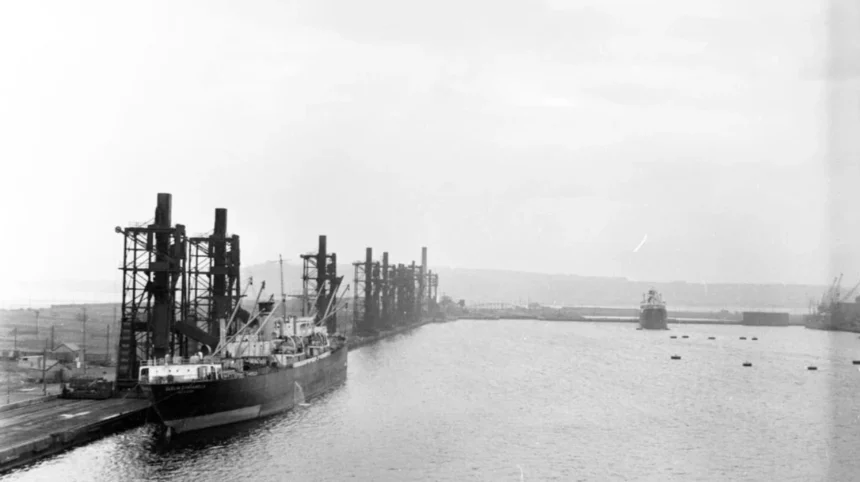
Cardiff Docks provided the infrastructure for loading coal into merchant ships. Railway sidings extended directly into dock areas, allowing coal wagons to move efficiently between railway and ship.
By 1862, Cardiff exported approximately 2 million tonnes of coal. By 1913, exports had reached 10.7 million tonnes. This made Cardiff one of the world’s most important coal-exporting ports.
The coal industry also supported employment outside the mines. Dock labourers, railway workers, engineers, ship crews, merchants, insurance firms, solicitors and shipping agents all formed part of the coal economy.
Coal exports finally ceased from Cardiff in 1964. The decline reflected changes in energy markets, competition from other fuels and the wider contraction of the South Wales coal industry.
How did Cardiff Docks create an industrial economy beyond coal?
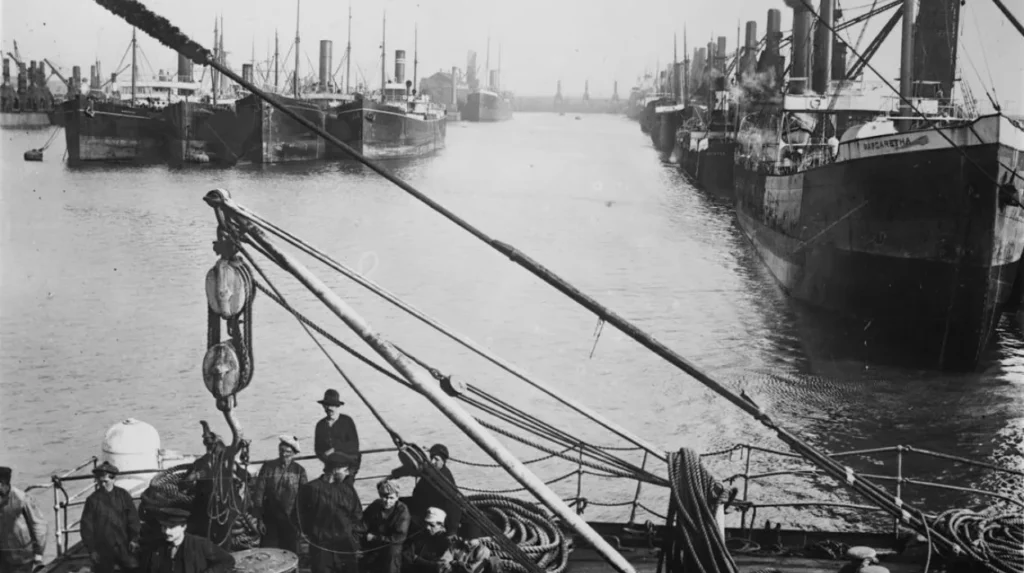
Cardiff Docks created an industrial economy by connecting inland coalfields and manufacturing districts with global shipping routes. Dock construction, cargo handling, warehouses, ship services, merchants, engineers, railways and shipping companies developed around the movement of coal and other commodities.
The first major phase of modern dock development followed the expansion of industrial trade. West Bute Dock opened in 1839. East Bute Dock followed in 1859. Roath Dock opened in 1887, while Queen Alexandra Dock opened in 1907.
Each expansion increased Cardiff’s capacity to receive and dispatch cargo.
The docks required extensive supporting infrastructure. Coal hoists, railway sidings, cranes, warehouses, bonded facilities and loading systems became essential components of the port.
Cardiff Docks also created a diverse waterfront workforce. Dockers handled cargo, engineers maintained machinery, sailors operated ships, clerks processed commercial transactions and merchants arranged international trade.
The docks transformed Butetown and surrounding areas into a densely populated maritime district. Museum Wales records that people from at least 50 nationalities settled in the docklands, contributing to the cosmopolitan character historically associated with Tiger Bay.
This diversity was an industrial consequence of Cardiff’s international trading role. Ships arriving from different countries brought crews and commercial connections into the city.
The modern Cardiff Bay waterfront occupies a landscape that was once dominated by this industrial infrastructure. Much of the original dock system disappeared through redevelopment, but sections of the historic port remain.
What role did iron production play in building Cardiff?
Iron production helped create Cardiff’s first major industrial connections because ironworks in the South Wales valleys required efficient routes to markets and raw materials. Cardiff became the maritime outlet for valley industries through canals, railways and expanding docks.
Before coal dominated Cardiff’s trade, iron was central to the industrial economy of South Wales.
Merthyr Tydfil and other valley communities developed major ironworks. The growth of these works increased demand for transport infrastructure connecting industrial production with ports.
The Glamorganshire Canal provided an early solution. Completed in 1794, it connected Cardiff with Merthyr. The canal allowed heavy industrial materials to travel between the valleys and the coast.
Cardiff’s port therefore developed partly because of the requirements of inland iron production.
The industrial relationship changed after the 1850s. Coal increasingly replaced iron as the principal industrial foundation of South Wales. Cardiff then became especially important as a coal-exporting port.
Iron nevertheless remained important because it established the transport and commercial foundations that later supported the coal economy.
This earlier industrial phase is often overshadowed by the scale of Cardiff’s later coal trade. The historical sequence is important because Cardiff’s industrial growth was cumulative rather than dependent on a single commodity.
How did steel manufacturing change Cardiff’s East Moors?
Steel manufacturing gave Cardiff a major heavy-industrial production centre in addition to its role as a coal-exporting port. The Dowlais-Cardiff Works opened in stages between 1891 and 1895 at East Moors beside Cardiff Docks and operated until 1978.
The Dowlais-Cardiff Works represented a major shift in Cardiff’s industrial geography.
The works were established by the Dowlais Iron Company of Merthyr Tydfil. East Moors provided a large industrial site close to the docks. Imported iron ore could arrive by sea, while railway infrastructure provided access to other materials and markets.
The plant included blast furnaces and steel-making facilities. Museum Wales records three blast furnaces during the early construction period and six open-hearth steel furnaces by the mid-1890s.
The location demonstrated Cardiff’s industrial advantage. The city could combine maritime imports, railway transportation, industrial production and export infrastructure within one regional economy.
After the Second World War, the works became known as East Moors Works. The site continued operating for decades before closing in 1978.
The East Moors steelworks therefore represents one of Cardiff’s most substantial forgotten industries. Its scale was considerable, but much of its physical landscape has disappeared.
Why were railways essential to Cardiff’s industrial economy?
Railways were essential because they connected Cardiff Docks with coalfields and industrial towns, allowing heavy materials to move quickly between mines, factories and ships. The Taff Vale Railway opened in the early 1840s and became a central part of Cardiff’s industrial transport system.
Railways solved a fundamental problem created by industrialisation: moving heavy commodities over long distances.
The Taff Vale Railway connected Cardiff with the Merthyr area. Its goods services supported the movement of industrial materials and coal. Contemporary railway records held by Museum Wales document services between Cardiff and Merthyr.
Railway infrastructure extended into the docklands. Coal wagons could reach loading facilities close to ships. This reduced the distance between extraction, transportation and export.
The railway network also supported Cardiff’s population growth. Workers could travel between industrial communities and employment centres. Goods could reach warehouses and businesses more efficiently.
Railways therefore functioned as an industrial system rather than simply a passenger service.
Their decline changed Cardiff’s landscape. Some railway lines disappeared, while others were incorporated into the modern transport network. Museum Wales notes that many of Cardiff’s former railway lines have disappeared.
What happened to Cardiff’s forgotten flour-milling industry?
Flour milling was a major Cardiff dockside industry because imported grain arrived by sea and could be processed close to the port. Spillers operated major Cardiff mills from 1854 into the late 20th century, making Cardiff an important centre of flour production.
Spillers provides one of the clearest examples of an industry that has largely disappeared from Cardiff’s public identity.
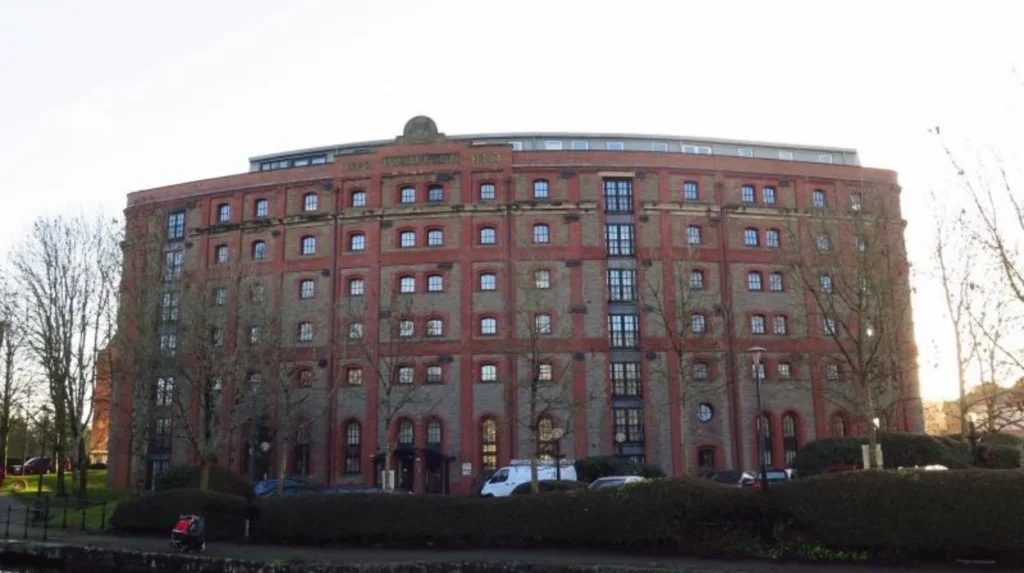
The first Spillers mill at Cardiff Docks was built in 1854 by Joel Spiller. The location reflected changing grain markets following the repeal of the Corn Laws in 1846, which encouraged grain imports and supported the development of coastal flour mills.
The company expanded its Cardiff operation during the 19th century. A bakery producing ships’ biscuits was added during the 1850s.
The Cardiff mill also became technologically significant. In 1881 it was among the first British mills to replace traditional millstones with iron rollers. This reflected wider mechanisation in flour production.
A major fire destroyed the original mill in 1882. Two new mills were subsequently constructed.
A third major mill opened in 1901. At that point, Spillers was described by Museum Wales as the largest flour producer outside London.
The Cardiff mills continued operating through much of the 20th century. Their industrial use eventually ended, and the buildings were converted into apartments in 1993.
This history demonstrates how Cardiff’s docks handled much more than coal. Grain imports, food processing and commercial baking were significant components of the port economy.
How did quarrying and limestone support Cardiff’s heavy industries?
Quarrying supplied essential limestone for Cardiff’s iron and steel production. Creigiau Quarry was connected to the Cardiff Works, with company records documenting limestone costs and consumption during the early 20th century. Quarrying therefore formed part of Cardiff’s wider industrial supply chain.
Heavy industry required large quantities of raw materials beyond coal and iron ore.
Limestone was particularly important in metallurgical processes. The Cardiff steelworks depended on supplies of suitable limestone, creating commercial connections between industrial sites and nearby quarries.
Museum Wales holds records concerning Creigiau Quarry and its relationship with the Cardiff Works. One record includes accounts showing the average costs of limestone from Creigiau Quarry between 1912 and 1920.
Another document from the 1930s records proposed extensions at Cardiff Works and information concerning limestone consumption.
These records demonstrate the complexity of Cardiff’s industrial economy.
The city’s factories depended on regional extraction sites. Quarries, mines, railways, docks and manufacturing plants formed a connected supply chain.
Quarrying therefore belongs within the history of Cardiff’s industrial development even when extraction took place outside the city centre.
How did shipping companies turn Cardiff into an international business centre?
Shipping companies transformed Cardiff from a coal port into an international commercial centre by arranging vessels, cargoes, finance and overseas trade. Around 250 Cardiff-owned tramp steamers operated by 1910, while 122 shipping companies were recorded in Cardiff in 1920.
A tramp steamer was a merchant vessel that operated without a fixed liner schedule, taking cargoes wherever commercial demand required.
Cardiff developed a substantial fleet of such vessels because the coal trade generated international demand.
By 1910, approximately 250 tramp steamers were owned at Cardiff. Their operators arranged cargoes through the city’s commercial institutions.
The Coal Exchange in Mount Stuart Square became an important centre for this activity. Shipowners and coal merchants negotiated cargoes and shipping arrangements there.
The scale of shipping created demand for professional services. Cardiff developed businesses associated with insurance, banking, law, brokerage, engineering and maritime administration.
Shipping therefore multiplied the economic impact of coal exports.
The industry’s decline was particularly visible after the First World War. In 1920, Cardiff still had 122 shipping companies, but the subsequent depression and changes in maritime fuel reduced the city’s traditional coal-shipping economy.
The Coal Exchange remains an important architectural reminder of this commercial period.
What other industrial activities developed around Cardiff’s docks?
Cardiff’s docks supported a broad industrial economy that included flour milling, timber handling, oil, engineering, maritime services and cargo storage. These activities depended on the same infrastructure that supported coal, allowing Cardiff to process, distribute and trade several imported and exported commodities.
Coal dominated Cardiff’s reputation, but it did not account for every industrial activity around the docks.
Flour milling was linked directly to imported grain. Timber was another continuing cargo. Oil became increasingly important as energy markets changed. Containers later became part of modern port activity.
Maritime engineering also developed because ships required maintenance, repairs, equipment and specialist services.
The docks consequently functioned as an industrial ecosystem.
Cargo handling required cranes and mechanical equipment. Warehouses required storage workers and managers. Ships required crews and maritime suppliers. Railways required locomotives, wagons and maintenance. Industrial plants required engineers and skilled workers.
These supporting activities created employment and commercial demand even when they were less visible than coal mining.
Museum Wales records that modern Cardiff’s port continues to handle timber, oil and containers, although on a very different scale from the historic coal trade.
Why did Cardiff’s old industries decline?
Cardiff’s historic industries declined because international energy markets changed, coal demand fell, alternative fuels expanded, industrial production moved or contracted, and older dock infrastructure became less important. Cardiff’s coal exports ended in 1964, while East Moors steel production continued until 1978.
The decline was gradual rather than immediate.
Coal faced competition from oil and other fuels. Oil became increasingly important as a maritime fuel after the First World War. Cardiff’s dependence on coal exports therefore became a structural weakness.
The economic depression of the 1930s accelerated the decline. Cardiff’s coal exports fell below 5 million tonnes by 1932, compared with the 10.7 million-tonne peak recorded in 1913.
The Second World War temporarily increased activity at the docks, but the long-term decline continued.
Coal exports from Cardiff finally ended in 1964.
Steel lasted longer. East Moors Works continued operating until 1978. Its closure removed another major heavy-industrial presence from the city.
Other industries disappeared through consolidation, technological change or redevelopment. Spillers’ Cardiff mills eventually became residential buildings in 1993.
The decline changed Cardiff’s physical and economic identity. Industrial land became available for housing, offices, leisure facilities, cultural buildings and public spaces.
Explore More Area Guide
Cardiff Streets Named After Historic Figures: Their History
Local Bakeries with Generations of History in Cardiff
How can Cardiff’s forgotten industries still be seen today?
Cardiff’s industrial past remains visible through surviving dock structures, historic buildings, railway alignments, industrial records, Cardiff Bay landmarks, Mount Stuart Square and East Moors. Museums and heritage collections preserve photographs, documents and objects that explain the industries behind the modern city.
Cardiff Bay provides the clearest example of industrial transformation.
Modern waterfront development occupies areas that were once dominated by coal hoists, warehouses, railway sidings and ships. West Bute Dock has been filled in, while parts of East Bute Dock survive.
Mount Stuart Square retains strong associations with Cardiff’s coal and shipping economy. The Coal Exchange became a symbol of the commercial infrastructure that supported international coal trading.
Butetown also retains connections with the multicultural dockland community created by international shipping. Museum Wales identifies Cardiff Bay as a significant location for understanding this industrial and social history.
Museum Wales collections provide another important source. Historic photographs document the East Moors steelworks, Cardiff Docks, ships, railway infrastructure and industrial processes.
These collections are important because many industrial structures no longer survive.
The National Museum of Wales and People’s Collection Wales also preserve records that document the transition from a small port to a global coal-exporting centre.
What does Cardiff’s industrial history mean for the city today?
Cardiff’s industrial history explains the physical structure, waterfront identity and economic development of the modern city. Coal, iron, steel, railways, flour milling, shipping and quarrying created infrastructure and communities whose influence remains visible in Cardiff Bay and surrounding neighbourhoods.
The modern city developed on foundations created by industrial transport and trade.
Cardiff’s docks established the waterfront as an economic centre. Railways connected the city with the valleys. Industrial employment accelerated population growth. Shipping created international commercial connections. Manufacturing introduced large-scale engineering and steel production.
The industrial economy also changed the city’s social composition. Cardiff’s docklands attracted people from many countries, creating a diverse maritime community.
The disappearance of heavy industry did not erase these connections. Instead, industrial land became the foundation for regeneration.
Cardiff Bay now contains cultural, residential, governmental and leisure facilities. The Senedd, Wales Millennium Centre, Norwegian Church Arts Centre and other landmarks occupy a waterfront shaped by the earlier industrial economy.
The story of Cardiff’s forgotten industries therefore extends beyond nostalgia. It explains why particular districts developed, why transport routes follow particular patterns and why the waterfront became central to Cardiff’s identity.
Understanding coal alone is not enough. Cardiff was built by a complete industrial network that included extraction, transportation, manufacturing, shipping, food processing, engineering and commerce.
The surviving evidence makes this industrial network traceable. Historic docks, railway routes, industrial buildings, museum collections and commercial landmarks connect present-day Cardiff with the industries that created its modern urban form.
What industries built Cardiff?
Cardiff was built by several industries, including coal mining and exporting, iron and steel production, shipping, railways, flour milling, quarrying, engineering and dock-related trade.