has more than 200 public artworks, developed over approximately 150 years. These works include statues, memorials, sculptures, architectural features, mosaics, murals and integrated artworks. They appear in city-centre streets, residential neighbourhoods, parks, waterfront areas and regeneration districts.
- What is public art in Cardiff?
- How did Cardiff’s public art develop historically?
- Which Cardiff neighbourhoods have important public art?
- City centre and Castle Quarter
- Cathays and Cathays Park
- Butetown and Cardiff Bay
- Splott and Tremorfa
- Roath
- Llandaff
- How does public art reflect Cardiff’s communities and history?
- How did Cardiff Bay regeneration change public art?
- What types of public art can visitors find across Cardiff?
- How is new public art commissioned and managed in Cardiff?
- Why does public art matter to Cardiff neighbourhoods?
- Where can people explore Cardiff’s public art?
Public art in Cardiff is closely connected with the city’s history. Older works record political figures, industrial development, civic institutions and military events. Later commissions reflect regeneration, multicultural communities, environmental themes and changing approaches to placemaking.
The distribution is particularly important. Public art is not concentrated entirely around Cardiff city centre. Examples extend through Butetown, Cathays, Roath, Splott, Tremorfa, Llandaff, Grangetown, Riverside and other communities. Cardiff Council’s public art register provides a formal record of many of these works and their locations.
What is public art in Cardiff?
Public art in Cardiff refers to artwork permanently or temporarily accessible in public spaces, including statues, murals, sculptures, memorials, mosaics and architectural artworks. Cardiff’s collection connects civic history, neighbourhood identity, regeneration, education, culture and environmental design across the capital.
Public art differs from artwork displayed inside a conventional gallery because its setting forms part of the experience. A sculpture can occupy a square, park, street, bridge approach or waterfront. A mural can become part of a school or community building. Architectural sculpture can form part of a historic civic structure.
Cardiff Council identifies public art as an element of city design. Its current city-design information states that Cardiff has more than 200 public artworks developed over the past 150 years. The collection forms part of the physical fabric of public spaces.
The Cardiff Public Art Register gives a more detailed record of individual works. It includes titles, artists, dates and locations. Examples include the Animal Wall at Cardiff Castle, Antarctic 100 – Captain Scott Memorial at Cardiff Bay, and Animal Wall at Century Wharf.
Public art also includes commemorative sculpture. A memorial can record a person, community or historical event. A civic statue can represent political or social history. A contemporary mural can communicate community identity through large-scale imagery.
Cardiff’s public art therefore operates across several functions. It records history, adds visual features to streets, marks important places and contributes to the identity of neighbourhoods.
How did Cardiff’s public art develop historically?
Cardiff’s public art developed alongside the city’s industrial growth, civic expansion and regeneration. Victorian statues and architectural sculpture established an early tradition, while late-20th-century regeneration introduced extensive contemporary artworks around Cardiff Bay and surrounding districts.
The historical development of Cardiff public art follows the growth of the city itself. During the Victorian period, Cardiff expanded rapidly as a major industrial and port centre. Civic buildings, parks and streets gained monuments and decorative sculpture.
The statue of John Batchelor provides an example. Batchelor was a Cardiff politician and mayor who was active in public life during the 19th century. His bronze statue, created by James Milo Griffith, was unveiled in 1886 and stands in The Hayes. Cadw records it as a Grade II listed structure.
Cathays Park contains another major concentration of historic public sculpture. The area developed as a civic district and contains monuments and architectural sculpture associated with Cardiff’s political, educational and cultural institutions. Examples include statues of John Cory, Lord Aberdare, David Lloyd George and Lord Ninian Edward Crichton Stuart.
The National Museum Cardiff and Cardiff City Hall also contain extensive architectural sculpture. These works form part of the historic architecture rather than functioning only as separate objects.
A significant later stage came with Cardiff Bay regeneration. The Cardiff Bay Development Corporation was established in 1987 to regenerate approximately 2,700 acres of declining residential, industrial and dockland areas. Public art became part of this regeneration programme. A public art strategy was commissioned in 1990, followed by implementation through the Cardiff Bay Arts Trust.
This period established a different model. Public art became integrated into infrastructure, redevelopment and the design of new public spaces. The approach helped create visual markers between older industrial landscapes and regenerated waterfront districts.
Which Cardiff neighbourhoods have important public art?
Important public-art locations across Cardiff include the city centre, Cathays Park, Butetown, Cardiff Bay, Grangetown, Splott, Tremorfa, Roath, Llandaff, Riverside and other neighbourhoods, with each area containing works connected to its history, communities or physical environment.
City centre and Castle Quarter
Central Cardiff contains historic monuments alongside contemporary public artworks. The Hayes, Central Square, Castle Street and surrounding civic spaces provide several examples.
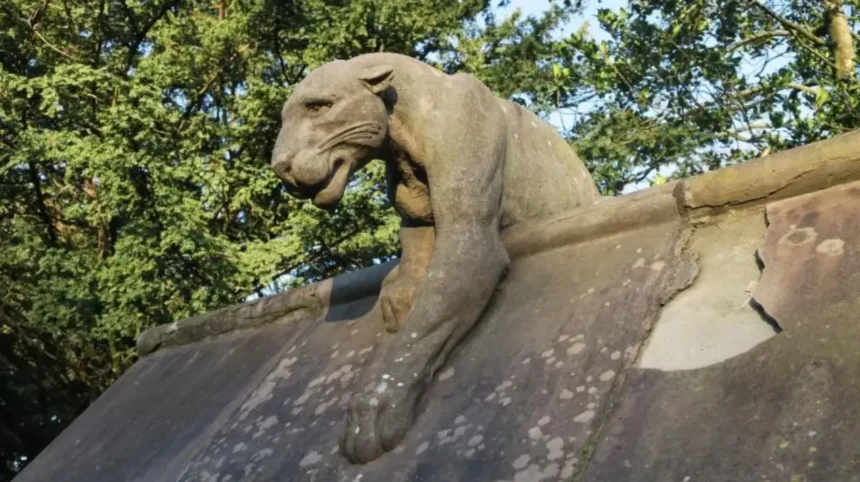
The Animal Wall is one of Cardiff’s best-known public artworks. The original animals were carved by Thomas Nicholls between 1887 and 1889. Additional animals were created by Alexander Carrick between 1928 and 1930 after the wall was moved because of road widening.
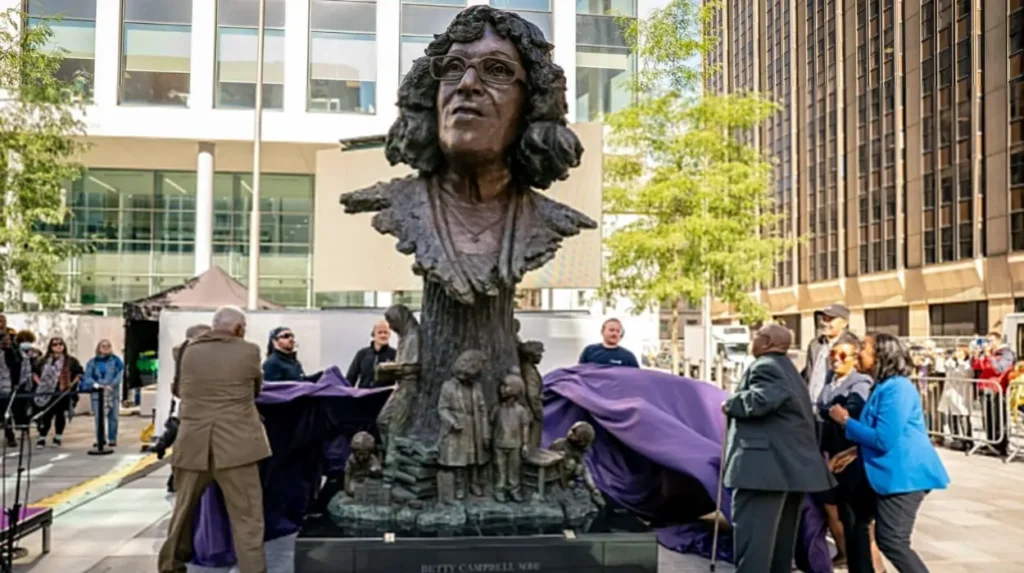
Central Square contains the Betty Campbell Monument. Created by sculptor Eve Shepherd, the four-metre bronze statue was unveiled on 29 September 2021. Betty Campbell was Wales’s first Black headteacher and taught at Mount Stuart Primary School in Butetown.
Cathays and Cathays Park
Cathays and Cathays Park contain historic architectural sculpture, statues and monuments. The concentration reflects the area’s role as an educational and civic district.
Cardiff Council identifies Cathays Park as a conservation area. Its civic buildings and open spaces contain numerous historic artworks and monuments.
Butetown and Cardiff Bay
Butetown has a particularly strong connection with public art because of its maritime, industrial and multicultural history.
The Cardiff Public Art Register records works in the waterfront area, including Antarctic 100 – Captain Scott Memorial. The mosaic sculpture commemorates Captain Robert Falcon Scott’s 1910 expedition, which departed from Cardiff aboard the Terra Nova.
The area also contains contemporary works connected with maritime navigation and the history of Tiger Bay. A recent Cardiff Council document identifies navigation-themed sculptural displays at Nelson House as examples of artwork reflecting Butetown’s maritime heritage.
Splott and Tremorfa
Splott and Tremorfa contain examples of public art associated with Cardiff’s industrial and regeneration landscapes.
Landmark by French artist Pierre Vivant stands at the Tyndall Street and Ocean Way roundabout. The work dates from 1992 and was commissioned through the Cardiff Bay Arts Trust on behalf of the Cardiff Bay Development Corporation. It is widely associated with the junction known locally as the Magic Roundabout.
Tremorfa contains Secret Station by Eilis O’Connell. The sculpture dates from 1992 and was also commissioned through the Cardiff Bay Arts Trust during the regeneration period.
Roath
Roath contains both historic and contemporary cultural features. The neighbourhood includes Roath Park and several conservation areas identified by Cardiff Council.
Roath also has religious and architectural artwork. Christ the Pantocrator of Roath is a 2013 mosaic at St Martin’s Church. It was created by artist Aidan Hart and forms part of the church interior.
Llandaff
Llandaff provides examples of public art connected with religious history and local identity.
The Cathedral Green contains the City Cross, a historic cross dating to the medieval period and restored in 1897. The same area contains a war memorial and the James Rice Buckley statue. High Street contains Map of Llandaff, a sculpture created by Jeremy Waygood in 1981.
These works demonstrate how public art can operate alongside historic buildings, religious sites and established village-style streets.
How does public art reflect Cardiff’s communities and history?
Cardiff public art reflects local history through monuments, murals and sculptures that recognise industrial development, civic leadership, maritime heritage, multicultural communities, education, migration, environmental themes and the contributions of people associated with individual Cardiff neighbourhoods.
Public art provides a visible record of changing Cardiff society.
Historic monuments often focus on civic leaders, politicians, industrial figures and military events. Contemporary artworks increasingly address community identity and representation.
The Betty Campbell Monument is a significant example. Campbell was born in Butetown and became Wales’s first Black headteacher. She taught at Mount Stuart Primary School and became associated with multicultural education and Black history. Her Central Square monument connects national Welsh history with a specific Cardiff neighbourhood.
The story continues at Mount Stuart Primary School itself. In 2023, a 10-metre mural of Betty Campbell was unveiled on the school building. The mural was funded by Cardiff University and created by artist Bradley Rmer. The project developed after pupils learned about Campbell’s legacy and wanted a permanent artwork at the school.
This creates an important connection between public art, education and community memory. The same person is represented through a city-centre monument and a neighbourhood mural.
Cardiff University has also commissioned contemporary murals addressing representation. In October 2023, the university unveiled Flora: A Tribute to Sisterhood and Black Women on its Sports Centre building on Senghenydd Road. The 14-metre-high mural was designed by Unify.
Such works demonstrate the expanding range of subjects represented through Cardiff public art. The collection is not limited to traditional statues of political or civic figures.
How did Cardiff Bay regeneration change public art?
Cardiff Bay regeneration changed public art by making artworks part of major redevelopment schemes, transport routes, waterfront spaces and new neighbourhoods. The approach produced contemporary sculptures and installations designed to identify places, interpret history and improve the character of regenerated environments.
Cardiff Bay provides one of the clearest examples of public art being incorporated into urban regeneration.
The Cardiff Bay Development Corporation was established in 1987. Its regeneration area covered approximately 2,700 acres of former industrial, dockland and residential land. Public art became an organised component of the redevelopment programme.
The Cardiff Bay Arts Trust implemented many commissions following the public art strategy developed during the early 1990s. The resulting artworks included sculptures placed beside roads, waterfront areas and newly developed public spaces.
Landmark by Pierre Vivant demonstrates this approach. The work uses standard road signs as a major visual component and was positioned at a significant road junction. Its location made the artwork part of everyday movement through the regenerated area rather than an object visited only by art audiences.
Antarctic 100 – Captain Scott Memorial provides a different approach. The mosaic sculpture at Waterfront Park connects the physical location with the history of Captain Scott’s 1910 departure from Cardiff.
The Cardiff Bay programme also established a precedent for incorporating art into infrastructure and development. This approach remains relevant because Cardiff continues to develop new residential, commercial and public spaces.
Cardiff Council’s current city-design policy continues to connect good public-space design with the quality of the city’s environment. The council’s Liveable Design Guide identifies identity, public and green spaces, transport and sustainability among important liveability indicators.
What types of public art can visitors find across Cardiff?
Visitors can find statues, memorials, murals, mosaics, architectural sculpture, environmental installations, civic monuments and artworks integrated into buildings across Cardiff. Examples range from the Victorian Animal Wall to contemporary community murals and regeneration-era waterfront sculptures.
Statues and monuments
Statues form a major part of Cardiff’s historic public-art collection. Examples include John Batchelor in The Hayes and Betty Campbell in Central Square.
The John Batchelor statue dates from 1886 and commemorates a prominent figure in Cardiff’s civic and political history. Cadw lists the structure at Grade II.
The Betty Campbell statue represents a more contemporary approach to commemoration. Its subject is a named Welsh woman whose career focused on education, equality and community representation.
Murals
Murals provide large-scale artwork directly connected with buildings and neighbourhood streets.
The Betty Campbell mural at Mount Stuart Primary School is a major example. The artwork is approximately 10 metres high and was created following engagement with pupils at the school.
The Flora mural at Cardiff University demonstrates another contemporary approach. Its 14-metre height gives it a strong presence within the university district while its subject focuses on Black women and community identity.
Architectural sculpture
Architectural sculpture forms part of historic civic buildings. Cathays Park contains numerous examples associated with Cardiff City Hall, Cardiff Crown Court and surrounding institutions.
These works are important because they cannot always be separated from the buildings themselves. Their subjects and symbolism contribute to the original architectural design.
Environmental and wildlife-related artworks
Public art can also combine artistic and environmental functions.
The Cardiff Public Art Register records Animal Wall at Century Wharf, designed by Gitta Gschwendtner in 2009. The installation consists of 1,000 bird and bat boxes along the River Taff and creates wildlife habitat.
This illustrates how public art can intersect with biodiversity and environmental design.
How is new public art commissioned and managed in Cardiff?
New public art in Cardiff is influenced by planning, city design, regeneration, community engagement and the Council’s public-art procedures. Cardiff Council maintains a public art register and uses a Statue and Monument Protocol to assess proposals for new public artworks.
Public art commissioning involves more than selecting an artwork and placing it in a street.
Cardiff Council states that its Statue and Monument Protocol sets out the procedure for assessing proposals to install public artworks in Cardiff.
Planning also influences artworks connected with new development. Cardiff Council’s design guidance requires attention to the quality of buildings and public spaces. Design and Access Statements form part of many planning and listed-building applications.
Community involvement is another important mechanism. Cardiff Council’s Participation Strategy 2023–2027 sets out an approach to public participation and community engagement. It states that participation helps residents communicate their needs and aspirations and supports stronger relationships between communities and public bodies.
The Mount Stuart Primary School Betty Campbell mural provides a direct example of community involvement. Pupils learned about Campbell’s life and requested an artwork at the school. The project then received support from the school governing body and Cardiff University funding.
Public art can therefore originate through different routes. A council-led project, a regeneration scheme, an educational institution, a community initiative or a private development can produce an artwork.
Maintenance is also important. Public artworks exposed to weather, traffic and vandalism require ongoing care. Cardiff Council’s responsibilities include removing graffiti from public buildings, monuments and street furniture. The council states that non-offensive graffiti is targeted for removal within 10 working days, while racist or offensive graffiti is targeted for removal within 24 hours.
Explore More Area Guide
Cardiff Community Hubs: Services for Local Residents
Why does public art matter to Cardiff neighbourhoods?
Public art contributes to Cardiff neighbourhoods by strengthening local identity, recording history, improving public spaces, supporting cultural representation and creating recognisable landmarks. Its value extends beyond decoration because artworks connect buildings, streets, communities, heritage and regeneration.
Public art contributes to the identity of individual places.
A statue in a civic square can commemorate a person. A mural on a school can communicate local history. A sculpture beside a regenerated road can identify a new district. A historic memorial can preserve community memory.
Cardiff Council describes its public-art collection as part of the fabric of the city’s public spaces. This makes public art relevant to urban design as well as cultural activity.
The geographical distribution also matters. Artworks in Butetown can relate to maritime history and multicultural Cardiff. Works in Cathays Park reflect civic and institutional development. Llandaff contains art connected with religious and historic identity. Splott and Tremorfa contain examples linked to industrial landscapes and regeneration.
Public art also creates connections between residents and visitors. The Animal Wall, for example, is freely visible from Castle Street and has become one of Cardiff’s recognised historic features. Cardiff Castle describes the wall as a well-loved feature and records its development from the late 19th and early 20th centuries.
Contemporary commissions add new layers to this historic collection. The Betty Campbell statue and Mount Stuart mural demonstrate how recent public art can recognise people and communities previously underrepresented in traditional monuments.
Where can people explore Cardiff’s public art?
People can explore Cardiff public art through city-centre streets, civic parks, historic districts, Cardiff Bay, neighbourhood high streets, university areas and riverside routes. Cardiff’s Public Art Register provides locations and information for many documented artworks across the city.
A public-art exploration can begin in the city centre. The Hayes contains the John Batchelor statue, while Central Square contains the Betty Campbell Monument. Castle Street provides access to the Animal Wall.
Cathays Park provides another concentrated area. Visitors can combine public art with Cardiff City Hall, National Museum Cardiff, civic gardens and surrounding university buildings. The historic character of the area is protected through conservation controls.
Butetown and Cardiff Bay provide a different experience. Public art here is closely associated with waterfront regeneration, maritime history and former dockland landscapes. The Captain Scott memorial and other waterfront works form part of this wider cultural environment.
Roath and Llandaff provide examples within established residential and historic neighbourhoods. Roath includes contemporary religious artwork, while Llandaff contains historic monuments and the Map of Llandaff sculpture.
Splott and Tremorfa demonstrate the importance of looking beyond traditional visitor districts. Landmark and Secret Station illustrate how regeneration-era public art was positioned within everyday transport and industrial environments.
For current locations, the Cardiff Public Art Register is the most useful starting point because artworks can change through conservation, redevelopment, relocation or replacement. Cardiff Council also maintains information about planning, city design and public-space development.
Cardiff’s public art is therefore best understood as a citywide network rather than a single collection inside one cultural venue. Historic statues, civic monuments, neighbourhood murals, waterfront sculptures and environmental installations collectively document how Cardiff has developed.
The collection continues to evolve as new communities, buildings and regeneration projects create new opportunities for public art. Cardiff Council’s current design policies continue to emphasise identity, public space, placemaking and liveable neighbourhoods, keeping public art relevant to the city’s future as well as its past.
How much public art is there in Cardiff?
Cardiff has more than 200 public artworks, according to Cardiff Council. The collection includes statues, sculptures, murals, memorials, mosaics, architectural artworks and environmental installations.