Cardiff’s community-centre history reflects the city’s industrial growth, docklands communities, post-war neighbourhood development and voluntary-sector expansion. Community buildings have provided spaces for youth activities, education, welfare, cultural programmes, meetings, recreation and local heritage.
- What makes a Cardiff community centre historically important?
- Which Cardiff community centre has some of the earliest documented community activity?
- How did Butetown Community Centre support Cardiff’s voluntary sector?
- Why is Cathays Community Centre important in Cardiff’s community history?
- What happened at Cathays Community Centre during the late twentieth century?
- When was Grangetown’s community-centre tradition established?
- What does Grangetown’s history reveal about older community centres?
- How does Cardiff’s community-centre history connect with post-war neighbourhood change?
- Which Cardiff community centres have strong heritage connections?
- How have Cardiff’s community centres changed their services?
- Why are Cardiff’s oldest community centres important today?
- How can Cardiff residents research the history of an old community centre?
- What is the lasting legacy of Cardiff’s oldest community centres?
The phrase “Cardiff’s oldest community centres” needs careful definition. Some buildings used by community organisations are older than the organisations themselves. Other centres developed from voluntary projects that operated in existing halls before gaining dedicated premises. Surviving archives also document community activity without always identifying the precise opening date of a building.
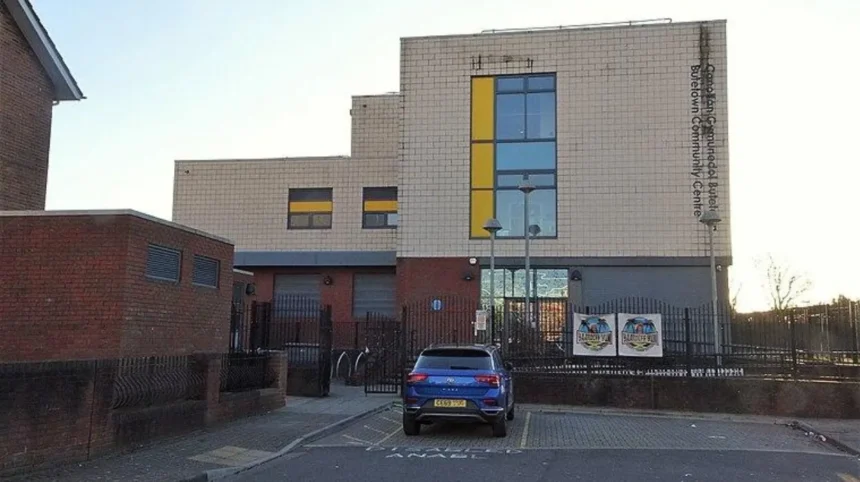
One of the clearest early examples is Butetown Community Centre, where voluntary activities were taking place by the 1960s. A 1969 photograph preserved by People’s Collection Wales records a children’s play scheme at the centre. The wider voluntary tradition in Butetown is also linked to Voluntary Community Service, established in Cardiff in 1964.
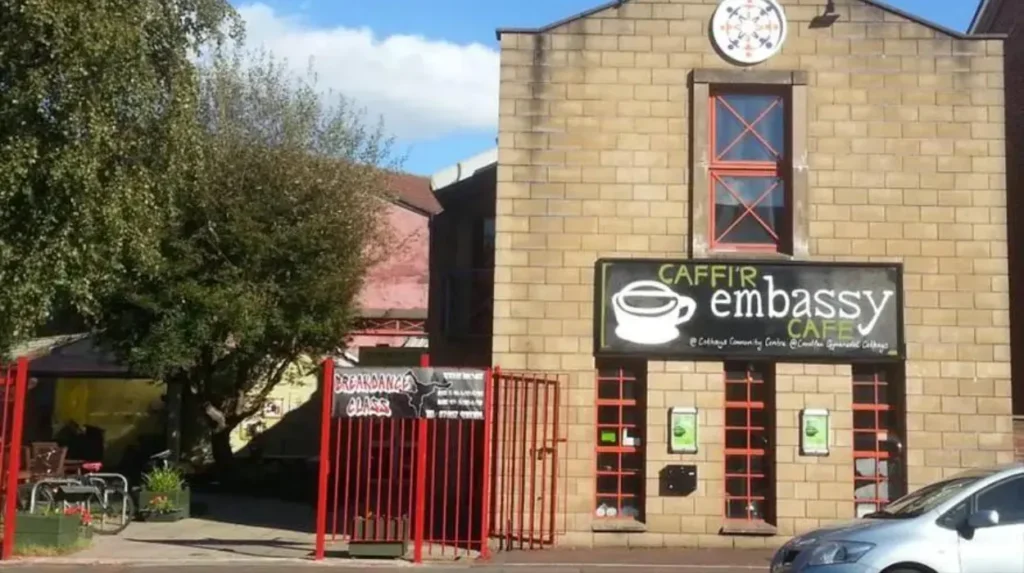
Cathays Community Centre provides another important historical example. Its current building incorporates a structure dating from 1927. The site originally operated as the Embassy roller-skating rink and later became a community facility when Cathays and Central Youth and Community Project was established around 1978.
Cardiff’s older community facilities therefore represent more than individual buildings. They show how local voluntary organisations, residents, councils and charities created practical spaces for neighbourhood life.
What makes a Cardiff community centre historically important?
A historically important Cardiff community centre combines an established local organisation, sustained community use, documented social activity and a significant relationship with its neighbourhood. Building age alone does not establish community-centre heritage because older premises often acquired community functions later.
Community centres perform a civic role between formal public institutions and everyday neighbourhood life. They provide places where residents organise activities, access support, attend meetings and maintain social connections.
Historical importance can involve several factors. These include the age of the building, the date an organisation began operating, the length of continuous community use and the importance of programmes delivered from the site.
The documentary record is particularly important in Cardiff. People’s Collection Wales preserves photographs, minutes, constitutions, letters and oral histories relating to community organisations. These records demonstrate how local facilities operated rather than simply identifying buildings on a map.
Community activity also changed over time. Earlier programmes often focused on youth work, social welfare, volunteering, recreation and support for older residents. Modern community centres provide a wider combination of services, including learning, food support, cultural activity, children’s provision, workspace and community events.
This changing role explains why the history of a centre cannot be measured only by its construction date.
Which Cardiff community centre has some of the earliest documented community activity?
Butetown Community Centre has some of Cardiff’s earliest clearly documented community-centre activity in the surviving online historical record, including a 1969 children’s play scheme. The centre also became an important base for Cardiff’s voluntary-sector development during the 1960s.
Butetown occupies a distinctive position in Cardiff’s social history. The area developed alongside Cardiff Docks and became internationally connected through maritime trade, migration and employment.
The community centre provided a practical venue for local activity. A photograph dated 1969 records children and volunteers participating in a play scheme organised by Voluntary Community Service. The image is held by People’s Collection Wales and provides direct evidence of community-centre use during that period.
Voluntary Community Service itself dates from 1964. Its origins followed a summer activity programme for children in Cardiff’s Tiger Bay area, with the organisation formally established later in 1964. Its early objectives included charitable activity, education and relief of poverty, distress and sickness in Cardiff.
This history connects Butetown’s community-centre tradition with the development of organised volunteering in Cardiff.
The centre was also significant because community organisations used it as a meeting place for projects that later developed independently. The history of Butetown History and Arts Centre illustrates this process.
How did Butetown Community Centre support Cardiff’s voluntary sector?
Butetown Community Centre provided a practical base for volunteering, children’s activities and community projects during a period when Cardiff’s docklands neighbourhoods experienced major social and economic change. Its documented use connects local community work with Cardiff’s wider voluntary-sector development.
Voluntary Community Service began in 1964 after a successful children’s summer programme in Tiger Bay. The organisation’s early work included volunteers helping older residents with gardening and decorating, alongside summer work camps for children and young people.
These activities demonstrate the practical function of community infrastructure. A community centre was not simply a meeting room. It provided a base from which volunteers could organise services and maintain contact with local residents.
Butetown’s importance also continued into later decades through cultural and heritage work.
The Butetown History and Arts Centre developed from oral-history activity that began in the 1980s. The National Library of Wales records that its early meetings and events took place at Butetown Community Centre before the project moved to premises in central Butetown in 1996.
By 2005, the history centre had collected approximately 450 hours of oral history and around 3,000 photographs. These collections documented the multicultural history of Butetown and preserved memories of Cardiff’s docklands community.
The example shows how community centres can act as starting points for wider heritage projects.
Why is Cathays Community Centre important in Cardiff’s community history?
Cathays Community Centre is historically significant because its present site contains a 1927 building that later became a community facility. Cathays and Central Youth and Community Project took responsibility for community-centre activity around 1978, creating a long-running neighbourhood institution.
Cathays Community Centre stands at 36–38 Cathays Terrace. The older rear section of the building was constructed in 1927. It originally served as the Embassy roller-skating rink, which became a notable local entertainment venue.
The rink closed in the 1970s. Around 1978, the building was divided between an independent bingo club and Cathays Community Centre, managed by Cathays and Central Youth and Community Project.
This distinction matters when discussing the centre’s age. The building dates from 1927, but the community-centre use dates from around 1978. Calling the entire building a community centre from 1927 would therefore create a misleading historical claim.
The site continued to evolve. Cardiff Council constructed a new front building in 1991, providing an advice centre, café and meeting rooms. In 2009, the front and rear sections were joined to create a new reception area.
The centre remains active and currently contains meeting rooms, halls, music rehearsal facilities, a recording studio, café and bakery, alongside youth and community projects.
What happened at Cathays Community Centre during the late twentieth century?
Cathays Community Centre developed into a significant youth and social venue during the late twentieth century, supporting meetings, youth activities, music and social events. Its history also includes Cardiff’s early hip-hop culture and weekly youth discos during the early 1980s.
The centre’s social role expanded beyond formal community meetings. Local historical accounts describe its use for youth events and music during the late 1970s and early 1980s.
The Guardian documented the centre’s connection with Cardiff’s hip-hop history, describing weekly events and the importance of the venue to young people during the early 1980s.
Local history research also records the earlier development of the site as the Embassy Billiards Club, followed by its use as a roller-skating rink and social club. This history demonstrates how one building adapted to changing neighbourhood needs.
The physical structure therefore contains several layers of Cardiff social history. Entertainment, youth culture, community organisation and voluntary activity all occupied the same site at different stages.
This pattern is common in older urban neighbourhoods. Buildings acquire new functions as demographics, social needs and local organisations change.
When was Grangetown’s community-centre tradition established?
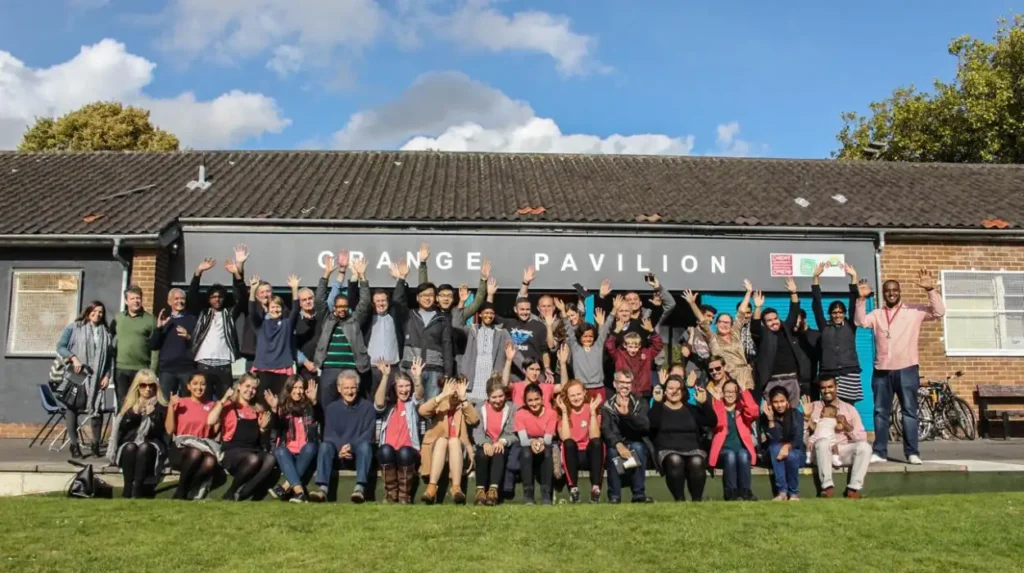
Grangetown’s documented organised community tradition dates to 1977, when Grangetown Community Concern was established as a voluntary organisation. It subsequently operated a day centre on Clydach Street from 1985 to 2005 and supported local groups using its rooms.
Grangetown Community Concern provides one of the best-documented examples of Cardiff community organisation from the late twentieth century.
The organisation was established in 1977 as an umbrella organisation for voluntary groups. Its objectives included encouraging services for different age groups, with particular attention to older people.
Its work included community newspapers, public events, toy drives, lunches, trips and a meals-on-legs programme. The organisation also supported the Grangetown Festival and activities involving local schools.
The organisation’s records provide unusually detailed evidence of grassroots activity. Minutes from January 1986 record discussions about volunteer training, carers’ groups, women’s groups, lunch clubs, carnival activities and community projects.
The group operated a day centre at Clydach Street between 1985 and 2005. Rooms were made available to local groups, strengthening the site’s role as shared community infrastructure.
Grangetown Community Concern later became Grangetown Community Action. People’s Collection Wales records the organisation as continuing its community role after the name change.
What does Grangetown’s history reveal about older community centres?
Grangetown’s history shows that community infrastructure often developed through voluntary organisations rather than a single purpose-built building. Local groups combined social support, events, information, volunteering and meeting space to create a sustained community network.
The Grangetown example demonstrates the difference between a community organisation and a community-centre building.
Grangetown Community Concern began in 1977. Its later day centre at Clydach Street provided physical space for activities, but the organisation itself existed before that facility.
This distinction is essential when researching Cardiff’s oldest community centres. A search based only on building construction dates misses organisations that developed community facilities gradually.
The surviving records also show how community centres operated as multi-purpose spaces. Activities included social lunches, volunteer meetings, training, children’s initiatives, festivals and support for older residents.
The organisation’s 1985 constitution provides further evidence of its formal structure and mission. The archive material is held in Glamorgan Archives and made available through People’s Collection Wales.
A 2003 record also documents recognition through the Queen’s Golden Jubilee Award process. Grangetown Community Concern was notified that its nomination had successfully progressed through the local assessment stage and was recommended for the award.
These records make Grangetown particularly useful for understanding the development of community-led infrastructure in Cardiff.
How does Cardiff’s community-centre history connect with post-war neighbourhood change?
Cardiff’s post-war community-centre development followed major changes in housing, population, employment and neighbourhood services. Community facilities gave residents places for youth work, welfare activity, education, recreation and local organisation as established districts and newer residential areas changed.
The expansion of community facilities needs to be understood alongside Cardiff’s urban development.
Industrial Cardiff had concentrated communities around docks, railway infrastructure, factories and housing. Butetown and Grangetown were closely associated with dockland employment and maritime activity.
Later decades brought economic restructuring and changes to traditional employment. Community organisations increasingly addressed social needs through voluntary work, education, youth programmes and local support.
The growth of organisations such as Grangetown Community Concern illustrates this shift. Its work combined practical assistance with activities designed to maintain neighbourhood connections.
Cathays demonstrates another pattern. A former entertainment building was adapted for community use as local needs changed. The site subsequently developed into a larger centre incorporating advice services, meeting rooms and community facilities.
Community-centre history therefore forms part of Cardiff’s wider social history. The buildings provide evidence of how residents organised themselves during periods of economic and demographic change.
Which Cardiff community centres have strong heritage connections?
Several Cardiff community facilities have strong heritage connections through older buildings, long-running organisations or documented community activity. Important examples include Butetown Community Centre, Cathays Community Centre, Grangetown’s community facilities and heritage projects developed from local community spaces.
Butetown is significant because of its relationship with Cardiff Docks, Tiger Bay and the development of multicultural community life. The community centre supported youth and voluntary activities from at least the 1960s, while later heritage projects used the centre as an early base.
Cathays is significant because the current centre occupies a building whose older section dates from 1927. Its transformation from entertainment venue into a community centre demonstrates adaptive reuse in an established urban neighbourhood.
Grangetown is significant because its voluntary infrastructure has been documented through archival records dating from the 1970s and 1980s. The surviving material provides detailed evidence of community-led services and events.
The Butetown History and Arts Centre also forms part of this heritage network. Although it was not itself one of Cardiff’s oldest community centres, its early activity at Butetown Community Centre demonstrates how established community buildings supported cultural heritage projects.
These examples show why Cardiff’s community-centre heritage should be studied through both buildings and organisations.
How have Cardiff’s community centres changed their services?
Cardiff community centres have expanded from traditional meeting, youth and welfare functions into broader facilities supporting learning, culture, food access, social activities, volunteering, children’s services and wellbeing. The underlying purpose remains accessible neighbourhood-based community activity.
Modern community centres often operate as flexible multi-purpose facilities.
Cardiff Council’s current services recognise the role of local organisations in supporting health, wellbeing and social connection. Activities promoted through community organisations include arts and crafts, sports, choirs, exercise classes, friendship groups, gardening, book clubs and special-interest groups.
Food support has also become part of community infrastructure. Cardiff Council currently identifies local food pantries, community fridges and community food projects operating from neighbourhood venues. Cathays Community Centre, for example, is listed as a location for a community fridge.
Education remains another important function. Cardiff Council provides information on adult learning, youth services and community-based educational provision.
The modern community centre is therefore a flexible neighbourhood asset rather than a facility defined by one service.
This flexibility helps explain the longevity of centres such as Cathays. The building has accommodated different uses across nearly a century, while its community role has continued since the late 1970s.
Why are Cardiff’s oldest community centres important today?
Cardiff’s oldest community-centre traditions remain important because they preserve local networks, support voluntary activity and provide accessible spaces for social, cultural and educational programmes. Their historical records also preserve evidence of neighbourhood life that is absent from conventional architectural histories.
The value of older community centres extends beyond their physical structures.
They preserve organisational memory. Minutes, photographs, newsletters and oral histories document how residents responded to local needs.
The Grangetown archive demonstrates this particularly clearly. Surviving documents record volunteer training, community festivals, social lunches, children’s activities and links between different local organisations.
Butetown’s heritage record similarly demonstrates the importance of community spaces in preserving multicultural histories. The Butetown History and Arts Centre developed from local oral-history activity and eventually assembled hundreds of hours of recordings and thousands of photographs.
Community centres also provide continuity during periods of change. Buildings can be renovated, organisations can change their names and programmes can evolve, while the basic requirement for accessible local gathering space remains.
Cardiff Council continues to recognise neighbourhood-based organisations as part of wider health, wellbeing and community support networks. Its wellbeing framework emphasises partnership between public services and the third sector.
Explore More Area Guide
Largest Housing Estates in Cardiff: Ely, Caerau & Plasdŵr
Cardiff’s Historic Public Squares: Heritage, History and Landmarks
How can Cardiff residents research the history of an old community centre?
Residents can research Cardiff community-centre history through Cardiff Council records, Glamorgan Archives, National Library of Wales collections, People’s Collection Wales, local history societies and the centres themselves. Building records and organisational archives should be compared to establish accurate dates and historical uses.
The first step is to separate the building’s history from the organisation’s history.
Building records can establish construction dates and earlier uses. Organisational records can establish when a community group began operating. Photographs, newspapers and meeting minutes can then establish how the premises were used.
People’s Collection Wales provides a particularly useful starting point because it contains digitised material relating to Cardiff community organisations. Its Grangetown collection includes constitutions, minutes, correspondence, photographs and activity records.
The National Library of Wales also holds archival material relating to Cardiff’s community heritage. Its Butetown History and Arts Centre collection documents the organisation’s activities and its early use of Butetown Community Centre.
Local historical societies provide another source. Roath Local History Society, for example, has documented the changing uses of buildings around Cathays Terrace and the development of the Embassy site.
Cardiff Council’s current neighbourhood services also provide a useful starting point for identifying active community facilities and local services.
Comparing these sources reduces the risk of confusing a building’s construction date with the date it became a community centre.
What is the lasting legacy of Cardiff’s oldest community centres?
The lasting legacy of Cardiff’s oldest community centres is a documented tradition of local participation. Butetown, Cathays and Grangetown demonstrate how buildings and voluntary organisations supported youth work, social welfare, culture, heritage, education and neighbourhood activity across successive generations.
Cardiff’s oldest community-centre history is therefore not defined by one building or one opening date.
Butetown provides evidence of community-centre activity by the 1960s, including a documented 1969 children’s play scheme. Voluntary Community Service, established in 1964, connected volunteering with community activity in the docklands.
Cathays provides evidence of a 1927 building that became a community facility around 1978. Its history demonstrates how an existing building can acquire a new civic role while retaining traces of earlier social uses.
Grangetown demonstrates the strength of voluntary organisation from the late 1970s. Its community network provided social support, activities, events and shared spaces, with detailed records preserved in local archives.
Together, these examples establish a clear pattern. Cardiff’s community centres developed alongside the city’s changing neighbourhoods. Their importance rests on sustained local participation, not simply architectural age.
For researchers, residents and visitors interested in Cardiff’s social history, these centres provide a direct route into the everyday history of the city. Their records preserve the activities, organisations and people that shaped neighbourhood life beyond Cardiff’s better-known civic buildings.
What is the oldest community centre in Cardiff?
There is no single officially confirmed “oldest community centre” in Cardiff because building age and community-centre use have different dates. Butetown Community Centre has documented community activity from the 1960s, while Cathays Community Centre occupies a building dating from 1927.