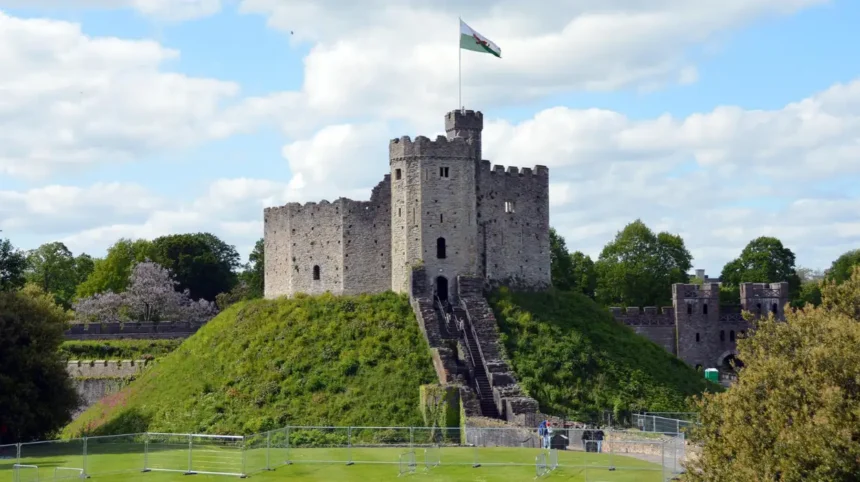
Cardiff is a compact capital with a layered heritage landscape that spans Roman occupation, medieval religious sites, Norman fortification, Victorian industrial growth, Edwardian civic architecture and modern urban development. This history is visible across streets, parks, arcades, riverside paths, churches, civic buildings and historic neighbourhoods.
- What makes Cardiff suitable for a weekend heritage walk?
- How can you explore Cardiff Castle and the city centre on foot?
- Why should Bute Park be included in a Cardiff heritage walk?
- What can you see on a Cardiff arcades and historic streets walk?
- How can you explore Llandaff’s medieval heritage on foot?
- What historic buildings can you see around Cardiff’s Civic Centre?
- Can the River Taff form part of a Cardiff heritage walking route?
- What makes St Fagans important for a Cardiff heritage weekend?
- How should you plan a two-day Cardiff heritage walking weekend?
- What should you look for during a Cardiff heritage walk?
- How can visitors make Cardiff heritage walks more useful and accessible?
- Why will Cardiff’s heritage walking routes remain relevant?
A weekend heritage walk around Cardiff provides a practical way to connect these different periods without relying entirely on museums or organised tours. Cardiff Castle sits at the centre of the historic city. Bute Park extends north from the castle along the River Taff. The Civic Centre contains major Edwardian buildings and formal gardens. Cardiff’s Victorian and Edwardian arcades preserve another important part of the city’s commercial history.
Beyond the city centre, Llandaff provides medieval religious heritage and historic streets. St Fagans offers a wider view of Welsh social and architectural history through relocated historic buildings. Cardiff’s conservation framework also recognises the importance of its wider built environment. Cardiff Council records 27 conservation areas, around 1,000 listed buildings, around 300 locally listed buildings and 31 scheduled monuments within the city.
These resources make Cardiff suitable for several different walking approaches. A visitor can complete a short city-centre heritage route, combine architecture with green space, follow the River Taff, explore Llandaff, or dedicate a full day to the heritage landscape at St Fagans.
What makes Cardiff suitable for a weekend heritage walk?
Cardiff suits heritage walking because major historic sites, protected buildings, arcades, parks, religious landmarks and riverside routes sit within a connected urban area, allowing visitors to explore several centuries of Welsh history on foot during a single weekend without extensive travel.
Cardiff’s historic character comes from the interaction between different periods rather than one single architectural style. Roman, medieval, Georgian, Victorian and Edwardian features remain visible in different parts of the city.
Cardiff Castle provides the clearest starting point. The site incorporates evidence of a Roman fort, a Norman stronghold and a Victorian Gothic palace developed for the Bute family. The nineteenth-century interiors were designed by architect William Burges for the 3rd Marquess of Bute.
The surrounding city centre provides another layer. Cardiff became an important commercial centre during the industrial expansion of South Wales, while its arcades developed as distinctive covered shopping streets. Royal Arcade dates from 1858 and is recognised as Cardiff’s oldest surviving shopping arcade. Morgan Arcade was built in 1896.
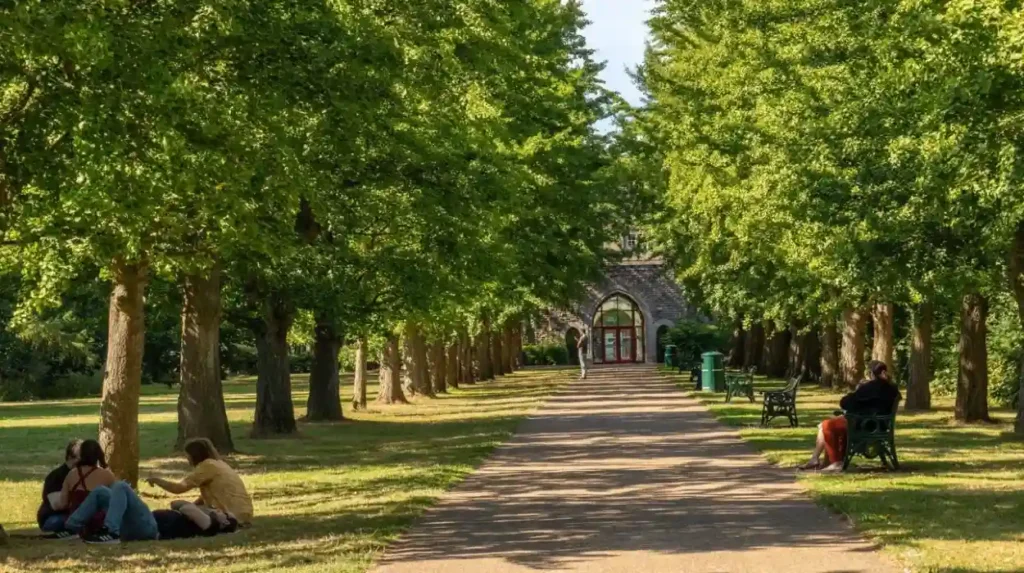
North of the castle, Bute Park connects the historic centre with the River Taff and wider parkland. The 56-hectare park contains historic landscape features, mature trees, an arboretum and a river corridor. It is also listed as a Grade I historic landscape on Cadw’s register.
This concentration of heritage makes walking particularly effective. The route between major sites becomes part of the experience because streets, buildings and public spaces provide historical context between individual attractions.
How can you explore Cardiff Castle and the city centre on foot?
Start at Cardiff Castle, continue through the city centre and historic arcades, then walk towards the Civic Centre and Bute Park. This route combines Roman, Norman, Victorian, Edwardian and commercial heritage across a compact central walking area.
Cardiff Castle is the logical starting point for a central heritage walk. The castle occupies a strategically important location beside the River Taff and the historic city centre.
The site contains approximately 2,000 years of history. Visitors can identify the Roman Wall, medieval Keep and Victorian Gothic apartments within the same complex. The castle’s nineteenth-century transformation under the Bute family created some of its most distinctive architectural features.
From Castle Street, continue into the central shopping district. The historic arcades provide a direct connection between Cardiff’s commercial development and its surviving architecture.
Royal Arcade was constructed in 1858. It forms part of a network of historic covered passages that includes Morgan Arcade, Castle Arcade, High Street Arcade and Wyndham Arcade. These spaces continue to function as commercial streets rather than preserved monuments.
Morgan Arcade dates from 1896 and remains one of the best-preserved examples of Cardiff’s historic arcade architecture. Its relationship with the Morgan Quarter also demonstrates how historic commercial buildings continue to function within the modern city centre.
Continue towards the Civic Centre after exploring the arcades. The area contains major Edwardian civic architecture, formal gardens and cultural institutions. Visit Cardiff identifies the National Museum Cardiff, Temple of Peace and Alexandra Gardens among the notable features of this historic district.
The route can then continue towards Bute Park. This creates a transition from dense commercial streets to historic landscape and riverside space.

Why should Bute Park be included in a Cardiff heritage walk?
Bute Park adds historic landscape heritage to a Cardiff walking itinerary through 56 hectares of parkland, mature trees, river corridors and designed gardens. Its Grade I historic landscape status connects the city centre with important nineteenth-century landscape design.
Bute Park occupies a major area immediately north of Cardiff Castle. Its position makes it easy to incorporate into a city-centre heritage route.
The park was developed partly as a private pleasure garden for the Bute family. Andrew Pettigrew laid out parts of the landscape between 1873 and 1903. In 1947, the 5th Marquess of Bute presented the park to the people of Cardiff.
The park therefore represents more than recreational open space. Its layout reflects nineteenth-century ideas about designed landscapes, horticulture and public access.
Bute Park contains more than 2,000 trees, including trees identified as Champion Trees. Its landscape also incorporates woodland, sports areas, an arboretum, horticultural features and the River Taff corridor.
A weekend walker can use the park as a slower section between the castle and northern Cardiff. The park also provides a useful connection towards Blackweir and the wider Taff corridor.
The heritage value is formally recognised. Bute Park is included on Cadw’s Register of Landscapes, Parks and Gardens of Special Historic Interest in Wales as a Grade I historic landscape. Cardiff Council states that 18 Cardiff parks and gardens appear on the Cadw register, including 12 public parks.
This combination of designed landscape, trees, river scenery and historic connections makes Bute Park an important part of a heritage-focused weekend route.
What can you see on a Cardiff arcades and historic streets walk?
A Cardiff arcades walk reveals Victorian and Edwardian commercial architecture through covered shopping streets, historic façades, specialist businesses and connected passages. Royal Arcade, Morgan Arcade, Castle Arcade and High Street Arcade form key parts of this central heritage experience.
Cardiff’s arcades form one of the city’s most recognisable architectural features. They developed as covered commercial passages during the nineteenth and early twentieth centuries.
Royal Arcade is particularly significant because it dates from 1858 and is Cardiff’s oldest arcade. It links St Mary Street and the wider Morgan Quarter area through a narrow historic passage.
Morgan Arcade followed in 1896. Its architecture retains a strong historic character while continuing to accommodate shops, cafés and other businesses.
Wyndham Arcade provides another example of Victorian commercial architecture. Its red-brick entrance and covered passage connect St Mary Street with Mill Lane. Dominions Arcade, constructed in 1921, represents a later stage in the development of Cardiff’s arcade network.
The arcades are particularly useful for weekend heritage walking because they operate as active parts of the city rather than isolated heritage attractions.
Look upward as you walk. Fascia details, decorative glazing, brickwork, roof structures, shopfronts and entrance arches reveal architectural details that are easy to overlook during ordinary shopping trips.
The route also demonstrates continuity. Historic commercial buildings continue to support independent retailers, cafés and specialist businesses, showing how heritage structures remain integrated into contemporary Cardiff.
How can you explore Llandaff’s medieval heritage on foot?
Llandaff provides a distinct heritage walking environment with medieval religious architecture, historic streets, Bishop’s Palace ruins, Llandaff Cathedral, Insole Court and protected parkland, creating a quieter route that extends Cardiff’s heritage beyond the modern city centre.
Llandaff is one of Cardiff’s oldest historic settlements. It developed around an important religious centre associated with the River Taff.
Llandaff Cathedral is the central landmark. The cathedral’s history extends back to the medieval period, with construction associated with Bishop Urban from around 1107. Later medieval expansion included a major west front built around 1220.
The building also demonstrates the effect of later historical events. Parts of the cathedral underwent nineteenth-century restoration, while the building suffered major damage during the Second World War. Architect George Pace subsequently led an important post-war restoration programme.
The surrounding Llandaff conservation area strengthens the heritage experience. Cardiff Council identifies Llandaff among the city’s conservation areas, where architectural and historic character receives additional planning protection.
Continue through the historic settlement towards the remains of Bishop’s Palace. The ruins provide evidence of Llandaff’s medieval ecclesiastical importance.
Insole Court adds a later architectural period. The Victorian mansion and its grounds illustrate the development of Cardiff’s prosperous suburban districts during the nineteenth century.
Llandaff therefore works particularly well as a separate half-day walking route. It provides a different atmosphere from the commercial city centre while remaining within Cardiff’s urban boundary.
What historic buildings can you see around Cardiff’s Civic Centre?
Cardiff’s Civic Centre contains a concentrated group of Edwardian public buildings, cultural institutions, gardens and formal spaces that demonstrate the city’s development as a modern Welsh capital during the late nineteenth and early twentieth centuries.
The Civic Centre represents an important stage in Cardiff’s urban development.
The area was planned as a formal civic district rather than a commercial street. Its buildings and open spaces created an architectural setting for government, education, culture and public administration.
National Museum Cardiff is one of its most recognisable institutions. The surrounding area also includes City Hall, the Temple of Peace and Alexandra Gardens. Visit Cardiff identifies the Civic Centre as one of Cardiff’s key heritage areas.
The architectural character is strongly associated with the Edwardian period. Formal stone façades, monumental entrances, civic sculptures and landscaped spaces create a consistent visual environment.
A heritage walk through this district should include time to examine the relationship between individual buildings and their surroundings. The gardens provide open views of façades that are difficult to appreciate from narrow streets.
The Civic Centre also demonstrates the relationship between architecture and civic identity. Cardiff’s growth as the capital city of Wales required public institutions and representative buildings capable of serving a growing population.
This section of a weekend walk works well after the arcades because the route moves from private commercial development into public civic architecture.
Can the River Taff form part of a Cardiff heritage walking route?
The River Taff provides a continuous walking corridor through Cardiff, connecting historic Cardiff Castle, Bute Park, central neighbourhoods and Cardiff Bay while linking the city’s architectural heritage with its industrial, environmental and transportation history.
The River Taff is central to Cardiff’s geography and historical development. Cardiff Castle stands close to the river, while Bute Park follows the river corridor north of the city centre.
The river also forms part of Cardiff’s wider walking and cycling network. Visit Cardiff identifies the Taff Trail as a major route following the River Taff from Cardiff Bay through the city and beyond towards Brecon.
For a weekend heritage walk, there is no requirement to complete the entire long-distance route. Short sections provide useful connections between individual heritage areas.
A central section can link Cardiff Castle and Bute Park. Another approach can connect the city centre towards Cardiff Bay.
The river corridor also helps explain Cardiff’s industrial development. The city’s expansion was closely connected with the coal trade and the transport infrastructure that moved South Wales coal towards the docks.
A riverside route therefore provides context that individual buildings cannot provide alone. The landscape shows how Cardiff developed around movement, water, commerce and transport.
The Taff corridor also creates a practical walking route because it provides a relatively continuous path away from busy central roads.
What makes St Fagans important for a Cardiff heritage weekend?
St Fagans National Museum of History provides an extensive open-air heritage experience where historic buildings from different parts of Wales demonstrate everyday life, work, housing and community development across different periods of Welsh history.
St Fagans National Museum of History sits on the outskirts of Cardiff within the grounds of St Fagans Castle.
The museum differs from a conventional city-centre heritage walk because it brings historic buildings together within a large outdoor setting. More than 50 original buildings from different locations and historical periods have been reconstructed within its 100-acre grounds.
The site includes St Fagans Castle, a late sixteenth-century manor house. The castle was donated to the people of Wales by the Earl of Plymouth.
The reconstructed buildings represent different aspects of Welsh social history. Visitors can examine historic houses, workplaces, agricultural buildings and community structures.
This approach provides context for understanding how people lived and worked across Wales. It complements city-centre walking because Cardiff’s urban heritage is only one part of the wider history of Wales.
St Fagans is also described by Visit Cardiff as Wales’s most-visited heritage attraction. Entry to the museum is free, although parking charges apply.
For a weekend itinerary, St Fagans works best as a dedicated half-day or full-day visit rather than a short stop between central attractions.
How should you plan a two-day Cardiff heritage walking weekend?
A practical two-day itinerary combines Cardiff Castle, historic arcades, the Civic Centre and Bute Park on the first day, then uses the second day for Llandaff, the River Taff or St Fagans National Museum of History.
The first day should focus on central Cardiff because the main heritage attractions are close together.
Begin at Cardiff Castle and explore the Roman, medieval and Victorian layers of the site. Continue through the central arcades before moving towards the Civic Centre.
Spend the afternoon walking through Bute Park. The park provides a substantial change of environment after the dense city-centre streets.
The second day can focus on one of Cardiff’s outer heritage areas. Llandaff is suitable for a historic village-style walking experience within the city. Its cathedral, Bishop’s Palace remains, historic streets and Insole Court provide several connected heritage points.
St Fagans provides a different option. Its large open-air museum requires more time and involves considerably more walking across its grounds.
Another approach is to use the River Taff as the organising feature and combine sections of riverside walking with Bute Park and Cardiff’s central heritage sites.
The correct route depends on walking distance, opening times and whether the focus is architecture, religious history, landscape, commercial heritage or Welsh social history.
What should you look for during a Cardiff heritage walk?
Focus on architectural details, historic street patterns, building materials, conservation areas, monuments, religious structures, commercial arcades, designed landscapes and river infrastructure to understand how Cardiff’s historic environment developed across different periods.
A successful heritage walk involves more than visiting named attractions. The surrounding streets contain evidence of historical development.
Start by identifying building dates and architectural periods. Victorian and Edwardian buildings often contain decorative stonework, elaborate entrances, large windows and specialist masonry.
Look at how historic buildings relate to streets. Cardiff’s arcades demonstrate a commercial pattern based on covered pedestrian passages. The Civic Centre demonstrates a planned public architectural district. Llandaff demonstrates the survival of an older settlement structure within a modern city.
Green spaces also contain historical evidence. Bute Park is a designed historic landscape rather than simply an open recreational area. Its trees, paths, gardens and river relationship form part of its heritage significance.
Conservation status provides another useful indicator. Cardiff Council records 27 conservation areas across the city. It also records around 1,000 listed buildings and 31 scheduled monuments.
These designations identify places where architectural, archaeological or historic value receives formal recognition.
A heritage walk therefore becomes a way to understand the city as a connected historic environment rather than a collection of isolated attractions.
Explore More Area Guide
Discover Cardiff’s Old Villages: Llandaff, St Fagans and Radyr
Historic Homes of Penylan, Cardiff: Victorian & Edwardian Heritage
How can visitors make Cardiff heritage walks more useful and accessible?
Visitors can improve a Cardiff heritage walk by checking attraction opening times, choosing manageable route lengths, allowing time for historic interiors, using public transport for outer districts and checking accessibility information before visiting older buildings and uneven heritage sites.
Planning is particularly important when a route combines outdoor walking with attractions that have fixed opening hours.
Cardiff Castle publishes seasonal opening information and has accessibility limitations in some historic interiors because of steps and spiral staircases.
Llandaff Cathedral provides wheelchair access through its east and west entrances, while the historic nature of the surrounding area creates different accessibility conditions on individual routes.
St Fagans is largely accessible by wheelchair, although some historic buildings present access difficulties because of their age and construction.
Weather also affects walking conditions. Cardiff’s heritage routes include exposed parks, riverside paths and paved city streets. Appropriate footwear and weather protection support longer walking days.
Visitors should also respect active religious buildings, private properties, conservation areas and protected structures. Heritage sites remain part of the living city.
Cardiff’s conservation system demonstrates why historic buildings require careful treatment. Cardiff Council states that listed buildings require Listed Building Consent for works affecting their special architectural or historic character.
For visitors, the practical implication is simple: observe, photograph responsibly and avoid damaging historic fabric.
Why will Cardiff’s heritage walking routes remain relevant?
Cardiff’s heritage walking routes remain relevant because the city continues to preserve Roman, medieval, Victorian, Edwardian and industrial evidence within an active modern capital, allowing historic buildings, landscapes and streets to remain part of everyday urban life.
Cardiff’s heritage is not concentrated in a single museum district. It exists across the city.
Cardiff Castle preserves evidence from Roman and medieval periods while its Victorian interiors demonstrate nineteenth-century architectural ambition. Bute Park preserves a major designed historic landscape. The arcades retain nineteenth- and early twentieth-century commercial architecture. Llandaff preserves an ancient religious centre. St Fagans places Welsh buildings and everyday life within a wider historical context.
The city’s formal conservation framework also supports long-term protection. Cardiff Council identifies historic buildings, archaeological remains, parks, gardens and conservation areas as important parts of the built environment.
This creates a strong foundation for heritage tourism and local exploration.
A weekend walk also provides a flexible format. Visitors can focus on one historic district or connect several areas through public paths and the River Taff corridor.
The result is a heritage experience that combines architecture, archaeology, landscape, religion, commerce and civic history.
Cardiff’s historic environment therefore works as an interconnected walking network. Each route adds another layer to the understanding of the Welsh capital and its development over centuries.
What are the best heritage walks around Cardiff?
Cardiff Castle, the historic city-centre arcades, Civic Centre and Bute Park form a strong central heritage walking route. Llandaff and St Fagans provide additional heritage experiences outside the main city-centre route.