Cardiff’s local post offices remain important parts of everyday community infrastructure. They support postal services, parcel handling, cash access, banking, identity services, travel products and selected government-related services. Their role extends beyond sending letters because many branches now combine postal facilities with financial and retail services.
- What are local post offices and why do they still matter in Cardiff?
- How has the post office network developed through Cardiff’s history?
- Which Cardiff post offices still provide everyday community services?
- What services can Cardiff residents use at a local post office?
- How do local post offices support banking and cash access in Cardiff?
- How do Cardiff post offices support local businesses?
- Why are physical post offices still relevant in a digital Cardiff?
- How does the Post Office network protect community access across the UK?
- How should Cardiff residents find the right local post office?
- What does the future of Cardiff’s local post offices look like?
The Post Office is the UK’s largest retail network. Its network contained 11,683 branches at the end of March 2025, including branches operated by independent postmasters and retail partners. The organisation states that 99.7% of the UK population lives within three miles of a Post Office.
Cardiff illustrates how the national network operates at neighbourhood level. City-centre branches serve shoppers, workers and businesses, while suburban branches support residents with everyday postal, financial and identity-related tasks. Examples include Cardiff Post Office on Queen Street, Canton Post Office on Cowbridge Road East, Llanedeyrn Post Office at Maelfa and the Grand Avenue Post Office in Ely.
The modern Cardiff network also reflects a long postal history. Post offices became increasingly important as Cardiff expanded through industrialisation, port activity, population growth and commercial development.
What are local post offices and why do they still matter in Cardiff?
Local post offices are community-facing branches that provide postal, parcel, banking, cash, identity and other services in accessible neighbourhood locations. In Cardiff, they connect residents, businesses and visitors with essential face-to-face services alongside increasingly digital postal and financial systems.
A local post office is a branch within the wider Post Office network. Post Office Limited is separate from Royal Mail, although Post Office branches sell Royal Mail postal services. This distinction is important because Royal Mail operates the national mail delivery network, while Post Office branches provide retail access to postage and other services.
Post Office branches operate through different formats. Independent postmasters and retail partners operate most branches. The Post Office reported that 11,572 of its 11,683 branches at the end of March 2025 were operated by independent postmasters and retail partners.
This structure explains why many Cardiff post offices operate inside convenience stores, newsagents or other retail premises. The branch provides Post Office services while the wider premises support additional local shopping needs.
The community function also relates to physical accessibility. Government policy confirmed in 2026 that the national network would retain a minimum requirement of 11,500 branches. The policy also maintains geographical access criteria designed to keep 99% of the population within three miles of a branch.
For Cardiff residents, proximity remains important for services requiring physical documents, cash, parcels, identification or face-to-face assistance.
How has the post office network developed through Cardiff’s history?
Cardiff’s postal network expanded alongside the city’s population, commerce, docks and communications infrastructure. Historical records document successive post office locations in Duke Street, Church Street, St Mary Street, Westgate Street and Cardiff Docks as postal demand increased.
Cardiff’s postal history reflects the city’s rapid urban and commercial development during the nineteenth century.
A reminiscence recorded by the Roath Local History Society describes the Cardiff Post Office in Duke Street during the 1860s. The office formed part of a bookseller’s premises. Around 1860, postal operations moved to dedicated premises in Church Street as demand increased. Around 1870, the service moved again to larger premises in St Mary Street.
Cardiff Docks also required dedicated postal infrastructure. A historical assessment published through Coflein, the National Monuments Record of Wales, records the opening of a new post and telegraph office at Bute Place on 10 October 1881. The facility served the expanding communications requirements of Cardiff Docks.
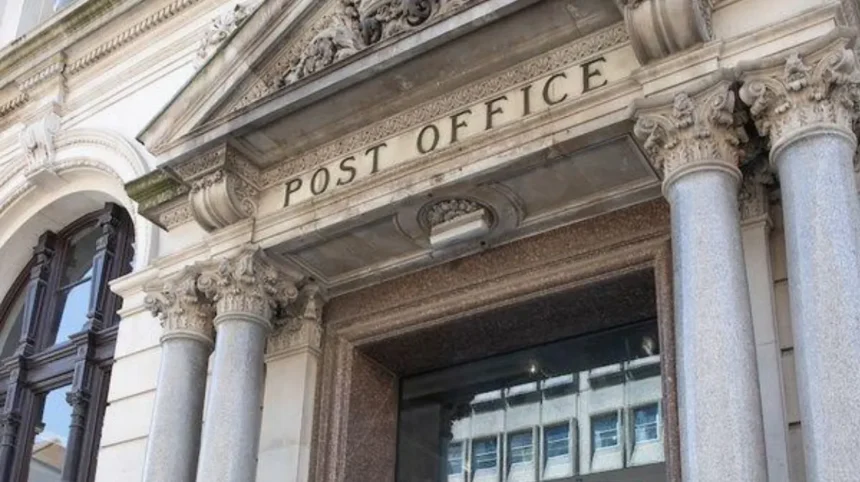
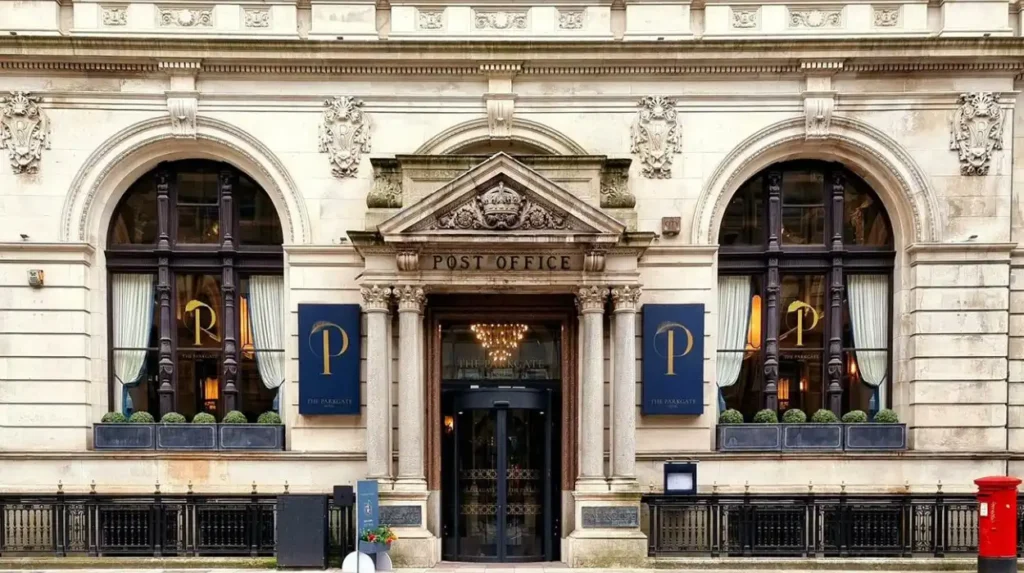
The former Cardiff Head Post Office on Westgate Street represents another major stage of this development. The building was completed in 1897 and designed by Sir Henry Tanner, Chief Architect to the Office of Works. It used Portland stone and became an important civic building in central Cardiff.
The building later ceased operating as the main post office. Historical records state that the Post Office moved from the Westgate Street building in 1983. The former building remains an important part of Cardiff’s architectural and postal history.
This history shows why local post offices should be viewed as part of Cardiff’s urban development. Postal facilities followed population growth, commercial activity, transport connections and the expanding requirements of residents and businesses.
Which Cardiff post offices still provide everyday community services?
Cardiff continues to have Post Office branches serving different neighbourhoods, including the city centre, Canton, Llanedeyrn and Ely. Current branch services vary by location, so customers should check the official Post Office Branch Finder before visiting for a specific service.
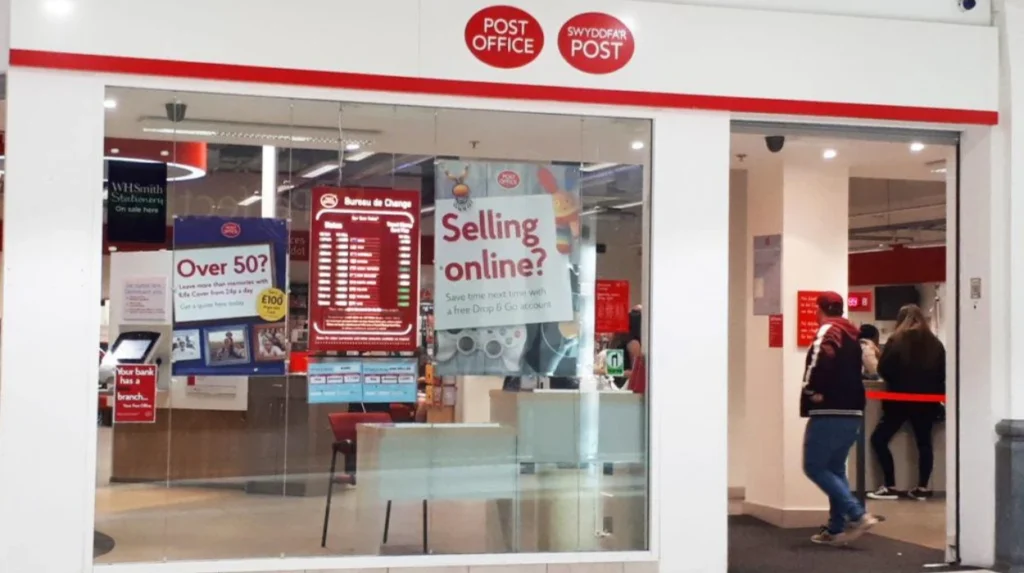
The Cardiff Post Office at 83–85 Queen Street is a central example. Its published services include everyday personal and business banking facilities, including cash withdrawals, cash deposits and cheque deposits. The branch also provides Royal Mail and Parcelforce Worldwide services.
Canton has a separate local branch at 234A Cowbridge Road East. Its published services include mail services, Parcelforce Express Services, foreign currency, travel insurance, travel money cards, passport Check & Send and identity checking services.
The Llanedeyrn Post Office, located at Unit 1 Lewis Court in Maelfa, provides another neighbourhood-based service point. Its listed services include mail services, Parcelforce Express Services, foreign currency, travel money cards, vehicle tax services and a 24-hour ATM.
The Grand Avenue Post Office in Ely is another example of a branch integrated into a local retail environment. Royal Mail’s branch information lists Drop & Go, Parcelforce Express Services, a Travel Money Card and vehicle tax services among its facilities.
These examples demonstrate the varied nature of Cardiff’s local postal network. Not every branch offers identical services. Opening hours and service availability also differ between locations.
What services can Cardiff residents use at a local post office?
Cardiff post offices provide services covering letters, parcels, postage, banking, cash access, identity checks, travel products, vehicle-related services and selected government services. The exact combination differs between branches, making the official branch listing essential for service-specific visits.
Postal services remain the core function. Customers can buy postage, send letters, send parcels and access Royal Mail and Parcelforce services through Post Office branches. The Cardiff Post Office listing confirms that Royal Mail and Parcelforce Worldwide services are available through the network, subject to branch format.
Parcel services have become increasingly important as online shopping and home delivery have expanded. Customers use branches to send parcels, collect items and obtain proof of postage. Royal Mail’s Cardiff Post Office information lists prepaid parcel drop-off, item collection and label printing functions.
Banking is another major community service. The Post Office’s 2025 network report states that branches provide access to personal and business bank accounts, including withdrawals, deposits, cheque deposits, change and balance enquiries, subject to individual bank arrangements.
Identity services form another part of the network. Selected branches provide passport-related services and identity checking. Canton, for example, lists Passport Check & Send and an ID checking service.
Travel services also operate at selected branches. These include foreign currency, travel money cards and travel insurance. The availability differs between branches, so customers should confirm the exact service before travelling.
Vehicle-related services remain another component of the network. Llanedeyrn and Grand Avenue list vehicle tax-related services among their facilities.
The Post Office states that its network offers more than 170 products and services, covering areas such as mail, banking, bill payments, travel money, insurance, identity and government services.
How do local post offices support banking and cash access in Cardiff?
Local post offices support financial access by allowing eligible customers to carry out everyday banking services at the counter. These include cash withdrawals, cash deposits, cheque deposits and balance enquiries, helping residents access banking without relying entirely on traditional bank branches.
The financial role of post offices has become increasingly significant as the UK banking landscape has changed.
The Post Office describes itself as a major provider of cash services. Its 2025 Network Report states that personal and business customers can access their high street bank accounts at Post Office branches through services such as cash withdrawals, cash deposits, cheque deposits and balance enquiries.
The exact services depend on the customer’s bank and the branch. A Post Office is not a replacement for every banking function. It provides specific services through agreements between participating banks and the Post Office.
This distinction is important for Cardiff residents. Customers should check whether their bank supports the required service before visiting.
Cash access also has a wider community dimension. Government policy on access to cash recognises the importance of physical access to money, particularly for people and businesses that continue to use cash.
The Post Office’s 2025 report recorded 145 Banking Hubs and two Cash Hubs across the UK as of March 2025, developed in partnership with Cash Access UK.
Banking Hubs are separate from ordinary Post Office branches, but they form part of the wider response to changing local banking provision. Post Office branches continue to provide everyday cash services within the established network.
How do Cardiff post offices support local businesses?
Cardiff post offices support small businesses through parcel sending, postage, cash services, business banking and other counter-based facilities. These services help businesses manage physical transactions, customer deliveries and financial tasks without requiring a separate visit to multiple service providers.
Small businesses depend on reliable postal and parcel infrastructure. Cardiff has a broad business base covering retail, professional services, hospitality, creative industries, education, technology and other sectors.
Post Office branches support these businesses through postage and parcel services. Businesses can send customer orders, documents and returns through branch-based services. Some branches also provide Drop & Go facilities that streamline regular mailing activity.
Banking services provide another connection. The Post Office states that its banking network supports both personal and business customers, with services including cash deposits, withdrawals and balance enquiries where the relevant bank participates.
This is particularly relevant to businesses that handle cash. A local branch provides a physical point for selected banking transactions without requiring access to a traditional bank branch.
The Post Office also identifies small-business support as part of its wider community role. Its corporate information describes branches as supporting small businesses, financial inclusion and high-street activity.
For Cardiff’s neighbourhood economies, this creates a connection between postal services and local commerce. Businesses use branches as practical service points while residents use the same locations for everyday transactions.
Why are physical post offices still relevant in a digital Cardiff?
Physical post offices remain relevant because some postal, banking, identity and government-related services require face-to-face transactions, physical documents, cash or staff assistance. Cardiff’s branches combine these functions with digital services rather than operating as a replacement for online systems.
Digital technology has transformed how people communicate and manage financial services. Email replaced many paper letters. Online banking reduced the need for some branch visits. Digital postage and parcel tracking changed how customers prepare and monitor shipments.
Post offices still provide functions that depend on physical access.
Cash is one example. A digital bank account does not remove the need for physical cash access. Post Office branches provide selected cash services for participating banks.
Parcels provide another example. Online shopping creates physical goods that require collection, returns and delivery. Customers still need physical locations for some parcel transactions.
Identity services also retain a physical component. Certain verification processes require documents, photographs, identity checks or staff involvement.
The Post Office’s national network therefore operates as a hybrid infrastructure. Customers can begin processes online and complete them at a branch, or use a branch as the starting point for a physical transaction.
The current Cardiff Post Office demonstrates this combination. Customers can use the branch for counter services while Royal Mail’s wider system supports online postage, labels, tracking and digital parcel preparation.
This hybrid model gives local branches continued relevance even as digital communication expands.
How does the Post Office network protect community access across the UK?
The UK Government has retained a minimum Post Office network requirement of 11,500 branches and geographical access criteria covering 99% of the population. The policy also introduces stronger expectations for full-time and full-service branches across the network.
Government policy provides the national framework for maintaining access to Post Office services.
In its 2026 response on the future of the Post Office, the Government confirmed the 11,500 minimum branch requirement and the geographical access criterion that 99% of the population should remain within three miles of a branch.
The same policy introduces a requirement for at least 50% of the network to consist of full-time and full-service branches. The Government reported that 79% of branches met that definition in April 2025.
The policy also includes network subsidy arrangements. The Government response states that up to £263 million will support the network between financial years 2025/26 and 2028/29.
In February 2026, the Government separately announced £483 million of investment over two years to support Post Office transformation and modernisation. The announcement included new technology and improvements to products and services.
These national measures influence how community branches operate in cities such as Cardiff. They establish access requirements while allowing individual branches to use different formats based on local circumstances.
Explore More Area Guide
Historic Fire Stations in Cardiff: Westgate Street & Fire Brigade History
Public Art Across Cardiff Neighbourhoods: Statues, Murals & Sculptures
How should Cardiff residents find the right local post office?
Cardiff residents should use the official Post Office Branch Finder to identify the nearest branch, check opening hours and confirm the required service before travelling. Individual branches offer different services, and opening times differ between locations and days.
The official Post Office Branch Finder provides the most appropriate source for current branch information. The Post Office states that its latest network information should be checked through the Branch Finder because branch lists can change.
This is particularly important for services with limited availability. A branch can provide standard postal services while offering only selected banking, identity, travel or vehicle services.
Cardiff Post Office on Queen Street, for example, has published opening hours from 8:30am to 5:30pm Monday to Saturday and 10:45am to 2:45pm on Sunday.
Other Cardiff branches follow different schedules. Llanedeyrn has shorter Saturday hours and is closed on Sunday according to its current listing.
Customers should therefore check three details before visiting: branch location, opening hours and the specific service required.
This approach also reduces unnecessary journeys. Service availability can differ between branches even within the same city.
What does the future of Cardiff’s local post offices look like?
Cardiff’s local post offices remain part of a national network being modernised around postal services, banking, digital technology and face-to-face community access. Government policy protects the minimum network while Post Office investment focuses on technology, branch standards and wider service provision.
The future of local post offices is shaped by changing customer behaviour and continuing demand for physical services.
The Post Office’s transformation programme focuses on modernising the network while maintaining community access. Government announced funding for technology upgrades, improved services and branch modernisation in 2026.
The Government’s future policy also introduces minimum branch standards from financial year 2026/27. Customer satisfaction data is scheduled to form part of the monitoring framework.
Post Office has also developed new models designed to broaden the role of selected branches. Its Post Office Plus pilot turns selected branches into community hubs where partner organisations can provide face-to-face support alongside normal counter services.
This direction places greater emphasis on the branch as a physical community access point.
For Cardiff, the practical significance is local rather than abstract. Residents continue to use neighbourhood branches for parcels, cash, banking, identity services, travel products and other transactions. Businesses use branches for postage, parcels and selected financial services.
The historic development of Cardiff’s post offices also provides important context. From Duke Street and Church Street to St Mary Street, Cardiff Docks and Westgate Street, postal infrastructure has repeatedly adapted to the city’s changing economic and population needs.
Modern Cardiff branches continue that pattern through smaller neighbourhood formats, retail partnerships, extended services and digital integration.
Local post offices therefore remain a visible part of Cardiff’s everyday infrastructure. Their role has changed significantly since the nineteenth century, but their basic function remains connected to community access: providing physical points where residents, visitors and businesses can complete essential transactions.
Which post offices are available in Cardiff?
Cardiff has Post Office branches across central and residential areas. Examples include Cardiff Post Office on Queen Street, Canton Post Office on Cowbridge Road East, Llanedeyrn Post Office at Maelfa and Grand Avenue Post Office in Ely.