Cardiff is the capital and largest local authority area in Wales. The city combines a compact central area with established residential districts, suburban communities, waterfront neighbourhoods and rural-edge settlements. Cardiff’s neighbourhoods differ substantially in housing, transport access, local facilities, student presence, green space and daily lifestyle.
- What makes Cardiff neighbourhoods different from one another?
- Which Cardiff neighbourhoods are closest to the city centre?
- Which Cardiff neighbourhoods are popular with students and young renters?
- Which Cardiff neighbourhoods are suited to families?
- Which Cardiff neighbourhoods offer the best transport connections?
- How much does it cost to rent in Cardiff neighbourhoods?
- How do Cardiff neighbourhoods differ in lifestyle?
- Which Cardiff neighbourhoods have the strongest links to Cardiff Bay and the waterfront?
- How should renters compare Cardiff neighbourhoods before choosing a home?
- How are Cardiff neighbourhoods changing?
- What is the most useful way to understand Cardiff neighbourhoods?
The 2021 Census recorded 362,308 residents in Cardiff, compared with about 346,100 in 2011. Population increased by 4.7% during the decade, making Cardiff the most populous local authority in Wales. The Office for National Statistics also identified Cardiff as the most densely populated Welsh local authority in 2021.
Neighbourhood names do not always correspond to formal administrative boundaries. Cardiff contains electoral wards, communities, postcodes and locally recognised districts. Places such as Canton, Pontcanna, Roath, Cathays, Grangetown, Llandaff, Whitchurch, Rhiwbina and Lisvane are commonly used to describe where people live, while council services and statistical data use specific administrative geographies. Cardiff Council’s neighbourhood information also groups communities into wider service areas.
Housing costs are an important difference between Cardiff neighbourhoods. The ONS recorded an average private rent of £1,177 per month in Cardiff in August 2026, up 3.5% from £1,138 in August 2025. Average rents were £908 for one-bedroom properties, £1,085 for two-bedroom properties, £1,211 for three-bedroom properties and £1,703 for properties with four or more bedrooms.
Transport also shapes neighbourhood choice. Cardiff Central is the city’s principal railway station and transport interchange. Cardiff Queen Street, Cathays, Llandaff, Radyr and other stations connect residential districts with central Cardiff and destinations across South Wales. Transport for Wales is also developing Metro and central interchange infrastructure to improve connections between rail, bus, walking and cycling.
What makes Cardiff neighbourhoods different from one another?
Cardiff neighbourhoods differ through housing stock, distance from the city centre, public transport, green space, student concentration, waterfront access, local shopping and employment connections. Examples include central Cathays, residential Llandaff, suburban Rhiwbina, waterfront Grangetown and village-style Whitchurch.
Cardiff has no single residential pattern. The inner city contains dense streets, converted houses, flats and purpose-built accommodation. Outer districts contain larger houses, gardens, schools, parks and lower-density streets.
Housing history explains many of these differences. Victorian and Edwardian expansion produced large areas of terraced housing around the historic centre. Later suburban development created estates and detached or semi-detached housing farther from the centre. Cardiff Bay and former industrial districts experienced substantial redevelopment during the late twentieth and early twenty-first centuries.
The city also has a strong student population. Cardiff University reported 31,505 students for 2024/25, including 24,645 undergraduates and 6,860 postgraduates. This contributes to housing demand in neighbourhoods close to the university and central campuses.
Neighbourhood character is therefore closely connected to housing type and population structure. A district dominated by terraced houses and student rentals has a different daily environment from a suburban area dominated by family houses and gardens.
Cardiff Council’s local development and regeneration programme also influences how neighbourhoods evolve. Regeneration projects, transport investment and new housing schemes continue to change parts of the city.
Which Cardiff neighbourhoods are closest to the city centre?
Cathays, Adamsdown, Plasnewydd, Riverside, Canton, Butetown and parts of Grangetown are among the established inner-city districts. Their proximity to central Cardiff supports walking, cycling, bus and rail travel, while housing includes terraces, flats, shared homes and converted properties.
The city centre forms Cardiff’s principal commercial and civic core. Central neighbourhoods immediately surrounding it have high levels of pedestrian movement and comparatively dense housing.
Cathays sits north of the city centre and is closely associated with Cardiff University, student accommodation and Victorian terraces. Cathays railway station provides a direct rail connection towards Cardiff Central, with Transport for Wales describing the journey as taking less than ten minutes.
Plasnewydd, commonly associated with the Roath area, extends east of Cathays. It contains substantial Victorian and Edwardian housing and provides access to Roath’s commercial streets and local services.
Adamsdown lies east of the central area. It contains predominantly urban housing and benefits from its location near central employment, shopping and transport facilities.
Riverside is west of the River Taff and close to central Cardiff. Its location provides access to the river corridor, central employment areas and nearby Canton.
Canton is further west and combines older terraced streets with local commercial areas. Its location between the city centre and western Cardiff gives residents access to both central and suburban destinations.
Butetown occupies a historic position beside Cardiff’s docks and Cardiff Bay. It has a distinctive relationship with the city’s maritime and industrial history and includes modern residential development.
Grangetown lies south of the city centre and extends towards Cardiff Bay and the River Taff. Cardiff Council identifies Grangetown among the inner-city areas prioritised within its long-term parking plan.
These neighbourhoods generally suit residents who place high importance on access to central Cardiff. Their housing markets also contain significant rental demand because of proximity to universities, employment, entertainment and transport.
Which Cardiff neighbourhoods are popular with students and young renters?
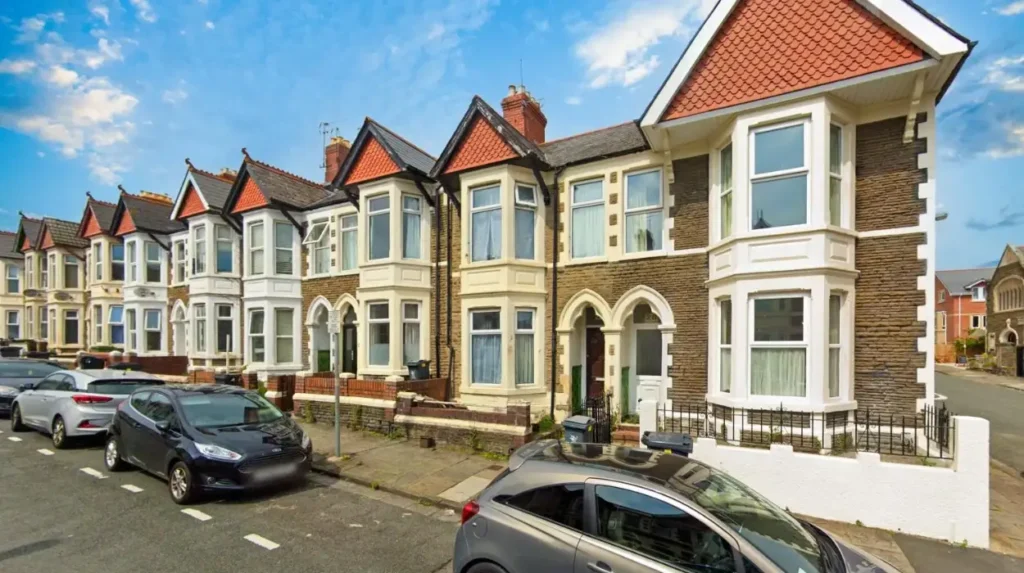
Cathays, Plasnewydd, parts of Roath, Riverside and nearby central districts have strong connections with student and young-renter housing. Their characteristics include terraced houses, shared accommodation, university access, frequent bus services, local shops and relatively short journeys into central Cardiff.
Student housing forms an important part of Cardiff’s residential market. Cardiff University has more than 31,000 students, creating substantial demand for accommodation across the city.
Cathays is particularly closely connected with university life. Cardiff University campuses are concentrated around Cathays Park and the city centre, while Cathays railway station provides a direct connection with Cardiff Central.
Plasnewydd and Roath contain extensive terraced housing. Many properties are suitable for shared occupation because Victorian and Edwardian houses frequently contain multiple bedrooms and communal living areas.
Riverside also has a central location and access to the University and city centre. Its position west of the River Taff gives residents access to riverside walking routes as well as central facilities.
Rental costs depend heavily on property size, condition, location and whether a property is rented individually or shared. Citywide ONS figures provide a reliable benchmark but do not represent the exact asking rent for every neighbourhood. In August 2026, Cardiff’s average private rent was £1,177 per month.
Students and young professionals also need to consider bills, deposits, tenancy terms and transport costs rather than comparing rent alone.
Which Cardiff neighbourhoods are suited to families?
Llandaff, Whitchurch, Rhiwbina, Lisvane, Llanishen, Cyncoed, Radyr and parts of Penylan contain established residential streets, schools, parks and larger homes. These areas generally provide more suburban housing patterns than central districts such as Cathays or Adamsdown.
Family-oriented housing is distributed across north, west and east Cardiff. These areas contain detached, semi-detached and larger terraced homes alongside local shops, schools and green spaces.
Llandaff has a historic village character within Cardiff and contains a mixture of older properties, suburban streets and modern housing. It sits beside the River Taff and has access to Llandaff railway station through nearby transport connections.
Whitchurch is a well-established northern suburb with local shops, community facilities and access to Cardiff’s wider transport network. It is connected to central Cardiff by bus and nearby rail stations.
Rhiwbina has a suburban housing pattern with residential streets, green areas and local services. It is served by Rhiwbina railway station on the Cardiff City Line.
Llanishen and Lisvane are northern residential communities. Both have strong suburban characteristics and access to railway services through stations on Cardiff’s northern rail network.
Cyncoed contains larger residential properties, established streets and substantial green areas. Its location provides access to Cardiff’s eastern and central districts.
Radyr lies in western Cardiff and combines suburban housing with direct rail connections. Radyr station is an important interchange on routes linking Cardiff with communities in the north and west.
Cardiff Council’s childcare assessment identifies Rhiwbina, Heath, Lisvane, Llanishen, Cyncoed, Penylan, Pentwyn, Pontprennau and Old St Mellons within its Cardiff North service area.
The term “family-friendly” therefore describes housing and service characteristics rather than a formal classification. Families should examine individual school catchments, property layouts, parking arrangements, local facilities and transport connections before choosing a specific street.

Which Cardiff neighbourhoods offer the best transport connections?
Transport access in Cardiff depends on proximity to railway stations, bus corridors, cycling routes and major roads. Central districts have extensive local connections, while suburbs such as Radyr, Llandaff, Rhiwbina and Lisvane benefit from rail access into the city.
Cardiff Central is the main railway station. It is located at Central Square and forms a major interchange between rail, bus and other transport modes. Transport for Wales identifies it as the principal station in Cardiff and a Grade II listed building that opened in 1850.
Cardiff Queen Street is another important central station. It provides services towards Cathays, Radyr, Pontypridd, the Valleys and other destinations.
Cathays station is particularly important for the northern inner city. Transport for Wales states that trains from Cathays to Cardiff Central take less than ten minutes.
Rail connections also influence western and northern neighbourhoods. Radyr provides access to Cardiff’s central area and onward services, while stations including Llandaff, Rhiwbina and Lisvane support suburban commuting.
Bus services remain important because railway stations do not cover every residential street. Cardiff Bus operates routes throughout the city, while Transport for Wales integrates rail services into the wider South Wales Metro network.
Metro Central is designed to improve connections between rail, bus, walking and cycling. The programme includes enhancements to Cardiff Central and a proposed rail connection between Cardiff Central and Cardiff Bay through Cardiff Crossrail development.
Transport conditions also vary by time of day. Event days, road congestion, rail engineering and service disruption affect journey times. Residents who commute regularly should assess their complete door-to-door journey rather than relying only on station-to-station travel time.
How much does it cost to rent in Cardiff neighbourhoods?
Cardiff’s average private rent was £1,177 per month in August 2026. ONS figures recorded averages of £908 for one bedroom, £1,085 for two bedrooms, £1,211 for three bedrooms and £1,703 for four or more bedrooms across the city.
The Office for National Statistics provides citywide rental statistics rather than a complete official rent series for every named Cardiff neighbourhood. This distinction is important when comparing areas.
In August 2026, the Cardiff average was £1,177 per month. Annual rent inflation was 3.5%, compared with £1,138 in August 2025.
Property size produced substantial differences. One-bedroom properties averaged £908. Two-bedroom properties averaged £1,085. Three-bedroom properties averaged £1,211. Four-or-more-bedroom properties averaged £1,703.
Property type also affected the average. Flats and maisonettes averaged £995. Terraced properties averaged £1,177. Semi-detached properties averaged £1,186. Detached properties averaged £1,516.
These figures do not mean every flat costs £995 or every detached house costs £1,516. They represent average rents across the Cardiff local authority area.
Neighbourhood differences reflect property stock, proximity to universities, transport, city-centre employment, housing condition and the size of the rental market.
Inner-city areas with many shared houses and flats have a different rental structure from suburban neighbourhoods dominated by family houses.
Renters should also calculate council tax, energy, broadband, transport, insurance and maintenance-related costs where applicable. A lower advertised rent does not automatically represent a lower total household cost.
How do Cardiff neighbourhoods differ in lifestyle?
Cardiff lifestyles vary between dense inner-city districts, historic communities, waterfront areas, suburban neighbourhoods and rural-edge settlements. Central areas emphasise convenience, while outer districts provide more residential space, parks, schools and quieter street environments.
Inner Cardiff offers close access to shops, restaurants, cultural venues, offices, universities and major transport stations. Cathays, Plasnewydd, Adamsdown, Riverside and Canton illustrate this urban pattern.
The western neighbourhoods provide a different residential environment. Canton, Llandaff, Fairwater, Radyr and nearby communities contain established housing, green corridors and connections to the River Taff.
Northern Cardiff includes Whitchurch, Rhiwbina, Llanishen, Lisvane and Cyncoed. These communities contain substantial suburban housing and access to parks, schools and local shopping.
Eastern Cardiff includes areas such as Penylan, Pentwyn, Pontprennau, Llanrumney, Rumney and Trowbridge. Housing types range from older residential streets to later suburban estates and modern development.
Southern Cardiff includes Grangetown, Butetown and Cardiff Bay. These areas have strong connections with the city’s waterfront, regeneration projects and central employment.
Cardiff’s parks and green corridors also influence daily life. The River Taff provides a major north-south environmental and recreational corridor, while parks and open spaces are distributed throughout the city.
Lifestyle therefore depends on practical factors rather than neighbourhood labels alone. A resident who walks to work has different priorities from someone commuting by rail or car. A household with children has different space requirements from a student sharing a terraced house.
Which Cardiff neighbourhoods have the strongest links to Cardiff Bay and the waterfront?
Butetown, Grangetown, Cardiff Bay and nearby southern districts have the strongest direct connections with Cardiff’s waterfront. The area combines historic docklands, modern residential development, cultural attractions, public spaces and transport links with central Cardiff.
Cardiff Bay developed from the historic docklands that supported Cardiff’s coal-export economy. Modern regeneration transformed large sections of the former industrial waterfront into a mixed-use district.
Butetown is one of Cardiff’s historic dockside communities. Its position beside the former docks gives it an important place in Cardiff’s maritime history.
Cardiff Bay contains modern residential buildings alongside cultural and leisure destinations. The area is connected to central Cardiff by road, bus, walking and rail services through nearby stations.
Grangetown occupies land south of the city centre and west of Cardiff Bay. Its location provides access to central Cardiff, the waterfront and the River Taff.
Transport for Wales is developing central transport infrastructure that includes plans to strengthen connections between Cardiff Central and Cardiff Bay.
Waterfront living therefore involves a combination of modern apartments, older housing, regeneration areas and established communities. Property conditions and rental prices vary significantly within short distances.
How should renters compare Cardiff neighbourhoods before choosing a home?
Renters should compare total housing cost, commute time, property condition, transport availability, local facilities, parking, green space and tenancy terms. Cardiff Council and ONS data provide useful official information, while property-level decisions require checking individual homes and streets.
The first comparison should be rent. Use the ONS Cardiff average as a benchmark rather than treating it as the asking price for a specific property.
The second comparison should be transport. Identify the nearest railway station and regular bus routes. Check the actual journey to work, university or other frequent destinations.
The third comparison should be housing type. A two-bedroom flat, two-bedroom terrace and two-bedroom semi-detached house have different space, parking and maintenance characteristics.
The fourth comparison should be local services. Check supermarkets, GP practices, schools, pharmacies, parks, libraries and other facilities relevant to the household.
The fifth comparison should be parking. Cardiff Council is implementing a city parking plan over three phases across ten years. Initial priority areas include Cathays, Plasnewydd, Riverside, Adamsdown and Grangetown.
The sixth comparison should be tenancy conditions. Renters should check the tenancy agreement, deposit requirements, repair responsibilities, permitted occupants and any restrictions.
Cardiff Council provides housing advice covering private renting, council housing, homelessness and other housing options. The council also operates a common waiting list for council and housing association properties.
A postcode-level review is useful because neighbourhood characteristics can change considerably within a few streets.
Explore More Area Guide
Best Areas to Live in Cardiff: Complete Neighbourhood Guide
Which Electoral Ward Covers Cardiff Bay? Butetown and Grangetown
How are Cardiff neighbourhoods changing?
Cardiff neighbourhoods are changing through population growth, housing development, transport investment, regeneration and changing household demand. The 2021 Census recorded 362,308 residents, while current housing and infrastructure programmes continue to reshape central and suburban districts.
Cardiff’s population increased by about 16,200 between the 2011 and 2021 censuses. The 4.7% increase was greater than the 1.4% increase recorded across Wales.
Population growth increases demand for housing, transport, schools, healthcare and community infrastructure.
Housing development is an important part of this change. Cardiff Council’s development and regeneration programme includes neighbourhood regeneration and planning through the Local Development Plan.
Transport investment is another major factor. Metro Central plans include improvements to Cardiff Central and connections between different transport modes. Cardiff Crossrail proposals also focus on strengthening the connection between central Cardiff and Cardiff Bay.
The rental market is also changing. Cardiff’s average private rent increased from £1,138 in August 2025 to £1,177 in August 2026.
These changes have different effects across neighbourhoods. Areas near major transport infrastructure can experience changing housing demand. Regeneration areas can introduce new homes and facilities. Established residential districts continue to evolve as housing changes hands and properties are renovated.
What is the most useful way to understand Cardiff neighbourhoods?
The most useful approach is to treat Cardiff as a network of distinct residential environments rather than one uniform housing market. Compare inner-city, waterfront, western, northern and eastern districts through rent, transport, housing type, facilities and daily travel needs.
Central Cardiff provides proximity to employment, universities, retail and entertainment. Cathays, Adamsdown, Plasnewydd, Riverside and Canton demonstrate the advantages and pressures of inner-city living.
Northern Cardiff provides a stronger suburban pattern. Whitchurch, Rhiwbina, Llanishen, Lisvane and Cyncoed contain established residential areas with schools, parks and transport connections.
Western Cardiff combines suburban and historic environments. Llandaff, Radyr, Fairwater and nearby communities connect residential areas with the River Taff, railway network and western transport corridors.
Eastern Cardiff contains established and newer suburban communities. Penylan, Pentwyn, Pontprennau, Llanrumney, Rumney and Trowbridge provide different housing forms and connections to central Cardiff.
Southern Cardiff contains the city centre’s southern edge, Grangetown, Butetown and Cardiff Bay. These areas combine historic communities with major waterfront regeneration.
No single neighbourhood category determines whether a property suits a particular household. The practical choice depends on budget, property size, commuting pattern, access requirements, schools, parking and preferred local environment.
Cardiff’s official data provide the foundation for neighbourhood research. ONS Census data show population and housing patterns. ONS rental statistics provide citywide housing-cost benchmarks. Cardiff Council provides planning, housing, parking and neighbourhood information. Transport for Wales provides current railway and Metro information.
For anyone comparing Cardiff neighbourhoods, the strongest method is to combine citywide statistics with postcode-level research and an assessment of the individual property. This approach reflects how varied Cardiff’s housing, transport and lifestyle patterns are across the capital.
What are the main neighbourhoods in Cardiff?
Cardiff includes many distinct neighbourhoods, including Cathays, Roath, Plasnewydd, Canton, Riverside, Grangetown, Butetown, Llandaff, Whitchurch, Rhiwbina, Llanishen, Lisvane, Cyncoed and Radyr.