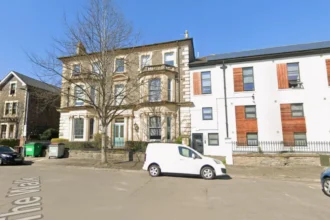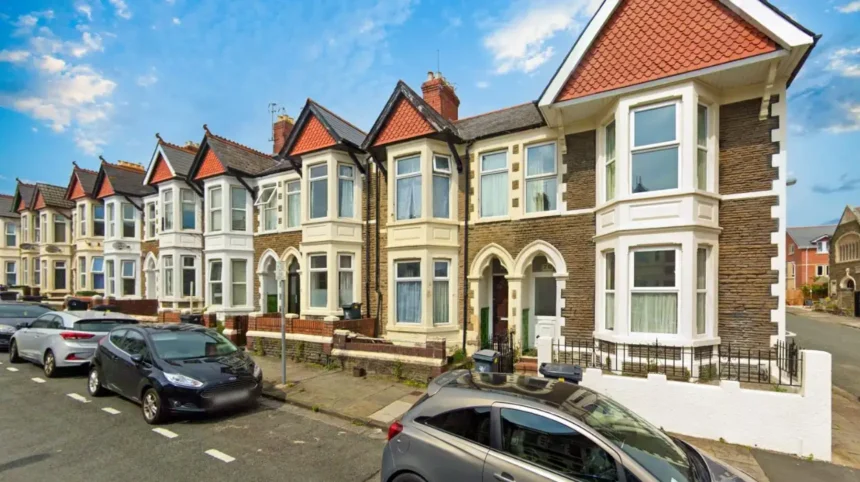
Cathays is a central Cardiff neighbourhood closely associated with Cardiff University, student housing, local shops, independent food businesses, public transport and Victorian-era residential streets. It sits immediately north of Cardiff city centre and provides direct access to Cathays Park, the university campus and central Cardiff amenities.
- What is Cathays like for people living in Cardiff?
- Why is Cathays important in Cardiff’s history?
- Why do so many students live in Cathays?
- What types of student housing are available in Cathays?
- How much does student accommodation in Cathays cost?
- What are the HMO rules for student housing in Cathays?
- Is Cathays well connected by public transport?
- How easy is it to walk or cycle from Cathays?
- What amenities are available in Cathays?
- How close is Cathays to Cardiff city centre?
- What are the main roads and streets around Cathays?
- Is parking difficult in Cathays?
- What are the council tax rules for students living in Cathays?
- What should students check before renting in Cathays?
- What is everyday life like in Cathays?
- How does living in Cathays compare with living farther from central Cardiff?
- What should new residents know about living in Cathays?
The area has a distinctive student-oriented housing market, but Cathays is not exclusively a student neighbourhood. Its streets contain long-established homes, university buildings, rented properties, local businesses and community facilities. Cardiff University identifies Cathays and nearby Roath as locations for university student houses, while the university’s wider student population exceeds 31,500.
What is Cathays like for people living in Cardiff?
Cathays is a central Cardiff neighbourhood known for student accommodation, Cardiff University facilities, Victorian housing, local shops, restaurants, public transport and quick access to the city centre. Its location combines residential streets with a strong university presence and everyday amenities.
Cathays forms part of Cardiff’s inner-city area immediately north of the main commercial centre. Its position places residents close to Cardiff University, Cathays Park, Bute Park, Cardiff city centre and major transport connections.
The neighbourhood is particularly significant for higher education. Cardiff University’s Cathays campus contains academic buildings, student services, libraries and social facilities. The university describes the campus as a short walk from Cardiff city centre and identifies Cathays as one of its two principal campus areas.
Cathays also has a strong private rental market. Shared houses are common because of the concentration of students and young renters. Cardiff Council classifies properties occupied by three to six unrelated people as C4 Houses in Multiple Occupation, or HMOs, while properties for seven or more unrelated people fall within the larger Sui Generis HMO category.
The neighbourhood therefore has several overlapping functions. It operates as a university district, residential area, rental market, transport location and gateway to central Cardiff.

Why is Cathays important in Cardiff’s history?
Cathays developed from a historic northern part of Cardiff into an important urban neighbourhood as Cardiff expanded during industrialisation and the growth of civic institutions. Cathays Park later became a major civic district containing university, government, cultural and architectural landmarks.
The wider Cathays area reflects Cardiff’s rapid expansion during the nineteenth and early twentieth centuries. Cardiff developed from a port and market town into a major industrial city, increasing demand for housing and civic infrastructure.
Cathays Park became particularly important as Cardiff expanded. Its development created a planned civic environment close to the city centre. The district contains significant buildings associated with Cardiff’s civic, cultural and educational development.
Today, Cardiff Council recognises Cathays Park as a conservation area. Conservation areas are designated places where the character and appearance of the built environment receive additional planning protection. Cardiff Council also identifies Charles Street and Windsor Place as conservation areas within the Cathays ward.
The area therefore contains different layers of urban development. Victorian and Edwardian residential streets sit alongside university buildings, civic architecture and modern student accommodation.
This historic setting remains relevant to residents because alterations to protected buildings and certain areas can require additional planning controls. Cardiff has around 1,000 listed buildings, reflecting the wider architectural importance of the city.
Why do so many students live in Cathays?
Students choose Cathays because it is close to Cardiff University’s Cathays Park campus, the Students’ Union, city-centre facilities, public transport and a large supply of shared rental housing. University residences and private houses provide different accommodation formats within walking distance of major student destinations.
Cardiff University’s Cathays campus is one of the main reasons for the area’s student population. The campus includes teaching facilities, libraries, student services and social spaces.
The university’s 2026 accommodation information lists student houses in Cathays and Roath. Its Student Houses Village includes shared kitchens for four to eleven students, while the Colum Road and Colum Place properties provide flats and houses for three to eleven students.
The university also operates several residences close to Cathays Park. Its accommodation listings include options such as Aberdare Hall, Colum Hall, Gordon Hall and student houses on Colum Road and Place.
Cardiff University’s wider student population was 31,505 in 2024/25, including 24,645 undergraduates and 6,860 postgraduates. Students represented 142 countries.
This concentration creates demand for housing, food, study facilities, transport and leisure services around Cathays.
The Students’ Union is another important component. Its Cardiff facility contains cafés, shops, bars, a letting agency, Post Office facilities and flexible study spaces.
What types of student housing are available in Cathays?
Cathays student housing includes university-managed houses, private shared houses, flats, purpose-built accommodation and rooms rented through landlords or letting agents. Housing formats differ by room size, number of occupants, facilities, contract length, location and whether bills are included.
University accommodation provides a structured option for students who want housing connected to Cardiff University. Student Houses Village, for example, provides shared kitchens for four to eleven students and is located close to Cathays Park and the city centre.
Private accommodation forms another major part of the local housing market. Cardiff University states that students commonly rent through letting agents or directly from landlords. Private halls also provide an alternative to traditional shared houses.
Shared houses are especially relevant to students moving beyond their first year. A typical property can contain several bedrooms with shared kitchen, bathroom and living facilities.
The number of occupants matters legally. Cardiff Council defines a C4 HMO as a property occupied by three to six unrelated people. Seven or more unrelated occupants place a property in the Sui Generis category for planning purposes.
Cathays has specific planning considerations for HMOs. Cardiff Council assesses the concentration of existing HMOs when considering new applications. Its guidance uses a 50-metre assessment radius and identifies a 20% threshold for dwellings in Cathays and Plasnewydd.
Students should therefore check the property’s legal status, tenancy terms and landlord or agent information before signing.
How much does student accommodation in Cathays cost?
Student accommodation costs in Cathays depend on property type, room specification, tenancy length, location and included services. Cardiff University listed student-house rooms from £131.81 per week for its 2026 accommodation, while other university residences had higher published weekly prices.
Cardiff University’s 2026 accommodation listings show clear differences between residences. Student Houses Village and Student Houses Colum Road/Place were listed from £131.81 per week. Other residences had starting prices above £140 or £150 per week.
These university prices provide a useful reference point, but private rental prices operate separately.
Private accommodation costs depend on the property and tenancy structure. Cardiff University identifies location, property size, condition, number of housemates and whether bills are included as important cost factors. Additional expenses can include water, gas, electricity, internet, insurance and summer rent.
Students should compare the full annual cost rather than only the advertised weekly rent.
A lower headline rent can have additional bills. A higher rent with several utilities included can have a different total cost.
Tenancy length is also important. Some student properties operate on academic-year contracts, while others require year-round agreements. Students should check the exact start and end dates before signing.
What are the HMO rules for student housing in Cathays?
Cathays has specific planning controls for Houses in Multiple Occupation because of its concentration of shared student housing. Properties for three to six unrelated occupants are C4 HMOs, while properties for seven or more occupants are generally Sui Generis.
Cardiff Council introduced its current HMO planning framework alongside the city’s Local Development Plan. The framework considers the cumulative effect of HMO conversions on residential areas.
The council states that planning permission is required for new HMOs in the relevant categories. Its planning assessment considers existing HMO density around proposed properties.
The rules matter to landlords, developers and prospective tenants. A student viewing a property should confirm that the property is legally suitable for the intended number of residents.
Renters should also check fire safety arrangements, gas safety information, electrical safety documentation and tenancy paperwork.
Cardiff Council states that private landlords must be registered with Rent Smart Wales, while people carrying out letting and property management activities must hold the relevant licence.
These requirements form part of the wider regulatory framework governing private renting in Wales.
Is Cathays well connected by public transport?
Cathays has strong public transport connections through its railway station, Cardiff Bus services and proximity to Cardiff Queen Street and Cardiff Central. The neighbourhood also provides practical walking and cycling access to Cardiff University, Cathays Park and the city centre.
Cathays railway station is one of the most important transport assets in the neighbourhood. Transport for Wales identifies it as the closest station to many Cardiff University buildings. The station handles more than one million passengers annually.
The station opened in 1983, at a time when railway stations were being closed elsewhere. It now serves students, university staff, local residents and visitors.
Cardiff University states that Cathays station is approximately 15 to 20 minutes from relevant Cathays Park university buildings. Cardiff Queen Street is approximately 10 minutes from several other university facilities.
Cardiff Central provides wider national connections. It links Cardiff with destinations across South and West Wales and major British cities.
Bus services provide another important transport option. Cardiff University identifies Cardiff Bus, Adventure Travel, Stagecoach, Traws Cymru and other providers among the services serving Cardiff and its campuses.
Transport options reduce the need for a private car for many residents.
How easy is it to walk or cycle from Cathays?
Cathays is highly walkable for residents attending Cardiff University or travelling into central Cardiff. Walking connects the neighbourhood with Cathays Park, Cardiff city centre and Bute Park, while cycling provides another practical option for university and city journeys.
The neighbourhood’s central position makes walking a practical part of everyday travel.
Cardiff University describes its Cathays campus as a short walk from the city centre. Its 2026 information also identifies walking and cycling as important ways of reaching university accommodation.
The relatively short distances between housing, university buildings, shops and central Cardiff facilities reduce the need for long daily journeys.
Cycling is also relevant to students. Cardiff University works with South Wales Police on student bicycle security marking and promotes sustainable travel initiatives.
Residents should consider cycle storage when selecting private accommodation. Many shared houses have limited outdoor space, so secure storage is an important practical feature.
What amenities are available in Cathays?
Cathays provides everyday amenities including food shops, cafés, restaurants, takeaways, student services, pharmacies, convenience stores and university facilities. Its proximity to Cardiff city centre adds larger retail, cultural, financial, healthcare and leisure services within a short journey.
The local amenity structure reflects the area’s residential and student population.
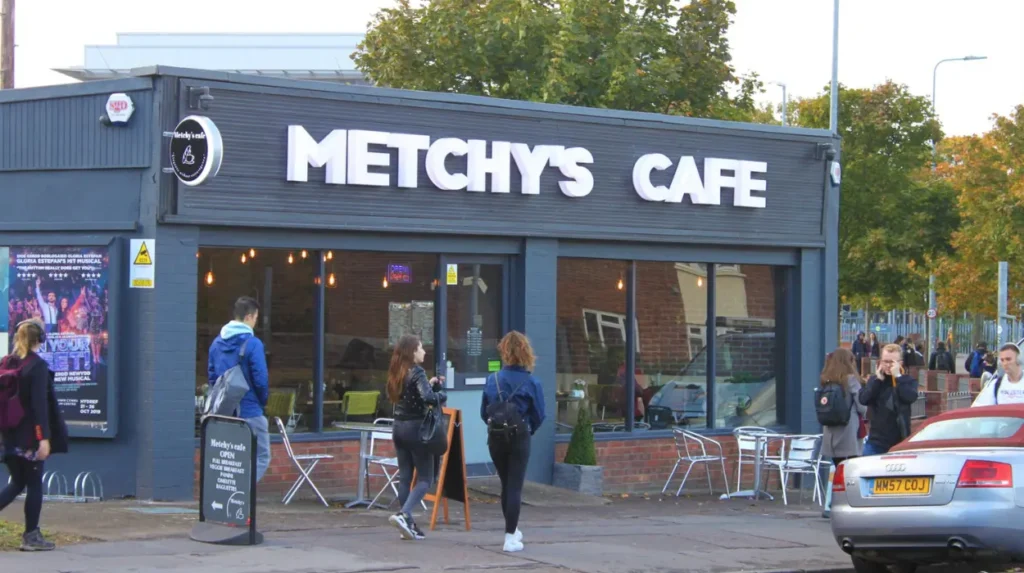
Food businesses are prominent around major streets serving the university and residential areas. Cafés and takeaway businesses provide quick food options, while supermarkets and convenience stores support everyday shopping.
The university campus adds another layer of amenities. Cardiff Students’ Union contains cafés, shops, bars, a Post Office, a letting agency and 24-hour flexible study spaces.
University libraries also provide important services. Cardiff University operates ten libraries across its Cathays and Heath Park campuses.
Cathays residents also benefit from nearby central Cardiff facilities. Cardiff city centre provides larger shopping areas, restaurants, entertainment venues, public services and cultural institutions.
Bute Park is another significant nearby open space. Its location beside central Cardiff provides residents with access to extensive green space without requiring a long journey outside the city.
How close is Cathays to Cardiff city centre?
Cathays is immediately north of Cardiff city centre and provides direct walking, cycling, rail and bus connections into the central area. Transport for Wales states that Cardiff city centre is about 15 minutes on foot from Cathays station via Park Place.
The short distance to central Cardiff is one of Cathays’ defining geographical characteristics.
Park Place connects the Cathays area with the civic centre and central commercial district. The route also passes major university and cultural destinations.
Transport for Wales estimates the walking journey between Cathays station and Cardiff city centre at around 15 minutes.
This proximity makes central Cardiff part of the practical daily activity area for many residents.
Students can also use Cardiff Queen Street station for connections through the wider Cardiff rail network. Cathays and Queen Street are particularly useful for journeys involving the university, civic centre and nearby neighbourhoods.
What are the main roads and streets around Cathays?
Important Cathays routes include North Road, Cathays Terrace, Salisbury Road, Crwys Road, City Road, Whitchurch Road and Colum Road. These streets connect residential areas with university buildings, shops, food businesses, public transport and neighbouring Cardiff districts.
Street functions differ across the neighbourhood.
North Road provides an important connection between central Cardiff, Cathays and northern parts of the city. Cathays Terrace serves residential and local commercial areas.
Colum Road has a strong university connection and contains university accommodation. Cardiff University’s Colum Road and Colum Place student houses are specifically positioned close to Cardiff Business School, the Humanities Building, Law School and Cathays Park campus.
Other nearby routes connect Cathays with Roath, Plasnewydd, Gabalfa and central Cardiff.
These roads also influence housing choice. Properties closer to university buildings can reduce walking distances, while homes farther north can provide different connections to other parts of Cardiff.
Is parking difficult in Cathays?
Parking in Cathays requires attention because residential demand, university activity, terraced housing and limited private parking create pressure on available spaces. Cardiff Council uses parking controls and resident permit schemes in parts of the neighbourhood, with specific rules applying to different zones.
Many Cathays properties have limited or no private parking.
This is particularly relevant to shared student houses. A property with several residents does not automatically provide several parking spaces.
Cardiff Council has consulted on parking controls in Cathays North, including resident permits, visitor permits, limited waiting bays and pay-and-stay arrangements. The proposed arrangements included restrictions during specified weekday or weekday-and-Saturday periods.
Students should check the parking arrangements for a specific address rather than assuming that a residential street provides unrestricted parking.
Car-free living is practical for many residents because the university, city centre, railway station and local shops are close together.
What are the council tax rules for students living in Cathays?
Full-time students who meet the relevant eligibility requirements are generally exempt from Council Tax, while properties occupied entirely by qualifying students can receive an exemption. Mixed households containing students and non-students follow different Council Tax rules.
Cardiff Council states that full-time students can qualify for Council Tax exemption when their course lasts at least one academic or calendar year, requires at least 24 weeks of study annually and involves at least 21 hours of study, tuition or work experience each week.
A property occupied only by qualifying students can receive an exemption.
Different rules apply when non-students live at the property. Cardiff Council states that full-time students are not counted for Council Tax purposes, which can affect whether a household receives a discount or exemption.
Students should obtain the appropriate exemption certificate and provide it when required.
Tenancy arrangements also matter. Cardiff Council explains that responsibility for Council Tax can differ between individual tenants, joint tenants and certain HMO arrangements.
What should students check before renting in Cathays?
Students should check the tenancy agreement, total rent, bills, deposit requirements, HMO status, safety certificates, property condition, landlord or agent credentials, parking arrangements and contract dates before renting in Cathays. The full annual housing cost should be compared before signing.
The first step is to understand the tenancy structure.
Students should identify whether they are signing an individual room agreement or a joint tenancy. They should confirm who is responsible for utilities, repairs and communal areas.
Cardiff University advises students to consider location, property condition, number of housemates and whether bills are included when assessing private accommodation.
Safety documentation is also important. Renters should check relevant gas and electrical safety information and understand how repairs are reported.
HMO status is particularly important in Cathays because of the area’s large shared-housing market. Cardiff Council’s planning rules specifically address HMO concentration in Cathays and Plasnewydd.
Students should also consider the practical distance to their campus. A cheaper property farther away can create additional transport costs and longer daily journeys.
What is everyday life like in Cathays?
Everyday life in Cathays combines university activity with established residential living. Residents have access to shops, food businesses, green space, rail and bus services, university facilities and central Cardiff within a compact urban area. Student housing remains a defining feature.
The neighbourhood’s identity is strongly connected to Cardiff University, but its function extends beyond the campus.
Residents can walk to university facilities, use Cathays railway station, access central Cardiff and shop locally. The combination creates a dense urban environment with short distances between major destinations.
The student population influences local businesses and housing patterns. Shared houses, cafés, food outlets and student services form an important part of the local economy.
The historic built environment adds another dimension. Cathays Park’s conservation status means that parts of the neighbourhood have additional planning controls designed to protect architectural and historic character.
For students, the area offers direct access to university life. For other residents, the same location provides proximity to employment, shopping, transport and city-centre facilities.
Explore More Area Guide
Living in Roath Cardiff: Complete Neighbourhood Guide
Living in Canton Cardiff: Rent, Transport, Shops & Local Life
How does living in Cathays compare with living farther from central Cardiff?
Living in Cathays places residents close to Cardiff University and central Cardiff, while areas farther from the centre generally provide longer commuting distances and different housing environments. The practical choice depends on study location, transport needs, housing budget and lifestyle requirements.
Cathays has a location advantage for residents whose daily destinations are concentrated around the university and city centre.
Cardiff University lists many accommodation options within walking or cycling distance of the city centre. Its 2026 residences guide states that its accommodation sites are distributed across Cathays Park and Heath Park and remain within walking or cycling distance of central Cardiff.
A central location also changes transport requirements. Residents can use walking and cycling for short journeys and rail or bus services for longer ones.
Further-out neighbourhoods provide different housing markets and local environments. The trade-off involves distance, transport time and housing characteristics.
For students attending Cathays Park campus, proximity can reduce daily travel. For people working elsewhere in Cardiff, the usefulness of Cathays depends on their workplace and transport route.
What should new residents know about living in Cathays?
New residents should understand Cathays as a university-centred residential neighbourhood with strong transport connections, shared student housing, conservation areas and extensive nearby amenities. Checking housing rules, transport options, parking arrangements and local services provides a practical foundation for settling into the area.
Cathays combines several urban functions within a relatively compact area.
The university creates a large daily population. Private and university accommodation support this population. Local businesses serve students and permanent residents, while nearby central Cardiff supplies larger services and facilities.
Transport for Wales identifies Cathays station as a key station for Cardiff University and central Cardiff. Cardiff University’s campus information also identifies Cathays and Queen Street stations as useful access points for different university buildings.
Housing regulation remains important. Cardiff Council’s HMO planning system specifically recognises the concentration of shared housing in Cathays.
The area’s future residential character will therefore continue to be shaped by university demand, housing policy, transport infrastructure, planning controls and the wider development of Cardiff.
For people researching living in Cathays, the key facts are its central location, strong student housing market, proximity to Cardiff University, accessible public transport, extensive amenities and connection with Cardiff’s historic civic landscape. These factors explain why Cathays remains one of Cardiff’s most important university-linked residential neighbourhoods.
Is Cathays a good area for students?
Yes. Cathays is one of Cardiff’s main student areas because it is close to Cardiff University, student accommodation, shops, cafés, restaurants, public transport and Cardiff city centre.