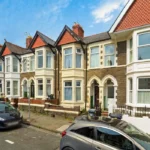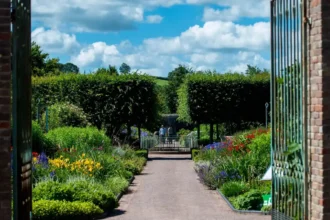
Roath is an established inner-city neighbourhood in Cardiff, Wales, known for Victorian and Edwardian housing, Roath Park, Albany Road, City Road, local shops, independent businesses, schools and strong connections with Cardiff city centre. Its built environment reflects Cardiff’s rapid expansion during the industrial growth of the nineteenth and early twentieth centuries.
- What is Roath and where is it in Cardiff?
- How did Roath develop historically?
- What is Roath Park and why is it important?
- What are the main residential areas within and around Roath?
- What is everyday life like in Roath?
- What shops and commercial areas are found in Roath?
- How good is public transport from Roath?
- Is Roath suitable for students?
- Is Roath suitable for families?
- What are the main schools and educational influences around Roath?
- What historic buildings and landmarks can you see in Roath?
- How does Roath connect with Cardiff city centre?
- What should you consider before moving to Roath?
- What makes Roath an important Cardiff neighbourhood today?
- What is the overall character of living in Roath?
The area sits east and north-east of central Cardiff and connects closely with neighbouring communities including Cathays, Plasnewydd, Penylan, Splott, Adamsdown and Cyncoed. Roath is not defined by one single street or housing style. Different parts have distinct architectural, commercial and residential characteristics.
What is Roath and where is it in Cardiff?
Roath is an inner-city Cardiff neighbourhood located east and north-east of the city centre, centred around streets such as Albany Road, City Road, Newport Road and Wellfield Road, with Roath Park forming a major green-space landmark.
Roath is part of Cardiff’s urban area and sits close to several important employment, education and transport destinations. Its position gives residents access to the city centre without requiring a long cross-city journey.
The neighbourhood is closely associated with Plasnewydd, a Cardiff electoral ward and community area. Penylan lies further north-east, while Cathays and Adamsdown sit closer to central Cardiff. Because neighbourhood boundaries are used differently by residents, property listings, businesses and local government, the term Roath often describes a broader area than one administrative boundary.
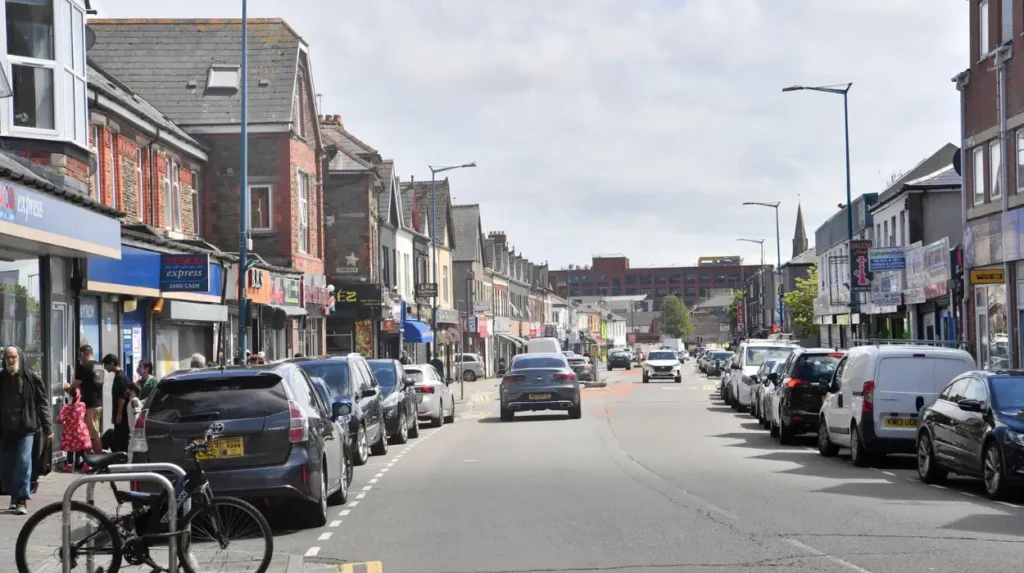
The main roads help explain the structure of the neighbourhood. Albany Road is a major commercial corridor. City Road provides another concentration of restaurants, shops and services. Newport Road forms an important eastern approach to central Cardiff. Wellfield Road contains residential streets and local businesses.
Roath’s location is particularly relevant for people who work or study in central Cardiff. Cardiff University campuses, Cardiff city centre, the University Hospital of Wales and major employment districts are accessible by bus, bicycle and on foot from different parts of the neighbourhood.
How did Roath develop historically?
Roath developed from a historic parish and rural landscape into an urban Cardiff district during the nineteenth century, when industrial expansion, population growth, housing construction, railways and dock activity transformed eastern Cardiff.
Cardiff experienced dramatic economic expansion during the nineteenth century because of the South Wales coal trade. The development of docks and railway connections increased employment and population and accelerated the conversion of surrounding rural land into urban neighbourhoods.
The Roath Dock opened in 1887, providing additional capacity for Cardiff’s expanding coal-export economy. The dock was constructed during a period when Cardiff was competing to maintain its position as a major coal-exporting port.
This industrial development influenced the wider eastern side of Cardiff. Workers needed housing, transport and community facilities close to employment areas. Streets of terraced and semi-detached houses expanded around the established village and parish landscape.
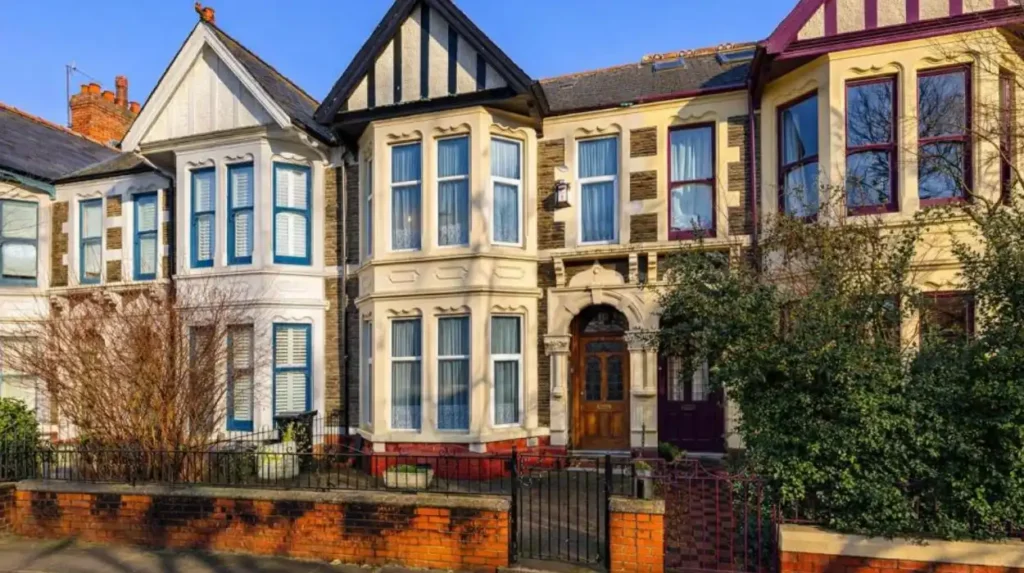
The Victorian and Edwardian periods therefore shaped much of the built character visible in Roath today. Terraced homes, bay-fronted properties, brick buildings, churches, schools and commercial terraces remain important components of the neighbourhood.
The history of Roath is also closely connected with the Bute family and Cardiff’s nineteenth-century development. St Margaret’s Church in Waterloo Road was commissioned by the 3rd Marquess of Bute and built in 1870 to designs by architect John Prichard. Its Grade I-listed status reflects its architectural and historic significance.
Roath Park provides another important historical connection. Cardiff University identifies Roath Park among the urban parks created during Cardiff’s Victorian and Edwardian prosperity.
What is Roath Park and why is it important?
Roath Park is a major historic public park containing a lake, gardens, recreational areas and the well-known Scott Memorial Lighthouse, and it forms one of the most significant green spaces within Cardiff’s urban neighbourhoods.
Roath Park is more than a recreational space. It is an important part of Cardiff’s historic landscape.
Cadw identifies Roath Park as a Grade I registered historic park and garden. The Grade I classification represents exceptional historic interest within the Welsh system for registered historic parks and gardens.
The park includes Roath Park Lake and landscaped gardens. The lake provides a distinctive centrepiece, while paths and planted areas support walking and everyday recreation.
The Scott Memorial Lighthouse stands at the southern end of the lake. It commemorates Captain Robert Falcon Scott and members of his Antarctic expedition of 1910–12. The memorial is an important connection between Cardiff’s local landscape and polar exploration.
Roath Park also demonstrates how public parks became part of urban planning during Cardiff’s period of rapid growth. Historic parks provided recreation, landscaped space and public amenities within an increasingly dense city.
Cardiff Council identifies Roath Park and Roath Park Lake and Gardens as conservation areas. These designations recognise the architectural, landscape and historic character of the locations.
Cadw explains that registered historic parks and gardens are considered through the planning system when development proposals affect their special historic interest or setting.
For residents, the practical significance is straightforward. Roath has access to a large historic landscape without leaving the urban area.
What are the main residential areas within and around Roath?
Roath contains dense Victorian and Edwardian residential streets, while nearby Plasnewydd, Penylan, Cathays and Cyncoed provide different housing forms ranging from traditional terraces and converted properties to larger family homes.
Housing character changes considerably across the neighbourhood.
Areas closer to Albany Road, City Road and Cathays generally contain denser urban housing. Victorian and Edwardian terraces are common, and many properties have been adapted into flats or shared student accommodation.
Further north and north-east, streets around Roath Park, Penylan and Cyncoed contain larger houses and lower-density residential development. Some roads have substantial semi-detached and detached properties, gardens and mature trees.
The architecture reflects the periods when Cardiff expanded rapidly. Common features include brick elevations, bay windows, pitched roofs, front gardens, rear gardens and traditional terraces.
Older properties often have more complex maintenance requirements than modern housing. Roofs, windows, brickwork, damp management, insulation and heating systems are important considerations when assessing a property.
Roath also has a significant private rental market. Its proximity to Cardiff University and central employment areas makes the wider Roath-Cathays corridor relevant to students and young professionals.
People considering buying or renting should therefore assess the exact street rather than treating Roath as one uniform housing market. Property type, distance from commercial streets, parking arrangements, conservation controls and proximity to transport can differ significantly between locations.
What is everyday life like in Roath?
Everyday life in Roath combines dense residential streets with local shopping, independent businesses, parks, schools, restaurants and frequent public transport, creating an urban neighbourhood where many routine services are available within the wider community.
The neighbourhood has a strong local-service structure.
Albany Road and City Road provide concentrations of shops, restaurants, cafés, takeaways, convenience stores and professional services. Smaller businesses operate along residential streets and around local junctions.
The commercial environment reflects Cardiff’s diverse population. Food businesses represent a broad range of cuisines, while convenience retail supports everyday household needs.
Roath also has a strong connection with Cardiff’s student population. Its proximity to Cardiff University and central Cardiff contributes to demand for rented accommodation, food businesses and evening services.
Residential streets provide a different environment from the main commercial corridors. Traffic and pedestrian activity generally increase around major shopping roads, while quieter streets have a more residential character.
Green space is another important part of everyday life. Roath Park, local recreation grounds and smaller green areas provide opportunities for walking, exercise and outdoor activities.
This combination creates a neighbourhood where residential, commercial, educational and recreational functions exist within a relatively compact urban area.
What shops and commercial areas are found in Roath?
Roath’s main commercial areas include Albany Road, City Road, Wellfield Road and nearby streets, offering food businesses, convenience shops, professional services, cafés, restaurants, personal services and independent retailers.
Albany Road is one of the best-known commercial streets associated with Roath. It connects the neighbourhood with surrounding districts and provides a large concentration of everyday businesses.
City Road has a particularly strong food and hospitality presence. Its businesses contribute to the area’s diverse commercial identity.
Wellfield Road provides another local shopping environment, with businesses serving residents and visitors from surrounding residential streets.
The commercial structure is important for residents because it reduces dependence on large out-of-town retail areas for routine purchases. Grocery shopping, food, personal services and household requirements can often be handled locally.
For larger shopping trips, central Cardiff provides major retail destinations within a short distance of Roath. Cardiff city centre contains the principal high-street retail core and larger commercial facilities.
Business turnover is a normal feature of any urban high street, so specific shops and restaurants change over time. Residents should check current opening information before planning around a particular business.
How good is public transport from Roath?
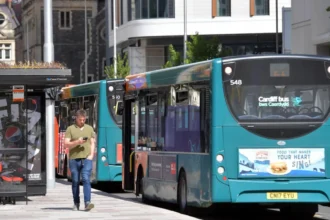
Roath has extensive bus connections with Cardiff city centre and surrounding districts, with routes operating along major corridors including Albany Road; services such as Cardiff Bus routes 1, 2, 28 and 29 connect Roath with wider parts of the city.
Bus travel is central to transport in Roath.
Cardiff Bus route 1 operates a City Circle service connecting areas including Cardiff Bay, Grangetown, Canton, Heath Hospital, Albany Road, Tremorfa and Splott. Route 2 operates the reverse City Circle direction through similar areas.
Routes 28 and 29 connect Cardiff city centre with Roath Park and continue towards Llanishen, with Albany Road and Lakeside included on the route.
The exact timetable varies by service, day and date, so residents should use current operator information when planning journeys.
Cycling and walking are also practical for many local journeys. The relatively close relationship between Roath and central Cardiff means that active travel can be useful for commuting, shopping and university travel.
Car users face a different set of considerations. Dense Victorian streets often have limited off-street parking. Parking arrangements therefore vary by property and street.
Anyone moving to Roath should check whether a property has a private driveway, allocated parking, permit requirements or unrestricted street parking.
Is Roath suitable for students?
Roath is an established student area because it sits close to Cardiff University, central Cardiff and major bus corridors, while its rental housing, food businesses, shops and neighbourhood services support student-oriented daily life.
Student demand is particularly visible around the Roath-Cathays corridor.
Traditional terraced houses provide accommodation suitable for shared living. Some larger properties have been converted into houses in multiple occupation, commonly known as HMOs.
An HMO is a property occupied by several people who are not from one household and who share facilities such as kitchens or bathrooms. In Cardiff, applicable planning and licensing requirements depend on the property and circumstances.
Students benefit from access to local food businesses, convenience shops and bus routes. Central university facilities are also accessible from many parts of Roath.
However, the exact suitability of a property depends on factors such as room size, heating, insulation, tenancy terms, transport distance and landlord or agent arrangements.
Students should check the current legal requirements and property licensing position with Cardiff Council before signing a tenancy.
Is Roath suitable for families?
Roath contains family housing, schools, parks and local services, while nearby Penylan and Cyncoed provide additional residential options; families should assess individual streets for property size, traffic, parking, school access and proximity to green space.
Family suitability varies considerably across the neighbourhood.
Properties near Roath Park and quieter residential streets often provide larger floor areas and gardens than accommodation closer to the busiest commercial roads.
Roath Park is a major recreational asset for households with children. Its landscaped areas, lake and walking routes provide accessible outdoor space within the urban environment.
Education is another important consideration. Cardiff contains Welsh-medium, English-medium and faith-based schools, and school catchment arrangements depend on the specific residential address.
Parents should therefore use current Cardiff Council school information and admissions guidance rather than relying on general neighbourhood descriptions.
Traffic also matters. Major roads such as Albany Road and Newport Road carry substantial traffic, while quieter residential streets offer different conditions.
Families considering a move should inspect the property and immediate street at different times of day to understand traffic, parking and pedestrian conditions.
What are the main schools and educational influences around Roath?
Roath benefits from proximity to Cardiff’s wider education network, including Cardiff University, local primary and secondary schools, further education facilities and specialist institutions serving residents across the city.
Education contributes strongly to Roath’s demographic and housing character.
Cardiff University is one of the city’s major higher-education institutions. Its presence contributes to demand for student accommodation and services across nearby neighbourhoods.
The University’s academic and research activity also forms part of Cardiff’s wider knowledge economy. Roath’s proximity to central university areas makes it relevant to students, academic staff and other university workers.
Local schools serve surrounding residential communities. The availability of places and admissions arrangements depend on current council policies, catchment boundaries and the individual school.
Welsh-medium education is an established part of Cardiff’s education system. Families considering schools should review current admission arrangements and language provision directly with the relevant education authorities.
The educational environment therefore influences both residential demand and local commercial activity.
What historic buildings and landmarks can you see in Roath?
Roath contains historic churches, Victorian and Edwardian buildings, landscaped parks and other heritage assets that reflect Cardiff’s industrial expansion, civic development and architectural growth during the nineteenth and early twentieth centuries.
St Margaret’s Church is among the best-known historic landmarks. The church was built in 1870 and contains architectural and memorial features associated with the Bute family and the history of the site. Cadw lists it as Grade I.
Roath Park is another major heritage asset. Its Grade I registration demonstrates its national historic importance.
Cardiff Council maintains conservation-area designations covering Roath Park, Roath Park Lake and Gardens, and Roath Mill Gardens.
Conservation areas are designated because of special architectural or historic interest. Planning controls apply to certain changes within them.
This matters to homeowners because alterations to traditional buildings can involve additional planning considerations. Windows, external materials, trees and extensions require careful assessment where conservation controls apply.
Cadw also maintains records through Cof Cymru and the Welsh historic environment system. These resources provide information about designated historic assets and their significance.
How does Roath connect with Cardiff city centre?
Roath connects closely with central Cardiff through major roads, bus routes, walking routes and cycling corridors, making the neighbourhood part of Cardiff’s inner urban area rather than a detached suburban district.
Newport Road, City Road and Albany Road provide major links between Roath and central Cardiff.
Bus services strengthen these connections. Cardiff Bus routes serving Albany Road connect Roath with the city centre and wider parts of Cardiff. Routes 28 and 29 specifically connect the city centre with Roath Park and northern districts.
Walking distances depend on the exact starting point. Southern Roath is closer to the city centre, while areas around Roath Park are further north.
Cycling provides another transport option. The flat urban geography of much of Cardiff supports cycling for local journeys, although individual routes differ in traffic conditions and infrastructure.
This central position is one reason Roath remains closely connected to Cardiff’s employment, education, entertainment and cultural networks.
What should you consider before moving to Roath?
Before moving to Roath, compare the exact street, property condition, rent or purchase price, parking, transport, school catchment, conservation controls, noise levels, local services and distance from major destinations rather than assessing the whole neighbourhood uniformly.
The first consideration is location within Roath. Albany Road, City Road, Roath Park, Penylan and streets closer to Cathays have different characteristics.
The second consideration is housing condition. Victorian and Edwardian properties require appropriate inspection of roofs, windows, insulation, damp, electrics, plumbing and heating.
The third consideration is transport. People who commute should compare their journey at the times they normally travel. Bus frequency and traffic conditions vary by corridor.
Parking should receive particular attention. Some older terraces have no private parking, while other properties have garages, driveways or rear access.
Noise is another practical factor. Properties near busy commercial roads experience different conditions from homes on quieter residential streets.
Heritage status is relevant for properties within conservation areas or for listed buildings. Cardiff Council and Cadw provide the appropriate planning and heritage information.
Explore More Area Guide
Living in Canton Cardiff: Rent, Transport, Shops & Local Life
Best Cardiff Areas for Students: Cathays, Roath & More
What makes Roath an important Cardiff neighbourhood today?
Roath remains an important Cardiff neighbourhood because its historic housing, commercial streets, education links, transport connections, diverse community facilities and major green spaces combine within an established inner-city district close to the capital’s central employment and cultural areas.
Roath demonstrates how Cardiff’s nineteenth-century expansion continues to shape modern urban life.
The neighbourhood’s historic housing provides a substantial residential base. Albany Road and City Road support commercial activity. Cardiff University contributes an important educational influence. Roath Park provides a nationally significant historic green space.
Its location also creates strong links with the wider Cardiff economy. Residents can access central employment districts, education facilities, healthcare services, retail areas and cultural venues without living outside the city.
The neighbourhood continues to evolve through housing changes, business turnover, transport investment, planning decisions and changing patterns of urban living.
Its historic environment is also subject to ongoing management. Cardiff Council currently identifies 27 conservation areas across Cardiff, including several locations associated with Roath and neighbouring districts.
For prospective residents, the key point is that Roath is not one uniform residential environment. It is a collection of streets and sub-areas with different housing, transport, commercial and environmental characteristics.
Understanding those differences provides a more accurate picture of living in Roath and its position within Cardiff.
What is the overall character of living in Roath?
Living in Roath means combining inner-city accessibility with established residential streets, historic architecture, independent businesses, educational connections and access to Roath Park, creating a neighbourhood closely integrated with Cardiff’s wider urban environment.
Roath’s identity comes from the interaction of its different functions.
Its Victorian and Edwardian housing records Cardiff’s industrial expansion. Its commercial streets reflect modern urban demand. Its student population connects it with higher education. Its parks provide recreational and environmental value. Its transport network connects it with central Cardiff and surrounding communities.
The neighbourhood also demonstrates the importance of historic urban landscapes. Roath Park remains a Grade I registered historic park, while St Margaret’s Church and other heritage assets preserve evidence of earlier phases of Cardiff’s development.
For people researching living in Roath, the most useful approach is to assess the precise location rather than relying only on the neighbourhood name. Housing type, street character, transport, parking, education and access to green space all change across the area.
Roath therefore remains a significant part of Cardiff’s residential landscape, linking the city’s industrial history with its contemporary education, commerce, transport and community life.
Is Roath a good area to live in Cardiff?
Roath is an established Cardiff neighbourhood with Victorian and Edwardian housing, local shops, restaurants, schools, bus connections and access to Roath Park. Its location near Cardiff city centre also supports convenient commuting and access to universities, employment areas and city services.