Choosing the best area to live in Cardiff for families depends on school access, housing costs, transport connections, green spaces, healthcare and everyday amenities. Cardiff, the capital of Wales, offers residential neighbourhoods ranging from established suburbs with detached family houses to modern waterfront developments and communities close to the city centre.
- What makes Cardiff a suitable city for families?
- Which areas in Cardiff are best for families?
- Which Cardiff neighbourhoods offer convenient access to schools?
- Which Cardiff areas are best for families who want parks and outdoor space?
- Which Cardiff areas are suitable for different family budgets?
- Which Cardiff neighbourhoods offer the best transport connections for parents?
- What should families know about Cardiff’s history and residential development?
- How should families compare healthcare, childcare and everyday amenities in Cardiff?
- What should families check before moving to Cardiff?
- Which Cardiff area should families choose for their long-term home?
Families moving to Cardiff need to compare neighbourhoods according to their children’s ages, commuting requirements, housing budget and preferred lifestyle. Areas such as Radyr, Whitchurch, Cyncoed, Pontprennau, Llandaff, Rhiwbina and Penylan offer different combinations of residential housing, parks, schools and transport links. The most suitable location depends on the household’s practical priorities rather than a single citywide ranking.
What makes Cardiff a suitable city for families?
Cardiff is a family-friendly capital city with residential suburbs, public parks, schools, healthcare facilities and transport connections. Its neighbourhoods provide access to urban amenities and outdoor recreation, allowing families to compare housing, education, commuting and childcare requirements within one metropolitan area.
Cardiff is located in South Wales and serves as the country’s principal administrative, commercial and cultural centre. Its residential geography includes the city centre, older inner suburbs, established northern neighbourhoods, eastern housing developments and communities extending towards the Vale of Glamorgan.
The city provides access to primary and secondary education, further education, universities, hospitals, local shopping centres and recreational facilities. Families also benefit from public spaces such as Bute Park, Roath Park and the extensive grounds surrounding Cardiff Castle and other historic sites.
Cardiff’s transport network includes local bus services, suburban railway stations and road connections to the M4 motorway. Cardiff Central railway station links the city with destinations across Wales and England, including Bristol and London. These connections are relevant to parents commuting for work, travelling to family appointments or managing school journeys.
The cost and convenience of family life vary between neighbourhoods. A household prioritising a larger garden and a quieter residential street generally evaluates different properties from a household seeking a short commute to the city centre. School admission arrangements, local transport frequency and access to childcare also influence the final decision.
Which areas in Cardiff are best for families?
Radyr, Whitchurch, Rhiwbina, Cyncoed, Llandaff, Penylan and Pontprennau are established Cardiff neighbourhoods for family housing. Each offers a different balance of schools, residential streets, green spaces, shopping facilities and commuting options, so families should compare individual locations before choosing a home.
Radyr
Radyr is a residential area in north-west Cardiff with a village-style centre, railway access and established family housing. It suits households seeking a suburban environment and connections to central Cardiff. Property type, station distance and school catchment arrangements differ by street.
Whitchurch
Whitchurch combines residential streets with a local shopping centre, schools, parks and transport links. Its established community facilities support everyday family routines. Families should assess traffic, walking routes and the distance between a prospective home and their preferred school.
Rhiwbina
Rhiwbina is a northern Cardiff suburb known for its village centre and predominantly residential character. It provides local shops, green spaces and public transport options. Families comparing homes here should check railway or bus access, school admission rules and property prices.
Cyncoed
Cyncoed is an established residential neighbourhood in north-east Cardiff, with substantial houses, quieter streets and access to parks and educational facilities. Larger properties attract households needing additional bedrooms or gardens, although prices and property sizes vary considerably.
Llandaff
Llandaff has a historic village centre, cathedral, residential streets and access to green spaces. Its architectural character and established amenities appeal to families seeking a neighbourhood with local identity. Housing costs depend on property size, condition and exact location.
Penylan
Penylan offers residential streets and access to Roath Park and other eastern Cardiff amenities. Its location provides routes towards the city centre and surrounding neighbourhoods. Families should compare parking, road conditions, public transport and the availability of suitable homes.
Pontprennau
Pontprennau is a modern residential area in north-east Cardiff with family housing developments and access to local services. It suits households considering newer properties and road-based commuting. Bus frequency, school availability, traffic and walking distances require careful assessment.
These neighbourhoods provide a useful starting point rather than a guarantee of school admission, affordability or suitability. Families should compare individual streets and properties, since access to services can change substantially over a short distance.
Which Cardiff neighbourhoods offer convenient access to schools?
Cardiff has English-medium, Welsh-medium, faith-based and specialist education options across the city. Families should compare school locations, admission criteria, available places and transport routes before selecting a neighbourhood, because living near a preferred school does not guarantee admission.
School access is one of the most important factors when choosing family housing. Cardiff Council provides online school searches and catchment-area information, helping parents identify relevant primary and secondary schools by postcode.
The council’s school admissions guidance explains that children living within a school’s catchment area receive higher priority under the relevant arrangements, but a catchment address does not guarantee a place. Availability depends on the school’s admissions criteria and capacity in the relevant year group.
Families researching Radyr, Whitchurch, Rhiwbina, Cyncoed and Llandaff should therefore check the exact address against the current school information. A property advertised as being near a popular school is not sufficient evidence of admission eligibility.
School visits provide additional information about teaching arrangements, facilities, pastoral support and the journey from home. Parents should also review recent Estyn inspection reports. Estyn is the education and training inspectorate for Wales.
Cardiff families can also compare Welsh-medium and English-medium education. The choice affects the schools under consideration and, in some cases, the distance children travel each day. Parents who need nursery provision should check availability separately from primary school admissions.
Which Cardiff areas are best for families who want parks and outdoor space?
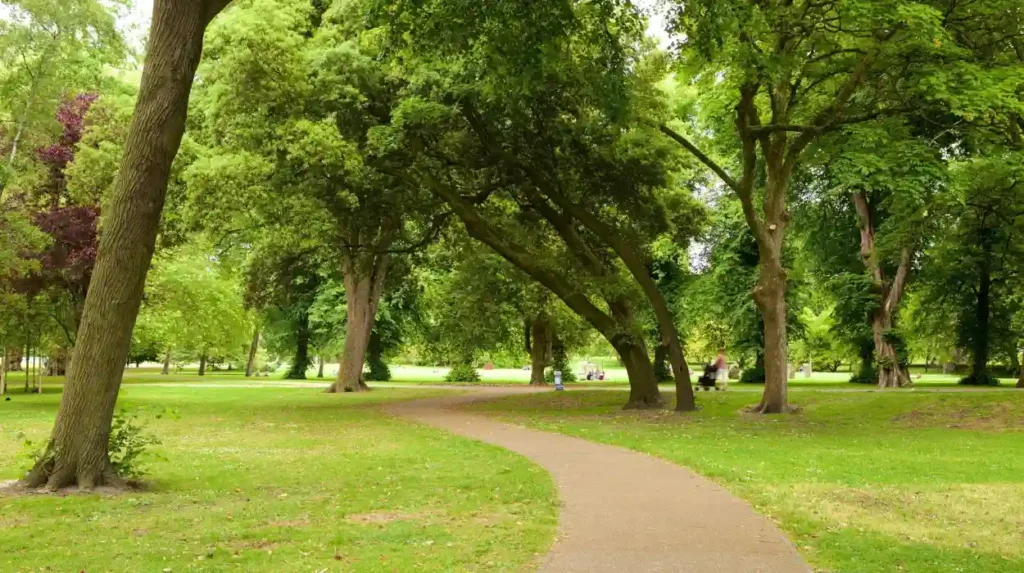
Families seeking regular outdoor activities should compare neighbourhoods near Roath Park, Bute Park and local green spaces. Penylan offers access to Roath Park, while central and western Cardiff neighbourhoods provide routes to Bute Park, walking paths and recreational facilities.
Green space supports family routines, including walking, cycling, outdoor play and weekend activities. Cardiff has parks of different sizes, from large historic landscapes to neighbourhood play areas.
Roath Park is a major recreational destination in north Cardiff. Its 30-acre artificial lake supports boating and fishing, while surrounding paths provide space for walks and outdoor recreation. The park’s history dates to its public opening on 20 June 1894.
Bute Park occupies 56 hectares beside Cardiff city centre. Its features include woodland, an arboretum, sports pitches, horticultural displays, natural play features and an education centre. The park is suitable for family walks and outdoor learning, and its central location also makes it accessible from nearby urban neighbourhoods.
Families considering Penylan should assess the walking or cycling route from the property to Roath Park. Households interested in Llandaff should investigate nearby green spaces and routes towards western Cardiff’s recreational areas. Radyr, Rhiwbina and Whitchurch also require street-level comparisons to establish which parks and play facilities are accessible on foot.
Parents with younger children should check playground equipment, accessible paths, toilets, seating and road crossings. Families with older children can prioritise sports pitches, cycling routes and independent access to local facilities.
A nearby park does not automatically make every property convenient for outdoor activities. The distance from the front door, pavement quality and crossing points matter as much as the neighbourhood’s overall reputation.

Which Cardiff areas are suitable for different family budgets?
Cardiff offers a range of housing choices, including flats, terraced houses, semi-detached homes and detached properties. Families should compare purchase prices or rents, council tax, energy bills, transport costs and maintenance expenses rather than judging affordability by property price alone.
Housing costs vary according to property size, condition, location and demand. Detached homes with gardens generally offer a different price proposition from smaller flats or terraced houses, but the exact relationship depends on the local market and individual property.
Cyncoed and parts of Llandaff contain larger traditional houses, while Pontprennau includes modern residential developments. Whitchurch, Rhiwbina, Radyr and Penylan offer varied housing stock, so families need to compare properties rather than assume every home within one neighbourhood falls into the same price category.
For renters, the monthly budget should include rent, council tax, electricity, gas, water, broadband and transport. Tenants should also check the tenancy terms, deposit requirements and whether any utilities or service charges are included.
For buyers, the calculation includes the deposit, mortgage payments, property purchase taxes where applicable, conveyancing, surveys, insurance and repairs. Welsh property transactions are subject to Land Transaction Tax rules where the relevant thresholds and conditions apply. Official Welsh Revenue Authority guidance provides the applicable rates and thresholds.
Families can make a more reliable comparison by reviewing recently advertised properties with similar numbers of bedrooms and comparable outdoor space. A three-bedroom property in one area should not be compared directly with a one-bedroom flat elsewhere.
Parents should also consider childcare and after-school provision. A cheaper property can generate higher overall household costs if it requires additional driving, paid childcare or lengthy commuting.
Which Cardiff neighbourhoods offer the best transport connections for parents?
Cardiff’s transport options include local buses, suburban rail services, cycling routes and major roads. Radyr and Rhiwbina provide rail access in their respective areas, while other neighbourhoods rely on combinations of buses, walking and driving for school and work journeys.
Transport convenience depends on the destination, journey time and service frequency. Families travelling to Cardiff city centre should compare actual door-to-door journeys rather than relying on a neighbourhood’s distance from the city centre.
Radyr has a railway station serving local journeys towards central Cardiff and the wider rail network. Rhiwbina also has suburban railway access. Whitchurch and Llandaff residents should investigate the stations and bus stops closest to their specific properties.
Pontprennau’s residential layout makes road access and bus services important considerations. Households living there should check the frequency of services at school-run and commuting times, along with traffic conditions on their usual routes.
Parents commuting to Cardiff city centre should calculate the time needed to reach the station or bus stop, wait for a service and travel to the final destination. A journey that appears short on a map can take longer when transfers or walking sections are included.
Families who drive should examine parking availability, residential restrictions, access to major roads and the cost of parking at work. Households with two working parents should test both commuting routes before deciding where to live.
Active travel also matters. Cardiff Council encourages walking, cycling and scooting for suitable school journeys. Parents should assess pavements, crossings, cycle infrastructure and traffic exposure before allowing children to travel independently.
What should families know about Cardiff’s history and residential development?
Cardiff developed from a historic settlement around Cardiff Castle into Wales’s capital and a major urban centre. Its residential neighbourhoods reflect different periods of expansion, including historic villages, Victorian housing, established suburbs and newer developments built to accommodate population growth.
Cardiff’s history influences its present-day housing character. The city centre grew around Cardiff Castle and the surrounding settlement, while industrial development and the expansion of the docks transformed the city during the nineteenth century.
Older residential areas contain traditional terraces, period houses and established shopping streets. Llandaff retains a historic village centre associated with its cathedral, while parts of Penylan and Cyncoed feature older suburban housing. These neighbourhoods offer architectural character alongside modern residential needs.
Other areas expanded as Cardiff’s population and employment base grew. Radyr, Rhiwbina and Whitchurch developed as residential communities beyond the historic core, while Pontprennau contains more recent housing development.
The Office for National Statistics recorded Cardiff’s population at approximately 362,300 in Census 2021, an increase of 4.7% from around 346,100 in 2011. This growth provides context for the city’s changing housing demand and residential development.
Historical character alone does not determine suitability for families. Older homes require checks on insulation, roof condition, damp, windows, heating systems and maintenance. Newer properties also require careful assessment of room sizes, storage, construction quality, outdoor space and transport access.
Families comparing older and newer neighbourhoods should consider how the housing layout matches their needs now and in the future. A family with a baby has different requirements from a household with teenagers who need study space and independent transport.
How should families compare healthcare, childcare and everyday amenities in Cardiff?
Families should assess GP registration options, dental services, pharmacies, nurseries, supermarkets and leisure facilities before choosing a Cardiff neighbourhood. The most practical location provides reliable access to essential services and reduces the time parents spend travelling between school, childcare, work and home.
Healthcare access should be part of the property search. Families can use NHS Wales services to identify GP practices, dental services and pharmacies near a prospective address. Registration availability and appointment arrangements need checking directly with each provider.
Childcare is another important consideration for working parents. Nursery opening hours, waiting lists, fees and after-school club availability influence household budgets and commuting schedules. Parents should confirm whether childcare providers accept children of the required age and whether their opening times match working hours.
Local shopping facilities also affect daily convenience. Whitchurch and Rhiwbina have local centres serving routine shopping needs, while Penylan provides access to amenities in eastern Cardiff. Families in newer residential areas should check the distance to supermarkets, pharmacies and other frequently used services.
Leisure centres, libraries, sports clubs and community facilities provide additional options for children. Cardiff Council maintains information about parks, leis
Before committing to a home, families should complete a weekday trial journey. This reveals practical issues such as congestion, parking, public transport frequency and the time required to reach essential services.
Explore More Area Guide
Moving to Cardiff With Children: A Family Guide
Cardiff School Admissions Guide for Parents: 2026–2027
What should families check before moving to Cardiff?
Families should verify school admission arrangements, property affordability, transport connections, healthcare access and local amenities before signing a tenancy or purchasing a home. Checking the exact address and visiting the neighbourhood at different times helps identify practical problems that property advertisements often overlook.
A structured property assessment helps parents compare neighbourhoods objectively. The following checks address the most important decisions.
- School access: Check catchment information, admission criteria, school capacity and recent Estyn reports.
- Housing condition: Inspect heating, insulation, windows, damp, storage, garden space and the number of suitable bedrooms.
- Monthly expenses: Calculate rent or mortgage payments, council tax, utilities, insurance, childcare and commuting costs.
- Transport: Test the school run and work commute during normal weekday hours.
- Safety and accessibility: Assess road crossings, pavement conditions, street lighting and the route children use to reach local facilities.
- Healthcare: Identify nearby GP practices, pharmacies and dental services, then confirm registration arrangements.
- Future requirements: Consider additional bedrooms, secondary school transitions, changing childcare needs and access to public transport.
Families relocating from another city should also compare their current living arrangements with those available in Cardiff. A household moving from a rural location may prioritise outdoor space, while parents relocating from a larger metropolitan area may place greater emphasis on rail connections and walkable amenities.
For international families, additional considerations include employment locations, language preferences in education and familiarity with Welsh school admissions. Researching these factors before moving helps reduce uncertainty and prevents decisions based solely on advertised property features.
Which Cardiff area should families choose for their long-term home?
The best Cardiff neighbourhood depends on household priorities, including housing budget, school preferences, commuting requirements and access to outdoor space. Radyr, Whitchurch, Rhiwbina, Cyncoed, Llandaff, Penylan and Pontprennau each provide different residential options for families.
Radyr suits households looking for a suburban setting with railway access. Whitchurch offers an established neighbourhood with local shops and community facilities. Rhiwbina provides a village-style centre and residential surroundings, while Cyncoed appeals to families comparing larger houses and established suburban streets.
Llandaff combines historic character with residential housing and access to green space. Penylan is worth considering for families interested in eastern Cardiff and access to Roath Park. Pontprennau provides modern housing options and is particularly relevant to households evaluating newer developments and road connections.
No neighbourhood is automatically the best choice for every family. The right decision depends on the relationship between the property, school arrangements, daily travel and total household costs.
Families should shortlist three areas, compare similar properties and check current school and transport information before making a final decision. This approach identifies a home that meets both immediate requirements and longer-term family needs.
What are the best areas to live in Cardiff for families?
Radyr, Whitchurch, Rhiwbina, Cyncoed, Llandaff, Penylan and Pontprennau are popular areas for families to consider. Each offers different combinations of schools, housing, parks, transport links and local amenities.