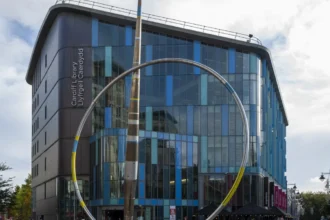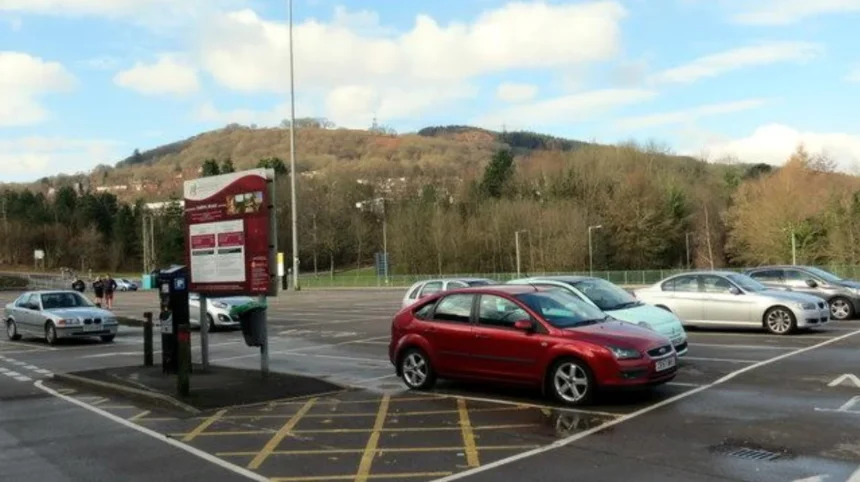
Cardiff has a mixed park and ride network rather than one single city-operated facility. The system combines dedicated event and hospital park and ride services with Transport for Wales (TfW) rail-based park and ride facilities around Cardiff. TfW currently identifies 24 stations with park and ride facilities within 30 minutes of Cardiff Central, providing more than 2,000 parking spaces and more than 100 accessible spaces.
- What is Cardiff park and ride?
- How many Cardiff park and ride facilities are available?
- Which Cardiff North park and ride stations are available?
- Which Cardiff East park and ride stations are available?
- Which Cardiff South park and ride stations are available?
- Which Cardiff West park and ride stations are available?
- How does Cardiff’s hospital park and ride service work?
- How does Cardiff event park and ride work?
- How do you use Cardiff’s rail-based park and ride system?
- Why does Cardiff use park and ride?
- How should visitors choose the right Cardiff park and ride option?
- What should drivers know about parking, accessibility and service changes?
- How does Cardiff park and ride fit into the city’s future transport network?
This distinction is important because Cardiff Council and Transport for Wales describe different parts of the wider park and ride system. Cardiff Council operates or coordinates specific road-based services, while TfW provides information about station car parks that allow motorists to leave their vehicles and continue into Cardiff by train.
For visitors, commuters, hospital users and event-goers, park and ride reduces the need to drive directly into central Cardiff. It also connects car travel with the city’s rail network and supports Cardiff Council’s wider sustainable transport strategy. Cardiff Council identifies park and ride as part of its programme to make sustainable travel easier and improve access to the city centre.
What is Cardiff park and ride?
Cardiff park and ride allows drivers to leave their vehicles at designated parking facilities before completing journeys by bus or train. The system includes hospital, event and rail-based facilities serving Cardiff from northern, eastern, southern and western approaches to the city.
The basic principle is simple. A driver parks away from the busiest central roads and completes the remaining journey using public transport. The transport connection varies according to the facility.
Cardiff’s road-based park and ride services operate differently from TfW’s railway-based facilities. The Cardiff Council park and ride page currently highlights a free hospital service from Cardiff East to the University Hospital of Wales and special arrangements for large events at the Principality Stadium.
TfW operates the wider rail-based network. Its Cardiff Park and Ride system covers 24 stations divided into four geographical areas: Cardiff North, Cardiff East, Cardiff South and Cardiff West. Each facility provides access to Cardiff Central by train.
The system therefore serves several travel purposes. A commuter can park at a station and take a train to Cardiff Central. A visitor can use the same principle for city-centre shopping or attractions. Event visitors can also use park and ride arrangements when special facilities are activated.
The term “Cardiff park and ride” therefore refers to a network rather than a single car park.
How many Cardiff park and ride facilities are available?
Transport for Wales currently lists 24 Cardiff-area stations with park and ride facilities, grouped into four directions. The network has more than 2,000 parking spaces and over 100 accessible spaces, with every listed route reaching Cardiff Central within 30 minutes.
The 24-station network is divided into four geographical groups. The division makes the system easier to understand for motorists approaching Cardiff from different directions.
The 10 Cardiff North facilities are Aber, Caerphilly, Lisvane and Thornhill, Llanbradach, Llandaf, Llanishen, Pontypridd, Radyr, Taffs Well and Trefforest. TfW lists different parking capacities and journey times for each location.
The 5 Cardiff East facilities are Cwmbran, Newport, Pye Corner, Risca and Pontymister, and Rogerstone. These stations provide access from the east and surrounding communities.
The 5 Cardiff South facilities are Barry, Cadoxton, Cogan, Eastbrook and Penarth. These stations connect southern communities with Cardiff Central by rail.
The 4 Cardiff West facilities are Bridgend, Llanharan, Pontyclun and Pyle. They provide park and ride access from the west and are all listed by TfW as being within 30 minutes of Cardiff Central by train.
The total network is therefore broader than Cardiff’s administrative boundary. The TfW definition focuses on practical access to Cardiff Central rather than limiting park and ride facilities to sites physically located inside Cardiff.
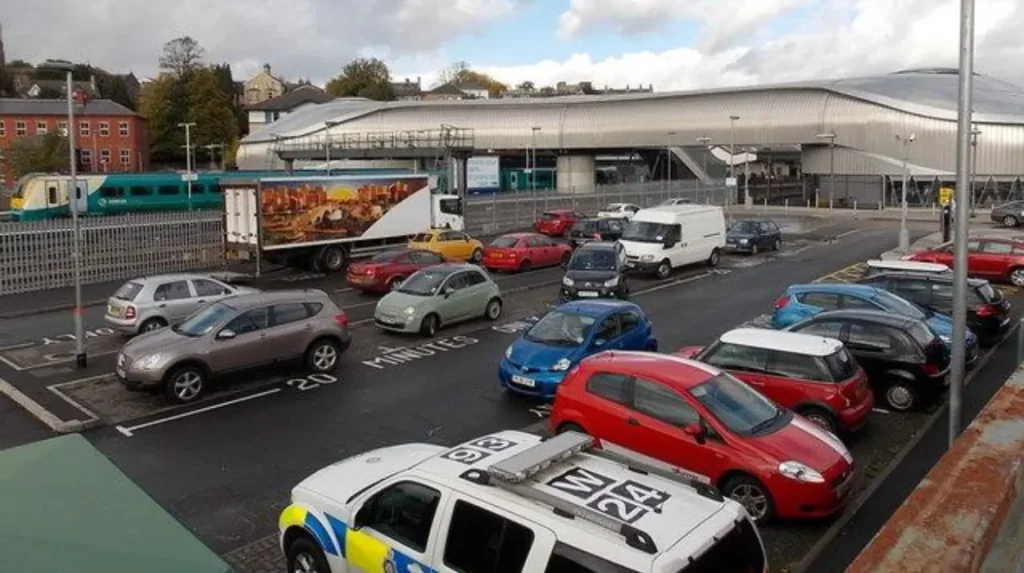
Which Cardiff North park and ride stations are available?
Cardiff North has 10 TfW park and ride stations: Aber, Caerphilly, Lisvane and Thornhill, Llanbradach, Llandaf, Llanishen, Pontypridd, Radyr, Taffs Well and Trefforest. Their listed train journeys to Cardiff Central range from 13 to 30 minutes.
The northern group is particularly important for motorists travelling towards Cardiff from the valleys and northern suburbs.
Aber has 129 park and ride spaces, including 8 accessible spaces, with a listed train journey of 22 minutes to Cardiff Central. Caerphilly has 260 spaces and 8 accessible spaces, with a listed journey of 19 minutes.
Lisvane and Thornhill has 83 park and ride spaces, including 5 accessible spaces. The listed train journey to Cardiff Central is 15 minutes.
Llanbradach has 18 spaces and no accessible spaces listed by TfW. Its train journey to Cardiff Central is 28 minutes.
Llandaf has 78 spaces and 6 accessible spaces. Its listed journey to Cardiff Central is 13 minutes.
Llanishen has 41 spaces, with no accessible spaces listed, and a 13-minute train journey to Cardiff Central.
Pontypridd has 8 spaces, including 2 accessible spaces, and a 30-minute journey.
Radyr is one of the larger northern facilities. TfW lists 290 park and ride spaces and 15 accessible spaces on its Cardiff North page. A separate TfW station page also identifies additional parking at the nearby park and ride facility.
Taffs Well has 89 spaces and 5 accessible spaces, with a 22-minute journey.
Trefforest has 108 spaces and 8 accessible spaces, with a 28-minute journey.
These figures demonstrate that parking capacity varies substantially between stations. Drivers should check the current TfW information before travelling because TfW states that station and car-park improvement work can affect available spaces.
Which Cardiff East park and ride stations are available?
Cardiff East has five TfW park and ride stations: Cwmbran, Newport, Pye Corner, Risca and Pontymister, and Rogerstone. Listed journeys to Cardiff Central range from 14 to 30 minutes, providing several alternatives for motorists approaching Cardiff from the east.
Cwmbran provides 150 park and ride spaces, including 10 accessible spaces. TfW lists a 27-minute journey to Cardiff Central.
Newport has 238 pay-and-display spaces and 12 accessible spaces. Its listed train journey to Cardiff Central is only 14 minutes, making it one of the fastest eastern options in the TfW Cardiff network.
Pye Corner has 57 park and ride spaces, including 4 accessible spaces. The listed journey to Cardiff Central is 22 minutes.
Risca and Pontymister has 88 spaces, including 6 accessible spaces, with a listed journey of 30 minutes.
Rogerstone has 59 spaces, including 4 accessible spaces, with a listed journey of 26 minutes.
Cardiff East also has a separate meaning within Cardiff Council’s hospital park and ride arrangements. Cardiff Council states that a free hospital park and ride service operates from Cardiff East to the University Hospital of Wales at Heath. This service is for staff, patients and visitors attending the hospital.
The hospital facility should not be confused with the five TfW railway stations in the Cardiff East group. They are separate transport arrangements with different destinations and operating models.
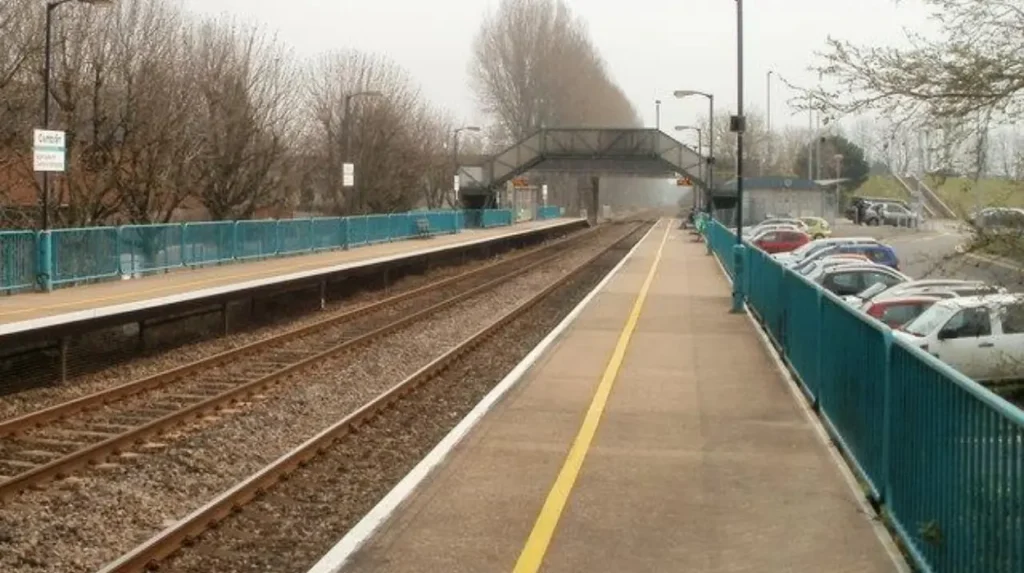
Which Cardiff South park and ride stations are available?
Cardiff South has five TfW park and ride stations: Barry, Cadoxton, Cogan, Eastbrook and Penarth. Listed rail journeys to Cardiff Central range from 9 to 24 minutes, giving motorists from the Vale of Glamorgan several routes into central Cardiff.
Barry has 124 park and ride spaces, including 2 accessible spaces. TfW lists a 24-minute train journey to Cardiff Central.
Cadoxton has 21 spaces and 2 accessible spaces, with an 18-minute journey.
Cogan has 43 spaces and 3 accessible spaces. Its listed journey to Cardiff Central is 9 minutes, the shortest journey in the Cardiff South group.
Eastbrook has 43 spaces and 3 accessible spaces, with an 11-minute journey.
Penarth has 29 spaces and 2 accessible spaces, with a 12-minute journey.
These stations provide an important connection between the Vale of Glamorgan and Cardiff. They also offer alternatives to driving along the road network towards central Cardiff.
The South group is particularly relevant for people travelling from Barry, Penarth and surrounding communities. The train journey terminates at Cardiff Central, placing passengers close to the central shopping, business, cultural and sporting districts.
TfW also provides journey-planning information for these facilities. Current service conditions should always be checked before travel because train services and station facilities can change.
Which Cardiff West park and ride stations are available?
Cardiff West has four TfW park and ride stations: Bridgend, Llanharan, Pontyclun and Pyle. Their listed journeys to Cardiff Central range from 23 to 30 minutes, giving westbound motorists several rail-based alternatives to driving directly into Cardiff.
Bridgend has 102 pay-and-display spaces, including 5 accessible spaces, with a listed 25-minute journey to Cardiff Central.
Llanharan has 48 park and ride spaces, including 5 accessible spaces. The listed train journey is 23 minutes.
Pontyclun has 25 spaces, with no accessible spaces listed by TfW. Its journey to Cardiff Central is 23 minutes.
Pyle has 15 spaces, with no accessible spaces listed, and a 30-minute journey.
The western facilities are useful for people who live or work around Bridgend, Llanharan, Pontyclun and Pyle. They allow motorists to complete the final part of their journey by rail.
The network also illustrates why “Cardiff park and ride” extends beyond Cardiff’s city boundary. The purpose is to intercept car journeys before they reach the central urban area.
How does Cardiff’s hospital park and ride service work?
Cardiff’s hospital park and ride provides a free weekday service from Cardiff East to University Hospital Wales in Heath. It serves staff, patients and visitors, operates from 6:25am to 9pm, and does not permit overnight vehicle parking.
The service is provided by the Cardiff and Vale NHS Board rather than functioning as a general city-centre park and ride service. Cardiff Council identifies the destination as the University Hospital of Wales in Heath.
The facility uses postcode CF23 8HH for navigation. Cardiff Council provides separate driving directions for people arriving from the east and west through the M4 and A48 road network.
The service operates Monday to Friday from 6:25am until 9pm. The car park closes shortly after the final bus arrives.
Overnight parking is not permitted. Cardiff Council also states that there are no vehicle height restrictions at the site.
The car park has CCTV, but vehicles are left at the owner’s risk. This distinction is important because CCTV does not represent a guarantee of vehicle security.
The hospital service has a specific purpose. It is not the same as the TfW rail-based park and ride network. Drivers travelling into central Cardiff for shopping, tourism or general commuting should therefore use the appropriate TfW station facility or another public transport option.
How does Cardiff event park and ride work?
Cardiff Council organises special park and ride arrangements for major events, particularly events at the Principality Stadium. These services are temporary rather than permanent facilities, and availability, locations, operating times and travel instructions depend on each event.
Cardiff hosts major sporting and performing-arts events that generate substantial additional traffic and parking demand. Cardiff Council provides special supervised park and ride arrangements during selected events to manage these pressures.
The Principality Stadium is Cardiff’s major city-centre stadium and a significant destination for rugby, football and large-scale entertainment events. Its central location creates particular transport demands because large numbers of visitors arrive within a short period.
Event park and ride therefore operates differently from a standard station car park. A permanent rail facility has published station information, while an event service depends on the specific event.
Drivers should check Cardiff Council’s official major-event travel advice before attending a large event. Event parking arrangements, road closures, temporary restrictions and park and ride locations can change according to venue requirements and expected attendance.
This system is also separate from the hospital park and ride. Hospital transport operates around healthcare access, while event park and ride responds to temporary demand generated by major gatherings.
How do you use Cardiff’s rail-based park and ride system?
Using Cardiff’s rail-based park and ride involves choosing a suitable station, checking current parking availability and train services, parking at the station, buying the required rail ticket and travelling by train to Cardiff Central. Return journeys are available throughout the day.
TfW defines its Cardiff Park and Ride system as parking at a designated station car park and using the train for the remainder of the journey. The network is specifically organised around access to Cardiff Central.
The process begins with selecting the station that best matches the driver’s starting point. Someone approaching from Caerphilly has different practical options from someone travelling from Barry or Bridgend.
The next step is checking the current station information. TfW states that car-park improvement works can affect the number of spaces available. This means historical capacity figures should not be treated as guaranteed availability on a particular day.
After parking, passengers purchase their rail ticket and board the appropriate service. TfW states that all Cardiff Park and Ride routes reach Cardiff Central and provide return journeys throughout the day.
Journey planning is available through TfW’s website and app. TfW also provides a travel map showing bus stops, railway stations and park and ride options.
Passengers should check live travel information before departure. Rail disruptions, engineering works and temporary station restrictions can change journey conditions.
Why does Cardiff use park and ride?
Cardiff uses park and ride to connect private car travel with public transport, reduce the need for central-city driving and support sustainable travel. Cardiff Council identifies park and ride as part of wider measures to improve public transport, cycling and walking across the city.
Central Cardiff has a dense road network and significant demand from residents, commuters, shoppers, visitors and event attendees. Cardiff Council states that bus services are particularly susceptible to traffic congestion and that delays can increase operating costs and affect fares.
Park and ride changes the structure of a journey. Instead of completing the entire trip by car, a motorist uses the car for the outer section and public transport for the central section.
This approach reduces the number of vehicles travelling into the most congested parts of the city when people choose it instead of driving all the way to central Cardiff.
Cardiff Council’s sustainable transport programme includes park and ride alongside improvements to bus travel, Cardiff Bay connections, cycling infrastructure and walking conditions.
The council’s transport planning also connects park and ride with longer-term public transport development. Its transport white paper identified improved park and ride facilities at locations including J32/A470, J33 and Cardiff East as part of the city’s transport programme.
The strategic purpose is therefore broader than parking. Park and ride forms part of a transport network that connects roads, railways and city-centre destinations.
How should visitors choose the right Cardiff park and ride option?
Visitors should choose a park and ride facility according to their approach direction, final destination, operating arrangements and current service information. Rail-based users should select a TfW station linked to Cardiff Central, while hospital and event users should follow Cardiff Council instructions.
A visitor approaching from the north can examine the Cardiff North group. Caerphilly, Radyr, Llandaf and other northern stations provide different combinations of parking capacity and journey time.
Someone approaching from the east can compare Newport, Cwmbran, Pye Corner, Risca and Pontymister, or Rogerstone. Newport has the shortest listed rail journey to Cardiff Central in this group at 14 minutes.
Visitors arriving from the south can consider Barry, Cadoxton, Cogan, Eastbrook and Penarth. Cogan has the shortest listed journey to Cardiff Central at 9 minutes.
People approaching from the west can use Bridgend, Llanharan, Pontyclun or Pyle. Llanharan and Pontyclun both have listed journeys of 23 minutes to Cardiff Central.
The destination also matters. Cardiff Central is appropriate for the city centre, while the University Hospital of Wales requires the separate Cardiff East hospital service.
Major-event visitors should follow the specific event travel plan rather than assuming that ordinary station parking or city-centre parking will provide the best option. Cardiff Council publishes dedicated travel advice for major events.
Explore More Area Guide
Best Children’s Playgrounds and Play Areas in Cardiff 2026
Local Sports Clubs in Cardiff: Complete Guide 2026
What should drivers know about parking, accessibility and service changes?
Parking capacity, accessible spaces, payment arrangements and operating conditions differ between Cardiff-area facilities. Drivers should check the current TfW or Cardiff Council information before travel because station upgrades, events, disruptions and operational changes can affect parking and transport availability.
TfW currently lists more than 2,000 spaces across the 24 Cardiff Park and Ride stations and more than 100 accessible spaces. The distribution is uneven, so a particular station can have substantially fewer spaces than another.
Accessibility also differs between locations. For example, TfW lists 15 accessible spaces at Radyr, 8 at Caerphilly and 6 at Llandaf, while some facilities have no accessible spaces listed.
Parking payment also varies. TfW lists some facilities as pay-and-display while others are identified as park and ride spaces. Bridgend and Newport are examples of locations where TfW lists pay-and-display parking.
This makes pre-trip checking essential. The number displayed on a static guide does not guarantee that a space will be available when a driver arrives.
Cardiff’s council-managed car parks use different arrangements. Cardiff Council states that its city car parks support payment through MiPermit, machines or other specified methods depending on location. These council car parks should not be confused with dedicated TfW park and ride facilities.
Accessibility information should also be checked before travelling. TfW provides dedicated accessibility information for stations and advises passengers to check which stations offer suitable access.
How does Cardiff park and ride fit into the city’s future transport network?
Cardiff park and ride forms part of a wider transport strategy linking rail, buses, cycling, walking and road networks. Future rail and Metro development is designed to strengthen public transport connections, while park and ride remains a practical way to intercept car journeys outside central Cardiff.
Cardiff’s transport planning has developed around the wider South Wales Metro concept. The Cardiff Council transport white paper identifies improvements to park and ride alongside new stations, additional rail capacity and active-travel infrastructure.
The council’s published programme included improved park and ride facilities at J32/A470, J33 and Cardiff East. It also identified further rail and Metro developments, including stations and new tram-train connections.
Future network development changes the role of park and ride. As more railway and Metro connections become available, drivers gain more opportunities to transfer from cars to public transport before reaching central Cardiff.
The Cardiff Crossrail and Metro programmes also demonstrate the city’s long-term emphasis on integrated transport. TfW and Cardiff Council’s planning documents connect future rail infrastructure with broader questions of road access, parking, congestion, walking and cycling.
The wider objective is not simply to increase parking. It is to create a transport system in which driving, rail, bus, cycling and walking work together.
For visitors and residents, the practical lesson is straightforward: Cardiff park and ride is best understood as a network of transport interchange points, not a single car park. The most suitable facility depends on where the journey begins, where it ends and which service is operating on the day.
Cardiff’s current park and ride network already provides extensive rail-based access. TfW lists 24 stations, more than 2,000 spaces and over 100 accessible spaces, while Cardiff Council separately provides hospital and major-event arrangements.
This structure gives Cardiff multiple ways to avoid driving directly into the city centre. It also makes park and ride an important part of the city’s continuing transition towards more integrated and sustainable travel.
What is Cardiff Park and Ride?
Cardiff Park and Ride is a network of facilities where drivers leave their cars outside busy central areas and continue their journey by train or dedicated bus services. The network includes Transport for Wales rail stations, hospital services and event-specific arrangements.