Cardiff has a strong tradition of independent and family-owned enterprise. The city’s long commercial history is visible in its markets, shopping arcades, neighbourhood high streets, workshops, food businesses and specialist retailers. Some family businesses have operated in Cardiff for generations, while others have built decades-long relationships with local customers through specialist skills and consistent service.
- What makes a family-owned business different from an ordinary independent business?
- Why did family businesses become important during Cardiff’s commercial expansion?
- Which Cardiff family business has operated for more than a century?
- How has Market Deli served Cardiff across generations?
- How has Jonathan David Jewellers maintained a family connection in Cardiff?
- Which Cardiff family businesses have preserved specialist skills?
- How does Cardiff Market support long-established family businesses?
- What role do neighbourhood businesses play in Cardiff’s family-business tradition?
- How have Cardiff’s long-established family businesses adapted to modern commerce?
- What economic value do long-running family businesses bring to Cardiff?
- Why are family-owned businesses important to Cardiff’s heritage?
- What does the future look like for Cardiff’s family-owned businesses?
The history of family businesses in Cardiff is closely connected to the city’s development as a commercial and industrial centre. Cardiff expanded rapidly during the nineteenth century as coal from the South Wales valleys moved through Cardiff Docks to international markets. Cardiff became one of the world’s leading coal-exporting ports, with more than 10 million tonnes of coal passing through the port in 1913.
That economic expansion created demand for shops, food suppliers, tradespeople, manufacturers, transport operators and specialist retailers. Cardiff Market became an important centre for everyday commerce, while the Victorian arcades created additional space for independent retailers.
Family ownership gave some businesses a structure that supported continuity across generations. Skills, supplier relationships, customer knowledge and business responsibilities passed from parents to children and, in some cases, grandchildren and great-grandchildren.
Today, Cardiff’s established family businesses remain part of the city’s commercial identity. Their histories include soft drinks, food retail, jewellery, hairdressing, manufacturing, home services and specialist trades.
What makes a family-owned business different from an ordinary independent business?
A family-owned business is controlled by members of the same family, with ownership, management or both passing between relatives across generations. Examples include Lowes Soft Drinks, Market Deli and Jonathan David Jewellers in Cardiff.
Family ownership is different from simply being an independent business. An independent business operates without ownership by a large corporate group, but its owners do not necessarily belong to the same family.
A family business normally has a significant connection between ownership and family relationships. The structure varies. One generation can establish the company, a second generation can take responsibility for operations, and a third generation can continue the business.
Cardiff provides clear examples of this model. Lowes Soft Drinks identifies itself as a family-run company trading in the Cardiff area since 1890, with the present ownership extending across later generations.
Market Deli describes itself as a family business that has served Cardiff for five generations. Its history begins with William Dolbear taking a stall in Cardiff Market in 1906.
Family ownership also appears in specialist services. Lazarou Hair Group was founded in Cardiff in 1966 by brothers Steve and Jimmy Lazarou and states that the third generation of the family continues the business.
The important characteristic is continuity. The business remains connected to a family ownership structure while adapting its products, services and operating methods to changing customer requirements.
Why did family businesses become important during Cardiff’s commercial expansion?
Family businesses became important as Cardiff expanded through coal exports, docks, railways, markets and urban development. Growing population and trade created demand for local retailers, food suppliers, tradespeople and specialist services serving everyday customers.
Cardiff’s commercial development accelerated during the nineteenth century. The Glamorganshire Canal connected Cardiff with Merthyr in 1794, while the Taff Vale Railway opened in 1841. These transport connections strengthened Cardiff’s position as a major trading centre.
The docks expanded alongside the coal trade. Coal exports from Cardiff reached about 2 million tonnes in 1862 and nearly 11 million tonnes by 1913. Cardiff’s port handled cargo volumes that placed it among the leading ports of the period.
This expansion supported an increasingly complex urban economy.
Workers needed food, clothing, household goods and personal services. Businesses needed printing, transport, repairs, equipment and specialist professional services. Markets and shopping streets became important points of contact between producers, traders and consumers.
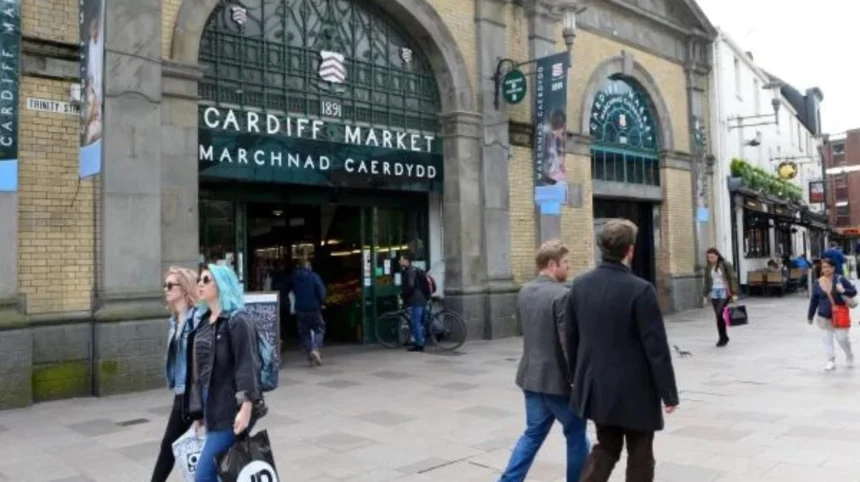
Cardiff Market reflects this commercial environment. The current market building officially opened on 8 May 1891. Cardiff Council records state that the original layout contained 349 stalls, covering different types of trade.
The market supported small specialist traders rather than only large companies. This environment provided a practical foundation for businesses that relied on direct customer relationships.
Family businesses fitted this environment because they could combine household labour, specialist knowledge and long-term relationships with customers and suppliers.
Which Cardiff family business has operated for more than a century?
Lowes Soft Drinks is one of Cardiff’s longest-established family businesses, tracing its Cardiff-area trading history to 1890. The company began producing soft drinks in Pontcanna and continues to operate as a family-run Welsh drinks business.
Lowes Soft Drinks provides one of the clearest examples of long-term family enterprise connected to Cardiff.
The company states that Robert Lowe began producing soft drinks in the Pontcanna area in 1890. The business later became Lowe Bros. (Cardiff) Ltd and continued under family ownership after Albert Cheetham acquired it in 1947.
Its production history reflects changes in technology and distribution. Early operations used clay jars and horse-drawn delivery. Later developments included returnable glass bottles and motorised transport.
The business also demonstrates how established companies respond to regulatory and consumer changes. Lowes now distributes soft drinks beyond its original Cardiff-area customer base and supplies businesses across the United Kingdom.
The family connection remains central to the company’s identity. Its current business information describes later generations as involved in running the company.
Lowes therefore represents more than a historic trading name. Its history records changes in manufacturing, packaging, transport, distribution and consumer demand while maintaining a family ownership structure.
How has Market Deli served Cardiff across generations?
Market Deli has served Cardiff through a family business operating from Cardiff Market since 1906. The business began with William Dolbear selling rabbits and later expanded into poultry, cooked foods, meat products, ready meals and household food shopping.
Market Deli is one of the strongest examples of generational retail continuity in Cardiff.
William Dolbear took over a stall in Cardiff Market in 1906 and initially sold rabbits. In 1912, ownership passed to his daughter Ethel and her husband Thomas Griffiths. Their son Thomas Daniel later took control and expanded the operation.
The business moved through different generations while adapting its product range.
Thomas Daniel expanded the operation by taking over neighbouring stalls and adding poultry. His wife Mary later continued the business with their son Martin.
After Mary’s death in 2001, Martin’s son Andrew took over the business with business partner Geoff. The company continues to operate in Cardiff Market.
The history demonstrates an important characteristic of family retail businesses. The physical premises can remain part of the business identity even as the people running the operation change.
Cardiff Council’s market history also identifies the Market Deli as a longstanding family-run trader operating for more than a century, with the business associated with the same stall since 1928.
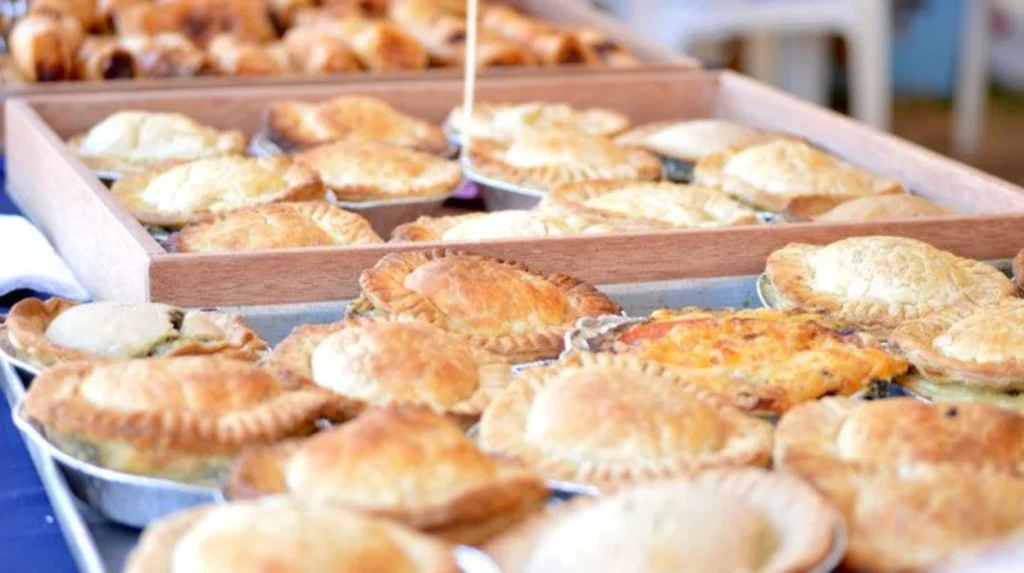
Its present range includes cooked foods, pies, pasties, filled rolls, salads, meat products and other food items. The business therefore combines historical continuity with contemporary food retail.
How has Jonathan David Jewellers maintained a family connection in Cardiff?
Jonathan David Jewellers combines a Cardiff jewellery history dating to the nineteenth century with family ownership established in 1981. The Hughes-Lewis family took over the St Mary Street business and continued its jewellery, watchmaking, repair and valuation services.
The story of Jonathan David Jewellers begins before its current family ownership.
The premises at 33 St Mary Street were completed in 1896 as an entrance to Morgan Arcade. Kaiser & Son, a watchmaker and jeweller, became the first tenant. The business later traded as Kingston Brothers.
In the early 1980s, Cardiff jeweller David Hughes-Lewis and his wife Margaret acquired the business. They renamed it Jonathan David Jewellers after their son Jonathan. This established the current family ownership period.
The family also restored important elements of the Victorian shopfront during the 1980s. Restoration work exposed historic architectural details that had been covered by later alterations.
The business continues to provide jewellery and watch services from 33 St Mary Street. Its services include jewellery repairs, watch servicing, bespoke design and formal valuations for purposes including insurance and probate.
The business demonstrates how family ownership can begin after an older commercial enterprise already has a long history. The building and trade remain historically connected, while the family ownership dates from 1981.
Which Cardiff family businesses have preserved specialist skills?
Cardiff’s long-running family businesses include specialist operators in jewellery, hairdressing, roofing, printing, blinds and food retail. Examples include Jonathan David Jewellers, Lazarou Hair Group, R & W Hughes Roofing and Swanmac Blinds.
Specialist family businesses depend heavily on accumulated practical knowledge.
Lazarou Hair Group was established in Cardiff in 1966 by brothers Steve and Jimmy Lazarou. The company describes itself as a family-run business with more than half a century of hairdressing and barbering history. It has expanded from its original Riverside location to multiple sites across Cardiff and South Wales.
R & W Hughes Roofing provides another Cardiff example. The company states that Ralph and Wayne Hughes established the business in Roath in 1981. It now describes itself as a third-generation family-run roofing company serving Cardiff and surrounding areas.
Swanmac Blinds was established in 1974 and remains family-owned and operated. Its early years included trading from a shop in Taffs Well before the company moved to its current site in 1988. It later expanded from domestic work into healthcare, education and commercial markets across the United Kingdom.
These businesses illustrate the role of specialist knowledge in long-term enterprise. Roofing requires practical building knowledge. Hairdressing depends on technical and customer-service skills. Jewellery requires precision and repair expertise. Manufacturing requires production knowledge and supply-chain management.
Family succession provides a mechanism for transferring this knowledge between generations.
How does Cardiff Market support long-established family businesses?
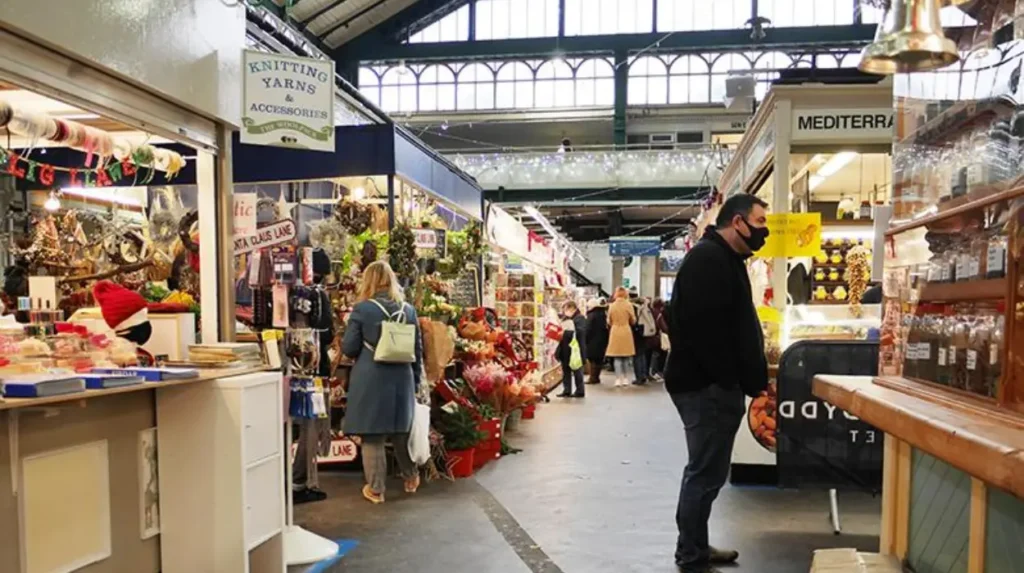
Cardiff Market provides a historic trading environment where independent and family businesses have operated alongside one another for generations. The market opened in 1891 and continues to accommodate specialist food, retail and service businesses in the city centre.
Cardiff Market is central to the story of family enterprise in the city.
The present market building opened in 1891. It is a Grade II listed building and has entrances from St Mary Street, Trinity Street and Church Street.
The market developed from an older tradition of open trading. Cardiff’s earlier markets supplied residents with everyday goods, including meat, grain, butter and cheese.
Long-established traders demonstrate how this environment supported continuity.
Ashton’s Fishmongers is recorded by Cardiff Council as a longstanding market trader. The business claims to have traded in the market since 1866 at the Trinity Street entrance. Cardiff Council also records its history as one of the market’s notable traders.
The Market Deli has an even clearer documented family history, beginning in 1906 and continuing through successive generations.
The market’s importance extends beyond individual businesses. It provides a physical environment where specialist retailers interact directly with customers.
That direct relationship supports recognition, repeat purchasing and local knowledge. For family businesses, these factors are particularly important because reputation often develops over a long period.
What role do neighbourhood businesses play in Cardiff’s family-business tradition?
Neighbourhood family businesses extend Cardiff’s commercial heritage beyond the city centre. Businesses in areas such as Roath, Riverside, Pontcanna, Ely and Heath provide specialist services directly within residential communities and maintain relationships with local customers.
Cardiff’s family-business tradition is not limited to the central shopping district.
Lowes Soft Drinks has roots in Pontcanna, while R & W Hughes Roofing was established in Roath. Lazarou began in Riverside, demonstrating how family businesses developed alongside Cardiff’s expanding residential communities.
Neighbourhood businesses have a different operating environment from major city-centre retailers.
Their customer base often includes residents who need repeat services. Roofing, hairdressing, food retail, vehicle maintenance and household services depend on local accessibility and reputation.
The long-term presence of a business also contributes to neighbourhood identity. A shop, workshop or service company that operates for decades becomes part of the commercial history of its surrounding area.
This relationship is particularly important for businesses that depend on repeat custom rather than one-off transactions.
How have Cardiff’s long-established family businesses adapted to modern commerce?
Long-established Cardiff family businesses have adapted through digital communication, expanded product ranges, modern distribution, online services and new commercial markets while retaining established skills, customer relationships and family ownership structures.
Longevity does not mean that a business operates in the same way as it did when it was founded.
Lowes Soft Drinks moved from horse-drawn deliveries and traditional packaging to modern distribution across the United Kingdom.
Swanmac developed from a local domestic operation into a business serving healthcare, education and commercial customers across the UK.
Jonathan David Jewellers combines traditional jewellery and watchmaking services with online communication, bespoke design and formal valuation services.
Modernisation also affects marketing.
Established businesses now use websites, online catalogues, digital communication and social media alongside physical premises. These channels provide access to customers beyond the immediate neighbourhood.
The principle remains straightforward. A business can preserve its historical identity while changing how it manufactures, sells, communicates and distributes its products.
This is an important reason why family businesses can remain commercially relevant for decades.
What economic value do long-running family businesses bring to Cardiff?
Long-running family businesses contribute to Cardiff through employment, local spending, specialist skills, entrepreneurship, commercial diversity and continuity. Their activities connect independent ownership with neighbourhood economies and established trading districts such as Cardiff Market and the city-centre arcades.
Family businesses contribute to the local economy through direct and indirect activity.
Direct activity includes employment, purchasing, premises occupation and sales. Indirect activity includes relationships with suppliers, contractors, professional advisers and other local businesses.
Cardiff Council identifies the city as a major business location with established strengths across different sectors. The council’s economic information highlights Cardiff’s connectivity, workforce, tourism, business support and commercial infrastructure.
Family businesses form part of this wider economic environment.
Their long operating histories also create accumulated commercial knowledge. Owners understand local demand, supplier relationships and customer expectations developed over many years.
Some businesses also expand beyond Cardiff. Lowes Soft Drinks supplies customers throughout the United Kingdom, while Swanmac serves national commercial sectors.
This demonstrates that family ownership does not restrict a company to a small geographical market.
A family business can remain locally rooted while developing national customers.
Explore More Area Guide
How Independent Businesses Are Changing Roath Cardiff
Cardiff Traditional Shopping Districts Guide 2026
Why are family-owned businesses important to Cardiff’s heritage?
Family-owned businesses are important to Cardiff’s heritage because they preserve commercial traditions, specialist skills, historic premises and generational knowledge. Businesses such as Market Deli, Lowes Soft Drinks and Jonathan David Jewellers connect present-day commerce with earlier Cardiff trading history.
Commercial heritage is not limited to monuments and historic buildings.
Businesses also preserve aspects of everyday economic history. Their products, services, premises, tools, recipes, production methods and customer relationships record how Cardiff residents lived and worked.
Market Deli provides a direct link with Cardiff Market’s long retail tradition. Its documented family history begins in 1906.
Lowes Soft Drinks preserves a manufacturing tradition that began in Cardiff in 1890. Its history records changes in packaging, transport, production and distribution.
Jonathan David Jewellers connects present-day family ownership with a jewellery premises whose commercial history dates to the nineteenth century.
These examples demonstrate that heritage operates at different levels.
A business can preserve a historic trade. A family can preserve specialist knowledge. A premises can preserve architectural features. A product can preserve a traditional recipe or manufacturing method.
Together, these elements provide a practical record of Cardiff’s commercial development.
What does the future look like for Cardiff’s family-owned businesses?
The future of Cardiff’s family-owned businesses depends on successful succession, digital adaptation, skills development, customer retention and commercial resilience. Established companies with strong local identities can combine inherited knowledge with modern technology and changing consumer requirements.
Succession remains one of the central issues for family businesses.
Generational transfer requires the next generation to understand both the technical and commercial sides of the business. The transition also requires clear decisions about ownership, management responsibilities and long-term investment.
Digitalisation is another important factor.
Cardiff University research into Welsh family-run businesses has documented how digital infrastructure can improve communication, operational efficiency, marketing and integration between physical and online sales.
The wider Welsh business environment also includes alternative ownership structures. Cardiff University records the transition of Melin Tregwynt, a business purchased by the Griffiths family in 1912, into employee ownership in 2022. The change transferred ownership to its 42 employees while retaining its operational heritage.
This example demonstrates that long-term business continuity does not always require ownership to remain within the founding family.
For Cardiff’s established family businesses, the central challenge is continuity combined with adaptation.
Businesses that preserve valuable skills, maintain customer relationships and invest in appropriate modern systems remain connected to both Cardiff’s commercial history and its contemporary economy.
Cardiff’s family-owned businesses therefore represent an important part of the city’s economic and cultural landscape. From a soft-drinks producer established in 1890 to a market business founded in 1906 and a jewellery business with nineteenth-century roots, these enterprises demonstrate how family ownership has remained part of Cardiff’s commercial life across generations.
Their histories also show the changing nature of the city itself. Cardiff developed from a port and coal-exporting centre into the capital of Wales and a modern service economy. Family businesses adapted alongside that transformation.
Their continued presence provides a direct connection between Cardiff’s historic trading culture and its modern independent-business economy.
What are some family-owned businesses that have served Cardiff for decades?
Cardiff has several long-established family-owned businesses, including Lowes Soft Drinks, Market Deli, Jonathan David Jewellers, Lazarou Hair Group, R & W Hughes Roofing and Swanmac Blinds. These businesses have operated for decades and developed strong connections with Cardiff communities.