Key Points
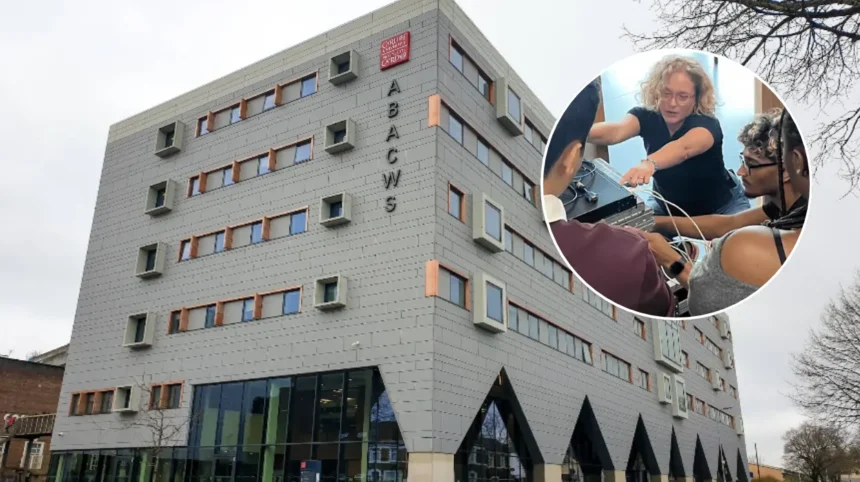
- Workshop titled ‘Sustainable Reality’ for High-Performance Computing and AI was organised by Advanced Research Computing at Cardiff (ARCCA) on Friday, 2nd October 2026 at Abacws Building, Cathays.
- The workshop was held in conjunction with Alces Flight – the supplier of HPC solutions.
- About 45 students and researchers from a range of subjects such as mechanical, electrical, electronic, and medical engineering, chemistry, computer science, data science, AI, cybersecurity, and sustainable energy & environment studies attended the session, securing the second highest percentage of attendance to registration across the tour.
- Cardiff Dragons also attended the workshop in preparation for the participation of Cardiff University in the CIUK26 Supercomputing Student Cluster Competition.
- Practical sessions were comprised of configuring and benchmarking a job using Mandelbrot Set.
- The objective of ARCCA is to capitalise on this success with a repeat performance in Spring 2027.
Cathays (Cardiff Daily) October 31, 2026 – Advanced Research Computing at Cardiff successfully hosted a Sustainable Reality workshop focusing on energy-conscious supercomputing and artificial intelligence practices, drawing strong student engagement across multiple technical disciplines at the Abacws Building.
- Key Points
- What Was the Sustainable Reality HPC and AI Workshop Hosted by Cardiff University?
- How Many Students Attended the Cathays University HPC Workshop?
- What Practical Activities Took Place During the Event?
- What Are the Future Plans for ARCCA’s Sustainable Reality Initiative?
- Background of the Development
What Was the Sustainable Reality HPC and AI Workshop Hosted by Cardiff University?
Advanced Research Computing at Cardiff (ARCCA) hosted the Sustainable Reality workshop on Friday, October 2, 2026, at the university’s Abacws Building located in Cathays. The event was delivered in collaboration with High-Performance Computing (HPC) solutions provider Alces Flight. According to the institutional report published by Cardiff Daily, the workshop brought together students, researchers, and technology enthusiasts to explore hands-on, energy-conscious practices in supercomputing and artificial intelligence operations.
The event provided attendees with direct, practical insights into how modern HPC and AI operations can actively reduce their carbon footprint while maintaining high-efficiency processing power. Commenting on the unique nature of the initiative, workshop participant Mao stated that the session offered “something extremely unique, and anyone interested in what is behind AI should try out a workshop,” as reported by Cardiff Daily.
How Many Students Attended the Cathays University HPC Workshop?
The event saw broad engagement across the university, achieving the second-highest attendance rate relative to registrations across the entire regional tour. In addition to pre-registered participants, several enthusiastic walk-in students joined on the day, increasing total attendance to around 45 students.
The diverse cohort spanned multiple discipline areas, reflecting a broad academic interest in sustainable technology. Participating faculties and fields included:
- Mechanical, electrical, electronic, and medical engineering
- Chemistry, computer science, data science, AI, and cybersecurity
- Sustainable energy and environment studies
Additionally, the event hosted members of the Cardiff Dragons, who utilised the session to collaborate ahead of their efforts to represent Cardiff University at the upcoming CIUK26 Supercomputing Student Cluster Competition.
What Practical Activities Took Place During the Event?
During the workshop, participants tackled practical HPC and AI exercises designed to simulate real-world computational challenges. Activities included running job configurations and exploring computational benchmarking with the Mandelbrot Set.
Reflecting on the practical value of the session, another workshop participant, Ayan, noted that “it is an insightful, hands-on event that shows you how sustainable practices can be applied directly to high-performance computing without losing processing power,” adding that attendees “get to see real-world tools in action, network with industry professionals, and learn how tech operations are actively reducing their carbon footprint,” as documented by Cardiff Daily.
Explore more Cathays News:
Cardiff Daily News: New Financial Crime LLM Launched in Cardiff 2026
Cardiff Student Accommodation Block May Convert Into Co-Living Space 2026
What Are the Future Plans for ARCCA’s Sustainable Reality Initiative?
Feedback gathered from the session underscored a strong appetite among students for further HPC and AI engagements, hands-on hardware interplay, and undergraduate research opportunities in computational science. ARCCA looks forward to building on this momentum to offer further training, workshops, and student-focused HPC and AI initiatives in the near future. The organisation hopes to run the event again in the spring of 2027, with post-event materials and benchmarks available via the shared Mandelbrot Set Results Folder.
Background of the Development
The Sustainable Reality workshop series forms part of broader industry and academic efforts to address the environmental impact of large-scale computing. As artificial intelligence and high-performance computing expand exponentially, energy consumption and carbon emissions associated with data centres and supercomputers have drawn increased scrutiny. Collaborations between academic computing centres, such as ARCCA at Cardiff University, and industry providers like Alces Flight are designed to bridge the gap between heavy computational demands and energy-conscious engineering, educating the next generation of researchers in sustainable technological practices.
This development can significantly affect students, researchers, and institutional technology strategies within the university community. By equipping students across engineering, computer science, and data science with practical knowledge in energy-efficient computing, the workshop helps cultivate a workforce attuned to green computing principles. For the particular audience of tech enthusiasts, researchers, and student groups like the Cardiff Dragons, exposure to these methodologies improves competitive readiness for national events like CIUK26 and fosters a culture of sustainability that can influence future academic research and commercial technology development in Wales and beyond.