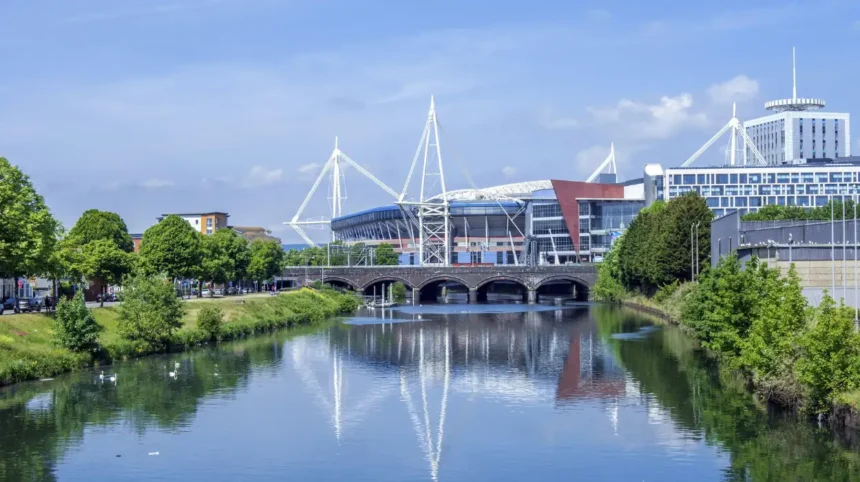
Cardiff’s rivers and waterways are central to the city’s geography, industrial development, environmental health and urban identity. Located on the south coast of Wales, Cardiff developed around a network of rivers, streams, canals, docks and coastal waterways that connect the South Wales Valleys with the Severn Estuary.
- What Are the Main Rivers and Waterways in Cardiff?
- Where Do Cardiff’s Rivers Flow and How Are They Connected?
- How Did Cardiff’s Rivers Influence the City’s History?
- Early Settlement and River Transport
- Industrial Revolution and Coal Exports
- Decline of Traditional Dock Industries
- What Is the Glamorganshire Canal and Why Was It Important to Cardiff?
- How Did Cardiff Bay and the Cardiff Bay Barrage Transform the Waterways?
- What Wildlife Lives Around Cardiff’s Rivers and Waterways?
- What Are the Main Environmental Challenges Facing Cardiff’s Rivers?
- How Does Cardiff Manage River Flooding and Water Levels?
- Which Cardiff Waterways Are Important for Walking and Recreation?
- River Taff Trail
- Cardiff Bay Waterfront
- Atlantic Wharf and Historic Canals
- River Ely and Western Cardiff
- What Is the Importance of Cardiff’s Waterways for the Local Economy?
- Tourism and Hospitality
- Recreational Businesses
- Waterfront Regeneration
- Environmental and Infrastructure Benefits
- How Are Cardiff’s Rivers Being Restored and Protected?
- Nant Dowlais Restoration Project
- Fish Migration Improvements
- Water Quality Monitoring
- Community Responsibility
- How Will Climate Change Affect Cardiff’s Rivers and Waterways?
- Changing Rainfall Patterns
- Higher Water Temperatures
- Flooding and Urban Development
- Future River Restoration
- Why Are Cardiff’s Rivers and Waterways Important to the City’s Future?
The city’s three principal rivers are the River Taff, River Ely and River Rhymney. These waterways drain extensive catchments across South Wales before reaching the coastal areas around Cardiff. They support freshwater habitats, wildlife, drainage systems, recreational activities and important environmental processes.
Cardiff’s relationship with water also includes Cardiff Bay, the Glamorganshire Canal, historic dock infrastructure and the Cardiff Bay Barrage. These developments transformed the city’s transport network and supported its growth as an international coal-exporting port during the Industrial Revolution.
Today, Cardiff’s waterways serve environmental, recreational and economic purposes. They also face challenges involving urban pollution, flood risk, habitat modification and climate change. Understanding their geography and history explains why rivers and waterways remain essential to Cardiff’s sustainable development.
What Are the Main Rivers and Waterways in Cardiff?
Cardiff’s main rivers are the River Taff, River Ely and River Rhymney. These waterways drain the surrounding South Wales Valleys and flow towards the Bristol Channel. Cardiff also contains Cardiff Bay, historic canals, dock channels and smaller streams that support drainage and urban ecosystems.
The three principal rivers form the foundation of Cardiff’s freshwater network. Their catchments extend beyond the city’s administrative boundaries and connect Cardiff with surrounding communities, agricultural landscapes and industrial areas.
Each river has a different geographical route and relationship with the city.
River Taff
The River Taff is one of the most recognisable waterways in Cardiff. It flows southwards through the South Wales Valleys before entering the city centre.
The river passes through areas including Pontypridd, Radyr and Llandaff before reaching central Cardiff. It then flows towards Cardiff Bay, where the Cardiff Bay Barrage regulates the water environment.
The Taff has influenced Cardiff’s settlement patterns, industrial growth, transport development and riverside recreation. Its banks provide important habitats and public spaces.
River Ely
The River Ely flows through western Cardiff and connects the surrounding countryside with Cardiff Bay.
Its catchment includes communities and landscapes across the Vale of Glamorgan and neighbouring parts of South Wales. The river passes through areas near St Fagans, Ely and Grangetown before reaching Cardiff Bay.
The Ely supports freshwater habitats and contributes to the water supply entering Cardiff Bay. Its environmental condition is influenced by agricultural activity, urban development, drainage and historical modifications to its channel.
River Rhymney
The River Rhymney flows southwards from the South Wales Valleys through Caerphilly and eastern Cardiff.
It passes communities including Llanrumney and Rumney before reaching the coastal environment near the Severn Estuary.
Unlike the Taff and Ely, the Rhymney does not feed into Cardiff Bay. It follows a separate route towards the estuary and forms an important part of eastern Cardiff’s drainage network.
Natural Resources Wales identifies the Taff, Ely and Rhymney within the wider South East Valleys river system.
Where Do Cardiff’s Rivers Flow and How Are They Connected?
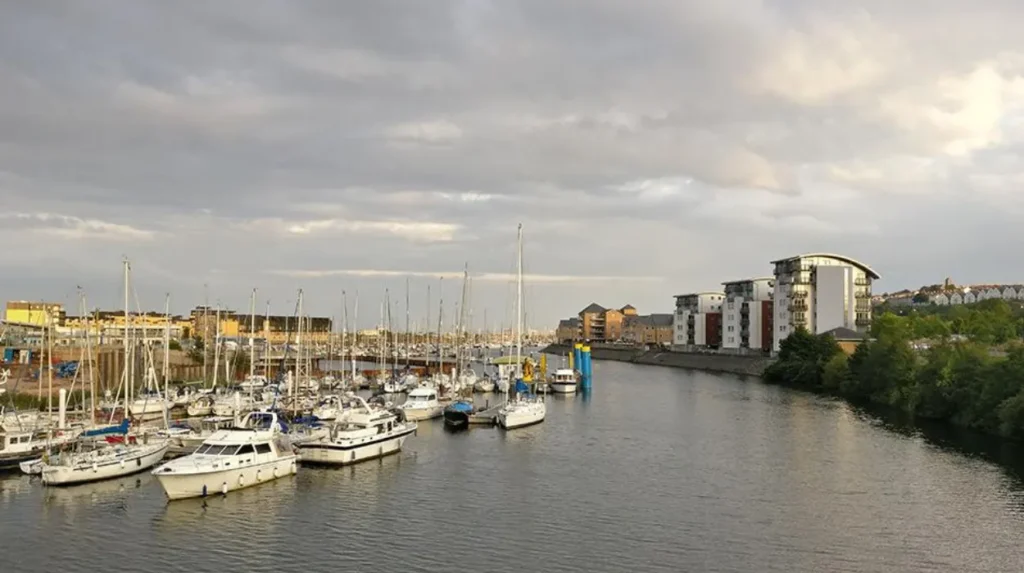
Cardiff’s rivers drain the surrounding South Wales Valleys towards the Bristol Channel and Severn Estuary. The Taff and Ely enter Cardiff Bay, while the Rhymney follows a separate eastern route. Their catchments connect urban neighbourhoods, rural landscapes and coastal ecosystems.
The geography of Cardiff’s waterways reflects the wider landscape of South Wales. Much of the region consists of elevated valleys that descend towards the low-lying coastal plain surrounding Cardiff.
Rainfall collects in streams and tributaries before entering the main rivers. These rivers transport freshwater, sediment and nutrients towards the coast.
The Taff and Ely Catchments
The River Taff and River Ely form part of the Taff and Ely catchment system.
Their upper catchments extend into the South Wales uplands. The rivers pass through steep-sided valleys before entering Cardiff’s more developed urban landscape.
The Taff receives water from tributaries associated with the Rhondda and Cynon valleys. These connections make its catchment important to communities far beyond Cardiff.
The Ely drains another extensive area of South Wales, including agricultural and urban landscapes. Its tributaries contribute to the river’s flow before it reaches western Cardiff.
Both rivers enter Cardiff Bay, where the barrage maintains a controlled freshwater environment.
The Rhymney Catchment
The Rhymney catchment covers parts of Caerphilly County Borough and eastern Cardiff.
The river collects water from upland and valley landscapes before reaching the coastal plain. Its lower course passes through developed areas where roads, housing, drainage infrastructure and flood-management systems influence the surrounding environment.
The river’s connection with the Severn Estuary also makes it important for coastal ecology and migratory fish.
Connection with the Severn Estuary
The Severn Estuary receives freshwater from more than 600 rivers.
The Severn Estuary Partnership identifies the Taff, Ely and Rhymney among its freshwater inputs.
When freshwater meets seawater, it creates a brackish environment. This mixture supports distinctive ecological conditions and provides habitats for fish, birds and other wildlife.
The estuary also experiences a substantial tidal range, which influences navigation, coastal management and flood-risk planning around Cardiff.
How Did Cardiff’s Rivers Influence the City’s History?
Cardiff’s rivers supported settlement, agriculture, transportation and industrial development. During the Industrial Revolution, the River Taff and its surrounding valley connected ironworks and coal-producing communities with Cardiff’s port, while canals and docks expanded trade.
Waterways influenced Cardiff long before the development of its modern waterfront.
The rivers provided water for domestic activities, agriculture and early industries. Their valleys also created natural transportation routes between inland settlements and the coast.
Early Settlement and River Transport
The River Taff played an important role in the development of early Cardiff.
Its location influenced settlement around Cardiff Castle and the surrounding low-lying landscape. The river provided access to inland resources and connected the settlement with the coastal trading environment.
Historically, rivers also supported fishing, water-powered activities and the movement of goods.
However, natural river transport had limitations. Changing water levels, shallow channels and seasonal conditions restricted the movement of larger commercial vessels.
Industrial Revolution and Coal Exports
The Industrial Revolution transformed the relationship between Cardiff and its waterways.
The South Wales Valleys contained extensive coal and iron resources. Cardiff developed as a major export centre because its coastal location provided access to international shipping routes.
The River Taff and surrounding valleys connected inland industrial communities with the developing docks.
The construction of canals and railways improved transportation efficiency and increased the movement of industrial materials.
By the late nineteenth century, Cardiff had become one of the world’s most important coal-exporting ports.
According to the historical account published by Visit Cardiff Bay, coal exports from Cardiff exceeded 13 million tonnes on the eve of the First World War.
This industrial expansion transformed Cardiff’s economy, population and waterfront landscape.
Decline of Traditional Dock Industries
The importance of Cardiff’s traditional dock system declined during the twentieth century.
Changes in international energy markets, shipping technology and coal demand reduced commercial activity. By the 1960s, coal exports had virtually ceased.
Former industrial waterfront areas subsequently experienced economic decline.
The creation of the Cardiff Bay Development Corporation in 1987 established a major regeneration programme. This initiative transformed former dockland areas through infrastructure investment, housing, public spaces and waterfront development.
What Is the Glamorganshire Canal and Why Was It Important to Cardiff?
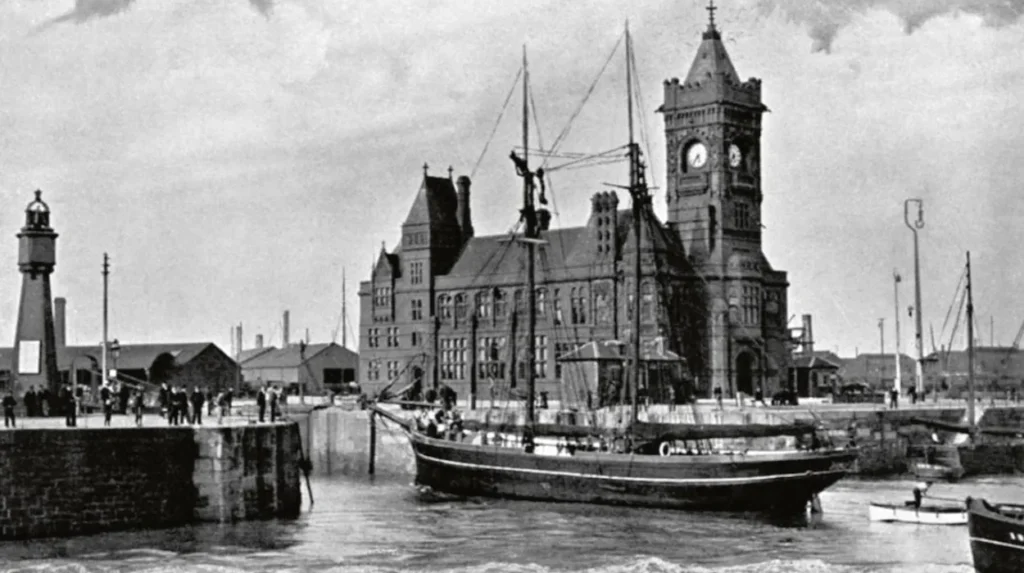
The Glamorganshire Canal was an important eighteenth-century transportation route connecting Cardiff with Merthyr Tydfil. Opened in stages from 1794 and completed in 1798, it transported iron and industrial goods from the South Wales Valleys to Cardiff for export.
The Glamorganshire Canal was one of the earliest major canal developments in Wales.
Before its construction, transporting iron from the industrial centres of Merthyr Tydfil to Cardiff was expensive and slow.
The canal provided a more efficient connection between inland ironworks and the port.
Construction and Development
Construction began in 1790 following parliamentary authorisation.
The first section between Cardiff and Abercynon opened in February 1794. The remaining sections towards Merthyr Tydfil followed, with the canal completed in 1798 after the construction of its sea lock.
The canal extended approximately 25 miles (40 kilometres) and descended more than 510 feet through a system of locks.
Historical records held by Heneb’s Glamorgan-Gwent Archaeological Trust document its route, engineering and industrial significance.
Industrial Transportation
The canal transported iron products from the Merthyr ironworks towards Cardiff.
These products were subsequently transferred to ships for international trade.
The waterway helped reduce transportation costs and strengthened the commercial relationship between Cardiff and the industrial valleys.
It also supported the development of additional industries and employment opportunities.
Decline and Remaining Heritage
Railway expansion gradually reduced the canal’s importance.
The Taff Vale Railway provided faster transportation between inland industrial communities and Cardiff. Competition from railways and changes in shipping infrastructure contributed to the canal’s decline.
The canal eventually closed in 1942.
Much of its original route disappeared beneath modern roads and urban development. However, archaeological records, historic structures and surviving waterway sections preserve evidence of its importance.
How Did Cardiff Bay and the Cardiff Bay Barrage Transform the Waterways?
Cardiff Bay developed from an industrial dockland into a major waterfront environment through the Cardiff Bay regeneration programme. The Cardiff Bay Barrage, completed in 1999, created a controlled freshwater lake from the tidal estuary.
Cardiff Bay represents one of the most significant changes to the city’s water infrastructure.
Historically, the area contained working docks connected to international coal and industrial trade. Following the decline of traditional shipping industries, regeneration became a major urban development priority.
The Cardiff Bay Development Corporation was established in 1987 to coordinate the transformation.
Cardiff Bay Barrage Construction
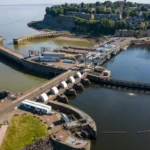
The Cardiff Bay Barrage became the central engineering project of the regeneration programme.
The £220 million project began in 1994 and was completed in 1999.
The structure extends approximately 1.1 kilometres between Cardiff and Penarth.
Its construction created a freshwater lake covering approximately 200 hectares. The new water environment transformed the former tidal dockland into a waterfront destination.
Cardiff Harbour Authority now manages important operational and environmental responsibilities associated with Cardiff Bay.
How the Barrage Controls Water Levels
The barrage uses several engineering components to regulate water movement.
Its main components include:
- Five sluice gates: These control water movement between Cardiff Bay and the Severn Estuary.
- Three navigation locks: These allow boats to travel between the freshwater bay and the tidal estuary.
- Fish pass: This provides a route for migratory fish.
- Bascule bridges: These movable bridges operate alongside the navigation locks.
The sluice gates respond to differences between water levels in the bay and estuary.
When the estuary level is higher than the bay level, the gates close to prevent seawater entering the freshwater lake. When the estuary level falls below the bay level, the gates open to regulate water levels and release freshwater.
According to Cardiff Harbour Authority, the three navigation locks are each 40 metres long. Two are 8 metres wide, while the third is 10.5 metres wide.
Modern Waterfront Development
The barrage supported the redevelopment of Cardiff Bay into a major urban destination.
The waterfront now includes residential developments, public spaces, visitor attractions, hospitality businesses and recreational facilities.
The regeneration also improved public access to the water and strengthened connections between Cardiff city centre and the bay.
What Wildlife Lives Around Cardiff’s Rivers and Waterways?
Cardiff’s rivers, wetlands and freshwater environments support fish, birds, aquatic invertebrates and riverside vegetation. The Taff, Ely and Rhymney provide important ecological connections, while Cardiff Bay Wetland Reserve supports wildlife within an urban waterfront environment.
Cardiff’s waterways provide habitats for species that depend on freshwater, wetlands and riverbanks.
These environments support feeding, breeding, migration and shelter.
Fish and Migratory Species
The River Taff and River Ely support migratory fish, including Atlantic salmon and sea trout.
These fish travel between marine feeding grounds and freshwater spawning areas.
Salmon and sea trout return to rivers to reproduce. Their young develop in freshwater before migrating towards the sea.
The Cardiff Bay Barrage includes a specially designed fish pass to maintain migration routes.
Cardiff Harbour Authority monitors fish movements using underwater cameras and monitoring equipment.
European eels are also important to the wider freshwater ecosystem.
Birds and Wetland Habitats
Cardiff Bay Wetland Reserve covers approximately eight hectares on the northern shore of Cardiff Bay.
Cardiff Harbour Authority manages the reserve as an urban wildlife habitat.
Its wetland environment supports aquatic plants, invertebrates, fish and birds.
Bird species associated with Cardiff’s waterfront habitats include:
- Swans, which feed and rest around sheltered water.
- Coots, which use vegetation and shallow water for nesting.
- Great crested grebes, which depend on suitable freshwater habitats.
- Other wildfowl that use wetlands for feeding and shelter.
Wetland vegetation also provides habitat for insects, including dragonflies and damselflies.
Why Riverside Habitats Matter
Riverbanks support vegetation that stabilises soil and reduces erosion.
Trees and plants provide shade, which helps regulate water temperatures. Natural river margins also provide feeding and breeding areas for wildlife.
Connected habitats allow species to move between different parts of a river catchment.
Maintaining these ecological connections is an important part of sustainable waterway management.
What Are the Main Environmental Challenges Facing Cardiff’s Rivers?
Cardiff’s rivers face environmental pressures from urban pollution, sewage contamination, agricultural runoff, historical industrial activity and physical changes to river channels. These pressures affect water quality, aquatic habitats, fish migration and the long-term resilience of freshwater ecosystems.
The environmental condition of Cardiff’s rivers reflects centuries of industrial development and modern urban activity.
Although improvements have occurred, pollution and habitat degradation remain important concerns.
Water Pollution
Urban runoff transports pollutants from roads, pavements, commercial areas and residential neighbourhoods into drainage systems.
These pollutants include oil, chemicals, plastics and sediment.
Agricultural runoff also introduces nutrients and other substances into river catchments.
Excessive nutrients, particularly phosphates, contribute to eutrophication. This process encourages excessive plant and algal growth, which can reduce dissolved oxygen levels and affect aquatic organisms.
Sewage discharges and incorrectly connected drainage systems create additional environmental pressures.
Industrial Legacy
The industrial history of South Wales continues to influence river environments.
Mining, iron production and associated industrial activities affected water quality across the valleys.
Historic minewater discharges introduce metals and other contaminants into certain watercourses.
Natural Resources Wales identifies historical industrial pollution as an important factor affecting freshwater ecosystems.
Physical Changes to River Channels
River engineering has altered the natural structure of several Cardiff waterways.Flood walls, weirs, culverts and straightened channels affect how water moves through the landscape.These structures sometimes prevent fish from reaching suitable spawning habitats.They also reduce natural connections between rivers and floodplains.Restoring natural river processes helps improve habitat quality and supports biodiversity.
Water Quality Conditions
Cardiff Council’s environmental planning assessment identified differences in the historical water quality conditions of the city’s three main rivers.
The assessment described the Ely catchment as being in poor condition, while the Taff and Rhymney were assessed as moderate.
These findings are associated with the council’s 2021 sustainability appraisal and should not be treated as a live assessment of every river section.
Natural Resources Wales provides current water-environment information through its Water Watch Wales monitoring resources.
How Does Cardiff Manage River Flooding and Water Levels?
Cardiff manages river flooding through monitoring, flood-risk planning, drainage infrastructure, flood defences and natural flood-management measures. Natural Resources Wales monitors major river levels, while Cardiff Council coordinates local flood-risk responsibilities and drainage planning.
Flood management is important because Cardiff contains extensive low-lying land near its principal rivers.The city’s location within a coastal floodplain creates exposure to several sources of flooding.These include river flooding, surface-water flooding and coastal flooding.
River Flooding
River flooding occurs when rainfall increases river flows beyond the capacity of the channel.Heavy rainfall across the South Wales Valleys can increase water levels downstream in Cardiff.The River Taff is particularly important because its catchment extends through several developed valley communities.The River Ely and River Rhymney also present flood-management challenges in their respective catchments.
Surface-Water Flooding
Surface-water flooding occurs when rainfall exceeds the capacity of drainage systems or cannot infiltrate the ground quickly enough.Urban development increases impermeable surfaces, including roads, pavements and building roofs.These surfaces accelerate runoff and place additional pressure on drainage infrastructure.Sustainable Drainage Systems, commonly called SuDS, help manage this problem by slowing, storing and filtering rainwater.
Flood Monitoring and Warning
Natural Resources Wales operates river monitoring and flood-warning services.Its flood-warning information helps residents and businesses understand changing conditions.The River Taff at Cardiff City has a dedicated flood-warning area.Residents can use official flood information to monitor warnings, prepare emergency plans and identify actions required during severe weather.
Cardiff Council also has responsibilities under local flood-risk management arrangements.
Floodplain Management
Floodplains are naturally low-lying areas that receive excess river water during periods of high flow.Protecting appropriate floodplain areas helps reduce pressure on downstream communities.Natural flood-management techniques include restoring wetlands, reconnecting rivers with floodplains and improving vegetation along riverbanks.These approaches complement traditional engineering measures.
Which Cardiff Waterways Are Important for Walking and Recreation?
Cardiff’s waterways provide accessible spaces for walking, cycling, wildlife observation and water-based recreation. Popular locations include the River Taff Trail, Cardiff Bay, the River Ely waterfront and the historic canal remains around Atlantic Wharf.
Cardiff’s rivers and waterfronts form part of the city’s wider public-space network.They provide opportunities for residents and visitors to experience the natural and historical landscape.
River Taff Trail
The Taff Trail is a major walking and cycling route connecting Cardiff with communities further north.The route follows sections of the River Taff and passes through urban parks, riverside landscapes and former industrial areas.It provides access to green spaces and connects Cardiff with the wider South Wales Valleys.The trail is used by cyclists, walkers and recreational visitors.
Cardiff Bay Waterfront
Cardiff Bay provides a major waterfront recreation area.Its public spaces include promenades, pedestrian routes, marina facilities and viewing areas.Visitors can explore the waterfront around Mermaid Quay, the Senedd and the Wales Millennium Centre.The bay also supports sailing, kayaking, water-based events and organised recreational activities.
Atlantic Wharf and Historic Canals
Atlantic Wharf contains surviving sections of the historic dock feeder canal network.These waterways originally supplied water to Cardiff’s docks.The canal infrastructure helped maintain dock operations independently of changing tidal conditions.Today, the surrounding area provides an opportunity to understand Cardiff’s industrial heritage while exploring the waterfront.
River Ely and Western Cardiff
The River Ely provides additional opportunities for riverside recreation.Its surrounding landscapes include green spaces, residential areas and natural habitats.Walking routes along suitable sections provide access to the river environment and nearby communities.Visitors should follow designated paths and respect private property and wildlife habitats.
What Is the Importance of Cardiff’s Waterways for the Local Economy?
Cardiff’s waterways contribute to the local economy through tourism, recreation, waterfront development, environmental management and commercial activity. Cardiff Bay supports visitor businesses, while riverside routes and restored public spaces attract residents, cyclists and visitors throughout the year.
The economic value of Cardiff’s waterways extends beyond their historical contribution to coal exports.
Today, water-related activities support several sectors of the city’s economy.
Tourism and Hospitality
Cardiff Bay attracts visitors through its waterfront setting, restaurants, cultural venues and recreational facilities.
The area provides access to major attractions, including the Wales Millennium Centre and the Senedd.
Waterfront promenades and boat-based activities strengthen its appeal as a visitor destination.
Hospitality businesses benefit from the regular movement of residents and tourists around the bay.
Recreational Businesses
Water-based activities support local operators and recreational organisations.
Sailing, kayaking and other organised activities create demand for equipment, training, maintenance and visitor services.
Cardiff International White Water is another important example of water-based recreation associated with the city’s waterfront regeneration.
Waterfront Regeneration
The transformation of Cardiff Bay demonstrates how former industrial waterways support urban redevelopment.
Residential developments, public spaces and commercial buildings have replaced many traditional dockland uses.
This redevelopment has strengthened connections between Cardiff’s city centre and its waterfront.
Environmental and Infrastructure Benefits
Healthy waterways also provide economic benefits through natural flood management, improved public spaces and ecological services.
Wetlands absorb water, vegetation stabilises riverbanks and healthy freshwater ecosystems support biodiversity.
These functions reduce environmental pressures and contribute to the long-term resilience of urban areas.
How Are Cardiff’s Rivers Being Restored and Protected?
Cardiff’s rivers are protected through environmental monitoring, pollution control, habitat restoration, fish-passage improvements and catchment-management projects. Cardiff Council, Natural Resources Wales and local environmental organisations work to improve water quality and reconnect rivers with natural habitats.
River restoration focuses on improving the natural functions of waterways.
It involves addressing pollution, repairing damaged habitats and improving connections between rivers and surrounding landscapes.
Nant Dowlais Restoration Project
One important example is the restoration of the Nant Dowlais, a tributary of the River Ely.
The Welsh Government announced a project in November 2024 with funding of approximately £583,500.
The project aims to reconnect the stream with its historical channel and floodplain.
The stream had previously been straightened during the late nineteenth century. This modification contributed to erosion, sediment problems and ecological degradation.
The restoration project aims to improve habitat conditions and support the return of fish species, including salmon, eels and trout.
Fish Migration Improvements
Fish migration is an important part of river restoration.
Weirs and other barriers prevent fish from reaching suitable upstream habitats.
Fish passes help overcome these barriers and improve ecological connectivity.
The Cardiff Bay Barrage fish pass provides a route for migratory species travelling between the sea and freshwater rivers.
Water Quality Monitoring
Cardiff Harbour Authority monitors Cardiff Bay’s environmental conditions.
The Cardiff Bay Barrage Act requires dissolved oxygen levels to remain above 5 milligrams per litre throughout the bay.
Dissolved oxygen is essential for aquatic organisms, including fish.
The Harbour Authority also monitors salinity, nutrients, metal salts and other water-quality indicators.
Bacterial water sampling supports its predictive water-quality model, which helps inform decisions about water-based recreational activities.
Community Responsibility
Residents and businesses also contribute to river protection.
Responsible waste disposal, correct drainage connections and reduced plastic pollution help protect local watercourses.
Community clean-ups and wildlife monitoring activities provide additional support.
Avoiding the disposal of oils, chemicals and household waste into drains is particularly important because drainage networks connect with the wider water environment.
Explore More Area Guide
Flood Defences in Cardiff: Barrage, River Protection and Flood Management
Cardiff Flood Risk: Rivers, Coastal Areas and Flood Protection
How Will Climate Change Affect Cardiff’s Rivers and Waterways?
Climate change increases pressure on Cardiff’s waterways through changing rainfall patterns, higher temperatures, flood risks and potential periods of drought. River restoration, sustainable drainage, pollution reduction and floodplain protection are important for long-term water management.
Climate change is an increasingly important consideration for Cardiff’s future development.
Natural Resources Wales identifies changes in rainfall, temperature and extreme weather as significant pressures on freshwater ecosystems.
Changing Rainfall Patterns
Climate projections for Wales indicate changes in seasonal rainfall.
Increased winter rainfall raises concerns about river flooding and drainage capacity.
Reduced summer rainfall increases the likelihood of prolonged dry periods and water-resource pressures.
These changes affect river flows, freshwater habitats and water quality.
Higher Water Temperatures
Rising temperatures influence freshwater ecosystems.
Warmer water generally holds less dissolved oxygen than cooler water.
Higher temperatures can also increase the risk of algal blooms and affect the distribution of aquatic species.
Maintaining riverside vegetation helps provide shade and supports more stable habitat conditions.
Flooding and Urban Development
New housing, commercial developments and transport infrastructure increase the importance of effective drainage planning.
Sustainable Drainage Systems help manage rainfall close to where it falls.
Protecting floodplains and avoiding inappropriate development near vulnerable watercourses also support long-term resilience.
Future River Restoration
Future restoration projects focus on improving ecological connectivity and natural river processes.
Restoring wetlands, reconnecting floodplains and improving fish passage strengthen the ability of freshwater environments to respond to environmental pressures.
Natural Resources Wales’ 2025 State of Natural Resources Report identifies climate change, pollution and physical modifications as significant pressures on freshwater ecosystems across Wales.
Cardiff’s long-term water management therefore depends on coordinated environmental planning, infrastructure investment and responsible development.
Why Are Cardiff’s Rivers and Waterways Important to the City’s Future?
Cardiff’s rivers and waterways remain essential to environmental protection, flood resilience, biodiversity, recreation and sustainable urban development. The Taff, Ely, Rhymney and Cardiff Bay connect the city’s industrial heritage with its modern waterfront and future environmental priorities.
The city’s relationship with water has changed considerably over time.
Rivers that once supported early settlement and industrial transportation now contribute to environmental conservation, public recreation and urban regeneration.
The River Taff connects Cardiff with the industrial history and communities of the South Wales Valleys.
The River Ely supports western Cardiff’s freshwater network and provides important ecological connections.
The River Rhymney contributes to eastern Cardiff’s drainage system and connects the city with the wider Severn Estuary environment.
Cardiff Bay demonstrates how engineering and regeneration transformed an industrial waterfront into a modern freshwater environment.
The historic Glamorganshire Canal preserves evidence of the transportation infrastructure that supported the Industrial Revolution.
However, continued investment in water quality, flood protection and habitat restoration remains necessary.
Urban pollution, changing rainfall patterns and historical river modifications require long-term attention.
Protecting these waterways supports wildlife, strengthens local communities and improves the resilience of Cardiff’s urban environment.
Cardiff’s rivers are therefore more than geographical features. They are important natural and historical assets that continue to shape the city’s development, economy and environmental future.
What are the three main rivers in Cardiff?
The three main rivers in Cardiff are the River Taff, River Ely and River Rhymney. They flow through different parts of the city and connect with Cardiff Bay or the Severn Estuary.