
Maternity services in Cardiff provide healthcare and support throughout pregnancy, childbirth and the period following delivery. These services help pregnant women and birthing people access antenatal appointments, ultrasound scans, pregnancy screening, midwife-led care, consultant-led maternity services, labour support and newborn healthcare. Cardiff and Vale University Health Board (UHB) is the main NHS provider of maternity services for Cardiff and the Vale of Glamorgan.
- What Maternity Services Are Available in Cardiff?
- Which Hospitals Provide Maternity Care in Cardiff?
- How Can You Register for Maternity Services in Cardiff?
- What Happens During Antenatal Care in Cardiff?
- First booking appointment
- Routine pregnancy appointments
- Ultrasound scans and pregnancy screening
- Monitoring maternal health
- What Is the Difference Between Midwife-Led and Consultant-Led Maternity Care?
- Where Can You Give Birth in Cardiff?
- What Labour and Delivery Services Are Available in Cardiff?
- Labour assessment
- Induction of labour
- Pain relief during childbirth
- Assisted vaginal delivery
- Caesarean section
- What Specialist Pregnancy and Fetal Medicine Services Are Available in Cardiff?
- What Postnatal Services Are Available After Childbirth in Cardiff?
- Postnatal hospital care
- Community midwife visits
- Breastfeeding support
- Newborn screening and health checks
- Maternal recovery and mental wellbeing
- How Do Mental Health Services Support Pregnant Women in Cardiff?
- How Can Pregnant Women Access Emergency Maternity Support in Cardiff?
- How Much Do Maternity Services Cost in Cardiff?
- What Do Maternity Statistics Reveal About Pregnancy and Birth in Cardiff and Wales?
- How Are Maternity Services in Cardiff Developing for the Future?
- Digital maternity records
- Improved maternity safety
- Earlier pregnancy assessment
- More integrated postnatal support
- How Can Families Access the Right Maternity Services in Cardiff?
Maternity care focuses on protecting maternal health, monitoring the baby’s development, identifying pregnancy complications and supporting safe childbirth. Services are delivered through community midwives, hospital maternity teams, obstetric specialists, neonatal professionals and other healthcare providers.
Cardiff residents can access NHS maternity care through the local pregnancy referral system. Care is organised according to individual medical needs, pregnancy risk factors and personal birth preferences. The University Hospital of Wales and University Hospital Llandough are important locations within the local maternity and women’s healthcare network.
Understanding how maternity services work helps expectant parents make informed decisions, prepare for childbirth and access appropriate support after their baby arrives.
What Maternity Services Are Available in Cardiff?
Maternity services in Cardiff provide coordinated healthcare before, during and after pregnancy. Cardiff and Vale University Health Board delivers antenatal appointments, midwifery care, hospital births, obstetric treatment, pregnancy screening and postnatal support through community and hospital-based teams.
Maternity services cover the complete pregnancy journey. Their primary purpose is to protect the health of the pregnant person and baby while providing information, medical assessment and emotional support.
Cardiff and Vale University Health Board manages local NHS maternity provision. Its services include routine pregnancy monitoring, specialist fetal medicine, labour and delivery care, emergency obstetric assessment and newborn support.
The main components of maternity care include:
- Antenatal care: Regular appointments, pregnancy assessments and screening tests.
- Midwifery services: Clinical support from registered midwives throughout pregnancy and childbirth.
- Obstetric services: Specialist medical care for complicated pregnancies and childbirth.
- Labour and delivery: Hospital-based and midwife-led birth services.
- Postnatal care: Recovery assessments, breastfeeding guidance and newborn checks.
- Neonatal care: Medical treatment for newborn babies who require additional support.
These services operate together to provide continuity of care. Community midwives coordinate routine pregnancy monitoring, while hospital specialists manage medical complications and complex birth requirements.
The NHS maternity system also supports informed decision-making. Expectant parents discuss birth preferences, screening choices, pain relief and individual healthcare requirements with their maternity team.
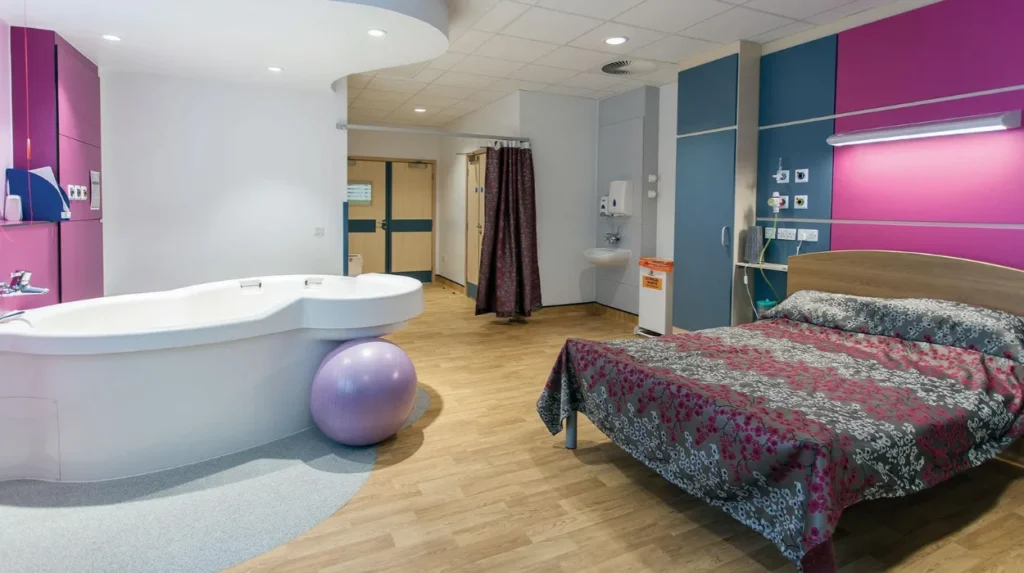
Which Hospitals Provide Maternity Care in Cardiff?
Cardiff and Vale University Health Board provides maternity services through University Hospital of Wales and University Hospital Llandough. University Hospital of Wales is the principal location for hospital-based childbirth, midwife-led services, obstetric treatment and specialist maternity care.
Two important hospital locations support the wider maternity and women’s healthcare service in Cardiff.
University Hospital of Wales
University Hospital of Wales is located in Heath, Cardiff. It provides specialist hospital services, including maternity and obstetric care.
Its maternity facilities include:
- Consultant-led labour and delivery services.
- Midwife-led maternity facilities.
- Antenatal clinics and ultrasound appointments.
- Obstetric assessment and emergency maternity support.
- Fetal medicine services.
- Postnatal wards.
- Neonatal services.
The hospital supports pregnancies requiring additional medical supervision. Its specialist teams assess complications and coordinate treatment during pregnancy and childbirth.
University Hospital Llandough
University Hospital Llandough is another important healthcare location within Cardiff and Vale University Health Board.
It provides antenatal clinic appointments and other women’s healthcare services. The location of appointments depends on the patient’s address, clinical requirements and the maternity team’s arrangements.
Pregnant women should check their appointment letters before travelling because different scans and assessments take place at designated hospital departments.
The health board’s maternity arrangements also connect hospital services with community midwives, allowing routine pregnancy monitoring to take place closer to home. Cardiff and Vale University Health Board+1
How Can You Register for Maternity Services in Cardiff?
Pregnant women living in Cardiff can register with Cardiff and Vale University Health Board through its online pregnancy referral system. Early registration connects patients with community midwives, who arrange the booking appointment, pregnancy assessments and appropriate hospital referrals.
Early maternity registration is an important step after discovering a pregnancy. It allows healthcare professionals to assess medical history, identify potential complications and organise appropriate antenatal care.
Cardiff and Vale UHB provides an online pregnancy referral process through its maternity services website and Badger Notes system.
Pregnancy self-referral
The self-referral process allows pregnant women to contact maternity services directly rather than waiting for a routine GP appointment.
The process generally involves:
- Accessing the Cardiff and Vale UHB maternity registration service.
- Completing the online pregnancy referral information.
- Providing personal details, pregnancy information and relevant medical history.
- Waiting for the community midwifery team to make contact.
- Attending the first booking appointment.
The maternity team uses this information to organise the appropriate pathway and hospital appointments.
Badger Notes pregnancy records
Cardiff and Vale UHB introduced its Badger Notes digital maternity system on 29 July 2025.
Badger Notes is a digital platform that allows eligible patients to access maternity records, care plans and pregnancy information. Patients receive access following their first appointment with a midwife.
The system supports communication between patients and maternity professionals. It also makes important pregnancy information easier to access during the antenatal period.
When should pregnancy registration happen?
Pregnant women should contact maternity services as soon as they discover their pregnancy. NHS maternity care aims to provide the first booking assessment by 10 completed weeks wherever possible.
The Welsh Government’s 2025 maternity statistics report that 80% of pregnant women in Wales received their initial assessment by 10 completed weeks or earlier.
Early registration supports timely screening, risk assessment and pregnancy monitoring.
What Happens During Antenatal Care in Cardiff?
Antenatal care is the medical support provided throughout pregnancy before childbirth. Cardiff maternity teams arrange regular midwife appointments, blood pressure checks, urine tests, blood screening, ultrasound scans and assessments to monitor maternal health and the baby’s development.
Antenatal care begins after pregnancy registration and continues until labour or delivery. Community midwives and hospital professionals share responsibility for routine monitoring and specialist assessments.
The schedule depends on pregnancy history, medical conditions, previous births and individual clinical needs.
First booking appointment
The first appointment provides a detailed assessment of the pregnancy.
A community midwife discusses medical history, previous pregnancies, current health, medications and lifestyle factors. The appointment also establishes whether midwife-led or consultant-led care is appropriate.
Common assessments include:
- Blood pressure measurement.
- Urine testing.
- Body Mass Index calculation.
- Medical and family history.
- Discussion of screening options.
- Planning hospital appointments.
- Information about pregnancy health and support.
The midwife also explains the available screening tests and arranges the first hospital appointment.
Routine pregnancy appointments
Cardiff and Vale UHB provides a pregnancy appointment schedule that includes assessments at different stages of pregnancy.
The exact schedule varies according to whether the pregnancy is a first pregnancy, whether complications develop and whether additional hospital monitoring is required.
Ultrasound scans and pregnancy screening
Ultrasound scans use sound waves to create images of the developing baby. They help healthcare professionals assess pregnancy dates, fetal development and certain structural conditions.
The dating scan establishes the estimated stage of pregnancy. The 18–21-week anomaly scan examines the baby’s physical development.
Antenatal screening also includes blood tests and other assessments. Screening for Down’s syndrome, Edwards’ syndrome and Patau’s syndrome is offered as part of the NHS pregnancy screening pathway.
Screening identifies the likelihood of certain conditions. It does not provide a definitive diagnosis.
Pregnant women receive information about the purpose, benefits and limitations of screening before deciding which tests they want.
Monitoring maternal health
Regular assessments help identify conditions requiring additional care.
Blood pressure checks help detect hypertension and possible pre-eclampsia. Urine testing supports the assessment of urinary infections and other pregnancy-related concerns.
Blood tests assess factors such as haemoglobin levels and blood group. Rhesus status is important because some pregnant women require additional treatment to prevent complications associated with blood group incompatibility.
Midwives also discuss fetal movements, nutrition, smoking cessation and emotional wellbeing.
What Is the Difference Between Midwife-Led and Consultant-Led Maternity Care?
Midwife-led care supports pregnancies assessed as low risk through registered midwives, while consultant-led care provides additional medical supervision for pregnancies involving complications or increased clinical risks. Cardiff maternity services offer both pathways through coordinated community and hospital teams.
The appropriate maternity pathway depends on clinical assessment rather than personal preference alone.
Midwife-led maternity care
Midwife-led care is designed for pregnancies without identified complications requiring specialist obstetric management.
A registered midwife provides routine pregnancy assessments, birth preparation, labour support and postnatal care.
Responsibilities include monitoring maternal health, checking fetal development, discussing birth preferences and identifying symptoms that require medical assessment.
Midwives also provide information about breastfeeding, newborn care and recovery after delivery.
Consultant-led maternity care
Consultant-led care involves an obstetrician, a doctor specialising in pregnancy and childbirth.
This pathway is appropriate when medical conditions or pregnancy complications require specialist supervision.
Examples include:
- High blood pressure or pre-eclampsia.
- Diabetes during pregnancy.
- Multiple pregnancies, including twins and triplets.
- Previous complicated childbirth.
- Placental complications.
- Concerns about fetal growth.
- Certain maternal medical conditions.
Consultant-led care does not automatically mean that a caesarean section is necessary. The obstetric team assesses the pregnancy and develops a suitable management plan.
Can maternity care change during pregnancy?
Yes. The maternity pathway changes when clinical circumstances change.
A pregnancy initially assessed as low risk can require consultant involvement if complications develop. Similarly, specialist teams reassess patients as pregnancy progresses.
The objective is to provide the appropriate level of medical support at every stage.

Where Can You Give Birth in Cardiff?
Cardiff residents receiving local NHS maternity care can discuss hospital birth, midwife-led birth and home birth with their maternity team. University Hospital of Wales provides obstetric-led and midwife-led facilities, while home birth suitability depends on individual clinical circumstances.
Birthplace decisions form an important part of antenatal care. Midwives discuss available options, medical risks, personal preferences and access to specialist treatment.
Consultant-led hospital birth
The consultant-led delivery suite at University Hospital of Wales supports patients requiring hospital-based obstetric care.
It provides access to specialist doctors, midwives, anaesthetic services and emergency medical facilities.
Hospital birth is particularly important for pregnancies involving conditions that require continuous monitoring or specialist intervention.
Midwife-led birth
The Midwife Led Unit at University Hospital of Wales provides a maternity environment managed by midwives.
It supports appropriate low-risk pregnancies and focuses on normal physiological childbirth.
Midwives monitor labour, provide practical support and assess whether additional medical intervention is necessary.
The availability of specific facilities and birth arrangements should be confirmed with the maternity team.
Home birth
Home birth is an option for selected pregnancies following an individual assessment.
Antenatal discussions consider maternal health, previous birth history, pregnancy complications, distance from hospital and the availability of midwifery support.
Cardiff and Vale UHB’s home birth guidance supports informed decisions about birthplace and recognises home as an option for appropriate uncomplicated pregnancies.
A home birth plan also includes arrangements for transfer to hospital when medical assistance becomes necessary.
Making an informed birth decision
The NHS recognises hospital maternity units, midwife-led units and home birth as possible birth settings.
The safest option depends on individual circumstances. Pregnant women should discuss the benefits and risks of each setting with their midwife.
Birth preferences can also change during pregnancy. The maternity team should review decisions when medical circumstances or personal preferences change.
What Labour and Delivery Services Are Available in Cardiff?
Labour and delivery services in Cardiff provide clinical supervision, pain relief, maternal monitoring and emergency treatment during childbirth. Cardiff and Vale University Health Board supports spontaneous labour, induced labour, assisted vaginal delivery and planned or emergency caesarean births.
Labour care begins when a pregnant person experiences signs of childbirth or attends hospital for a planned induction or assessment.
The maternity team monitors the progress of labour and the condition of both mother and baby.
Labour assessment
The maternity team assesses labour symptoms, pregnancy history and the baby’s condition.
Depending on clinical circumstances, assessments include contractions, cervical changes, fetal heart rate and maternal observations.
The team determines whether the patient needs admission, continued assessment or additional medical support.
Induction of labour
Induction is a medical process used to start labour before it begins naturally.
It is offered when continuing the pregnancy presents greater medical risks than delivering the baby. Reasons include prolonged pregnancy and certain maternal or fetal health concerns.
Cardiff and Vale UHB operates an Induction of Labour Suite for patients receiving this treatment.
The maternity team explains the induction method, expected process, monitoring requirements and available pain relief.
Pain relief during childbirth
Pain relief options depend on clinical needs, personal preferences and the circumstances of labour.
Available methods include:
- Breathing and relaxation techniques.
- Movement and different labour positions.
- Gas and air, also known as Entonox.
- Opioid pain relief when clinically appropriate.
- Epidural anaesthesia.
An epidural involves administering anaesthetic medication near the spinal nerves to reduce pain during labour.
The anaesthetic team explains the procedure, benefits and possible side effects before treatment.
Assisted vaginal delivery
An assisted vaginal delivery uses medical instruments to help deliver a baby through the birth canal.
The two principal methods are forceps and ventouse.
Forceps are specially designed instruments used by an obstetrician to guide the baby’s head during delivery. Ventouse uses a suction cup attached to the baby’s head to assist delivery.
These procedures are considered when labour requires additional assistance, including concerns about the baby’s condition or difficulties during the pushing stage.
Caesarean section
A caesarean section is an operation in which doctors deliver a baby through surgical incisions in the abdomen and uterus.
A planned caesarean takes place before labour begins, while an emergency caesarean is performed when medical circumstances require delivery during labour or pregnancy.
The obstetric team explains the reason for surgery, anaesthesia, recovery and possible risks.
According to the Welsh Government’s 2025 maternity statistics, 42% of recorded births in Wales were by caesarean section. This included 20% elective caesareans and 22% emergency caesareans.
These figures describe Wales as a whole rather than Cardiff maternity units specifically.
What Specialist Pregnancy and Fetal Medicine Services Are Available in Cardiff?
Specialist maternity services provide additional medical assessment and treatment when pregnancy involves complex maternal health conditions or concerns about fetal development. Cardiff and Vale University Health Board provides specialist obstetric and fetal medicine services through its hospital-based clinical teams.
Not every pregnancy follows a straightforward pathway. Some patients require additional investigations, specialist consultations or closer monitoring.
Fetal medicine services
Fetal medicine is a specialist area of healthcare focused on the development and medical condition of an unborn baby.
Cardiff and Vale UHB provides a Fetal Medicine Unit at University Hospital of Wales.
Its services support the assessment of pregnancies involving suspected fetal abnormalities, growth concerns and other complications requiring specialist investigation.
Specialist professionals use ultrasound examinations and appropriate diagnostic procedures to assess fetal health.
Multiple pregnancy care
Multiple pregnancy refers to carrying more than one baby, including twins, triplets or higher-order multiples.
These pregnancies require additional monitoring because they involve increased risks of premature birth, growth differences and certain pregnancy complications.
The maternity team establishes an appropriate monitoring schedule and delivery plan according to the type of multiple pregnancy and individual clinical findings.
Diabetes and pregnancy
Diabetes during pregnancy includes pre-existing diabetes and gestational diabetes.
Gestational diabetes develops when blood glucose levels become elevated during pregnancy.
Healthcare professionals monitor glucose levels and provide advice about nutrition, physical activity and medication when necessary.
Appropriate management reduces the risk of complications affecting the pregnant person and baby.
High-risk pregnancy monitoring
High-risk pregnancy describes a pregnancy involving medical or obstetric factors that increase the likelihood of complications.
These factors include pre-eclampsia, placental problems, previous pregnancy complications and certain chronic health conditions.
Specialist maternity teams coordinate additional scans, clinical reviews and delivery planning according to individual needs.
Cardiff’s specialist maternity network provides access to obstetric assessment and fetal medicine support when routine community midwifery care is insufficient.
What Postnatal Services Are Available After Childbirth in Cardiff?
Postnatal maternity services support recovery after childbirth and monitor the health of both mother and baby. Cardiff maternity teams provide physical assessments, newborn checks, feeding advice, breastfeeding support and community midwife follow-up after hospital discharge.
Postnatal care begins immediately after delivery and continues after the family leaves hospital.
The purpose is to identify health concerns, support physical recovery and establish appropriate newborn care.
Postnatal hospital care
Following childbirth, maternity professionals monitor the mother’s recovery and the baby’s condition.
Maternal assessments include:
- Bleeding after delivery.
- Blood pressure and general health.
- Pain and surgical wound recovery.
- Bladder and bowel function.
- Feeding and emotional wellbeing.
Newborn assessments include breathing, temperature, feeding, physical condition and other routine health checks.
The length of hospital stay depends on the type of birth, recovery progress and the health of the baby.
Community midwife visits
After discharge, community midwives provide follow-up care according to individual needs.
These visits help assess maternal recovery, newborn feeding, weight and general development.
Midwives also explain warning signs that require medical attention and direct families towards appropriate healthcare services.
Breastfeeding support
Breastfeeding support is an important part of Cardiff’s postnatal maternity provision.
Midwives provide guidance about positioning, attachment, feeding frequency and common breastfeeding difficulties.
Support also includes advice about expressing breast milk and recognising whether a baby receives sufficient milk.
Parents who use formula feeding receive information about safe preparation, sterilisation and feeding practices.
Newborn screening and health checks
Newborn screening helps identify certain health conditions during the first weeks of life.
The NHS newborn blood spot screening test, commonly called the heel-prick test, is generally offered when a baby is five days old.
The test screens for several rare but serious conditions.
Newborn hearing screening checks for possible hearing loss. A physical examination also assesses the baby’s general health and development.
Maternal recovery and mental wellbeing
Recovery after childbirth includes physical and emotional changes.
Healthcare professionals provide advice about perineal recovery, caesarean wound care, pelvic floor exercises and returning to everyday activities.
Emotional wellbeing is also assessed. Persistent low mood, severe anxiety and difficulty coping require appropriate professional support.
Cardiff’s maternity services include a Birth Afterthoughts Service, which provides an opportunity for patients to discuss and reflect on previous birth experiences.
How Do Mental Health Services Support Pregnant Women in Cardiff?
Mental health support is an important component of maternity care because pregnancy and childbirth involve emotional, psychological and physical changes. Cardiff maternity professionals assess wellbeing, identify concerns and help patients access appropriate mental health support during pregnancy and after delivery.
Pregnancy-related mental health difficulties include anxiety, depression, obsessive-compulsive symptoms and other psychological conditions.
These conditions require appropriate assessment and support rather than being dismissed as normal pregnancy experiences.
Mental health assessments during pregnancy
Midwives discuss emotional wellbeing during antenatal appointments.
Patients can disclose existing mental health conditions, previous treatment, medication and new symptoms.
This information helps the maternity team identify additional support requirements and coordinate care with relevant healthcare professionals.
Perinatal mental health
Perinatal mental health describes psychological wellbeing during pregnancy and the period following childbirth.
Some people experience mental health difficulties for the first time during this period. Others experience a recurrence of an existing condition.
Support includes clinical assessments, psychological treatment and medication reviews when appropriate.
Postnatal depression
Postnatal depression is a depressive illness that develops after childbirth.
Common symptoms include persistent sadness, anxiety, loss of interest, exhaustion and difficulty bonding with the baby.
It requires professional assessment and treatment.
The Welsh Government’s 2025 maternity statistics recorded that 35% of pregnant women across Wales reported a mental health condition at their initial maternity assessment. The corresponding figure for Cardiff and Vale was 33%.
These figures demonstrate the importance of including emotional wellbeing in routine maternity assessments.
How Can Pregnant Women Access Emergency Maternity Support in Cardiff?
Pregnant women experiencing concerning symptoms should contact their maternity team or the appropriate hospital assessment service immediately. Cardiff and Vale UHB provides an Obstetric Assessment Unit and a 24-hour delivery service for maternity advice and urgent clinical assessment.
Some pregnancy symptoms require immediate medical attention rather than waiting for the next routine antenatal appointment.
Important warning signs include:
- Vaginal bleeding during pregnancy.
- Severe or persistent abdominal pain.
- Severe headache or visual disturbances.
- Sudden swelling of the face or hands.
- Reduced or changed fetal movements.
- Fluid leaking from the vagina.
- Regular contractions before 37 weeks.
- Fever or signs of serious infection.
Reduced fetal movements require prompt assessment. Pregnant women should contact their maternity unit immediately rather than waiting until the following day.
Obstetric Assessment Unit
The Obstetric Assessment Unit at University Hospital of Wales provides assessment for pregnancy-related concerns.
It supports patients requiring urgent clinical advice and examination.
The service helps maternity professionals determine whether a patient needs further monitoring, hospital admission or specialist intervention.
Emergency maternity contact numbers
Cardiff and Vale UHB publishes the following maternity contact details:
Patients should confirm contact numbers through the official health board website because hospital contact arrangements can change.
For life-threatening emergencies, call 999. For urgent health advice when the maternity team cannot be reached, NHS 111 Wales provides an additional route to healthcare guidance.
How Much Do Maternity Services Cost in Cardiff?
Routine NHS maternity services are provided without direct charges to eligible patients through Cardiff and Vale University Health Board. Antenatal appointments, NHS hospital births, midwifery care and clinically necessary maternity treatment form part of publicly funded NHS healthcare.
NHS maternity care is funded through public taxation and delivered by NHS healthcare organisations.
Eligible patients do not normally pay for routine maternity appointments, hospital delivery, medically necessary scans or postnatal midwifery care.
Additional considerations include:
- Private ultrasound scans arranged outside NHS services.
- Private maternity consultations.
- Optional commercial pregnancy services.
- Transport and parking expenses associated with hospital appointments.
Patients should confirm whether a service is NHS-funded or privately provided before arranging an appointment.
The NHS maternity team also explains available treatment and referral arrangements when additional specialist services are required.
What Do Maternity Statistics Reveal About Pregnancy and Birth in Cardiff and Wales?
Welsh maternity statistics provide information about pregnancy assessments, maternal health, birth methods and newborn outcomes. These figures help healthcare organisations understand service demand, identify health inequalities and plan improvements to maternity care across Cardiff and Wales.
The Welsh Government publishes annual maternity and birth statistics using maternity records and child health information.
The 2025 release, published on 4 August 2026 and subsequently updated, provides the latest comprehensive annual dataset.
Other important findings include:
- 35% of pregnant women reported a mental health condition at their initial assessment.
- 34% had a Body Mass Index of 30 or above at initial assessment.
- 30% of labours began through induction.
- 8% of births involved forceps or ventouse.
- Approximately 2% of births took place at home.
- 8% of live births occurred before 37 completed weeks of pregnancy.
These statistics highlight the importance of antenatal screening, specialist pregnancy care and access to appropriate delivery facilities.
Cardiff and Vale maternity provision
The Welsh Government’s national maternity assurance assessment recorded 4,776 registered births among residents of Cardiff and Vale University Health Board’s area in 2024. Its maternity services provided care for 4,952 registered births.
These figures demonstrate that the health board provides maternity services to a wider population than the number of births recorded among its own residents.
The distinction matters when evaluating hospital capacity and maternity service demand.
Explore More Area Guide
Mental Health Support Services in Cardiff: NHS, Charities and Counselling
Dental Services in Cardiff: NHS Dentists, Costs and Emergency Care
How Are Maternity Services in Cardiff Developing for the Future?
Maternity services in Cardiff continue to develop through digital healthcare records, specialist pregnancy monitoring, maternity safety improvements and coordinated community support. These developments aim to improve access, strengthen clinical communication and provide appropriate care throughout pregnancy, childbirth and recovery.
Several areas influence the future development of maternity healthcare.
Digital maternity records
Badger Notes provides digital access to pregnancy records and care plans.
Digital maternity information helps patients access important details and supports communication with healthcare professionals.
Continued digital development supports more coordinated maternity pathways.
Improved maternity safety
Maternity safety involves identifying risks, monitoring pregnancy complications and improving clinical responses.
The Welsh Government’s national maternity assurance work, including its 2026 assessment of maternity and neonatal services, highlights the importance of service quality, workforce support and safer pregnancy outcomes.
Earlier pregnancy assessment
Early registration and antenatal assessment help identify medical and emotional health concerns.
The Welsh maternity system continues to focus on timely booking appointments and appropriate screening during early pregnancy.
More integrated postnatal support
Postnatal care requires coordination between hospital maternity teams, community midwives, GPs and other healthcare professionals.
Improved communication helps families access feeding advice, maternal recovery support and newborn health assessments.
These developments are important for Cardiff because maternity services must respond to changing healthcare needs, population characteristics and clinical requirements.
How Can Families Access the Right Maternity Services in Cardiff?
Maternity services in Cardiff provide healthcare throughout pregnancy, childbirth and the postnatal period. Cardiff and Vale University Health Board coordinates antenatal appointments, community midwifery, hospital births, specialist obstetric care, fetal medicine and newborn support.
University Hospital of Wales is a major centre for maternity services, while University Hospital Llandough also provides important antenatal and women’s healthcare services.
Early pregnancy registration helps expectant parents access screening, medical assessments and appropriate maternity pathways. Regular appointments allow healthcare professionals to monitor maternal health and fetal development while identifying complications requiring specialist treatment.
Families should discuss their birth preferences, available pain relief, hospital arrangements and postnatal support with their maternity team.
How do I register for maternity services in Cardiff?
You can register directly with Cardiff and Vale University Health Board using its online pregnancy self-referral form. After submitting your details, a community midwife contacts you to arrange your first booking appointment.