Cardiff is a family-oriented capital city with established suburban neighbourhoods, extensive parks, primary and secondary schools, rail connections, community facilities and access to employment areas. The strongest family locations differ according to school access, housing, green space, transport and daily convenience.
- Which Cardiff areas are best for families?
- Why is Lisvane popular with families?
- Is Cyncoed a good area for families?
- What makes Rhiwbina suitable for family life?
- Why do families choose Whitchurch?
- Is Radyr one of Cardiff’s family-friendly areas?
- Why is Llandaff considered for family living?
- What makes Penylan a strong family location?
- Is Heath a practical Cardiff area for families?
- Are Creigiau and St Fagans suitable for families?
- How important are Cardiff schools when choosing a family area?
- Which Cardiff family areas have the best access to parks and green space?
- How important is public transport for families in Cardiff?
- What should families check before buying or renting in Cardiff?
- Which Cardiff area should families consider based on their priorities?
- What is the long-term outlook for Cardiff family neighbourhoods?
For families choosing where to live, Cardiff offers distinct residential environments. Northern neighbourhoods such as Lisvane, Cyncoed, Rhiwbina, Llanishen and Whitchurch provide established suburban settings. Western areas such as Radyr, Llandaff and Creigiau combine residential streets with access to green space and transport. Penylan and Heath provide closer access to central Cardiff while retaining family-oriented amenities.
Cardiff Council currently records 125 schools, covering nursery, primary, secondary and special education. Its school system includes English-medium, Welsh-medium, Church in Wales and Catholic primary provision. Catchment areas are an important part of family house searches because living in a catchment does not guarantee admission.
Which Cardiff areas are best for families?
The main Cardiff areas associated with family living include Lisvane, Cyncoed, Rhiwbina, Whitchurch, Radyr, Llandaff, Penylan, Heath and Creigiau. Each combines residential housing with different levels of school access, green space, transport, shops and community facilities.
Family suitability in Cardiff depends on the needs of each household. A family prioritising larger houses and open space has different requirements from a household prioritising rail travel and proximity to the city centre.
Lisvane and Cyncoed are established north Cardiff residential areas with substantial family housing and access to green spaces. Rhiwbina and Whitchurch have strong local centres, schools and transport connections.
Radyr provides a western suburban setting with a railway station. Transport for Wales states that Radyr station has more than 500,000 annual passengers and services to Cardiff Central take just over 15 minutes, with trains operating at frequent intervals.
Llandaff combines historic architecture, residential streets, schools, green space and access to the River Taff corridor. Penylan provides proximity to Roath Park and central Cardiff. Heath is particularly useful for households needing access to Heath High Level station, Heath Low Level station and nearby services.
The phrase “best area” therefore works as a search category rather than a universal ranking. Families should compare individual streets, properties, schools, transport routes and local facilities.
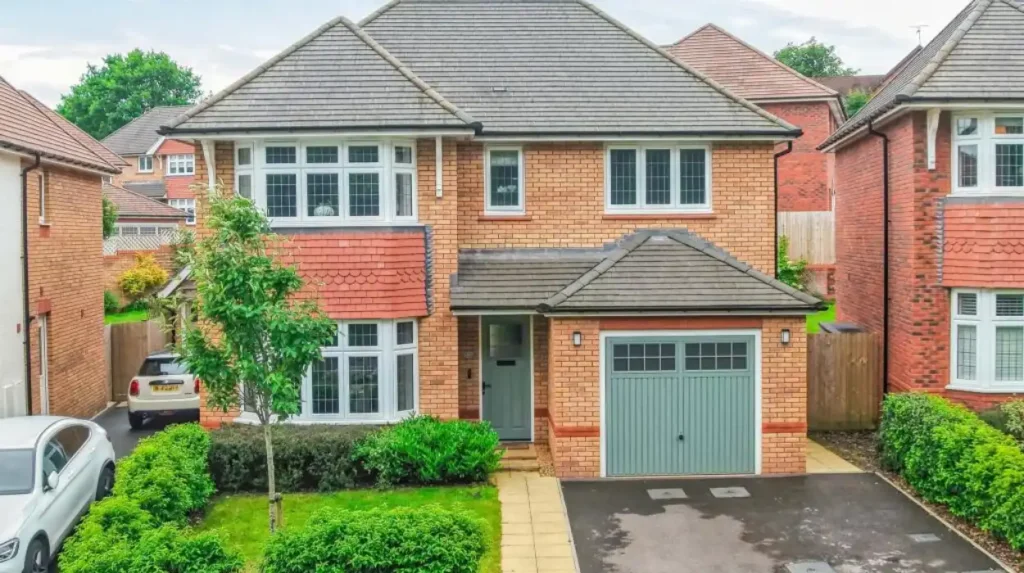
Why is Lisvane popular with families?
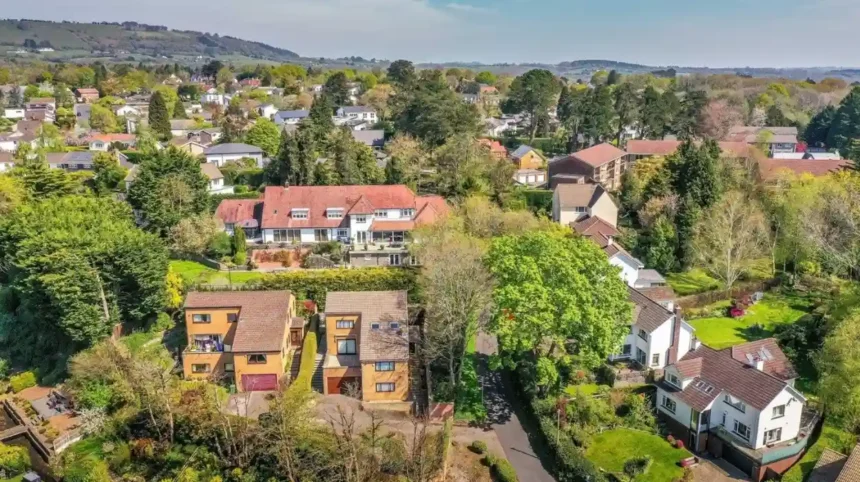
Lisvane is a residential area in north Cardiff with established housing, local schools, green space and rail access through Lisvane and Thornhill station. Its suburban character and connection with nearby Llanishen, Cyncoed and Thornhill make it a significant family residential location.
Lisvane sits in northern Cardiff and forms part of a wider group of suburban neighbourhoods including Llanishen, Cyncoed and Rhiwbina. Cardiff Council’s childcare assessment identifies these neighbourhoods within Cardiff North, reflecting their established residential and family-service infrastructure.
The area’s housing stock includes detached and semi-detached properties alongside other residential formats. Family buyers often assess Lisvane according to garden space, bedroom numbers, parking and proximity to schools.
Transport is another important factor. Lisvane & Thornhill railway station provides access to Cardiff’s wider rail network. Transport for Wales lists Lisvane & Thornhill among the stations supporting pay-as-you-go travel in South Wales.
Schools remain central to property searches. Cardiff Council provides postcode-based catchment information for English-medium and Welsh-medium primary and secondary schools. Families should check the exact property address rather than relying on a neighbourhood name because catchment boundaries vary.
Lisvane also benefits from its position close to other northern Cardiff amenities. Families can access services in Llanishen, Cyncoed and Thornhill without relying entirely on the city centre.
Is Cyncoed a good area for families?
Cyncoed is an established north Cardiff residential area known for family housing, access to schools, parks and local services. Its location near Roath Park, Lakeside, Heath and Llanishen connects suburban living with major education, healthcare, transport and recreation facilities.
Cyncoed occupies a strategic position in north-east Cardiff. It sits close to Roath Park, one of Cardiff’s major historic green spaces, and connects with Penylan, Lakeside, Llanishen and Heath.
Cardiff Council identifies Roath Park Lake and Gardens within the Cyncoed and Penylan area. The council also recognises Roath Park as a conservation area, demonstrating its historical and environmental importance.
For families, the area provides access to schools serving different age groups. Cardiff’s education system includes English-medium and Welsh-medium options, while Church in Wales and Catholic schools also operate across the city.
Cyncoed also provides access to nearby employment and healthcare infrastructure. Heath lies close to the University Hospital of Wales and Heath railway stations. This creates practical advantages for households where commuting patterns involve northern Cardiff.
Housing varies considerably by street. Families comparing properties should examine garden size, parking, property condition, road layout and walking distance to schools rather than treating Cyncoed as a uniform housing market.

What makes Rhiwbina suitable for family life?
Rhiwbina is a north Cardiff suburb with established residential streets, schools, local shops, green spaces and access to rail services. Its connection to Whitchurch, Birchgrove, Llanishen and Cardiff city centre supports everyday family travel and local community life.
Rhiwbina forms part of Cardiff North alongside Heath, Lisvane, Llanishen, Cyncoed, Penylan, Pentwyn, Pontprennau and Old St Mellons in Cardiff Council’s childcare planning framework.
The neighbourhood has a distinct suburban identity with predominantly residential streets and local amenities. Its position near Whitchurch and Llanishen expands access to shops, schools and public transport.
Rhiwbina railway station is part of the Cardiff suburban rail network. Transport for Wales lists Rhiwbina among stations supporting pay-as-you-go travel.
The nearby rail corridor connects Rhiwbina with Cardiff Queen Street and Cardiff Central through the wider Cardiff network. Current Transport for Wales services show the Coryton route travelling through Rhiwbina and Whitchurch towards Cardiff Queen Street.
For families, the neighbourhood is particularly relevant when comparing commuting convenience with suburban housing. The exact balance depends on the location of the property within Rhiwbina.
Why do families choose Whitchurch?
Whitchurch is a north-west Cardiff suburb with schools, shops, parks, community facilities and a railway station. Its village-style local centre and transport links provide families with everyday services while maintaining convenient access to Cardiff city centre and surrounding neighbourhoods.
Whitchurch occupies an important position in north-west Cardiff. It is connected to Rhiwbina, Llandaff North, Tongwynlais and Heath, creating a large network of nearby services.
Whitchurch railway station provides access to the Cardiff suburban rail network. Transport for Wales lists Whitchurch among stations supporting pay-as-you-go travel and shows services connecting Whitchurch with Cardiff Queen Street and Cardiff Central.
Schools are another major component of the area. Cardiff Council’s published school information includes Whitchurch Primary School, which has an admission number of 90 in the council’s 2027/28 admissions policy.
The neighbourhood also provides access to local shops and services without requiring every household trip to the city centre. This is important for families managing school runs, childcare, shopping and leisure.
Whitchurch also connects with the River Taff corridor and nearby green spaces. Its location makes it practical for households seeking a suburban environment with rail access.
Is Radyr one of Cardiff’s family-friendly areas?
Radyr is a western Cardiff suburb with established housing, schools, green space and a major railway station. Radyr station provides frequent connections to Cardiff Central, while nearby countryside and the River Taff corridor provide substantial outdoor space.
Radyr is located west of Cardiff city centre along the River Taff. The area includes Radyr and Morganstown and has developed as an established suburban community.
Transport is one of Radyr’s clearest practical features. Transport for Wales states that Radyr station opened in 1883 and now operates as a busy commuter station. The station has 115 official station car-park spaces plus 177 nearby park-and-ride spaces according to current station information.
Rail services connect Radyr with Cardiff Central and other destinations. Transport for Wales describes a journey to Cardiff Central as taking just over 15 minutes, with frequent services.
Schools also form an important part of Radyr’s family infrastructure. Cardiff Council’s school transport information includes routes serving Radyr Comprehensive School from Pentyrch, Rhydlafar, Creigiau and Tongwynlais.
Radyr’s location near the Taff provides access to outdoor routes and countryside. This gives families opportunities for walking and cycling without travelling far from the residential area.
Why is Llandaff considered for family living?
Llandaff is a historic north-west Cardiff community with residential streets, schools, local services, green spaces and access to the River Taff. Its location provides a balance between established neighbourhood character, outdoor space, education facilities and connections with central Cardiff.
Llandaff has medieval origins and developed around Llandaff Cathedral, the River Taff and its historic settlement. The modern neighbourhood combines historic buildings with later residential development.
The area contains Llandaff High Street and nearby residential streets. Cardiff Council identifies Llandaff within its western childcare planning area alongside Llandaff North, Radyr and Morganstown, Whitchurch and Tongwynlais, Creigiau and St Fagans, Pentyrch and Fairwater.
Green space is a major part of Llandaff’s location. Llandaff Fields provides open recreational space between Llandaff and Pontcanna. Cardiff Council operates a car park at Llandaff Fields with 59 spaces, including five Blue Badge spaces and two electric vehicle charging bays.
The area also benefits from proximity to the River Taff and wider Taff Trail routes. These facilities support walking, cycling and outdoor recreation.
Llandaff is therefore relevant for families who want historic surroundings combined with access to city facilities. Property selection still requires street-level assessment because housing types and traffic conditions vary.
What makes Penylan a strong family location?
Penylan is an inner-north Cardiff residential area close to Roath Park, schools, local shops and central Cardiff. Its location combines established housing with relatively short access to major city facilities, making everyday school, work and leisure journeys practical.
Penylan sits immediately south and west of parts of Cyncoed and close to Roath Park. Cardiff Council’s conservation information places Roath Park Lake and Gardens within the Cyncoed and Penylan areas.
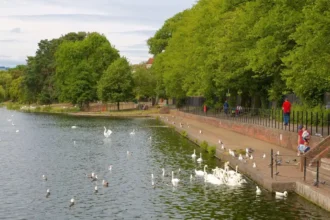
Roath Park is one of the area’s defining recreational assets. The park includes a large lake, gardens and walking routes, creating substantial outdoor space within the urban area.
Education provision is also significant. Cardiff Council established Howardian Primary School in Penylan in September 2015. The council notes that its catchment area was still to be established on the referenced school information page, demonstrating why families need to verify current admissions information before choosing a property.
Penylan provides comparatively direct access to central Cardiff, Roath, Albany Road and surrounding neighbourhoods. This benefits families who want city access without living directly in the city centre.
The area’s housing includes traditional terraces, semi-detached homes and larger properties. The precise family suitability of each property depends on bedrooms, outdoor space, parking and proximity to schools.
Is Heath a practical Cardiff area for families?
Heath is a north Cardiff residential area with schools, parks, healthcare facilities, rail stations and access to surrounding suburbs. Its position near the University Hospital of Wales and Cardiff’s northern transport network gives families strong access to essential city services.
Heath is particularly significant because it combines residential streets with major public services. The University Hospital of Wales is located in the Heath area and forms one of Cardiff’s most important healthcare institutions.
The neighbourhood also has access to Heath High Level and Heath Low Level railway stations. Transport for Wales lists both stations within its South Wales pay-as-you-go network.
Rail connections provide access towards Cardiff Queen Street, Cardiff Central and northern Cardiff. Current TfW service information shows trains travelling through Heath towards Llanishen, Lisvane & Thornhill and Caerphilly.
Heath Park provides another family amenity. Cardiff Council lists the Heath Park main car park with 243 spaces, alongside additional parking facilities serving the park.
The area therefore suits households that prioritise access to healthcare, public transport, education and green space. Its urban character differs from the larger suburban environments found further north.
Are Creigiau and St Fagans suitable for families?
Creigiau and St Fagans provide western Cardiff residential environments with larger suburban housing, open space and access to rural landscapes. Their location suits families prioritising space and outdoor access while accepting longer journeys into central Cardiff than inner-city neighbourhoods.
Creigiau and St Fagans sit on Cardiff’s western edge. Cardiff Council groups them within its Cardiff West childcare planning area alongside Pentyrch, Radyr and Morganstown, Whitchurch and Tongwynlais, Fairwater, Llandaff and Llandaff North.
The area has a lower-density residential character than central Cardiff. Properties often include larger gardens and more substantial family housing.
St Fagans National Museum of History provides a major cultural and outdoor attraction. The surrounding landscape also offers access to rural walking environments.
Creigiau has primary education provision, including Creigiau Primary School. Cardiff Council also operates school transport routes connecting Creigiau with Radyr Comprehensive School.
The principal consideration is transport. Families commuting to central Cardiff should calculate actual journey times from the specific property. Car travel, bus services and school-run traffic affect daily travel patterns.
Creigiau and St Fagans therefore form part of the family housing market for households prioritising space and access to the western countryside.
How important are Cardiff schools when choosing a family area?
Schools are one of the most important practical factors in choosing a Cardiff family area because catchment boundaries, admission arrangements, school language and available places differ. Families should check the exact property postcode and current council information before committing to a home.
Cardiff Council states that Cardiff has 125 schools, including nursery, primary, secondary and special schools. Families can search schools by location, type, Cardiff ward, language and address.
Cardiff provides several education models. These include English-medium community schools, Welsh-medium community schools, Church in Wales schools and Catholic schools.
Catchment areas are particularly important. Cardiff Council states that children living in a school’s catchment area receive higher priority for that catchment school, but living within a catchment does not guarantee a place.
Families should therefore check three separate factors: the current catchment boundary, the school’s admissions policy and recent allocation information.
Cardiff Council’s published allocation information demonstrates differences between schools. For example, published primary allocation figures include Radyr Primary School with 60 places, Rhiwbina Primary School with 90 places and Whitchurch Primary School with 90 places in the referenced allocation dataset.
School capacity changes over time. New developments and demographic changes also affect demand. A property search should therefore use current council information rather than historical property descriptions.
Which Cardiff family areas have the best access to parks and green space?
Cardiff has extensive green infrastructure across suburban and inner-city neighbourhoods. Roath Park, Bute Park, Llandaff Fields, Heath Park, the River Taff corridor and western countryside provide families with walking, recreation, play and outdoor activity options.
Green space is a major part of Cardiff’s residential structure. Cardiff Council maintains a citywide network of parks and play areas and provides a dedicated service for finding local parks and green spaces.
Different neighbourhoods provide different outdoor environments.
Roath Park serves Penylan and Cyncoed. Heath Park serves Heath and surrounding northern districts. Llandaff Fields provides a large open space near Llandaff and Pontcanna. Bute Park sits closer to central Cardiff and provides a major city-centre green space.
Western Cardiff offers a different landscape. Radyr connects with the River Taff and nearby countryside. Creigiau and St Fagans provide access to more rural environments.
For families, proximity matters more than the overall number of parks in the city. A property located within walking distance of a play area or park provides different everyday benefits from a property requiring a car journey.
Cardiff Council also operates outdoor recreation and leisure services covering parks, play areas, trails, sports facilities and cultural activities.
How important is public transport for families in Cardiff?
Public transport affects school journeys, commuting, shopping and access to healthcare. Cardiff’s rail network connects suburban areas with Cardiff Central and Queen Street, while buses provide additional coverage across neighbourhoods without direct rail access.
Cardiff’s suburban rail system provides a strong north-south and east-west framework. Transport for Wales lists stations including Radyr, Llandaf, Heath High Level, Heath Low Level, Rhiwbina, Whitchurch and Lisvane & Thornhill within its South Wales pay-as-you-go network.
Radyr provides particularly clear commuter connectivity. TfW states that Cardiff Central is just over 15 minutes from Radyr by train.
Northern Cardiff also benefits from rail connections through Heath, Llanishen and Lisvane & Thornhill. Current services show connections between Cardiff Queen Street, Heath, Llanishen, Lisvane & Thornhill and Caerphilly.
Families should assess transport according to actual routines. A railway station close to a home is useful for commuting but does not replace local buses if the school, nursery or workplace lies away from the rail corridor.
Walking distance also matters. Cardiff Council encourages active travel for school journeys, including walking, cycling and scooting.
What should families check before buying or renting in Cardiff?
Families should check school catchments, admissions policies, housing condition, transport, parking, green space, childcare, local services and flood or planning information before choosing a Cardiff property. Neighbourhood reputation alone does not establish whether an individual home suits a family.
The first check should be the school catchment. Cardiff Council provides postcode-based catchment information for primary and secondary schools.
The second check should be the school admissions position. A catchment area does not guarantee a place, and school capacity differs between institutions.
The third check should be transport. Families should measure school, work, shopping and healthcare journeys at realistic times rather than relying on straight-line distances.
The fourth check should be childcare. Cardiff Council’s childcare assessment identifies sufficient provision across much of the city but also identifies localities, service types and specific childcare services where unmet demand exists.
The fifth check should be green space and recreation. Families should identify the nearest park, playground, sports facility and walking route.
The sixth check should be housing practicality. Garden space, bedroom configuration, storage, parking, road access and property condition affect everyday family life.
Planning information also deserves attention. Cardiff Council maintains its Local Development Plan and development monitoring system. Families should check significant planning proposals near a prospective home.
Explore More Area Guide
Cardiff Areas for Young Professionals: Transport & Lifestyle
Most Expensive Areas to Live in Cardiff: Lisvane & Cyncoed
Which Cardiff area should families consider based on their priorities?
Family priorities differ across Cardiff. Lisvane and Cyncoed suit established northern suburban living; Whitchurch and Rhiwbina combine local amenities with rail access; Radyr offers western rail connectivity; Llandaff and Penylan provide established neighbourhoods closer to central Cardiff.
Families seeking northern suburban housing can investigate Lisvane, Cyncoed, Rhiwbina and Llanishen. These areas connect with established schools, parks and services.
Families prioritising rail commuting can examine Radyr, Whitchurch, Rhiwbina, Heath and Lisvane & Thornhill. TfW’s current network provides direct suburban connections into Cardiff’s central stations.
Families prioritising green space can examine Cyncoed, Penylan, Heath, Llandaff and Radyr. Roath Park, Heath Park, Llandaff Fields and the Taff corridor provide different forms of outdoor access.
Families prioritising western suburban space can examine Radyr, Creigiau and St Fagans.
Families prioritising proximity to central Cardiff can examine Penylan, Heath, Llandaff and other inner suburbs where everyday services sit closer to the city centre.
The most reliable approach is property-specific research. Cardiff’s school catchments, transport options, housing stock and local facilities vary between streets. Current council information should therefore form the basis of any final housing decision.
What is the long-term outlook for Cardiff family neighbourhoods?
Cardiff’s established family neighbourhoods remain shaped by housing demand, school capacity, transport investment, childcare provision, green-space management and new development. Future suitability depends on how these infrastructure factors evolve alongside population and housing growth.
Cardiff Council continues to manage development through its Local Development Plan and planning framework. The council monitors development needs and reviews planning policy as the city changes.
Education infrastructure also changes. Cardiff has introduced new schools and continues to manage school capacity through admissions and education planning. Ysgol Gynradd Groes-wen Primary School, for example, opened in September 2023 within the Plasdŵr development area.
Transport remains another long-term factor. Transport for Wales continues to publish and update Cardiff and South Wales rail timetables, including services connecting Cardiff with the surrounding valleys, Vale of Glamorgan and other destinations.
For families, this means Cardiff’s residential landscape should be assessed as an evolving system. Schools, transport, housing, childcare and green infrastructure interact directly with the quality and practicality of everyday life.
The strongest family search process therefore starts with priorities rather than neighbourhood labels. Families can identify their required school type, commuting destination, property size, outdoor-space needs and transport requirements, then compare Cardiff areas against those criteria.
What are the best areas in Cardiff for families?
Lisvane, Cyncoed, Rhiwbina, Whitchurch, Radyr, Llandaff, Penylan, Heath, Creigiau and St Fagans are established family-oriented areas. Each offers different combinations of schools, housing, green space, transport and local amenities.