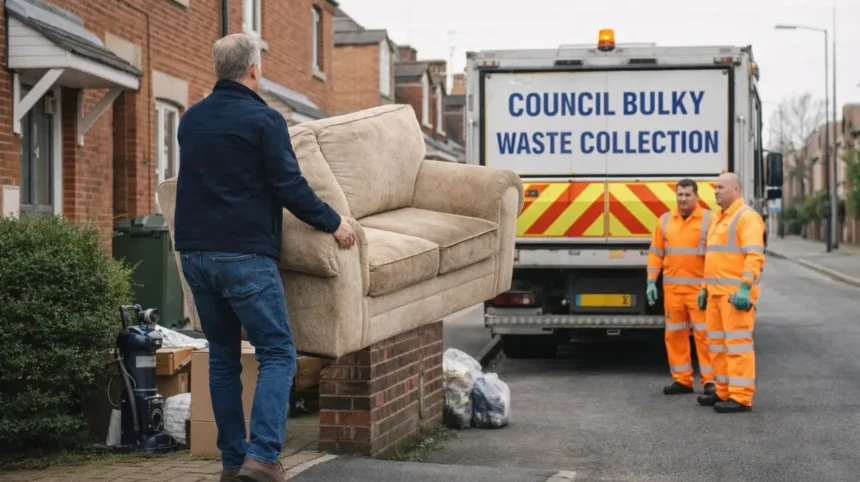
Cardiff bulky waste collection is a City of Cardiff Council service that helps residents dispose of large household items that are difficult to transport to a recycling centre. The service covers eligible furniture, mattresses, metal objects, carpets and certain large electrical appliances. Residents must book a collection, pay the applicable charges and place their items at the specified collection point. The council also provides recycling centres and alternative disposal routes for items that are not accepted through its household collection service.
- What Is Cardiff Bulky Waste Collection?
- Who Can Use Cardiff Council’s Bulky Waste Collection Service?
- How Much Does Cardiff Bulky Waste Collection Cost?
- Which Items Does Cardiff Council Collect as Bulky Waste?
- What furniture can residents book for collection?
- Can Cardiff Council collect mattresses and carpets?
- Which electrical appliances are accepted?
- Are metal, wooden and plastic objects accepted?
- Which Items Cannot Be Collected Through Cardiff’s Bulky Waste Service?
- How should residents dispose of small electrical appliances?
- How should residents handle asbestos, soil and rubble?
- Where can residents take bicycles, glass doors and garden waste?
- How Can Residents Book Cardiff Bulky Waste Collection?
- Where Should Bulky Waste Be Placed Before Collection?
- Can Residents Change or Cancel a Bulky Waste Booking?
- What Alternatives Are Available for Bulky Waste in Cardiff?
- Can residents use Cardiff’s household recycling centres?
- Can unwanted furniture be reused instead of discarded?
- How can residents choose a private waste carrier?
- How Does Bulky Waste Collection Support Cardiff’s Waste Management System?
- Why is correct waste separation important?
- What does Cardiff’s waste policy mean for future disposal needs?
- How Can Residents Avoid Problems With Cardiff Bulky Waste Collection?
What Is Cardiff Bulky Waste Collection?
Cardiff bulky waste collection is a paid household service for removing large items that residents cannot easily transport to a recycling centre. Cardiff Council collects eligible objects from residential properties following an advance booking, subject to item restrictions, collection charges and placement requirements.
Bulky waste refers to household objects that are too large, heavy or awkward for ordinary rubbish collections. Examples include sofas, wardrobes, mattresses, carpets and certain large electrical appliances. These items require different handling from everyday household rubbish because of their size, material composition and potential recycling value.
Cardiff Council operates the service for residential properties within its service area. It is designed for residents who need to remove unwanted household possessions without transporting them independently to a designated recycling centre.
The council distinguishes bulky waste from ordinary household rubbish, garden waste, commercial waste and building materials. These categories follow different collection or disposal arrangements. Residents must identify the material they want to discard before booking so that they select an appropriate service.
The official council website provides the current accepted-item list, booking arrangements, charges and conditions. Residents should consult this information before paying because eligibility and service restrictions affect whether an item can be collected.
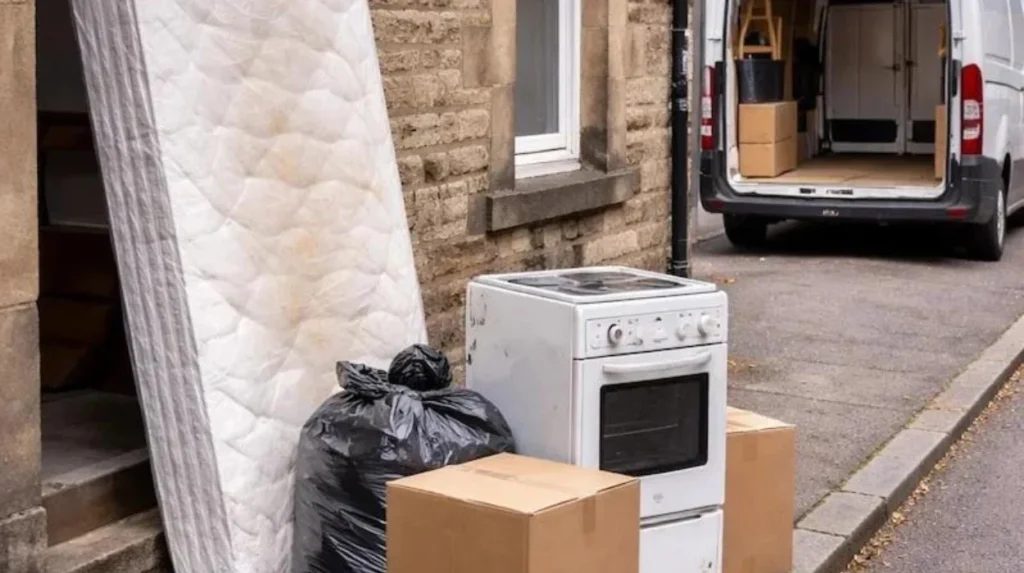
Who Can Use Cardiff Council’s Bulky Waste Collection Service?
Cardiff Council’s bulky waste collection service is intended for residential properties in Cardiff. Residents with eligible household items can arrange a collection through the council website, the Cardiff Gov app or participating council Hubs, while commercial customers must use separate trade waste arrangements.
The service addresses household disposal needs rather than the removal of waste generated by businesses. Residents clearing a bedroom, replacing a sofa or disposing of an unwanted wardrobe can check whether their possessions qualify for collection.
The council also provides options for people who can transport their own items. Its household recycling centres accept many categories of household waste, subject to site conditions and booking requirements. This gives residents an alternative when they have suitable transport and can manage the loading and unloading themselves.
Does the service cover flats and rented properties?
Residents in flats and rented accommodation should check their property’s waste arrangements before booking. A collection must follow the council’s instructions about where the items should be placed. Communal bin stores are not automatically authorised collection points.
Cardiff Council’s guidance for flats specifically warns residents against leaving bulky items in communal bin stores without an arranged collection. Unbooked objects can obstruct shared facilities and require additional removal arrangements.
Can businesses use the household service?
Businesses should not book the residential bulky waste service for commercial waste. Cardiff Council operates a separate Commercial Recycling Centre and publishes commercial waste information for organisations disposing of materials such as general waste, wood, metal, cardboard and rubble.
The correct route depends on the waste’s origin and material. A landlord, retailer, office or contractor clearing business premises should establish the appropriate commercial disposal arrangement rather than treating the material as ordinary household waste.
How Much Does Cardiff Bulky Waste Collection Cost?
Cardiff Council lists a £5 non-refundable booking fee and collection charges of £15 for one or two items, £30 for three or four items, and £45 for five or six items. The maximum standard booking covers six items, excluding any additional bookings.
The published pricing structure allows residents to estimate the cost before arranging collection. The booking fee applies to all collections and is non-refundable. Residents should verify the total displayed during the official booking process before making payment.
Published council charges shown on the official bulky-items page; check the booking page for the current total before paying.
What are the charges for different quantities?
The council’s published collection bands are:
- One or two items: £15 collection charge, plus the £5 booking fee.
- Three or four items: £30 collection charge, plus the £5 booking fee.
- Five or six items: £45 collection charge, plus the £5 booking fee.
These examples show how the charges work. A resident booking one sofa falls into the first collection band. Someone booking a sofa, mattress and wardrobe falls into the second band, provided all three items are accepted.
The applicable total should be confirmed at checkout. Residents should not assume that extra objects can be added after payment because Cardiff Council states that paid bookings cannot be expanded to include additional items.
Why does Cardiff charge for bulky waste collection?
Bulky waste requires collection vehicles, staff time, transport and appropriate treatment or disposal. Furniture and other large objects also contain different materials, including wood, metal, textiles, plastics and composite materials, which influence their recovery options.
Cardiff Council’s 2024/25 budget consultation document discussed proposals to introduce charges across bulky waste collections in response to financial pressures. The council’s research reported 6,581 responses to the relevant consultation question, with 67.1% supporting the proposed charges. These figures describe the historical consultation, not the current booking price or a new consultation.
The current published service charges should take precedence over older budget proposals when residents calculate disposal costs.
Which Items Does Cardiff Council Collect as Bulky Waste?
Cardiff Council accepts eligible household furniture, mattresses, carpets, metal objects, hard plastics and specified large electrical appliances through its bulky waste service. Examples include sofas, armchairs, divan bed bases, wooden cabinets, UPVC window frames and certain white goods, subject to restrictions.
The accepted-item list covers household objects made from a range of materials. Residents should identify each item accurately during booking because an object’s size, construction and material affect its eligibility.
What furniture can residents book for collection?
Accepted furniture includes sofas, armchairs, divan bed bases and furniture made from mixed materials, such as a wooden cabinet with glass doors. These items are common during house moves, room renovations and furniture replacements.
Residents should describe the actual item rather than relying on a broad category such as furniture. A large wardrobe, for example, should be checked against the current booking options. The council’s published list identifies accepted categories, but residents must follow the exact options and instructions shown during booking.
Can Cardiff Council collect mattresses and carpets?
Yes. The council lists memory foam and spring mattresses, divan bed bases and carpets among the items it collects. These materials are bulky because of their dimensions, weight or handling requirements.
Before arranging collection, residents should check whether each separate object counts towards the booking limit. A mattress and bed base are distinct items for planning purposes unless the booking system specifies otherwise. Preparing an accurate inventory reduces the risk of leaving an unbooked object behind.
Which electrical appliances are accepted?
The published list includes large electrical appliances and white goods, subject to current service restrictions. Residents must check the rules for the particular appliance rather than assuming every electrical item qualifies.
Important current restriction: Cardiff Council has temporarily suspended bulky waste collections for fridges, fridge-freezers and freezers because of a nationwide shortage of reprocessing capacity. The council also warns that these appliances are very unlikely to be accepted at its recycling centres while the restriction remains in place. It recommends considering retailer take-back services when purchasing replacement appliances. Residents should check the official notice for updates before arranging disposal.
Are metal, wooden and plastic objects accepted?
Cardiff Council lists metal items, objects made from wood, medium-density fibreboard (MDF) or laminate, and hard plastics among its accepted categories. It also accepts UPVC windows and frames and certain ceramic, tile or stone items.
Material identification is important because the council excludes some objects that appear similar to accepted household goods. A bicycle, for example, is excluded from the bulky collection service even though it contains metal. Residents can check the recycling-centre service for alternative options.
Which Items Cannot Be Collected Through Cardiff’s Bulky Waste Service?
Cardiff Council excludes glass doors, small electrical appliances, pianos, asbestos, garden waste, soil, rubble and bicycles from its standard bulky waste collection. Examples of alternative disposal routes include recycling centres for eligible items and specialist arrangements for hazardous materials.
Checking exclusions before booking prevents unsuitable items from being left for collection. The fact that an object is large does not automatically make it eligible.
How should residents dispose of small electrical appliances?
Small electrical appliances are excluded from the standard bulky collection list. Examples include kettles, toasters and games consoles.
Cardiff’s household recycling centres accept a range of smaller electrical items, subject to their site conditions. Community recycling zones at participating Hubs and libraries also accept selected small electrical items, books and hard plastics. However, these community zones do not accept larger appliances such as vacuum cleaners, microwaves and televisions. Residents should check the relevant facility’s accepted-item list before travelling.
How should residents handle asbestos, soil and rubble?
Asbestos requires particular care because its fibres present serious health risks when disturbed. Residents should not place asbestos in a standard bulky collection booking. Cardiff Council provides separate asbestos disposal guidance, including an appointment-based arrangement for a maximum of two asbestos sacks at Bessemer Close recycling centre. Residents must telephone 029 2087 2087 to arrange an asbestos appointment. They should follow the council’s instructions before handling or transporting this material.
Soil and rubble are also excluded from the bulky collection service. Cardiff’s recycling centres accept certain quantities of rubble and hardcore under specific conditions. The council lists a maximum of six 20-kilogram bags per visit, with the material tipped into the designated skip and the bags taken home. Larger DIY projects require different arrangements, such as a suitable skip or commercial disposal service.
Where can residents take bicycles, glass doors and garden waste?
These objects require separate disposal routes because they are not accepted through the standard bulky collection service. Cardiff’s recycling-centre guidance lists bicycles, garden waste and sheets of glass among materials accepted at its centres, subject to site-specific restrictions. Glass doors remain excluded from the bulky collection service.
Residents should consult the council’s recycling A–Z to identify the appropriate route for each object. Garden waste also follows its own collection arrangements, while reusable bicycles and furniture are worth considering for donation or resale before disposal.
How Can Residents Book Cardiff Bulky Waste Collection?
Residents can book Cardiff bulky waste collection through the official council website, the Cardiff Gov app or in person at most council Hubs using cash. A booking must identify eligible items, confirm the collection arrangements and include payment of the applicable charges.
The online process allows residents to arrange collection without visiting a council office. The Cardiff Gov app also provides access to other waste services, including checking collection dates, booking recycling-centre visits and reporting waste-related problems.
What are the steps for making a booking?
Step 1: Check the accepted-item list.
Identify the objects requiring collection and confirm that each one appears on the council’s accepted list. Check temporary restrictions, particularly the suspension affecting fridges and freezers.
Step 2: Open the official booking service.
Step 3: Select the items.
Choose the correct descriptions and quantity. The standard service permits a maximum of six items per booking. Review the selected objects carefully before proceeding.
Step 4: Confirm the collection and charges.
Follow the booking instructions, check the collection details and pay the displayed amount. Keep the booking confirmation so that the agreed arrangements can be checked later.
Step 5: Prepare the collection point.
Place the booked objects at the location specified in the confirmation and council instructions. Do not leave additional objects beside the booked items, and do not assume that communal bin stores are authorised collection points.
Can residents book by telephone?
The council’s bulky-items page directs residents to the website, Cardiff Gov app and most Hubs for bookings. It specifically lists telephone contact for changing or cancelling a booking. Residents should use the official page to verify the available booking methods rather than assume that a telephone booking option is available.
For amendments and cancellations, the council lists the contact number 029 2087 2087.
Where Should Bulky Waste Be Placed Before Collection?
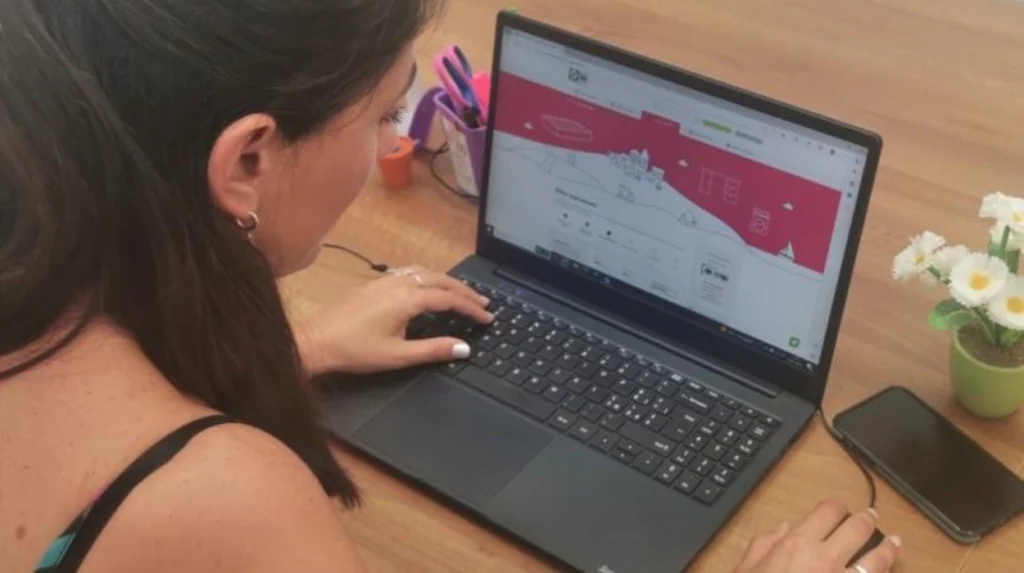
Residents must place booked bulky items at the location specified in their Cardiff Council booking. They should keep items accessible to collection crews, avoid obstructing pavements or communal facilities, and ensure that the objects presented match the items listed in the booking.
Correct placement is an essential part of the collection process. A valid booking does not mean that an item can be left anywhere outside a property. The council’s instructions determine the appropriate collection point.
What should residents do before collection day?
Residents should prepare the booked items in advance and check the confirmation for placement instructions. They should ensure that the objects are accessible without creating unnecessary obstructions.
For properties with shared entrances, residents should check the arrangements for communal access. Items left in a communal bin store without an authorised booking can interfere with other residents’ waste facilities. Cardiff Council warns that incorrectly presented waste is not necessarily collected and that responsible parties, such as building management companies, can face additional collection costs.
Residents should also separate the booked objects from anything that has not been included in the booking. This helps collection crews identify the correct items and reduces confusion during removal.
What happens if an item is not ready or accessible?
Residents should follow the location and access requirements stated in their booking. An item placed behind a locked gate or inside an inaccessible area creates a different collection situation from an object positioned at the designated point.
If access arrangements change, residents should contact the council before collection day. The official service page provides instructions for amending bookings and explains the applicable deadlines. Residents should not assume that a collection will proceed if the agreed arrangements are not followed.
Can Residents Change or Cancel a Bulky Waste Booking?
Cardiff Council allows residents to swap booked items until 2pm on the working day before collection. Additional items cannot be added after payment without another booking, and cancellations must be made five working days before collection to qualify for a refund.
These conditions matter when residents change their plans, replace an item or discover another object that needs disposal. The council applies separate rules to changes, extra items and cancellations.
How can residents change the items in a booking?
The council states that residents can swap items until 2pm, one working day before the scheduled collection. This provides a limited opportunity to replace a selected object when disposal requirements change.
For example, a resident who originally books a mattress but then needs to dispose of a different eligible item should check the amendment rules and complete the change before the deadline.
Once payment has been made, residents cannot simply add more items to the existing booking. They need to make another booking for additional objects, subject to the six-item maximum for each booking.
When must residents cancel to receive a refund?
Cardiff Council requires cancellations to be made five working days before the collection date for a refund to be available. The £5 booking fee remains non-refundable.
Residents should therefore review the scheduled date carefully before paying. If a collection is no longer required, they should contact the council promptly and confirm the cancellation conditions that apply to their booking.
What Alternatives Are Available for Bulky Waste in Cardiff?
Cardiff residents who cannot use the bulky waste service can investigate household recycling centres, reuse and donation options, retailer take-back schemes or registered waste carriers. The appropriate route depends on the item’s material, condition, size and eligibility under the relevant disposal service.
Alternative routes are particularly important for excluded objects, appliances affected by temporary restrictions and possessions that remain in usable condition.
Can residents use Cardiff’s household recycling centres?
Cardiff Council operates household recycling centres at Lamby Way and Bessemer Close. These facilities accept many household materials, including furniture, mattresses, bicycles, garden waste, electrical appliances and wood, subject to the published rules for each site.
Visits require advance booking. Cardiff residents can book up to 26 visits per year under the standard allowance, with additional vehicle-specific conditions. The council also states that materials must meet its transport and acceptance requirements. Residents should check the current site guidance before loading a vehicle.
Can unwanted furniture be reused instead of discarded?
Furniture and household possessions in usable condition can be considered for donation, resale or reuse. Examples include wardrobes, tables, chairs and sofas that remain functional and safe.
Reuse prevents serviceable objects from entering the waste stream unnecessarily. However, residents should confirm that a charity or reuse organisation accepts the specific item and can arrange collection where required. Reuse organisations operate their own eligibility and condition requirements, so acceptance should not be assumed.
How can residents choose a private waste carrier?
Residents who need a private collection should use a registered waste carrier. Cardiff Council explicitly directs residents towards its registered waste carrier supplier information when they choose an external company.
Before handing over waste, residents should check the carrier’s registration and obtain clear information about the collection price and disposal arrangements. A low collection price does not establish that waste will be handled legally.
The Environment Agency provides a public waste-carrier register for checking relevant registrations in England. In Wales, residents should also consult Natural Resources Wales for the applicable registration and regulatory requirements. These checks help establish whether a contractor is authorised to carry the type of waste involved.
Explore More Area Guide
Cardiff Bin Collection Guide: Dates, Recycling and Waste Rules
Cardiff Recycling Guide: Rules, Collections and Recycling Centres
How Does Bulky Waste Collection Support Cardiff’s Waste Management System?
Bulky waste collection forms part of Cardiff’s wider household waste management system, which separates ordinary rubbish, recyclable materials, garden waste and large household objects. Correct sorting directs eligible items towards suitable recovery or disposal facilities and helps prevent unsuitable materials from entering the wrong collection stream.
Cardiff provides several distinct waste services because household materials differ in size, composition and treatment requirements. Ordinary household waste follows regular collection arrangements, while recyclable materials use designated bags, caddies or bins. Large furniture and selected appliances require separate arrangements.
Why is correct waste separation important?
Separating waste according to material and service eligibility helps collection teams handle items correctly. For example, a sofa, a small electrical appliance and a bag of garden waste do not necessarily follow the same disposal route.
Incorrectly presented waste can remain uncollected, requiring residents to rearrange disposal. Cardiff Council’s waste guidance explains that items placed in the wrong containers are not collected and that enforcement action applies to certain waste-related offences.
What does Cardiff’s waste policy mean for future disposal needs?
Cardiff’s waste services operate within wider financial, environmental and operational constraints. Its published budget consultation document for 2024/25 described the cost pressures associated with bulky waste and the proposal to charge for collections previously provided without charge in some circumstances. The document recorded public responses to those proposals, demonstrating that collection charges have been part of the council’s waste-policy discussions.
Future service decisions depend on council policy, operating costs, treatment capacity and waste-management requirements. The temporary suspension of fridge and freezer collections also illustrates how limitations in reprocessing capacity affect household disposal arrangements. Residents should therefore check the official service page whenever they plan a collection rather than rely on old pricing guides or outdated acceptance lists.
How Can Residents Avoid Problems With Cardiff Bulky Waste Collection?
Residents can avoid collection problems by checking item eligibility, confirming charges, booking before placing items outside, following placement instructions and observing amendment deadlines. Examples include checking appliance restrictions, booking each additional item and keeping communal entrances clear during collection preparation.
A few practical checks help residents complete the process correctly.
First, use Cardiff Council’s official bulky-items page to confirm the accepted materials and current prices. Second, count the items before booking and make sure the selected descriptions match the objects being discarded. Third, retain the booking confirmation and prepare the items at the specified location.
Residents should pay particular attention to excluded items. Fridges, fridge-freezers and freezers remain subject to the council’s published temporary suspension until the official service page confirms otherwise.
Finally, use the appropriate alternative route when an item is not accepted. Household recycling centres, reuse options and registered waste carriers provide different ways to deal with unwanted possessions, depending on the material and circumstances.
Cardiff bulky waste collection offers a practical disposal route for eligible household objects, but successful collection depends on following the council’s booking rules. Checking the latest guidance before paying helps residents manage costs, prepare items correctly and avoid unnecessary delays.
What is Cardiff bulky waste collection?
Cardiff bulky waste collection is a City of Cardiff Council service for removing large household items that do not fit into ordinary rubbish collections. Examples include sofas, mattresses, wardrobes and eligible large household objects.