Cardiff, the capital of Wales, operates household recycling and waste collection services to help residents separate recyclable materials from general rubbish. Cardiff Council manages local waste services, including household recycling collections, food waste recycling, public recycling facilities and household waste recycling centres. Understanding these services helps residents dispose of everyday waste correctly and reduce the amount sent for disposal.
- What Is Recycling in Cardiff?
- How Does Cardiff Council’s Recycling System Work?
- Which Household Materials Can Residents Recycle in Cardiff?
- Paper and cardboard
- Glass bottles and jars
- Metal packaging
- Plastic packaging
- Food waste
- Textiles and electrical equipment
- What Recycling Containers Does Cardiff Council Provide?
- When Should Residents Put Recycling Out for Collection in Cardiff?
- How Can Residents Recycle Food Waste in Cardiff?
- Where Are Cardiff’s Household Recycling Centres?
- How Can Residents Recycle Small Electrical Items and Other Specialist Waste?
- How Can Residents Arrange Cardiff Bulky Waste Collection?
- What Recycling Rules Apply to Flats and Communal Bins in Cardiff?
- What Happens If Recycling Is Contaminated in Cardiff?
- Why Is Recycling Important for Cardiff and Wales?
- How Can Cardiff Residents Reduce Household Waste?
- Where Can Residents Find Official Cardiff Recycling Information?
Recycling in Cardiff forms part of a wider Welsh approach to resource management. Wales has developed policies that encourage households, businesses and public organisations to separate materials, prevent unnecessary waste and recover resources for reuse. Residents contribute to this system by following local collection instructions, preparing recyclable items correctly and using authorised facilities for waste that regular household collections do not accept.
This Cardiff recycling guide explains how household recycling works, which materials residents need to separate, how food waste is handled, where specialist waste belongs and how local recycling supports environmental objectives. It also explains the practical steps residents take to avoid contamination and dispose of unwanted household items responsibly.
What Is Recycling in Cardiff?
Recycling in Cardiff is the process of collecting and sorting household materials so they can be processed into reusable resources instead of being discarded as general waste. Cardiff Council provides local collection arrangements that help residents separate recyclable packaging, paper, cardboard, food waste and other accepted materials.
Recycling converts discarded materials into resources for manufacturing new products. Paper becomes feedstock for paper products, glass can be remelted into new containers, and suitable metals can be recovered for further manufacturing. Some plastics are also processed into new products, depending on their composition, quality and the recycling facilities available.
Cardiff’s household recycling system connects residents with collection vehicles, sorting operations and specialist processing facilities. The process starts when residents place the correct materials in the designated containers. Collection teams then transport those materials through the appropriate waste management routes.
Not every discarded item is recyclable through a household collection. Materials that appear similar can require different disposal methods because they contain different substances or need specialist treatment. Residents therefore need to distinguish between accepted recyclables, general waste, food waste and items requiring separate arrangements.
Cardiff Council’s current service instructions provide the controlling guidance for local collection requirements. Container types, collection arrangements and accepted materials must be checked against the council’s published information rather than assumed from the rules used in another Welsh authority.
How Does Cardiff Council’s Recycling System Work?
Cardiff Council’s recycling system begins with residents separating household waste into the appropriate containers. Council collection services gather eligible materials, which then enter recycling, treatment or disposal processes according to their composition, condition and the facilities available to process them.
The system depends on cooperation between households, collection crews, waste contractors and processing facilities. Each stage influences the quality of the recovered material.
Household separation
Residents sort waste at home before collection. This initial separation prevents recyclable materials from becoming mixed with unsuitable rubbish. Clean, correctly sorted materials are generally easier to process than contaminated loads.
Collection and transportation
Council collection teams collect designated materials according to local service arrangements. Different waste streams follow different routes because food waste, dry recyclables and general rubbish require different handling methods.
Sorting and processing
Recyclable materials enter facilities where they are inspected, separated and prepared for processing. Equipment and manual sorting help identify different materials and remove unsuitable items. Processing methods depend on the material involved.
Recovery and disposal
Suitable recovered materials enter manufacturing or other resource recovery processes. Food waste follows an appropriate treatment route, while non-recyclable residual waste requires an authorised disposal or treatment method.
The system does not guarantee that every item placed in a recycling container becomes a new product. Material quality, contamination, processing capacity and market demand all affect recovery outcomes. Correct household separation improves the likelihood that collected materials can be used effectively.
Which Household Materials Can Residents Recycle in Cardiff?
Cardiff residents need to separate household materials according to Cardiff Council’s current recycling instructions. Common recyclable categories include paper, cardboard, glass containers, metal packaging, accepted plastic packaging and food waste, although the permitted container and preparation rules depend on the local service.
Paper and cardboard
Paper and cardboard commonly include newspapers, magazines, envelopes, cereal boxes and delivery packaging. Residents should keep these materials dry and remove excessive non-paper packaging where practical.
Greasy food packaging and heavily contaminated paper require different treatment from clean paper. Used tissues, paper towels and other absorbent products also have restrictions that depend on the collection scheme.
Glass bottles and jars
Glass bottles and jars are recyclable through appropriate glass collection arrangements. Examples include drinks bottles and empty food jars.
Heat-resistant cookware, drinking glasses, mirrors and window glass have different compositions or processing requirements. They should not automatically be placed with ordinary container glass.
Metal packaging
Metal packaging includes aluminium drinks cans, steel food tins and suitable empty metal containers. These materials can be recovered and processed into new metal products.
Sharp edges, pressurised containers and hazardous residues require care. Aerosol cans must be handled according to local instructions and must never be punctured or burned.
Plastic packaging
Accepted plastic packaging includes certain bottles, tubs, trays and containers. Plastic recycling depends on the type of polymer, the local collection specification and the processing infrastructure available.
Residents should follow Cardiff Council’s current list rather than assuming that every plastic item is accepted. Black plastic, mixed-material packaging and non-packaging plastics can have different requirements.
Food waste
Food waste includes items such as vegetable peelings, fruit scraps, bread, cooked food leftovers and other accepted food materials. Separating food waste helps prevent it from contaminating dry recyclables and allows it to enter a suitable treatment process.
Meat, bones, dairy products and other food categories should be checked against the council’s instructions for the applicable collection service.
Textiles and electrical equipment
Clothing, shoes, small electrical appliances and other reusable household goods often require dedicated collection points or separate disposal arrangements. These items do not automatically belong in ordinary recycling containers.
Residents should use authorised facilities that accept the specific material. Reusable items in good condition are also suitable for donation or reuse schemes where accepted.
What Recycling Containers Does Cardiff Council Provide?
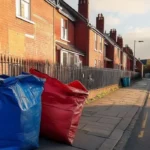
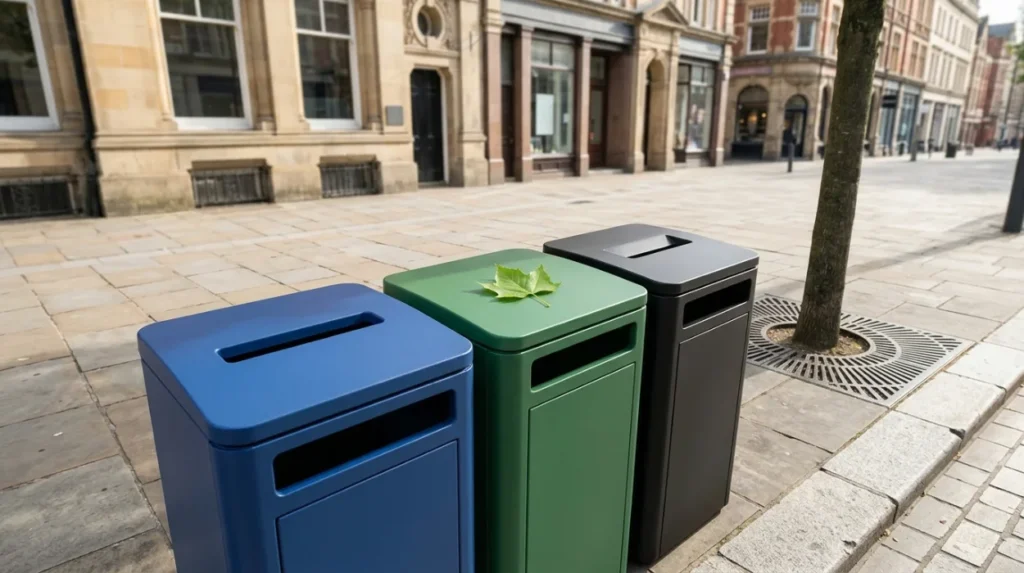
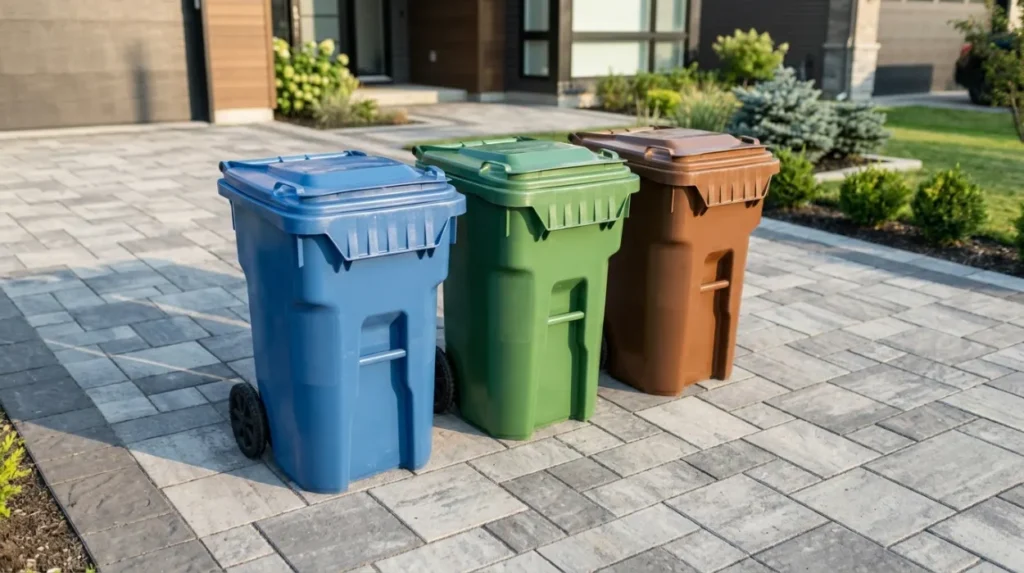
Cardiff Council’s household collection system separates paper and cardboard, plastic and cans, food, glass, garden waste and general waste into designated containers. Residents should use the correct bags, caddies or bins for their property and follow the council’s instructions.
Cardiff’s standard household service uses separate containers for different waste streams. The council identifies the following main categories:
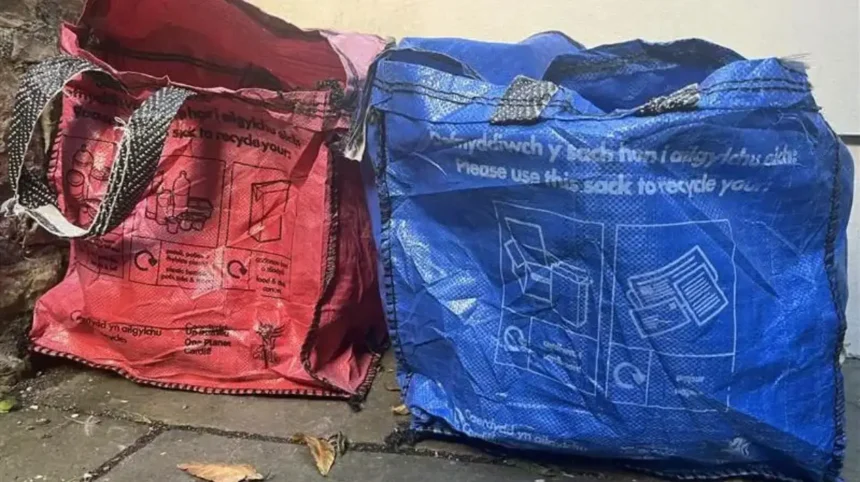
- Blue sack: paper and cardboard.
- Red sack: plastic and cans.
- Food caddy: household food waste.
- Glass caddy: glass bottles and jars.
- Garden waste bin: eligible garden materials.
- General waste bin: residual household rubbish that the recycling service does not accept.
The precise arrangements depend on the property and the collection scheme provided. Residents should check Cardiff Council’s recycling and waste collections guidance before replacing a missing container or disposing of an unfamiliar item.
Using the designated containers prevents recyclable materials from becoming mixed with general rubbish. It also helps collection crews identify and handle each waste stream correctly.
When Should Residents Put Recycling Out for Collection in Cardiff?
Cardiff residents should check their collection date using the council’s official postcode lookup. The standard collection instructions require containers to be presented at the correct time, kept accessible to collection crews and removed from the pavement after collection.
Collection schedules vary by address, so residents should not assume that neighbouring streets have identical collection days. The council’s online service identifies the relevant collection arrangements for a postcode.
Cardiff Council’s published instructions state that household recycling and waste collections generally take place between Tuesday and Friday, within the service’s stated daytime collection window. Residents must follow the current instructions displayed for their address.
How should residents prepare containers?
Residents should separate each material into its designated container and avoid putting incorrect items into recycling bags or caddies. Paper and cardboard should remain dry, while food waste belongs in the appropriate food caddy.
Containers should be placed at the designated collection point without blocking pavements, driveways or pedestrian access. The council’s collection guidance also provides information about assisted collections for residents who have difficulty presenting their waste.
Missed collections, damaged containers and other service problems should be reported through Cardiff Council’s official waste services pages. Residents should check the council’s latest notices before assuming that a missed collection represents a permanent schedule change.
How Can Residents Recycle Food Waste in Cardiff?
Food waste recycling in Cardiff allows residents to separate suitable kitchen scraps from general rubbish. Examples include fruit peelings, vegetable scraps and leftover food accepted by the council’s scheme. Residents should use the designated food caddy and follow current liner and collection instructions.
Food waste is a distinct part of the household recycling system because it needs a suitable treatment process. Separating it from dry recyclables reduces contamination and keeps organic material out of the general waste stream.
What belongs in a food caddy?
Suitable examples include vegetable peelings, fruit waste, bread and other accepted food leftovers. Residents should consult the council’s food waste guidance for the complete list, including any restrictions on particular food products.
Cardiff Council provides specific instructions for food waste in flats with communal bins. Its published guidance says residents should use caddy liners in their kitchen caddy and transfer the lined contents into the communal brown food waste bin. It instructs residents not to use ordinary plastic bags for this purpose.
How does food waste recycling help?
Separating food waste supports the recovery of organic resources through appropriate treatment. It also reduces the quantity of food entering residual waste collections.
Residents can improve their household waste performance by planning meals, storing food correctly and using leftovers before they become waste. Recycling remains important for unavoidable scraps, but preventing edible food from being discarded reduces waste at an earlier stage.
Where Are Cardiff’s Household Recycling Centres?
Cardiff has two household recycling centres, at Lamby Way and Bessemer Close. Cardiff residents can use these facilities free of charge for eligible household items, but they must book a visit, bring the required proof and follow the site’s acceptance rules.
Cardiff Council states that Bessemer Close is open from 8:30am to 5:30pm daily, except Christmas Day, Boxing Day and New Year’s Day. Operational closures can occur, so residents should check the latest information before travelling.
What should residents know before visiting?
The council requires a booking and proof of address. Its published rules permit up to 26 visits per year, with additional limits depending on the vehicle used. Cars with trailers and vans have different booking restrictions from ordinary cars.
The facilities accept many household materials, including cardboard, glass bottles and jars, scrap metal, wood, textiles, garden waste and eligible electrical appliances. Acceptance can vary by item and location, so residents should check the official list before loading their vehicle.
The centres are intended for household waste that cannot be handled through kerbside services. They do not accept unsorted bags of general waste or mixed builders’ waste. Large DIY projects require different arrangements, such as a skip or an appropriate commercial service. <Cite refs={[“turn824266search0”]}/>
Important: Cardiff Council’s current guidance reports restrictions affecting fridge and freezer disposal because of a national shortage of processing capacity. Residents should arrange an alternative before taking these appliances to a centre.
How Can Residents Recycle Small Electrical Items and Other Specialist Waste?
Cardiff’s community recycling zones provide local drop-off points for selected small items that are not collected through standard household recycling. Participating council hubs and libraries accept different materials, so residents must check each location’s accepted items before visiting.
Community recycling zones help residents dispose of smaller items without travelling to a household recycling centre. Depending on the location, accepted materials include small electrical appliances, household batteries, books, ink cartridges and hard plastics.
For example, Cardiff Council lists small electrical items, books and hard plastics among the materials accepted at Butetown Pavilion Youth Hub. Canton Library accepts household batteries, books, hard plastics and ink cartridges. Other locations have different arrangements. <Cite refs={[“turn824266search3”]}/>
Large appliances, such as televisions, microwaves and vacuum cleaners, are not accepted through these small-item facilities. Residents should use an appropriate recycling centre or arrange a suitable collection.
Electrical waste deserves particular attention because discarded equipment contains materials that require specialist treatment. Residents should not place electrical appliances in ordinary recycling sacks unless the council explicitly permits that item.
Batteries also require correct handling. Damaged batteries and batteries contained within electrical devices need particular care because they can create fire risks if crushed or handled incorrectly.
How Can Residents Arrange Cardiff Bulky Waste Collection?
Cardiff Council provides a paid bulky waste collection service for eligible household items that are too large or awkward to transport safely. Examples include sofas, mattresses, furniture and certain large appliances. Residents must book in advance and follow the council’s collection conditions.
The service is intended for residential properties. Cardiff Council’s published charges are £15 for one or two items, £30 for three or four items, and £45 for five or six items. A separate £5 booking fee applies to every collection. These charges should be checked against the council’s current terms before booking.
Eligible items include sofas, armchairs, mattresses, wooden furniture, carpets, certain large electrical appliances and hard plastics. The council does not collect every bulky item. Its exclusions include asbestos, bikes, pianos, garden waste, soil and rubble.
Residents should make sure each item meets the service conditions and is placed at the specified collection point. The council allows a maximum of six items per booking under its published guidance.
Fridges, fridge-freezers and freezers are subject to a temporary collection suspension in the council’s current guidance because of a nationwide shortage of reprocessing capacity. Residents should investigate retailer take-back services or other authorised disposal options before arranging disposal.
Where a private waste company is required, residents should check that the business is an appropriately registered waste carrier. This helps reduce the risk of waste being dumped illegally.
What Recycling Rules Apply to Flats and Communal Bins in Cardiff?
Cardiff flats with communal waste facilities follow a separate collection arrangement. Residents must put recycling into the designated communal containers, keep general rubbish separate and use the correct food waste system. Incorrectly mixed waste can prevent collection. <Cite refs={[“turn824266search7”]}/>
Communal systems require residents to share responsibility for keeping recycling areas usable. One household placing general waste in a recycling container can contaminate material deposited by other residents.
Cardiff Council states that residents should not put black bags into communal green recycling bins. It also advises that recyclable materials should be placed loose in the communal recycling bin where that system applies.
Food waste is collected weekly under the council’s published guidance for flats with communal bins, while general waste is collected every two weeks. Individual arrangements should be confirmed through the relevant property and collection information.
Residents in flats should check the labels on communal containers, follow building management instructions and avoid leaving bags beside full bins. If a container is overflowing or damaged, they should report the issue to the responsible council service or property manager.
What Happens If Recycling Is Contaminated in Cardiff?
Contaminated recycling contains materials that do not belong in the designated recycling stream. Examples include general rubbish in a recycling sack, unsuitable plastics mixed with accepted packaging, or food waste deposited with dry recyclables. Cardiff Council can refuse incorrectly sorted recycling.
Contamination reduces the quality of recovered materials and increases the work required at sorting facilities. Some contaminated loads require additional processing, while unsuitable materials can prevent recyclable resources from being recovered efficiently.
Residents can prevent common problems by checking the council’s item-by-item recycling guidance, emptying containers where required and keeping paper and cardboard dry. They should also avoid placing electrical equipment, textiles or hazardous household materials in ordinary recycling containers unless specifically instructed.
Cardiff Council provides an A to Z recycling guide that explains how individual items should be recycled or disposed of. This resource is particularly useful for packaging made from mixed materials and products that do not fit standard categories.
If an item is not accepted through the usual collection, residents should identify the correct alternative rather than placing it in a container on the assumption that it will be sorted later.
Why Is Recycling Important for Cardiff and Wales?
Recycling helps Cardiff recover useful materials, reduce avoidable waste and support Wales’s wider resource management objectives. Official Welsh Government statistics recorded a 68.4% local authority municipal waste recycling, reuse and composting rate in 2024–2025, with Cardiff among the authorities below the 70% statutory target.
The Welsh Government defines the headline municipal recycling rate using waste collected by or on behalf of local authorities that is reused, recycled or composted, divided by the total municipal waste collected, excluding abandoned vehicles. This measure includes household and non-household waste, so it is not identical to the household recycling rate.
In 2024–2025, the overall Welsh municipal recycling rate increased from 66.6% to 68.4%. The household recycling rate rose from 64.6% to 66.7%. Cardiff was among the ten local authorities that did not meet the 70% statutory target for that reporting year.
These figures show why correct household sorting remains relevant. Recycling performance depends on the amount of waste produced, the materials separated for recovery, contamination levels and the availability of appropriate treatment facilities.
Residents also contribute by reducing waste at source, repairing products, reusing household items and donating usable goods. These measures complement recycling because they help extend product life and reduce the demand for new materials.
Explore More Area Guide
How to Report Noise Complaints in Cardiff | Council Guide
How to Report Fly-Tipping in Cardiff: Council Guide
How Can Cardiff Residents Reduce Household Waste?
Cardiff households can reduce waste by preventing unnecessary purchases, reusing products, separating recyclable materials and disposing of specialist items through authorised services. Examples include planning meals, donating usable furniture, repairing electrical goods and taking accepted small items to community recycling zones.
Waste prevention comes before recycling in the waste management hierarchy. Avoiding unnecessary waste reduces the materials that need collection, sorting and processing.
Residents can take practical steps at home:
- Plan meals and store food correctly to reduce avoidable food waste.
- Reuse shopping bags, containers and household products where suitable.
- Repair usable furniture and appliances instead of discarding them immediately.
- Donate suitable clothing, books and furniture to organisations that accept them.
- Separate accepted paper, cardboard, glass, metal, plastic packaging and food waste.
- Check the council’s guidance before disposing of batteries, electrical equipment or chemicals.
Garden waste should also be handled through an accepted collection or disposal route. Residents should not assume that all garden materials belong in general waste or that every item is accepted through the same service.
For items that cannot be reused, residents should consult Cardiff Council’s online recycling directory. Choosing the correct route reduces contamination and helps ensure that waste is managed safely.
Where Can Residents Find Official Cardiff Recycling Information?
Cardiff Council’s official recycling and waste pages provide collection dates, accepted materials, recycling centre bookings, bulky waste arrangements and guidance for individual items. Residents should use these resources to confirm current service rules because collection arrangements and facility restrictions change.
These resources help residents confirm the correct procedure before presenting waste for collection or travelling to a recycling facility.
Cardiff’s recycling system relies on residents separating household waste, following collection instructions and choosing suitable disposal routes for items that regular collections do not accept. The council provides dedicated containers for paper and cardboard, plastic and cans, food waste, glass, garden waste and general rubbish, alongside recycling centres, community recycling zones and bulky waste services.
Correct sorting reduces contamination and supports the recovery of reusable materials. Residents can also reduce the amount of waste produced by preventing food waste, repairing products and reusing suitable household items.
The most reliable approach is to check Cardiff Council’s current guidance before disposing of unfamiliar materials, booking a collection or visiting a recycling centre. These everyday actions help households manage waste responsibly and contribute to Cardiff’s wider environmental objectives.
What can you recycle in Cardiff?
Cardiff residents can recycle accepted paper, cardboard, plastic packaging, metal cans, glass bottles and jars, and food waste. The correct container depends on the material and Cardiff Council’s current collection rules.