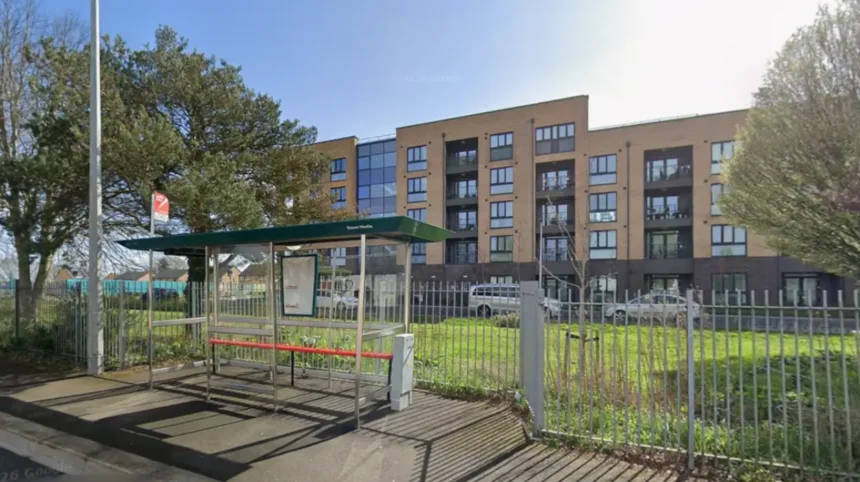
The reconfiguration of urban municipal space requires a balance between historical preservation and modern public needs. In Cardiff, the land previously occupied by Rumney High School represents a significant case study in post-industrial urban regeneration. Following the closure and demolition of the educational institution, local authorities shifted focus from public academic infrastructure to low-carbon residential development. This structural transition addresses the critical housing shortage in South Wales while establishing new benchmarks for municipal carbon reduction strategies.
- What is the history of the old Rumney High School site?
- Why did Cardiff Council close the original school facility?
- What is currently being built on the vacant Newport Road land?
- How does the development integrate independent living for older citizens?
- What sustainable energy technologies are deployed across the site?
- What are the planning timelines and delivery phases for the project?
- How does the development impact the wider Cardiff housing market?
- What environmental drainage solutions are implemented on the land?
- What long-term economic and community benefits does the project provide?
- How does this urban regeneration project align with Welsh national policies?
What is the history of the old Rumney High School site?
The old Rumney High School site in Cardiff historically served as a prominent secondary education campus until its formal closure in 2013 and subsequent demolition in 2014, a process driven by the consolidation of regional academic infrastructure.
Origins and Educational Era
Rumney High School was established to provide comprehensive secondary education to the growing population of eastern Cardiff. For over five decades, the institution operated as a localized academic hub, accommodating thousands of pupils from the surrounding catchment areas of Rumney, Llanrumney, and Trowbridge. The campus comprised multiple concrete school blocks, asphalt playing fields, and associated physical education facilities. By the early 2010s, the structural integrity of the buildings deteriorated, and the facility no longer met the modernized educational standards set by the Welsh Government.
Infrastructure Consolidation
In 2013, Cardiff Council enacted an institutional merger to address declining building conditions and optimize educational delivery. Rumney High School merged with nearby Llanrumney High School to create a unified educational entity named Eastern High School.
The legacy campus on Newport Road officially closed its doors to students in December 2013. In 2014, demolition contractors cleared the entire footprint of the school, reducing the vertical concrete superstructures to ground level. This process rendered the site a vacant brownfield plot, which Cardiff Council subsequently zoned for alternative municipal usage.
Why did Cardiff Council close the original school facility?
Cardiff Council closed the original school facility because the aging infrastructure reached the end of its operational lifespan and failed to meet the modern, sustainable standard required for 21st-century secondary education delivery.
Structural Obsolescence
The primary driver for the closure was the physical degradation of the campus buildings. Built using mid-20th-century construction techniques, the facilities suffered from poor thermal efficiency, inadequate ventilation, and high maintenance costs. Annual operational expenditure escalated, diverting critical funds from educational resources to emergency fabric repairs.
Furthermore, the layout of the old buildings restricted the implementation of modern information and communication technology frameworks. Cardiff Council determined that retrofitting the existing structures was financially unviable compared to building a centralized facility.
Strategic Capital Investment
The closure aligned directly with the 21st Century Schools Programme, a long-term capital investment initiative funded jointly by the Welsh Government and local authorities. This policy framework prioritizes the creation of resource-efficient learning environments.
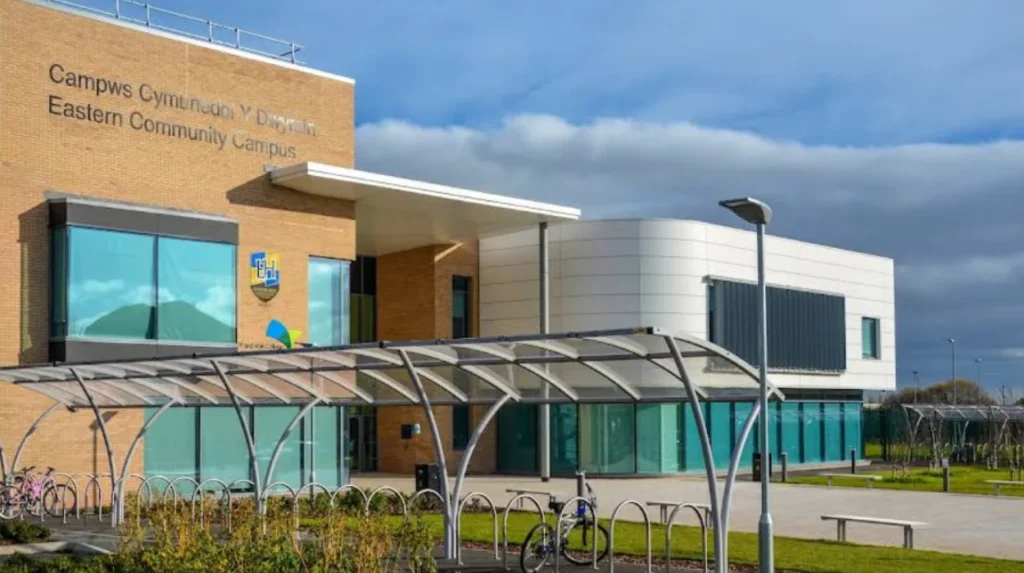
By closing Rumney High School and Llanrumney High School, the local authority pooled its capital resources to construct the Eastern Community Campus on Trowbridge Road. This new 26.3 million pound development accommodates 1,200 secondary pupils and 320 post-16 students, operating in partnership with Cardiff and Vale College to deliver shared vocational and academic curriculum pathways.
What is currently being built on the vacant Newport Road land?
A sustainable, mixed-tenure residential development named Aspen Grove is currently replacing the vacant school site, delivering 214 low-carbon homes through an innovative public-private housing partnership.
The Cardiff Living Framework
The redevelopment of the old Rumney High School footprint is executed under the Cardiff Living initiative. This initiative is a 10-year strategic partnership established between Cardiff Council and private developer Wates Residential.
The overarching programme targets the construction of 1,500 homes across 40 sites in the municipality to alleviate the localized housing deficit. The former school site represents one of the largest single land allocations within Phase 2 of this municipal regeneration framework.
Tenure Allocation Breakdown
The 214-home master plan utilizes a mixed-tenure allocation strategy designed to foster socio-economic integration within the Rumney district. The total unit delivery divides into specific segments:
- 149 homes for open market sale: These private properties are marketed directly to homebuyers to generate capital revenue, offsetting the overall cost of municipal infrastructure.
- 15 homes for affordable rent: These properties are integrated into the council housing stock to provide stable accommodation for applicants on the municipal housing register.
- 6 homes for low-cost home ownership: These units are distributed via the First Homes Cardiff Shared Equity Scheme, allowing qualified first-time buyers to purchase a property at 70% of market value while the council retains a 30% equity share.
- 44 older person apartments: These specialized units are situated within a dedicated independent living complex on the site.
How does the development integrate independent living for older citizens?
The development integrates independent living for older citizens through Addison House, a specialized four-storey apartment block providing 44 accessible, adaptable flats designed to support aging-in-place strategies.
Structural Accessibility Architecture
Addison House represents the first of 10 planned “Community Living” schemes delivered across Cardiff under the municipal older persons’ housing strategy. The physical design prioritizes independent living for residents aged 60 and over.
The entire four-storey building features barrier-free architecture, wide corridors, and automated entrance systems. Four specific apartments are built to full wheelchair-accessible standards from inception, incorporating specialized mechanical features such as rise-and-fall kitchen worktops and integrated wet rooms.
Integrated Health and Social Facilities
The facility functions as an independent residential block and a localized support hub. The internal layout includes multiple communal zones designed to reduce social isolation and deliver health services directly to occupants. These zones comprise:
- Two communal lounges for resident interaction.
- A dedicated medical examination room for visiting National Health Service professionals.
- An elevated roof terrace offering views across the Bristol Channel.
- A large landscaped communal garden featuring level pathways.
- A guest suite to accommodate overnight visits from family members or external caretakers.
What sustainable energy technologies are deployed across the site?
The site deploys an advanced array of renewable energy technologies, including ground-source heat pumps, photovoltaic arrays, battery storage banks, and intelligent energy management software to achieve net-zero carbon operational standards.
Fabric-First Engineering
Before integrating active technologies, the architectural design utilizes a fabric-first approach to minimize baseline energy demand. The building envelopes feature structural insulation values that perform 17% better than standard UK building regulations.
Triple-glazed windows, advanced air-tightness membranes, and Mechanical Ventilation with Heat Recovery systems prevent thermal escape, retaining heat within the living spaces and lowering ambient energy consumption.
Active Renewable Infrastructure
To eliminate reliance on fossil fuels, Cardiff Council and Wates Residential partnered with the sustainable energy firm Sero. Every residential property on the former school site features a integrated technical system:
- Ground-Source Heat Pumps: These systems extract geothermal energy from deep boreholes to feed domestic underfloor heating networks.
- Photovoltaic Panels: Rooftop solar arrays convert solar radiation into usable electrical currents.
- Battery Storage Systems: On-site lithium-ion battery banks store surplus solar electricity generated during peak daylight hours.
- Smart Hot Water Cylinders: Insulated water tanks store thermal energy by heating domestic water when electricity costs are lowest.
The entire apparatus is governed by the Sero BEE intelligent energy management system. This software coordinates grid consumption using predictive algorithms. It tracks weather patterns and fluctuating electrical tariffs to charge batteries or heat water when green energy is abundant, exporting surplus electricity back to the National Grid when regional demand peaks.
Explore More Area Guide
Who Owns Rumney Rocks Bistro and What Is on the Menu?
What Channel Is the Champions League Final On in Cardiff UK TV Guide
What are the planning timelines and delivery phases for the project?
The planning timelines and delivery phases for the project span from initial master planning in 2018 through construction commencement in 2022 to final multi-phase completion.
Initial Planning and Contracts
The planning trajectory for the former Rumney High School site began in January 2018 when Powell Dobson Architects were appointed to design the residential master plan. Formal planning permission was secured following detailed environmental impacts assessments.
To expedite delivery, Cardiff Council utilized an early groundworks package prior to finalizing the Joint Contracts Tribunal construction contract, effectively de-risking the site by clearing below-ground educational infrastructure early.
Phased Construction Schedule
The construction phase is categorized into distinct chronological milestones:
- July 2022: Heavy machinery mobilized on-site to initiate major earthworks, deep borehole drilling for ground-source pumps, and utility installation.
- August 2022: Developers conducted a traditional topping-out ceremony at Addison House, marking the structural completion of the highest vertical roof point of the older persons’ block.
- July 2023: Internal fit-outs and accessibility adaptations concluded at Addison House, allowing the first intake of older tenants to occupy the building.
- September 2024: The primary residential phase of 214 homes achieved practical completion, with private and affordable units handed over to occupiers.
- Future Phase (Post-2026): A secondary phase of development is zoned for adjacent land fronting Newport Road, intended to bring forward additional high-density apartments for sale.
How does the development impact the wider Cardiff housing market?
The development impacts the wider Cardiff housing market by injecting high-performance housing stock into the eastern sector, reducing municipal social housing waiting lists, and demonstrating the commercial viability of green mortgages.
Relief of Housing Register Pressures
The inclusion of 65 affordable and social housing units directly addresses the acute housing deficit within the Cardiff Local Development Plan framework. By transferring 44 older residents into Addison House, the council frees up larger, under-occupied family council homes elsewhere in eastern Cardiff. This cascading chain increases the overall efficiency of the municipal social housing stock, allowing families to vacate temporary accommodation.
Market Transformation and Green Finance
The open-market segment of Aspen Grove serves as a demonstration project for the broader UK construction industry. By achieving an Energy Performance Certificate rating of Grade A across 96% of the houses, the development provides a concrete data set for financial institutions.
Purchasers of these properties qualify for specialized green mortgages, such as those trialled by the Monmouthshire Building Society. These financial products offer lower interest rates based on the reduced operational running costs of the home, proving that sustainable construction can stimulate innovative consumer finance models in the private housing sector.
What environmental drainage solutions are implemented on the land?
The environmental drainage solutions implemented on the land consist of an exemplar Sustainable Drainage Systems strategy that replaces traditional subterranean culverts with surface-level green infrastructure to mitigate local flood risks.
Sustainable Urban Drainage Infrastructure
The geographic elevation of the Newport Road site requires managed water runoff controls to prevent localized flooding in the lower-lying districts of Rumney and Llanrumney. The development completely rejects traditional underground plastic attenuation tanks. Instead, engineers designed a visible, nature-based Sustainable Drainage Systems framework integrated into the public realm.
Blue-Green Corridors
Rainwater falling across the development is captured and routed through a series of surface-level interventions. These landscape components include:
- Permeable Pavements: Driveways and pedestrian footpaths are constructed using porous materials that allow rainwater to infiltrate the sub-base naturally.
- Vegetated Swales: Shallow, wide landscaped channels run parallel to roads to slow down, filter, and direct surface runoff.
- Rain Gardens: Zones planted with water-tolerant native vegetation absorb heavy surges of stormwater during extreme weather events.
- Attaining Basins: Open retention ponds store excess water volume, releasing it at a controlled rate into the municipal drainage network.
This infrastructure is paired with a network of newly planted trees that provide urban shading and intercept rainfall before it impacts the ground, protecting the adjacent Site of Special Scientific Interest located near the eastern boundary.
What long-term economic and community benefits does the project provide?
The project provides long-term economic and community benefits through localized social value creation, targeted apprenticeships, and permanent public green spaces that enhance neighborhood connectivity.
Social Value and Local Employment
The JCT contract executed by Wates Residential mandated strict local procurement and employment targets to ensure capital expenditure remained within the regional economy. According to verified Cardiff Living monitoring data, the project generated significant local investment, prioritizing supply chains within Wales.
The social value framework achieved measurable targets, including the employment of local laborers, the creation of paid apprenticeships for residents, and the delivery of construction training placements for ex-offenders via resettlement partnerships.
Community Infrastructure Integration
The physical master plan transforms a closed, fenced-off educational institution into an open neighborhood asset. The removal of security fencing allows the public to access a network of footpaths and green corridors connecting Newport Road to wider pedestrian routes.
The financial structure of the development also funded localized community enhancements outside the boundaries of the housing estate. This mechanism provided direct investments into neighboring community hubs, including financial support for local educational activities and the physical refurbishment of nearby public library facilities.
How does this urban regeneration project align with Welsh national policies?
This urban regeneration project aligns with Welsh national policies by directly advancing the statutory goals of the Well-being of Future Generations Act and contributing to Cardiff’s One Planet carbon-neutral strategy.
Statutory Policy Conformance
The redevelopment of the old Rumney High School site serves as a direct operationalization of the Well-being of Future Generations (Wales) Act 2015. This legislation requires public bodies to consider the long-term impacts of their decisions on community health, economic equality, and environmental resilience.
By designing a multi-generational, zero-carbon residential zone, Cardiff Council meets multiple statutory well-being goals, including the cultivation of a resilient economy, a healthier population, and cohesive, well-connected local communities.
Decarbonization Targets
The project functions as a key demonstration canvas for the One Planet Cardiff strategy, which establishes a target for the municipality to become a carbon-neutral city. The built environment accounts for a significant proportion of urban carbon emissions.
The deployment of Sero’s grid management software and the achievement of an average Standard Assessment Procedure rating of 95% prove that high-density municipal housing can transition from an energy sink into a localized power station. This development establishes the scalable framework required for all future public land regenerations across Wales.
What happened to the old Rumney High School site?
The former Rumney High School site was closed in 2013 after the school merged with Llanrumney High School to form Eastern High School. The buildings were demolished in 2014, and the land was later designated for residential redevelopment.