Canton, known in Welsh as Treganna, is a historic neighbourhood in western Cardiff, Wales. Its history stretches from an early settlement associated with the Manor of Llandaff to a busy Victorian suburb shaped by markets, religious institutions, transport, industry and residential expansion. Today, Canton retains evidence of these developments through its historic streets, churches, public houses, parks and cultural buildings.
- What Is the Historical Background of Canton in Cardiff?
- How Did Canton Develop Before the Norman Period?
- What Was the Relationship Between Canton and Llandaff?
- Why Is Canton Called Treganna and What Is Its Connection to Saint Canna?
- How Did Saint Canna Influence the Area’s Place Names?
- What Is the Difference Between Canton and Pontcanna?
- How Did Canton Develop During the Medieval Period?
- How Did the Cattle Market Transform Canton During the Nineteenth Century?
- When Did Canton Cattle Market Open?
- What Was the Size and Layout of the Market?
- How Did the Market Influence Local Employment?
- How Did Victorian Industrialisation Change Canton?
- What Was the Importance of William Vaughan’s Laundry?
- How Did Brewing Become Part of Canton’s Industrial History?
- What Happened During the 1908 Canton Cross Brewery Fire?
- When Did Canton Become Part of Cardiff?
- How Did Victorian Churches and Schools Shape Canton’s Community?
- What Historic Buildings and Public Houses Survive in Canton?
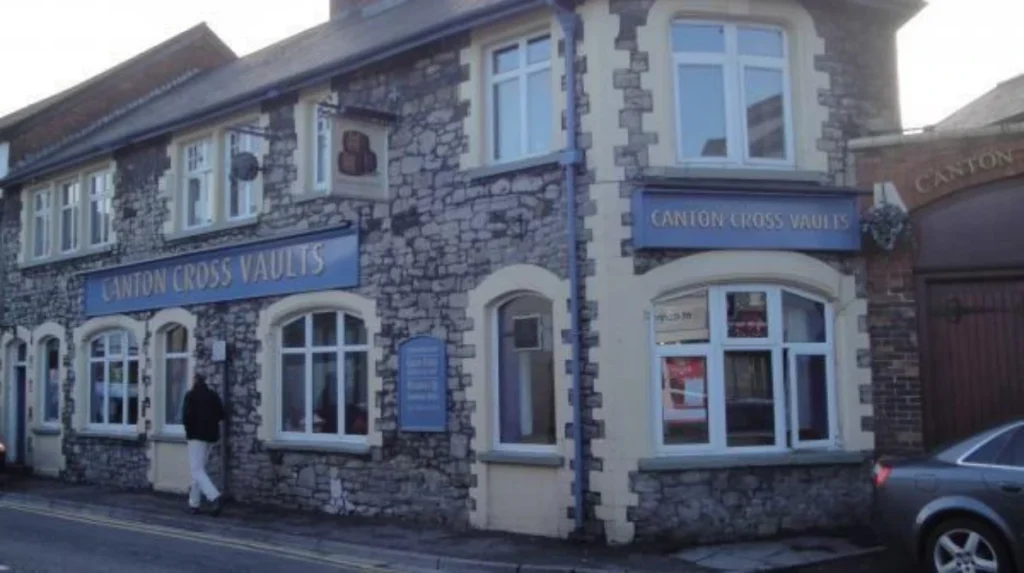
- What Is the History of Canton Cross Vaults?
- What Is the History of the Royal Exchange?
- Why Is Canton’s Historic Milepost Important?
- How Did Canton Expand During the Twentieth Century?
- What Happened to the Former Canton Cattle Market?
- How Did Canton High School Become Chapter Arts Centre?
- How Did the World Wars Affect Canton?
- How Did Canton’s Residential Character Change?
- What Role Have Canton’s Parks Played in Its History?
- How Has Canton Preserved Its Cultural and Historical Identity?
- How Does Cowbridge Road Reflect Canton’s Development?
- Why Are Historic Maps Important for Understanding Canton?
- What Makes the History of Canton Important to Modern Cardiff?
Located west of Cardiff city centre, Canton developed alongside the wider transformation of Cardiff from a relatively small market town into an important industrial port and, eventually, the capital of Wales. Its position on routes connecting Cardiff with Llandaff and communities in western Glamorgan helped establish its commercial importance.
The neighbourhood’s history includes medieval land ownership, agricultural activity, nineteenth-century market development, incorporation into Cardiff Borough in 1875, Victorian housing expansion and twentieth-century cultural change. These historical developments explain how Canton became one of Cardiff’s established residential and commercial communities.
What Is the Historical Background of Canton in Cardiff?
Canton is a historic district in western Cardiff whose origins predate the Norman period. Known in Welsh as Treganna, it developed around an early settlement and manor associated with Llandaff, eventually becoming part of Cardiff Borough in 1875.
Canton stands approximately one mile west of Cardiff’s historic centre. Its development reflects the relationship between rural Glamorgan, the religious settlement at Llandaff and the growing commercial importance of Cardiff.
Before modern residential development, much of the surrounding landscape consisted of agricultural land, commons, small settlements and properties connected to the Manor of Llandaff. The Bishops of Llandaff held important land and property interests in the district.
Historical accounts associate early Canton with a manor and mills near the junction of present-day Atlas Road and Leckwith Road. These properties formed part of the area’s agricultural and economic landscape.
The name Canton has several historical interpretations. The Welsh name Treganna is commonly associated with Saint Canna, an early Christian figure whose name also appears in nearby Pontcanna.
The district’s historic identity developed through its connections with Llandaff, Cardiff and the surrounding countryside. Its location made it an important settlement along routes carrying people and goods between agricultural communities and Cardiff.
How Did Canton Develop Before the Norman Period?
Historical accounts identify Canton as an established settlement before the Norman invasion of Wales. Its early development centred on agricultural land, local estates and connections with the religious community at Llandaff.
The precise layout of the earliest settlement remains difficult to establish because surviving documentary evidence is limited. However, references to its manor and historic land ownership demonstrate that Canton was not simply a Victorian creation.
The medieval landscape contained fields, watercourses, mills and routes connecting settlements. These features supported agricultural production and local trade.
What Was the Relationship Between Canton and Llandaff?
Llandaff was an important ecclesiastical settlement north-west of Cardiff. Its cathedral and associated religious institutions influenced the ownership and administration of surrounding land.
Canton formed part of this wider historical landscape. The Bishops of Llandaff held the manor and mills associated with the district before some properties changed ownership during the nineteenth century.
In 1818, the manor and mill properties were sold to Sir Samuel Romilly. The Romilly name survives in the neighbourhood through Romilly Road.
This change in ownership represents an important stage in Canton’s transition from an estate-based rural settlement towards a more developed suburban community.
Why Is Canton Called Treganna and What Is Its Connection to Saint Canna?
Treganna is the Welsh name for Canton and is traditionally connected with Saint Canna, an early Christian figure associated with the religious history of the Cardiff area. Her name also survives in Pontcanna and local church traditions.
Place names provide important evidence of how historic communities developed and preserved their cultural identities. In Canton, the Welsh name Treganna maintains a connection with the area’s early religious associations.
Saint Canna is traditionally described in Welsh historical and religious accounts as a Christian figure connected with Brittany and early medieval Wales. Her historical biography contains elements of religious tradition rather than fully documented contemporary evidence.
The association between Saint Canna and Canton remains significant because it links the neighbourhood’s identity with the wider Christian heritage of Glamorgan.
How Did Saint Canna Influence the Area’s Place Names?
The name Canna appears in several Cardiff place names, most notably Canton and Pontcanna. Pontcanna refers to a bridge or crossing associated with Canna.
The Welsh word elements in Treganna connect the place name with a settlement identity. The name is therefore an important part of the area’s linguistic and historical heritage.
The connection also demonstrates how religious traditions influenced the naming of settlements, landscapes and local landmarks throughout Wales.
What Is the Difference Between Canton and Pontcanna?
Canton and Pontcanna are neighbouring but distinct areas of western Cardiff. Canton developed around its historic manor, market and Cowbridge Road, while Pontcanna became particularly associated with residential development, green spaces and its proximity to Sophia Gardens and the River Taff.
Their shared connection with Saint Canna reflects overlapping historical traditions. However, their modern neighbourhood identities and built environments developed differently.
How Did Canton Develop During the Medieval Period?
Medieval Canton developed around its manor, agricultural estates, mills and trading routes. Its relationship with Llandaff and Cardiff connected the settlement to regional landholding, religious administration and commercial activity throughout medieval Glamorgan.
Canton’s medieval development was closely connected with the wider political and economic organisation of Glamorgan. Following the Norman expansion into South Wales, landownership and local administration changed across the region.
The manor of Canton became associated with the Manor of Llandaff. Historical references to people bearing the name of the settlement demonstrate its established identity during the medieval period.
The district’s agricultural character remained important. Farms, fields and mills supported local economic activity, while roads provided connections with Cardiff and neighbouring communities.
What Role Did Canton Manor Play?
The manor represented an important element of Canton’s historic landownership. The Bishops of Llandaff held significant property interests in the area, including the manor and mills.
These properties supported agricultural production and local administration. Mills processed agricultural products, while the surrounding estates supplied resources for nearby settlements.
The manor’s historical importance continued into the early modern period. Its later sale in 1818 to Sir Samuel Romilly marked a change in ownership before nineteenth-century suburban expansion.
Why Was Canton Cross Historically Important?
Canton Cross developed as an important meeting point for local roads and commercial activity. Its position connected Cowbridge Road with routes towards Llandaff and Leckwith.
The junction became associated with trading, public houses and later industrial premises. The surrounding common land also provided space for markets and other community activities.
The historic milepost at Canton Cross provides physical evidence of the area’s importance within the regional transport network. Cadw records this cast-iron marker as an early or mid-nineteenth-century structure associated with the Cardiff–Llantrisant turnpike. It was designated Grade II on 13 January 1976. Reports+1
How Did the Cattle Market Transform Canton During the Nineteenth Century?
The establishment of Canton’s cattle market transformed the district from a predominantly rural settlement into an important commercial location. The market brought livestock traders, agricultural workers, transport businesses and customers into the neighbourhood.
The nineteenth century was a major turning point in Canton’s history. Cardiff was expanding rapidly because of industrial development, coal exports and increasing commercial activity.
This growth created demand for agricultural markets and facilities serving the expanding population. Canton provided suitable land west of the town centre, particularly around Cowbridge Road.
Cardiff Borough Council identified land for a proposed cattle market in 1854. The location was described in historical planning documents as Turnpike Field, near Cowbridge Road.
Plans for the market were deposited in 1857. By the Ordnance Survey mapping of 1886, the market occupied a substantial site bounded by Cowbridge Road to the south, Llandaff Road to the east, Market Road to the west and Carmarthen Street to the north. Local Development Plan+1
When Did Canton Cattle Market Open?
The cattle market became operational during the late 1850s. Local historical accounts identify 1859 as the year it opened.
The market handled livestock and agricultural trading. Its location provided access to major roads and nearby settlements, making it an important commercial facility for Cardiff and surrounding communities.
The market also encouraged the development of supporting businesses. These included public houses, stables, workshops, food-related businesses and transport services.
The slaughterhouses associated with the market remained in use after the market itself closed. This demonstrates how the site continued to serve commercial purposes beyond its original function.
What Was the Size and Layout of the Market?
The cattle market occupied a large urban site between four important streets:
- Cowbridge Road formed its southern boundary.
- Llandaff Road marked its eastern boundary.
- Market Road provided its western boundary.
- Carmarthen Street formed its northern boundary.
This arrangement placed the market close to the main commercial route through Canton.
The market’s historical footprint remains important for understanding the neighbourhood’s street pattern and the later development of Chapter Arts Centre.
How Did the Market Influence Local Employment?
The cattle market generated demand for different occupations. Livestock dealers, butchers, transport workers, stable employees and traders contributed to the local economy.
Businesses also developed around the movement and processing of agricultural goods. Public houses provided meeting places for traders and workers.
The market helped establish Canton as a commercial centre serving communities beyond its immediate residential population.
How Did Victorian Industrialisation Change Canton?
Victorian industrialisation transformed Canton through population growth, commercial development, new employment and residential construction. Its proximity to Cardiff’s expanding economy encouraged the development of laundries, breweries, workshops, public houses and transport-related businesses.
During the nineteenth century, Cardiff experienced substantial economic growth. The development of its docks and coal-exporting industries increased employment and attracted workers from Wales and other parts of Britain.
Canton benefited from its position near Cardiff while maintaining a distinct commercial identity. Its streets gradually developed into a mixture of residential properties, shops, industrial premises and community buildings.
The district’s growing population created demand for services, education, religious institutions and public infrastructure.
What Was the Importance of William Vaughan’s Laundry?
William Vaughan established a laundry and dry-cleaning business in Canton in 1860. The business operated from Llandaff Road and became an important local employer.
Customers from different parts of Cardiff brought clothing and household fabrics to the premises for cleaning and pressing.
The laundry continued operating until the late 1960s, demonstrating the longevity of traditional service industries in the neighbourhood. Its history also illustrates how Victorian businesses supported the daily needs of Cardiff’s expanding urban population. cardiffians.co.uk+1
How Did Brewing Become Part of Canton’s Industrial History?
Brewing became another important part of Canton’s commercial development. The Canton Cross area contained brewery premises associated with local public houses and businesses.
The Canton Cross Brewery occupied a substantial site near Leckwith Road. Historical Ordnance Survey maps from 1879 show that the brewery occupied much of the property surrounding the inn.
In 1891, the brewery underwent alterations designed by Gadlam and Son for Pearce and Company.
The business experienced financial difficulties and entered liquidation in 1895. In 1904, W. Hancock and Company purchased the brewery and closed its production operations. Its equipment was transferred to another establishment. Local Development Plan
What Happened During the 1908 Canton Cross Brewery Fire?
A major fire broke out at the former brewery building during the early hours of 27 June 1908. By then, the building was being used as a furniture warehouse.
The fire spread to nearby stable buildings and the roof of the Canton Cross Hotel. The warehouse suffered extensive damage and was described in historical records as practically gutted.
The damaged brewery premises were rebuilt in 1909 to designs by architects Veall and Saint. The reconstruction changed the appearance and layout of the commercial site.
When Did Canton Become Part of Cardiff?
Canton officially became part of Cardiff Borough in 1875, during a major expansion of the town’s municipal boundaries. Its incorporation brought the established settlement into Cardiff’s growing administrative, residential and commercial urban area.
Before incorporation, Canton existed as a separate settlement associated with the parish and manor of Llandaff.
Cardiff’s increasing population and economic importance created pressure to expand its municipal boundaries. Nearby communities were becoming increasingly connected to the town through employment, housing and transport.
In 1875, Canton joined Cardiff alongside other developing districts, including Roath, Cathays, Grangetown and Penylan. This expansion helped establish the foundations of modern Cardiff’s urban geography.
Why Was Municipal Incorporation Important?
Municipal incorporation placed Canton within Cardiff Borough’s administrative structure.
The change strengthened the relationship between the district and Cardiff’s local government. It also supported the wider management of infrastructure, public services, roads and urban development.
Canton’s incorporation occurred during a period when Cardiff was transforming from a relatively compact town into a much larger industrial settlement.
The development of municipal institutions also created opportunities for improvements in education, public health and community facilities.
How Large Was Canton Before Incorporation?
Historical population records provide an indication of Canton’s nineteenth-century growth.
John Marius Wilson’s Imperial Gazetteer of England and Wales, published in 1870–72, described Canton as a chapelry with a village in the parish of Llandaff.
The gazetteer recorded:
- Population: 3,920.
- Houses: 709.
- Rated property: £5,589.
- Distance from Cardiff: approximately one mile north-west.
A chapelry was a defined ecclesiastical district served by a chapel or church. Canton’s chapelry was constituted in 1858. These figures demonstrate that the settlement already had a substantial population before its incorporation into Cardiff in 1875. Map and description+1
How Did Victorian Churches and Schools Shape Canton’s Community?
Victorian churches and schools helped establish Canton’s identity as a growing residential neighbourhood. Religious institutions provided community services, while new educational facilities supported families moving into the district during Cardiff’s nineteenth-century expansion.
Population growth increased the need for permanent community institutions. Canton developed churches, chapels and schools that reflected the changing social structure of the neighbourhood.
Religious buildings also became important architectural features. Their construction demonstrated the growth of local congregations and the increasing importance of organised community life.
When Was St John’s Church in Canton Built?
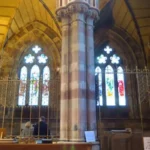
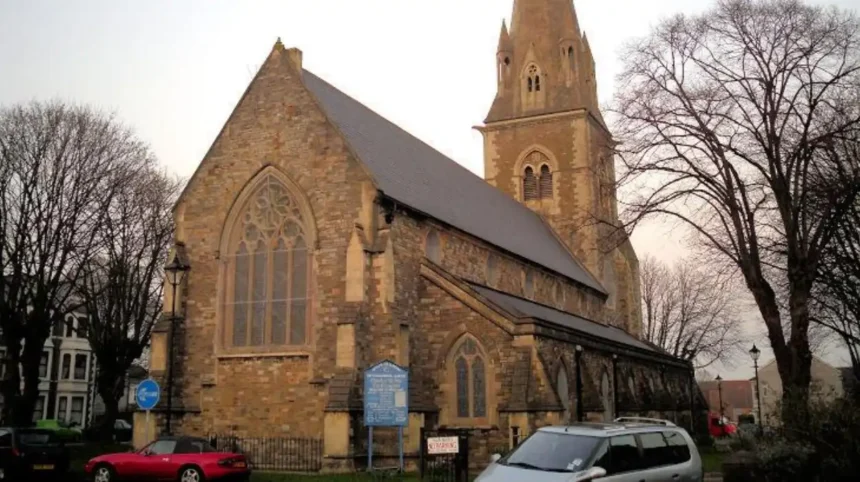
St John’s Church, Canton
St John’s Church became one of Canton’s most recognisable religious landmarks during the nineteenth century.
The church was partly constructed from 1853 onwards. Its development continued through the following decades, with the tower, spire, chancel and vestry completed between 1871 and 1874.
The building was designed by John Prichard, the diocesan architect associated with several important church restoration and construction projects in Wales.
One of its chapels is dedicated to Saint Canna, reinforcing the historical connection between the neighbourhood’s religious identity and its traditional place name.
How Did Education Develop in Victorian Canton?
Education expanded as Canton’s population increased. In 1882, the first board school in the district opened in Severn Road, according to local historical records.
Board schools were educational institutions established under the Elementary Education Act 1870. The legislation created a framework for publicly supported elementary education in areas where existing provision was insufficient.
The introduction of local schools reduced the need for children to travel outside the neighbourhood for basic education.
Canton’s later educational development included the opening of Canton Municipal Secondary School in 1907, which became an important institution in the district’s twentieth-century history.
What Historic Buildings and Public Houses Survive in Canton?
Canton retains historic buildings that reflect its Victorian commercial and social development. Canton Cross Vaults, the former Royal Exchange, St John’s Church and the former Canton High School demonstrate the neighbourhood’s architectural and community history.
Canton’s historic buildings provide evidence of how the neighbourhood developed from a rural settlement into a busy Cardiff suburb.
Public houses, commercial buildings, religious institutions and educational premises served different parts of the community. Their architecture also reflects changing construction styles and economic conditions.
What Is the History of Canton Cross Vaults?
Canton Cross Vaults is associated with the early commercial history of Canton Cross.
The building is generally dated to approximately 1855–1860. Cardiff Council’s historical research identifies 1855 and 1860 as alternative dates found in the available records.
The inn formed part of a larger commercial complex that included a brewery, yards and associated buildings.
The premises underwent several changes during the late nineteenth and early twentieth centuries. The former brewery was rebuilt in 1909 following the 1908 fire.
The building remains historically significant because it represents the relationship between public houses, brewing and commercial activity in Victorian Canton. Local Development Plan
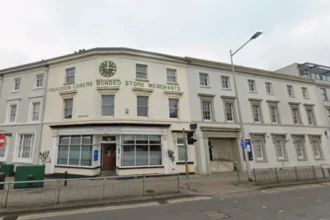
What Is the History of the Royal Exchange?
The Royal Exchange stands on the site of an earlier public house called the Barley Mow.
Historical records identify the Barley Mow in newspaper references from April 1852. In 1854, the premises were advertised as a licensed public house with a stable, brewery, garden and approximately four acres of land.
Plans for rebuilding the establishment were submitted in 1885. The new Royal Exchange opened in 1887 and was designed by architect John Price Jones.
Its three-storey structure features decorative stonework, prominent windows and an architectural design characteristic of substantial Victorian commercial premises.
The building’s history illustrates how Canton developed increasingly elaborate public houses to serve its growing population and commercial activity. Local Development Plan
Why Is Canton’s Historic Milepost Important?
The cast-iron milepost at Canton Cross provides evidence of nineteenth-century road transport.
The marker records distances to Cardiff, Llandaff and Llantrisant. Its original position was outside properties on Llandaff Road, which formed part of the Cardiff–Llantrisant turnpike.
Turnpike roads were routes maintained through toll payments collected from road users. They improved regional transport and supported the movement of agricultural goods, commercial products and passengers.
Cadw designated the Canton milepost Grade II on 13 January 1976 because of its historic transport significance.
How Did Canton Expand During the Twentieth Century?
Twentieth-century Canton developed through residential expansion, improved public facilities, cultural institutions and changing commercial activity. Former industrial and educational buildings acquired new uses, while historic parks and community spaces became established neighbourhood landmarks.
By the beginning of the twentieth century, Canton had developed beyond its original rural and market-town character.
Residential streets expanded around established roads, while shops, schools and public facilities served an increasingly urban population.
The neighbourhood also experienced major changes during the two world wars and the post-war period.
What Happened to the Former Canton Cattle Market?
The cattle market eventually closed, although slaughterhouse facilities remained on part of the northern site.
In 1907, Canton Municipal Secondary School opened on the former market site with 85 pupils.
The school represented a major change in land use. A commercial agricultural site became an educational institution serving the local population.
The school initially operated with Walter Brockington as headmaster and Elizabeth Abbott as headmistress. Its educational facilities expanded in 1909 with the addition of a laboratory and art block. Local Development Plan
How Did Canton High School Become Chapter Arts Centre?
Chapter Arts Centre occupies the former Canton Municipal Secondary School building.
The school became known as Canton High School in 1933. It experienced significant wartime damage when a bomb struck the building in 1941, destroying parts of the structure, including much of the roof.
The school was not fully restored until September 1951. It moved to a new site in 1962.
In 1971, the former school opened to the public as Chapter Arts Centre. Local artists had first developed the idea of creating an arts centre for Wales three years earlier.
The conversion gave the building a new cultural purpose. Former classrooms became gallery spaces, while the school hall was adapted into a theatre.
Chapter subsequently developed into an important venue for contemporary art, theatre, film, dance and creative activities.
Cardiff Council’s heritage research records a £2.24 million refurbishment by Ash Sakula Architects, which received an RIBA Award Wales in 2010. The centre continues to host more than 1,000 events annually and attracts over 800,000 visitors each year, according to the council’s published heritage information.
How Did the World Wars Affect Canton?
The Second World War affected Canton’s buildings and community infrastructure.
The 1941 bombing of Canton High School damaged its roof, internal facilities and historical records. The school temporarily continued its educational activities through alternative buildings.
The damage demonstrates how wartime air raids affected civilian infrastructure beyond Cardiff’s central commercial and industrial areas.
Post-war reconstruction subsequently restored the school building before its eventual conversion into a cultural venue.
How Did Canton’s Residential Character Change?
Canton became increasingly residential during the twentieth century. Victorian housing, terraced streets and commercial premises formed part of its expanding urban environment.
The growth of Cardiff created greater demand for housing and local services. The district’s position west of the city centre made it an established residential location.
The development of schools, parks, shops and cultural facilities strengthened its role as a neighbourhood serving both residents and visitors.
What Role Have Canton’s Parks Played in Its History?
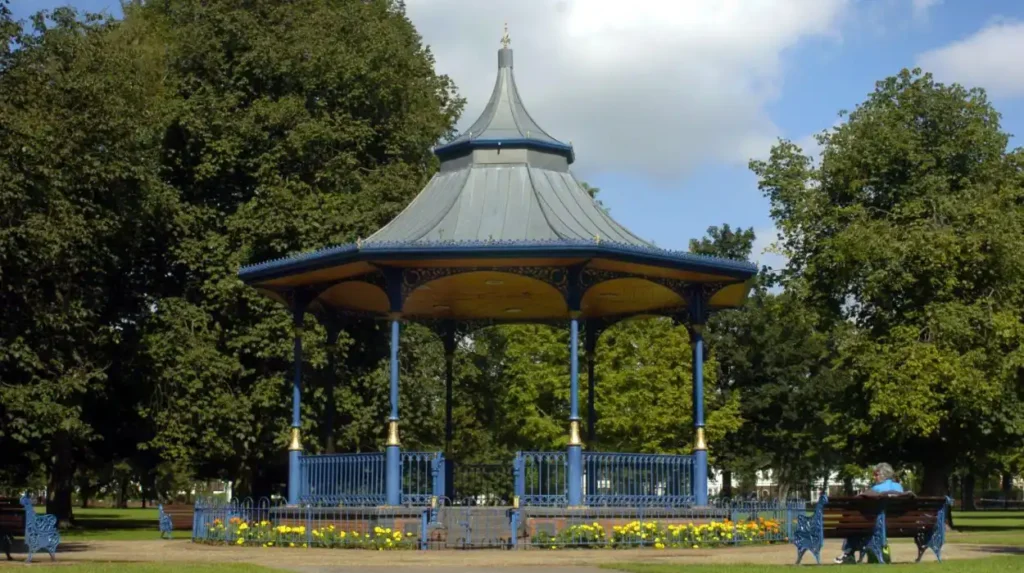
Canton’s parks preserve important parts of its social and environmental history. Victoria Park and Thompson’s Park provide public recreation, green space and community facilities, reflecting the development of organised urban leisure in Cardiff.
Public parks became increasingly important as Cardiff expanded during the Victorian period.
Industrial growth and residential construction increased demand for accessible outdoor recreation. The development of public parks provided spaces for walking, exercise and community activities.
What Is the Historical Importance of Victoria Park?
Victoria Park stands on land historically associated with Ely Common.
The surrounding commons were important parts of the area’s earlier landscape. Their recreational use developed as Cardiff expanded.
The Cartwright family’s sale of Canton and Ely Commons to the local authority during the late nineteenth century helped establish land for public recreation. Local historical accounts record the transaction in 1888, while other accounts refer to 1885; the precise date should therefore be checked against the original conveyance records.
Victoria Park subsequently became an important public space in western Cardiff.
Its historical association with Billie the Seal is another notable part of Canton’s identity. Billie arrived in Cardiff aboard a fishing trawler in 1912 and became a popular attraction. The seal was remembered through local photographs and the Cardiff folk song associated with Frank Hennessy.
Why Is Thompson’s Park Historically Significant?
Thompson’s Park is another established green space in the neighbourhood.
Its importance reflects the development of public recreation alongside Canton’s residential expansion.
The park provides a landscaped environment within the urban district and contributes to the neighbourhood’s historic network of public spaces.
Together, Canton’s parks demonstrate how former agricultural landscapes and privately controlled land became part of Cardiff’s public recreational environment.
Explore More Area Guide
History of Splott, Cardiff: Industry, Steelworks and Community
The History of Grangetown, Cardiff: Heritage and Growth
How Has Canton Preserved Its Cultural and Historical Identity?
Canton preserves its identity through Welsh place names, historic architecture, community institutions, cultural venues and long-established commercial streets. Its heritage connects medieval settlement patterns with the modern social and cultural development of Cardiff.
Canton’s identity is not based on a single historic building or event. It reflects several centuries of development.
The neighbourhood maintains connections with its early religious history through Treganna and Saint Canna. Its Victorian history remains visible through public houses, churches and traditional commercial buildings.
Its twentieth-century development is represented by Chapter Arts Centre and established public parks.
How Does Cowbridge Road Reflect Canton’s Development?
Cowbridge Road East remains one of the neighbourhood’s principal commercial streets.
Historically, the road connected Cardiff with communities to the west. Its importance increased as Canton developed into a residential and commercial suburb.
Shops, public houses and service businesses gradually established themselves along the route.
The road’s development reflects the changing economic character of Canton, from agricultural trading and livestock markets to modern retail and hospitality.
Why Are Historic Maps Important for Understanding Canton?
Historic maps provide evidence of how Canton’s land use and street pattern changed.
Glamorgan Archives holds important historical mapping resources covering Cardiff and surrounding districts.
Its collection includes John Wood’s map of Cardiff from the late 1830s and a 1869 map covering Cardiff, Penarth, Roath, Canton and Llandaff.
These records help researchers compare the district before and after major Victorian developments.
Ordnance Survey maps also provide evidence of the cattle market, brewery premises, streets, buildings and changing boundaries.
What Makes the History of Canton Important to Modern Cardiff?
Canton’s history explains how Cardiff expanded beyond its original centre and incorporated neighbouring settlements into a larger urban community. Its medieval origins, Victorian commercial growth and twentieth-century cultural development remain visible in the neighbourhood today.
Canton represents an important part of Cardiff’s urban development. Its history connects the agricultural landscape of medieval Glamorgan with the industrial growth that transformed Cardiff during the nineteenth century.
The neighbourhood’s historic roads, buildings and institutions demonstrate how economic development influenced residential communities.
Its former cattle market illustrates the importance of agricultural trade. Its Victorian public houses demonstrate the growth of commercial services, while Chapter Arts Centre shows how historic buildings acquired new cultural purposes.
Canton also retains connections with Cardiff’s wider Welsh identity through its Welsh place name, religious heritage and historic community institutions.
How Can Visitors Explore Canton’s History Today?
Visitors interested in local history can explore several locations associated with the district’s development:
- Canton Cross: An important historic junction associated with trading, transport and brewing.
- St John’s Church: A nineteenth-century religious landmark connected with Saint Canna.
- Canton Cross Vaults: A historic public house associated with Victorian commercial activity.
- Former Royal Exchange: An 1887 building illustrating the development of Victorian public houses.
- Chapter Arts Centre: A former school transformed into a major cultural venue.
- Victoria Park: A public green space associated with the area’s historic commons.
- Thompson’s Park: An established recreational space within Canton.
These locations provide different perspectives on the neighbourhood’s architectural, commercial, religious and social history.
What Is the Future Importance of Canton’s Heritage?
Canton’s heritage remains relevant to Cardiff’s future urban development. Historic buildings, traditional streets and public spaces contribute to the neighbourhood’s distinct character.
Conservation work, historical research and responsible redevelopment help maintain connections between the district’s past and present.
Cardiff’s local heritage records, Cadw’s listed-building information and the historical collections held by Glamorgan Archives provide resources for documenting and protecting this history.
Understanding Canton’s development also helps explain Cardiff’s wider transformation into the capital of Wales.
The neighbourhood’s history is therefore an important part of the city’s collective heritage, linking its early settlements, Victorian expansion and modern cultural identity.
How old is Canton in Cardiff?
Canton is a historic Cardiff neighbourhood with origins dating back to the medieval period and potentially earlier. Its development began around an agricultural settlement and manor associated with Llandaff.