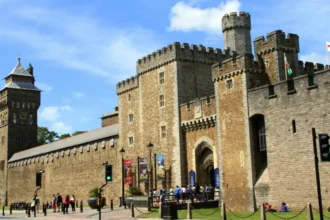
Cardiff Bay is one of Wales’s most significant examples of industrial transformation. Its history connects the growth of the South Wales coalfield, the development of Cardiff Docks, the global coal trade, the decline of traditional shipping, and the regeneration of the modern waterfront. Today, Cardiff Bay combines maritime heritage, cultural institutions, public spaces, and residential development.
- What was Cardiff Bay before it became a major waterfront destination?
- How did the South Wales coal industry shape Cardiff Bay?
- When were Cardiff’s historic docks built?
- Why was Cardiff Bay known as Tiger Bay?
- How did Cardiff Bay reach its peak as a global coal-exporting port?
- Why did Cardiff Docks decline during the twentieth century?
- What role did Cardiff Bay’s historic buildings play in its identity?
- How did the Cardiff Bay Development Corporation transform the waterfront?
- Why was the Cardiff Bay Barrage built, and how did it change the area?
- How did Cardiff Bay develop into a cultural and political destination?
- What can visitors see today that explains the history of Cardiff Bay?
- What is the lasting significance of Cardiff Bay’s history?
What was Cardiff Bay before it became a major waterfront destination?
Cardiff Bay is the modern waterfront district built around Cardiff’s historic docklands in South Wales. Before its industrial expansion, the area formed part of the tidal estuary of the Rivers Taff and Ely, with marshland, mudflats, and a small port serving Cardiff.
The history of Cardiff Bay begins long before the construction of its modern waterfront. The area lies beside the Bristol Channel, where the River Taff and River Ely meet the wider Severn Estuary system. Its coastal position connected inland communities with maritime trade.
Cardiff was historically a smaller settlement in Glamorgan, a historic county in South Wales. Its port handled goods moving between the Welsh interior and overseas markets. However, Cardiff initially remained less important commercially than Swansea, which benefited from earlier industrial development in parts of South Wales.
The landscape changed substantially during the Industrial Revolution, a period of rapid industrial and technological development that began in Britain during the eighteenth century. Coal and iron production expanded throughout the South Wales valleys. Cardiff’s location near these mineral-producing areas gave the port a major commercial advantage.
The development of transport links, including canals, railways, and docks, transformed the surrounding marshland into an industrial landscape. Warehouses, dock basins, railway sidings, and workers’ housing eventually occupied areas that had previously supported estuarine habitats.
How did the South Wales coal industry shape Cardiff Bay?
The South Wales coal industry transformed Cardiff Bay by creating demand for larger docks, efficient transport, and international shipping. Coal from valleys such as the Rhondda, Cynon, and Rhymney moved through Cardiff, turning a relatively small port into a major centre of global coal exports.
The South Wales coalfield became one of Britain’s most important industrial regions during the nineteenth century. Coal supplied steam engines, ironworks, factories, ships, and power stations. Cardiff developed into a principal export gateway because it connected these inland resources with international shipping routes.
The Glamorganshire Canal, opened in 1794, was a crucial early transport link. It connected Cardiff with Merthyr Tydfil, an important iron-producing town. The canal enabled iron and other industrial goods to reach Cardiff more efficiently than transport over difficult roads.
As production increased, the canal and existing harbour facilities struggled to accommodate growing cargo volumes. Larger vessels and more efficient loading arrangements became essential. The construction of dedicated docks provided a solution by creating enclosed waters where ships could load and unload goods.
Coal exports also encouraged investment in railways and industrial infrastructure. Rail connections carried minerals from mining districts to the waterfront, while dock facilities enabled their onward transport to destinations across Britain and overseas.
This industrial relationship shaped Cardiff’s urban geography. Dock workers, sailors, merchants, railway employees, and industrial businesses established themselves around the port. The resulting community became closely connected to the movement of coal and the wider economy of South Wales.
When were Cardiff’s historic docks built?
Cardiff’s historic docks developed in stages during the nineteenth and early twentieth centuries. The West Bute Dock opened in 1839, the East Bute Dock opened in 1859, Roath Dock followed in 1887, and Queen Alexandra Dock opened in 1907 to support expanding maritime trade.
The expansion of Cardiff Docks reflected the increasing scale of the coal industry. Each major development improved the port’s capacity to handle ships and cargo.
West Bute Dock, 1839
The Second Marquess of Bute, a major landowner in Cardiff, promoted the construction of a dock to support mineral exports. Plans developed during the 1820s and early 1830s before construction began in December 1834.
West Bute Dock officially opened on 8 October 1839. It provided enclosed docking facilities and established the foundation for Cardiff’s later industrial expansion. The project also helped strengthen the connection between the Bute family’s property interests and the city’s economic development.
East Bute Dock, 1859
The East Bute Dock opened in 1859 to accommodate rising shipping demand. Its larger capacity expanded the port’s ability to handle coal and other industrial cargo.
The surrounding docklands developed into a dense network of industrial facilities. Warehouses, railway lines, loading equipment, and businesses supported the daily movement of goods through the port.
Roath Dock, 1887
Roath Dock opened in 1887 as Cardiff’s coal trade continued to grow. Additional dock capacity reduced pressure on earlier facilities and strengthened the port’s position in international commerce.
Queen Alexandra Dock, 1907
Queen Alexandra Dock opened in 1907, marking another stage in the expansion of Cardiff’s port infrastructure. Together, the docks formed part of a large industrial system connecting South Wales’s mineral wealth with global markets.
These developments changed Cardiff from a modest port into an industrial city whose economy depended heavily on maritime trade.
Why was Cardiff Bay known as Tiger Bay?
Tiger Bay was the historic name widely associated with Cardiff’s multicultural docklands, where sailors, dock workers, merchants, and migrants from numerous countries lived and worked. The community developed through international shipping and industrial employment, creating a distinctive part of Cardiff’s social and cultural history.
The name Tiger Bay became closely associated with the dockland neighbourhoods around Butetown and the wider port. Butetown is a historic district of Cardiff that developed alongside the docks and their growing workforce.
The coal trade attracted workers from across Wales, other parts of Britain, and overseas. Seafarers and migrants arrived through international shipping connections, while employment in the docks supported shops, boarding houses, religious institutions, and community organisations.
The Royal Commission on the Ancient and Historical Monuments of Wales, through its Coflein heritage record, identifies the area as one of Wales’s oldest multi-ethnic communities. Its historical population included people connected with more than 50 countries.
Tiger Bay’s social history extended beyond employment. Families established long-term homes, developed community networks, and maintained cultural traditions. The area’s population included people with different languages, religions, national backgrounds, and maritime experiences.
However, dockland life was also shaped by demanding physical work, economic uncertainty, and the social challenges of an industrial port. The community experienced changes in employment as the shipping industry modernised and coal exports declined.
Today, Tiger Bay remains an important name in accounts of Cardiff’s maritime identity. Its history provides essential context for understanding the people behind the docks, rather than viewing the waterfront solely through its buildings and commercial achievements.
How did Cardiff Bay reach its peak as a global coal-exporting port?
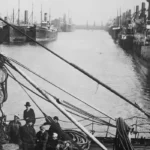
Cardiff Docks reached their commercial peak in the early twentieth century, when South Wales coal supplied international markets. In 1913, exports exceeded 13 million tonnes, establishing Cardiff as one of the world’s leading coal-exporting ports before economic and technological changes weakened its dominance.
The year 1913 represents a defining point in the history of Cardiff Bay. Before the First World War, the docks handled enormous quantities of coal destined for industrial markets around the world. Steamships, railways, and industrial production all depended on reliable supplies of fuel.
The Cardiff Coal Exchange, located near the historic docks, became an important centre for coal trading. Merchants negotiated contracts there, linking South Wales mining companies with international buyers. The building is particularly associated with the first recorded business deal worth £1 million, illustrating the financial importance of the coal trade.
Cardiff’s prosperity also supported employment across the surrounding region. Miners extracted coal inland, railway workers transported it, dock employees loaded vessels, and shipping businesses organised international distribution. The port therefore supported an interconnected industrial economy rather than an isolated waterfront industry.
However, the port’s success depended heavily on continued demand for Welsh coal. The First World War disrupted international trade, while the following decades brought changing economic conditions and growing competition. Although coal exports remained important after the war, the commercial environment that had produced Cardiff’s extraordinary expansion gradually changed.
The peak of 1913 is important because it marks both the achievement of Cardiff’s traditional maritime economy and the scale of the challenge that followed.
Why did Cardiff Docks decline during the twentieth century?
Cardiff Docks declined because international coal demand changed, overseas competitors expanded, and shipping technology evolved. After the Second World War, these pressures reduced the port’s traditional trade, and coal exports had virtually ceased by the 1960s, leaving extensive dockland areas economically weakened.
The decline of Cardiff Docks developed over several decades. The Second World War disrupted shipping, while post-war industrial reconstruction changed international energy markets. Countries increasingly developed their own steel industries and alternative sources of industrial fuel.
Shipping practices also changed. Containerisation, which involves transporting goods in standardised containers, transformed cargo handling and logistics. Ports adapted to new vessel designs, equipment, and trading patterns. Cardiff’s traditional coal infrastructure lost much of its former commercial importance as international trade moved towards different systems.
The effects extended beyond the waterfront. Businesses associated with coal handling lost customers, while dock workers faced reduced employment opportunities. Warehouses, railway sidings, loading facilities, and industrial premises became underused or abandoned.
The closure of East Moors Steelworks in 1978 added to the economic difficulties of South Cardiff. The closure resulted in the loss of approximately 3,200 jobs, intensifying the challenges facing communities already affected by the decline of traditional industries.
By the early 1980s, large parts of the former docklands contained derelict industrial land and tidal mudflats. Unemployment and social exclusion affected communities in the area.
This decline created the conditions for a major redevelopment programme. Policymakers faced a complex challenge: restoring economic activity, improving the physical environment, attracting investment, and reconnecting Cardiff’s city centre with its neglected waterfront.
What role did Cardiff Bay’s historic buildings play in its identity?
Cardiff Bay’s historic buildings preserve evidence of the port’s commercial and multicultural past. The Pierhead Building represents dock administration, while the Norwegian Church reflects international seafaring communities. These landmarks connect modern waterfront development with Cardiff’s industrial heritage.
The surviving historic buildings help explain how the docks functioned and how their communities developed. Their importance extends beyond architectural appearance because each represents a different part of Cardiff’s maritime economy.
The Pierhead Building
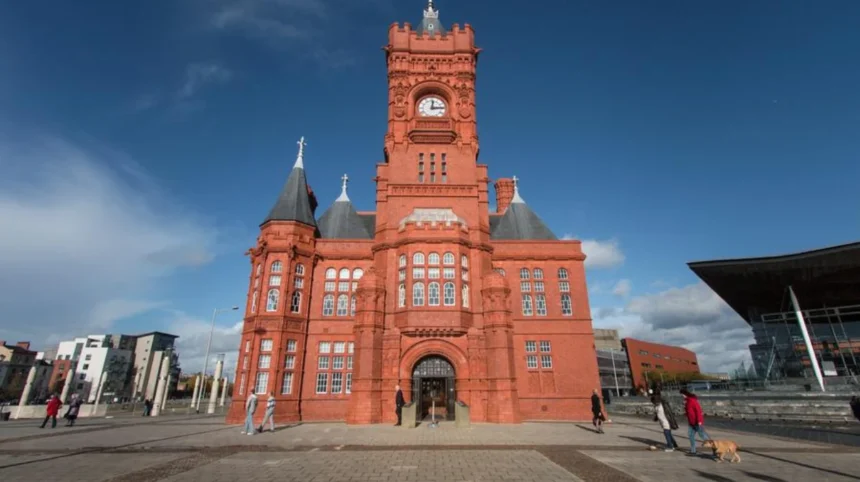
The Pierhead Building opened in 1897 as the headquarters of the Cardiff Railway Company. Designed by Welsh architect William Frame, the Grade I listed building features a distinctive Gothic Revival style and red terracotta brickwork.
Its earlier administrative role connected it directly with the management of the docks and their railway infrastructure. Office workers, engineers, surveyors, and port administrators helped coordinate the commercial systems that supported Cardiff’s coal exports. Today, the building forms part of the Welsh Parliament’s estate and hosts public exhibitions and events.
The Norwegian Church
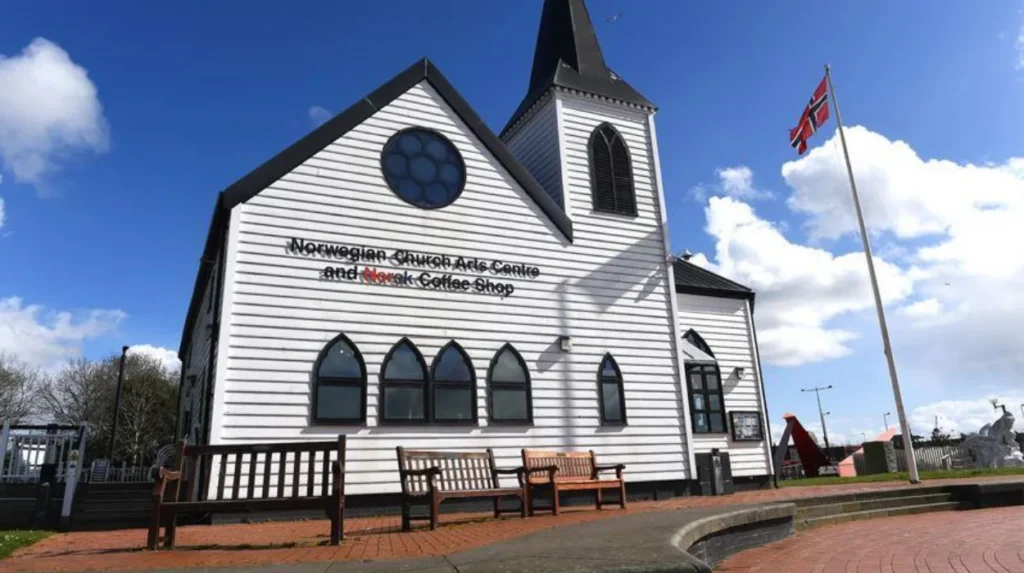
The Norwegian Church Arts Centre was built in 1868 to serve Norwegian sailors working in Cardiff’s docks. The Norwegian Seamen’s Mission established the building as a place for worship, social contact, and communication with home.
Norwegian ships carried Welsh coal overseas and brought Scandinavian timber into the region. The church became a centre for the Norwegian community, which included seafarers and families who settled in South Wales.
The building closed in 1974 as the traditional coal trade declined. A preservation campaign helped save it from demolition, and it reopened at its present waterfront location in 1992. It now serves as an arts and community venue.
The historic dock basins
The remaining historic dock features provide further evidence of the port’s industrial past. Bute East Dock survives as a section of the former dock system, while the site of the filled-in West Bute Dock has been incorporated into the modern waterfront.
These physical remains help visitors understand the scale of the industrial infrastructure that once dominated Cardiff Bay. Their preservation also provides a link between the area’s commercial history and its present-day cultural landscape.
How did the Cardiff Bay Development Corporation transform the waterfront?
The Cardiff Bay Development Corporation was established in April 1987 to regenerate approximately 1,100 hectares of derelict docklands across Cardiff and Penarth. Its programme combined infrastructure improvements, housing, commercial development, public spaces, and the construction of the Cardiff Bay Barrage.
The creation of the Cardiff Bay Development Corporation marked a major turning point. The corporation formed part of the British government’s urban regeneration programme, which aimed to revitalise declining industrial areas through coordinated investment and redevelopment.
Its central objectives included reconnecting Cardiff city centre with the waterfront, attracting businesses, creating employment, improving housing, and establishing a high-quality environment for residents and visitors. The programme also sought to improve Cardiff’s international reputation as a maritime city.
The regeneration strategy included several major changes.
First, developers reclaimed and redeveloped former industrial land. Derelict sites became available for homes, offices, leisure facilities, and public spaces.
Second, transport links and the waterfront environment received improvements. These changes made the area more accessible and created opportunities for private investment.
Third, new cultural and commercial facilities helped establish a different economic identity for Cardiff Bay. Rather than relying primarily on coal exports, the area increasingly attracted visitors, businesses, residents, and cultural organisations.
According to Cardiff Harbour Authority’s published regeneration figures, the programme delivered approximately 16,750 jobs, 4,800 housing units, 695,000 square metres of non-residential development, and 327 hectares of reclaimed land. These figures illustrate the scale of physical and economic change associated with the project.
The corporation was formally wound up on 31 March 2000. Responsibility for its work passed to successor organisations, including Cardiff Council and other public bodies.
Why was the Cardiff Bay Barrage built, and how did it change the area?
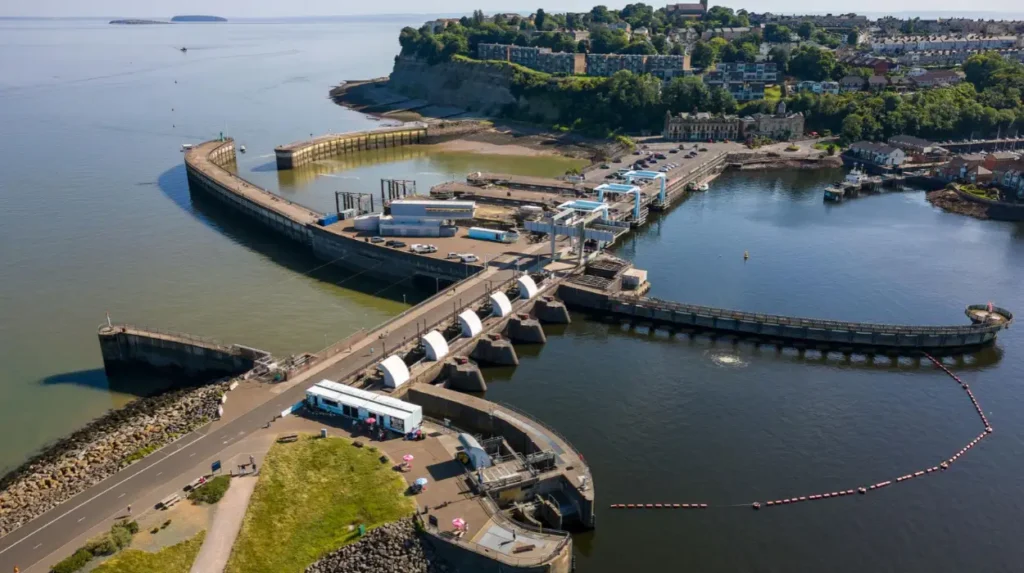
The Cardiff Bay Barrage was built to support waterfront regeneration by controlling tidal water levels and creating a permanent freshwater lake. Construction began in 1994, and the barrage became operational in 1999, fundamentally changing the landscape, recreation opportunities, and environmental conditions of Cardiff Bay.
The Cardiff Bay Barrage was central to the regeneration strategy. Before construction, tidal movement regularly exposed mudflats across parts of the estuary. Regeneration planners wanted a more stable waterfront environment that supported new housing, leisure activities, and commercial development.
The Cardiff Bay Barrage Act 1993 provided the legislative framework for constructing and operating the project. Construction began in May 1994, and the completed structure created a freshwater lake covering approximately 200 hectares. The barrage itself extends for around 1.1 kilometres between Cardiff and Penarth. Cardiff Harbour Authority+2
The barrage incorporates several engineering features, including:
- Sluice gates, which regulate water levels.
- Navigation locks, which allow vessels to pass between the freshwater bay and the sea.
- A fish pass, which supports fish movement through the structure.
- Bridges and pedestrian routes, which connect sections of the waterfront.
The barrage helped establish the physical setting for modern Cardiff Bay. Its waterfront paths, views, and water-based leisure activities now form important parts of the area’s visitor experience.
However, the project also involved environmental trade-offs. Flooding the former tidal mudflats changed estuarine habitats and affected the ecological conditions used by wading birds. The barrage therefore represents both an important engineering achievement and a significant intervention in the natural environment.
How did Cardiff Bay develop into a cultural and political destination?
Cardiff Bay developed into a cultural and political destination through investment in major public buildings, performance venues, visitor attractions, and waterfront facilities. The Senedd, Wales Millennium Centre, and Mermaid Quay demonstrate how the former industrial district acquired new roles in Welsh government, arts, tourism, and leisure.
The modern waterfront contains several landmarks that reflect Cardiff’s changing identity.
The Senedd is the home of the Welsh Parliament, the legislature responsible for devolved matters in Wales. Its opening in 2006 strengthened Cardiff Bay’s role in Welsh political life. The building provides a public setting for parliamentary proceedings and civic engagement.
The Wales Millennium Centre opened in 2004. It is a major performing arts venue hosting opera, musicals, dance, theatre, and other cultural productions. Its presence established a strong cultural focus on the waterfront.
The Mermaid Quay development introduced restaurants, cafés, shops, and leisure facilities beside the water. It supports the visitor economy and provides a public gathering place in an area once dominated by industrial activity.
The Pierhead Building adds a historic dimension to this modern setting. Its preservation demonstrates how industrial heritage remains part of the waterfront’s contemporary identity.
Together, these developments have diversified Cardiff Bay’s economy. Visitors arrive for performances, dining, heritage exploration, waterfront walks, and events. Government institutions and commercial facilities also generate activity beyond traditional tourist visits.
The result is a district whose identity combines its industrial past with modern civic, cultural, and economic functions.
Explore More Area Guide
Cardiff’s Lost Villages and Settlements: Hidden History
Historic Streets in Cardiff: Medieval Routes and Victorian Heritage
What can visitors see today that explains the history of Cardiff Bay?
Visitors can explore Cardiff Bay’s history through surviving dock features, heritage buildings, public art, waterfront paths, and museums or cultural venues. The Pierhead Building, Norwegian Church, former dock areas, and Cardiff Bay Barrage provide particularly useful starting points for understanding the area’s industrial transformation.
A heritage visit works best when it connects the major stages of Cardiff Bay’s development rather than focusing exclusively on modern attractions.
1. Pierhead Building
Explore the history of dock administration and the commercial institutions that supported Cardiff’s international coal trade. The building’s architecture reflects the confidence of the late nineteenth-century port.
2. Norwegian Church Arts Centre
Learn about Norwegian seafarers, international maritime connections, and the multicultural communities that grew around the docks.
3. Cardiff Bay Barrage
Examine the engineering project that created the freshwater lake and helped reshape the former tidal estuary.
4. Roald Dahl Plass
Visit the public space named after Cardiff-born author Roald Dahl. Its location connects the modern waterfront with the history of the Norwegian community and the wider docklands.
The official Wales Coast Path includes a Cardiff Bay circular walk that passes several of these landmarks. It provides an accessible way to explore the waterfront on foot and observe how historic structures sit alongside modern development.
Visitors interested in deeper research can also consult the National Monuments Record of Wales, known through its public heritage resource Coflein, and the UK Parliament’s historical records on Cardiff Docks. These sources provide further information about buildings, industrial infrastructure, and the port’s commercial development.
What is the lasting significance of Cardiff Bay’s history?
Cardiff Bay’s history demonstrates how an industrial port can change when its original economic foundations decline. Its transformation from a coal-exporting dockland into a cultural, residential, and commercial waterfront reshaped Cardiff’s economy while preserving important evidence of its maritime and multicultural heritage.
The history of Cardiff Bay has several lasting implications for the city and Wales.
First, the area demonstrates the influence of transport infrastructure on urban development. Canals, railways, and docks connected the South Wales coalfield with global markets and helped Cardiff expand during the Industrial Revolution.
Second, the history of Tiger Bay highlights the importance of migration and international trade in shaping local communities. Cardiff’s maritime economy depended on people from different backgrounds whose lives and cultural contributions remain part of the city’s heritage.
Third, the regeneration programme illustrates the complexity of transforming former industrial land. New housing, commercial buildings, public spaces, and cultural venues created different economic opportunities, but the scale of redevelopment also changed established neighbourhoods and natural habitats.
Finally, Cardiff Bay continues to connect the city’s past with its future. The waterfront supports tourism, public life, cultural activity, and government institutions, while its historic buildings and dock remains preserve evidence of the industrial era.
The area’s development also demonstrates that regeneration involves more than replacing abandoned buildings. It requires decisions about employment, housing, public access, environmental management, community identity, and the preservation of historic places.
For residents and visitors, understanding Cardiff Bay’s history makes the waterfront more than a collection of modern attractions. It reveals how coal, shipping, migration, industrial decline, engineering, and public investment shaped one of Wales’s most recognisable urban landscapes.
As Cardiff continues to develop, the legacy of the docks remains essential to understanding the city’s identity and the long-term relationship between its waterfront, communities, and economy.
What is the history of Cardiff Bay?
Cardiff Bay developed from a tidal estuary into a major coal-exporting port during the nineteenth century. After the decline of the coal industry, regeneration began in 1987, transforming the former docklands into a modern waterfront destination.