Cardiff became the capital of Wales in 1955 because of its growing political influence, economic importance, population, transport connections and established civic institutions. The city developed from a Roman settlement into a major coal-exporting port before becoming the administrative centre of modern Wales. Its selection reflected Cardiff’s national significance and the changing relationship between Welsh identity, industrial development and political representation.
- Why Did Wales Need an Official Capital City?
- How Did Roman and Medieval Cardiff Develop Before Industrialisation?
- What role did the Romans play in Cardiff’s history?
- How did Cardiff Castle influence the town’s growth?
- How Did the Coal Industry Transform Cardiff Into a Major City?
- What role did the Marquess of Bute play in Cardiff’s growth?
- Why were Cardiff Docks internationally important?
- Why Did Cardiff Receive City Status in 1905?
- Which Welsh Towns Competed With Cardiff for Capital Status?
- Why was Aberystwyth considered?
- Why did Caernarfon have a strong historical claim?
- Why did Swansea compete for the position?
- How Was Cardiff Chosen as the Capital of Wales in 1955?
- What happened during the early capital campaign?
- How did Welsh local authorities influence the decision?
- What did the UK Government announce on 20 December 1955?
- How Did Cardiff’s Capital Status Change Its Political and Administrative Role?
- How Did Cardiff’s Economy and Population Support Its Capital Status?
- What Makes Cardiff Different From Other Welsh Cities Today?
- How Can Visitors Explore Cardiff’s Journey to Becoming the Welsh Capital?
- Why Does Cardiff’s Selection as Capital Still Matter?
Why Did Wales Need an Official Capital City?
Wales needed an officially recognised capital to represent its national identity, coordinate public institutions and provide a recognised centre for civic and political affairs. Before 1955, Welsh national life already had important institutions, but no city held formal recognition as the country’s capital.
Wales has a distinct history, language, culture and political identity within the United Kingdom. However, its national institutions developed over time rather than being established together in one capital city. During the nineteenth and early twentieth centuries, growing interest in Welsh nationhood strengthened calls for clearer national representation.
Several institutions already served Wales as a whole. The University of Wales developed as a national educational institution, while the National Museum of Wales represented Welsh history, science and culture. The National Library of Wales, based in Aberystwyth, preserved the country’s literary and historical collections.
These institutions did not all operate from Cardiff. Their geographical distribution demonstrated that Welsh national life extended beyond a single urban centre. Nevertheless, campaigners increasingly argued that Wales needed an officially recognised capital to represent its interests and give its national identity a visible civic centre.
The question was not simply which town was the largest. A capital needed to represent the country, accommodate important institutions and maintain strong connections with communities across Wales.
By the middle of the twentieth century, Cardiff had developed the population, transport infrastructure, commercial influence and civic buildings that made it a leading candidate.
How Did Roman and Medieval Cardiff Develop Before Industrialisation?
Cardiff’s early development began with a Roman fort established around AD 55–60 near the River Taff. The settlement later grew around a Norman castle, a developing market and regional trade, creating the foundations for the larger industrial town that emerged centuries afterward. Museum Wales+1
Cardiff’s Welsh name is Caerdydd. Its location in south-east Wales placed it near the meeting point of important river routes and close to the Bristol Channel. The River Taff and nearby waterways influenced transport, settlement and access to the surrounding countryside.
What role did the Romans play in Cardiff’s history?
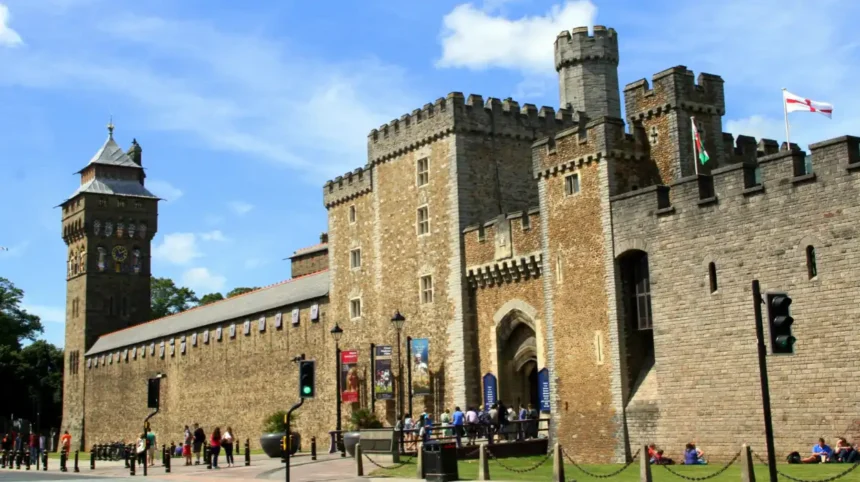
Roman forces established a fort at Cardiff around AD 55–60. The site occupied a strategic position for military movement and regional control. Remains associated with the Roman fort survive within the area now occupied by Cardiff Castle.
The Roman presence established an early foundation for settlement, but Cardiff did not immediately become a major city. Roman occupation continued into the late fourth century, after which the settlement developed through later periods of Welsh and Norman history.
How did Cardiff Castle influence the town’s growth?
Cardiff Castle became a major landmark in the town’s development. Following the Norman conquest of the area, a castle was established on or near the earlier Roman fort site. The surrounding settlement gradually developed as a local administrative and trading centre.
Medieval Cardiff remained much smaller than the modern city. Its economy depended on local commerce, agriculture, markets and regional connections rather than the enormous international coal trade that later transformed the area.
The castle’s central location continued to shape Cardiff’s urban identity. In later centuries, the growth of surrounding streets, public buildings and commercial districts helped establish the city centre that became the heart of the Welsh capital.
How Did the Coal Industry Transform Cardiff Into a Major City?
Cardiff expanded rapidly during the nineteenth century because the South Wales coalfield supplied growing international demand for coal. New docks, canals and railways connected inland mining districts with overseas markets, turning a small town into a major industrial port and strengthening its claim to national importance.
At the beginning of the nineteenth century, Cardiff was a relatively small town. Industrial expansion across South Wales changed its economic position as coal and iron production increased in the surrounding valleys.
Coal became essential to industrial production, shipping and railway operations. Cardiff’s location near the Bristol Channel gave businesses access to international maritime routes, while improved transport links connected the port with inland mineral resources.
What role did the Marquess of Bute play in Cardiff’s growth?
John Crichton-Stuart, the second Marquess of Bute, was a major landowner whose investments helped expand Cardiff’s port infrastructure. The Bute family controlled extensive land around Cardiff and supported developments that increased the town’s commercial importance.
The opening of West Bute Dock in 1839 marked a significant stage in the port’s expansion. Further dock development, including the East Bute Dock, strengthened Cardiff’s ability to handle increasing coal exports. Railways and canals linked these facilities with mining districts across South Wales.
Why were Cardiff Docks internationally important?
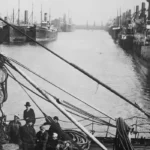
Cardiff Docks became one of the world’s leading coal-exporting ports. The port connected the South Wales coalfield with industrial markets across Europe and beyond. Shipping activity generated employment in loading, transport, warehousing, ship operations and commercial services.
The scale of this trade was substantial. National Museum Wales records that more than 10 million tons of coal passed through Cardiff Docks in 1913, the port’s peak year.
The coal trade also helped Cardiff develop financial and commercial institutions. The Coal Exchange became a centre for coal transactions, linking producers, merchants and shipping interests. Cardiff’s international reputation rested on its ability to coordinate large-scale commodity exports.
This economic expansion attracted workers from Wales and other parts of the world. Butetown, the district associated with the docks and commonly linked with Tiger Bay, developed a diverse population that included people from Yemen, Somalia, Greece and other maritime communities.
The port’s success changed Cardiff’s population, architecture and social structure. It also supplied a practical argument for capital status: the city had become a major centre of employment, administration, transport and international trade.
Why Did Cardiff Receive City Status in 1905?
Cardiff received official city status in 1905 under King Edward VII. The recognition followed decades of commercial expansion and civic development, reflecting the town’s growing population, international importance and increasingly substantial public institutions before its later designation as Wales’s capital.
City status and capital status are separate distinctions. City status recognises a settlement as a city, while capital status identifies a city as the country’s recognised national centre. Cardiff achieved the first in 1905 and the second in 1955.
By the late nineteenth century, Cardiff had grown into Wales’s largest settlement. Its coal-exporting economy supported a broader range of services, including education, local government, financial activity and cultural institutions.
How did civic buildings strengthen Cardiff’s national role?
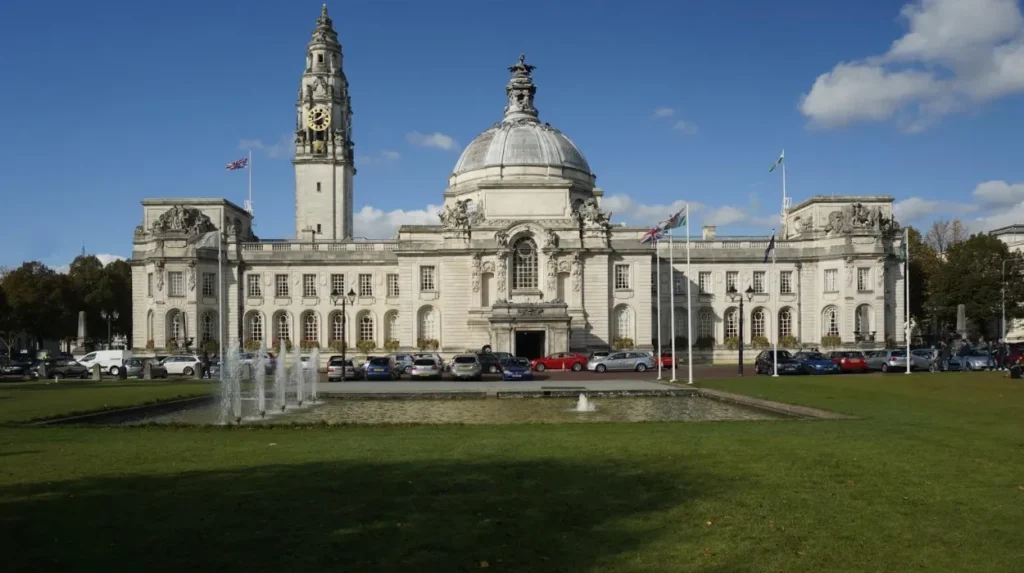
The development of Cathays Park helped establish Cardiff as a civic centre. The area became home to important public buildings, including City Hall and the National Museum of Wales. Their architecture and institutional functions gave Cardiff a recognisable administrative character.
The National Museum represented Welsh culture and heritage, while the city’s educational and civic institutions helped attract professionals, students and public-sector workers.
Cardiff’s growing importance also extended beyond industry. The city hosted national events and supported organisations connected with Welsh language, literature and cultural identity. These developments strengthened the argument that Cardiff was already functioning as a centre of national life before receiving official capital recognition.
By 1905, Cardiff had the commercial scale and civic infrastructure to support its ambitions. However, official capital status remained unresolved, and other Welsh towns continued to present competing claims.
Which Welsh Towns Competed With Cardiff for Capital Status?
Cardiff faced competing claims from places including Aberystwyth, Caernarfon and Swansea. Their supporters emphasised different combinations of Welsh-language heritage, geographical position, cultural identity and economic importance, making the selection a national debate rather than an automatic consequence of Cardiff’s size.
The question of a Welsh capital involved competing ideas about what a capital should represent. Cardiff had the strongest urban and commercial profile, but other towns argued that their cultural connections and geographical positions offered advantages.
Why was Aberystwyth considered?
Aberystwyth, on the west coast of Wales, had strong educational and cultural credentials. It was home to the University of Wales institution established there in the nineteenth century and later became the location of the National Library of Wales.
Supporters of Aberystwyth could therefore point to its educational importance and its position outside the industrialised south-east. Its location also offered a different geographical model for a national capital, with greater distance from the concentration of heavy industry around Cardiff.
Why did Caernarfon have a strong historical claim?
Caernarfon, in north-west Wales, had a prominent place in Welsh history. Caernarfon Castle and its association with medieval Welsh and English political history gave the town considerable symbolic significance.
Supporters of a northern capital could emphasise Welsh heritage, cultural identity and the importance of representing communities beyond the industrial south. The town’s historical significance, however, did not give it Cardiff’s population scale or commercial infrastructure.
Why did Swansea compete for the position?
Swansea was another major industrial and maritime centre. Its development as a port and its connections with the South Wales industrial economy gave it a credible claim to national importance.
The competition showed that industrial importance alone did not settle the question. Cardiff’s advantage lay in the combination of its size, administrative institutions, commercial history and growing support from Welsh local authorities.
How Was Cardiff Chosen as the Capital of Wales in 1955?
Cardiff was officially recognised as the capital of Wales in December 1955 after years of discussion, petitions and consultations with Welsh local authorities. The UK Government accepted Cardiff’s position following substantial support for its claim, announced through a written parliamentary answer on 20 December 1955.
The decision followed several stages rather than a single national referendum. Welsh councils, civic leaders and national organisations debated the need for an official capital and assessed which place was best suited to the role.
What happened during the early capital campaign?
In the early twentieth century, Cardiff’s civic leaders increasingly sought official recognition. The South Wales Daily News conducted a survey of local authorities in the 1930s, recording 76 of 161 in favour of Cardiff, according to research published by the National Library of Wales.
Cardiff continued to press its case after the Second World War. In 1949, the city submitted a petition to King George VI requesting capital status. The petition outlined Cardiff’s importance in business, administration, religion and education. It did not produce an immediate decision. National Library of Wales
The issue reached Parliament again in 1951. Questions were raised about recommendations supporting Cardiff, but the government did not immediately confirm the designation. This delay reflected the need to consider competing views and the appropriate way to recognise a national capital.
How did Welsh local authorities influence the decision?
Consultation with local authorities helped demonstrate the level of support for Cardiff. In 1955, a further vote recorded 134 of 161 local authorities in favour of the city, according to the National Library of Wales.
This support strengthened Cardiff’s position. The result indicated that its claim had gained broad backing among Welsh local government bodies, although it did not mean that every community supported the choice. National Library of Wales
What did the UK Government announce on 20 December 1955?
On 20 December 1955, Sir David Treharne-Llewellyn asked the Home Secretary, Gwilym Lloyd George, whether the government had reached a decision on recognising Cardiff as the capital.
Lloyd George’s written answer confirmed that the government was prepared to recognise Cardiff as the capital of Wales, citing the volume of support for the city. He also stated that no formal measures were necessary to implement the decision.
The announcement made Cardiff the officially recognised capital of Wales. Unlike some constitutional changes, this designation did not require a separate Act of Parliament. Its significance came from official recognition following a sustained political and civic campaign.
How Did Cardiff’s Capital Status Change Its Political and Administrative Role?
Cardiff’s capital status reinforced its position as Wales’s principal civic and administrative centre. National institutions, public services and cultural organisations strengthened the city’s role, while later Welsh devolution brought a distinct legislature and government institutions to Cardiff and expanded its constitutional significance.
Capital status gave Cardiff a clearer national function, but it did not instantly transform the city’s political system. The designation in 1955 recognised Cardiff’s standing; the development of devolved political institutions came decades later.
How did national institutions develop in Cardiff?
Cardiff’s civic centre continued to provide a home for public and cultural institutions. National Museum Cardiff became a prominent location for collections relating to Welsh art, history and natural sciences. Other organisations expanded the city’s role in education, culture and sport.
The presence of these institutions helped make Cardiff a point of contact for visitors, researchers, public officials and organisations working across Wales.
The capital designation also strengthened the relationship between the city’s identity and the country’s public life. Cardiff increasingly represented Wales in official events, national celebrations and international settings.
What changed after Welsh devolution in 1999?
Devolution is the transfer of certain decision-making powers from the UK Parliament and Government to institutions responsible for a nation or region. In Wales, devolution created a new democratic structure for handling devolved matters.
The National Assembly for Wales first met in 1999 following the 1997 referendum and subsequent legislation. It later became the Senedd, or Welsh Parliament. The Welsh Government also developed as the executive responsible for devolved policy areas.
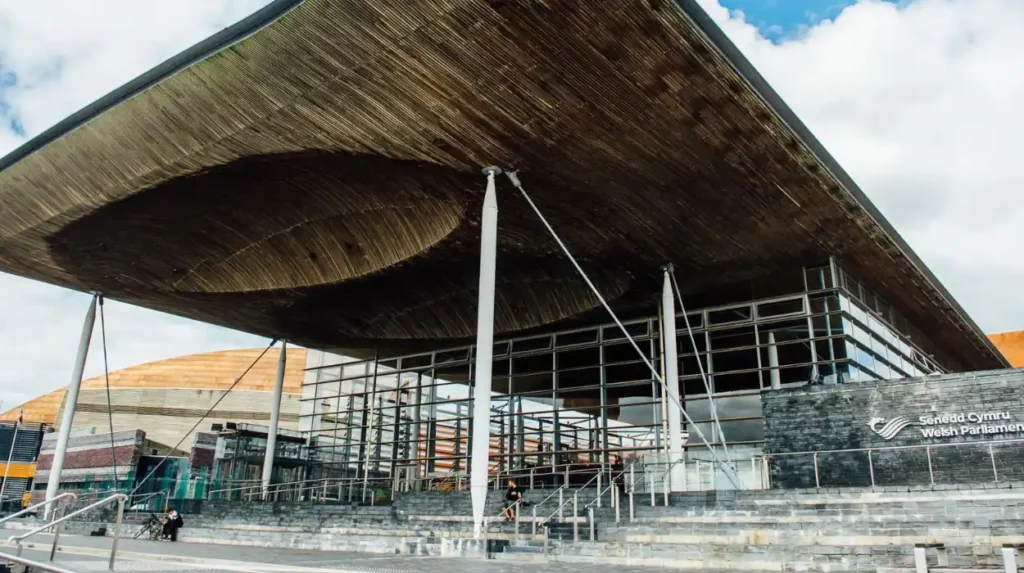
These institutions established Cardiff as the centre of Wales’s modern devolved political system. The Senedd building in Cardiff Bay became a visible symbol of Welsh democratic government.
Capital status and devolution are related but distinct. Cardiff was already recognised as the capital in 1955; devolution gave the city a stronger role in exercising Welsh political authority.
How Did Cardiff’s Economy and Population Support Its Capital Status?
Cardiff’s economic growth created the infrastructure, workforce and commercial networks associated with a national capital. Coal exports initially drove expansion, while government, education, retail, culture, sport and other service industries later diversified the economy and sustained the city’s importance across Wales. Coflein+1
Cardiff’s development illustrates the relationship between economic growth and political recognition. Its industrial economy supported a large urban population and created demand for transport, housing, education, public services and administrative facilities.
The port connected Cardiff with international markets, while railway networks linked the city to the South Wales valleys and other British cities. These connections made Cardiff accessible to businesses, workers and visitors.
The coal trade eventually declined, particularly as energy markets and industrial structures changed. Cardiff adapted by developing a service-based economy, with employment across public administration, education, healthcare, retail, financial services, tourism and the creative industries.
The city also benefits from its universities and cultural institutions. Cardiff University, Cardiff Metropolitan University, the University of South Wales and the Royal Welsh College of Music and Drama contribute to education, research and the creative economy.
This economic diversification matters because a modern capital requires more than historic prestige. It needs employment, transport links, public infrastructure and institutions that support residents and national organisations.
Cardiff’s economic transformation helped it retain national importance after its traditional coal-exporting role diminished.
What Makes Cardiff Different From Other Welsh Cities Today?
Cardiff combines national political institutions, historic landmarks, cultural organisations and modern commercial districts within one urban centre. Its capital status distinguishes its administrative role from other Welsh cities, while its industrial heritage, multicultural communities and educational institutions remain central to its identity.
Cardiff’s identity reflects several historical layers. Roman remains and Cardiff Castle represent its early settlement history, while the nineteenth-century docks demonstrate the scale of its industrial expansion. Civic buildings and museums reflect the period when the city developed into an administrative and cultural centre.
Cardiff Bay provides a further example of change. The former industrial waterfront has undergone extensive regeneration, with cultural venues, public spaces, businesses and residential developments replacing parts of the old port landscape. The Senedd connects this modern waterfront with Wales’s devolved political institutions.
The city also serves as a national centre for sport. Principality Stadium hosts major rugby fixtures and other large events, bringing visitors into Cardiff and contributing to its national and international profile.
Its multicultural history remains significant. Maritime trade attracted people from different parts of the world, and communities around Butetown helped establish Cardiff’s reputation for cultural diversity. This history forms part of the city’s wider story as a place shaped by migration, commerce and changing employment.
Cardiff’s position as capital therefore rests on more than its official designation. It combines political functions with cultural, educational and economic activity that reaches beyond the city itself.
Explore More Area Guide
History of Cardiff Docks: Coal Trade, Tiger Bay and Regeneration
The History of Cardiff Bay: From Coal Port to Waterfront Landmark
How Can Visitors Explore Cardiff’s Journey to Becoming the Welsh Capital?
Visitors can explore Cardiff’s development through its castle, civic centre, museums and regenerated waterfront. These places reveal different stages of the city’s history, from Roman occupation and medieval settlement to industrial expansion, civic recognition in 1905 and capital status in 1955. Visit Cardiff+1
1. Cardiff Castle
Explore the castle grounds and surviving Roman fort remains to understand the area’s early strategic importance and its later medieval development.
2. Pierhead Building
See a landmark associated with Cardiff’s docklands and industrial history. Its location helps explain how coal exports shaped the city’s rise.
3. Cardiff City Hall
Discover the civic architecture associated with Cardiff’s growth as a major Welsh administrative centre before it officially became the capital.
4. Senedd
Visit the home of the Welsh Parliament to understand how Cardiff’s historic capital status connects with modern devolved democracy.
Check official visitor information for opening times, exhibitions and access arrangements before travelling.
Together, these locations offer a practical way to connect the city’s historical periods. They show how Cardiff developed from a settlement around a strategic river crossing into an industrial port, a recognised city and the political centre of Wales.
Why Does Cardiff’s Selection as Capital Still Matter?
Cardiff’s selection in 1955 remains important because it gave Wales an officially recognised capital and strengthened the city’s national role. Its later development as the home of devolved government connects the decision to contemporary Welsh representation, public administration, culture and economic activity. UK Parliament API+1
The designation marked a significant point in the development of modern Welsh identity. It did not create Welsh nationhood, language or culture; those traditions long predated 1955. Instead, it recognised Cardiff as the city most appropriately suited to serve as Wales’s capital, following years of public and political discussion.
The decision also illustrates how national capitals develop. Some are established through constitutional arrangements, while others acquire their status through historical decisions, political campaigns and institutional growth. Cardiff’s designation followed the latter pattern.
Today, Cardiff’s significance extends across devolved government, education, cultural institutions, business and tourism. The city provides a central location for Welsh political activity while remaining connected to the distinct histories and identities of communities throughout the country.
Its story also demonstrates the difference between industrial influence and national representation. Coal exports helped Cardiff become a major city, civic development strengthened its claim, and the 1955 announcement formally recognised its capital status.
Cardiff became the capital of Wales in 1955 after decades of economic growth, civic development and political campaigning. Its Roman origins and medieval castle established the foundations of settlement, while the nineteenth-century coal industry transformed the town into a major international port.
City status in 1905 recognised Cardiff’s growing importance, but the capital question remained unresolved. Following petitions, discussions and strong support from Welsh local authorities, the UK Government officially recognised Cardiff on 20 December 1955.
The city subsequently strengthened its position through national institutions, cultural development and public administration. Welsh devolution from 1999 added a further dimension by establishing Cardiff as the centre of Wales’s modern devolved political system.
Cardiff’s history is therefore not simply the story of a city receiving a title. It is the story of how industrial success, civic ambition, national identity and political recognition combined to establish the capital of modern Wales.
When did Cardiff become the capital of Wales?
Cardiff officially became the capital of Wales in December 1955. The UK Government confirmed its recognition on 20 December 1955 following a campaign and strong support from Welsh local authorities.