This Cathedral Road walking guide shows you how to walk Cathedral Road in Cardiff, why it matters, what you will see, and how to combine it with nearby routes in the city centre and Bute Park. Cathedral Road is a broad, tree-lined avenue in central Cardiff that runs from the area near Cardiff Castle and the city’s main civic quarter toward the residential neighbourhoods of Pontcanna and beyond, with Cardiff Cathedral close by.
- What is Cathedral Road in Cardiff and where does it run?
- Why is Cathedral Road worth walking in Cardiff?
- How do you start and finish a Cathedral Road walking route?
- What landmarks and buildings can you see on Cathedral Road?
- How long is the Cathedral Road walk and how much time do you need?
- What is the best way to navigate Cathedral Road as a walker?
- How does Cathedral Road connect to other Cardiff walking routes?
- What practical tips should you follow when walking Cathedral Road?
What is Cathedral Road in Cardiff and where does it run?
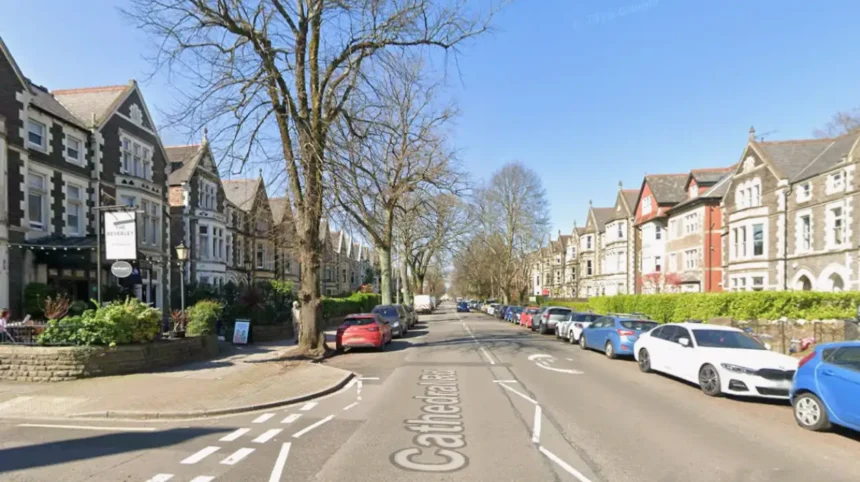
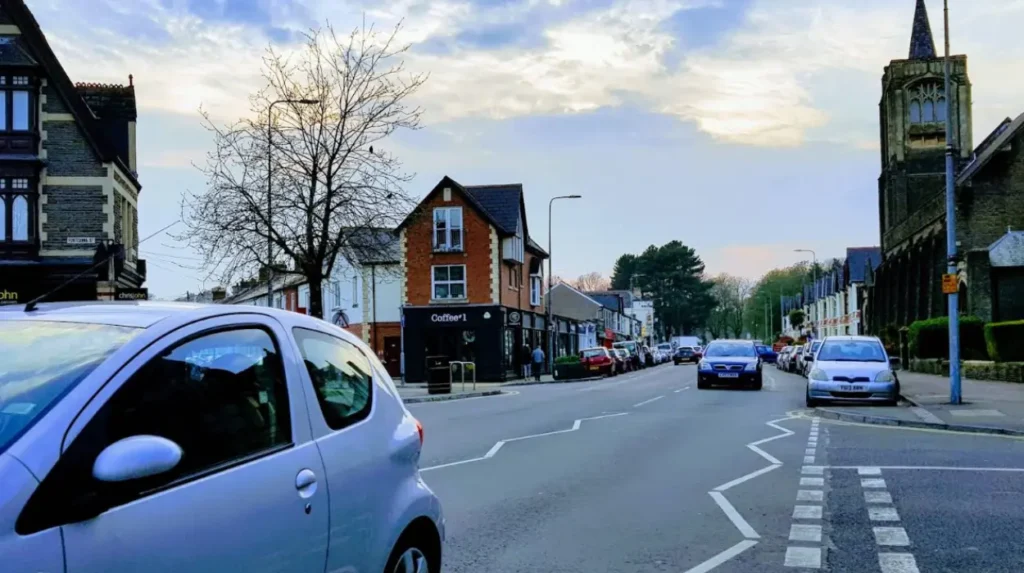
Cathedral Road is a major, tree-lined avenue in central Cardiff that connects the civic area near Cardiff Castle with Pontcanna and runs close to Cardiff Cathedral, Llandaf and the wider Cathedral Road conservation area. It is part of the city’s historic residential and civic fabric and forms a key walking link between the city centre and quieter western neighbourhoods.
Cathedral Road itself is a long, straight road that starts near the western edge of the city centre, close to attractions such as Cardiff Castle and Bute Park, and extends westward toward Pontcanna. The road is named for its proximity to Cardiff Cathedral (also known as the Cathedral Church of St Peter and St Paul), one of Wales’ most important Anglican cathedrals. The road is often associated with the “Cathedral Road” area, a recognised residential district with large Victorian and Edwardian houses, many of which are now listed or form part of a local conservation area.
Walking Cathedral Road gives you a direct route from the busy city centre into a more leafy, residential environment, with a mix of civic buildings, churches, historic houses and pocket parks. It is also a convenient part of longer walks that include Bute Park, Cardiff Castle, and the Centenary Walk routes.
Why is Cathedral Road worth walking in Cardiff?
Cathedral Road is worth walking because it combines historic architecture, civic landmarks, peaceful tree-lined streets, and easy links to central Cardiff attractions like Cardiff Castle, Bute Park and Cardiff Cathedral. The route is short enough for a casual stroll but rich enough in interest for a more detailed heritage walk.
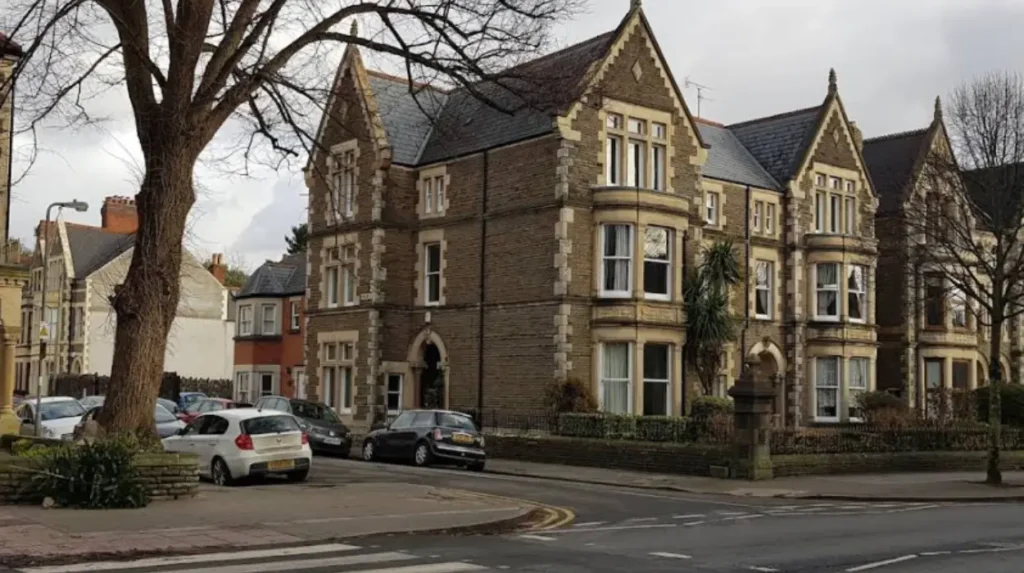
The road sits within a historically significant part of Cardiff. Many of the houses along Cathedral Road were built in the late 19th and early 20th centuries for professionals and merchants, reflecting Cardiff’s rapid growth as a port and industrial city. The architecture includes brick and stone villas, bay-windowed houses and occasional larger mansions, many with original details such as stained glass, timber panelling and decorative porches.
Cathedral Road also provides a visual and cultural connection between Cardiff’s civic heart and its more residential west. Along the walk you pass or come close to:
- Cardiff Cathedral, an important religious and architectural landmark
- Ghosts of earlier civic institutions and former schools or chapels
- Quiet junctions and small green spaces that break up the urban environment
- Easy access to Pontcanna Fields and the River Taff corridor
This mix makes Cathedral Road a strong candidate for a focused walking guide, especially for visitors who want to see Cardiff beyond the main shopping streets and stadium areas.
How do you start and finish a Cathedral Road walking route?
A simple Cathedral Road walking route starts near Cardiff Castle or Bute Park entrance, follows Cathedral Road west toward Pontcanna, and finishes at Pontcanna Fields or a nearby transport stop, with options to extend into the River Taff trails. The walk is flexible and can be shortened or extended depending on time and interest.
A practical starting point is the west side of Cardiff Castle or the main entrance to Bute Park on Queen Street or Castle Street. From there, you can walk toward the area where Cathedral Road begins, often near the junction with St Mary Street / Westgate Street or slightly further west depending on your exact path. The exact starting point may vary slightly depending on which side of the city you approach from, but the key is to orient yourself toward the long, straight road that runs west from the civic area.
Once you reach Cathedral Road, walk straight along it in a westward direction. You will pass groups of historic houses, small gardens and occasional churches or former chapels. The road gradually shifts from a more civic feel to a residential one, with tree canopy increasing and traffic noise reducing.
To finish the walk, you can:
- End at Pontcanna Fields, a large open space with sports pitches and play areas
- Continue further along extensions of the road into the wider Pontcanna neighbourhood
- Link into the Taff Trail by following paths from Pontcanna Fields toward the River Taff
This gives you a clear start and finish while leaving room to add side routes or detours.
What landmarks and buildings can you see on Cathedral Road?
On Cathedral Road you can see Cardiff Cathedral, large Victorian and Edwardian houses, former chapels or schools, small gardens, and junctions that lead toward Bute Park and Pontcanna Fields. These landmarks provide both visual interest and historical context for the walk.
Cardiff Cathedral is the most prominent landmark associated with Cathedral Road. The cathedral is an Anglican cathedral built in the 20th century, designed in a modern Gothic style with a distinctive tower and spire. It is one of the main religious buildings in Cardiff and hosts regular services, concerts and community events. From parts of Cathedral Road you can see the cathedral’s tower and surrounding grounds, especially when the road curves or when you look across side streets.
The residential buildings along Cathedral Road are another key feature. Many are two or three-storey houses with:
- Brick or stone fronts
- Bay windows on the upper floors
- Decorative porches and entranceways
- Original or restored timber doors and fanlights
These houses reflect the wealth and expansion of Cardiff during the late 19th and early 20th centuries, when the city became one of the world’s largest coal-exporting ports. Some of the larger houses were originally built as private residences for merchants, doctors, lawyers and other professionals.
Along the road you may also encounter:
- Former chapels or small churches, some now converted into offices or community spaces
- Small schools or educational buildings that once served the local population
- Narrow side streets that lead to hidden gardens or occasional small parks
Together these landmarks create a layered sense of history, from civic and religious institutions to everyday residential life.
How long is the Cathedral Road walk and how much time do you need?
The core Cathedral Road walk is about 1 to 1.5 miles (1.6 to 2.4 km) and takes around 20 to 40 minutes at a normal pace, but adding Castle, Bute Park or Pontcanna Fields can extend it to 2 to 3 miles (3.2 to 4.8 km) and 60 to 90 minutes. This makes it suitable for a short break or a longer heritage walk.
If you walk only along Cathedral Road itself, from where it begins near the civic area to the edge of Pontcanna Fields, the distance is roughly 1–1.5 miles. At an average walking speed of 3 miles per hour (around 5 km/h), this takes about 20–30 minutes. If you pause to look at architecture, read information boards, or take photos, you may need closer to 40 minutes.
If you extend the walk to include:
- Cardiff Castle and Bute Park on the eastern end
- Pontcanna Fields and approaches to the River Taff on the western end
then the total distance can reach 2–3 miles. This longer version is still manageable for most walkers and gives you a more complete experience of Cardiff’s central and western areas.
The walk is mostly on flat, paved streets with gentle gradients, making it suitable for most ability levels, including older walkers and families with children. There are no major climbs or technical sections.
What is the best way to navigate Cathedral Road as a walker?
The best way to navigate Cathedral Road is to start near Cardiff Castle or Bute Park, walk steadily west along the main road, use visible landmarks such as the cathedral tower and Pontcanna Fields as guides, and follow side streets only if you want to explore specific houses or small parks. The route is straightforward and does not require complex navigation.
Because Cathedral Road is a long, straight avenue, navigation is simple:
- Identify your starting point near the civic area (Cardiff Castle / Bute Park side).
- Walk toward the long, tree-lined road that runs west.
- Stay on Cathedral Road itself, keeping the cathedral visible in the distance when possible.
- Continue until you reach the more open area of Pontcanna Fields or the point where the road feels more residential and less central.
You do not need to turn frequently. Side streets can be used if you want to:
- Look more closely at particular houses
- Visit small parks or gardens
- Access cafes or shops in Pontcanna
But for a focused Cathedral Road walk, staying on the main road is usually enough.
On a clear day, the cathedral tower and spire act as a strong visual guide. On quieter days, the steady line of trees and the gradual shift from civic to residential atmosphere help you confirm you are on the right route.
Explore More Area Guide
Cowbridge Road West Business Directory Cardiff Shops Services
Cowbridge Road East Local Guide: Culture, History, and Culinary Highlights
How does Cathedral Road connect to other Cardiff walking routes?
Cathedral Road connects directly to Bute Park, Cardiff Castle, Pontcanna Fields and the River Taff trails, and can be combined with the Cardiff Centenary Walk and other city centre routes for longer, more varied walks. This makes it a useful link in a network of central Cardiff walking paths.
From the eastern end of Cathedral Road, you can walk into:
- Bute Park, a large green space with paths, trees and riverside sections
- Cardiff Castle, one of Cardiff’s main historic attractions
- The city centre shopping streets (St Mary Street, The Hayes, Queen Street)
From the western end, you can reach:
- Pontcanna Fields, a large open space with sports pitches
- The River Taff and the Taff Trail, a long-distance walking and cycling route along the river
- The wider Pontcanna neighbourhood, with local shops and cafes
Cathedral Road is also compatible with the Cardiff Centenary Walk, a circular route that links key sites around the city. While Cathedral Road is not the main spine of the Centenary Walk, it can be used as a connecting segment between the city centre and the western residential areas.
This connectivity means you can:
- Do a short Cathedral Road-only walk
- Add Bute Park and Cardiff Castle for a city-centre heritage route
- Extend into Pontcanna and the River Taff for a longer, more natural walk
What practical tips should you follow when walking Cathedral Road?
When walking Cathedral Road, wear comfortable shoes, check the weather, use street lighting if walking in the evening, and be aware of traffic at junctions; the route is pedestrian-friendly but still requires standard city walking caution. These tips help ensure a safe and comfortable experience.
Cathedral Road is mainly a residential and civic street with moderate traffic. You will walk on sidewalks alongside vehicles, so:
- Stay on the paved footpaths and avoid walking in the road
- Watch for vehicles at junctions and when turning into side streets
- Use lighting or a phone flashlight if walking after dark, as some stretches may be quieter
The route is flat and well-suited to most walkers, including families and older people. However, some sections may have uneven paving or steps near older buildings, so take care if you have mobility issues or are using a wheelchair.
Weather in Cardiff can change quickly, especially in winter. On wet days, puddles may form on some parts of the road, and leaf coverage in autumn can make pavements slippery. In summer, the tree canopy provides shade, but midday sun can still be strong.
For a better experience:
- Bring water if you plan to extend the walk
- Consider a small map or offline city map if you want to explore side streets
- Check local event notices if you plan to walk during festival times or major matches, as traffic and pedestrians may increase near Pontcanna Fields and the city centre
With these basic precautions, Cathedral Road is a safe, enjoyable and historically rich walking route in Cardiff.
What is Cathedral Road in Cardiff and where does it run?
Cathedral Road is a broad, tree-lined avenue in central Cardiff that runs from Castle Street beside Sophia Gardens west through Pontcanna to Western Avenue (A48). Historically, it formed part of the route towards Llandaff and takes its name from the road leading to Llandaff Cathedral rather than because the cathedral is located on the street itself.