Rumney Rocks is a premier sport climbing destination located in the White Mountain National Forest near Rumney, New Hampshire. The cliffs consist of Plymouth schist, a fine-grained metamorphic rock that provides highly featured vertical to severely overhanging climbing routes. Unlike traditional climbing destinations that require removable protection devices, Rumney Rocks is developed exclusively for sport climbing, where climbers protect falls by clipping pre-installed steel or titanium bolts using quickdraws. A quickdraw is a piece of climbing equipment consisting of two carabiners connected by a semi-rigid textile webbing strap called a dogbone. Climbers must carry a precise number of quickdraws on their harness gear loops to safely ascend a route from the ground to the anchor system without running out of equipment.
- What Is the Minimum and Maximum Number of Quickdraws Required for Rumney Rocks?
- How Does Route Length and Crag Geography Alter Equipment Selection?
- Why Must Climbers Account for Anchor Configurations When Calculating Gear Needs?
- What Mechanical and Safety Standards Define a Reliable Sport Climbing Quickdraw?
- How Do Environmental Conditions and Rock Geometry Impact Equipment Wear at Rumney Rocks?
- What Specialized Quickdraw Techniques Refine Performance on Steep Schist?
- What Long-Term Structural and Legal Elements Maintain the Rumney Bolt Infrastructure?
The geological history of Rumney Rocks dates back to the Devonian period, approximately 400 million years ago, when tectonic collisions subjected sedimentary rock to intense heat and pressure, forming the dense, fractured schist visible today. Modern climbing development began in the late 1980s and surged through the 1990s as route developers used motorized hammer drills to place mechanical and adhesive expansion bolts. Today, the area contains over 1,000 documented routes across multiple distinct crags, including the Meadows, Main Cliff, Waimea, and Orange Crush. Because the spacing of safety bolts varies based on historical development standards, route length, and specific terrain hazards, understanding precise equipment requirements is necessary for safety and efficiency.
What Is the Minimum and Maximum Number of Quickdraws Required for Rumney Rocks?
To climb safely at Rumney Rocks, a standard rack of 12 quickdraws suffices for 90 percent of the sport routes, while the absolute longest routes require a maximum of 16 quickdraws to protect the line and clip the anchor.
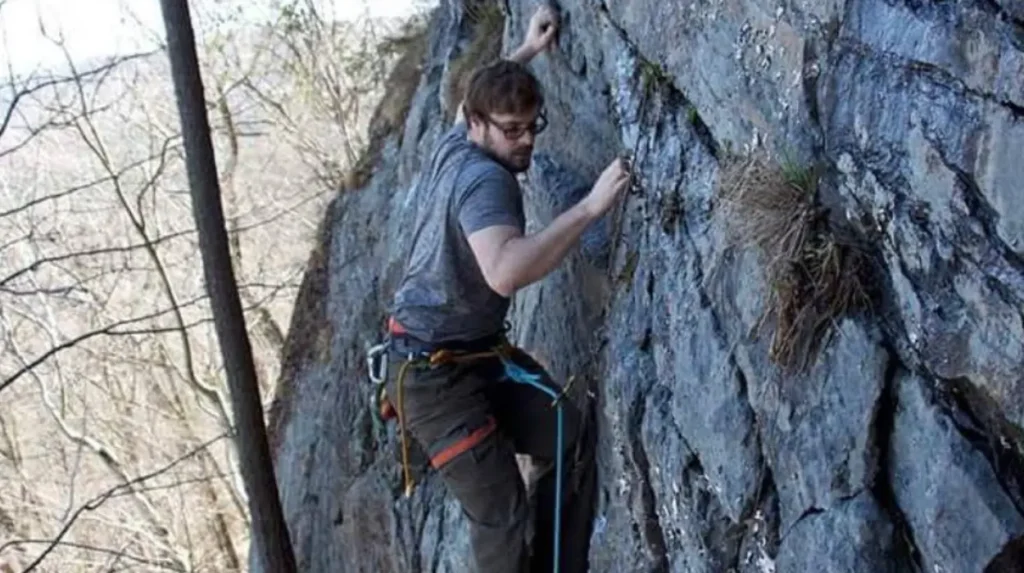
The total number of quickdraws a climber must carry depends entirely on the bolt count of the chosen route plus the two quickdraws required to secure the top anchor system. Rumney Rocks features routes that range in height from short, powerful bouldery lines of 30 feet to extended endurance pitches reaching up to 90 feet. Short pitches, such as those found at the Meadows crag, often require only 4 to 8 quickdraws. Intermediate routes measuring between 50 and 70 feet generally require 10 to 12 quickdraws. Long pitches, particularly on the massive overhanging faces of Orange Crush or the Main Cliff, feature up to 14 protection bolts along the path, necessitating a larger kit.
Route developers at Rumney Rocks placed protection bolts to mitigate specific fall hazards, such as ground strikes or ledge collisions. The first three bolts are typically spaced closely together, often between 4 and 6 feet apart, to prevent a climber from hitting the ground if they fall before reaching the upper sections of the cliff. Beyond the third bolt, spacing widens to 8 or 12 feet apart as the vertical distance from the ground increases and rope elasticity safely absorbs fall forces. Because of this structural variation, climbers must check a reliable guidebook or online database before ascending to verify the exact bolt count of an individual route. Carrying exactly 16 quickdraws ensures that a climbing team remains fully prepared for any single-pitch sport route in the entire complex.
How Does Route Length and Crag Geography Alter Equipment Selection?
Route length directly dictates the quantity of quickdraws needed, while crag geography alters the specific length of the quickdraw dogbones required to prevent severe rope drag across protruding schist ledges and bulging rock features.
The physical dimensions of Rumney Rocks vary significantly across its 20 plus distinct cliffs. At lower-elevation crags like the Meadows, routes are short, vertical, and closely bolted, making a standard set of 10 to 12 short quickdraws optimal. Conversely, high-angle and overhanging zones like Waimea, Bonsai, and Orange Crush present multi-tiered roofs and steep horizontal bulges. When a climbing route crosses over an overhang or transitions from a steep roof back to vertical rock, the climbing rope creates a sharp angle at the carabiner interface. This angle generates friction, known as rope drag, which pulls downward on the climber’s harness, increases physical fatigue, and interferes with precise upward movement.
To counteract the structural layout of overhanging schist, climbers employ varied quickdraw configurations rather than relying on a uniform set of short draws. Webbing dogbones are manufactured in three primary lengths: short (10 to 12 centimeters), medium (16 to 18 centimeters), and long (24 to 32 centimeters). Short quickdraws keep the rope close to the bolt line on perfectly straight, vertical walls. Medium and long quickdraws extend the clipping point outward from bolts located underneath roofs or recessed inside depressions. Extending the clipping point straightens the path of the rope as it travels from the belayer up to the climber, eliminating frictional drag and ensuring the rope moves smoothly through the safety system.
Why Must Climbers Account for Anchor Configurations When Calculating Gear Needs?
Climbers must always add two additional quickdraws to the total bolt count of a route because standard sport anchors at Rumney Rocks require a redundant, two-point clipping system to safely secure the rope for lowering.
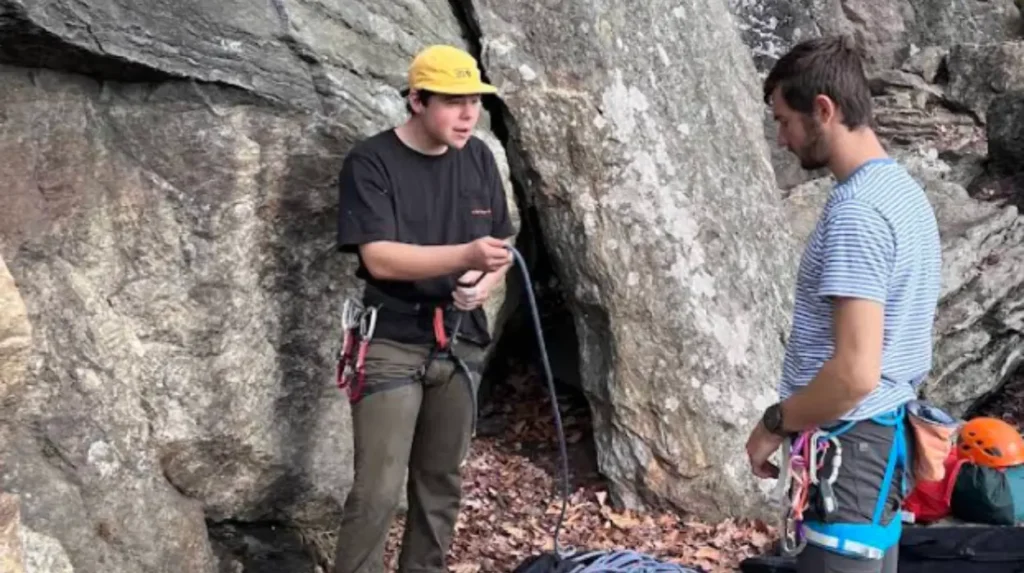
The termination point of every sport route at Rumney Rocks is a fixed anchor system bolted into the rock face. These anchor systems typically consist of two heavy-duty steel bolts positioned horizontally or vertically between 8 and 12 inches apart. Connected to these bolts are modern lowering configurations, which include steel chain links, cold shuts, or heavy-duty steel carabiners. When a lead climber reaches the top of a route, they do not lower directly off the fixed permanent hardware while their partner is top-roping. Instead, the climber installs two independent quickdraws into the anchor bolts to serve as the primary wear points for the duration of the session.
Using two quickdraws at the anchor satisfies the fundamental safety principle of redundancy. If one quickdraw components experience an unforeseen structural failure, the second independent quickdraw prevents a catastrophic system collapse. The two quickdraws must be positioned with their carabiner gates facing in opposite directions and opposing orientations. This gate-opposed configuration prevents the climbing rope from accidentally rubbing against a gate mechanism and unclipping itself during movement. Only the final climber of the day removes these two personal quickdraws and threads the rope directly through the permanent metal fixtures to clean the route and lower back to the ground.
Explore More Area Guide
Rumney Hall History and Current Ownership Explained for Readers
Did Shirley Bassey Really Live in Rumney, Cardiff?
What Mechanical and Safety Standards Define a Reliable Sport Climbing Quickdraw?
An optimal sport climbing quickdraw features strong aluminum carabiners certified by the International Climbing and Mountaineering Federation and a thick, rigid polyester dogbone that resists twisting during high-stress clipping maneuvers.
The International Climbing and Mountaineering Federation, known globally as the UIAA, establishes rigid structural requirements for all personal protective equipment used in vertical sports. According to UIAA standard 121, a sport climbing carabiner must withstand a minimum major-axis closed-gate force of 20 kilonewtons, which equates to roughly 4,500 pounds of static weight. Furthermore, the carabiner must support a minor-axis force of 7 kilonewtons and an open-gate force of 7 kilonewtons. Falls at Rumney Rocks can generate dynamic forces between 4 and 7 kilonewtons depending on rope elongation, climber weight, and fall distance, making UIAA certified hardware mandatory for survival.
A technical quickdraw is assembled with two specialized carabiners designed for distinct functions:
- The Bolt-End Carabiner: This carabiner features a solid, straight gate and is designed to clip directly into the steel hanger attached to the rock. The interior basket shape allows the carabiner to shift freely within the bolt hanger without binding or loading awkwardly against the rock surface.
- The Rope-End Carabiner: This carabiner incorporates a curved or bent gate mechanism. The concave curve of the gate guides the climbing rope directly into the basket during a clip, minimizing the effort required by the climber’s hand.
Connecting these two components is the dogbone webbing, which is typically constructed from heavy-duty stitched nylon or variable-width polyester. For sport climbing at Rumney Rocks, thick dogbones measuring 18 to 25 millimeters wide are preferred over ultra-lightweight, skinny dyneema bands. Thick dogbones provide structural rigidity, which prevents the quickdraw from spinning or flapping in high winds or during desperate clips. Additionally, the bottom loop of the dogbone features an internal rubber positioning element, often called a keeper or string, that firmly locks the rope-end carabiner into a fixed orientation, ensuring the gate remains perfectly positioned for instantaneous rope clipping.
How Do Environmental Conditions and Rock Geometry Impact Equipment Wear at Rumney Rocks?
The highly abrasive nature of Plymouth schist combined with local atmospheric moisture accelerates mechanical wear, requiring meticulous gear inspections to detect structural grooving and sharp burrs on carabiner baskets.
Plymouth schist contains high concentrations of quartz, mica, and feldspar minerals. These mineral crystals form a rugged, sandpaper-like surface that grinds against metal equipment when quickdraws shift under tension. When a leader falls or lowers off a route, the highly tensioned climbing rope drags microscopic particles of rock dust through the aluminum alloy basket of the rope-end carabiner. Over time, this abrasive process cuts deep, localized channels into the metal, a condition known as rope grooving. Once a groove develops a sharp edge, it can act as a blade, slicing into the synthetic fibers of a climbing rope during a subsequent fall.
Environmental moisture in central New Hampshire further alters equipment longevity. Rumney Rocks experiences high relative humidity throughout the summer climbing season, alongside regular rain cycles that seep through rock fractures, creating active water seeps on popular cliffs. When aluminum carabiners remain in contact with damp steel bolt hangers for extended periods, or when gear is stored wet, it can trigger galvanic and atmospheric corrosion. Climbers must check for the following red flags during regular gear audits:
- Sharp Burrs: Jagged metal protrusions on the bolt-end carabiner caused by metal-on-metal friction against rough steel bolt hangers.
- Gate Sluggishness: Internal spring corrosion or dirt accumulation within the hinge mechanism that prevents the gate from snapping completely shut instantly.
- Webbing Degradation: Fraying, fuzzy textures, or severe color fading on the dogbone caused by mechanical abrasion against schist and ultraviolet radiation from the sun.
Any quickdraw displaying a rope groove deeper than 1 millimeter, a sticky or non-returning gate mechanism, or broken structural threads in the dogbone webbing must be retired from service and destroyed immediately.
What Specialized Quickdraw Techniques Refine Performance on Steep Schist?
Utilizing pre-placed perma-draws on highly overhanging ceilings and deploying alpine draws on wandering terrain drastically improves safety margins and energy conservation on advanced Rumney routes.
On severely overhanging routes located at elite crags like the Waimea cave or the central belly of Orange Crush, removing quickdraws after climbing is exceptionally difficult due to the massive horizontal displacement from the anchor line. Consequently, the local climbing community maintains pre-placed, semi-permanent quickdraws, known as perma-draws, on these specific lines. Perma-draws utilize thick steel cables or heavy-duty industrial chain links instead of nylon textile dogbones, and they feature thick steel carabiners designed to withstand years of high-impact falls and continuous rope friction without developing dangerous grooves. When a climber tackles these routes, they do not carry a full rack of personal quickdraws on their harness; they only carry enough equipment to secure the final anchor system.
For wandering routes that snake left and right across complex schist features rather than following a strict vertical path, elite climbers utilize adjustable quickdraws known as alpine draws. An alpine draw consists of a single 60-centimeter tubular low-bulk polyethylene sling tripled over and clipped into two lightweight wire-gate carabiners. When a route changes direction sharply around a prominent rib or prow of rock, the climber unclips two loops of the sling, instantly extending the quickdraw to its full 60-centimeter length. This rapid extension eliminates severe rope kinks, reduces localized friction against the rock face, and prevents the lower carabiner from being loaded over a sharp edge, preserving the dynamic integrity of the entire safety chain.
What Long-Term Structural and Legal Elements Maintain the Rumney Bolt Infrastructure?
The physical safety of sport climbing at Rumney Rocks relies entirely on volunteer-driven replacement initiatives managed by local non-profit groups using high-grade stainless steel hardware.
Because sport climbing quickdraws must clip into pre-installed rock anchors, the mechanical safety of the sport is inextricably linked to the structural integrity of the bolts drilled into the Plymouth schist. Industrial infrastructure testing demonstrates that older carbon steel mechanical wedge anchors deteriorate rapidly when exposed to acidic forest soil runoff and freeze-thaw cycles common to New Hampshire winters. To counter this environmental degradation, the Rumney Climbers Association, a grassroots non-profit organization founded in the early 1990s, coordinates systematic anchor replacement campaigns throughout the park.
Modern standard installations utilize 1/2-inch diameter stainless steel mechanical expansion bolts or 10-millimeter titanium glue-in anchors embedded deep into the solid rock matrix using high-strength structural epoxy. These materials resist stress-corrosion cracking and provide an ultimate shear strength exceeding 30 kilonewtons. Furthermore, because Rumney Rocks resides within the White Mountain National Forest, all route maintenance and resource protection strategies are executed in accordance with federal land management guidelines and volunteer service agreements. This structured management paradigm ensures that the physical interface between the climber’s quickdraw and the ancient schist wall remains fundamentally secure for future generations of vertical athletes.
How many quickdraws do you need for Rumney Rocks?
Most sport climbing routes at Rumney Rocks can be climbed safely with 12 quickdraws. However, the longest single-pitch routes may require up to 16 quickdraws, including the anchor setup at the top of the climb.