
The best fish & chips in Rumney are located along Newport Road and Wentloog Road, where established traditional fish bars serve sustainably sourced, fresh Atlantic cod, haddock, and fresh-cut British potatoes cooked daily in high-grade vegetable oil or traditional beef dripping.
- What makes traditional Cardiff fish and chips unique in Rumney?
- How is authentic British fish and chips prepared step by step?
- What are the key ingredients used in top-quality fish and chips?
- What is the history of fish and chips in South Wales and Rumney?
- What are the nutritional values and dietary facts of fish and chips?
- How do you choose the best fish and chip shop in Rumney?
- What side dishes and sauces are traditionally paired with fish and chips?
- How do takeaway practices impact the environmental sustainability of fish and chips?
- What is the future outlook for traditional fish and chip shops in Cardiff?
Rumney, a suburban community located in eastern Cardiff, Wales, hosts several long-standing, family-operated fish and chip shops that adhere to classic British frying techniques. These establishments cater to local residents, commuters travelling along the A48 and A4161 corridors, and visitors exploring eastern Cardiff. The primary hubs for these eateries are concentrated around main commercial thoroughfares: Newport Road, Wentloog Road, and the immediate surrounding neighborhoods of Llanrumney and Trowbridge.
Selecting the premier option depends on key culinary metrics: batter crispness, fish freshness, potato variety, frying media, and hygiene ratings certified by the Food Standards Agency (FSA). Local establishments compete on consistency, portion sizing, and speed of service, with high-performing shops maintaining a 5-star FSA rating.
The top-rated takeaway options in the area include:
- The Codfather Rumney (Newport Road): Known for double-cooked chips and wild-caught Atlantic cod.
- Rumney Fish Bar (Wentloog Road): A neighbourhood staple recognized for traditional Welsh savouries and thick-cut batter.
- Albany Fish Bar (Serving the broader East Cardiff area): Widely referenced for fast customer turnover and consistent frying temperatures.
What makes traditional Cardiff fish and chips unique in Rumney?
Cardiff fish and chips in Rumney combine classic Anglo-Welsh frying traditions, featuring locally sourced Maris Piper potatoes, sustainably caught North Atlantic whitefish, regional accompaniments like Clark’s Pies and Welsh dark curry sauce, and a commitment to high-temperature continuous frying.
The culinary tradition of fish and chips in South Wales carries specific regional variations that differentiate it from English coastal standard offerings. In Rumney, local takeaways integrate regional food products directly into their standard menus. Chief among these regional staples is the Clark’s Pie—a famous Cardiff savory pie featuring a thick pastry crust filled with minced beef, vegetables, and rich gravy—which is sold in almost every traditional fish bar in the area.
Another distinct regional feature is the sauce selection. Takeaways in eastern Cardiff serve specific varieties of curry sauce, predominantly divided into standard mild English curry and a darker, spicier “Irish Curry Sauce” formulation. Additionally, pickled items such as pickled eggs, pickled onions, and giant pickled gherkins (wallys) are served as standard sides.
The physical preparation of the batter in South Wales takeaways leans toward a slightly thicker, yeast- or beer-leavened style that traps steam inside the fish, effectively poaching the flesh while maintaining a crisp outer shell.
How is authentic British fish and chips prepared step by step?
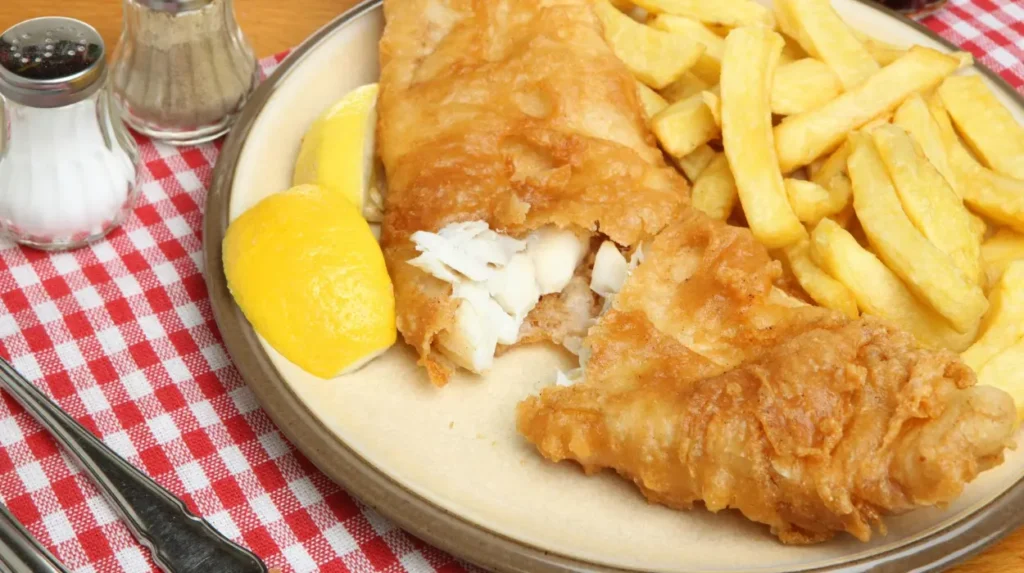
Authentic British fish and chips are prepared by skinning and deboning fresh whitefish, coating it in a simple flour and liquid batter, peeling and chopping British potatoes into thick chips, and deep-frying both elements separately in precise, high-temperature vegetable oil or tallow.
The preparation of high-quality fish and chips relies on strict temperature management, specific ingredient processing, and precise timing. The mechanical and chemical steps involved in the traditional frying process ensure the exterior remains crisp while the interior retains moisture.
The Preparation Process
- Potato Processing: Fresh potatoes are fed through a mechanical peeler and cut into chips with a minimum cross-section of 15 millimeters to 18 millimeters. Thick cuts prevent excess oil absorption.
- Soaking and Starch Removal: The cut chips are submerged in cold water baths to wash away excess surface starches, preventing the chips from burning or sticking together during cooking.
- Blanching (First Fry): Chips undergo an initial cooking cycle at a lower oil temperature of approximately 140°C (284°F) until cooked through but unbrowned.
- Fish Batter Application: Fresh fish fillets are lightly dusted with dry flour to absorb surface moisture, then immersed in a wet batter composed of flour, water, baking powder, and occasionally carbonated water or beer.
- High-Temperature Frying (Second Fry): The battered fish and blanched chips are fried in separate pans at high temperatures ranging between 180°C and 190°C (356°F to 374°F). The high heat instantly sets the batter, creating a waterproof steam seal around the fish.
- Draining and Resting: The fried items are lifted from the oil, drained on heated wire racks for 30 to 60 seconds to release excess oil, and transferred to a heated display pass.
What are the key ingredients used in top-quality fish and chips?
Top-quality fish and chips require fresh Atlantic cod or haddock, high-starch potatoes such as Maris Piper or Markies, a flour and carbonated liquid batter, and high-smoke-point frying oils like sustainable palm oil, rapeseed oil, or refined beef dripping.
The quality of the final meal is determined by four foundational ingredients, each serving a specific culinary and structural function.
Primary Ingredients
- The Fish: Atlantic cod (Gadus morhua) and haddock (Melanogrammus aeglefinus) represent the industry standard. Cod offers a mild, sweet flavor with large, soft flakes. Haddock features a slightly firmer texture and a subtly stronger, sweeter flavor profile.
- The Potatoes: High-starch, low-sugar potato varieties are essential. Recommended British varieties include Maris Piper, Markies, Agria, and Victoria. High starch content yields a fluffy interior texture, while low sugar content prevents early browning before the chip is fully cooked.
- The Batter Mix: Traditional batter relies on wheat flour, salt, baking soda (sodium bicarbonate), and cold liquids. Carbonated water or beer introduces carbon dioxide bubbles, which expand quickly during frying, producing a light, crispy texture rather than a heavy, dense coating.
- The Frying Medium: Traditional establishments utilize beef dripping (rendered beef tallow) for a deep, savory flavor profile. Modern shops frequently use pure vegetable oils, refined rapeseed oil, or sustainable palm oil to accommodate vegetarian dietary requirements and lower saturated fat content.
What is the history of fish and chips in South Wales and Rumney?
Fish and chips originated in the 1860s in England, spreading rapidly to South Wales during the industrial revolution to feed coal miners, dockworkers, and industrial laborers, evolving into a fundamental dietary staple across Cardiff communities like Rumney.
The history of fish and chips in South Wales is tied to the industrialization of the region in the late 19th and early 20th centuries. The rapid growth of the Cardiff Docks—which became one of the largest coal-exporting ports in the world—led to a population influx and an urgent demand for quick, cheap, high-calorie hot food for working-class families.
The expansion of the British railway network in the mid-19th century allowed fresh whitefish caught in the North Sea and North Atlantic to be transported rapidly inland to industrial centers. Simultaneously, the development of steam trawling increased fish supply, lowering prices significantly.
As Cardiff expanded eastward along the Newport Road transport corridor throughout the 20th century, residential developments in Rumney, Llanrumney, and Trowbridge grew. Fish and chip shops opened along these primary commuter routes to serve the expanding suburban population. Italian and Greek-Cypriot immigrant families played a major historical role in establishing fish bars across South Wales during this period, introducing professional frying equipment, commercial ranges, and structured service models that define the local industry today.
What are the nutritional values and dietary facts of fish and chips?
A standard portion of fish and chips contains approximately 800 to 1,200 calories, providing 40 to 60 grams of protein, essential omega-3 fatty acids, iodine, vitamin B12, and complex carbohydrates derived from whole-potato preparations.
Despite its reputation as a fast-food dish, traditionally prepared fish and chips consists of whole, unprocessed primary ingredients: real fish fillets and sliced potatoes. The nutritional profile varies depending on portion size, batter thickness, oil type, and drainage efficiency.
Health and Dietary Characteristics
- Protein Density: Atlantic cod and haddock are lean sources of complete protein, containing all essential amino acids necessary for human tissue repair and muscle maintenance.
- Micronutrient Content: Whitefish delivers natural iodine, which supports thyroid function, along with selenium, phosphorus, and vitamin B12.
- Fat Absorption Control: Proper frying techniques maintained at 180°C or higher create an immediate steam barrier that prevents oil from deeply penetrating the fish flesh. Lower frying temperatures increase fat absorption significantly.
- Dietary Variations: Modern takeaways in Cardiff increasingly offer gluten-free batter days (utilizing rice flour or cornstarch blends) and vegetable-oil-only frying lines to accommodate gluten sensitivities and vegetarian diets.
How do you choose the best fish and chip shop in Rumney?
Choose the best fish and chip shop in Rumney by checking Food Standards Agency hygiene ratings, inspecting the clarity and temperature of the frying oil, confirming fresh potato usage, observing customer turnover rates, and evaluating batter texture.
Identifying high-performance fish bars requires reviewing operational standards and physical quality indicators. Evaluating these criteria ensures food safety, optimal taste, and proper texture.
Quality Evaluation Checklist
- Food Hygiene Rating: Verify that the establishment displays a Food Standards Agency rating of 5 (Very Good). This rating covers food handling cleanliness, structural hygiene, and safety management processes.
- High Customer Turnover: Busy shops cook fish to order or maintain rapid stock rotation. Freshly fried fish served within five minutes of leaving the oil avoids soggy batter caused by trapped moisture.
- Oil Quality and Smell: Clean frying oil yields a crisp, golden batter with a neutral aroma. Dark, smoking oil indicates chemical breakdown, leading to bitter-tasting, dark brown batter and greasy food.
- In-House Potato Processing: Quality takeaways process raw British potatoes daily using on-site rumblers and chippers rather than relying on pre-frozen, chemically treated chip imports.
- Menu Transparency: Reliable shops clearly state the specific fish species served (such as Cod or Haddock) rather than using generic terms like “whitefish,” and explicitly detail whether their oil medium is animal- or plant-based.
What side dishes and sauces are traditionally paired with fish and chips?
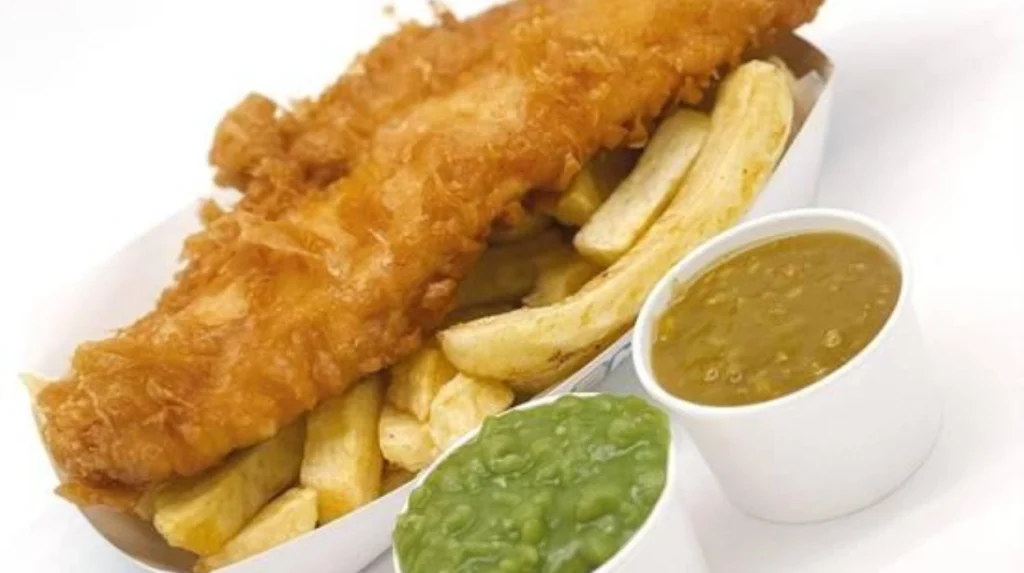
Traditional side dishes paired with fish and chips include mushy peas, Irish curry sauce, gravy, pickled onions, pickled eggs, wallys (gherkins), Clark’s Pies, and classic condiments like malt vinegar and sea salt.
Side dishes and condiments are central to the overall British fish and chip meal, balancing the rich, savory profile of the fried components with acidity, moisture, and spice.
Classic Accompaniments
- Mushy Peas: Marrowfat peas soaked overnight in water and sodium bicarbonate, then simmered until soft and creamy. They provide a sweet, earthy contrast to savory fried batter.
- Curry Sauce: A British takeaway staple. In Cardiff, takeaways serve two main variations: a mild, sweet English fruit-curry sauce and a darker, pepper-rich “Irish Curry” style that delivers a stronger heat profile.
- Malt Vinegar and Salt: Standard table condiments applied immediately after cooking. The acetic acid in malt vinegar cuts through fat, while coarse salt enhances flavor perception.
- Pickled Goods: Pickled eggs, large pickled onions, and pickled gherkins (wallys) provide high acidity that cleanses the palate between bites of fish and chips.
- Gravy: A thick, rich meat-flavored sauce widely ordered over chips across Wales and Northern England.
Explore More Area Guide
Independent Cafés in Roath Guide – Cardiff 2026
Guide to the Best Family Butchers in Whitchurch Cardiff 2026
How do takeaway practices impact the environmental sustainability of fish and chips?
Takeaway practices impact sustainability through wild-caught fishery certifications like the Marine Stewardship Council (MSC), biodegradable or recyclable packaging materials, efficient oil recycling into biofuel, and energy-efficient induction frying equipment.
The modern fish and chip industry interacts directly with global marine ecosystems, agricultural supply chains, waste management systems, and municipal energy networks. Local businesses in Rumney increasingly adopt sustainable operational practices to minimize their environmental footprint.
Environmental Dimensions
- Sustainable Seafood Sourcing: Responsible fish bars source cod and haddock from certified sustainable fisheries, particularly those monitored by the Marine Stewardship Council (MSC). These fisheries enforce strict catch quotas to prevent overfishing in Atlantic waters.
- Packaging Materials: The industry has largely transitioned away from expanded polystyrene (EPS) trays toward recyclable cardboard boxes, unbleached greaseproof paper, and biodegradable paper bags. Cardboard boxes also preserve crispness by allowing steam to escape through ventilation slits.
- Waste Oil Recycling: Commercial takeaways generate significant volumes of used cooking oil. Reputable shops partner with licensed waste management services to collect used fats and process them into biodiesel, reducing fossil fuel reliance and protecting municipal sewage systems from grease blockages.
- Energy-Efficient Frying Technology: Modern high-efficiency gas and induction frying ranges reduce carbon emissions and gas consumption by up to 50 percent compared to older ranges, maintaining precise temperatures with lower energy input.
What is the future outlook for traditional fish and chip shops in Cardiff?
The future of fish and chip shops in Cardiff relies on adapting to rising ingredient costs, adopting digital ordering platforms, expanding vegan and gluten-free menu options, and investing in energy-efficient cooking technology to maintain economic viability.
Traditional fish and chip shops face evolving economic and consumer landscapes in eastern Cardiff and across the broader United Kingdom. Business operators must adapt to shifting supply chain dynamics, changing dietary preferences, and technological advancements while maintaining the core appeal of their traditional product.
Key Trends Shaping the Sector
- Supply Chain Diversification: Fluctuations in global whitefish supplies and fuel prices encourage shops to offer alternative, highly sustainable fish species alongside cod and haddock, such as line-caught hake, pollack, and coley.
- Dietary Inclusivity: Consumer demand drives takeaways to implement strict allergen controls. Establishing dedicated gluten-free fryers allows shops to safely serve celiac customers without cross-contamination risks.
- Digital Integration: The adoption of online delivery aggregators, dedicated shop ordering apps, and digital point-of-sale systems streamlines order processing, reducing wait times and expanding takeaway delivery radii across eastern Cardiff.
- Operational Efficiency: Rising utility costs necessitate capital investment in smart heat-retention frying equipment, automated oil filtration systems, and solar energy installations, helping small business owners preserve operational margins over time.
Where can I find the best fish and chips in Rumney, Cardiff?
The best fish and chips in Rumney are mainly found around Newport Road and Wentloog Road, where traditional fish bars serve freshly prepared cod, haddock, hand-cut chips, and classic Welsh takeaway accompaniments.