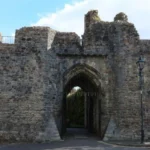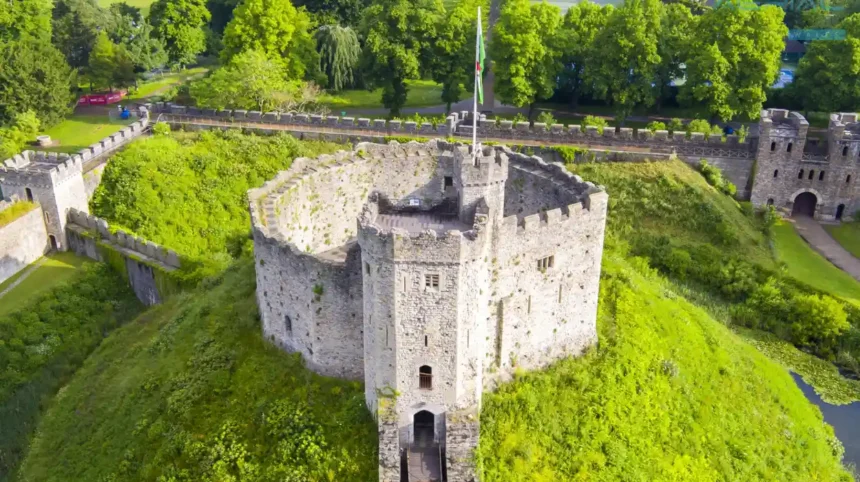
Cardiff Castle stands at the centre of Cardiff and contains nearly two thousand years of history within one compact site. The castle is not a single-period monument. Its archaeology records Roman military occupation, Norman conquest, medieval lordship, Victorian architectural transformation, landscaped estate development, and Second World War civil defence.
- What is Cardiff Castle and why is it historically important?
- When did Cardiff Castle first become a fortress?
- What are the main architectural layers inside Cardiff Castle?
- What is the secret behind Cardiff Castle’s Norman keep?
- Why are Cardiff Castle’s Victorian rooms considered architectural secrets?
- How did Cardiff Castle become an air-raid shelter?
- What hidden details make Cardiff Castle different from other British castles?
- How should visitors understand the different parts of Cardiff Castle?
- Why does Cardiff Castle still matter to Cardiff today?
- What are the most important Cardiff Castle secrets to remember?
The site occupies a strategic position beside the River Taff and close to Cardiff’s historic settlement. Its location explains much of its importance. Control of the area provided access to routes across South Wales and supported the development of Cardiff as a major settlement.
The most interesting Cardiff Castle secrets are found in the layers beneath and behind its familiar appearance. Roman fortifications survive within the medieval and Victorian complex. The Norman keep sits on an artificial mound. Victorian rooms contain elaborate decoration created for the Marquesses of Bute. Long tunnels within the castle walls later became wartime air-raid shelters.
Understanding these features requires separating the castle’s history into distinct periods. Each period added structures, changed functions, or reused earlier remains.
What is Cardiff Castle and why is it historically important?
Cardiff Castle is a historic fortification in central Cardiff, Wales, with Roman, medieval, Victorian, and wartime layers. Its surviving walls, towers, apartments, shelters, and grounds document nearly two thousand years of military, political, architectural, and civic development.
Cardiff Castle occupies approximately 30 acres in the heart of the Welsh capital. Its position makes it one of the most prominent historic sites in central Cardiff. The castle is also unusual because several major historical periods remain physically visible within the same grounds.
The earliest substantial occupation was Roman. Roman military forces established a fort at Cardiff during the first century AD. The Roman settlement developed around a strategically important position near the River Taff.
The Norman period introduced a new defensive system. After the Norman conquest of England in 1066, Norman forces expanded their control into Wales. Around 1081, William the Conqueror reached Cardiff during his campaign in South Wales. A Norman castle was established on the site, creating the foundation for the medieval fortification.
The castle subsequently passed through powerful aristocratic families. The de Clare family became particularly important during the medieval period. Gilbert de Clare, 8th Earl of Gloucester, controlled Cardiff Castle during the early fourteenth century and strengthened the wider lordship.
Later ownership passed through several influential families before the estate became associated with the Bute family. The Bute connection transformed the castle dramatically during the eighteenth and nineteenth centuries.
The third Marquess of Bute, John Crichton-Stuart, became particularly important to the castle’s modern appearance. His wealth came largely from the industrial development of South Wales and the coal trade. He invested heavily in Cardiff and commissioned extensive architectural work.
Architect William Burges directed much of the nineteenth-century transformation. His approach created highly decorated interiors based on medieval and Gothic Revival influences. These rooms are among the most recognisable features of Cardiff Castle today.
The castle therefore represents more than military history. It records changes in political authority, architecture, wealth, urban development, technology, and public use.
When did Cardiff Castle first become a fortress?
Cardiff Castle began as a Roman fort around the late first century, became a Norman motte-and-bailey stronghold after 1081, and later developed into a powerful medieval residence. Nineteenth-century owners transformed it again through Gothic Revival architecture, landscaping, and elaborate interiors.
Roman military occupation represents the earliest major phase of Cardiff Castle’s history. Archaeological evidence identifies Roman fortifications beneath parts of the present castle complex.
The Roman military presence was connected to the wider Roman occupation of Wales. Roman forces established military bases to control territory, protect communications, and suppress resistance. Cardiff’s position beside the River Taff provided strategic advantages.
Roman Cardiff did not remain unchanged. Military structures were rebuilt and modified as Roman priorities changed. The surviving archaeological evidence therefore represents different stages of Roman occupation rather than one unchanged fort.
After the Norman conquest, the site gained a new defensive purpose. The Norman castle was constructed using the motte-and-bailey system. A motte is a raised artificial mound supporting a defensive structure. A bailey is an enclosed area containing additional buildings and facilities.
The Norman motte remains one of the castle’s defining physical features. The elevated position created a strong defensive advantage. It also made the castle visually dominant over the surrounding settlement.
The medieval castle developed considerably beyond its original Norman form. Stone walls, towers, gateways, domestic buildings, and defensive structures were added over successive generations.
The castle became the administrative centre of the Lordship of Glamorgan. A medieval lordship was a territorial area governed by a lord who exercised political, judicial, economic, and military authority.
Cardiff Castle’s importance therefore increased as Cardiff itself developed. The castle controlled access, supported administration, and demonstrated aristocratic power.
Its later transformation demonstrates how historic buildings change when military priorities decline. The castle gradually became a prestigious residence as defensive requirements became less important.
The Victorian period produced the most visually dramatic changes. The Bute family invested in elaborate architectural interiors, transforming sections of the medieval complex into highly specialised residential and ceremonial spaces.
What are the main architectural layers inside Cardiff Castle?
The castle contains several distinct architectural layers, including Roman defensive remains, a Norman keep, medieval walls, Victorian Gothic Revival rooms, and Second World War air-raid shelters. These components occupy a compact site where military, residential, ceremonial, and defensive functions overlap.
The Roman remains provide the earliest architectural layer. Sections of the Roman defensive line can still be identified within the castle grounds. Archaeological interpretation helps establish the relationship between the Roman fort and later construction.
The Norman keep represents another major layer. It occupies the large central mound and demonstrates the defensive priorities of the eleventh and twelfth centuries.
The medieval walls and towers created a more substantial enclosed fortress. These structures were designed to control movement into and around the castle.
The medieval defensive system included thick masonry, controlled entrances, elevated positions, and strategically placed towers. Such features reflected the military technology and political conditions of medieval Wales.
The Victorian layer is architecturally different. Instead of prioritising defence, it emphasises residence, display, decoration, and status.
William Burges worked with the third Marquess of Bute to remodel parts of the castle during the nineteenth century. Burges designed interiors that combined Gothic Revival architecture with elaborate historical and symbolic decoration.
The result includes richly decorated rooms, carved timber, painted ceilings, stained glass, fireplaces, sculptures, murals, and detailed stonework.
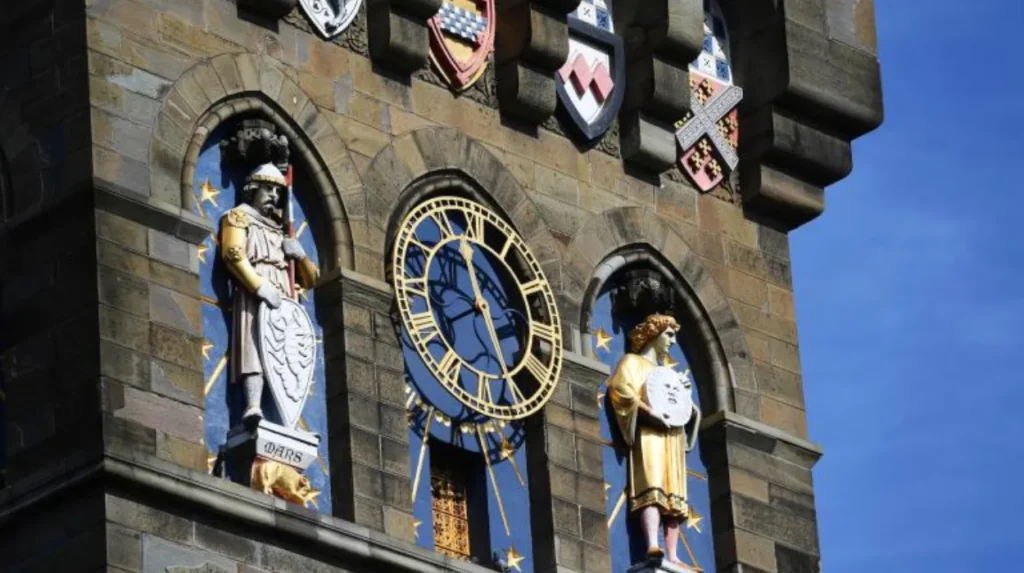
The Clock Tower is another important Victorian feature. It forms part of the outer castle landscape and is one of Cardiff Castle’s most recognisable structures. Its design reflects the Gothic Revival style associated with Burges and the Bute period.
The wartime layer adds another transformation. During the Second World War, sections of the castle’s outer walls were adapted as air-raid shelters.
These shelters demonstrate adaptive reuse. Adaptive reuse occurs when an existing structure is given a new function instead of being used exclusively for its original purpose.
Cardiff Castle therefore contains architecture created for military defence, aristocratic residence, architectural display, and civilian protection.
What is the secret behind Cardiff Castle’s Norman keep?
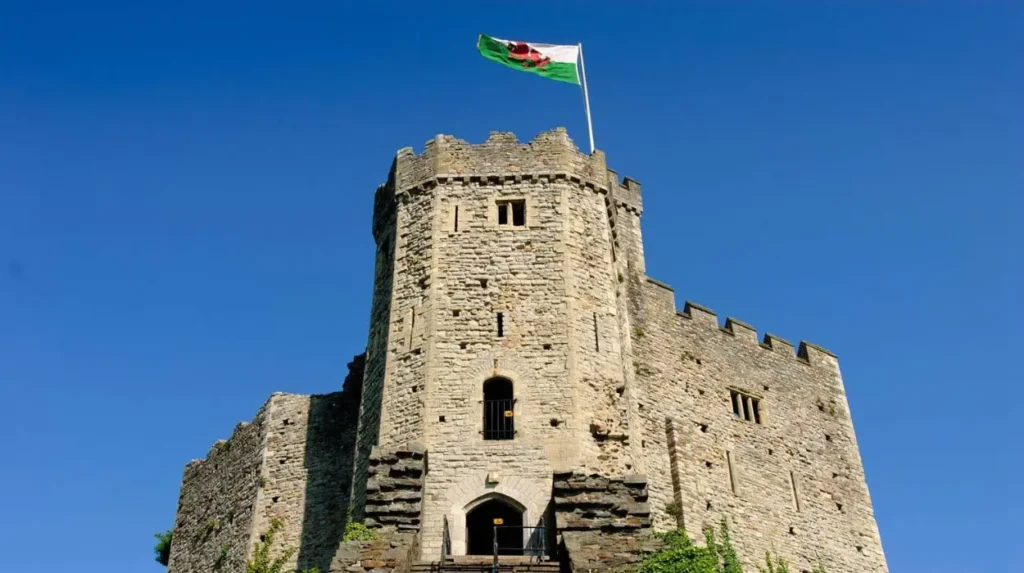
The castle’s Norman keep is one of its defining structures, standing on a substantial artificial mound within the grounds. The keep used elevated defensive positioning, thick masonry, and controlled access to protect its occupants and command the surrounding settlement.
The Norman keep is positioned on the castle’s central motte. The mound itself is an important archaeological feature because it demonstrates the construction methods used by Norman castle builders.
Building a motte required substantial quantities of earth and material to create an elevated platform. The raised position improved visibility and made direct assault more difficult.
The keep developed as a fortified stronghold rather than a decorative residence. Its elevated location allowed defenders to monitor approaches to the castle and surrounding settlement.
The surviving remains do not represent every feature of the original Norman building. Centuries of alteration changed the appearance and condition of the structure.
The keep also demonstrates an important principle in medieval fortification. Defence relied on several combined features rather than a single wall or tower. Height, restricted access, strong masonry, enclosed spaces, and visibility worked together.
Cardiff Castle’s location added another strategic advantage. The River Taff provided a natural geographical feature near the settlement. Cardiff’s position also connected routes across Glamorgan.
The keep should therefore be understood as part of a larger defensive landscape rather than an isolated tower.
The motte itself is also historically significant. Earthwork structures often survive differently from stone buildings because later construction can incorporate or obscure earlier features.
The relationship between the motte, keep, bailey, and later walls explains why Cardiff Castle has such a complex archaeological character.
Modern visitors see a historic monument, but the underlying structure records repeated rebuilding. Each generation inherited an existing site and adapted it to new military or residential requirements.
Why are Cardiff Castle’s Victorian rooms considered architectural secrets?
Cardiff Castle contains lavish Victorian interiors created during the nineteenth century, especially under John Crichton-Stuart, 3rd Marquess of Bute, and architect William Burges. Their work introduced richly decorated rooms featuring sculpture, stained glass, painted surfaces, timber carving, and medieval-inspired design.
The Victorian interiors are among Cardiff Castle’s most distinctive features because they differ sharply from the defensive architecture outside.
John Crichton-Stuart, 3rd Marquess of Bute, inherited enormous wealth associated with the South Wales coal industry. His financial resources supported extensive architectural projects in Cardiff and beyond.
William Burges became one of the principal architects responsible for the castle’s transformation. His work began at Cardiff Castle during the nineteenth century and continued through a series of highly detailed interior projects.
Burges drew heavily from Gothic Revival principles. Gothic Revival architecture was a nineteenth-century movement that revived medieval architectural forms, decorative methods, and visual themes.
The interiors were designed as complete environments. Decoration extended across ceilings, walls, floors, furniture, fireplaces, doors, windows, and decorative objects.
The Arab Room is particularly notable for its elaborate decorative scheme. It contains intricate surfaces, detailed patterns, and a strongly ornamental interior.
The Banqueting Hall is another major space. Its decoration incorporates medieval themes and monumental architectural features.
The library and other private rooms demonstrate how the castle functioned as an aristocratic residence rather than simply as a preserved fortress.
The decorative programme also reflects Victorian attitudes toward history. Medieval architecture was reinterpreted rather than simply copied. Designers selected historical forms and combined them with contemporary craftsmanship.
The castle’s interiors therefore provide evidence about nineteenth-century wealth and taste as well as medieval history.
The Bute family used architecture to express status, cultural interests, and wealth. Cardiff Castle became an important symbol of the family’s position in industrial-era South Wales.
The interiors also demonstrate the relationship between industrial wealth and architectural patronage. Cardiff’s expansion as a major coal-exporting port generated enormous fortunes, and some of that wealth was invested in monumental architecture.
How did Cardiff Castle become an air-raid shelter?
Cardiff Castle became an important wartime refuge when its walls and internal shelters protected local residents during Second World War bombing raids. The castle’s air-raid shelters formed part of Cardiff’s wider civil-defence system and demonstrate how historic buildings gained new functions during wartime.
The Second World War created a completely different role for Cardiff Castle. Cardiff was an important industrial and port city, making it a target during German bombing campaigns.
The city contained docks, railway infrastructure, industrial facilities, warehouses, and transport connections. These facilities contributed to Cardiff’s strategic importance during wartime.
The castle’s thick outer walls provided suitable areas for adaptation as protected shelter space. Long sections of the walls contained passageways that were used as air-raid shelters.
The shelters could accommodate large numbers of people during bombing raids. Contemporary historical accounts record capacity for approximately 1,800 people within the castle’s shelter system.
People using the shelters required protection from falling debris and blast effects. The castle’s substantial masonry provided a degree of physical protection.
The wartime shelters also reveal the practical importance of historic buildings during emergencies. The castle was no longer primarily a medieval fortress, yet its defensive construction remained useful.
Cardiff experienced significant bombing during the Second World War, particularly during the Cardiff Blitz. The bombing damaged parts of the city and caused civilian casualties.
The castle’s shelter spaces therefore form an important part of Cardiff’s twentieth-century social history.
Their significance extends beyond military history. They record how ordinary residents experienced wartime danger and how local authorities used available infrastructure to protect civilians.
The tunnels are among the most important hidden spaces associated with Cardiff Castle because they connect the ancient defensive character of the site with modern civil defence.
This adaptation also demonstrates why historic buildings should not be understood as frozen monuments. Their functions change as societies face new circumstances.
Explore more Area Guide
Cardiff High School Admissions Guide for Parents in Cardiff Today
Clifton Street Businesses in Cardiff: Shops, Cafés and Services
What hidden details make Cardiff Castle different from other British castles?
Cardiff Castle’s significance comes from the combination of archaeological remains, medieval fortification, Victorian architecture, landscaped grounds, and wartime history. The site connects Roman Cardiff, Norman conquest, medieval lordship, industrial-era wealth, civic development, and twentieth-century civil defence.
One important hidden detail is the number of historical periods represented within a relatively small area. A visitor can encounter Roman archaeology, Norman earthworks, medieval masonry, Victorian architecture, and wartime shelters during the same visit.
The Roman remains are especially important because they establish Cardiff’s military significance before the Norman conquest.
Another important detail is the survival of the Norman motte. The artificial mound remains a visible reminder of medieval castle-building techniques.
The medieval castle also demonstrates how aristocratic power operated in medieval Glamorgan. Cardiff Castle was connected to the administration of the surrounding lordship and the control of territory.
The Victorian transformation represents a completely different purpose. The castle became a fashionable aristocratic residence with rooms designed for dining, entertainment, study, and private life.
The Bute period also connects the castle to Cardiff’s industrial development. The wealth generated by coal helped fund major architectural projects across the city.
The Clock Tower represents this Victorian transformation particularly clearly. Its ornate design contrasts with the utilitarian appearance expected from a military fortress.
The wartime shelters create another unexpected connection. Medieval defensive walls later became civilian protection during twentieth-century bombing.
The castle’s grounds also contain evidence of changing ideas about landscape design. Victorian landscaping created formal spaces that complemented the architecture.
The site’s historical importance therefore comes from continuity and change. Structures were not simply demolished and replaced. Earlier features were frequently incorporated into later developments.
This layered character makes Cardiff Castle valuable for archaeology, architecture, military history, social history, and urban history.
How should visitors understand the different parts of Cardiff Castle?
Visitors can understand Cardiff Castle by moving from the Roman foundations and medieval fortifications to the Victorian apartments, grounds, and wartime shelters. The site rewards close attention to changes in materials, construction, decoration, defensive planning, and later adaptation.
A useful way to understand the castle is to begin with chronology rather than appearance. The oldest surviving evidence relates to Roman military occupation.
The next major stage is the Norman conquest and construction of the motte-and-bailey castle. The keep and earthwork mound provide the clearest physical evidence of this period.
The medieval walls and towers show how the fortress developed into a more substantial defensive and administrative complex.
The Victorian interiors should then be considered separately because they represent a major change in purpose. The castle became a residence designed around wealth, comfort, decoration, and social status.
William Burges’s interiors are particularly important because they demonstrate how nineteenth-century architects interpreted medieval design.
The Clock Tower and surrounding grounds provide additional evidence of the Victorian transformation. The architecture was intended to be visually impressive as well as historically evocative.
The wartime shelters complete the chronological picture. They demonstrate how the castle remained useful during a period when its original military function had disappeared.
Visitors should also distinguish between original medieval construction and later restoration or alteration. Historic buildings often contain reconstructed elements because preservation requires repair.
The castle’s architecture is therefore best understood through layers rather than a single date.
For history enthusiasts, the site provides evidence of military strategy, aristocratic government, industrial wealth, architectural design, and wartime civilian life.
For architecture enthusiasts, the contrast between the Norman keep and Burges’s interiors demonstrates how radically the meaning of a historic building can change.
For people interested in Cardiff’s development, the castle provides a physical link between the city’s Roman origins and its emergence as a major modern Welsh capital.
Why does Cardiff Castle still matter to Cardiff today?
Cardiff Castle remains important because it preserves evidence of the city’s Roman foundation, Norman conquest, medieval governance, Victorian industrial wealth, architectural development, and wartime experience. Its layered history provides a direct connection between Cardiff’s ancient past and its modern identity.
Cardiff Castle occupies an important position in the modern city. It stands close to Cardiff’s commercial centre, civic institutions, cultural venues, parks, and transport connections.
Its survival demonstrates the importance of heritage within an expanding urban environment. Modern Cardiff developed around a site with roots extending back almost two thousand years.
The castle also helps explain why Cardiff became strategically important. Its location near the River Taff supported settlement, transport, administration, and military control.
The medieval period established Cardiff as an important centre within Glamorgan. Later industrial development transformed the city into a major coal-exporting port.
The Bute family played a major role in that transformation. Their architectural investment left a lasting mark on Cardiff, with the castle representing one of the most visible examples.
The Victorian interiors also preserve evidence of nineteenth-century craftsmanship. Carving, stained glass, painted decoration, stonework, and metalwork demonstrate the complexity of high-status architecture during the period.
The wartime shelters add a social dimension. They preserve evidence of how Cardiff residents faced aerial bombing and relied on existing structures for protection.
The castle therefore represents both elite and public history. Its Victorian rooms record aristocratic life, while its wartime shelters record civilian experience.
Its archaeological remains provide another layer by showing that Cardiff existed as a strategically significant location long before the modern city emerged.
The castle’s continued preservation also supports historical research. Archaeology, architectural conservation, documentary research, and heritage interpretation all contribute to understanding the site.
Its future relevance comes from this layered evidence. Cardiff continues to change, but the castle preserves physical evidence of earlier stages of that development.
What are the most important Cardiff Castle secrets to remember?
Cardiff Castle is a layered historic site rather than a single medieval fortress. Its Roman foundations, Norman keep, medieval walls, Victorian interiors, landscaped grounds, and wartime shelters reveal how one Cardiff location served different purposes across nearly two thousand years.
The first key fact is the Roman origin. The site began as a Roman military position and later became part of the developing settlement.
The second key fact is the Norman transformation. After 1081, Norman rulers established a castle using the motte-and-bailey system. The surviving mound remains one of the clearest physical reminders of this phase.
The third key fact is medieval development. The castle became an important centre of lordship and administration within Glamorgan.
The fourth key fact is the Bute transformation. The third Marquess of Bute used his considerable industrial wealth to develop Cardiff Castle as an elaborate aristocratic residence.
The fifth key fact is William Burges. His Gothic Revival interiors transformed sections of the castle into highly decorated residential and ceremonial spaces.
The sixth key fact is the wartime shelter system. During the Second World War, the castle’s walls provided protected spaces for civilians during bombing raids.
The seventh key fact is the relationship between the castle and Cardiff itself. The site reflects the city’s development from Roman military settlement to medieval administrative centre, industrial port, and modern Welsh capital.
These layers explain why Cardiff Castle is more than a historic landmark. It is a physical record of changing political power, military technology, architecture, wealth, urban growth, and civilian experience.
The most revealing Cardiff Castle secrets are therefore not hidden treasures. They are the surviving traces of different eras embedded within the same site.
The Roman fort explains the earliest strategic importance. The Norman mound explains medieval conquest and defence. The medieval walls explain aristocratic power. The Victorian apartments explain industrial wealth and Gothic Revival design. The wartime tunnels explain civilian protection during modern warfare.
Together, these features make Cardiff Castle one of the most historically complex landmarks in the Welsh capital.
What is Cardiff Castle famous for?
Cardiff Castle is famous for its nearly 2,000-year history, Roman remains, Norman keep, medieval fortifications, Victorian Gothic Revival interiors, and Second World War air-raid shelters.