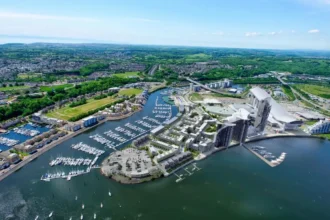
Cardiff is a compact capital city with an unusually strong connection to its waterways. The River Taff runs through the western side of the city centre before reaching Cardiff Bay, while the River Ely enters the Bay from the west. Together, these waterways create a network of riverside promenades, parks, embankments, trails and waterfront paths.
- What are the main riverside walks in Cardiff?
- Why is the River Taff important to Cardiff’s walking network?
- Where can you walk beside the River Taff in central Cardiff?
- What is the Taff Trail and how does it work for walkers?
- Is Bute Park good for a riverside walk?
- How does the Cardiff Bay Trail differ from the Taff Trail?
- What can you see on a Cardiff Bay riverside walk?
- Is Cardiff Bay Barrage suitable for accessible riverside walking?
- Can you walk from Cardiff city centre to Cardiff Bay?
- What historical features appear along Cardiff’s riverside walks?
- How should walkers plan for river conditions and safety?
- Which riverside walk is best for different types of visitors?
- How can riverside walks be connected into a full Cardiff day?
- Why are Cardiff’s riverside walks important for the city’s future?
- What should visitors remember before choosing a Cardiff riverside walk?
Riverside walks in Cardiff range from short city-centre strolls to longer routes connecting Bute Park, Pontcanna, Riverside, Cardiff Bay, the Barrage and Penarth. The routes combine green space, industrial heritage, architecture, public art and waterfront scenery.
The River Taff is the principal natural feature behind Cardiff’s best-known riverside walking route, the Taff Trail. Cardiff also has the Cardiff Bay Trail, a circular route of approximately 10 kilometres that crosses the Barrage and connects Cardiff Bay with Penarth through Pont y Werin.
Cardiff Council records approximately 200 kilometres of public rights of way and bridleways across the city. These include footpaths for walkers and bridleways that also accommodate cyclists and horse riders, subject to the applicable rights and user priorities.
For visitors, the riverside network provides a practical way to explore Cardiff without relying entirely on roads or public transport. For residents, the same paths connect neighbourhoods, parks and waterfront districts.
What are the main riverside walks in Cardiff?
The main riverside walks in Cardiff follow the River Taff, Cardiff Bay waterfront and Barrage, with key routes including the Taff Trail, Bute Park paths, Pontcanna riverside paths and Cardiff Bay Trail connecting the city centre with Penarth.
The River Taff provides the strongest continuous walking corridor through central Cardiff. The Taff Trail follows the river through the city and continues north towards Tongwynlais and beyond. Visit Cardiff describes an approximately 8-mile section between Cardiff and Tongwynlais, while the wider Taff Trail extends substantially farther into South Wales.
Bute Park forms one of the most important green spaces along the central River Taff corridor. The park sits immediately north of Cardiff Castle and provides paths beside and close to the river.
South of the city centre, the river passes Riverside, Pontcanna and the embankments around Fitzhamon Embankment and Taffs Mead Embankment. Visit Cardiff describes Riverside as a relatively small neighbourhood that can be explored on foot, with the area around Taffs Mead Embankment accessible from the city centre.
Further south, the River Taff reaches Cardiff Bay. The Bay contains a separate network of waterfront promenades and the approximately 10-kilometre Cardiff Bay Trail. The route crosses Cardiff Bay Barrage and reaches Penarth through Pont y Werin, a 140-metre pedestrian and cycling bridge.
These routes have different characteristics. The Taff corridor provides a greener river-valley experience, while Cardiff Bay provides wider waterfront views, maritime architecture and access to attractions.

Why is the River Taff important to Cardiff’s walking network?
The River Taff is central to Cardiff’s walking network because it creates a continuous north-south corridor through parks, residential districts, the city centre and Cardiff Bay, linking recreational paths with historic and modern parts of the capital.
The River Taff has shaped Cardiff’s geography and economic development for centuries. Its lower reaches connect the inland valleys with the port and maritime districts that transformed Cardiff during industrialisation.
Cardiff’s rise during the Industrial Revolution was closely connected with coal and iron production in South Wales. The National Library of Wales records that Cardiff’s expanding coal trade contributed to dock construction during the 1830s. By the 1880s, Cardiff had become the largest town in Wales and its port handled more coal than any other port in the world.
This industrial history explains why the River Taff is more than a recreational feature. The river formed part of the transport geography that connected South Wales coal-producing areas with Cardiff’s docks.
Modern walking routes reveal this history without requiring visitors to leave the central urban area. A walk along the Taff can pass historic civic buildings, Cardiff Castle, Bute Park, former industrial districts and the regenerated waterfront.
The river also provides ecological value. Natural Resources Wales monitors river levels and flood conditions along the Taff, including locations around Cardiff. The River Taff remains an active watercourse with changing river levels and flood risk, so walkers need to respect official warnings and temporary conditions.
Where can you walk beside the River Taff in central Cardiff?
Central Cardiff offers riverside walking beside Bute Park, Cardiff Castle, Pontcanna, Riverside and the city-centre embankments, creating a connected sequence of paths that combines green space, heritage sites and urban waterfront views.
Bute Park is one of the most significant starting points for a central Cardiff riverside walk. The park occupies land immediately beside Cardiff Castle and the River Taff.
Walkers can approach the river from the city centre through the park and follow paths through landscaped green space. The setting changes noticeably from the built-up streets around Cardiff Castle to open lawns, mature trees and riverside vegetation.
Cardiff Castle provides an important historic reference point. The site represents centuries of development within the capital and stands directly beside the River Taff corridor.
Moving south, walkers can continue towards Pontcanna and Riverside. Pontcanna is a residential neighbourhood with access to riverside green spaces and Pontcanna Fields.
Riverside lies directly beside the River Taff. Cardiff Council’s flood-risk assessment identifies the River Taff as the predominant source of flood risk for Riverside, demonstrating the direct physical relationship between the neighbourhood and the watercourse.
Fitzhamon Embankment and Taffs Mead Embankment provide additional riverside sections closer to the central urban area. Cardiff Council identifies Fitzhamon Embankment among the streets and areas forming part of the Riverside parking zone.
These sections are particularly useful for shorter walks. A visitor does not need to complete the entire Taff Trail to experience Cardiff’s river landscape.
What is the Taff Trail and how does it work for walkers?
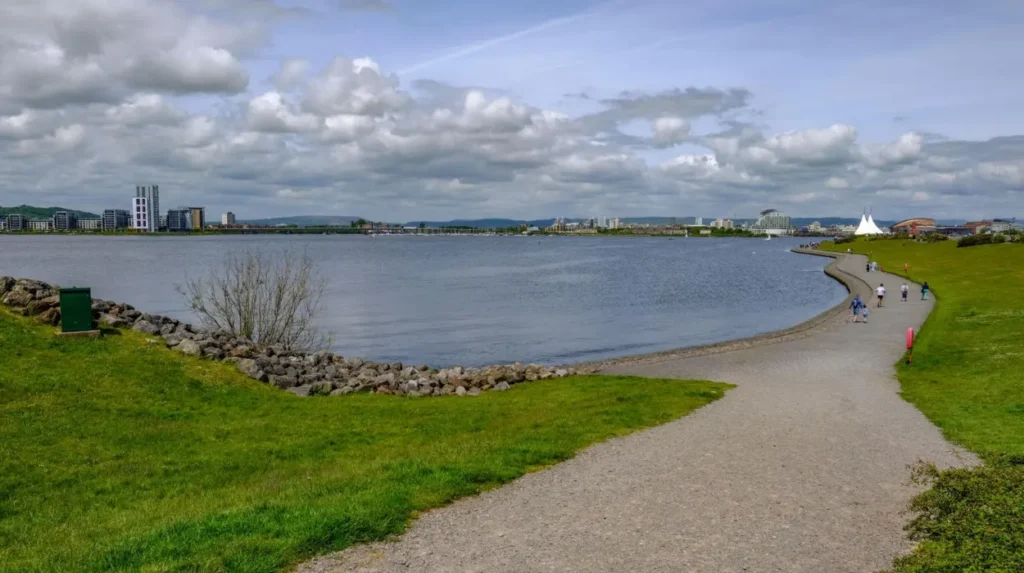
The Taff Trail is Cardiff’s best-known long-distance riverside route, following the River Taff through the capital and continuing north towards Tongwynlais and the wider South Wales valleys, with traffic-free sections suitable for walking and cycling.
The Taff Trail is a multi-use route connecting Cardiff with destinations farther north. Within Cardiff, the trail provides access to several major attractions and green spaces.
Visit Cardiff highlights an approximately 8-mile section between Cardiff and Tongwynlais. Cadw also describes an 8-kilometre section along the Taff Trail between Cardiff and Tongwynlais, continuing along the west bank of the River Taff towards Castell Coch.
Castell Coch is a Grade I listed Victorian castle in Tongwynlais. Its location gives longer-distance walkers a clear heritage destination beyond the central Cardiff parks.
The trail is also useful because it separates much of the walking experience from major roads. Visit Cardiff identifies the Taff Trail as a traffic-free route and recommends it for exploring the city and surrounding areas.
Walkers should recognise that the Taff Trail is a shared route. Cyclists also use the trail, so pedestrians need to maintain awareness around junctions, bridges and narrower sections.
The route’s length makes it adaptable. A short central section works for casual visitors, while longer sections provide a full-day walking experience.
Is Bute Park good for a riverside walk?
Bute Park is one of the strongest locations for a short riverside walk in Cardiff because it combines River Taff paths with extensive parkland, mature landscaping, access to Cardiff Castle and direct connections towards Pontcanna and the wider Taff Trail.
Bute Park provides a transition between Cardiff’s historic centre and its western riverside neighbourhoods. Cardiff Castle forms the southern gateway, while the park extends northwards along the River Taff.
The park’s riverside setting makes it suitable for walkers who want a shorter route without committing to a long-distance trail. Paths within the park provide opportunities to vary the route and combine riverside sections with internal park paths.
The historic relationship between Bute Park and Cardiff’s development is significant. The park was associated with the Bute family and the estate surrounding Cardiff Castle. Cadw’s information on the Victorian period identifies Bute Park as part of the former grounds associated with the Bute family and Cardiff Castle.
Bute Park also connects naturally with Sophia Gardens and Pontcanna. This creates a broader green corridor around the Taff.
For visitors, the location is convenient because the park is close to central attractions. A riverside walk can therefore be combined with Cardiff Castle, city-centre shopping and cultural venues without requiring a separate journey.
How does the Cardiff Bay Trail differ from the Taff Trail?
The Cardiff Bay Trail is approximately 10 kilometres long and forms a circular waterfront route through Cardiff Bay, across the Barrage and towards Penarth, offering maritime heritage, public art, major cultural buildings and open views across the Bay.
The Cardiff Bay Trail has a different character from the River Taff sections. It is primarily a waterfront and heritage circuit rather than a narrow river corridor.
Cardiff Harbour Authority identifies the route as approximately 10 kilometres, or 6.2 miles, long. It passes through Cardiff Bay, crosses the Barrage and connects with Penarth through Pont y Werin.
Major landmarks include the Norwegian Church, Wales Millennium Centre and the Senedd, which is the home of the Welsh Parliament. The route also passes waterfront cafés, bars and restaurants.
The Bay’s transformation is closely connected to the Cardiff Bay Barrage. The Barrage is approximately 1.1 kilometres long and extends from Cardiff docks towards Penarth. Cardiff Harbour Authority states that the £220 million project began in 1994 and was completed in 1999. It contributed to the wider regeneration of the former docklands.
The result is a distinctive walking environment. Historic dock infrastructure sits alongside modern cultural architecture, public spaces and waterfront promenades.
The Cardiff Bay Trail is therefore particularly useful for visitors who want a longer circular walk with attractions distributed along the route.
What can you see on a Cardiff Bay riverside walk?
A Cardiff Bay riverside walk combines waterfront architecture, historic dockland features, public art, cultural buildings, the Barrage, Penarth connections and views across the Bay towards the wider Severn Estuary and surrounding waterfront districts.
Cardiff Bay contains some of the city’s most recognisable modern landmarks. The Wales Millennium Centre provides a major cultural focal point, while the Senedd represents the contemporary political institutions of Wales.
The Norwegian Church reflects Cardiff’s maritime history and the international character of the former docks. During the industrial period, Cardiff’s port attracted workers and seafarers from many countries.
The National Library of Wales records that at least 50 nationalities settled in the Butetown and surrounding dockland area during the development of Tiger Bay. The community grew alongside Cardiff’s port and coal trade.
The Bay therefore combines physical and social history. Walking routes provide direct access to places associated with Cardiff’s maritime economy and multicultural development.
The Barrage provides another major viewpoint. Cardiff Harbour Authority describes the Barrage embankment as a landscaped public open space with views across Cardiff Bay and the Severn Estuary.
The waterfront also contains recreational spaces, including a children’s play area, skate plaza and outdoor gym. These facilities make the Barrage suitable for different types of visitors.
Is Cardiff Bay Barrage suitable for accessible riverside walking?
Cardiff Bay Barrage provides one of Cardiff’s clearest accessible riverside walking environments because its embankment has a flat gradient, no steps along the main promenade and extensive views across the Bay and Severn Estuary.
Cardiff Harbour Authority specifically describes the Barrage embankment as suitable for visitors because of its flat gradient and lack of steps. The route functions as a public promenade and supports walking and cycling.
The Barrage is approximately 1.1 kilometres long. Its structure includes locks, bridges, sluice gates and a fish pass. The locks allow boats to move between Cardiff Bay and the Severn Estuary.
The Barrage therefore combines infrastructure with public space. Walkers can see working maritime structures while using the landscaped promenade.
The main walking environment is relatively open. This is useful for visitors who prefer broad paths rather than narrower park trails.
Accessibility still depends on individual requirements and changing site conditions. Visitors should check current local information when planning a route, especially if they require specific facilities such as accessible toilets, parking or step-free connections beyond the Barrage itself.
Can you walk from Cardiff city centre to Cardiff Bay?
Visitors can walk from Cardiff city centre towards Cardiff Bay by following the River Taff corridor and connecting with waterfront paths, creating a continuous urban-to-waterfront experience that links central attractions, Riverside, Grangetown and Cardiff Bay.
Cardiff is compact enough for the city centre and waterfront to function as connected walking destinations. Visit Cardiff describes Cardiff Bay as within a short walking distance of the city centre.
A practical route begins around Cardiff Castle or Bute Park and continues south alongside the River Taff. Walkers can then progress through Riverside and towards the lower Taff corridor before reaching Cardiff Bay.
The exact route depends on the chosen side of the river and current path access. Bridges provide opportunities to cross the river and modify the distance.
Riverside is particularly relevant because it sits directly beside the Taff. Visit Cardiff states that Riverside is around a 20-minute walk from the city centre and identifies Taffs Mead Embankment as one of the areas reached from the central approach.
This city-to-Bay route demonstrates the value of Cardiff’s riverside infrastructure. A single walk can combine urban architecture, historic landmarks, parks, residential neighbourhoods and waterfront regeneration.
What historical features appear along Cardiff’s riverside walks?
Cardiff’s riverside walks reveal the city’s transformation from a medieval settlement into an industrial coal-exporting port and then a modern capital, with Cardiff Castle, docklands, Tiger Bay, Bute Park and Cardiff Bay providing important historical reference points.
The historical story begins well before industrial Cardiff. Cardiff Castle occupies a strategically important location beside the River Taff and remains one of the city’s defining historic landmarks.
Industrialisation fundamentally changed Cardiff. The expansion of coal mining in South Wales increased the importance of Cardiff’s port and created demand for improved docks and transport connections.
The National Library of Wales records the construction of Cardiff docks during the 1830s and the enormous expansion of the port during the nineteenth century. By the 1880s, Cardiff had become the world’s leading coal-exporting port by volume.
The docklands developed into a multicultural maritime district commonly known as Tiger Bay. Migrants from numerous countries settled in Butetown and surrounding areas, contributing to the workforce and culture of the port.
The twentieth century brought major changes to the docks and waterfront. Cardiff Bay subsequently became the focus of major regeneration.
The Cardiff Bay Barrage project was completed in 1999 after construction began in 1994. Cardiff Harbour Authority identifies the project as a major catalyst for approximately £2 billion of regeneration in the former docklands of Cardiff and Penarth.
Riverside walking therefore provides access to layers of Cardiff history within a relatively small geographical area.
How should walkers plan for river conditions and safety?
Walkers should check weather, river and flood information before using Cardiff’s riverside paths, remain on designated routes, avoid floodwater and keep away from unsafe water edges, particularly during periods of heavy rain or changing river conditions.
The River Taff remains subject to flood monitoring. Natural Resources Wales provides live flood warnings, alerts and river-level information for Cardiff and other parts of the Taff catchment.
Flood conditions can affect paths and riverside areas. Natural Resources Wales advises people to avoid walking, cycling or driving through floodwater.
The risk is particularly relevant on low-lying riverside paths. A route that is suitable during normal conditions requires greater caution after prolonged or intense rainfall.
Cardiff Bay has separate water-safety considerations. Cardiff Harbour Authority states that swimming and jumping into Cardiff Bay are not permitted because of drowning risks, unpredictable depths, hidden objects and cold-water hazards.
Walkers should remain on designated promenades and avoid entering the water.
Cyclists also share several routes with pedestrians. Awareness is particularly important on the Taff Trail and Cardiff Bay Trail, where both walking and cycling are supported.
Weather also affects comfort. Exposed waterfront sections such as the Barrage can experience stronger winds than sheltered parkland. Appropriate footwear is important because river and park paths have different surfaces.
Which riverside walk is best for different types of visitors?
The best Cardiff riverside walk depends on distance and purpose: Bute Park suits short heritage walks, the Taff Trail suits longer river routes, Riverside suits neighbourhood exploration, and Cardiff Bay Trail suits waterfront scenery and landmark-focused walking.
Visitors wanting a short walk can start around Cardiff Castle and Bute Park. This option combines historic architecture, landscaped parkland and the River Taff.
Visitors seeking a longer green route can follow the Taff Trail towards Pontcanna and Tongwynlais. The Cardiff-to-Tongwynlais section highlighted by Visit Cardiff and Cadw provides an established route towards Castell Coch.
Visitors interested in local neighbourhoods can explore Riverside and the embankments around the River Taff. Riverside is close enough to the city centre to incorporate into a broader urban walking itinerary.
Visitors prioritising waterfront landmarks can choose the Cardiff Bay Trail. The approximately 10-kilometre circuit incorporates the Barrage, Penarth connection, Norwegian Church, Wales Millennium Centre and Senedd.
Visitors prioritising accessible promenade walking can focus on Cardiff Bay Barrage. Its flat gradient and lack of steps on the main embankment make it one of the clearest options for step-free waterfront walking.
How can riverside walks be connected into a full Cardiff day?
A full Cardiff walking day can connect Cardiff Castle and Bute Park with the River Taff, Riverside, Cardiff Bay and the Barrage, allowing visitors to combine historic attractions, green spaces, neighbourhoods and waterfront landmarks within one continuous itinerary.
A practical itinerary begins in central Cardiff. Cardiff Castle provides a historic starting point, followed by Bute Park and the River Taff.
The walk then continues south through the Taff corridor. Pontcanna and Riverside provide opportunities to pause in neighbourhood areas before continuing towards Cardiff Bay.
The Bay offers a major change in scenery. The landscape becomes more open, with waterfront architecture replacing the enclosed character of some river and park sections.
The Cardiff Bay Trail then provides a structured way to continue around the waterfront. Its approximately 10-kilometre circuit is long enough to create a substantial walking day without requiring a separate long-distance trail.
The Barrage provides a major endpoint or turning point. Visitors can cross the structure and continue towards Penarth through Pont y Werin.
The route can also be shortened. Cardiff’s interconnected paths allow walkers to stop at Cardiff Bay and return by public transport rather than completing the entire circuit.
Explore More Area Guide
Circular Walk Around Roath: Roath Park Guide Cardiff 2026
Mansion House Cardiff History and Heritage, Cardiff 2026
Why are Cardiff’s riverside walks important for the city’s future?
Cardiff’s riverside walks support sustainable travel, recreation, heritage access and green-space connectivity while linking residential areas with the city centre and waterfront, making the River Taff and Cardiff Bay important parts of Cardiff’s long-term urban walking infrastructure.
Riverside paths provide alternatives to short car journeys. Cardiff Council’s extensive public rights-of-way network demonstrates the scale of pedestrian infrastructure available across the city.
The Taff Trail also connects urban Cardiff with the wider South Wales landscape. This gives the capital a direct relationship with longer-distance recreation routes.
The Cardiff Bay waterfront demonstrates another form of urban transformation. Former dockland infrastructure now supports public promenades, cultural buildings, recreation and tourism.
Environmental management remains important. Natural Resources Wales continues to monitor flood risk and water conditions along the River Taff.
Pollution management also remains relevant. In 2025, NRW reported more than 30 cases of misconnected wastewater pipes affecting investigations around the River Taff and River Ely in Cardiff.
This demonstrates that riverside recreation depends on effective water-quality and flood-risk management as well as path maintenance.
For Cardiff residents and visitors, the long-term value of riverside routes comes from their ability to combine movement, recreation, heritage and access to open space.
What should visitors remember before choosing a Cardiff riverside walk?
Visitors should choose a route based on distance, surface, accessibility and attractions, check current river and weather conditions, respect shared paths, avoid entering the water and use official route information when planning longer walks beside the Taff or Cardiff Bay.
The central River Taff is the strongest choice for combining green space and heritage. Bute Park, Cardiff Castle and Pontcanna provide a sequence of accessible destinations.
The Cardiff Bay Trail is the stronger choice for waterfront architecture and maritime heritage. Its approximately 10-kilometre route provides a defined circular walking experience with connections to Penarth.
The Barrage is suitable for visitors seeking a flat waterfront promenade. Cardiff Harbour Authority confirms its flat gradient and absence of steps along the embankment.
Longer walks require greater preparation. Walkers should check current conditions, especially after heavy rainfall. Natural Resources Wales provides current flood alerts and river-level information for the Taff.
Cardiff’s riverside routes are therefore not a single walking trail. They form a connected network with different landscapes, distances and purposes. The River Taff provides the main north-south spine, while Cardiff Bay creates a broad waterfront circuit.
Together, these routes allow visitors to experience Cardiff through its river, parks, neighbourhoods, historic docklands and modern waterfront.
They also provide residents with practical walking connections between some of the city’s most important public spaces.
For a short visit, Bute Park and the central Taff corridor provide an efficient introduction. For a longer walk, the Taff Trail extends the experience northwards.
For waterfront exploration, the Cardiff Bay Trail and Barrage provide the clearest route. These options make riverside walking one of the most comprehensive ways to explore Cardiff on foot.
What are the best riverside walks in Cardiff?
The best riverside walks in Cardiff include the River Taff through Bute Park and Pontcanna, the Taff Trail, Cardiff Bay Trail and Cardiff Bay Barrage. Each route offers different scenery, distances, historic landmarks and access to Cardiff’s parks and waterfront.