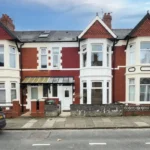
Buying in Rumney involves assessing property type, location, transport, schools, environmental conditions, planning history, taxation and long-term household costs. Rumney is an established residential district in eastern Cardiff, positioned near the eastern edge of the city and close to major routes linking Cardiff with Newport and surrounding communities.
- What is Rumney and where is it located?
- How has Rumney developed historically?
- What types of homes are available when buying in Rumney?
- How much should buyers budget when buying in Rumney?
- What is Land Transaction Tax when buying in Rumney?
- What should buyers check about flooding in Rumney?
- How important are transport links when buying in Rumney?
- What should families check about schools when buying in Rumney?
- What should buyers know about planning and development in Rumney?
- What property surveys are important when buying in Rumney?
- How does the conveyancing process work when buying in Rumney?
- What should buyers check about energy efficiency?
- Which home ownership schemes are relevant to buyers in Rumney?
- How should buyers compare different parts of Rumney?
- What are the main risks buyers should investigate in Rumney?
- How can buyers make a strong buying decision in Rumney?
The area forms an established part of Cardiff’s housing market. The Office for National Statistics recognises Rumney as one of Cardiff’s local statistical areas, while Cardiff Council operates the Rumney electoral ward.
Rumney also has a distinct historical identity. Historical research recorded by the Welsh Government states that Rumney was historically part of Monmouthshire and became part of the county borough of Cardiff in 1938. The district contains historic buildings alongside post-war and modern residential development.
For buyers, the most important principle is to assess the individual property rather than relying only on the Rumney postcode. Road position, property age, construction type, flood exposure, tenure, condition and planning history can produce significant differences between homes in the same locality.
What is Rumney and where is it located?
Rumney is an established residential district and electoral ward in eastern Cardiff, located east of the Rhymney River and close to Newport Road, Trowbridge, Llanrumney, St Mellons and the eastern Cardiff transport corridor connecting the city with Newport.
Rumney sits in the eastern part of Cardiff. Its location provides access to established residential streets, local services, schools, parks and transport connections. The district is particularly relevant to buyers who want a Cardiff address while remaining close to the city’s eastern employment and transport corridors.
The Rhymney River provides an important geographical reference point. The district’s relationship with the river and the wider Gwent Levels landscape also makes environmental due diligence important when purchasing property.
Rumney is not a uniform housing market. Streets contain different property periods, layouts and building forms. Buyers should therefore compare individual homes using recent sold-price evidence, property condition and local characteristics.
Cardiff Council identifies Rumney as an electoral ward, while the Office for National Statistics provides local statistical information for the area.
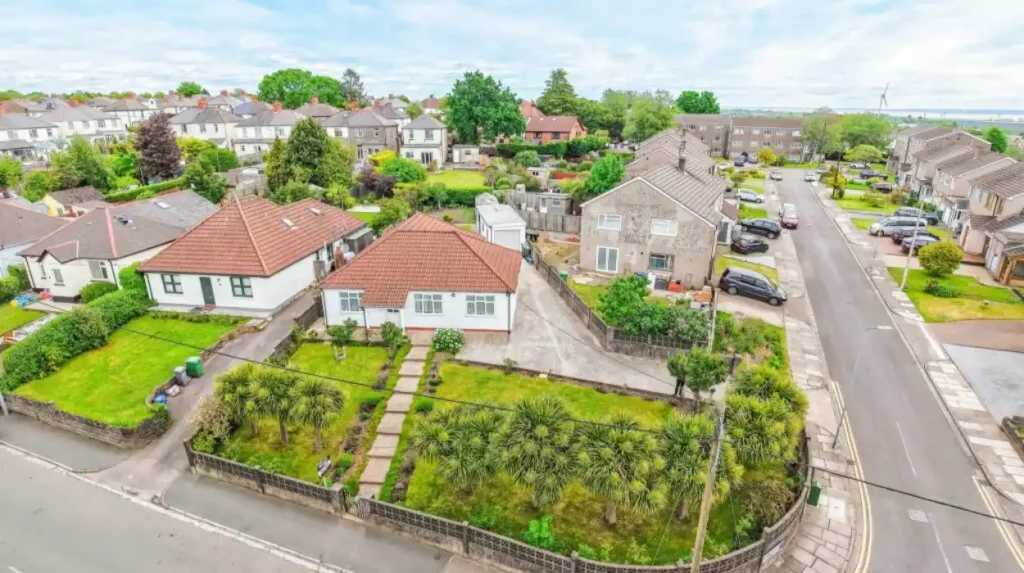
How has Rumney developed historically?
Rumney developed from a historic settlement into an urban Cardiff district through twentieth-century expansion, with its administrative connection to Cardiff established in 1938 and later residential growth creating a mixed housing environment of older and newer properties.
Rumney’s history predates its modern residential character. Historical evidence describes the area as historically associated with Monmouthshire before becoming part of Cardiff in 1938. This transition forms an important part of the district’s modern identity.
The area’s built environment reflects successive periods of development. Older buildings sit alongside twentieth-century housing estates and more recent residential schemes. This creates variation in construction, room sizes, gardens, parking arrangements and energy performance.
Rompney Castle is an important local heritage reference. Cardiff Council has confirmed an Article 4 direction relating to Rompney Castle in Rumney. Article 4 directions remove specified permitted development rights, making planning controls particularly relevant to properties affected by such designations.
Historical property context matters during conveyancing. Buyers should ask their solicitor to investigate title information, planning permissions, restrictions, listed or locally significant buildings and any relevant conservation or heritage controls.
What types of homes are available when buying in Rumney?
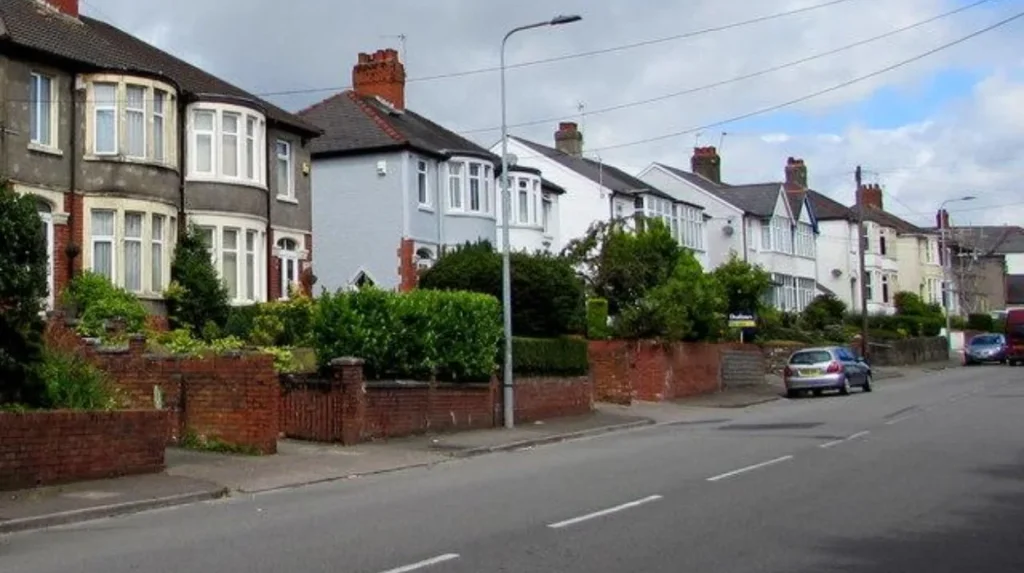
Homes in Rumney include traditional terraces, semi-detached houses, detached properties, purpose-built housing and newer developments, with substantial variation in floor area, gardens, parking, construction age, tenure and energy performance across individual streets.
The housing stock provides several options for different household requirements. Terraced properties often provide compact layouts and established gardens. Semi-detached houses provide additional internal space and side access on many plots. Detached houses represent a smaller segment of the local housing supply.
Newer residential development adds modern layouts and contemporary building standards. A documented development on land off Llandudno Road, for example, involved 16 dwellings, including five affordable homes and 11 market-sale homes, together with landscaping and highway works.
Property age directly affects inspection requirements. Older homes require checks on roof condition, damp, windows, insulation, electrical systems, plumbing and heating. Modern properties require checks on warranties, management arrangements, service charges where applicable and the condition of installed systems.
Buyers should also distinguish freehold and leasehold ownership. Freehold ownership generally includes the land and building subject to legal restrictions. Leasehold ownership involves a lease, which creates obligations concerning the property and the remaining lease term.
How much should buyers budget when buying in Rumney?
Buyers should budget for the purchase price plus mortgage costs, deposit, legal fees, surveys, searches, insurance, moving expenses and Welsh Land Transaction Tax, with the final budget based on the individual property’s price and the buyer’s financial circumstances.
There is no single purchase price that accurately represents every Rumney property. Prices vary according to property type, size, condition, street, plot, parking, extension history and market conditions.
The Office for National Statistics provides Cardiff housing-price information and local statistics, making official data useful for understanding broader market movement. Sold-price records should be compared with similar properties rather than using an area-wide average alone.
The deposit is one of the largest upfront costs. Mortgage lenders set their own lending criteria, so buyers should obtain a mortgage agreement in principle before making offers.
Additional costs include solicitor or licensed conveyancer fees, mortgage arrangement costs where applicable, valuation costs, building surveys, searches and removals. Buildings insurance is also normally required by mortgage lenders for freehold houses.
Buyers should maintain a separate contingency budget for repairs. This is particularly important for older properties where roof, heating, windows, damp or electrical work can create substantial additional expenditure.
What is Land Transaction Tax when buying in Rumney?
Land Transaction Tax is the devolved Welsh property tax replacing Stamp Duty Land Tax, and buyers purchasing residential property in Rumney must assess the applicable Welsh rates according to price, ownership status and transaction circumstances.
Land Transaction Tax, commonly abbreviated to LTT, applies to qualifying property and land transactions in Wales. It replaced Stamp Duty Land Tax in Wales on 1 April 2018. The Welsh Revenue Authority administers the tax.
For main residential transactions, the Welsh Government’s published bands include a 0% rate on the portion up to £225,000, followed by 6% on the portion above £225,000 up to £400,000, with higher bands applying above that level.
Higher residential rates apply in circumstances where a buyer owns one or more residential properties and the transaction does not qualify for an exception. The rules also contain provisions for replacing a main residence and other circumstances.
Wales does not operate a first-time buyer LTT relief. Buyers should therefore calculate LTT as part of the purchase budget from the beginning rather than treating it as a later cost.
LTT returns and payments generally must be submitted within 30 days from the day after the effective date, which is usually completion. A solicitor or conveyancer can normally handle the filing and payment.
What should buyers check about flooding in Rumney?
Flood risk is an important property consideration in Rumney because parts of the wider eastern Cardiff landscape are associated with rivers, low-lying land and flood-management infrastructure, making property-specific flood searches and insurance checks essential.
Flood risk should be assessed before making a final commitment to purchase. Buyers should obtain appropriate environmental and drainage searches and discuss the findings with their solicitor and surveyor.
Welsh Government flood-management programmes have specifically included Rumney South. A 2026–27 programme lists Rumney South within Cardiff Council’s flood and coastal erosion risk management programme, with 85 properties identified in the relevant project information.
Earlier Welsh Government programmes also recorded Rumney South flood-management work. The 2022–23 programme allocated £449,000 for the project phase and identified 85 properties expected to benefit once construction was complete.
These figures do not mean every Rumney property is exposed to flooding. Risk is property-specific. Buyers should examine the exact address, flood zone, drainage characteristics, historic incidents, insurance availability and any flood-resilience measures.
Flood risk can also affect mortgage availability and insurance costs. A buyer should resolve material concerns before exchange rather than discovering them after the legal commitment becomes difficult to reverse.
How important are transport links when buying in Rumney?
Transport access is a major consideration for Rumney buyers because the district connects with Cardiff’s eastern road and bus networks, while Cardiff Council’s transport strategy includes bus, walking, cycling, junction and road-safety improvements across the city.
Rumney’s position in eastern Cardiff provides access to major roads serving the city and the wider South Wales region. Newport Road is an important east-west corridor, while surrounding roads connect Rumney with Llanrumney, Trowbridge, St Mellons and other eastern districts.
Public transport should be assessed using the exact property location rather than the district name alone. Walking distance to bus stops, service frequency, journey times and interchange requirements affect practical commuting.
Cardiff Council’s Local Transport Plan identifies transport priorities including walking and cycling infrastructure, bus-network improvements, junction improvements, 20mph limits and road-safety schemes.
Active travel planning is also relevant. Cardiff Council publishes ward-level Active Travel Network Maps, including a dedicated map for Rumney. These maps help buyers understand existing and proposed walking and cycling infrastructure.
Commuters should test their journey during normal peak periods. A route that looks short on a map can have a substantially different travel time during school and workplace traffic.
What should families check about schools when buying in Rumney?
Families buying in Rumney should assess individual school catchment areas, admissions policies, walking routes, transport arrangements and current performance data because school availability is determined by specific addresses and admission rules rather than the wider Rumney name.
School location is a significant consideration for family buyers. A property’s distance from a school does not automatically guarantee admission.
Cardiff Council manages school admissions information and publishes education-related services. Buyers should check the current admissions arrangements for the relevant school year because catchment boundaries and policies can change.
Walking routes deserve separate consideration. Buyers should inspect pavements, crossings, road widths, traffic levels and lighting between the property and school.
Transport arrangements also matter for secondary education. Cardiff Council publishes school transport routes, including routes serving the eastern Cardiff area and Rumney-related locations.
Families should therefore verify the exact address against current official admission information before exchanging contracts. Estate-agent descriptions should not be treated as confirmation of school eligibility.
What should buyers know about planning and development in Rumney?
Planning activity matters when buying in Rumney because new housing, transport infrastructure, commercial development and changes to existing buildings can affect traffic, amenities, views, parking and future property conditions.
Cardiff Council uses its Local Development Plan to guide development and land-use decisions across the city. Planning applications can alter individual streets even when a buyer has already researched the wider neighbourhood.
The council’s major-development monitoring framework tracks strategic sites and development activity, including planning histories, construction and completed homes.
Buyers should search planning records for the property and surrounding streets. Relevant applications include extensions, conversions, new homes, commercial uses, access changes, parking alterations and infrastructure projects.
A planning search is particularly important for buyers purchasing a property with an extension or loft conversion. The solicitor should establish whether relevant permissions, building regulations approvals and completion documentation exist.
Future development also deserves attention. A vacant site near a property can have a different future use from its current appearance. Planning records provide a more reliable source than informal local descriptions.
What property surveys are important when buying in Rumney?
A property survey identifies physical defects and building risks that legal searches do not fully address, making an appropriate inspection important for assessing structure, damp, roofing, services, alterations, insulation and the overall condition of a Rumney home.
A mortgage valuation is not the same as a detailed building survey. A valuation primarily supports the lender’s assessment of the property as security.
Buyers should select a survey level appropriate to the building. Older houses, substantially altered properties and homes with visible defects generally require more detailed inspection.
Important areas include roof coverings, chimney structures, external walls, windows, drainage, damp, timber condition, electrical installations and heating systems.
Extensions require particular attention. Buyers should establish when an extension was constructed and whether planning permission or building regulations approval was required.
Survey findings should influence negotiations and the purchase decision. Significant defects require professional quotations before the buyer commits to the full financial obligation.
How does the conveyancing process work when buying in Rumney?
Conveyancing transfers legal ownership from seller to buyer through title checks, searches, enquiries, contract exchange, mortgage arrangements, completion and registration, with a Welsh property purchase also requiring Land Transaction Tax compliance.
The process normally begins after an offer is accepted. The buyer instructs a solicitor or licensed conveyancer and the seller’s legal representative provides contract documentation.
The buyer’s legal representative investigates title, boundaries, rights of way, restrictions, planning information and other legal matters. Local searches provide information held by the relevant local authority and other bodies.
Environmental and drainage searches are particularly relevant to properties where flood, ground or water issues require investigation.
The mortgage lender carries out its own valuation and lending checks. The buyer should not assume that lender approval confirms the property’s physical condition.
Contracts are exchanged after legal and financial requirements are satisfied. Exchange creates the contractual commitment, while completion transfers the purchase funds and legal ownership according to the agreed transaction.
After completion, the conveyancer handles post-completion legal registration and the LTT return where applicable. Welsh Government guidance confirms that LTT is self-assessed and can be filed by the buyer or their professional representative.
What should buyers check about energy efficiency?
Energy efficiency affects running costs, comfort, mortgage affordability and future improvement requirements, so buyers should examine the property’s Energy Performance Certificate, heating system, insulation, windows and likely upgrade costs before purchasing in Rumney.
An Energy Performance Certificate, or EPC, provides information about a property’s energy efficiency and typical energy use. Buyers should review the EPC before making a final decision.
Older properties often require greater attention to insulation, glazing, heating controls and ventilation. Modern homes generally incorporate more recent construction and energy standards, although individual systems still require inspection.
Energy improvements should be assessed financially. Loft insulation, cavity-wall insulation, heating controls, glazing and heating-system upgrades each have different costs and expected benefits.
Buyers should also examine the age and condition of the boiler or other heating equipment. Replacement costs can become significant when a system is approaching the end of its serviceable life.
Energy performance has growing relevance to property ownership because household running costs and building standards remain important considerations in housing policy.
Which home ownership schemes are relevant to buyers in Rumney?
Welsh home ownership schemes include Shared Ownership, Help to Buy and Homebuy, but eligibility varies by scheme, property type, income circumstances, location and transaction requirements, so buyers must check current official criteria before relying on assistance.
The Welsh Government provides several home ownership schemes. Shared Ownership – Wales allows eligible buyers to purchase an initial share of a property and pay rent on the remaining share. Published guidance states that initial shares can range from 25% to 75%.
Help to Buy – Wales supports eligible purchases of qualifying new-build homes up to £300,000, subject to scheme requirements. Current guidance states that eligible buyers need at least a 5% deposit and must meet mortgage and property conditions.
Homebuy – Wales provides an equity loan for eligible households purchasing an existing property in participating areas. The scheme is not available in every location and operates under local eligibility rules.
Scheme availability changes over time. Buyers should use current Welsh Government guidance rather than relying on older property advertisements or outdated mortgage information.
How should buyers compare different parts of Rumney?
Buyers should compare individual streets using property condition, sold prices, transport, schools, parking, flood exposure, planning records, amenities and long-term costs because Rumney contains varied housing stock and environmental characteristics.
Street-level comparison is more useful than treating Rumney as a single uniform market.
A buyer should compare similar properties by bedroom count, floor area, tenure, property type and condition. A renovated semi-detached house should not be directly compared with an unmodernised terrace simply because both are located in Rumney.
Parking is another important factor. Some properties have driveways or garages, while others rely on on-street parking. Buyers should inspect parking conditions at different times of day.
Garden size and orientation can affect usability and property appeal. Extensions can add floor space but also reduce garden area or increase maintenance requirements.
Noise should also be assessed. Properties close to main roads, bus corridors, commercial premises or busy junctions can have different environmental conditions from homes on quieter residential streets.
Explore More Area Guide
Cardiff Population Growth Trends and Demographic Analysis in Cardiff 2026
Roath Cardiff Population Demographics and Census Stats Update 2026
What are the main risks buyers should investigate in Rumney?
The principal risks include flood exposure, property defects, inadequate documentation, restrictive covenants, planning issues, leasehold obligations, inaccurate assumptions about schools and unexpected ownership costs, all of which require property-specific professional checks.
Flood exposure deserves particular attention because Rumney South appears in Welsh Government flood-management programmes. The existence of a local flood project does not determine the risk for an individual property, so address-specific searches remain essential.
Planning risk is another important consideration. Extensions, conversions and redevelopment proposals require verification through official planning records.
Title restrictions can affect extensions, parking, access and alterations. A solicitor should identify covenants, easements and rights affecting the property.
Leasehold buyers should check the lease term, service charges, ground rent provisions where applicable, management arrangements and future obligations.
Buyers should also verify property boundaries. Garden walls, fences, driveways and access routes do not always correspond precisely with informal assumptions about ownership.
How can buyers make a strong buying decision in Rumney?
A strong Rumney buying decision combines affordability analysis, comparable property research, transport checks, school verification, flood searches, planning research, professional surveying, legal due diligence and a realistic assessment of long-term ownership costs.
The process should begin with affordability rather than property viewing. Buyers should calculate the deposit, mortgage payment, LTT, professional fees, insurance and maintenance budget.
The second stage is location research. Buyers should inspect the immediate street, nearby roads, public transport, schools, shops, green spaces and planned development.
The third stage is property-specific due diligence. This includes viewing the property more than once, commissioning an appropriate survey and checking planning and building documentation.
The fourth stage is legal due diligence. A solicitor or conveyancer should investigate title, searches, restrictions, rights and contract conditions.
The final stage is financial review. Buyers should calculate the total cost of ownership rather than focusing solely on the advertised purchase price.
Rumney’s established position within eastern Cardiff gives buyers access to a broad residential environment with historic properties, established housing and newer development. Its location also creates specific considerations around transport, planning and environmental conditions. Official Cardiff Council, Welsh Government and ONS information provides the strongest foundation for evaluating these factors.
Buying in Rumney therefore requires a property-by-property approach. Buyers who combine official data with professional surveys, legal searches and direct inspection can assess the purchase using measurable information rather than assumptions about the wider neighbourhood.
Is Rumney a good area to buy a house in Cardiff?
Rumney is an established residential district in eastern Cardiff with a mix of traditional and modern housing, local amenities, schools, green spaces and transport connections. Buyers should assess individual streets and properties rather than relying only on the wider area’s reputation.