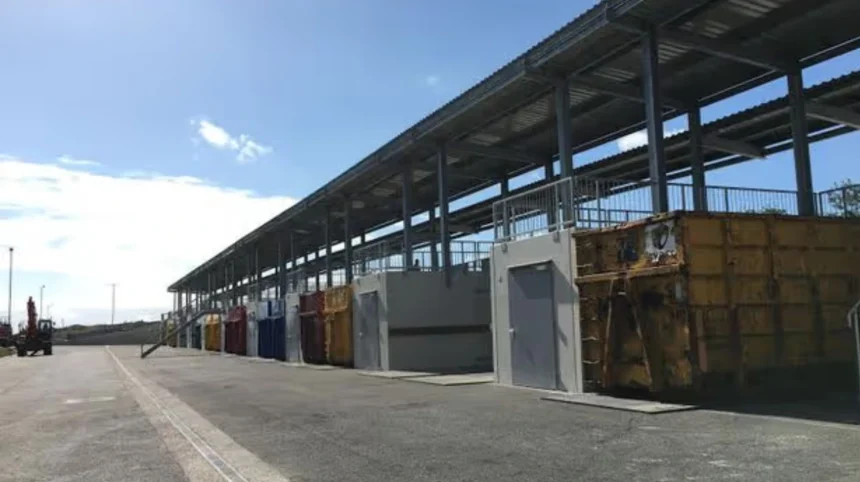
Cardiff recycling centres provide dedicated facilities for residents to dispose of household materials that cannot be handled through normal kerbside collections. Cardiff Council operates two household recycling centres, at Lamby Way and Bessemer Close. Both sites accept a wide range of materials, including cardboard, glass, metals, wood, electrical appliances, garden waste, textiles, paint and selected DIY materials. Cardiff residents can use the household recycling centres free of charge, subject to booking and site rules.
- What are Cardiff recycling centres and why are they important?
- Where are Cardiff’s household recycling centres located?
- Who can use Cardiff recycling centres?
- How do you book a Cardiff recycling centre visit?
- What can you take to Cardiff recycling centres?
- Which items should not be placed in mixed bags at Cardiff recycling centres?
- What non-recyclable items can Cardiff recycling centres accept?
- How should you dispose of asbestos in Cardiff?
- Can you take fridges and freezers to Cardiff recycling centres?
- How do Cardiff recycling centres fit into the wider recycling system?
- How has recycling developed in Cardiff and Wales?
- What do current Welsh recycling statistics show about waste management?
- What should you do before visiting a Cardiff recycling centre?
- Why does correct recycling matter for Cardiff’s future?
Recycling centres form one part of Cardiff’s wider waste-management system. The city also uses separate kerbside collections for paper and cardboard, plastic and cans, food, glass, garden waste and general waste. Community recycling zones provide additional locations for smaller items such as books, hard plastics and small electrical equipment.
Cardiff’s recycling infrastructure operates within the wider Welsh waste strategy. Wales has increased its municipal recycling rate from around 5% in the late 1990s to 68.4% in 2024-25. The Welsh Government’s statutory target for 2024-25 was 70%. Cardiff was one of the Welsh local authorities that did not meet that target in the latest published statistics.
What are Cardiff recycling centres and why are they important?
Cardiff recycling centres are council-operated household waste facilities where residents take materials unsuitable for ordinary kerbside collection. They support recycling, reuse, responsible disposal and waste reduction by separating valuable materials from residual household waste.
A household recycling centre is a controlled waste facility designed to receive specific household materials from residents. Instead of placing unsuitable items into ordinary household bins, residents transport them to designated skips, containers and collection points.
Cardiff Council operates two household recycling centres: Lamby Way and Bessemer Close. The service is intended for household items rather than commercial waste. Businesses have to use Cardiff’s Commercial Recycling Centre.
The centres are important because household waste contains materials with different recycling and treatment requirements. Paper, cardboard, metals, glass, wood, textiles and electrical equipment require separate handling. Correct separation improves the ability to recover materials and reduces the quantity sent for residual treatment.
Cardiff’s recycling strategy identified substantial opportunities to recover more recyclable material from general waste. The council’s 2022-25 strategy stated that around 70% of material in Cardiff’s general waste could be recycled through kerbside services or household recycling centres. The strategy also identified contamination as a major problem, with around 30% of material placed in green recycling bags identified as unsuitable at the time of the strategy.
The role of a recycling centre therefore extends beyond simply providing skips. It is part of a wider system involving household separation, collection, sorting, processing, reuse and final treatment.
Where are Cardiff’s household recycling centres located?
Cardiff has two household recycling centres: Lamby Way and Bessemer Close. Both serve Cardiff residents, accept household materials and require residents to book visits before arriving. Businesses use the separate Commercial Recycling Centre instead.
Lamby Way and Bessemer Close are the two household recycling centres identified by Cardiff Council. Residents should check the council’s current information before travelling because accepted materials, access arrangements and operational conditions can change.
Lamby Way provides recycling facilities for a broad range of household materials. It also has some location-specific services. Cardiff Council lists tyres and uPVC windows as materials accepted at Lamby Way only.
Bessemer Close also accepts a wide range of household materials. It has a specific process for asbestos disposal. Residents disposing of asbestos can take a maximum of two asbestos sacks to Bessemer Close, but an appointment is required. Cardiff Council states that asbestos appointments cannot be booked online and require a telephone booking.
The two centres should not be treated as interchangeable for every material. Location-specific restrictions exist. Checking the council’s accepted-items information before loading a vehicle prevents an unnecessary journey.
Residents should also check for temporary closures. Cardiff Council states that recycling centres can occasionally close at short notice.
Who can use Cardiff recycling centres?
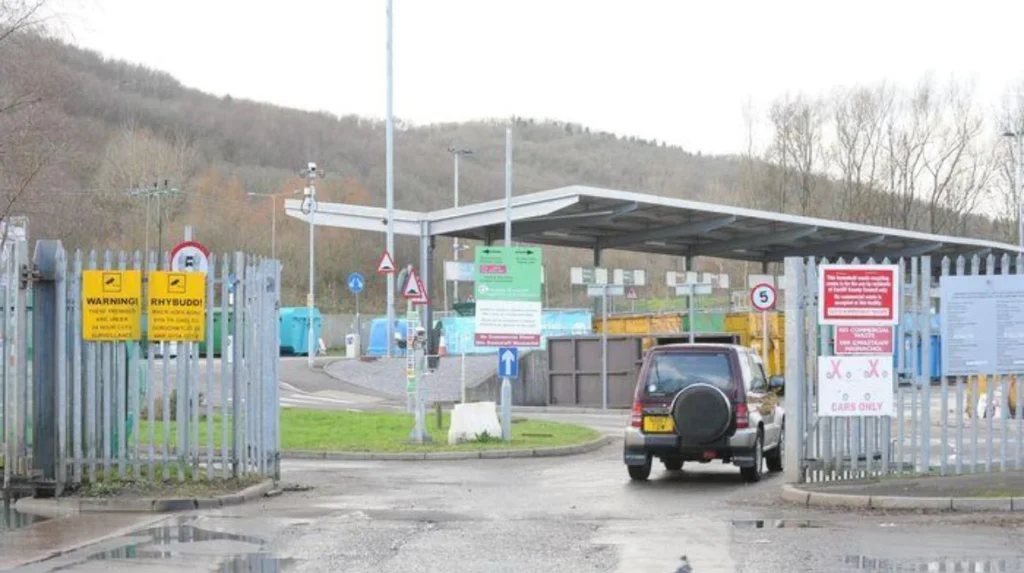
Cardiff household recycling centres are free for Cardiff residents using them for household waste. Visitors need proof of booking and proof of address, while businesses must use the commercial recycling service rather than the household facilities.
The household recycling centre service is designed for Cardiff residents. Cardiff Council states that household recycling centres are free for Cardiff residents to use. Visitors must bring proof of their booking and proof of address.
The distinction between household and commercial waste is important. A household recycling centre is designed around domestic waste generated by residents. Commercial waste generated by businesses belongs within the commercial waste-management system.
This distinction applies to businesses such as shops, offices, restaurants, contractors and other commercial premises. Cardiff Council directs businesses to its Commercial Recycling Centre.
Residents undertaking home improvements also need to distinguish between household DIY waste and larger construction projects. Cardiff’s household centres cater for small DIY projects. Large DIY projects require a skip or the commercial site.
Private waste contractors are another option when household general-waste capacity is insufficient. Cardiff Council advises residents using private contractors to ensure the contractor is a registered waste carrier.
How do you book a Cardiff recycling centre visit?
Residents need to book a time slot before visiting a Cardiff household recycling centre. The council allows up to 26 visits each year, with car users limited to three visits per day and van or trailer users limited to one visit per month.
Booking is a central part of Cardiff’s recycling-centre system. Residents need a time slot for each visit. Cardiff Council currently allows up to 26 visits per year.
The annual allowance operates differently depending on the vehicle. A resident using a car can use the annual allowance flexibly but cannot make more than three visits on the same day.
Van users and people using a car with a trailer face a different limit. Cardiff Council states that these users can book only one visit per month.
Residents should complete the booking before loading their vehicle. The booking confirmation should be available when arriving at the site because Cardiff Council requires proof of booking.
The Cardiff Gov App also provides recycling-centre booking functionality. The app includes other waste services such as checking collection dates, arranging bulky-item collections and searching the council’s recycling information.
Booking controls traffic, supports site management and allows the council to manage capacity. It also reduces the risk of residents arriving without access to a permitted visit.
What can you take to Cardiff recycling centres?
Cardiff recycling centres accept many household materials, including cardboard, glass, metals, wood, garden waste, electrical appliances, batteries, textiles, mattresses, paint, plasterboard and selected DIY waste. Material restrictions differ by site.
Cardiff Council lists a broad range of materials accepted at its household recycling centres. These include batteries, car batteries, cardboard, carpets, ceramics, coffee pods, computers, garden waste, gas bottles, glass bottles and jars, hard plastics, electrical appliances, mattresses, paper, scrap metal, textiles and wood.
Electrical waste represents an important category. Residents can take large electrical appliances such as dishwashers and washing machines, as well as smaller electrical equipment such as kettles, toasters and games consoles. Televisions, monitors, computers and mobile phones are also listed.
Garden and DIY materials are also covered. Cardiff accepts garden waste, wood, plasterboard and rubble or hardcore. Plasterboard must be broken up before being taken to the site.
Rubble, hardcore and soil have a specific quantity restriction. Cardiff Council allows a maximum of six 20-kilogram bags per visit. The material must be tipped into the relevant skip, while the bags are taken home.
Used engine oil is accepted up to a maximum of 10 litres. Vegetable and cooking oil are also listed among accepted materials.
Some items have location-specific restrictions. Tyres and uPVC windows are accepted at Lamby Way only. Bikes are accepted, but Cardiff Council does not accept e-bikes or e-scooters at these centres.
Residents should check the current council guidance for unusual materials before travelling because acceptance rules are material-specific.

Which items should not be placed in mixed bags at Cardiff recycling centres?
Cardiff recycling centres do not accept unsorted black bags, unsorted recycling or mixed builders’ waste. Residents must separate recyclable materials before arrival so staff can direct each material to the correct recycling or disposal container.
Sorting is fundamental to Cardiff’s recycling-centre system. Residents must not arrive with unsorted recycling or mixed builders’ waste. Cardiff Council states that residents bringing unsorted waste can be asked to open bags and separate recyclable materials.
This requirement protects material quality. Different materials require different processing routes. Mixing glass, cardboard, metals, wood, electrical equipment and residual waste reduces the efficiency of separation and increases contamination.
Residents should sort materials at home before loading the vehicle. Cardboard can be separated from metals, electrical equipment from general household items, and garden waste from DIY materials.
General household waste that belongs in the normal black-bin or black-bag service should not be transported to the recycling centre as a substitute for kerbside collection. Cardiff Council specifically directs residents to use their normal general-waste service for mixed general waste.
The council’s recycling strategy also identified contamination as a major issue. Its 2022-25 strategy stated that around 30% of material in green recycling bags should not have been present, resulting in recyclable material being lost to incineration.
Correct sorting therefore affects both household recycling performance and the quality of material entering the waste system.
What non-recyclable items can Cardiff recycling centres accept?
Cardiff recycling centres also provide controlled disposal for certain non-recyclable household materials after staff confirm that recycling options are unavailable. Examples include polystyrene, thin plastic film, mirrors, sofas, wallpaper, blinds and some baby equipment.
Not every item brought to a recycling centre is recyclable. Cardiff Council provides a non-recyclable waste skip for household materials that the site cannot recycle.
Site attendants must confirm that an item belongs in the non-recyclable stream. Cardiff Council recommends using clear bags or containers to make inspection easier. Residents bringing waste in bags must be prepared to open them for inspection.
Examples listed by the council include pet waste such as cat litter or animal bedding, blinds, divan beds, garden furniture, polystyrene, thin plastic film packaging, mirrors, sofas and armchairs, wallpaper, baby items such as car seats and highchairs, and video or cassette tapes.
This process prevents recyclable materials from being placed into the residual skip unnecessarily. Residents who are uncertain about an item should ask the site staff.
Cardiff also operates an A-to-Z recycling information service for residents who need guidance about how specific household items should be handled.
How should you dispose of asbestos in Cardiff?
Asbestos disposal at Cardiff’s household recycling facilities follows a separate controlled process. Bessemer Close accepts a maximum of two asbestos sacks, and residents must arrange an appointment by telephone rather than using the normal online booking system.
Asbestos is a hazardous material that requires controlled handling. Cardiff Council permits a maximum of two asbestos sacks at Bessemer Close recycling centre. A dedicated appointment is required before arrival.
The normal online booking process does not apply to asbestos disposal. Cardiff Council instructs residents to telephone 029 2087 2087 to arrange the appointment.
Residents should follow the council’s asbestos disposal instructions precisely. Asbestos-containing materials should not be treated as ordinary rubble or general household waste.
The controlled process exists because asbestos fibres present a serious health hazard when asbestos-containing materials are damaged or disturbed. Specialist handling, packaging and disposal requirements therefore apply.
Residents should never mix asbestos with ordinary recycling, garden waste, timber or household rubbish.
Can you take fridges and freezers to Cardiff recycling centres?
Cardiff lists fridges and freezers among accepted materials, but national restrictions on processing are currently limiting storage capacity. A centre can therefore be unable to accept these appliances even when a resident has a valid booking.
Fridges and freezers require specialist processing because they contain components and substances that need controlled treatment. Cardiff Council currently warns that ongoing national restrictions on fridge and freezer processing have created extremely limited storage capacity at its recycling centres.
As a result, residents can encounter restrictions when attempting to dispose of these appliances. Cardiff Council advises considering alternative disposal options, including retailer take-back services when buying a replacement appliance.
This is an important example of why residents should check current site information before travelling with large electrical appliances.
Retailer take-back schemes can provide a direct route for disposing of an old appliance when purchasing a replacement. Such arrangements also place the appliance into an appropriate electrical-waste treatment chain.
The situation demonstrates that an item being listed as an accepted material does not always guarantee immediate acceptance under changing operational conditions. Current council guidance remains the authoritative source for a planned visit.
How do Cardiff recycling centres fit into the wider recycling system?
Cardiff recycling centres are one part of a wider system that includes kerbside collections, food recycling, garden waste services, community recycling zones, bulky-item collections and specialist disposal routes for materials that need separate treatment.
Cardiff residents do not need to take every recyclable item to a recycling centre. The council’s kerbside system separately collects paper and cardboard, plastic and cans, food, glass, garden waste and general waste.
Recycling centres are intended for items that residents cannot dispose of through normal kerbside services. Cardiff Council explicitly advises residents to use recycling centres for materials that cannot be handled at the kerbside.
Community recycling zones provide another local option. Cardiff Council has placed recycling zones in hubs and libraries across the city for smaller materials. Depending on the location, these facilities accept items such as small electrical equipment, books, household batteries, hard plastics and ink cartridges.
Bulky-item collection is another alternative. Residents who cannot transport large household objects can use Cardiff Council’s bulky-item service rather than automatically taking everything to a recycling centre.
This layered system separates waste according to material, size and processing requirements. It also reduces unnecessary vehicle journeys to household recycling centres.
How has recycling developed in Cardiff and Wales?
Recycling in Wales has changed substantially since the late 1990s, when the municipal recycling rate was around 5%. Wales reached 68.4% in 2024-25, while Cardiff remained below the statutory 70% target for that year.
The modern Cardiff recycling system sits within a major long-term transformation in Welsh waste management.
Welsh Government statistics show that the national local-authority municipal recycling rate increased from around 5% in the late 1990s to 68.4% in 2024-25. The rate was 66.6% in 2023-24.
The 2024-25 figure was below the statutory target of 70%. Twelve of Wales’s 22 local authorities met or exceeded the target. Cardiff was among the ten authorities that did not meet it.
The change reflects decades of policy development. Wales introduced Towards Zero Waste, the national waste strategy, in 2010. The strategy established statutory recycling targets for local authorities. The 2021 Beyond Recycling strategy expanded the policy direction towards a circular economy in which resources remain in use for longer.
Cardiff’s own recycling strategy for 2022-25 responded to the national framework by focusing on material quality, recycling participation, additional recycling opportunities, reduced single-use plastics, reuse, repair and development of a circular economy.
Cardiff therefore operates within a national framework that treats waste as a resource rather than simply as material requiring disposal.
What do current Welsh recycling statistics show about waste management?
Welsh recycling statistics show continued long-term progress, with 68.4% of local-authority municipal waste reused, recycled or composted in 2024-25. Residual household waste also fell to 163 kilograms per person.
The latest official Welsh Government data provides important context for Cardiff residents.
In 2024-25, Wales generated 1.42 million tonnes of local-authority municipal waste. This was a 0.6% increase compared with 2023-24 but remained the third-lowest total recorded since 2001-02.
Residual household waste per person decreased from 168 kilograms in 2023-24 to 163 kilograms in 2024-25, a reduction of 3.3%. Residual waste is waste not prepared for reuse, recycling or composting.
Organic material represented 36.1% of all material collected for reuse, recycling or composting in 2024-25. Organic material includes food waste, green garden waste and other compostable waste.
Co-mingled materials accounted for 13.5%, while material classified as plastic or metal represented 11.7% of waste collected for reuse, recycling or composting.
Landfill use has also declined sharply. The proportion of waste sent to landfill fell from 42.0% in 2012-13 to 0.7% in 2024-25. During the same period, waste sent to incineration with energy recovery increased from 4.7% to 30.0%.
These figures show why household separation remains important. Recycling performance depends not only on the existence of facilities but also on correct material sorting and participation.
Expllore More Area Guide
Best Picnic Spots in Cardiff: Parks & Gardens 2026
Spring Blossom Walks: Best Cardiff Routes 2026
What should you do before visiting a Cardiff recycling centre?
Before visiting, residents should identify the material, check Cardiff Council’s current acceptance rules, book a time slot, sort recyclable items, prepare proof of address and booking, and ensure the load complies with vehicle and quantity restrictions.
Preparation makes a recycling-centre visit more efficient and reduces the risk of rejected materials.
Start by identifying every material in the load. Separate cardboard, glass, metals, wood, electrical items, garden waste, textiles and other recyclable categories.
Next, check whether the item belongs at a recycling centre at all. Cardiff’s kerbside services, community recycling zones and bulky-item collections provide alternative routes for many household materials.
Book the recycling-centre visit before travelling. Keep the booking confirmation available and bring proof of address because Cardiff Council requires both.
Load the vehicle so materials remain accessible. Cardiff Council states that items must fit into the boot of the car and that site staff cannot assist residents with unloading.
Check special restrictions. Rubble and hardcore are limited to six 20-kilogram bags per visit. Used engine oil is limited to 10 litres. Tyres and uPVC windows are restricted to Lamby Way. Asbestos has a separate appointment procedure at Bessemer Close.
Do not bring unsorted black bags, unsorted recycling or mixed builders’ waste. Sorting should be completed before arrival.
Finally, check the council’s latest service information on the day of the visit. Operational conditions, closures and acceptance restrictions can change.
Why does correct recycling matter for Cardiff’s future?
Correct recycling reduces contamination, improves material recovery and supports Cardiff’s wider circular-economy goals. Better separation also helps the city reduce residual waste and contribute to Wales’s long-term ambition for a resource-efficient, low-waste economy.
Cardiff’s recycling challenge is not limited to the quantity of material collected. Material quality is equally important.
Contamination occurs when unsuitable materials enter a recycling stream. Food waste, nappies and other incorrect items can contaminate recyclable material. Cardiff’s recycling strategy identified contamination as a major reason recyclable materials were being lost from the recycling process.
The same strategy identified reuse and repair as important elements of the city’s future waste system. Its objectives included supporting reuse and repair, reducing single-use plastics and contributing to a circular economy in Wales.
A circular economy keeps products and materials in use for as long as possible. It prioritises prevention, reuse, repair, remanufacturing and recycling before final disposal.
Cardiff’s household recycling centres contribute to this system by separating materials that would otherwise enter residual waste. Electrical equipment, metals, timber, textiles, cardboard and other materials can enter dedicated processing routes.
The Welsh Government’s long-term policy direction also extends beyond recycling. Beyond Recycling seeks to reduce waste, maintain materials in use and support a circular economy. Wales has a long-term ambition to move towards zero waste.
For Cardiff residents, the practical contribution is straightforward: use kerbside recycling correctly, take suitable household materials to recycling centres, use specialist disposal routes for controlled materials, and separate waste before it enters the collection system.
Cardiff’s recycling centres therefore represent an essential part of the city’s waste infrastructure. Their effectiveness depends on accurate sorting, responsible disposal and informed use by residents. As Welsh recycling policy continues to develop, household recycling centres remain an important link between residents, material recovery and the wider circular economy.
How many recycling centres are there in Cardiff?
Cardiff has two household recycling centres: Lamby Way and Bessemer Close. Both are operated by Cardiff Council and provide facilities for Cardiff residents to recycle and dispose of a wide range of household materials.