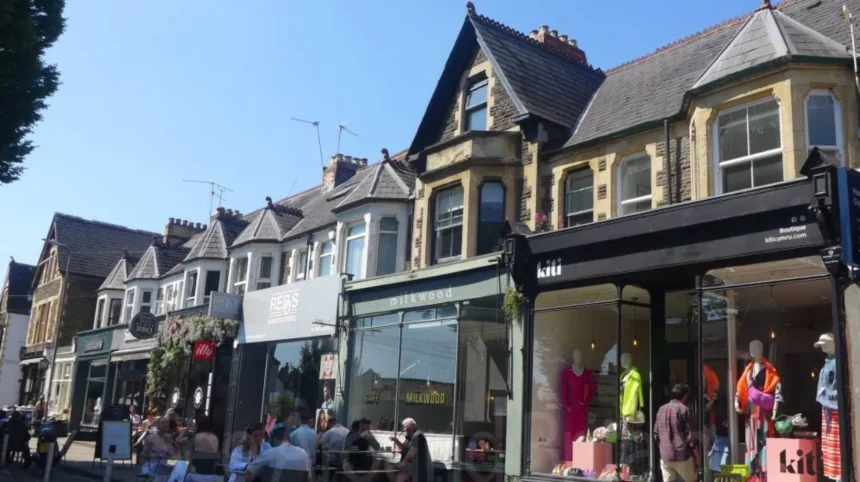
Pontcanna has developed a distinctive independent retail economy within Cardiff. The neighbourhood combines small shops, specialist food businesses, cafés, creative enterprises, markets and hospitality venues with established residential streets and direct access to central Cardiff. This creates a local trading environment based on convenience, specialisation and repeat custom.
- What makes Pontcanna different from a conventional shopping district?
- How did Pontcanna develop its independent retail identity?
- Why does location help independent businesses in Pontcanna?
- Why are small specialist businesses important to Pontcanna retail?
- How does food support independent retail in Pontcanna?
- Why do customers continue to value independent shopping?
- How does community support strengthen Pontcanna’s independent economy?
- What role does Kings Road Yard play in independent retail?
- How does the wider Cardiff retail market support Pontcanna?
- How does the UK high-street trend explain Pontcanna’s resilience?
- How does physical space influence independent retail in Pontcanna?
- Does accessibility by walking and cycling matter to independent shops?
- What challenges do independent retailers in Pontcanna face?
- How are independent businesses adapting to changing consumer behaviour?
- Why is Pontcanna’s mixed-use economy important for the future?
- Why does independent retail still thrive in Pontcanna?
The area is regularly described by Visit Cardiff as a “city village”, reflecting its combination of independent businesses, restaurants, parkland and proximity to the city centre. Pontcanna sits roughly a 20-minute walk from central Cardiff, while Ninian Park and Cathays stations are also within walking distance.
Independent retail in Pontcanna also forms part of a wider change across British high streets. Office for National Statistics data released in March 2026 shows that retail employment fell by 19% on central high streets between 2015 and 2024, compared with a 6% decline on non-central high streets.
Pontcanna fits the characteristics that support smaller neighbourhood businesses. Its retail offer is embedded within a residential district rather than concentrated inside a large shopping centre. Customers encounter independent businesses as part of everyday journeys for food, coffee, personal services, specialist purchases and leisure.
What makes Pontcanna different from a conventional shopping district?
Pontcanna differs because its retail economy is neighbourhood-based, independent-led and closely connected to residential life, hospitality, green spaces and creative activity. Its location near central Cardiff provides additional customer access without removing its local shopping identity.
Pontcanna does not operate like Cardiff’s major shopping destinations. The city centre contains large shopping centres, department stores, national chains and established arcades. Pontcanna instead distributes commercial activity across streets and smaller premises.
This structure supports a different retail model. A customer can combine a food purchase with a coffee, personal service, meal or visit to a local venue without making a dedicated city-centre shopping trip.
Visit Cardiff identifies independent shops and restaurants as defining features of Pontcanna. It also highlights Kings Road Yard, the Taff Trail, Sophia Gardens and nearby parkland as parts of the neighbourhood experience.
The physical setting is important. Retail does not exist separately from the neighbourhood. Shops and food businesses operate alongside homes, offices, creative workspaces and leisure destinations.
This creates regular local footfall. Residents use businesses during ordinary daily journeys, while visitors arrive because Pontcanna is close to central Cardiff and several major attractions.
How did Pontcanna develop its independent retail identity?
Pontcanna’s independent retail identity developed through its evolution as an inner-city residential neighbourhood and its close relationship with Cathedral Road, Pontcanna Street, Kings Road, Romilly Crescent and nearby commercial areas such as Canton and Riverside.
Pontcanna’s built environment contains substantial Victorian and early twentieth-century housing alongside later development. Cathedral Road provides an important historic connection between the city centre and western Cardiff.
Cardiff Council recognises the architectural and historic importance of several areas around Pontcanna. Its conservation-area framework includes Cathedral Road, with an appraisal and design guidance covering shopfronts and signage.
Conservation policy matters for independent retail because traditional buildings provide smaller commercial units and distinctive street frontages. These premises differ from large-format retail buildings designed for national chains.
The relationship between commercial premises and residential buildings also reinforces local shopping. Independent businesses occupy spaces integrated into the urban fabric rather than operating exclusively from purpose-built shopping complexes.
Pontcanna’s history therefore connects physical character with commercial identity. Older streets provide the setting, while newer independent businesses continuously adapt the available premises to contemporary consumer demand.
Why does location help independent businesses in Pontcanna?
Pontcanna benefits from a strategic location because it sits close to central Cardiff while retaining a residential setting. Walking, cycling, bus and nearby rail connections give independent businesses access to both local residents and visitors.
Visit Cardiff states that Pontcanna is approximately a 20-minute walk from Cardiff city centre. It also identifies Cardiff Central, Ninian Park and Cathays as accessible rail stations, while Cardiff Bus routes 24 and 25 serve the area.
This accessibility creates several customer groups.
Local residents provide repeat purchasing. City-centre workers provide daytime demand. Visitors provide additional spending connected to food, leisure and neighbourhood exploration. Students and nearby residents contribute further demand through walking and public transport.
The location also benefits businesses that depend on destination visits. Customers do not need to travel specifically for a major shopping centre. They can include Pontcanna within a broader Cardiff itinerary.
The area’s proximity to Sophia Gardens, Cardiff’s city centre and the Taff Trail adds another source of movement. Visit Cardiff identifies the Taff Trail as a route through Pontcanna Fields, extending north towards Brecon.
For independent retailers, accessibility reduces dependence on a single customer group. A neighbourhood business can serve residents during the week and attract visitors during weekends.
Why are small specialist businesses important to Pontcanna retail?
Specialist businesses give Pontcanna a differentiated retail offer because they focus on defined products, services and experiences. Examples include independent cafés, bakeries, food businesses, creative traders, markets, breweries and specialist hospitality venues.
Independent retail does not simply mean a small shop. It describes a business that operates independently from a large national retail chain or corporate store network.
Specialisation is one of its strongest commercial characteristics. A small business can focus on a particular product category or service rather than maintaining the broad range expected from a major retailer.
Pontcanna demonstrates this through its mix of food, drink, creative and lifestyle businesses.
Visit Cardiff lists businesses such as BRØD, a Danish bakery; Kin + Ilk, a specialty coffee and food business; Ground, which focuses on bread, pastries and brunch; and Canna Deli at Kings Road Yard.
Specialisation creates clear reasons for customers to visit. A bakery attracts customers seeking bakery products. A specialist coffee business attracts customers seeking particular drinks and food. A creative market attracts customers seeking products unavailable through mainstream retail.
This differentiation protects independent businesses from direct competition with large retailers.
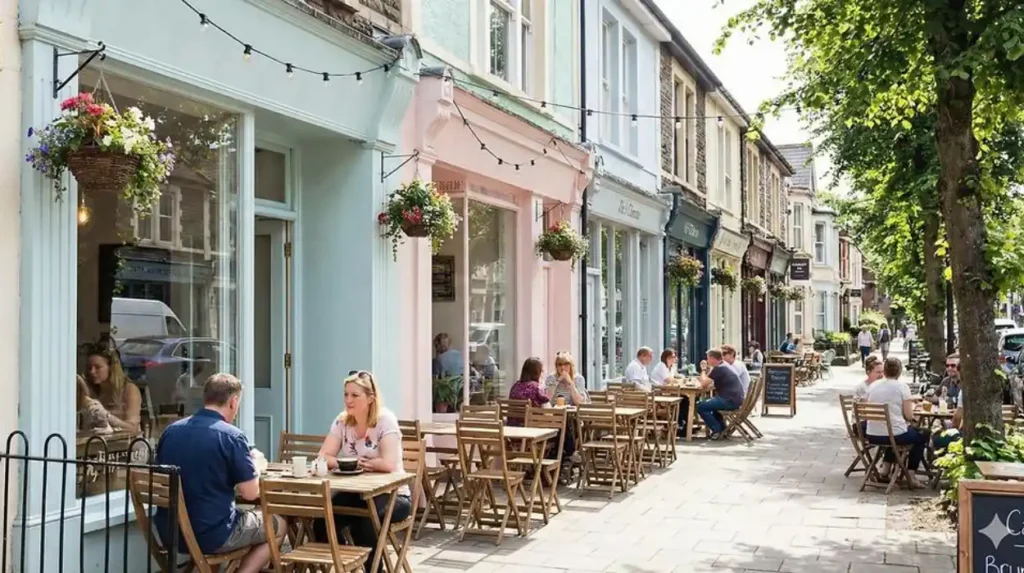
How does food support independent retail in Pontcanna?
Food strengthens Pontcanna’s independent economy by creating frequent purchasing occasions. Cafés, bakeries, delis, restaurants and specialist food businesses encourage repeat visits and connect retail activity with everyday consumption and neighbourhood leisure.
Food is particularly important because customers purchase it frequently. Retail categories based on occasional purchases have lower visit frequency than cafés, bakeries, delis and other everyday food businesses.
Pontcanna has developed a strong food and drink presence. Visit Cardiff lists several independent food businesses across the neighbourhood, including Heaneys, Milkwood, Gorse, Thomas by Tom Simmons and Canna Deli.
The area’s food economy also connects with Welsh produce. Visit Cardiff describes Thomas by Tom Simmons as combining French technique with Welsh ingredients and identifies Milkwood as a Pontcanna restaurant focused on local produce.
This creates additional local economic connections. Food businesses purchase ingredients, employ staff, use professional services and attract customers who spend elsewhere in the neighbourhood.
The commercial effect extends beyond the restaurant or café itself. A successful food destination can increase pedestrian activity around neighbouring businesses.
Why do customers continue to value independent shopping?
Customers continue to use independent shops because neighbourhood businesses provide specialist products, convenient locations, distinctive premises and locally focused services. These characteristics complement online shopping and national retail rather than competing with them on identical terms.
Online retail changed consumer behaviour by making price comparison, home delivery and extensive product selection easier. Independent shops therefore face direct competition in standardised product categories.
Their response is often differentiation.
A local retailer can offer specialist products, immediate availability, personal service and physical browsing. A café can provide an experience that an online retailer cannot replicate. A food business can offer fresh products for immediate consumption.
The Local Government Association has identified a broader shift towards more independent and boutique high-street offers. Its analysis states that vacant space created by large-chain reductions has opened opportunities for smaller businesses, while consumer demand for localism has supported independent-oriented high streets.
Pontcanna reflects this wider pattern. Its commercial identity is not based on having the largest selection of products. It is based on providing a concentrated collection of distinctive local businesses.
How does community support strengthen Pontcanna’s independent economy?
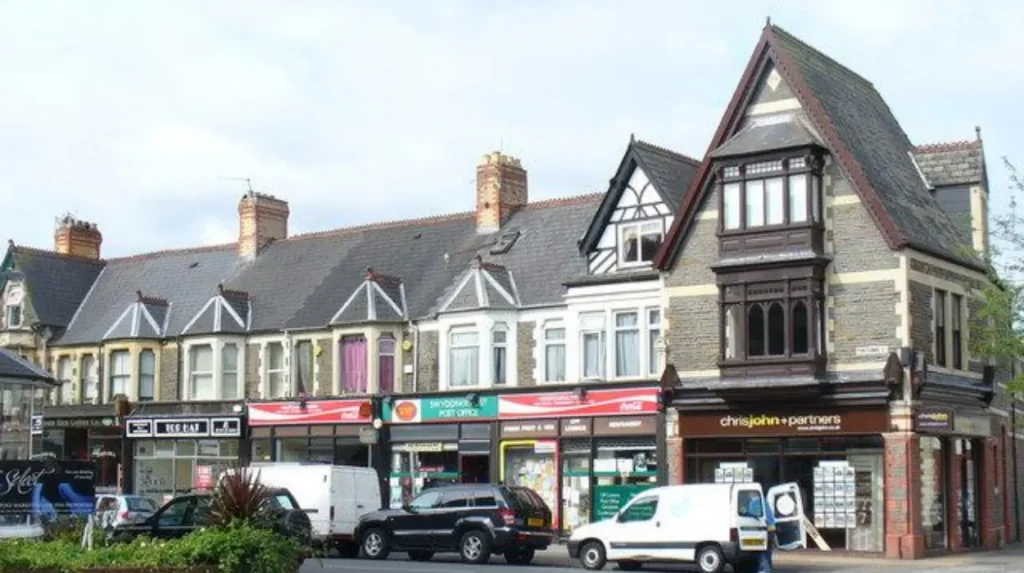
Community support strengthens independent retail through repeat purchasing, local awareness and participation in neighbourhood events. Businesses benefit when residents treat local shops and services as part of everyday life rather than occasional destinations.
Independent retail depends heavily on customer retention. A resident who regularly purchases coffee, food, gifts or services locally creates recurring revenue.
Neighbourhood identity supports this pattern. Pontcanna is recognised as a distinct Cardiff area rather than simply an extension of the city centre. Visit Cardiff explicitly describes it as a “city village”.
Community-focused venues also reinforce this identity.
Kings Road Yard provides an important example. Visit Cardiff describes it as a courtyard hosting markets, fairs and cultural events, alongside live music, local produce and community activity.
These activities create opportunities for small traders to meet customers without needing conventional high-street premises.
Markets also reduce barriers to experimentation. A new trader can test products, build recognition and establish customer relationships through temporary or shared spaces.
What role does Kings Road Yard play in independent retail?
Kings Road Yard provides a concentrated platform for independent businesses, markets and cultural activity in Pontcanna. Its courtyard format brings traders, food businesses, creative enterprises and community events into one locally recognisable commercial destination.
Kings Road Yard is located at 183A Kings Road, Pontcanna, Cardiff, CF11 9DF. Visit Cardiff identifies it as a venue for markets, fairs and cultural events throughout the year.
Its importance extends beyond individual businesses.
A shared destination creates customer density. Several businesses operating close together provide customers with more reasons to visit the same location.
Canna Deli is listed by Visit Cardiff at Kings Road Yard, demonstrating how food businesses form part of the site’s independent commercial offer.
The location also has a creative dimension. Visit Cardiff describes Kings Road Yard as providing workspace for creative activities, including joiners, music producers and bakers.
This combination of retail, production, food and events creates a broader independent-business ecosystem.
How does the wider Cardiff retail market support Pontcanna?
Pontcanna benefits from Cardiff’s established independent retail culture, which includes traditional markets, Victorian arcades, specialist shops and neighbourhood commercial centres. This wider ecosystem makes independent shopping a recognised part of Cardiff’s retail landscape.
Cardiff has a long history of independent commerce. Cardiff Market has traded in one form or another since the 1700s and occupies its current city-centre site within a Victorian market structure. Visit Cardiff describes it as a venue containing independent businesses selling food, coffee, clothing, records and other products.
The city’s arcades provide another historical foundation. Royal Arcade dates from 1858 and is identified by Visit Cardiff as Cardiff’s oldest arcade and first shopping centre. Its current retail mix includes independent and specialist businesses.
Pontcanna therefore operates within a city where independent commerce already has strong cultural and historical recognition.
The neighbourhood model is different from the city-centre market model, but both rely on small businesses, specialist offers and physical customer interaction.
How does the UK high-street trend explain Pontcanna’s resilience?
National retail data shows stronger employment performance on non-central high streets than central high streets between 2015 and 2024. Pontcanna shares several characteristics of non-central neighbourhood retail, including local customers, smaller premises and mixed commercial uses.
The Office for National Statistics provides important national context.
Between 2015 and 2024, retail employment declined by 19% on central high streets and 31% in central shopping centres. Retail employment declined by 6% on non-central high streets and 2% in retail parks.
The data does not provide a specific Pontcanna retail survival rate. It does, however, establish a relevant structural difference between central and non-central retail environments.
Pontcanna’s neighbourhood character aligns more closely with the non-central high-street model.
Its businesses serve residents and local visitors. Commercial premises sit within a mixed urban environment. Hospitality, food, creative businesses and services supplement conventional retail.
This diversification is significant because high streets increasingly depend on more than traditional retail sales.
ONS data also shows that employment in central high streets shifted away from retail towards sectors including accommodation and food services. Accommodation and food-service employment increased by 18% in central high streets between 2015 and 2024.
Pontcanna already contains this mixed-use pattern.
How does physical space influence independent retail in Pontcanna?
Physical space influences independent retail because smaller premises, traditional buildings and mixed-use streets suit specialist businesses. Pontcanna’s established urban form creates commercial units that support cafés, food businesses, creative enterprises and other independent operators.
Independent businesses often require less floor space than department stores and large-format retailers.
A compact premises can support a bakery, café, studio, specialist shop or service provider. This lowers the amount of commercial space required for operation.
Pontcanna’s streets contain varied building forms and commercial locations. Cathedral Road and surrounding streets provide a mixture of premises within a broader residential environment.
Cardiff Council’s conservation framework demonstrates the importance of protecting architectural character in parts of the area. Its Cathedral Road conservation guidance specifically includes shopfront and signage design.
Distinctive shopfronts also improve commercial visibility. Customers recognise businesses through signs, windows and building character.
This produces an environment where independent businesses can build individual identities while contributing to the visual identity of the neighbourhood.
Does accessibility by walking and cycling matter to independent shops?
Walking and cycling are important to neighbourhood retail because they connect businesses directly with nearby homes, parks, workplaces and leisure destinations. Pontcanna’s proximity to central Cardiff and the Taff Trail supports this pedestrian and cycling-oriented commercial pattern.
Visit Cardiff describes Pontcanna as a short walk from central Cardiff and highlights cycling access around Pontcanna Fields.
Walking creates repeated exposure to businesses. Residents pass shops on ordinary journeys instead of travelling specifically to a shopping centre.
Cycling provides a similar advantage for customers travelling across nearby neighbourhoods.
The Taff Trail is especially relevant because it passes through Pontcanna Fields. The route connects Cardiff with destinations north of the city, creating an important recreational corridor.
Transport patterns also affect practical shopping. Cardiff Council has operated parking arrangements covering streets in Pontcanna Central, including Kings Road, Pontcanna Street and sections of Cathedral Road.
Independent retail therefore depends on a combination of transport modes rather than one form of access.
What challenges do independent retailers in Pontcanna face?
Independent retailers in Pontcanna face rising operating costs, competition from online shopping, changing consumer behaviour, property pressures, staffing requirements and access constraints. Business resilience depends on maintaining a clear offer and consistent local demand.
Independence provides flexibility but also creates financial exposure.
A small business generally has fewer locations and fewer revenue streams than a national retailer. Rent, energy, wages, insurance, stock and regulatory costs therefore have a direct effect on business viability.
Online competition creates another structural challenge. Customers can compare prices instantly and access national retailers without travelling.
Independent businesses respond through differentiation, convenience and specialisation.
Property conditions also matter. High-quality premises support customer experience but can increase operating costs. Planning requirements can affect shopfront alterations, signage and changes to historic buildings.
Cardiff Council’s planning framework includes supplementary guidance covering shopfront design and signage.
Parking and traffic management also remain relevant. Cardiff Council’s Pontcanna Central parking-zone information includes pay-and-stay bays, limited waiting bays and resident permits across several streets.
These issues require businesses to balance customer accessibility with the wider management of residential streets.
How are independent businesses adapting to changing consumer behaviour?
Independent businesses are adapting through specialist products, hospitality, local sourcing, events, sustainability initiatives and combined retail experiences. Pontcanna demonstrates this model through cafés, food businesses, markets, creative spaces and community-oriented destinations.
Modern independent retail increasingly combines several functions.
A business can sell products while also providing food, events, workshops or services. This increases reasons for customers to visit physical premises.
Kings Road Yard provides a strong local example through markets, fairs, cultural events, live music and local produce.
Sustainability is another area of adaptation. Cardiff’s Refill Return Cup Scheme provides participating independent venues with a mechanism for reducing single-use cup waste. The scheme launched as a pilot in October 2024 with £90,000 from the UK Shared Prosperity Fund, with evaluation involving Cardiff Business School and Greenwich Business School.
The scheme included Kin + Ilk’s Pontcanna location among participating venues.
Such initiatives demonstrate how independent businesses participate in wider city-level environmental programmes while retaining their local identity.
Explore More Area Guide
Cardiff’s Most Walkable Shopping Areas: Cardiff 2026
Business Growth in Cardiff’s Eastern Suburbs: Cardiff 2026
Why is Pontcanna’s mixed-use economy important for the future?
Pontcanna’s mixed-use economy gives independent retail greater resilience because shopping, food, hospitality, creative activity, residential life and leisure reinforce one another. The neighbourhood’s future retail strength depends on preserving this diversity and maintaining convenient local access.
A neighbourhood retail economy is strongest when customers have multiple reasons to visit.
Pontcanna combines retail-related activity with cafés, restaurants, markets, creative workspaces, parks and cultural venues. Visit Cardiff identifies Sophia Gardens, Pontcanna Fields, Kings Road Yard and the Taff Trail alongside its independent commercial offer.
This creates an interconnected local economy.
A visitor attending an event can purchase food. A resident visiting a café can encounter another business. A customer visiting Kings Road Yard can attend a market or discover a new trader.
The model differs from traditional retail because commercial activity is distributed across several uses.
This diversification is increasingly relevant as national high-street data shows a shift away from retail-only employment towards food, accommodation and other services.
Pontcanna’s established combination of these uses gives the neighbourhood a structure suited to contemporary urban retail.
Why does independent retail still thrive in Pontcanna?
Independent retail still thrives in Pontcanna because the neighbourhood combines a strong residential customer base, central Cardiff accessibility, specialist businesses, distinctive premises, food culture, creative activity and community destinations such as Kings Road Yard.
The evidence points to a clear commercial structure.
Pontcanna is close enough to Cardiff city centre to benefit from visitor movement while remaining sufficiently neighbourhood-focused to generate regular local demand. Its independent businesses provide specialist products and services that differ from standardised chain retail.
Food and hospitality increase customer frequency. Markets and creative spaces create additional reasons to visit. Walking, cycling and public transport improve access. Historic buildings and established streets provide distinctive commercial settings.
The wider UK retail environment also supports this interpretation. ONS data shows that non-central high streets experienced a smaller retail-employment decline than central high streets between 2015 and 2024.
Pontcanna’s strength therefore comes from local relevance combined with city accessibility.
Its independent retail sector is not based on resisting modern retail trends. It operates through specialisation, convenience, mixed uses and community connection.
As Cardiff continues to develop, Pontcanna’s independent retail identity remains closely connected to its physical character, residential population, transport accessibility and diverse commercial ecosystem. These structural factors explain why small businesses continue to form a significant part of the Pontcanna experience.
Why is independent retail popular in Pontcanna?
Independent retail is popular in Pontcanna because the area combines a strong residential community with easy access to central Cardiff. Local shops, cafés, bakeries, delis, restaurants and creative businesses provide specialist products and services that complement larger retailers.