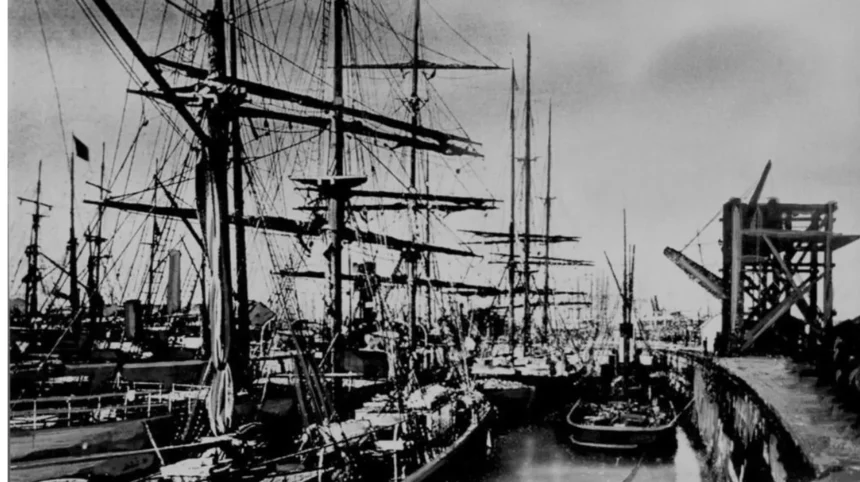
Cardiff’s transformation during the Industrial Revolution was driven by coal, canals, railways, docks, shipping and rapid population growth. From a relatively small port in the late 18th century, Cardiff became the commercial centre of the South Wales coal trade and a major international export port by the early 20th century.
- When did Cardiff become an industrial city?
- How did coal transform Cardiff?
- How did the Glamorganshire Canal support Cardiff’s industrial growth?
- Why were the Bute Docks important to Cardiff?
- How did the Taff Vale Railway change Cardiff?
- How did Cardiff’s population change during industrialisation?
- How did Cardiff Docks create an international community?
- What was working life like in industrial Cardiff?
- How did shipping make Cardiff a global city?
- What role did the coal trade play in Cardiff’s commercial economy?
- How did industrialisation change Cardiff’s physical landscape?
- How did Cardiff’s industrial growth affect the wider South Wales Valleys?
- When did Cardiff’s industrial boom reach its peak?
- Why did Cardiff’s industrial economy decline?
- What remains of Cardiff’s Industrial Revolution today?
- Why is Cardiff’s Industrial Revolution important to the city’s history?
When did Cardiff become an industrial city?
Cardiff became an industrial city during the late 18th and 19th centuries as South Wales iron and coal production expanded. The Glamorganshire Canal opened in 1794, the first Cardiff canal basin followed in 1798, and railways and docks accelerated growth after 1830.
Before industrialisation, Cardiff was a small market town and port associated with Cardiff Castle, local agriculture and coastal trade. Its position on the River Taff gave it access to the Bristol Channel, but its maritime trade remained limited.
The industrial transformation began when iron production expanded in the South Wales Valleys. Industrial centres such as Merthyr Tydfil required reliable transport routes for raw materials and manufactured iron. Cardiff provided a natural outlet to the sea.
The Glamorganshire Canal, completed in 1794, connected Cardiff with the industrial areas around Merthyr. A canal basin linking the waterway with the sea was completed at Cardiff in 1798. This created a direct transport system between the coal and iron-producing valleys and Cardiff’s port.
Coal gradually became more important than iron. South Wales developed extensive supplies of high-quality steam coal, which powered industrial machinery, railway locomotives and steamships. Cardiff became increasingly connected to this expanding industrial economy.
The process was not limited to factories inside Cardiff. Cardiff’s industrial importance came largely from its role as a transport, commercial and maritime centre for the wider South Wales coalfield.
How did coal transform Cardiff?
Coal transformed Cardiff by creating a large export economy based on mines, railways, docks, ships, merchants and associated services. Cardiff Docks exported about 2 million tonnes of coal in 1862 and nearly 11 million tonnes in 1913, establishing the city as a global coal port.
Coal was the central commodity behind Cardiff’s industrial expansion.
The South Wales coalfield contained large reserves of steam coal. Steam coal had high commercial value because it provided an efficient fuel for ships, locomotives and industrial equipment.
As mining expanded in the valleys, Cardiff became the principal maritime outlet for large quantities of coal. Coal travelled from mining communities to Cardiff through canals and, increasingly, railways.
The scale of this trade changed the physical structure of Cardiff. Dock basins expanded, railway sidings multiplied, coal-loading facilities developed and warehouses, offices and commercial buildings appeared around the port.
Museum Wales records that Cardiff exported approximately 2 million tonnes of coal in 1862. By 1913, exports had increased to 10.7 million tonnes, demonstrating the extraordinary expansion of the coal trade.
The coal trade also created demand for shipping services. Cardiff became home to shipowners, brokers, merchants, engineers, dock workers and other occupations linked directly to maritime commerce.
Coal therefore affected far more than the docks. It shaped Cardiff’s employment structure, urban expansion, transport infrastructure and international commercial connections.
How did the Glamorganshire Canal support Cardiff’s industrial growth?
The Glamorganshire Canal connected Cardiff with the South Wales industrial valleys and created an early bulk-transport route for coal and iron. Completed in 1794, it reduced the difficulty of moving heavy industrial materials between inland production centres and Cardiff’s port.
Before the canal, transporting large quantities of minerals overland was expensive and difficult.
The Glamorganshire Canal changed this system by providing a navigable route between Cardiff and the industrial areas around Merthyr. Canal boats carried heavy cargoes more efficiently than conventional road transport.
The canal was particularly important during the early phase of industrialisation when iron production dominated the South Wales industrial economy.
Cardiff’s position at the southern end of the canal made the town a natural transfer point. Goods arriving from the valleys could move onward by sea, while imported materials could travel inland.
A basin connecting the canal with the sea was completed in Cardiff in 1798. This strengthened the relationship between Cardiff’s inland transport network and its maritime trade.
The canal system also encouraged commercial development around Cardiff. Warehousing, trading activity and transport services grew as more industrial goods passed through the town.
Railways eventually became more important for the large-scale coal trade, but the canal represented a crucial early stage in Cardiff’s industrial transport system.
Why were the Bute Docks important to Cardiff?
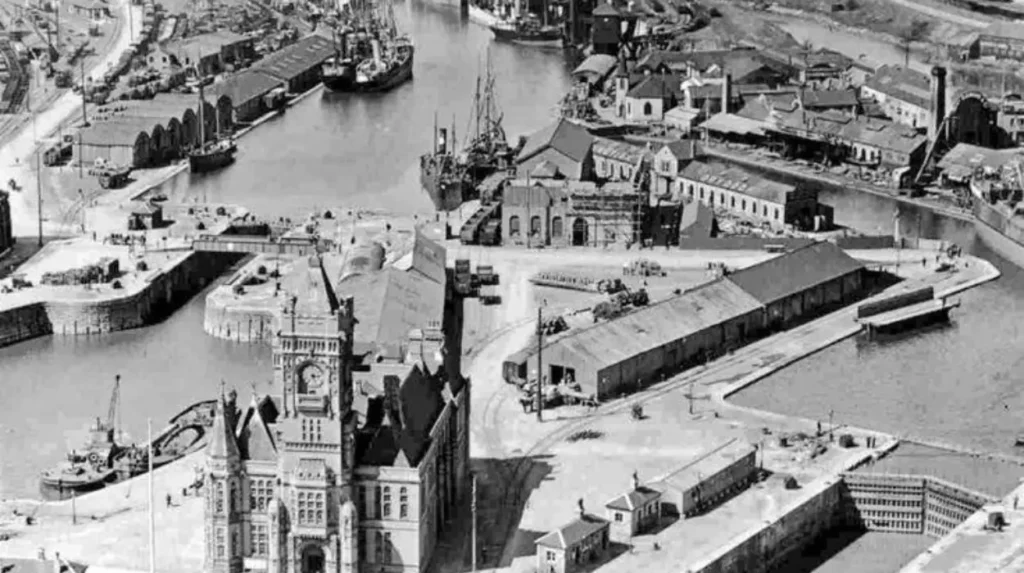
The Bute Docks provided the large-scale harbour infrastructure required for Cardiff’s expanding coal trade. West Bute Dock opened in 1839, East Bute Dock followed in 1859, and later dock expansion enabled Cardiff to handle rapidly increasing international coal shipments.
The development of Cardiff’s docks was closely connected with the Marquesses of Bute, major landowners whose estates controlled significant areas around Cardiff.
The 2nd Marquess of Bute played a major role in expanding Cardiff’s dock facilities. West Bute Dock opened in 1839, providing greater capacity for ships and coal exports.
East Bute Dock opened in 1859. Its construction reflected the increasing volume of industrial cargo moving through Cardiff.
The docks were more than places where ships loaded coal. They became centres of employment and commerce. Dock workers, railway workers, shipbuilders, engineers, merchants and sailors all became part of the expanding waterfront economy.
The dock system also changed Cardiff’s geography. Areas that had previously consisted of marshland, open land and smaller settlements became industrial waterfront districts.
The Bute Docks became closely integrated with railway infrastructure. Railway lines carried coal directly towards dockside loading areas, allowing large quantities of fuel to move efficiently from the valleys to ships.
Museum Wales records that Cardiff’s docks became the foundation of the city’s transformation from a small port into an international coal-exporting centre.
How did the Taff Vale Railway change Cardiff?
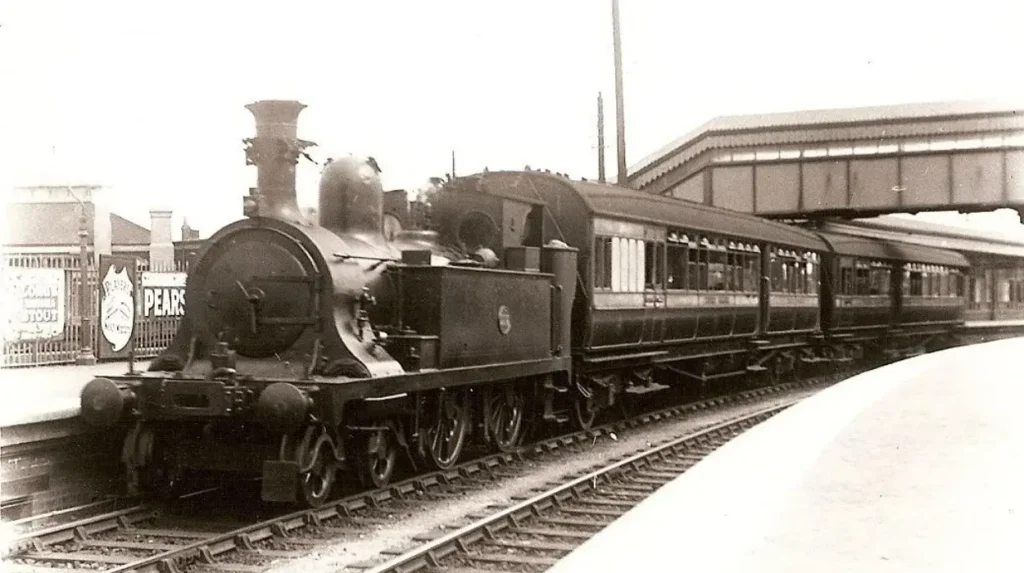
The Taff Vale Railway connected Cardiff directly with the South Wales coalfield and dramatically increased the speed and volume of mineral transport. It opened in 1841 and became a critical link between Cardiff Docks and the industrial valleys.
The Taff Vale Railway opened in 1841. Its development followed the expansion of the canal system and provided a faster method for transporting heavy industrial cargo.
Railways offered major advantages for coal transportation. Trains could move large quantities of coal over longer distances without depending on canal conditions.
The railway connected Cardiff with the industrial communities of the Taff Vale and surrounding coal-producing areas. Coal could then continue directly towards Cardiff’s docks.
This created an integrated industrial supply chain:
coalfield → railway → Cardiff Docks → steamship → international market
The railway also changed Cardiff’s physical environment. Railway sidings, bridges, stations, warehouses and freight facilities became important parts of the city’s industrial landscape.
By the late 19th century, Cardiff’s railway system included several companies and routes serving the port. Museum Wales collections record associations between the Bute Docks, Taff Vale Railway and Great Western Railway.
Rail transport therefore strengthened Cardiff’s position as the maritime outlet for South Wales coal.
How did Cardiff’s population change during industrialisation?
Cardiff’s population increased rapidly during industrialisation as coal mining, dock work, railway employment, shipping and commercial activity attracted workers and their families. The recorded population rose from 5,101 in 1801 to 15,737 in 1851 and 141,989 by 1891.
Population growth provides one of the clearest measures of Cardiff’s industrial transformation.
The historical population data recorded for Cardiff District show a population of 5,101 in 1801. By 1851, the figure had reached 15,737. It then expanded dramatically during the second half of the 19th century, reaching 93,903 in 1881 and 141,989 in 1891.
By 1911, the recorded population had reached 209,634.
This growth resulted from both natural population increase and migration.
Workers arrived from other parts of Wales, Britain and overseas. Employment opportunities existed across the industrial economy, including docks, railways, shipping, construction, engineering, retail and domestic services.
Population growth required new housing, roads, schools, places of worship and public services.
The expansion also created significant differences between neighbourhoods. Wealthy commercial and residential areas developed alongside dense working-class districts close to industrial employment.
Cardiff’s population growth therefore reflected the wider economic transformation created by the coal economy.
How did Cardiff Docks create an international community?
Cardiff Docks became an international maritime community because ships carrying Welsh coal connected the city with ports across the world. Sailors, merchants and migrants from many countries settled around the docks, contributing to the multicultural development of Butetown and Tiger Bay.
The docklands became one of the most internationally connected parts of Cardiff.
The district commonly known as Tiger Bay developed around the docklands. Museum Wales estimates that people from at least 50 nationalities settled in the area.
This international population reflected Cardiff’s position within global shipping networks.
Sailors arrived from different parts of Europe, Africa, the Middle East, Asia and other regions. Some remained in Cardiff rather than returning immediately to sea.
Businesses developed to serve maritime workers. Boarding houses, shops, cafés, public houses, religious institutions and other services became part of the dockland environment.
The result was a multicultural community with connections extending far beyond South Wales.
Industrial Cardiff was therefore not simply a Welsh mining and manufacturing economy. It was also an international port city.
The global movement of coal brought Cardiff into direct contact with international shipping routes and communities.
What was working life like in industrial Cardiff?
Working life in industrial Cardiff centred on physically demanding employment in docks, railways, shipping, construction and related industries. Coal handling involved heavy manual labour, while industrial employment operated within a wider economy of merchants, engineers, sailors, clerks and transport workers.
Industrial employment created a large working population.
Dock work included loading and unloading ships, moving coal wagons and maintaining port infrastructure. Railway workers operated locomotives, maintained tracks and managed freight traffic.
Coal itself generated specialist occupations. Colliery owners, coal merchants, shipping agents and brokers coordinated the movement and sale of fuel.
The waterfront also required engineers, mechanics, ship repair workers and construction labourers.
Working conditions differed significantly between occupations. Manual dock and transport workers faced physically demanding tasks and exposure to coal dust, machinery and heavy cargo.
The industrial economy also supported office-based employment. Cardiff became a major centre for commercial administration, insurance, banking, legal services and shipping management.
The Coal Exchange in Mount Stuart Square became an important commercial institution. Buyers and sellers negotiated coal cargoes while shipping interests arranged vessels for international trade.
Industrial Cardiff therefore contained both manual labour and sophisticated commercial services.
How did shipping make Cardiff a global city?
Shipping connected Cardiff’s coal economy with international markets and made the city’s docks central to global maritime commerce. Cardiff developed a large fleet of steamships, while coal exports supplied industrial and transport systems across international destinations.
Cardiff’s industrial economy depended on maritime transport.
Coal had to move from the South Wales valleys to overseas customers. Cardiff’s docks provided the infrastructure for this process.
The transition from sailing vessels to steamships increased the efficiency of international trade. Cardiff’s own maritime business community expanded alongside the coal trade.
Museum Wales records that Cardiff had approximately 250 tramp steamers under local ownership by 1910.
A tramp steamer was a cargo ship operating without a fixed scheduled route. Such vessels carried cargoes according to commercial demand.
Cardiff’s shipping connections also extended beyond coal. Ships could carry imported goods back to Britain after delivering coal abroad.
The scale of Cardiff’s maritime economy was reflected in its commercial institutions. The Coal Exchange provided a meeting place for coal merchants, shipowners and related businesses.
By the early 20th century, Cardiff was therefore both a coal-exporting port and a major international shipping centre.
What role did the coal trade play in Cardiff’s commercial economy?
The coal trade created a commercial economy involving mining companies, railway companies, dock operators, shipowners, brokers, banks, insurers and legal firms. Cardiff’s industrial prosperity depended on the interaction of these organisations rather than coal extraction alone.
Coal required an extensive network of businesses before it reached an overseas customer.
Mining companies extracted coal in the valleys. Railway companies transported it to Cardiff. Dock companies provided storage and loading infrastructure. Shipowners provided vessels. Brokers negotiated transactions and cargoes.
Banks and insurance companies supported financial and commercial operations. Lawyers handled contracts, property matters and disputes.
This network made Cardiff an important commercial centre.
The Coal Exchange became a symbol of the city’s coal-based financial economy. Transactions involved significant sums because international coal exports operated on a large scale.
The commercial importance of Cardiff extended beyond the physical dockland.
Offices, banks and professional businesses developed in central Cardiff to support the growing economy.
The industrial revolution therefore transformed Cardiff into a city where physical production, transportation, finance and international trade were closely connected.
How did industrialisation change Cardiff’s physical landscape?
Industrialisation reshaped Cardiff through dock construction, railway expansion, industrial buildings, new housing and transport infrastructure. The transformation extended from the River Taff and docklands into expanding residential and commercial districts across the growing city.
The industrial landscape was visible throughout Cardiff.
Dock basins occupied large areas around the waterfront. Railway tracks carried freight towards loading facilities. Coal wagons, cranes, warehouses and ships dominated the port environment.
New roads and bridges supported expanding traffic.
Residential development followed employment growth. Workers needed homes close to docks, railways and other industrial workplaces.
Commercial architecture also expanded. Cardiff developed offices, banks, exchanges and other buildings associated with its growing economic importance.
The landscape changed again as Cardiff expanded beyond its older historic core.
Neighbourhoods such as Butetown became strongly associated with maritime employment and multicultural communities. Other areas developed different residential and commercial functions.
The industrial city was therefore a combination of infrastructure, housing, workplaces and commercial institutions.
How did Cardiff’s industrial growth affect the wider South Wales Valleys?
Cardiff’s industrial growth was directly connected to the South Wales Valleys because the city functioned as a major maritime outlet for coal and other industrial products. The relationship linked inland mining communities with railways, docks, shipping companies and international markets.
Cardiff’s industrial prosperity cannot be understood separately from the valleys.
Coal was extracted in communities across South Wales. Railways transported it southwards towards Cardiff and other ports.
Cardiff provided access to international markets through the Bristol Channel.
This relationship created an economic system extending across a large geographical area.
The valleys supplied mineral resources. Cardiff supplied transport, shipping and commercial services.
The development of rival ports demonstrates the scale of this regional system. Penarth Docks opened in 1865, while Barry Docks opened in 1889. These ports helped relieve congestion and compete for coal traffic.
Barry’s development was particularly significant because congestion affected both the Taff Vale Railway and Cardiff’s Bute Docks.
Cardiff remained a major centre despite this competition because of its established railway, dock and commercial infrastructure.
When did Cardiff’s industrial boom reach its peak?
Cardiff’s coal-export boom reached its high point in the early 20th century, with the port exporting about 10.7 million tonnes of coal in 1913. The wider Welsh coal industry also reached peak output that year before entering a long decline.
The year 1913 provides a major reference point for Cardiff’s industrial history.
Cardiff’s coal exports reached approximately 10.7 million tonnes that year.
Across Wales, coal production reached about 60 million tonnes in 1913, with approximately half exported.
Cardiff’s importance came from the international demand for South Wales steam coal.
The city’s port handled enormous volumes of fuel destined for international markets.
The industrial landscape at this time included extensive docks, railway sidings, coal-handling equipment, shipping offices and large numbers of vessels.
The boom also supported a substantial local business community.
Cardiff had reached the height of its role as a global coal metropolis by the period immediately before the First World War.
Why did Cardiff’s industrial economy decline?
Cardiff’s coal economy declined after the First World War because international energy markets changed, oil became increasingly important as a maritime fuel, overseas coal markets weakened, and economic depression reduced demand. Coal exports eventually ended from Cardiff in 1964.
The decline did not happen immediately after 1913.
Cardiff experienced substantial shipping activity after the First World War. Museum Wales records 122 shipping companies operating in Cardiff in 1920.
However, structural changes affected the coal economy.
Oil became increasingly important as a fuel for ships. International coal markets also became more competitive.
The economic depression of the 1930s created further pressure.
Cardiff’s coal exports fell below 5 million tonnes by 1932, according to Museum Wales.
Welsh coal production itself entered long-term decline after its 1913 peak. Accessible reserves became harder to exploit, while competing energy sources gained importance.
Cardiff continued to function as a port and industrial centre, but its economic identity changed.
Coal exports from Cardiff finally ceased in 1964.
Explore More Area Guide
Former Villages Absorbed Into Cardiff: A History
How Cardiff’s Neighbourhoods Got Their Names
What remains of Cardiff’s Industrial Revolution today?
Cardiff’s industrial heritage remains visible through Cardiff Bay, historic dockland buildings, Butetown, Mount Stuart Square, surviving dock infrastructure and museum collections. Modern Cardiff Bay occupies landscapes created by the city’s coal, shipping and transport economy.
Modern Cardiff looks very different from its industrial predecessor, but the industrial landscape remains important to the city’s identity.
Cardiff Bay occupies the former docklands where coal ships once loaded cargoes.
Historic buildings and districts provide physical evidence of the city’s maritime past. Mount Stuart Square preserves associations with the Coal Exchange and Cardiff’s commercial coal economy.
Butetown retains strong links with the multicultural dockland community that developed during the industrial period.
Museum Wales identifies Cardiff Bay as an important industrial heritage landscape shaped by the iron and coal trade.
The National Museum and other heritage collections preserve photographs, maps, documents, paintings and objects connected with Cardiff’s industrial development.
The transformation of Cardiff Bay also demonstrates the long-term consequences of industrial change. Former working docks became part of a modern waterfront containing cultural, residential, commercial and leisure uses.
The industrial past therefore remains embedded in Cardiff’s geography even where the original industrial functions have disappeared.
Why is Cardiff’s Industrial Revolution important to the city’s history?
Cardiff’s Industrial Revolution changed the city from a small port into an international commercial centre through coal, canals, railways, docks and shipping. Its industrial expansion shaped population growth, neighbourhoods, multicultural communities, architecture and the modern geography of Cardiff.
Cardiff’s industrial history explains much of the city’s modern development.
The process began with transport improvements that connected Cardiff to the South Wales industrial valleys. Canals created the first major links. Railways then increased capacity and speed.
Dock expansion allowed Cardiff to handle increasingly large coal shipments.
International shipping transformed Cardiff into a global commercial centre.
Population growth followed the availability of industrial employment. The city expanded physically and socially as workers, businesses and migrants arrived.
The coal trade also created Cardiff’s international identity. By the early 20th century, the city was one of the world’s major coal-exporting centres.
The industrial economy eventually declined, but its infrastructure and social consequences remained.
Today, Cardiff’s waterfront, Butetown, transport routes, historic commercial buildings and museum collections provide evidence of this transformation.
The Industrial Revolution was therefore not a short episode in Cardiff’s history. It established the economic and urban foundations that shaped the city throughout the 19th and 20th centuries and continue to influence its identity in the 21st century.
When did Cardiff become an industrial city?
Cardiff began its major industrial transformation in the late 18th century. The opening of the Glamorganshire Canal in 1794 and Cardiff’s canal basin in 1798 connected the town with South Wales’ expanding iron and coal industries.