Cardiff combines a compact city centre with extensive residential districts, historic villages, suburban streets, parks, reservoirs and river corridors. The city had a usual resident population of 362,308 in the 2021 Census, compared with about 346,100 in 2011, representing a 4.7% increase over the decade.
- What makes a neighbourhood quiet in Cardiff?
- Is Llandaff one of the quietest neighbourhoods in Cardiff?
- Why is Lisvane suitable for a quieter Cardiff lifestyle?
- Does Radyr offer a peaceful residential setting?
- Is Rhiwbina a quiet neighbourhood in north Cardiff?
- What makes Cyncoed a quieter part of Cardiff?
- Is Whitchurch a peaceful neighbourhood with village character?
- Which Cardiff neighbourhoods have the strongest access to green space?
- How do quiet Cardiff neighbourhoods compare with the city centre?
- Which quiet Cardiff neighbourhood is suitable for different lifestyles?
- How can visitors experience Cardiff’s quieter neighbourhoods?
- Why are quiet neighbourhoods important to Cardiff’s future?
The busiest parts of Cardiff include the city centre, university districts, major shopping streets, entertainment areas and locations around large sporting venues. Residential Cardiff has a different character. Several neighbourhoods provide quieter streets, established housing, green spaces, village centres and access to walking routes while remaining within the Cardiff local authority area.
The phrase quiet neighbourhoods in Cardiff refers to residential areas where lower-density housing, green space, village-style streets, parks or distance from major entertainment concentrations create a calmer urban environment. Quiet does not mean isolated. Neighbourhoods such as Llandaff, Lisvane, Radyr, Rhiwbina, Cyncoed and Whitchurch retain connections to the wider city.
Cardiff Council recognises neighbourhoods including Cyncoed, Lisvane and Thornhill, Llandaff, Radyr, Rhiwbina, Whitchurch and Tongwynlais as distinct electoral wards or ward groupings. ONS geography also provides neighbourhood-level statistical data for Cardiff, allowing residential areas to be examined through census information rather than citywide averages alone.
What makes a neighbourhood quiet in Cardiff?
A quiet Cardiff neighbourhood generally combines residential streets, limited late-night activity, access to green space, established housing and practical transport connections. Llandaff, Lisvane, Radyr, Rhiwbina, Cyncoed and Whitchurch illustrate different versions of this residential character.
Quietness is not an official Cardiff planning classification. It is a practical description based on the physical and social character of an area.
Several factors help distinguish quieter residential districts from busier urban neighbourhoods. Housing density is important because streets dominated by houses generally experience a different level of pedestrian and commercial activity from central areas containing apartments, offices, nightlife venues and major retail destinations.
Green space is another important factor. Parks, playing fields, river corridors, woodland and reservoirs provide places away from main roads and commercial streets. Cardiff Council manages a large network of parks and green spaces, with 21 council-managed sites holding Green Flag status in 2026. These include Llandaff Fields, Parc Cefn Onn, Roath Park, Heath Park, Hailey Park and Western Cemetery.
Planning designations also provide useful context. Cardiff has 27 conservation areas protecting places with special architectural or historic interest. Llandaff, Rhiwbina Garden Village and Old St Mellons are among the designated areas listed by Cardiff Council.
Transport access also matters. A neighbourhood can remain peaceful while having strong connections through rail, bus, walking and cycling routes. Cardiff Council’s Active Travel Network Map covers wards including Cyncoed, Lisvane and Thornhill, Llandaff, Radyr and Rhiwbina.
For residents and visitors, quietness therefore involves more than distance from the city centre. Street layout, green infrastructure, commercial activity and transport patterns all influence the character of a neighbourhood.
Is Llandaff one of the quietest neighbourhoods in Cardiff?
Llandaff is a historic residential neighbourhood known for its cathedral, village streets, green spaces and conservation area. Its comparatively tranquil historic core provides a clear contrast with central Cardiff while remaining connected to the wider city.
Llandaff is one of Cardiff’s most distinctive residential districts. The area developed around an ancient settlement and the Cathedral Church of SS Peter and Paul, Dyfrig, Teilo and Euddogwy. Visit Cardiff describes Llandaff as a historic and picturesque neighbourhood with heritage and green spaces.
The cathedral is a major feature of the neighbourhood. Visit Cardiff dates the present cathedral’s architecture to around 1120 and identifies the site as one of the oldest Christian locations in Britain. The historic settlement around the cathedral forms part of the Llandaff Conservation Area.
The conservation designation is significant for the neighbourhood’s physical character. Conservation areas are designated because of architectural or historic interest. Cardiff Council states that national planning controls apply within conservation areas, with additional controls in some locations through Article 4 Directions.
Llandaff also benefits from proximity to green space. Llandaff Fields provides a large open recreational area between the neighbourhood and central Cardiff. The Taff Trail and River Taff create further opportunities for walking and cycling.
Insole Court adds another layer of heritage. The Victorian mansion and its grounds provide a cultural and green-space destination within Llandaff. Visit Cardiff identifies Insole Court alongside Llandaff Cathedral and the remains of the Bishop’s Palace as major local attractions.
Llandaff is not completely silent. It contains shops, cafés, restaurants, schools, roads and community facilities. The area also receives visitors attracted by its historic buildings. Its quieter character is strongest in the residential streets and around the historic village and cathedral rather than on busier through-routes.
Why is Lisvane suitable for a quieter Cardiff lifestyle?
Lisvane is a predominantly residential area in north Cardiff with access to extensive green and blue space, including Lisvane and Llanishen Reservoirs. Its suburban setting combines housing, local facilities and outdoor space with connections to Cardiff’s wider transport network.
Lisvane occupies a northern position within Cardiff and forms part of the Lisvane and Thornhill electoral ward. The neighbourhood is included within Cardiff’s northern residential area alongside Rhiwbina, Llanishen, Heath, Cyncoed, Penylan, Pentwyn, Pontprennau and Old St Mellons.
One of Lisvane’s defining features is its proximity to Lisvane and Llanishen Reservoirs. The reservoirs are Victorian infrastructure dating from the late nineteenth century. The combined site covers 110 acres of green and blue space and is recognised for biodiversity and outdoor recreation.
The reservoir site contains approximately 5 kilometres of circular paths. It also supports water activities including stand-up paddleboarding, sailing, canoeing and kayaking. The landscape contains woodland, hedgerows and habitats supporting birds and other wildlife.
The site has two Sites of Special Scientific Interest. Visit Cardiff identifies ecological features including overwintering birds and grassland fungi, with up to 25 species of rare waxcap fungi recorded at the site.
Lisvane therefore has a strong relationship with open space. Streets around the residential area provide a suburban environment while the reservoir landscape creates a major recreational resource nearby.
The neighbourhood also has practical local facilities. Cardiff Council identifies Lisvane within its northern childcare planning area, while council services and community facilities are distributed across the surrounding northern districts.
Lisvane suits people looking for a residential part of Cardiff where access to green space is an important component of daily life. Its distance from the central entertainment district also reduces exposure to the concentrated activity found in central Cardiff.
Does Radyr offer a peaceful residential setting?
Radyr provides a suburban and village-style residential environment on the western side of Cardiff. The area combines established housing, green surroundings, community facilities and rail access, giving residents a quieter setting without removing practical connections with central Cardiff.
Radyr is located in west Cardiff and is associated administratively with Radyr and Morganstown. ONS identifies Radyr as a distinct Cardiff electoral ward and Radyr, Morganstown and Gwaelod-y-garth as a middle-layer statistical area.
The neighbourhood has a strong suburban and village character. Housing extends around local roads, community facilities and green areas, while the River Taff and surrounding countryside contribute to the area’s landscape.
Radyr’s railway connection is an important part of its accessibility. Radyr station sits on Cardiff’s rail network and provides connections towards Cardiff Central and other destinations. This creates a useful combination of residential separation and public transport access.
The wider Radyr area also links into Cardiff’s walking and cycling network. Cardiff Council includes Radyr within its Active Travel Network Map programme.
Green space is central to Radyr’s identity. The western side of Cardiff provides easier access to rural landscapes and the countryside beyond the denser urban districts. The nearby Taff corridor also forms part of the wider network of routes connecting western Cardiff.
Radyr is not a completely rural location. It remains within Cardiff and contains schools, shops, roads, housing and community services. Traffic and activity increase along main routes and around local centres.
The neighbourhood is therefore best understood as a connected suburban district rather than an isolated village. Its quieter character comes from its residential layout, western location, green surroundings and separation from Cardiff’s busiest central streets.
Is Rhiwbina a quiet neighbourhood in north Cardiff?
Rhiwbina is a north Cardiff residential neighbourhood recognised for its garden-village heritage, established housing and access to parks and community facilities. Its planned character and lower-density streets distinguish it from Cardiff’s denser central residential districts.
Rhiwbina is one of Cardiff’s established northern residential communities. The area includes Rhiwbina Garden Village, which Cardiff Council lists as a conservation area because of its architectural and historic character.
Garden-village planning is important to understanding Rhiwbina. The design approach integrates housing with landscaped areas, gardens and communal open space. This produces a different urban form from dense streets dominated by continuous terraces and commercial premises.
Rhiwbina also benefits from access to nearby green spaces. The northern part of Cardiff contains parks, playing fields, woodland and recreational routes. Cardiff Council’s Green Flag network includes nearby sites such as Parc Cefn Onn, while community green spaces provide additional local recreation.
The neighbourhood has its own community infrastructure. Rhiwbina Hub provides local services, and the area has cafés, shops and other everyday facilities. Visit Cardiff’s current information also lists Rhiwbina businesses and community locations.
Rhiwbina’s quiet character is strongest away from major through-roads. Local residential streets provide a more settled environment, while busier roads provide connections towards Llanishen, Whitchurch and other parts of Cardiff.
The area also sits within Cardiff’s northern transport and active-travel geography. Cardiff Council’s active-travel mapping includes Rhiwbina as one of the city’s wards.
Rhiwbina therefore combines heritage, residential planning, green space and local services. Its garden-village identity remains one of the clearest reasons it is associated with quieter residential Cardiff.
What makes Cyncoed a quieter part of Cardiff?
Cyncoed is an established residential district in north-east Cardiff with substantial housing areas, access to Roath Park and green surroundings. Its distance from the city centre’s entertainment concentration provides a predominantly residential environment with practical urban connections.
Cyncoed occupies an important position between central Cardiff and the city’s northern districts. The neighbourhood is included within Cardiff’s northern childcare planning area alongside communities such as Rhiwbina, Heath, Lisvane and Llanishen.
Its residential character is supported by established streets and housing areas. Cyncoed contains a mixture of property types, including detached and semi-detached homes as well as other residential forms.
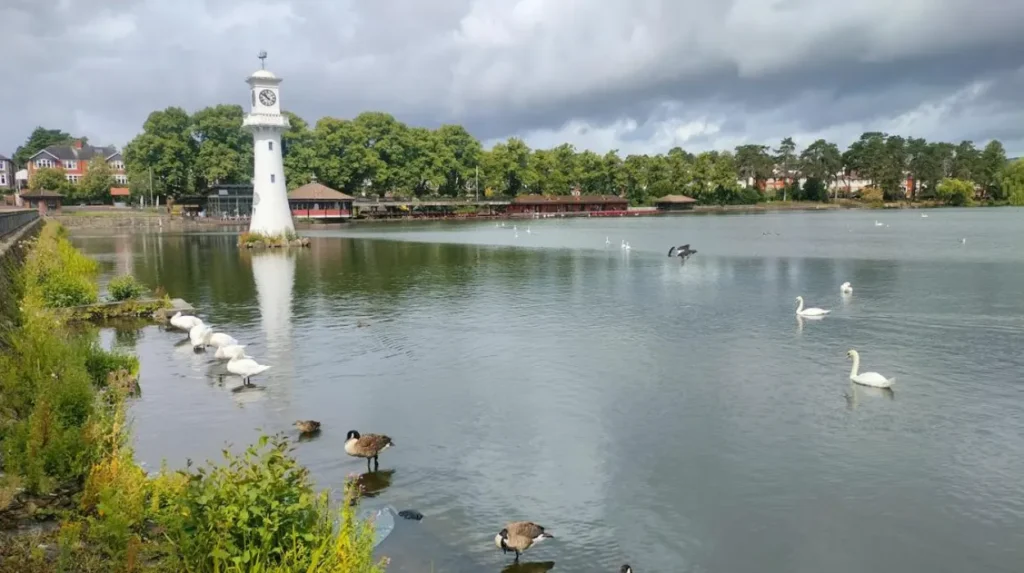
Roath Park is one of the area’s most important green-space assets. The park and lake extend across the boundary between Cyncoed and Penylan. Cardiff Council lists Roath Park and Roath Park Lake and Gardens among its conservation areas, reflecting their historic landscape significance.
Roath Park also holds current Green Flag recognition. Cardiff retained 21 Green Flag sites in 2026, with Roath Park receiving a Green Heritage Site Accreditation for the first time.
The park provides walking routes, landscaped areas, gardens and access to the lake. These features give nearby residential streets an immediate connection with a substantial public landscape.
Cyncoed is also home to Cardiff Metropolitan University’s Cyncoed Campus. The campus contains sports and educational facilities and is close to Roath Park Lake.
The university presence creates activity in specific parts of the neighbourhood. However, the wider district remains predominantly residential. Quietness therefore varies by street and proximity to schools, university facilities and main roads.
Cyncoed is particularly relevant for people who want residential surroundings while remaining relatively close to central Cardiff and the city’s eastern and northern districts.
Is Whitchurch a peaceful neighbourhood with village character?
Whitchurch combines a traditional village centre with established residential streets, local businesses and access to green space in north Cardiff. Its community facilities and distance from the city centre create a residential environment distinct from central Cardiff’s denser urban neighbourhoods.
Whitchurch is a long-established community in north Cardiff. Cardiff Council groups Whitchurch with Tongwynlais for electoral purposes, while ONS recognises Whitchurch and Tongwynlais as a Cardiff electoral ward.
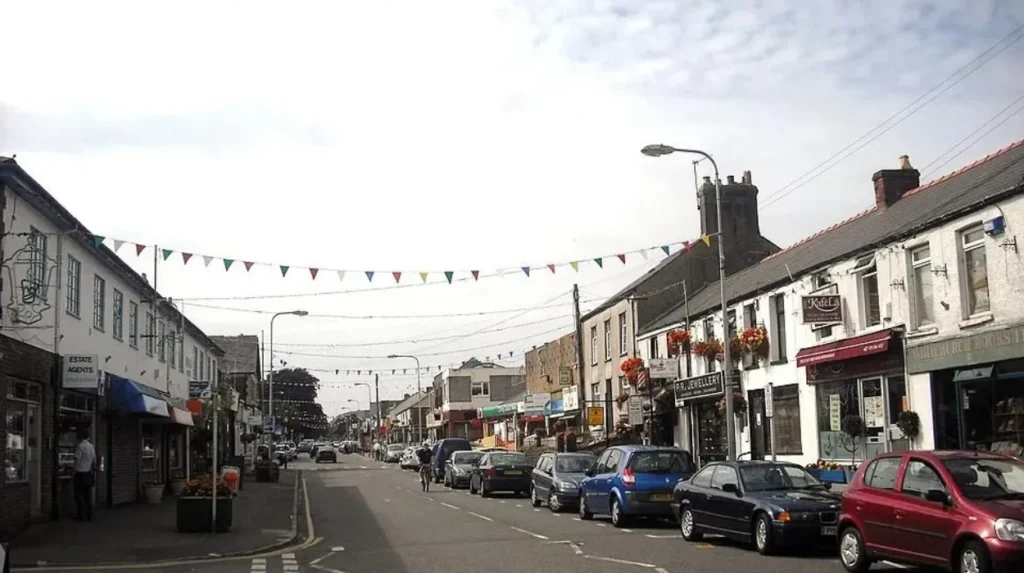
Visit Cardiff describes Whitchurch as a quaint village setting with character, vibrancy and eateries. This combination gives the neighbourhood a different identity from the highly urbanised areas surrounding Cardiff city centre.
The local centre contains shops, cafés, restaurants and community services. These facilities reduce the need for residents to travel into central Cardiff for everyday activities.
Whitchurch also has access to green infrastructure. Nearby areas include Hailey Park and the River Taff corridor, while Forest Farm provides another significant natural and recreational landscape in north-west Cardiff. Cardiff Council’s Green Flag programme includes Hailey Park and Forest Farm among recognised green spaces.
The neighbourhood’s residential streets extend away from the village centre. This produces different levels of activity across the area. Commercial activity is concentrated around particular roads, while surrounding residential streets provide a quieter environment.
Transport connections also support the neighbourhood. Whitchurch has rail and bus links, while major roads connect the district with Cardiff’s wider northern and western areas.
The result is a practical balance between local services and residential surroundings. Whitchurch offers village-style amenities without requiring residents to live outside Cardiff’s urban boundary.
Which Cardiff neighbourhoods have the strongest access to green space?
Llandaff, Lisvane, Rhiwbina, Cyncoed, Radyr and Whitchurch all provide strong access to green space, but their landscapes differ. Llandaff centres on river and park corridors, Lisvane on reservoirs, Cyncoed on Roath Park, and Radyr on western countryside.
Green space is one of the clearest structural differences between central Cardiff and its quieter residential districts.
Llandaff benefits from Llandaff Fields, the River Taff and the Taff Trail. The historic village also contains landscaped spaces around the cathedral and Insole Court. These resources create several types of outdoor environment within a relatively compact area.
Lisvane has one of the most substantial blue-green resources in Cardiff through Lisvane and Llanishen Reservoirs. The 110-acre site contains 5 kilometres of circular paths and significant ecological habitats.
Cyncoed benefits from Roath Park and its lake. The park is both a recreational space and a conservation area. Its Green Flag recognition confirms its continuing role as a high-quality public green space.
Rhiwbina has access to the wider northern park and woodland network, including Parc Cefn Onn. Its garden-village design also incorporates landscaped residential surroundings.
Radyr benefits from the western edge of Cardiff, where residential areas connect with the Taff corridor and countryside landscapes.
Whitchurch provides access to green spaces including Hailey Park and Forest Farm. These locations support walking, recreation, wildlife observation and outdoor activities.
Cardiff Council’s 2026 Green Flag results demonstrate the breadth of the city’s green infrastructure. The recognised sites include parks, wetlands, cemeteries, community spaces and other landscapes across the capital.
How do quiet Cardiff neighbourhoods compare with the city centre?
Quiet residential neighbourhoods differ from Cardiff city centre through lower concentrations of nightlife, retail, offices and major visitor attractions. They retain access to central facilities through public transport, walking, cycling and road connections while providing more residential surroundings.
Cardiff city centre contains the highest concentration of retail, offices, entertainment venues, visitor attractions and major transport facilities. The Principality Stadium, Cardiff Castle, St David’s Dewi Sant, the central shopping streets and major entertainment venues all generate significant visitor activity.
Residential neighbourhoods operate differently. Their primary land uses are housing, schools, parks, local shops and community facilities.
The distinction is visible in Cardiff’s neighbourhood structure. ONS identifies separate wards including Cathays, Plasnewydd, Riverside, Llandaff, Cyncoed, Lisvane and Thornhill, Radyr and Rhiwbina.
Cathays and parts of Plasnewydd contain large student populations and substantial concentrations of rented accommodation, while neighbourhoods such as Llandaff, Lisvane and Rhiwbina have stronger suburban and village characteristics.
Quietness also varies according to the time of day. A residential street can remain calm during most periods while becoming busier near school entrances, commuter routes or local shopping centres.
Distance from central Cardiff is another factor. Visit Cardiff describes Llandaff as just under an hour’s walk from the city centre, while its local attractions and village streets create a distinct environment within Cardiff.
For residents, the practical advantage of quieter neighbourhoods is the combination of residential surroundings and access to urban infrastructure. Cardiff’s compact geography allows many suburban communities to remain connected to the central area.
Explore More Area Guide
Historic Maps Showing Cardiff’s Growth and Urban History
Cardiff’s Lost Cinemas: Capitol, Plaza and Historic Picture Houses
Which quiet Cardiff neighbourhood is suitable for different lifestyles?
Different quiet Cardiff neighbourhoods suit different priorities. Llandaff combines heritage and river walks, Lisvane offers reservoirs and suburban space, Rhiwbina provides garden-village character, Cyncoed borders Roath Park, Radyr offers western greenery, and Whitchurch provides village-style amenities.
For historic character, Llandaff stands out because of its cathedral, conservation area, historic streets and Insole Court. Cardiff Council’s conservation framework confirms the importance of the area’s architectural and historic character.
For reservoir and outdoor access, Lisvane is particularly relevant. The Lisvane and Llanishen Reservoir site provides 110 acres of green and blue space and 5 kilometres of circular paths.
For garden-village character, Rhiwbina is a clear example. Its conservation designation protects an area with specific architectural and historic qualities.
For park access, Cyncoed provides proximity to Roath Park and Roath Park Lake. The park’s heritage status and Green Flag recognition reinforce its importance as a major public landscape.
For western suburban living, Radyr provides residential streets, rail connections and access to the wider Taff corridor and countryside.
For village-style convenience, Whitchurch combines local shops, food businesses, community facilities and transport connections with surrounding residential streets.
These distinctions matter because quietness is not a single measurable neighbourhood characteristic. A person prioritising heritage has different requirements from someone prioritising reservoirs, rail access, parks or local shopping.
How can visitors experience Cardiff’s quieter neighbourhoods?
Visitors can experience quieter Cardiff neighbourhoods through walking routes, historic sites, parks, reservoirs, village centres and local cafés. Llandaff, Lisvane, Rhiwbina, Cyncoed, Radyr and Whitchurch each provide a different way to explore residential Cardiff beyond the city centre.
Llandaff works particularly well for a heritage-focused visit. Visitors can explore the cathedral, Cathedral Close, historic streets and Insole Court before walking towards the River Taff and Llandaff Fields. Visit Cardiff identifies heritage and green spaces as defining features of the neighbourhood.
Lisvane provides an outdoor-focused experience through the reservoirs. The site contains walking paths, woodland, water landscapes, wildlife habitats and a visitor centre.
Cyncoed provides access to Roath Park and the lake. Visitors can combine the park with surrounding residential streets and nearby local facilities.
Rhiwbina is suitable for visitors interested in Cardiff’s planned residential heritage. Its garden-village conservation area provides an example of twentieth-century suburban planning within the modern city.
Whitchurch provides a village-centre experience with independent businesses and local services. Its position near northern green spaces allows visitors to combine food, shopping and walking.
Radyr offers a western Cardiff perspective. Its residential landscape and connections to the River Taff and surrounding countryside provide a different experience from the central visitor district.
Visitors should use public transport, walking and cycling where practical. Cardiff Council’s Active Travel Network Maps provide information for wards across the city, including Llandaff, Lisvane and Thornhill, Cyncoed, Radyr and Rhiwbina.
Why are quiet neighbourhoods important to Cardiff’s future?
Quiet residential neighbourhoods contribute to Cardiff’s wider urban structure by combining housing with parks, community facilities, heritage areas and active-travel connections. Their future character depends on balancing housing growth, transport, environmental protection, public services and the preservation of established neighbourhood identity.
Cardiff continues to experience population growth. The 2021 Census recorded 362,308 usual residents, compared with around 346,100 in 2011. Cardiff’s growth rate of 4.7% was higher than the 1.4% increase recorded across Wales during the same period.
Population growth increases demand for housing, schools, transport, recreation and community services. Quiet neighbourhoods therefore form part of a larger planning challenge rather than existing separately from Cardiff’s growth.
Planning controls help manage changes to historic environments. Cardiff currently has 27 conservation areas, and Cardiff Council provides conservation appraisals and planning guidance for designated neighbourhoods.
Green infrastructure is equally important. Cardiff’s 21 Green Flag sites in 2026 demonstrate the scale of the city’s managed green-space network. The network includes major parks, wetlands, cemeteries and community green spaces.
Active travel is another part of the future urban structure. Cardiff Council maintains ward-level Active Travel Network Maps covering routes and planned infrastructure across residential districts.
The future of quiet Cardiff therefore depends on maintaining a functional relationship between homes, transport, green space, heritage and local services.
Llandaff, Lisvane, Rhiwbina, Cyncoed, Radyr and Whitchurch demonstrate that a quiet neighbourhood does not require separation from the city. Each remains connected to Cardiff’s transport network and public infrastructure while retaining a distinct residential identity.
For anyone researching the best quiet neighbourhoods in Cardiff, the most useful approach is to compare the characteristics that create quietness: housing density, green space, local amenities, transport connections, heritage protection and proximity to major activity. Cardiff’s residential geography provides several different combinations of these features, making quiet living and city access compatible within the same urban area.
What are the quietest neighbourhoods in Cardiff?
Llandaff, Lisvane, Rhiwbina, Cyncoed, Radyr and Whitchurch are among Cardiff’s quieter residential neighbourhoods. They combine established housing with green spaces, local facilities and connections to the wider city.