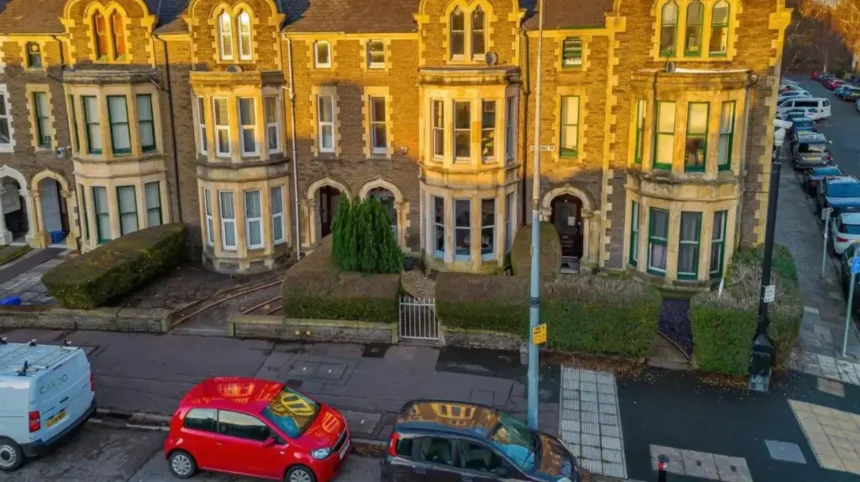
Cardiff’s most scenic residential streets combine historic architecture, mature trees, landscaped gardens, open-space views and distinctive townscape character. The strongest examples occur around Llandaff, Pontcanna, Cathedral Road, Roath Park, Penylan, Cyncoed and Rhiwbina, where historic planning and residential development remain visible today.
- What makes a residential street scenic in Cardiff?
- Which Cardiff residential streets are known for historic character?
- Why is Cathedral Road one of Cardiff’s most distinctive residential streets?
- Which streets around Pontcanna are especially scenic?
- Why is Llandaff one of Cardiff’s most scenic residential areas?
- Which streets around Roath Park have the strongest scenic setting?
- What makes Penylan residential streets visually attractive?
- Why is Cyncoed important when exploring scenic Cardiff streets?
- What makes Rhiwbina Garden Village different from other scenic Cardiff streets?
- Which Cardiff residential streets combine architecture with mature greenery?
- How do conservation areas protect Cardiff’s scenic residential character?
- Why do Cardiff’s scenic residential streets matter for the city’s future?
- How can visitors explore Cardiff’s most scenic residential streets?
What makes a residential street scenic in Cardiff?
A scenic Cardiff residential street combines architectural character, mature planting, attractive gardens, consistent building lines, open-space connections and historic townscape value. Streets beside parks, village centres and conservation areas often provide the strongest combination of these features.
Scenic residential streets are not defined by a single architectural style. Cardiff developed rapidly during the nineteenth and twentieth centuries, creating terraces, villas, semi-detached houses, detached homes, garden-village properties and planned suburban estates.
Cardiff Council currently identifies 27 conservation areas, covering places with special architectural or historic interest. These include Llandaff, Cathedral Road, Rhiwbina Garden Village, Roath Park, Roath Park Lake and Gardens, Roath Mill Gardens, Oakfield Street, Tredegarville and Wordsworth Avenue.
This conservation framework helps explain why several Cardiff residential streets retain distinctive visual character. Planning controls can regulate alterations to buildings, windows, trees and other features within designated areas.
Scenery also depends on landscape. Cardiff Council records 18 historic parks and gardens on the Cadw Register of Landscapes, Parks and Gardens of Special Historic Interest in Wales. Twelve are public parks.
The relationship between homes and these green spaces is particularly important. Roath Park, for example, retains its surrounding villa setting, while Pontcanna Fields and Llandaff Fields create a large historic open-space landscape beside residential neighbourhoods.
Which Cardiff residential streets are known for historic character?
Cardiff’s strongest historic residential streets include Cathedral Road, Plasturton Avenue, Wordsworth Avenue, streets around Roath Park, parts of Llandaff and roads within Rhiwbina Garden Village, where historic architecture, planned layouts and mature landscaping remain important.
Cardiff’s residential heritage developed in several stages. Industrial expansion transformed the city during the nineteenth century, while population growth produced large areas of Victorian and Edwardian housing.
The Victorian and Edwardian periods are particularly visible around central and western Cardiff. Large villas appeared along important residential routes, while terraces and semi-detached properties expanded into neighbouring districts.
Cathedral Road is one of the clearest examples. Cardiff Council identifies Cathedral Road Conservation Area as a designated historic area and provides a specific appraisal and design guidance for the street.
Roath and Penylan provide another important group of historic residential streets. Their development is closely connected with Roath Park, which was laid out between 1887 and 1894. The park was designed by William Harpur and planted by William Pettigrew.
Rhiwbina represents a different planning tradition. Rhiwbina Garden Village Conservation Area protects a planned residential environment associated with the garden-village movement. The area is formally recognised by Cardiff Council as a conservation area.
Llandaff provides an older historical layer. Its village character predates modern Cardiff and includes historic buildings, streets and spaces associated with Llandaff Cathedral and the River Taff landscape.
These different development periods give Cardiff a broad range of scenic residential environments rather than one uniform architectural identity.
Why is Cathedral Road one of Cardiff’s most distinctive residential streets?
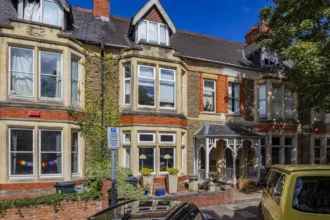
Cathedral Road is distinctive because it combines substantial historic villas, mature greenery, landscaped frontages and proximity to Pontcanna Fields and Llandaff Fields. Its conservation-area status recognises the architectural and historic character of this important Cardiff residential route.
Cathedral Road runs through the western side of central Cardiff and connects the city centre area with Pontcanna and nearby residential districts.
Its architectural character is closely associated with large nineteenth- and early twentieth-century houses. Many properties occupy generous plots with front gardens, mature trees and traditional boundary treatments.
The street also has an important landscape relationship with Pontcanna Fields and Llandaff Fields. Cadw designated these adjoining fields as a Grade II* registered historic park and garden in 2022. The designation recognises their historic interest as a well-preserved urban public park.
The fields were developed in major phases in 1879 and 1899–1901. Their axial lime avenue remains one of the defining landscape features.
This combination of historic housing and large public green space gives Cathedral Road a strong townscape identity.
Cardiff Council also maintains specific design guidance for Cathedral Road Conservation Area. Conservation status does not freeze a street in time, but it establishes planning considerations for changes that affect its character.
For visitors interested in Cardiff architecture, Cathedral Road provides a useful example of how residential development and historic parkland developed alongside each other.
Which streets around Pontcanna are especially scenic?
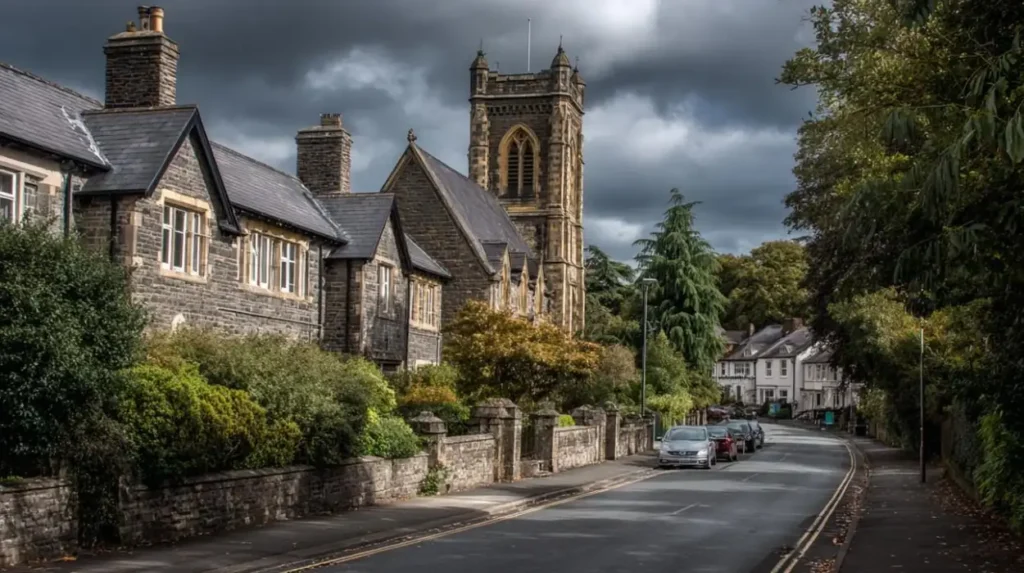
Plasturton Avenue, Plasturton Gardens, Plasturton Place, Sophia Walk and nearby Pontcanna streets form a visually distinctive residential group, combining period housing, mature greenery, traditional street layouts and convenient access to Cathedral Road and the historic Pontcanna Fields landscape.
Pontcanna is one of Cardiff’s best-known residential neighbourhoods west of the River Taff. Its streets contain a mixture of Victorian and Edwardian housing, later conversions and modern residential changes.
Several roads in the area are formally recognised within Cardiff’s parking and planning framework, including Plasturton Avenue, Plasturton Gardens, Plasturton Place, Sophia Walk, Pontcanna Street and Cathedral Road.
Plasturton Avenue is particularly notable for its mature residential environment. The street forms part of a wider neighbourhood where traditional houses sit close to parks and pedestrian routes.
The scenic quality of Pontcanna is strongly connected to its green infrastructure. Pontcanna Fields and Llandaff Fields provide a major open-space setting immediately north of the neighbourhood.
The historic fields also connect visually and physically with Bute Park and Sophia Gardens. Cadw describes the combined parkland as a substantial tract of open space in central Cardiff.
Residential streets near this landscape benefit from mature trees, garden boundaries and views towards open space. The result is a neighbourhood where urban housing and large-scale public landscapes exist in close proximity.
Why is Llandaff one of Cardiff’s most scenic residential areas?
Llandaff combines historic village streets, traditional houses, mature gardens, the River Taff landscape and proximity to Llandaff Cathedral. Its conservation-area designation protects the architectural and historic character of one of Cardiff’s oldest established residential environments.
Llandaff has a different character from the planned Victorian suburbs. Its history is connected with the historic ecclesiastical centre surrounding Llandaff Cathedral.
Cardiff Council lists Llandaff Conservation Area among the city’s designated conservation areas. The designation dates from March 1968, according to Cardiff’s current local development constraints information.
Residential streets around the village include The Avenue, Palace Avenue, Heol Fair, Heol Y Pavin, Bridge Street and streets around Cathedral Green. Cardiff Council identifies these roads within current parking proposals for Llandaff Village.
The village environment contains a mixture of historic buildings, traditional walls, narrow routes and later residential properties.
Llandaff’s landscape setting is also important. The village lies close to the River Taff and the large green spaces of Llandaff Fields and nearby Pontcanna Fields.
The historic environment therefore extends beyond individual buildings. Street width, building position, boundary walls, trees and views towards historic landmarks all contribute to the area’s visual identity.
For architectural exploration, Llandaff provides a direct connection between Cardiff’s medieval history and its modern residential landscape.
Which streets around Roath Park have the strongest scenic setting?
Residential streets around Roath Park benefit from mature trees, historic villas, landscaped gardens and direct proximity to a major Victorian public park. Cefn Coed Road and surrounding roads form part of the wider residential setting protected through Cardiff’s Roath Park conservation framework.
Roath Park is one of Cardiff’s most important historic landscape features. It was laid out between 1887 and 1894 and remains substantially intact in its original framework.
The park was Cardiff’s first publicly owned public park. Its original purpose included recreation, sport and educational facilities for residents of eastern Cardiff.
The surrounding residential development was strongly influenced by the park. Coflein records that villa residences were constructed around Roath Park to take advantage of the park setting, particularly the large lake.
This relationship explains the scenic character of streets around the park. Homes face mature landscaping, large gardens and established trees rather than simply looking onto dense urban development.
Cefn Coed Road is particularly significant in the wider Roath Park Lake and Gardens setting. Cardiff Council’s conservation appraisal states that the western section of Cefn Coed Road retains sufficient historic character for continued inclusion in the conservation area.
The appraisal also notes that the wider area contains substantial trees and woodland associated with the Nant Fawr brook.
The scenic residential environment therefore comes from the interaction between architecture, vegetation, historic parkland and water.
What makes Penylan residential streets visually attractive?
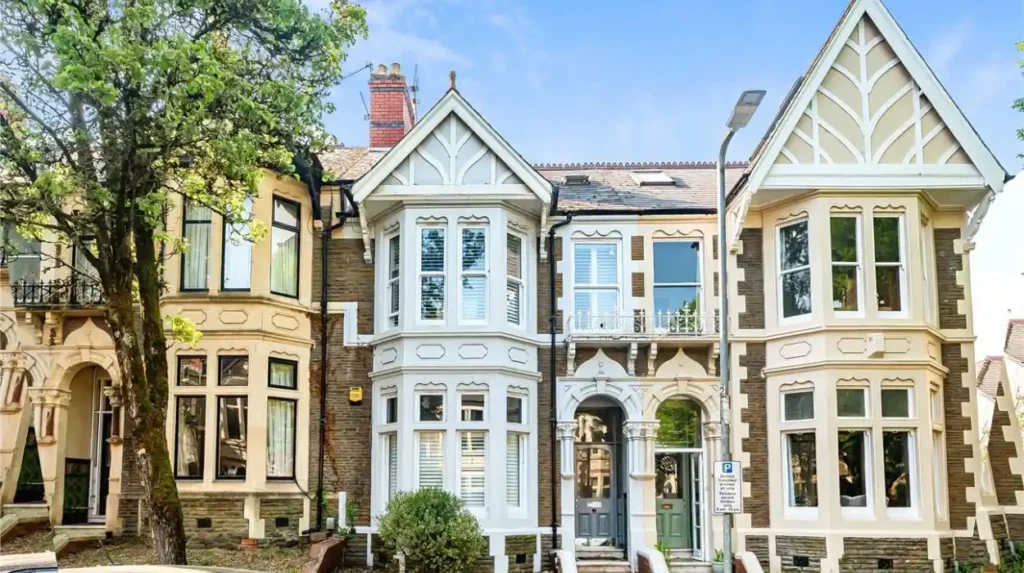
Penylan’s scenic character comes from mature residential streets, period houses, established gardens and close connections with Roath Park and Roath Mill Gardens. The area forms part of Cardiff’s historic eastern suburbs, where planned open spaces influenced surrounding residential development.
Penylan sits beside Roath Park and contains a mixture of traditional housing and later residential development.
The relationship with Roath Park is particularly important. The park extends through parts of Penylan and Plasnewydd, while the Roath Park Lake and Gardens conservation area also extends into Cyncoed and Penylan.
Roath Mill Gardens has its own conservation-area designation. Cardiff Council lists the area among the city’s designated conservation areas.
Residential streets around these landscapes benefit from mature trees and established garden structures. Traditional terraces, villas and semi-detached properties create varied architectural rhythms.
Penylan Road is a major residential route in the district and provides access to the wider neighbourhood. Smaller surrounding streets provide quieter residential environments.
The scenic character changes from one road to another. Streets closest to historic parks generally have stronger landscape relationships, while streets farther away display more conventional suburban patterns.
For visitors exploring Cardiff’s residential architecture, Penylan is important because it demonstrates how public park development influenced private housing.
Why is Cyncoed important when exploring scenic Cardiff streets?
Cyncoed provides a spacious suburban landscape characterised by detached and semi-detached houses, mature trees, gardens and proximity to Roath Park Lake. Streets such as Cefn Coed Road connect residential architecture with Cardiff’s historic eastern parkland.
Cyncoed developed substantially during the twentieth century, although its landscape retains links to earlier rural land use.
The area around Roath Park Lake is especially important. Cardiff Council’s conservation appraisal identifies historic residential development along Cefn Coed Road and recognises the contribution of trees and the Nant Fawr brook to the area’s character.
Roath Park itself crosses into Cyncoed. Its historic landscape provides a strong visual reference for surrounding housing.
Coflein describes Roath Park as a late-Victorian public park that retains much of its original framework and continues to serve many of its original recreational functions.
Residential streets around the park therefore have an unusual combination of suburban housing and major historic landscape.
Cyncoed also illustrates how Cardiff expanded beyond its nineteenth-century urban core. Larger plots and detached homes became more common as suburban development moved into previously less urbanised areas.
The result is a different form of scenic residential environment from Pontcanna or Llandaff.
What makes Rhiwbina Garden Village different from other scenic Cardiff streets?
Rhiwbina Garden Village is distinctive because it was planned around garden-suburb principles, with carefully arranged houses, landscaped spaces, mature vegetation and a coherent neighbourhood layout. Its conservation-area status recognises this planned historic character.
Rhiwbina Garden Village represents an important stage in Cardiff’s residential development.
Garden villages and garden suburbs emerged from planning ideas that promoted healthier residential environments through greenery, lower-density housing and coordinated layouts.
Cardiff Council designates Rhiwbina Garden Village Conservation Area as one of the city’s protected historic areas.
The neighbourhood is characterised by planned residential streets rather than an organically developed medieval village structure.
Modern Cardiff Council records also identify roads around Rhiwbina, including Lon Y Dail, Lon Ganol and Lon Ucha, within the city’s school-street arrangements.
Rhiwbina’s scenic quality comes from the relationship between buildings and landscape. Gardens, trees, verges and consistent housing patterns create a coherent visual environment.
The garden-village concept also makes Rhiwbina important from a planning perspective. Its value extends beyond individual attractive houses because the overall street layout contributes to the historic character.
This makes Rhiwbina useful for understanding how twentieth-century planning influenced Cardiff’s residential identity.
Which Cardiff residential streets combine architecture with mature greenery?
Cathedral Road, Plasturton Avenue, Cefn Coed Road, streets around Roath Park, Llandaff village roads and Rhiwbina Garden Village streets combine architectural character with mature greenery. Their scenic quality comes from the relationship between buildings, gardens, trees and public open spaces.
Mature vegetation is one of the strongest recurring features of Cardiff’s scenic residential streets.
Trees soften building frontages and create continuous green corridors. Front gardens provide additional vegetation, while parks introduce larger areas of open landscape.
Cardiff Council recognises trees as an important planning consideration within conservation areas. Works to trees inside conservation areas require permission under the relevant controls.
The council also operates dedicated leaf-clearing arrangements for tree-lined streets, demonstrating the scale of mature street vegetation across Cardiff.
Roath Park provides the clearest example of residential streets benefiting from a major historic landscape.
Pontcanna provides another. Its streets sit close to Pontcanna Fields and Llandaff Fields, which together create a substantial central green space.
Llandaff combines village greenery with river and park landscapes.
Rhiwbina uses a different model based on planned gardens and residential landscaping.
These environments demonstrate that scenic streets depend on more than architectural appearance. Landscape structure, trees and public spaces are equally important.
How do conservation areas protect Cardiff’s scenic residential character?
Cardiff conservation areas protect places with special architectural or historic interest by applying additional planning controls. These controls influence alterations, trees, building details and development so that important townscape characteristics remain identifiable over time.
Conservation areas are designated areas where the character or appearance has special architectural or historic interest.
Cardiff currently has 27 conservation areas. The council provides individual appraisals describing the special qualities and planning considerations associated with each area.
Relevant residential examples include Llandaff, Cathedral Road, Rhiwbina Garden Village, Roath Park, Roath Park Lake and Gardens, Roath Mill Gardens, Oakfield Street, Tredegarville and Wordsworth Avenue.
Some conservation areas also have Article 4 Directions. These provide additional controls over certain minor alterations that would otherwise have permitted development rights. Cardiff Council specifically identifies windows among the features that can be affected by these controls.
Tree protection is another important mechanism. Cardiff Council states that permission is required for works to trees within conservation areas.
These controls do not mean every house looks unchanged. Residential areas continue to accommodate modern living, maintenance and adaptation.
Their purpose is to manage change while retaining the characteristics that make the area historically or architecturally significant.
Explore More Area Guide
Cardiff Areas Popular with Young Couples
Walkable Cardiff Neighbourhoods Compared: Best Areas to Explore
Why do Cardiff’s scenic residential streets matter for the city’s future?
Cardiff’s scenic residential streets preserve architectural history, landscape structure and neighbourhood identity while supporting modern housing. Conservation planning, tree protection and sensitive development help retain these qualities as the city continues to grow and change.
Cardiff continues to experience development pressure from housing demand, transport changes, regeneration and population growth.
Historic residential environments therefore face the challenge of accommodating contemporary requirements without losing established character.
Cardiff Council’s Residential Design Guide provides supplementary planning guidance for residential development. The council also publishes guidance covering residential extensions, trees, open space and transport impacts.
The issue extends beyond conservation areas. Attractive residential streets outside formal designations can also contribute to local identity through mature trees, distinctive buildings and established layouts.
Historic parks remain an important part of this system. Cardiff has 18 registered historic parks and gardens, demonstrating the scale of the city’s protected landscape heritage.
The future character of streets such as Cathedral Road, Llandaff’s village roads, the Roath Park surroundings and Rhiwbina Garden Village therefore depends on both buildings and landscape.
Sensitive maintenance, appropriate development and protection of significant trees support the continuity of these environments.
For residents, property owners and visitors, the result is a city where historic residential neighbourhoods remain part of the contemporary urban landscape rather than isolated museum pieces.
How can visitors explore Cardiff’s most scenic residential streets?
Visitors can explore Cardiff’s scenic residential streets by combining neighbourhood walks with nearby parks, historic landmarks and conservation areas. Cathedral Road links with Pontcanna Fields, Llandaff connects with its cathedral and river landscape, while Roath Park provides a major eastern walking route.
A practical western Cardiff route starts around Cathedral Road and continues towards Pontcanna. Visitors can then reach Pontcanna Fields and Llandaff Fields, where the historic lime avenue and open landscape provide a clear contrast with surrounding housing.
A second route focuses on Llandaff Village. Historic residential roads can be combined with Llandaff Cathedral and the River Taff landscape.
The eastern route centres on Roath Park. The park’s lake, gardens and surrounding residential streets demonstrate the relationship between Victorian public-park planning and suburban housing.
Cyncoed provides an extension of this route, particularly around the historic residential setting of Cefn Coed Road and the northern parts of Roath Park Lake and Gardens.
Rhiwbina provides a different experience based on planned garden-village architecture and landscape.
Visitors should treat residential streets as lived-in neighbourhoods. Photography should respect private property, residents and restricted areas.
Cardiff’s scenic residential streets are best understood as working parts of the city where historic architecture, green infrastructure and modern residential life continue together.
What is the most scenic residential street in Cardiff?
Cathedral Road is one of Cardiff’s most distinctive scenic residential streets. It features historic villas, mature trees, landscaped gardens and close access to Pontcanna Fields and Llandaff Fields.