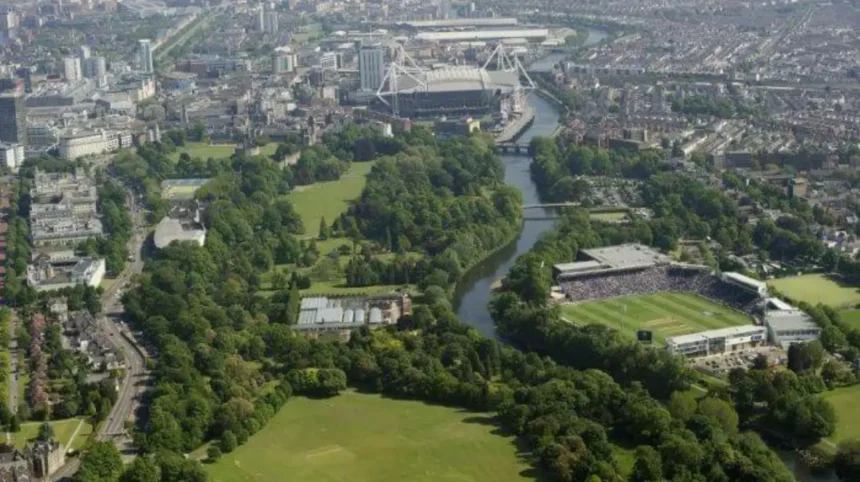
Cardiff is one of Wales’s greenest major cities, with a large network of public parks, recreation grounds, historic landscapes, country parks and nature reserves. Cardiff Council’s Outdoor Cardiff service lists more than 20 prominent parks and green spaces, while the city currently has 22 Green Flag-awarded sites, including 20 council-managed and two privately managed sites.
- How are the biggest parks in Cardiff measured?
- Which is the biggest park in Cardiff?
- How large is Pontcanna Fields?
- How large are Hendre Lake Park and its surrounding green space?
- How large is Bute Park?
- How large is Roath Park?
- How large is Heath Park?
- How large is Llandaff Fields?
- How large is Victoria Park?
- What does the ranking show about Cardiff’s largest parks?
The biggest parks in Cardiff are not all the same type of landscape. Forest Farm Country Park, Pontcanna Fields, Hendre Lake Park, Bute Park, Roath Park, Heath Park, Llandaff Fields and Victoria Park represent different combinations of woodland, sports fields, riverside land, formal gardens, lakes and wildlife habitats.
Area figures also require careful interpretation. Some Cardiff green spaces form connected complexes. Pontcanna Fields and Llandaff Fields are adjoining but separately identified. Bute Park connects physically and historically with Sophia Gardens and other River Taff green spaces. Forest Farm is a country park and nature reserve rather than a traditional Victorian urban park.
This guide ranks major Cardiff parks by their documented land area and explains their history, landscape, facilities, environmental role and relevance for visitors and residents.
How are the biggest parks in Cardiff measured?
The biggest Cardiff parks are best compared by documented site area, using hectares or acres published by Cardiff Council, heritage records and other authoritative sources. Connected landscapes require separate treatment when their individual boundaries are officially recognised.
A hectare contains 10,000 square metres. One hectare equals approximately 2.47 acres. An acre equals approximately 4,047 square metres. Using one measurement system provides a consistent basis for comparison.
The ranking in this guide includes major public parks and country-park sites that function as substantial recreational green spaces within Cardiff. It does not treat every woodland, cemetery, playing field or small recreation ground as a separate major park.
This distinction matters because Cardiff contains extensive connected green infrastructure. The Cardiff Council biodiversity material previously identified 407 hectares of parks and open space under Parks Service management and described the Bute Park, Sophia Gardens and Llandaff Fields area as a particularly large connected parkland complex.
The city’s park network therefore works at several scales. A named park has its own boundary and identity, while a wider green corridor can connect several parks, riverside areas and nature reserves.
Cardiff Council also maintains an official parks and green spaces service covering local parks, play areas and other public green spaces.
For this reason, the ranking focuses on documented areas of individual major sites rather than creating an artificial ranking from overlapping green-space boundaries.
Which is the biggest park in Cardiff?
Forest Farm Country Park is among Cardiff’s largest dedicated parkland sites, covering about 150 acres, or roughly 60 hectares. It combines woodland, meadows, wetlands, ponds, the River Taff corridor and surviving sections of the historic Glamorganshire Canal.
Forest Farm lies in north-west Cardiff beside the River Taff. The site is closely associated with the Glamorganshire Canal Local Nature Reserve, woodland, wetlands and the Taff Trail.
Historical Welsh Government statistics recorded Forest Farm as a 205-hectare country park, although later planning and environmental documentation describes the country park extension as approximately 150 acres, or 60 hectares. The difference demonstrates why park rankings need to state the measurement source and boundary used.
Forest Farm became a country park in 1992. Its landscape developed around the surviving section of the Glamorganshire Canal, which was constructed in the late eighteenth century as an industrial transport route.
The modern site contains several habitat types. These include woodland, scrub, hay meadow, ponds and marshland. Cardiff Council identifies Forest Farm and Melingriffith as an important wildlife landscape along the River Taff.
The site also has strong industrial heritage. The remaining canal waterway connects Cardiff’s modern green infrastructure with the city’s industrial past. The restored Melingriffith Waterpump is another surviving feature associated with Cardiff’s former canal and industrial landscape.
The Taff Trail passes through Forest Farm, making the park important for walking and cycling as well as wildlife observation. The site’s Conservation Centre also supports Cardiff Council’s Community Park Ranger Service and environmental volunteering.
Forest Farm therefore differs from formal city parks. Its main character comes from ecological habitats, waterways, woodland and historic infrastructure rather than ornamental planting.
How large is Pontcanna Fields?
Pontcanna Fields covers approximately 157 acres, or 64 hectares, making it one of Cardiff’s largest individually identified urban parkland areas. It forms part of a much larger riverside landscape alongside Llandaff Fields, Sophia Gardens and the River Taff.
Pontcanna Fields occupies the western side of the River Taff, close to Pontcanna and Llandaff. It is predominantly open parkland with large grassed areas, mature trees and sports facilities.
Published heritage information gives Pontcanna Fields an area of approximately 157 acres, equivalent to about 64 hectares. Llandaff Fields is a separate adjoining landscape of approximately 70 acres, or 28 hectares.
The two areas are part of an extensive historic parkland system. Cadw, the Welsh historic environment service, records the combined Pontcanna Fields and Llandaff Fields landscape on the Register of Parks and Gardens of Special Historic Interest in Wales at Grade II*.
Cardiff Council describes Pontcanna Fields and Sophia Gardens as a vast Grade II-listed parkland area beside the River Taff. The landscape contains sports pitches, mature tree-lined routes and connections to the Taff Trail.
Pontcanna Fields has a particularly strong sporting function. The wider area contains facilities associated with cricket, bowls and other organised sports.
The riverside location also gives the park an important active-travel role. Pedestrian and cycling routes connect the fields with other parts of Cardiff’s River Taff corridor.
The scale of Pontcanna Fields is especially significant because the landscape is located close to central Cardiff. Large open spaces near the city centre provide room for sports, walking, informal recreation and ecological connectivity without requiring travel into the countryside.
How large are Hendre Lake Park and its surrounding green space?
Hendre Lake Park covers approximately 58 hectares, equivalent to about 143 acres, making it one of Cardiff’s largest public green spaces. The park combines a substantial lake, open land, wildlife habitat, walking routes and fishing facilities.
Hendre Lake Park is located in the St Mellons area of eastern Cardiff. Cardiff Council’s Outdoor Cardiff service gives the park an area of 58 hectares, or 143 acres.
The lake is the central physical feature. The surrounding landscape contains open green space, paths, wildlife areas and viewpoints over the water.
Hendre Lake is used for fishing and birdwatching. A circular route around the lake provides a relatively simple way to experience the landscape without needing a long-distance walk.
The park forms part of the western extent of the Wentloog Levels, a distinctive low-lying landscape between Cardiff and Newport along the Severn Estuary.
The Wentloog Levels contain a mixture of drainage channels, agricultural land, wetlands and settlement. Hendre Lake sits within this wider landscape and provides a valuable recreational and ecological space in an urbanising part of Cardiff.
The park’s large waterbody also changes its character compared with Cardiff’s formal Victorian parks. The landscape is centred more strongly on open water, wildlife and walking than on ornamental gardens.
Hendre Lake demonstrates the geographic diversity of Cardiff’s largest green spaces. The city’s major parks are not concentrated around the city centre. Large public landscapes also exist in the eastern suburbs and along the city’s wider ecological corridors.
How large is Bute Park?
Bute Park covers approximately 130 acres, or about 53 hectares, and occupies a central position beside Cardiff Castle and the River Taff. It combines landscaped gardens, an arboretum, grassland, historic features, wildlife habitats and riverside paths.
Bute Park is one of Cardiff’s most prominent historic green spaces. It occupies approximately 130 acres beside Cardiff Castle and the River Taff. Cardiff Castle describes the park as containing a walled nursery, champion trees, visitor facilities, cafés and a sculpture trail.
The park’s history is closely connected with Cardiff Castle and the Bute family. The castle and adjacent parklands were transferred to Cardiff in 1947 following the death of the 4th Marquess of Bute. The arrangement established the park as an important public landscape.
Bute Park contains the remains of Blackfriars Friary, a medieval religious site that forms part of the park’s archaeological heritage. The park also contains the Bute Park Arboretum, created after the park became public.
The arboretum contains notable and champion trees. A champion tree is an exceptionally large or otherwise significant example of a tree species recorded within a recognised tree-recording system.
The park also contains the Animal Wall, designed by Victorian architect William Burges, and the historic Dock Feeder associated with Cardiff’s former dock system.
Bute Park has a strong role in Cardiff’s visitor economy because it sits immediately beside Cardiff Castle and close to the city centre. It is also part of the River Taff walking and cycling network.
Its central location makes its 130 acres particularly significant. The park provides extensive green space within the city’s historic core rather than at its suburban edge.
How large is Roath Park?
Roath Park covers approximately 130 acres, or 52.7 hectares, making it one of Cardiff’s largest historic urban parks. Opened in 1894, it includes a major lake, botanical gardens, pleasure gardens, recreation grounds and wildlife habitats.
Roath Park opened in 1894 and remains one of Cardiff’s best-known Victorian public parks. Coflein, the National Monuments Record of Wales, records the park as approximately 130 acres, or 52.7 hectares.
The park extends along the Nant Fawr stream and is divided into several distinct landscape sections. These include the Wild Garden, Roath Park Lake, Botanic Garden, Rose Garden, Pleasure Garden and Recreation Ground. Cardiff Council’s Outdoor Cardiff service describes these areas as having different horticultural, conservation and recreational functions.
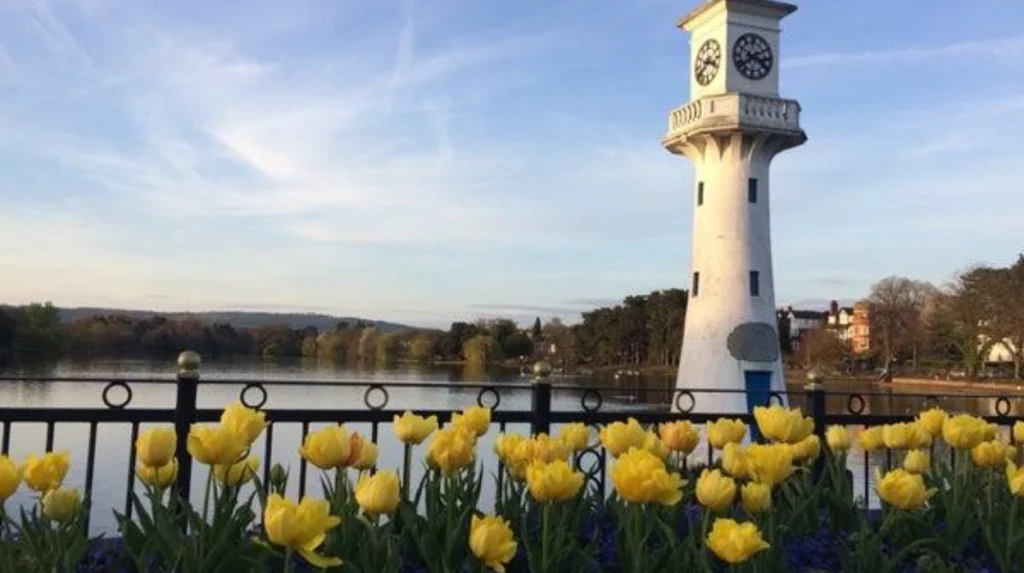
Roath Park Lake is a major feature. Cardiff Council describes the lake as a 30-acre man-made lake used for boating and fishing. The Scott Memorial Lighthouse stands at the lake and commemorates Captain Robert Falcon Scott and his Antarctic expedition.
The Botanic Garden contains a conservatory with tropical and unusual plant species. The Pleasure Gardens contain facilities for sports including bowls and tennis.
Roath Park also has an important conservation status. Cadw lists it as a Grade I historic park on the Register of Parks and Gardens of Special Historic Interest in Wales.
The park’s size is therefore distributed across several different functions rather than one continuous open field. This structure is central to understanding why Roath Park remains one of Cardiff’s major public landscapes.
The park also has an active historical management story. The Pettigrew family played an important role in Cardiff’s parks, with Andrew Pettigrew associated with the development of Bute Park and William Wallace Pettigrew involved in the early management of Roath Park.
How large is Heath Park?
Heath Park covers approximately 37 hectares, or 91 acres, making it one of Cardiff’s largest northern urban parks. It combines sports pitches, woodland, ponds, wetland habitats, a sensory garden, play facilities and recreation areas.
Heath Park occupies a large area in northern Cardiff near the University Hospital of Wales. Cardiff Council’s Outdoor Cardiff service gives its area as 37 hectares, equivalent to 91 acres.
The park is sometimes described as part of the historic Great Heath landscape. Cardiff Council acquired the land in 1938, and its historical extent was considerably larger than the modern public park. Cardiff Council records show that the original acquisition involved approximately 203 acres before subsequent changes to the landholding.
Modern Heath Park contains several different habitats. Woodland, ponds and wetland areas provide ecological diversity alongside sports fields and recreational facilities.
The park also includes wildlife ponds supporting great crested newts, a protected amphibian species. A sensory garden provides an additional landscape designed around accessible interaction with plants and natural features.
Sport is another major function. Facilities include sports fields, changing rooms, a nine-hole pitch-and-putt course, footgolf, footrugby, a children’s playground and a floodlit 3G sports pitch.
Heath Park is also associated with the Heath Park Model Railway, which provides a distinctive recreational feature within the wider park.
The site’s location beside the University Hospital of Wales adds another dimension. Cardiff University identifies the Heath Park campus as being beside approximately 100 acres of parkland and playing fields.
Heath Park therefore functions as a large suburban recreational landscape with both sports and biodiversity roles.
How large is Llandaff Fields?
Llandaff Fields covers approximately 70 acres, or 28 hectares, and forms part of Cardiff’s historic River Taff parkland network. The fields provide sports pitches, mature tree-lined routes, tennis courts, a playground and links towards Pontcanna.
Llandaff Fields is one of Cardiff’s earliest major public recreation grounds. Cardiff Council states that the fields were acquired as playing fields by Cardiff Corporation in 1898.
The park covers approximately 70 acres, according to heritage records. It adjoins Pontcanna Fields, creating a much larger continuous area of public parkland on the western side of the River Taff.
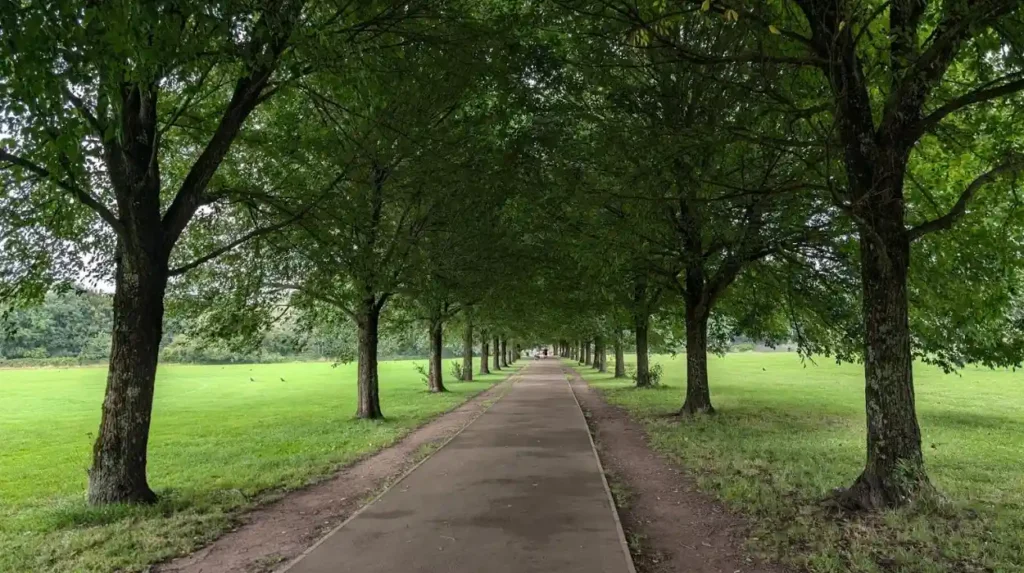
The landscape is characterised by broad grassed areas, mature trees and formal avenues. The site supports organised sport and informal recreation.
Llandaff Fields also has formal heritage recognition. Cardiff Council identifies it as part of an extensive Grade II-listed parkland network extending northwards from the city centre along both sides of the River Taff.
The fields were historically influenced by their relationship with Llandaff and the route between the city centre and the cathedral area.
Today, the park contains sports pitches, tennis courts, a children’s playground and the former bowling green now associated with Llandaff Croquet Club.
Its location makes Llandaff Fields important within Cardiff’s wider active-travel network. Walking and cycling routes along the River Taff connect the fields with Pontcanna, Sophia Gardens, Bute Park and northern Cardiff.
The park’s importance therefore comes from both its 70-acre size and its position within a much larger connected landscape.
Explore More Area Guide
Cardiff’s Historic Bridges: Taff, Ely and Cardiff Bridge
Oldest Schools in Cardiff: Howell’s, Cathedral School & Cardiff High
How large is Victoria Park?
Victoria Park covers approximately 19 acres, or 7.7 hectares, making it smaller than Cardiff’s major river-valley parks but significant as a traditional Victorian urban park. It opened in 1897 and remains an important community recreation space in Canton.
Victoria Park is located in Canton in western Cardiff. Coflein records the park as 19 acres, or 7.7 hectares, and dates its development to 1894–1897 on land taken from Ely Common.
The park opened in 1897, during Queen Victoria’s reign. Its original Victorian design included ornamental features, paths, planted areas and recreational space.
The park has Grade II historic status on the Cadw Register of Landscapes, Parks and Gardens of Special Historic Interest in Wales. Cardiff Council also identifies Victoria Park as one of its Green Flag parks.
Its facilities include a children’s playground, tennis courts, multi-use games area, beach volleyball, public toilets and a seasonal splash area.
One of the park’s distinctive features is its cast-iron bandstand. The original bandstand was installed in 1897, while a recast replica was installed in 1996.
Victoria Park also contains a memorial connection to Cardiff’s former zoo. The bronze Billy the Seal sculpture recalls the seal that became one of the best-known residents of the former Victoria Park Zoo.
Although Victoria Park is substantially smaller than Forest Farm, Pontcanna Fields, Bute Park and Roath Park, its compact size reflects a different model of urban park planning.
The park was designed primarily to serve a densely populated residential district. Its value comes from accessibility, recreational facilities, historic design and community use rather than sheer land area.
What does the ranking show about Cardiff’s largest parks?
Cardiff’s largest parks form several distinct landscape types, from the roughly 150-acre Forest Farm Country Park and 157-acre Pontcanna Fields to historic 130-acre Bute and Roath parks, 91-acre Heath Park and smaller Victorian community parks.
The ranking shows that Cardiff’s biggest green spaces developed for different purposes.
Forest Farm represents a country-park and nature-reserve model. Its woodland, wetlands, canal remains and riverside habitats provide a landscape closely connected with biodiversity and industrial heritage.
Pontcanna Fields represents a large urban sports and recreation landscape. Its 157-acre area forms part of the wider Taff-side parkland system.
Bute Park and Roath Park have similar published areas of approximately 130 acres, but their designs are different. Bute Park is closely associated with Cardiff Castle, the River Taff and an arboretum. Roath Park is structured around the Nant Fawr valley, lake, botanical garden and Victorian recreation areas.
Hendre Lake provides another model. Its 58 hectares are organised around a large lake and the surrounding landscape of the Wentloog Levels.
Heath Park combines sport, woodland and wetland habitats in a northern suburban setting. Its 37 hectares provide a different scale from Cardiff’s major central parks.
Llandaff Fields demonstrates the importance of connected parkland. Its 70 acres become more significant when considered alongside adjoining Pontcanna Fields and other River Taff green spaces.
Victoria Park demonstrates the continuing role of smaller historic parks. Its 19 acres provide a concentrated collection of recreation, gardens and heritage features within a residential district.
Cardiff’s wider green-space strategy also places importance on permanent protection and public access. Cardiff Council and Fields in Trust have worked on proposals to protect selected parks and green spaces, including Pontcanna Fields, Heath Park and other sites.
The city’s active-travel planning also connects major green spaces. Cardiff Council’s cycleway programme includes routes linking the city centre with Roath Park, Llandaff, Cardiff Bay and other communities.
The largest Cardiff parks therefore operate as more than recreational destinations. They provide sports facilities, walking and cycling routes, historic landscapes, wildlife habitat, floodplain space, community facilities and connections between urban neighbourhoods.
For visitors, the largest sites provide enough variety for longer walks and extended outdoor visits. For residents, their greatest significance comes from their role as accessible public green infrastructure within a growing city.
Because Cardiff’s park boundaries and connected green corridors are measured differently across official and historical sources, area figures should always be read alongside the site’s formal designation. This approach gives a more accurate understanding of how Cardiff’s biggest parks fit into the city’s wider green network.
What is the biggest park in Cardiff?
Forest Farm Country Park and Pontcanna Fields are among Cardiff’s largest individual public green spaces. Pontcanna Fields covers approximately 157 acres, while Forest Farm is commonly documented at around 150 acres under its country-park boundary.