Pontcanna is a residential neighbourhood in western central Cardiff, Wales, known for Victorian and Edwardian housing, independent businesses, green spaces and proximity to the city centre. Its location beside the River Taff, Pontcanna Fields, Llandaff Fields and Sophia Gardens shapes everyday life.
- What is Pontcanna and where is it in Cardiff?
- How did Pontcanna develop historically?
- What type of housing is available in Pontcanna?
- Is Pontcanna suitable for renters?
- What is daily life like for residents in Pontcanna?
- How easy is it to travel from Pontcanna?
- How does parking work in Pontcanna?
- What green spaces are available in Pontcanna?
- What local amenities are close to Pontcanna?
- What should families consider before renting or buying in Pontcanna?
- What should students and young professionals know about Pontcanna?
- Is Pontcanna a good base for people who work in central Cardiff?
- What are the main practical issues renters should check before moving?
- How does Pontcanna compare with nearby Cardiff neighbourhoods?
- What should residents know about Pontcanna’s future?
- What should you know before moving to Pontcanna?
What is Pontcanna and where is it in Cardiff?
Pontcanna is a central-west Cardiff neighbourhood beside the River Taff, north of Canton and west of Bute Park. It combines established residential streets, historic architecture, independent businesses, parks and convenient access to Cardiff city centre.
Pontcanna sits within Cardiff’s inner urban area. The neighbourhood connects with Canton, Riverside, Llandaff and the city centre. Its western and northern edges lead towards Llandaff and the wider western suburbs.
The River Taff forms an important geographical feature. Pontcanna Fields and Llandaff Fields occupy substantial open land beside the river. Bute Park lies across the river, while Sophia Gardens sits to the south.
Visit Cardiff describes Pontcanna as a leafy neighbourhood with independent shops, restaurants, open parkland and a strong connection to Cardiff city centre. The official visitor guide places the city centre roughly 10 to 15 minutes away on foot from parts of the neighbourhood.
Pontcanna is not a separate city or town. It forms part of Cardiff and sits within the administrative area of Cardiff Council.
The neighbourhood has several important roads and streets, including Cathedral Road, Pontcanna Street, Western Avenue, Kings Road and parts of nearby Cowbridge Road East. These routes connect residential areas with commercial streets, parks and central Cardiff.
Its location gives residents access to urban services without living directly in the busiest parts of the city centre.
How did Pontcanna develop historically?
Pontcanna developed from a historic Cardiff landscape into an established urban neighbourhood during the nineteenth century, as Cardiff expanded rapidly. Cathedral Road, Sophia Gardens and Pontcanna Fields reflect the period’s residential development, planned open space and growing connection with central Cardiff.
The wider area has much older historical associations. Historical records connect the name Pontcanna with St Canna and the older settlement landscape around Canton and Llandaff. A Coflein record for Cathedral Road states that Canton was historically associated with the name Treganna and that Pontcanna also takes its name from St Canna.
Cardiff’s nineteenth-century expansion transformed the landscape.
The development of Cardiff’s docks and coal-export economy increased the city’s population, wealth and demand for housing. The Bute family played a major role in Cardiff’s nineteenth-century urban development.
Sophia Gardens provides an important historical example. The park was created from the 1850s on the site of Plasturton Farm. Sophia Gardens opened in 1858 and is recorded by the Royal Commission on the Ancient and Historical Monuments of Wales as the first public park in Cardiff and the earliest public park in Wales.
Pontcanna Fields and Llandaff Fields developed later as major urban open spaces. The principal construction phases recorded for the parks are 1879 and 1899–1901. The fields form part of a large interconnected landscape of public open space beside the River Taff.
Cathedral Road also illustrates the development of the neighbourhood’s built environment. A historical record for properties at 27–29 Cathedral Road states that the road was developed in the late nineteenth century by the 3rd Marquess of Bute.
This history explains the combination of substantial period housing and large green spaces found in modern Pontcanna.
What type of housing is available in Pontcanna?
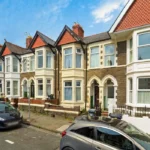
Pontcanna housing consists mainly of established urban properties, including Victorian and Edwardian houses, terraces, converted homes, flats and modern apartments. Rental supply includes whole properties and rooms, while ownership ranges from period houses to contemporary residential developments.
The housing character changes from street to street.
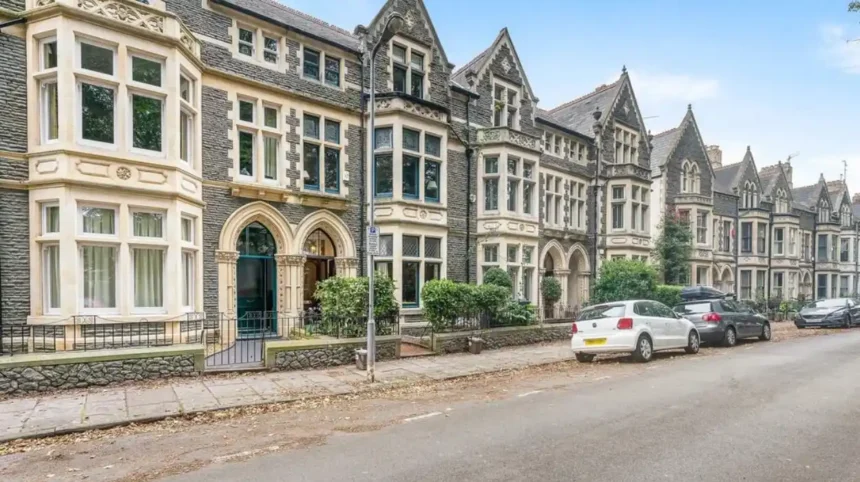
Cathedral Road is associated with substantial period properties and larger buildings. Residential streets around Pontcanna Fields contain terraces, semidetached properties and converted buildings. Apartments are also present, particularly in larger converted houses and newer developments.
Many properties have features associated with nineteenth- and early twentieth-century construction. These include high ceilings, large windows, bay windows, fireplaces and front gardens.
Period construction also creates practical considerations. Older properties can have different insulation standards, heating systems, roof structures and window designs from newer homes. Renters and buyers therefore need to inspect individual properties rather than assuming that every Pontcanna property has the same specification.
Cardiff Council identifies private renting as an important part of the city’s housing system and provides information for tenants and landlords. Its housing service also covers homelessness support, housing advice and private-sector renting.
Some Pontcanna properties fall within conservation areas or areas with additional planning controls. Cardiff Council states that the city has 27 conservation areas and that conservation-area controls can affect alterations to buildings and trees. Cathedral Road is specifically listed among Cardiff’s conservation areas.
This matters when considering extensions, replacement windows, external alterations or other changes to an older property.
Is Pontcanna suitable for renters?
Pontcanna provides a central residential location for renters who want access to Cardiff city centre, parks, independent businesses and public transport. Rental properties include rooms, flats, converted period homes and larger houses suitable for households and shared accommodation.
The rental market includes different property formats.
Single renters can find rooms in shared houses and apartments. Couples can consider one-bedroom and two-bedroom flats or smaller houses. Families and larger households have access to larger period properties where available.
Location affects rental costs within the neighbourhood. Properties close to Cathedral Road, Pontcanna Fields, Sophia Gardens and major commercial streets have different characteristics from homes farther from the main routes.
Renters should examine the full monthly housing cost. Rent is only one component. Energy bills, council tax, broadband, contents insurance, transport and parking costs also affect household expenditure.
A tenancy agreement should identify the landlord or letting agent, rent, deposit arrangements, responsibilities for repairs and other important terms. Renters should also check whether utilities are included.
Cardiff Council provides private-housing information and housing advice for residents. It also operates housing services for people who need assistance with housing problems.
For people renting a room, the number of occupants and the property’s licensing requirements also matter. Prospective tenants should confirm the legal status and management arrangements of a shared property before signing a tenancy.
What is daily life like for residents in Pontcanna?
Daily life in Pontcanna combines residential streets with cafés, restaurants, independent businesses, parks, sports facilities and short walking routes into central Cardiff. The neighbourhood supports ordinary shopping, recreation, commuting, dining and outdoor activities within a compact urban setting.
The neighbourhood’s commercial activity is concentrated along several main streets rather than spread evenly across every residential road.
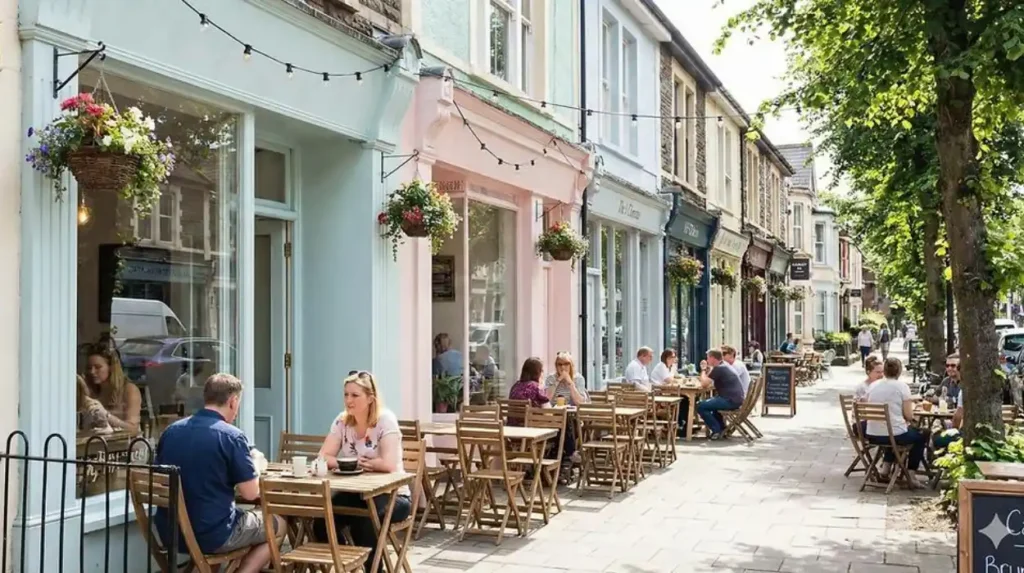
Cathedral Road is one of the best-known routes. Pontcanna Street and nearby streets provide additional independent businesses and food outlets.
Residents also have access to nearby Canton, Riverside and central Cardiff. This gives the neighbourhood a wider catchment of shops, services and leisure facilities than its immediate streets alone provide.
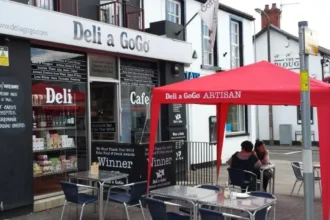
Pontcanna is particularly associated with independent food and drink businesses. Visit Cardiff highlights restaurants, cafés, bars and other local businesses as part of the area’s identity.
The neighbourhood also benefits from its proximity to major cultural and sporting facilities.
Sophia Gardens hosts Glamorgan Cricket and other events. Sport Wales National Centre provides sporting and fitness facilities. Kings Road Yard contains creative workspaces and businesses.
This combination creates a neighbourhood where residential life, recreation and city-centre access overlap.
How easy is it to travel from Pontcanna?
Pontcanna has strong walking, cycling and bus connections, while Cardiff Central is within walking distance. The Taff Trail provides a major cycling and walking route, and nearby railway stations include Cardiff Central, Ninian Park and Cathays.
Walking is one of the defining transport characteristics of Pontcanna.
Visit Cardiff identifies the city centre as roughly a 20-minute walk from Pontcanna, depending on the starting point. Routes commonly lead through Cathedral Road and towards Cardiff’s central streets.
Cycling is also well established.
The Taff Trail passes through Pontcanna Fields and follows the River Taff. The wider route connects Cardiff with areas north of the city and ultimately extends towards Brecon. Cardiff’s flat terrain supports cycling across much of the central urban area.
Pedal Power operates cycling facilities in Cardiff, including access near Pontcanna and Sophia Gardens.
Bus services provide another option for journeys into central Cardiff and surrounding districts. Visit Cardiff identifies Cardiff Bus routes 24 and 25 as services serving the Pontcanna area.
Rail users have several nearby options. Cardiff Central is the principal city-centre station. Ninian Park and Cathays are also accessible from Pontcanna, although walking times vary by location.
Transport for Wales operates the main rail network serving Cardiff and the surrounding region.
How does parking work in Pontcanna?
Parking in Pontcanna requires attention to resident parking controls, permit requirements, restrictions and public car parks. Cardiff Council operates parking facilities around Pontcanna, while some residential streets use controlled arrangements for residents, visitors and other eligible users.
Parking is an important consideration for renters and homeowners with cars.
Cardiff Council has introduced controlled parking arrangements in parts of Pontcanna. The Pontcanna Central zone includes streets such as Cathedral Road, Pontcanna Street, Kings Road, Plasturton Avenue, Plasturton Gardens, Teilo Street and Sophia Walk.
The council’s published parking information identifies resident and business permits and allows residents in the relevant zone to apply for visitor permits. A maximum of two resident permits per property is specified for the Pontcanna Central scheme.
Public parking is also available.
Pontcanna Fields car park has 142 spaces, including five Blue Badge spaces and two electric-vehicle charging bays, according to Cardiff Council’s current published information.
Llandaff Fields car park has 59 spaces, including five Blue Badge spaces and two electric-vehicle charging bays.
Parking rules and charges can change. Residents should check current Cardiff Council information before relying on a particular permit, restriction or tariff.
What green spaces are available in Pontcanna?
Pontcanna has direct access to Pontcanna Fields, Llandaff Fields, Sophia Gardens and nearby Bute Park. These spaces provide walking routes, sports areas, recreation and open landscapes, creating one of Cardiff’s largest connected concentrations of central urban green space.
Pontcanna Fields is one of the area’s defining landscape features.
The Royal Commission records Pontcanna Fields and Llandaff Fields as a Grade II* registered historic park and garden. The landscape sits on the west bank of the River Taff and forms part of a large open-space system with Sophia Gardens and Bute Park.
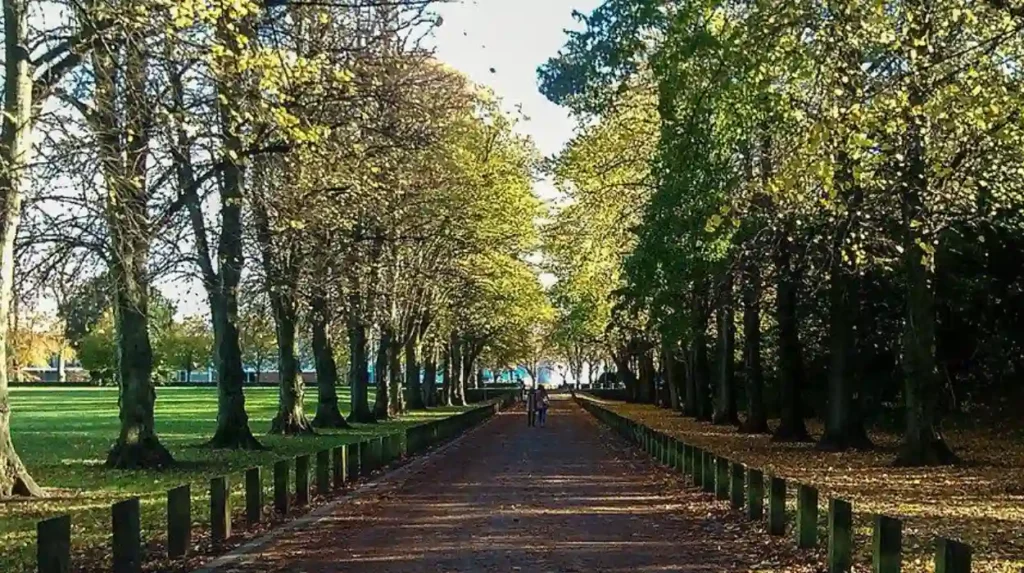
The park’s lime avenue is a major historic landscape feature. Much of the avenue was established during the late nineteenth-century development phases of the park.
Sophia Gardens has an even earlier public-park history. It was laid out from 1854 and opened in 1858. Its historical development is closely connected with Cardiff’s nineteenth-century expansion.
Bute Park is located across the River Taff. Together, these landscapes provide residents with extensive access to open space close to the central business and cultural districts.
The parks also support walking, cycling, sports and informal recreation.
For households choosing accommodation, proximity to these spaces is particularly relevant for regular outdoor activity, dog walking, exercise and family recreation.
What local amenities are close to Pontcanna?
Pontcanna residents have access to local restaurants, cafés, independent shops, sports facilities, parks, cultural venues and central Cardiff services. Nearby districts such as Canton and Riverside add further retail, food, healthcare, education and everyday service options.
Pontcanna’s amenities operate at neighbourhood and city levels.
At neighbourhood level, residents have independent food businesses, cafés, restaurants, pubs and local services. At city level, central Cardiff provides larger retail, cultural, administrative and transport facilities.
Sophia Gardens is an important nearby venue. It hosts Glamorgan Cricket and other events. The Sport Wales National Centre provides sporting facilities and fitness activities.
Bute Park and Cardiff Castle are also within practical walking and cycling distance.
The Royal Welsh College of Music & Drama, National Museum Cardiff and other central cultural institutions are accessible across the wider central Cardiff area. The official Cardiff neighbourhood map shows these facilities in relation to Pontcanna, Sophia Gardens, Bute Park and the city centre.
Healthcare, schools and other essential services depend on the precise residential address. Residents should use Cardiff Council, NHS Wales and individual service providers to confirm current catchment areas, registration arrangements and opening information.
What should families consider before renting or buying in Pontcanna?
Families considering Pontcanna should assess property size, school catchments, parking, outdoor space, transport, local services and household costs. The neighbourhood’s parks and central location provide strong everyday access to recreation, while individual streets differ in housing and traffic conditions.
Property choice is particularly important for families.
Victorian and Edwardian houses can provide multiple bedrooms and generous internal space, but layouts vary significantly. Some properties have been converted into flats, while others remain family houses.
Outdoor access is another consideration. Pontcanna Fields, Llandaff Fields and Sophia Gardens provide nearby public open space.
School decisions require address-specific research. School catchments and admission arrangements are determined through official education authorities and can change over time. Families should check the current Cardiff Council admissions information before choosing a property based on school access.
Parking also needs early consideration. Controlled parking schemes apply to parts of Pontcanna, while household parking availability differs substantially between streets and properties.
Families should therefore inspect the exact property, street and immediate surroundings rather than assessing Pontcanna only at neighbourhood level.
What should students and young professionals know about Pontcanna?
Pontcanna provides students and young professionals with central housing, walkable routes, independent food businesses, parks, sports facilities and access to Cardiff’s universities and employment areas. Housing includes rooms, shared homes and flats, with suitability depending on budget, commute and property type.
Pontcanna is not Cardiff’s main student district. Cathays has a larger concentration of student accommodation because of its proximity to Cardiff University and other central educational facilities.
Pontcanna nevertheless attracts students who prioritise a quieter residential environment while remaining close to central Cardiff.
Young professionals can also benefit from the neighbourhood’s proximity to central employment areas. Walking and cycling routes reduce dependence on private cars for some journeys.
Shared housing is another part of the rental market. Prospective tenants should establish the number of occupants, tenancy structure, bills and management arrangements before committing.
The neighbourhood’s restaurants, cafés, parks and cultural venues also provide nearby leisure options.
Housing costs are property-specific. Period houses, modern apartments and rooms in shared properties represent different rental propositions, so direct comparison requires consideration of floor area, location, bills, furnishings and parking.
Is Pontcanna a good base for people who work in central Cardiff?
Pontcanna is geographically close to Cardiff’s central employment districts and supports walking, cycling, bus and rail connections. Its position west of the River Taff allows commuters to reach central Cardiff without depending exclusively on private-car travel.
Central Cardiff contains major employment, government, retail, education, hospitality and professional-service activities.
Pontcanna’s location places these areas within practical walking distance for many residents. Visit Cardiff describes the neighbourhood as around a 20-minute walk from Cardiff city centre, although exact times depend on the starting point and destination.
Cycling provides another direct option. The Taff Trail connects Pontcanna with central Cardiff and other parts of the city.
Bus services add flexibility for longer or less direct journeys.
Rail is useful for commuting beyond central Cardiff. Cardiff Central provides connections across Wales and to destinations beyond Wales through the Transport for Wales network.
The practical benefit is reduced dependence on a single transport mode. Residents can select walking, cycling, buses, trains or cars according to destination and journey requirements.
What are the main practical issues renters should check before moving?
Renters should verify the exact property, tenancy terms, deposit arrangements, energy performance, parking rules, broadband availability, noise conditions, maintenance responsibilities and local restrictions before signing. Pontcanna’s older housing stock makes property-specific inspection particularly important.
A neighbourhood guide cannot replace a property inspection.
Renters should inspect windows, heating, insulation, ventilation, bathrooms, kitchens and signs of damp. Older properties require particular attention to maintenance condition.
The Energy Performance Certificate provides information about a property’s energy efficiency. Prospective tenants should review it alongside the actual condition of the home.
Parking needs checking before signing a tenancy. A property advertisement that states parking availability does not replace confirmation of permit eligibility or private parking rights.
Noise is another property-specific issue. Homes near Cathedral Road, Pontcanna Street, major routes, hospitality businesses or event venues can have different environmental conditions from quieter residential streets.
Tenants should also check mobile reception and broadband availability where remote work is important.
Cardiff Council provides private-housing advice and information for landlords and tenants. Its housing services include guidance relating to private renting and housing problems.
A clear tenancy agreement should establish rent, deposit, duration, responsibilities and relevant restrictions.
How does Pontcanna compare with nearby Cardiff neighbourhoods?
Pontcanna differs from nearby Cardiff neighbourhoods through its combination of period housing, central location, green space and independent businesses. Canton provides another strong local commercial environment, while Riverside, Llandaff and Cathays have distinct housing, transport and community characteristics.
Canton lies south of Pontcanna and provides a large concentration of shops, restaurants and services.
Riverside lies closer to the River Taff and city centre, with a different residential and commercial character.
Llandaff lies north-west of Pontcanna and has a historic identity centred around Llandaff Cathedral and its older settlement structure.
Cathays sits closer to Cardiff University and the city centre and has a particularly strong student presence.
These differences matter when choosing accommodation.
A renter prioritising university access can assess Cathays differently from someone prioritising period housing and park access. A household seeking a larger property can compare Pontcanna with Llandaff or other western Cardiff neighbourhoods.
The most useful comparison therefore depends on commute, housing type, budget, parking, outdoor access and daily services.
Explore More Area Guide
Living in Cathays Cardiff: Student Housing, Transport & Amenities
Living in Roath Cardiff: Complete Neighbourhood Guide
What should residents know about Pontcanna’s future?
Pontcanna’s future is closely connected to Cardiff’s wider priorities for housing, sustainable transport, public spaces, heritage protection and urban development. Its established housing stock and historic parks make careful planning important as Cardiff continues to grow.
Cardiff Council continues to plan for housing and transport across the city.
The council’s development monitoring programme includes major housing schemes elsewhere in Cardiff and associated transport improvements. Its stated transport objective is to provide alternatives to private cars through walking, cycling and public transport.
For Pontcanna, heritage protection remains relevant.
Cardiff has 27 designated conservation areas, with specific planning controls applying to properties and areas covered by those designations. Cathedral Road is among the listed conservation areas.
The historic parkland also has formal heritage recognition. Pontcanna Fields and Llandaff Fields are recorded as a Grade II* registered historic park and garden.
These designations influence how parts of the built and natural environment are managed.
For residents and renters, the practical implication is that Pontcanna’s character is shaped not only by housing demand but also by planning, transport, conservation and public-space policies.
What should you know before moving to Pontcanna?
Living in Pontcanna means combining central Cardiff access with established housing, historic parks, independent businesses and strong walking and cycling connections. Renters should assess individual properties, parking, transport, costs and tenancy conditions before choosing a home.
Pontcanna’s strongest defining features are its location and urban landscape.
The neighbourhood sits close to central Cardiff while retaining substantial open space. Pontcanna Fields, Llandaff Fields, Sophia Gardens and nearby Bute Park create an extensive green setting beside the River Taff.
Its housing stock contains significant numbers of older properties, including Victorian and Edwardian buildings. These properties create architectural character but require property-specific checks covering maintenance, energy performance and alterations.
Transport is another major factor. Walking, cycling, buses and nearby rail stations provide several options for local and longer journeys.
Parking requires additional planning because controlled zones and permit arrangements apply to parts of the neighbourhood.
For renters, the most important step is to assess the exact property rather than relying only on neighbourhood reputation. For homeowners, conservation requirements and the condition of period buildings deserve particular attention.
Pontcanna remains an established part of Cardiff’s central-west residential landscape, with its historic parks, housing, businesses and transport connections continuing to shape how residents experience the area.
Is Pontcanna a good place to live?
Pontcanna is a residential neighbourhood in western central Cardiff known for period housing, green spaces, independent businesses and convenient access to Cardiff city centre. It suits residents seeking an established urban neighbourhood close to parks and amenities.