Cardiff public transport connects residential neighbourhoods, Cardiff city centre, Cardiff Bay, universities, hospitals, railway stations and surrounding communities across South East Wales. The network combines local buses, rail services, the South Wales Metro, walking and cycling connections, taxis and park-and-ride facilities.
- What does Cardiff public transport include?
- How do Cardiff buses work for new residents?
- How does Cardiff rail transport connect the city?
- What is the South Wales Metro and why does it matter in Cardiff?
- How much does public transport cost in Cardiff?
- How does contactless payment work on Cardiff public transport?
- Which Cardiff transport tickets are useful for regular commuters?
- Can new residents travel around Cardiff without a car?
- How should new residents plan a Cardiff public transport journey?
- What public transport connections are important for Cardiff commuters?
- What concessions are available for Cardiff public transport?
- How does Cardiff public transport affect where new residents choose to live?
- What is the future of public transport in Cardiff?
For new residents, understanding the network starts with the main transport operators. Cardiff Bus provides extensive local bus services. Transport for Wales operates the majority of local and regional rail services and is developing the South Wales Metro. Traveline Cymru provides journey-planning information for buses and trains across Wales. Cardiff Council provides local transport information, including public transport, taxis and active-travel services.
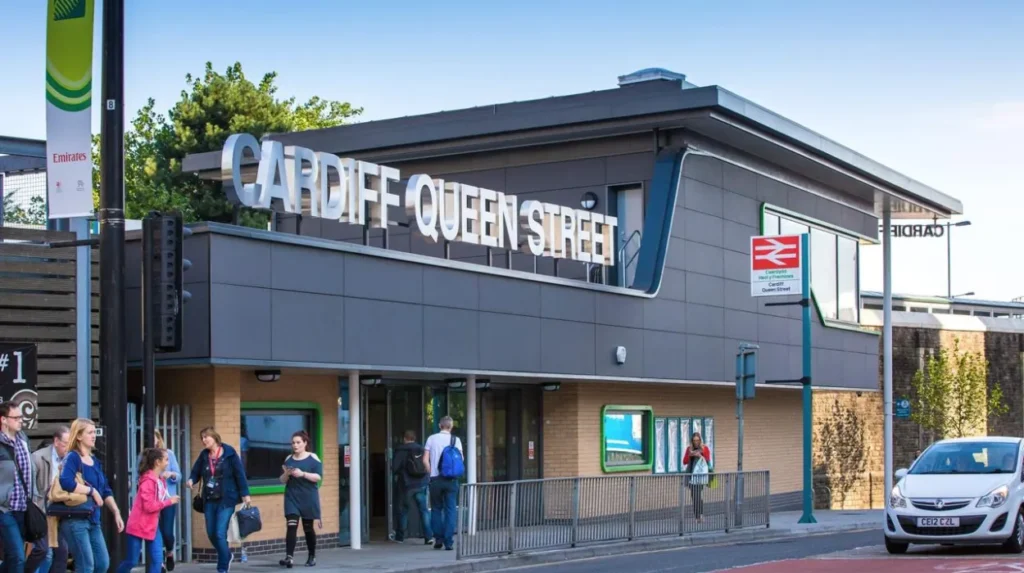
Cardiff Central is the principal railway station in the city centre. Cardiff Queen Street is another major rail interchange, particularly for journeys towards the eastern city and Valley lines. Cardiff Bus Interchange provides a central bus facility with 14 bus bays and improves connections between bus services and the wider transport network.
The system is important for commuting, education, shopping, healthcare, leisure and regional travel. New residents can use buses for neighbourhood journeys, trains for longer trips across Cardiff and the Valleys, and integrated journey planning for journeys involving more than one mode.
What does Cardiff public transport include?
Cardiff public transport includes buses, trains, Metro services, taxis and integrated travel options serving the city and surrounding communities. The main providers are Cardiff Bus, Transport for Wales and other regional operators, supported by Cardiff Council and Traveline Cymru.
Cardiff’s public transport system is not a single network operated by one organisation. Different operators provide different services, although their routes connect at important interchanges.
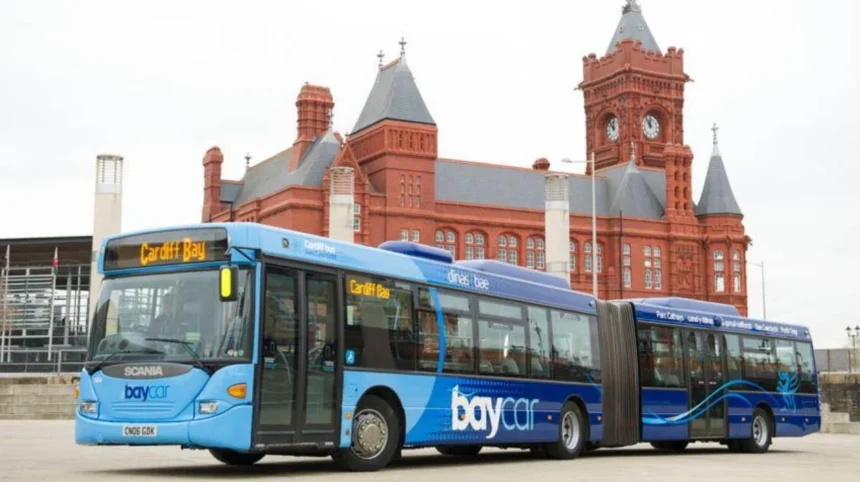
Cardiff Bus is the principal local bus operator in the city. Its services cover Cardiff and nearby areas including Penarth, Llandough and Barry. Cardiff Bus offers cash, contactless payment, mobile tickets and tap-on, tap-off facilities.
Transport for Wales, commonly abbreviated to TfW, operates the principal rail network in Wales. Its services connect Cardiff with destinations across South Wales, including the Valleys, Newport, Bridgend and other communities.
The South Wales Metro is the wider transport transformation programme connecting Cardiff with the Valleys and surrounding areas. Metro development includes railway improvements, new and improved stations, interchange facilities and future tram-train services.
Taxis provide another public transport option. Cardiff Council identifies licensed hackney carriages and private-hire vehicles as separate categories. Hackney cabs can be hailed from the roadside, while private-hire vehicles must be pre-booked.
How do Cardiff buses work for new residents?
Cardiff buses provide the most extensive local public transport coverage, linking residential areas with Cardiff city centre, Cardiff Bay, hospitals, universities, shopping districts and neighbouring communities through frequent scheduled services and multiple ticket options.
Cardiff Bus services operate across a large urban network. Routes connect districts such as Canton, Roath, Cathays, Grangetown, Splott, Penylan, Heath, Llanishen, Whitchurch and other residential communities with central Cardiff.
The best bus route depends on the origin and destination rather than simply the neighbourhood. New residents should check the current timetable and journey planner before travelling because routes and schedules change.
Cardiff Bus supports several payment methods. Passengers can pay on the bus using cash or contactless payment. The operator also provides mobile tickets through its app. Tap-on, tap-off allows passengers to use a contactless card or device without buying a conventional ticket before boarding.
From 3 May 2026, the standard adult single fare within the Cardiff Bus Cardiff zone is £2.60 when purchased on the bus. The operator also lists an adult Day to Go fare of £5.20 and a Week to Go fare of £19. App-based flexible tickets provide different pricing options.
The fare structure also includes discounted travel for eligible younger passengers. Passengers aged 16 to 21 can use a My Travel Pass for qualifying young-person fares. Children aged 5 to 15 also have discounted fares.
A new resident should therefore identify the regular bus route, nearest stop, first and last scheduled services, payment method and applicable fare before relying on the service for daily commuting.
How does Cardiff rail transport connect the city?
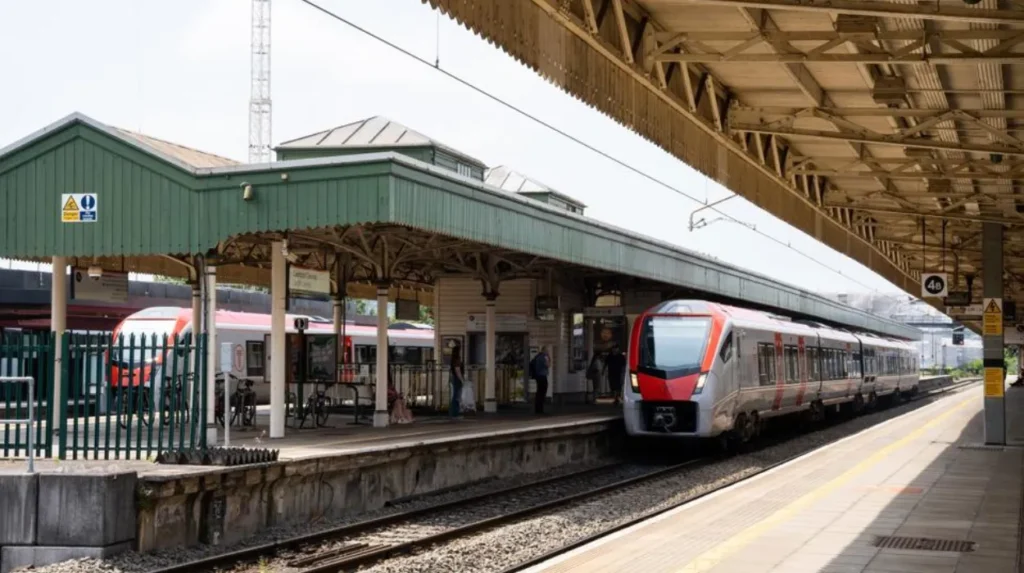
Cardiff’s rail network connects the city centre with Cardiff Bay, residential districts and communities across the South Wales Valleys and wider region. Cardiff Central and Cardiff Queen Street are key interchanges for local, regional and longer-distance rail journeys.
Cardiff Central is the city’s principal railway station. The station opened on 19 June 1850 as Cardiff station and formed part of the South Wales Railway. Its location near the docks helped connect Cardiff’s developing railway system with maritime trade and the movement of coal and other goods.
Today, Cardiff Central is a major passenger interchange. It serves local and regional journeys as well as longer-distance services.
Cardiff Queen Street is another important station. It provides access to routes serving the eastern part of the city and Valley destinations.
Other stations within Cardiff include Cathays, Llandaff, Ninian Park, Grangetown, Waungron Road, Fairwater, Danescourt, Radyr, Heath High Level, Heath Low Level, Cardiff Bay and stations serving other parts of the metropolitan area.
Rail is particularly useful for journeys where a direct train exists. It provides connections between Cardiff and places such as Caerphilly, Pontypridd, Barry, Penarth, Bridgend, Newport, Merthyr Tydfil, Aberdare and other communities.
New residents should distinguish between Cardiff’s urban rail stations and longer-distance services. The same station can serve different journey purposes depending on the route and time of travel.
What is the South Wales Metro and why does it matter in Cardiff?
The South Wales Metro is Transport for Wales’ integrated transport programme for South East Wales, combining rail improvements, new stations, interchange facilities and future tram-train infrastructure to improve connections between Cardiff, the Valleys and surrounding communities.
The South Wales Metro is larger than a conventional railway project. It is designed as an integrated transport system linking rail, bus and other forms of travel.
Cardiff is at the centre of the regional network. Improvements affect commuters travelling into the city as well as residents travelling from Cardiff to surrounding communities.
Transport for Wales is upgrading infrastructure and stations as part of the Metro transformation. The programme includes improvements at Cardiff Central and other locations.
Metro Central is focused on Cardiff Central and the surrounding area. TfW states that Cardiff Central is being enhanced to address overcrowding and congestion, increase capacity for event days and accommodate long-term passenger growth.
The programme also includes plans to improve the connection between Cardiff Central and Cardiff Bay through a tramway. The first phase of Cardiff Crossrail is intended to strengthen the rail connection between the city centre and Cardiff Bay.
Metro development remains relevant for residents because construction work can affect services. Transport for Wales publishes service-change information and replacement transport arrangements when engineering or construction work affects rail routes.
How much does public transport cost in Cardiff?
Cardiff public transport costs depend on the operator, route, passenger category, ticket type and payment method. In 2026, Cardiff Bus lists £2.60 for a standard adult single, while rail fares vary according to distance, zones, ticket type and travel conditions.
Bus fares are generally straightforward for local journeys. Cardiff Bus lists a £2.60 adult single fare for journeys within its Cardiff, Penarth and Llandough fare zone. Its adult Day to Go ticket is £5.20, while the listed Week to Go price is £19.
Contactless tap-on, tap-off is useful for passengers making multiple bus journeys because the operator calculates travel and applies the relevant fare structure. Cardiff Bus also provides app-based tickets and flexible ticket products.
Rail fares work differently. Transport for Wales operates a South Wales pay-as-you-go system using contactless cards and devices on eligible services.
For example, TfW currently lists a £5.90 daily cap for Zone 1 and a £17.70 weekly cap for Zone 1 journeys. Zone 1 to 3 has a £7.20 daily cap and £21.60 weekly cap. The relevant cap depends on the zones travelled through.
Residents should check the current operator fare before budgeting because fares change over time. The ticket that provides the lowest cost depends on travel frequency and journey pattern.
How does contactless payment work on Cardiff public transport?
Contactless payment works differently on buses and trains, so new residents should understand the operator’s rules before travelling. Cardiff Bus supports contactless payment, while eligible TfW rail journeys use tap-in and tap-out contactless pay-as-you-go travel.
On Cardiff Bus, passengers can use contactless payment when purchasing eligible tickets. The operator also provides tap-on, tap-off facilities that simplify payment for adult journeys.
Rail pay-as-you-go uses a separate process. Passengers tap in at their origin station and tap out at their destination station using the same card or device.
Transport for Wales states that passengers must use the same payment method when tapping in and out. A passenger using a phone must use the same digital card for both parts of the journey.
Failure to tap out can result in an incomplete-journey charge. TfW currently states that an incomplete journey charge is £10, while travelling without tapping in can result in a £20 penalty charge.
The South Wales pay-as-you-go system also applies daily and weekly fare caps. This makes contactless payment useful for residents who make repeated eligible rail journeys.
Pay-as-you-go has restrictions. It does not currently apply to GWR trains, and child or Railcard discounts are not generally incorporated into the standard pay-as-you-go calculation.
Which Cardiff transport tickets are useful for regular commuters?
Regular Cardiff commuters can choose between single fares, day tickets, weekly tickets, season tickets, railcards and combined travel products. The correct option depends on how often they travel, which operators they use and whether journeys cross Cardiff or regional fare boundaries.
Occasional passengers often use single or day tickets. Residents making several journeys in one day should compare the cost of individual fares with the operator’s day ticket or fare cap.
Cardiff Bus offers Day to Go and Week to Go products. Its app also provides flexible ticket options.
Rail commuters can consider weekly, monthly or annual season tickets where the same route is used frequently. Transport for Wales also offers Railcards and discounted products for eligible passengers.
A Railcard is a discount card that reduces the cost of eligible rail travel. TfW states that Railcards can provide savings of up to one-third on qualifying train tickets. Different Railcards serve different age groups and circumstances.
The 18 Saver Railcard is available for eligible 18-year-olds and is listed by TfW at £25 per year, with a 50% discount on applicable Standard Class TfW rail tickets.
Residents who use buses and trains should also check combined products. TfW provides selected combined rail and bus tickets, while Network Rider products cover travel involving multiple bus operators in South East Wales.
Can new residents travel around Cardiff without a car?
Cardiff supports car-free travel through an extensive bus and rail network, pedestrian routes, cycling infrastructure, park-and-ride facilities and integrated journey planning. The practicality of car-free living depends on the resident’s neighbourhood, workplace, timetable and daily destinations.
Cardiff’s central districts have particularly strong public transport connections. Areas around the city centre, Cardiff Bay, Cathays, Roath, Canton and other established urban communities have access to multiple transport options.
Rail is useful for corridors served by railway stations. Bus services provide broader coverage because they reach streets and neighbourhoods without railway stations.
Walking is an important part of many public transport journeys. Residents often walk between their home and bus stop, station, workplace, university or shopping area.
Cycling also forms part of Cardiff’s wider transport strategy. Cardiff Council’s transport planning links public transport improvements with active travel, congestion reduction and air-quality objectives.
Park and ride provides another option for people who live outside the most central areas or prefer not to drive into the city centre. Transport for Wales’ journey-planning tools include bus, train, walking and cycling options and identify park-and-ride facilities.
For a new resident, the most important test is the complete journey rather than the nearest transport stop. A home with a nearby bus stop is less useful if the service does not connect effectively with the workplace or other regular destinations.
How should new residents plan a Cardiff public transport journey?
New residents should plan the complete journey from home to destination, checking the current route, departure time, interchange, ticket, fare and service status. Traveline Cymru and Transport for Wales provide journey-planning tools covering buses, trains and multimodal journeys.
Transport for Wales provides a door-to-door journey planner covering bus, train, walking and cycling. Its travel map also displays bus stops, railway stations and park-and-ride options.
Cardiff Council directs residents towards Traveline Cymru for comprehensive public transport information covering buses and trains.
A practical journey check should include the walking distance to the first stop, scheduled departure time, interchange location, destination stop and return service.
Residents should also check service disruption before important journeys. Metro construction and infrastructure work can cause temporary timetable changes or replacement buses. TfW publishes service-change information for affected routes.
Event days require additional planning. Cardiff hosts major sporting, cultural and entertainment events, creating substantial demand around central transport hubs. Cardiff Central is specifically being enhanced to improve capacity during event periods.
Using an official journey planner is therefore more reliable than relying on an old timetable, social-media post or outdated route information.
What public transport connections are important for Cardiff commuters?
The most important Cardiff commuter connections link residential districts with Cardiff city centre, Cardiff Central, Cardiff Queen Street, Cardiff Bay, university campuses, hospitals, business districts and regional destinations such as Newport, Caerphilly, Pontypridd and the wider Valleys.
Cardiff Central is the principal interchange for many regional and national journeys. It connects rail passengers with the city centre and nearby bus services.
Cardiff Queen Street is important for journeys between central Cardiff and the eastern side of the city and Valley corridors.
Cardiff Bay has its own rail connection and extensive bus connections. The area is also a major destination for employment, leisure, culture and waterfront activities.
Cathays is significant for university-related travel and residential journeys. Heath is important for access to healthcare services and surrounding residential districts.
Newport provides a major eastward connection from Cardiff. The Valleys provide important commuter corridors north of the capital.
TfW’s current South Wales pay-as-you-go examples include Cardiff Central to Pontypridd and Cardiff Central to Cwmbran. The operator also provides zonal caps for journeys through the South Wales rail network.
These connections demonstrate why Cardiff public transport functions as a regional network rather than only a city-centre bus system.
What concessions are available for Cardiff public transport?
Eligible passengers in Wales can receive significant public transport concessions, including free local bus travel for qualifying older and disabled residents. Young passengers can also access discounted fares through products such as My Travel Pass.
The Welsh Government’s concessionary travel system provides free bus travel for eligible residents. Cardiff Council states that senior citizens and disabled people receive free travel on local bus services throughout Wales when they hold a valid concessionary pass.
Transport for Wales states that a Welsh Concessionary Travel Pass is available to eligible people whose primary address is in Wales and who are aged 60 or over or meet the relevant Welsh Government disability criteria. The pass provides free travel on most bus services in Wales and the borders, including TrawsCymru and fflecsi.
Young passengers also have dedicated fare arrangements. Cardiff Bus lists £1 single fares for eligible 16 to 21-year-olds with a My Travel Pass, while children aged 5 to 15 also have £1 single fares on the listed Cardiff Bus fare structure.
Residents should confirm eligibility and current terms before travelling because concessionary schemes have specific application and validity requirements.
Explore More Area Guide
Cardiff Resident Parking Zones and Permits Explained
Blue Badge Parking in Cardiff: Rules, Bays and Car Parks
How does Cardiff public transport affect where new residents choose to live?
Public transport accessibility influences the practicality of different Cardiff neighbourhoods by affecting commuting time, travel costs, access to services and connections with the city centre. Railway stations and frequent bus corridors are particularly important for residents without regular car access.
Transport access is an important part of residential planning. A property close to a reliable bus corridor or railway station can provide easier access to employment, education and services.
Rail connectivity is particularly significant for residents commuting between Cardiff and surrounding towns. Bus connectivity is more important for many inner-city and suburban journeys.
Residents should assess transport using their actual weekly routine. A student travelling to university has different requirements from a hospital employee, city-centre office worker or household with children.
The relevant factors include the distance to the nearest stop, number of direct services, evening services, weekend services, interchange requirements and travel cost.
Cardiff’s developing Metro network is also relevant to long-term residential decisions. TfW’s Metro programme is designed to improve capacity, connections and integration across South East Wales.
New residents should therefore assess current services rather than relying solely on future infrastructure proposals. Construction schedules and transport projects develop over time, while everyday commuting depends on services available at the time of the move.
What is the future of public transport in Cardiff?
Cardiff’s public transport system is moving towards a more integrated regional network through the South Wales Metro, rail capacity improvements, station upgrades, improved interchanges and stronger links between buses, trains and active travel across Cardiff and South East Wales.
Transport planning in Cardiff focuses on reducing congestion, improving air quality, supporting sustainable travel and increasing public transport capacity. Cardiff Council’s Transport White Paper sets out a long-term vision for major transport investment across the city and wider region.
Metro Central is one of the key developments. TfW is enhancing Cardiff Central to increase capacity and improve its role as a major regional transport hub.
The Cardiff Bus Interchange is another important part of the city’s transport infrastructure. The central facility has 14 bus bays and is designed to improve connections between bus services and other modes of transport.
The future network also includes planned tram-train infrastructure and further Metro improvements. These projects are designed to strengthen connections between Cardiff, Cardiff Bay and communities across the wider South Wales region.
Transport transformation does not remove the need to check current timetables. Construction work can temporarily change routes, station access and replacement transport arrangements. TfW publishes current service changes so passengers can adjust their journeys.
For new residents, the long-term direction is clear: Cardiff is developing a more integrated public transport system in which rail, buses, active travel and interchange facilities operate as connected parts of the wider South Wales network.
Cardiff public transport is therefore best understood as a combination of local buses, regional rail, Metro infrastructure, walking, cycling, taxis and integrated journey planning. New residents can reduce travel costs and simplify daily journeys by identifying their nearest transport links, understanding operator ticketing and checking current service information before travelling.
What public transport is available in Cardiff?
Cardiff has an integrated public transport network that includes local buses, trains, South Wales Metro services, taxis and active-travel connections. Cardiff Bus provides extensive city bus services, while Transport for Wales operates most local and regional rail services.