The River Taff is one of the most important geographical, historical and environmental features of Cardiff, Wales. It flows through the Welsh capital, connects the city centre with its northern valleys and southern waterfront, and plays a major role in Cardiff’s transport history, urban development, recreation and natural environment.
- What Is the River Taff and Where Does It Flow?
- Why Is the River Taff Important to Cardiff’s History?
- What Was the River Taff’s Role During Roman Cardiff?
- How Did the River Taff Support Medieval Cardiff?
- How Did the River Taff Contribute to Cardiff’s Industrial Growth?
- What Was the Connection Between the River Taff and Cardiff Docks?
- How Did Industrialisation Affect the River’s Environment?
- How Does the River Taff Flow Through Cardiff?
- What Is the River Taff’s Route Through Northern Cardiff?
- How Does the River Taff Pass Through Llandaff and Pontcanna?
- Where Does the River Taff Flow Through Cardiff City Centre?
- How Does the River Taff Reach Cardiff Bay?
- What Are the Main Attractions Along the River Taff in Cardiff?
- Why Is Bute Park Important to the River Taff?
- What Is the Connection Between the River Taff and Cardiff Castle?
- How Is the River Taff Connected to Principality Stadium?
- What Can Visitors See Around Cardiff Bay?
- What Is the Taff Trail and How Does It Follow the River Taff?
- What Wildlife Lives Along the River Taff?
- Which Fish Species Live in the River Taff?
- Do Otters and Kingfishers Live Along the River Taff?
- Why Are Riverside Habitats Important for Cardiff?
- How Does the Cardiff Bay Barrage Affect the River Taff?
- When Was the Cardiff Bay Barrage Built?
- How Does the Barrage Control Water Levels?
- How Does the Barrage Support Migratory Fish?
- What Is the Flood Risk Along the River Taff in Cardiff?
- Why Does the River Taff Flood?
- Which Cardiff Areas Are Associated With River Taff Flood Risk?
- How Can Residents Check River Taff Flood Warnings?
- What Is the Water Quality of the River Taff?
- How Can Visitors Enjoy the River Taff in Cardiff?
- Where Can Visitors Walk Along the River Taff?
- Can Visitors Cycle Along the River Taff?
- Can Visitors Take a Boat Along the River Taff?
- What Is the Future Importance of the River Taff to Cardiff?
- How Will Climate Change Affect the River Taff?
- Why Is River Restoration Important for Cardiff?
- How Does the River Taff Support Sustainable Urban Development?
- Why Should the River Taff Be Part of Every Cardiff Visitor’s Exploration?
The river has shaped Cardiff’s growth from a small settlement near Cardiff Castle into a major commercial city. Its historic connection with coal transportation, iron production and industrial development established Cardiff as one of the most important ports in Britain. Today, the River Taff forms part of the city’s green infrastructure and provides a setting for walking, cycling, wildlife observation and riverside recreation.
What Is the River Taff and Where Does It Flow?
The River Taff, known in Welsh as Afon Taf, is a major river in South Wales. It flows approximately 64 kilometres from the Brecon Beacons region through Merthyr Tydfil, Pontypridd and Cardiff before reaching Cardiff Bay and the Bristol Channel.
The River Taff is part of the South Wales river system. Its catchment includes upland landscapes, industrial valleys, residential communities, urban parks and the coastal environment around Cardiff.
The river begins as two separate waterways: the Taf Fawr, meaning Great Taff, and the Taf Fechan, meaning Little Taff. These rivers meet at Cefn-coed-y-cymmer, near Merthyr Tydfil, to form the main River Taff. The river then travels south through the Taff Valley towards Cardiff.
The principal settlements along its route include Merthyr Tydfil, Treharris, Pontypridd and Cardiff. Each settlement has a different relationship with the river, including industrial development, transport, recreation and environmental management.
According to Bute Park’s official information, the River Taff is approximately 64 kilometres long. It enters Cardiff near Taff’s Well and passes through Forest Farm, Hailey Park and Bute Park before continuing towards Cardiff Bay. River Taff+1
How Does the River Taff Connect Cardiff with South Wales?
The River Taff provides a geographical connection between Cardiff and the industrial communities of the South Wales Valleys. Its north-to-south route historically supported the movement of people, raw materials and manufactured products.
The river also forms part of Cardiff’s wider natural drainage system. Rainfall from its extensive catchment moves downstream towards the city, where river management, flood protection and water-quality monitoring are important public responsibilities.
The river’s connection with the wider Welsh landscape makes it significant beyond Cardiff’s administrative boundaries.
Why Is the River Taff Important to Cardiff’s History?
The River Taff influenced Cardiff’s early settlement, Roman military occupation, medieval development and industrial expansion. Its strategic crossing helped establish Cardiff Castle, while its connection to the coalfields supported the city’s growth into an internationally important nineteenth-century export port.
Cardiff’s relationship with the River Taff extends back almost 2,000 years. The river provided a strategic location for settlement because it offered access to inland routes and the nearby Bristol Channel.
The Romans recognised the importance of this geographical position during their occupation of South Wales.
What Was the River Taff’s Role During Roman Cardiff?
Roman forces established a fort at Cardiff during the first century AD, around AD 55. The location provided control over an important river crossing and access to routes connecting settlements across South Wales.
Cardiff Castle occupies the site of these earlier Roman fortifications. Archaeological evidence identifies several successive Roman forts on the same location, with occupation continuing into the fourth century.
The settlement became associated with the name Caer-Taff, meaning fort on the Taff. This historical connection contributed to the development of the modern Welsh name Caerdydd.
The river crossing therefore formed an important part of Cardiff’s early military and geographical importance.
How Did the River Taff Support Medieval Cardiff?
During the medieval period, Cardiff developed around its castle, river crossing and growing commercial settlement.
The River Taff provided access to surrounding agricultural communities and supported movement between the town and inland areas. Its location also influenced the development of roads, bridges and trading activities.
Cardiff’s medieval importance increased under Norman rule. A motte-and-bailey castle was established within the former Roman fortifications during the late eleventh century.
The river remained a defining geographical feature as Cardiff expanded beyond its original defensive settlement.
How Did the River Taff Contribute to Cardiff’s Industrial Growth?
The River Taff supported Cardiff’s industrial expansion by connecting the South Wales coalfield and iron-producing valleys with the developing docks. Its transport links helped move industrial goods towards international markets, establishing Cardiff as a major nineteenth-century maritime trading centre.
The Industrial Revolution transformed the River Taff corridor. South Wales became an important centre for coal mining, iron production and manufacturing.
Merthyr Tydfil and neighbouring industrial settlements produced materials required by expanding British and international industries. Cardiff developed into the principal maritime outlet for much of this production.
The river corridor provided a geographical route between the industrial valleys and the coast.
What Was the Connection Between the River Taff and Cardiff Docks?
Cardiff’s dock development accelerated during the nineteenth century as coal exports increased.
The Bute West Dock opened in 1839 under the patronage of the second Marquess of Bute. Further developments included the Bute East Dock in 1855, Roath Basin in 1874, Roath Dock in 1887 and Queen Alexandra Dock in 1907.
These facilities transformed Cardiff’s maritime infrastructure and supported large-scale international trade.
By the 1880s, Cardiff had become one of the world’s leading coal-exporting ports. Its docks handled more coal than any other port in the world at that time, according to Cardiff Harbour Authority’s historical account. Cardiff Harbour Authority
The River Taff formed part of the wider geographical system that connected these docks with the inland industrial economy.
How Did Industrialisation Affect the River’s Environment?
Industrial development placed considerable pressure on the River Taff.
Coal processing, iron production, urban expansion and industrial wastewater affected the river’s water quality. Pollution from industrial activity damaged aquatic habitats and reduced the river’s environmental condition.
The river became closely associated with the environmental consequences of heavy industry.
As Cardiff and the surrounding valleys transitioned away from traditional heavy industry, environmental management became increasingly important. Improvements in wastewater treatment, industrial regulation and river restoration contributed to the recovery of aquatic habitats.
The River Taff now supports important wildlife populations and forms a recognised ecological corridor through Cardiff.
How Does the River Taff Flow Through Cardiff?
The River Taff enters Cardiff from the north near Taff’s Well and travels south through natural green spaces, residential neighbourhoods and the city centre. It passes Forest Farm, Hailey Park, Llandaff and Bute Park before reaching Cardiff Bay.
The river’s Cardiff section contains a mixture of natural riverbanks, engineered channels, bridges, public parks and developed waterfront areas.
Its route connects several important Cardiff neighbourhoods and visitor destinations.
What Is the River Taff’s Route Through Northern Cardiff?
The river enters Cardiff near Taff’s Well and continues through the northern part of the city.
Forest Farm provides an important natural environment close to the river. The area contains wetlands, woodland, grassland and habitats that support birds and other wildlife.
Further south, the river passes Hailey Park, which provides access to riverside paths, recreational facilities and green spaces.
These northern sections demonstrate the river’s importance as a natural feature within an increasingly developed urban environment.
How Does the River Taff Pass Through Llandaff and Pontcanna?
The River Taff continues towards Llandaff and Pontcanna, where riverside landscapes become an important part of Cardiff’s public open-space network.
Llandaff is known for its historic cathedral and traditional village character. The surrounding area provides a connection between Cardiff’s historic heritage and the river corridor.
Pontcanna Fields and neighbouring recreational spaces offer opportunities for walking, cycling and outdoor activities.
The river also provides a natural boundary and landscape feature for communities located on either side of its banks.
Where Does the River Taff Flow Through Cardiff City Centre?
The river passes directly through central Cardiff, close to major landmarks and public attractions.
Bute Park is one of the most important green spaces along the river. The park provides extensive riverside access and connects the city centre with northern Cardiff.
The River Taff also passes close to Cardiff Castle, Cardiff Arms Park and Principality Stadium.
Its present route through central Cardiff reflects major engineering changes undertaken during the nineteenth century.
According to Bute Park’s historical account, Isambard Kingdom Brunel developed plans to divert the river westwards from its former course around Cardiff Castle. The change also helped create space for Cardiff Central Station in an area previously affected by flooding.
How Does the River Taff Reach Cardiff Bay?
After passing through central Cardiff, the River Taff continues south towards the former docklands.
Its lower section connects with Cardiff Bay, where the river enters a managed freshwater environment.
The River Ely also flows into Cardiff Bay, contributing to the water system managed by Cardiff Harbour Authority.
The bay provides a modern waterfront setting with marinas, cultural attractions, pedestrian routes and boating facilities.
What Are the Main Attractions Along the River Taff in Cardiff?
The River Taff passes several important Cardiff attractions, including Bute Park, Cardiff Castle, Principality Stadium, Cardiff Arms Park and Cardiff Bay. These locations combine historic architecture, sporting heritage, public green spaces and waterfront recreation within the city’s central river corridor.
The riverside route offers access to some of Cardiff’s best-known visitor destinations. It also provides a way to explore the city’s historical development without travelling far from the centre.
Why Is Bute Park Important to the River Taff?
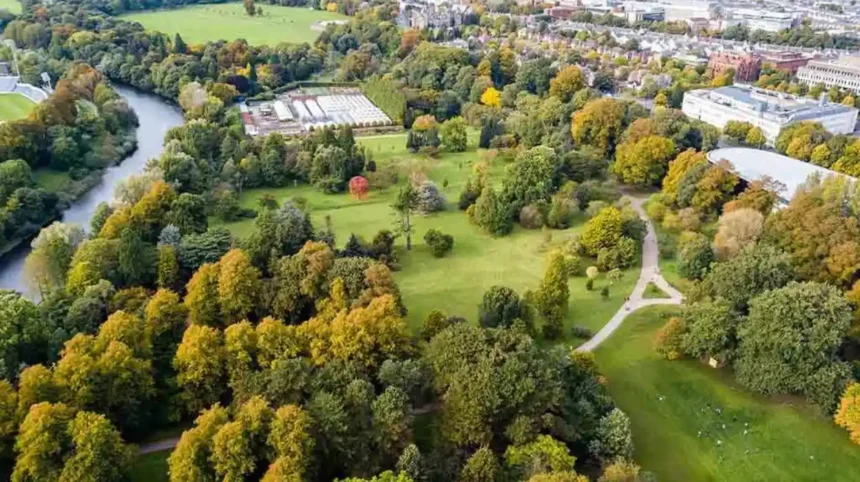
Bute Park is one of Cardiff’s largest and most recognised urban parks. It stretches alongside the River Taff behind Cardiff Castle and provides a substantial green corridor through the city centre.
The park contains mature trees, open lawns, historic features and riverside paths. Visitors use these spaces for walking, cycling, jogging and relaxation.
Its location makes Bute Park an important connection between Cardiff’s historic centre and its northern neighbourhoods.
The River Taff also supports the park’s ecological value. Its banks provide habitats for birds, insects, fish and mammals, including otters.
What Is the Connection Between the River Taff and Cardiff Castle?
Cardiff Castle stands close to the River Taff and represents almost 2,000 years of local history.
Its original Roman fortifications occupied a strategically important location near the river crossing. Later Norman and Victorian developments transformed the site into the historic attraction visible today.
Visitors exploring the castle can also access Bute Park and nearby riverside walking routes.
This geographical relationship demonstrates how the River Taff influenced Cardiff’s original settlement and subsequent urban development.
How Is the River Taff Connected to Principality Stadium?
Principality Stadium stands close to the River Taff in the city centre.
The stadium is a major venue for international rugby, football and entertainment events. Its location contributes to the relationship between Cardiff’s sporting infrastructure and its central river corridor.
Visitors walking along the river can explore the surrounding city centre, stadium approaches and nearby public spaces.
What Can Visitors See Around Cardiff Bay?
The lower River Taff connects with Cardiff Bay, an important waterfront destination in the Welsh capital.
Nearby attractions include the Wales Millennium Centre, the Senedd, Mermaid Quay and the Norwegian Church.
Cardiff Bay combines maritime history with modern cultural and commercial development. Its waterfront also provides access to walking routes and recreational activities.
The area demonstrates how Cardiff has transformed its former industrial waterfront into a major public destination.
What Is the Taff Trail and How Does It Follow the River Taff?
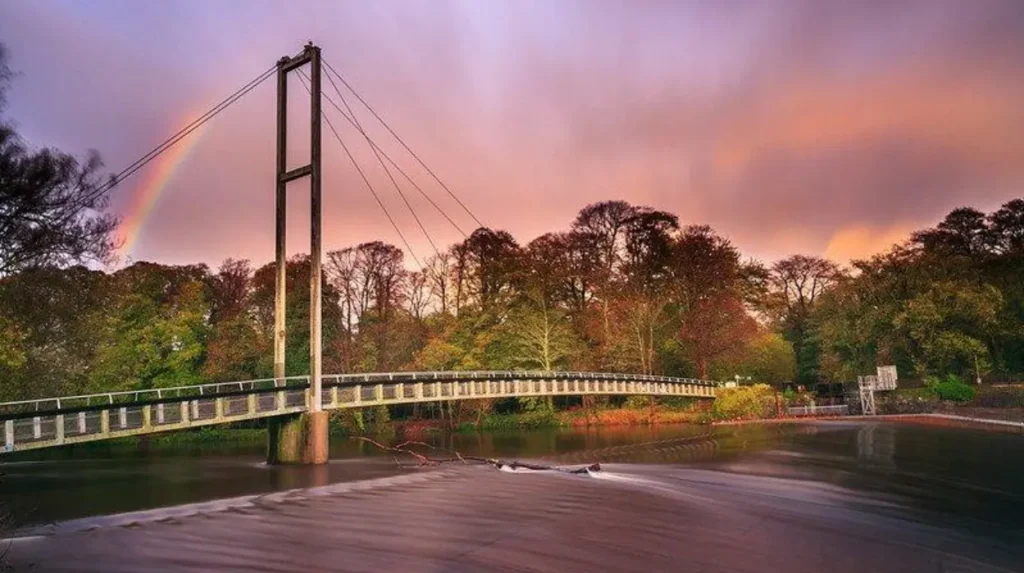
The Taff Trail is a long-distance walking and cycling route connecting Cardiff with Brecon. It covers approximately 55 miles and follows riverside paths, former railway routes and forest tracks, providing access to Cardiff’s green spaces and South Wales landscapes.
The Taff Trail is one of the most recognised outdoor routes in South Wales. It follows much of the River Taff corridor and connects urban environments with countryside and upland landscapes.
The route is suitable for walking and cycling, although surface conditions and difficulty vary along its length.
According to Visit Rhondda Cynon Taf, the trail extends approximately 55 miles between Cardiff and Brecon.
Where Does the Taff Trail Start in Cardiff?
The Cardiff starting point is at Roald Dahl Plass in Cardiff Bay.
The location provides access to the waterfront and nearby cultural attractions. A commemorative plaque identifies the beginning of the trail.
From Cardiff Bay, the route continues towards the city centre, passing near Principality Stadium and Cardiff Castle before reaching Bute Park.
The riverside sections provide opportunities to explore Cardiff’s historic and natural landscapes.
Which Places Can Visitors Explore Along the Taff Trail?
The trail connects several notable destinations beyond Cardiff.
These include:
- Bute Park: A major urban green space alongside the River Taff.
- Hailey Park: A recreational area in northern Cardiff.
- Castell Coch: A historic castle near Tongwynlais.
- Pontypridd: An important industrial heritage town with historic bridges and public parks.
- Brecon: A historic market town near the Brecon Beacons.
The route offers a gradual transition from Cardiff’s urban environment to the landscapes of the South Wales Valleys.
Visit Wales also highlights the Cardiff-to-Pontypridd section as an accessible way to experience the Taff Trail’s combination of riverside scenery and heritage attractions.
What Wildlife Lives Along the River Taff?
The River Taff supports freshwater fish, mammals, birds, insects and riverside vegetation. Important species include Atlantic salmon, brown trout, otters, kingfishers, bats and grass snakes, making the river a valuable wildlife corridor through Cardiff’s urban landscape.
The river provides habitats for species that depend on freshwater environments and connected green spaces.
Its ecological importance extends beyond the water itself. Woodland, riverbanks, wetlands and nearby grasslands support different wildlife communities.
Which Fish Species Live in the River Taff?
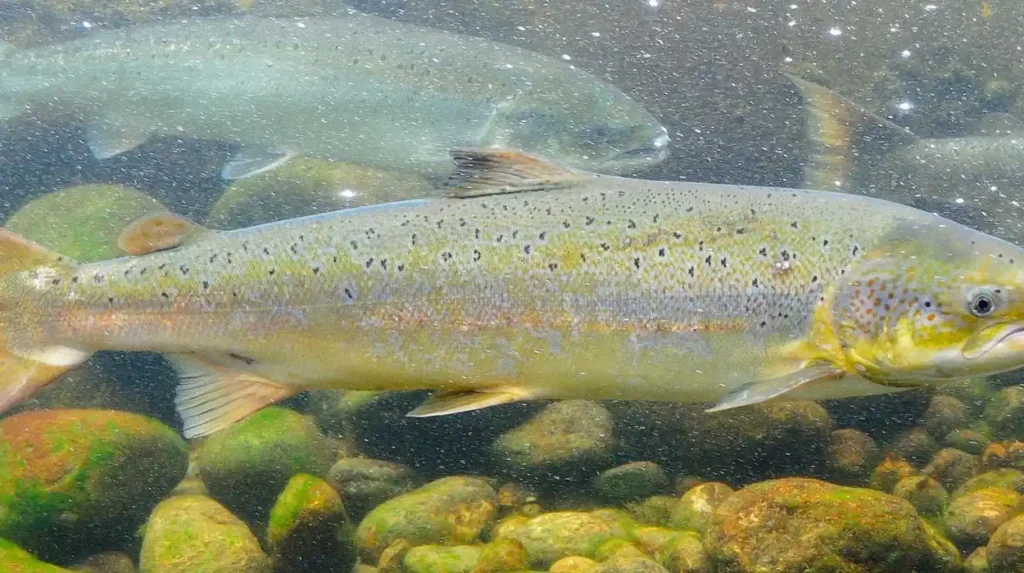
Atlantic salmon and brown trout are important fish species associated with the River Taff.
Atlantic salmon are migratory fish. They spend part of their lives in the sea before returning to freshwater rivers to reproduce.
Brown trout generally remain in freshwater environments, although their movement patterns vary between populations.
These species depend on suitable water quality, accessible river channels and appropriate spawning habitats.
The Cardiff Bay Barrage includes a dedicated fish pass designed to support the movement of migratory fish between the Bristol Channel and the rivers Taff and Ely.
Do Otters and Kingfishers Live Along the River Taff?
Otters are mammals that depend on healthy freshwater habitats and suitable food supplies. Their presence indicates the ecological importance of connected river environments.
Kingfishers are colourful birds commonly associated with rivers and streams. They hunt small fish from waterside perches and require suitable riverbanks for nesting.
Bats, grass snakes and other wildlife also use the wider River Taff corridor.
Bute Park identifies the river as an important wildlife corridor and records these species among the wildlife associated with its conservation environment.
Why Are Riverside Habitats Important for Cardiff?
Riverside habitats provide ecological connections between otherwise separated urban green spaces.
Trees and vegetation provide shelter and feeding areas. Wetlands support aquatic organisms, while natural riverbanks offer nesting and breeding environments.
Protecting these habitats helps maintain biodiversity within Cardiff’s developed landscape.
Public access and conservation therefore need to operate together. Visitors should avoid disturbing wildlife, damaging vegetation or leaving rubbish along riverbanks.
How Does the Cardiff Bay Barrage Affect the River Taff?
The Cardiff Bay Barrage is a major engineering structure connecting Cardiff and Penarth across the mouth of Cardiff Bay. Completed in 1999, it controls water levels, supports navigation and helps maintain the freshwater environment supplied by the River Taff and River Ely.
The barrage changed the relationship between the lower River Taff, Cardiff Bay and the Bristol Channel.
Before its construction, Cardiff Bay operated as a tidal harbour. Water levels changed with the movement of tides in the Severn Estuary.
The barrage created a managed freshwater environment and became a major part of Cardiff’s waterfront regeneration.
When Was the Cardiff Bay Barrage Built?
Cardiff Harbour Authority identifies the project as a £220 million engineering development. The structure measures approximately 1.1 kilometres and extends between Cardiff’s docklands and Penarth.
The project helped enable the wider regeneration of Cardiff’s former industrial waterfront. Cardiff Harbour Authority associates the barrage with a wider regeneration programme valued at approximately £2 billion. Cardiff Harbour Authority
How Does the Barrage Control Water Levels?
The barrage uses sluice gates to regulate the movement of water between Cardiff Bay and the Bristol Channel.
When the Bristol Channel tide is higher than the bay, the sluices close to prevent seawater from entering the freshwater environment.
When the water level outside the barrage falls below the bay level, the sluices open to release water from the bay.
The structure also contains navigation locks that allow boats to move between Cardiff Bay and the Bristol Channel.
The system requires continuous monitoring because water levels, river flows and tidal conditions influence its operation.
How Does the Barrage Support Migratory Fish?
The barrage includes a specially designed fish pass to support migratory fish movement.
Atlantic salmon and sea trout travel between freshwater spawning grounds and marine feeding areas during their life cycles.
The fish pass provides a route around the barrage structure. Its monitoring equipment helps Cardiff Harbour Authority observe fish movements.
This infrastructure is important because large water-control structures can interrupt natural migration routes when suitable passage facilities are absent.
What Is the Flood Risk Along the River Taff in Cardiff?
Flood risk along the River Taff results from heavy rainfall, high upstream river flows and limited drainage capacity in developed areas. Natural Resources Wales monitors river conditions, issues flood warnings and manages designated flood-risk areas with other public authorities.
Flood management is an important consideration for communities located near the River Taff.
The river receives water from an extensive catchment extending beyond Cardiff. Heavy rainfall in the South Wales Valleys therefore affects river conditions downstream.
Urban development also influences how quickly rainwater enters drainage systems and nearby watercourses.
Why Does the River Taff Flood?
Flooding occurs when the amount of water entering a river exceeds the capacity of its channel and surrounding drainage environment.
Several factors contribute to flood risk along the Taff.
Heavy rainfall across the upper catchment increases river discharge. Saturated ground reduces the amount of additional rainfall that can soak into the soil.
Urban surfaces, including roads, roofs and paved areas, also increase surface-water runoff.
Cardiff Council’s flood-risk strategy identifies the Taff catchment as a responsive catchment in which river levels can rise rapidly following rainfall. The strategy also identifies the influence of Storms Ciara, Dennis and Jorge during 2020.
Which Cardiff Areas Are Associated With River Taff Flood Risk?
Areas close to the River Taff require attention to river and surface-water flood risk.
These include riverside locations around Pontcanna, Riverside and other parts of central and northern Cardiff.
Cardiff Council’s flood-risk management documentation identifies Riverside as an area where the River Taff represents a significant source of flood risk.
The council’s 2025 consultation draft also discusses surface-water risk within the area. Cyngor Caerdydd
Flood exposure differs between properties, streets and individual sites. Residents should therefore check the official flood-risk map rather than assume that every property within a neighbourhood faces the same level of risk.
How Can Residents Check River Taff Flood Warnings?
Natural Resources Wales provides online flood warnings and alerts for the River Taff.
Its monitoring system includes locations such as Cardiff City and Pontcanna Fields.
Residents can check current warning levels, monitor river conditions and receive flood alerts for relevant locations.
The Flood Risk Assessment Wales map also provides information about river, coastal, surface-water and reservoir flooding.
Natural Resources Wales recommends avoiding walking, cycling or driving through floodwater. Floodwater can conceal hazards and move with considerable force.
What Is the Water Quality of the River Taff?
Water quality in the River Taff has improved following the decline of heavy industrial activity and improvements in wastewater management. However, pollution monitoring remains important because urban runoff, wastewater discharges and rainfall events continue to affect freshwater conditions.
Historically, the River Taff experienced significant pollution from industrial activities across South Wales.
Coal mining, iron production and urban wastewater affected its aquatic environment. These pressures reduced the suitability of parts of the river for sensitive freshwater species.
Environmental improvements have helped restore habitats and support the return of fish and other wildlife.
What Factors Affect River Taff Water Quality?
Several environmental factors influence the river’s condition.
Industrial pollution remains an important historical consideration. Modern industrial regulation and wastewater treatment help reduce the release of harmful substances.
Surface-water runoff is another important factor. Rainwater washes pollutants from roads, parking areas and developed land into drainage networks and watercourses.
Heavy rainfall can also increase the amount of sediment and pollutants entering rivers.
Wastewater infrastructure requires continuous maintenance to reduce pollution incidents and protect aquatic ecosystems.
Is the River Taff Safe for Swimming?
The River Taff should not be treated as a designated swimming location.
River conditions change with rainfall, water levels, currents and pollution incidents. Even when water appears clear, harmful bacteria and other contaminants remain invisible.
Cardiff Harbour Authority publishes water-quality forecasts for Cardiff Bay and monitors conditions associated with the River Taff and River Ely.
These forecasts demonstrate that water quality requires regular monitoring and does not remain constant. Cardiff Harbour Authority
Visitors should follow official safety advice and avoid entering the river unless an activity is specifically authorised and suitable safety arrangements are in place.
How Can Visitors Enjoy the River Taff in Cardiff?
Visitors can experience the River Taff through walking, cycling, wildlife observation and riverside sightseeing. Bute Park, Pontcanna Fields and Cardiff Bay provide accessible locations for outdoor recreation, while the Taff Trail connects Cardiff with attractions throughout South Wales.
The river provides opportunities to explore Cardiff’s natural environment without leaving the urban area.
Its public paths and green spaces attract residents, tourists, cyclists and outdoor enthusiasts.
Where Can Visitors Walk Along the River Taff?
Bute Park is one of the most convenient locations for riverside walking.
Visitors can follow paths alongside the river, explore wooded areas and access Cardiff Castle and the city centre.
Pontcanna Fields provides additional open space for walking and outdoor recreation.
Hailey Park offers another option in northern Cardiff, with access to green spaces and the wider riverside corridor.
These locations provide different ways to experience the River Taff without completing the entire long-distance trail.
Can Visitors Cycle Along the River Taff?
Cycling is an important recreational activity along the River Taff.
The Taff Trail provides a recognised route for cyclists travelling between Cardiff and the South Wales Valleys.
Within Cardiff, cyclists can access sections of the route through Bute Park and towards Cardiff Bay.
The route includes different surfaces and gradients. Cyclists should check local signage, use suitable equipment and take care around pedestrians.
Can Visitors Take a Boat Along the River Taff?
Cardiff Bay offers opportunities to experience the lower River Taff from the water.
Water-based activities include organised boat trips and authorised passenger services operating within the harbour environment.
Cardiff Harbour Authority regulates navigation within Cardiff Bay and the River Taff.
Its navigation guidance specifies a maximum speed of five knots for most vessels using the River Taff. Licensed passenger-carrying vessels have a separate maximum speed limit of seven knots. Cardiff Harbour Authority
Visitors should check current services, operating arrangements and departure points before planning a boat trip.
Explore More Area Guide
Cardiff’s Rivers and Waterways: Taff, Ely, Rhymney and Cardiff Bay
Flood Defences in Cardiff: Barrage, River Protection and Flood Management
What Is the Future Importance of the River Taff to Cardiff?
The River Taff will remain important to Cardiff’s environmental protection, climate resilience, urban development and recreational infrastructure. Its future management requires coordinated flood prevention, water-quality improvements, wildlife conservation and sustainable public access along the river corridor.
Cardiff continues to develop around its existing natural and built environments.
The River Taff provides an important connection between these different elements of the city.
Its future value depends on maintaining a balance between public access, environmental protection and responsible urban development.
How Will Climate Change Affect the River Taff?
Climate change increases the importance of effective flood-risk management.
Changes in rainfall intensity and patterns place additional pressure on rivers, drainage networks and flood defences.
Heavy rainfall across the Taff catchment can produce higher river flows that affect communities downstream.
Cardiff therefore requires long-term planning that considers changing weather conditions, development pressures and the condition of existing infrastructure.
Natural Resources Wales provides flood-risk information and guidance to help communities understand and prepare for potential flooding.
Why Is River Restoration Important for Cardiff?
River restoration involves improving the physical and ecological condition of watercourses.
For the River Taff, this includes protecting natural riverbanks, improving water quality, maintaining fish migration routes and conserving riverside vegetation.
Restoration also supports biodiversity by maintaining connected habitats.
Public organisations, environmental groups and local communities all contribute to the long-term protection of river environments.
How Does the River Taff Support Sustainable Urban Development?
The river provides green infrastructure within Cardiff’s developed landscape.
Green infrastructure refers to connected natural and semi-natural spaces that provide environmental and social benefits.
The River Taff corridor contributes to urban biodiversity, outdoor recreation and natural drainage.
Its green spaces also provide opportunities for walking and cycling, supporting sustainable movement through the city.
Protecting these areas is important as Cardiff accommodates new housing, transport infrastructure and commercial development.
Why Should the River Taff Be Part of Every Cardiff Visitor’s Exploration?
The River Taff is an essential part of Cardiff’s geographical identity, historical development and modern environment. Its route connects Roman heritage, industrial landmarks, urban parks and Cardiff Bay, offering visitors a comprehensive understanding of how the Welsh capital developed.
The river explains important aspects of Cardiff’s past and present.
Its historical role began with Roman settlement and strategic river crossings. During the Industrial Revolution, it became part of the wider transport network connecting the South Wales coalfields with international markets.
Today, the River Taff supports wildlife, recreation, flood management and urban regeneration.
Visitors can explore its history around Cardiff Castle, walk along its banks through Bute Park, discover its sporting landmarks and continue towards Cardiff Bay.
The Taff Trail extends this experience beyond the city, connecting Cardiff with the landscapes and communities of South Wales.
Protecting the River Taff remains important for Cardiff’s environmental quality, cultural heritage and future development. Its continued conservation ensures that this historic waterway remains a valuable part of the Welsh capital.
Where is the River Taff located?
The River Taff is located in South Wales. It flows through Merthyr Tydfil, Pontypridd and Cardiff before reaching Cardiff Bay and the Bristol Channel.