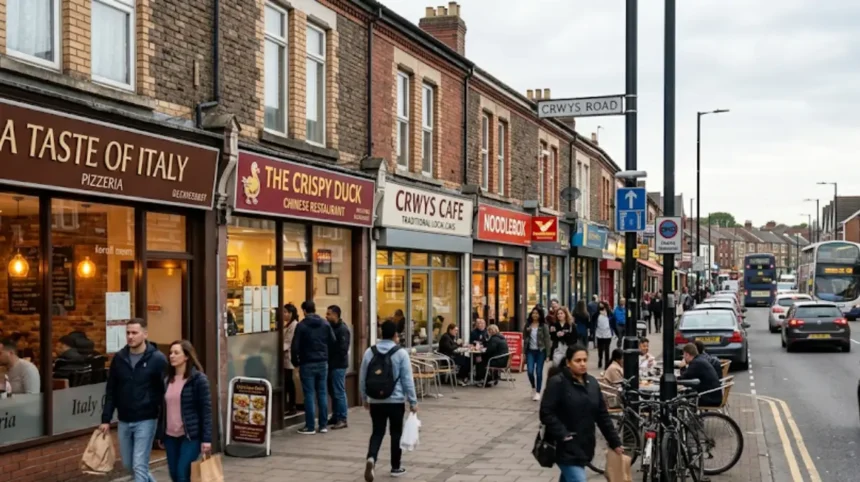
Crwys Road is a primary commercial thoroughfare situated in the Cathays district of Cardiff, Wales. The street functions as a major culinary hub, characterized by a high density of independent restaurants, cafes, pubs, and takeaway establishments that serve a diverse local population.
- What Is the Significance of Crwys Road in Cardiffs Food Scene?
- How Did Crwys Road Develop into a Culinary Destination?
- What Types of Cuisines Are Available on Crwys Road?
- What Are the Key Dining Categories and Notable Establishments on Crwys Road?
- Full-Service International Restaurants
- Specialty Cafes and Brunch Establishments
- Quick-Service and Takeaway Venues
- Historic Public Houses
- How Does the Student Population Influence Crwys Road’s Food Economy?
- What Role Does Sustainability and Plant-Based Dining Play on Crwys Road?
- How Does Crwys Road Compare to Other Food Hubs in Cardiff?
- What Infrastructure and Accessibility Features Support Crwys Road Diners?
- Public Transport Connectivity
- Pedestrian and Active Travel Infrastructure
- Parking Regulations and Delivery Access
- What Is the Future Outlook for Crwys Road’s Culinary Ecosystem?
What Is the Significance of Crwys Road in Cardiffs Food Scene?
Crwys Road serves as a central gastronomic corridor in Cardiff, connecting the city center with suburban Cathays and Roath. The street features over thirty independent food businesses, offering diverse global cuisines that cater to university students, permanent residents, and visitors.
The commercial ecosystem of Crwys Road relies heavily on its geographic positioning. Situated within 1.0 mile of Cardiff University, the area benefits from continuous foot traffic generated by a student population exceeding 30,000 individuals. This demographic profile shapes the price structures, operational hours, and service models of local eateries.
The street exhibits a high concentration of independent enterprise compared to national corporate chains. Data from Cardiff Council planning registries indicates that independent food and drink venues occupy more than 85 percent of the commercial frontage designated for Class A3 (Food and Drink) use along the corridor. This structural density fosters market competition, driving menu diversity and culinary specialization across the district.
How Did Crwys Road Develop into a Culinary Destination?
Crwys Road developed from a nineteenth-century Victorian residential transport route into a commercial dining district. Urban expansion during the Welsh coal boom led to row-house construction, which later converted ground-floor spaces into shops, bakeries, and modern international dining establishments.
The transformation of Crwys Road aligns with Cardiff’s wider economic evolution. During the late nineteenth century, the rapid growth of the Port of Cardiff established Cathays as a residential area for dockworkers, railway staff, and tradespeople. The installation of the Cardiff District Tramways line along Crwys Road in the 1880s accelerated commercial development along the arterial street.
Ground-floor residential bays were systematically altered into storefronts between 1890 and 1930. Early food businesses were primarily utility-driven, comprising local butchers, fishmongers, and traditional British bakeries.
Post-World War II migration patterns substantially altered the street’s commercial landscape. Commonwealth immigration during the 1960s and 1970s introduced the district’s first South Asian curry houses and Greek Cypriot grills.
By the early 2000s, the expansion of higher education institutions in Cardiff shifted demographic demand toward affordable, fast-casual international dining, solidifying Crwys Road’s status as a dining district.
What Types of Cuisines Are Available on Crwys Road?
Crwys Road offers a wide range of global cuisines, including South Asian, Middle Eastern, Mediterranean, East Asian, traditional British, and modern plant-based options. Independent venues specialize in authentic regional preparation methods alongside contemporary fast-casual dining formats.
The culinary taxonomy of Crwys Road is categorized by geographical region and operational model. South Asian establishments form a long-standing foundation of the street’s nighttime economy, offering regional Indian, Bangladeshi, and Pakistani preparations.
Middle Eastern and Mediterranean dining options are heavily represented through Lebanese shawarma houses, Greek tavernas, and Turkish charcoal grills. These venues utilize traditional open-flame cooking methods, serving flatbreads baked on-site, grilled meats, and cold meze selections.
East Asian representation includes Japanese ramen bars, Korean fried chicken venues, and traditional Chinese noodle shops. These establishments reflect the growing international student demographic residing in Cathays.
Western culinary offerings range from long-operating traditional British fish and chip shops to contemporary artisanal burger establishments, wood-fired pizza venues, and specialized plant-based cafes.
What Are the Key Dining Categories and Notable Establishments on Crwys Road?
Crwys Road features distinct dining categories: sit-down restaurants, casual cafes, specialized takeaways, and traditional pubs. Establishments such as Woodville Pub, Stageit, and various independent eateries illustrate the varied service models operating along the commercial corridor.
Full-Service International Restaurants
Full-service establishments along Crwys Road operate primarily during evening hours, catering to group dining and sit-down meals. Indian dining rooms offer traditional curries, biryanis, and tandoori specialties. Greek tavernas provide sit-down meze experiences featuring halloumi, souvlaki, and moussaka. These businesses rely on traditional interior service models, telephone reservations, and third-party delivery platforms.
Specialty Cafes and Brunch Establishments
Daytime trade on Crwys Road is dominated by independent cafes that prioritize specialty coffee, artisan pastries, and structured brunch menus. Establishments utilize high-grade espresso equipment and source single-origin coffee beans. Menus incorporate options such as poached eggs on sourdough, full Welsh breakfasts, and extensive vegan alternatives. These spaces function as remote work and study hubs for local residents during business hours.
Quick-Service and Takeaway Venues
Quick-service venues manage high customer throughput, particularly during late-night operational windows. Fish and chip shops deliver traditional fried cod, battered sausage, and thick-cut chips prepared using historic frying practices. Kebab houses and pizza shops operate late into the night, serving takeaway items designed for fast consumption.
Historic Public Houses
Public houses on Crwys Road offer traditional pub cuisine integrated with wet-led social spaces. The Woodville, situated at the southern end of the street, serves as a primary social venue. The pub provides classic British menu items, including:
- Customizable pub burgers
- Hand-battered fish and chips
- Loaded fries and nachos
- Vegetarian and plant-based pub meals
These venues maintain affordable price points tailored to student budgets while screening live sporting events and hosting community activities.
How Does the Student Population Influence Crwys Road’s Food Economy?
Cardiff University’s nearby campus provides a demographic that directly dictates menu pricing, service speed, and operational hours on Crwys Road. Businesses adapt by offering targeted discounts, late-night service, and affordable fast-casual dining options tailored to student living.
The higher education sector in Cardiff provides an economic driver for the Cathays commercial area. According to data published by the Higher Education Statistics Agency (HESA), Cardiff University, Cardiff Metropolitan University, and the University of South Wales collectively enroll over 40,000 students within the city boundary. A significant percentage of this population resides in private rented sector housing immediately adjacent to Crwys Road.
This demographic concentration creates specific operational conditions for food businesses:
- Price Elasticity: Venues maintain low price ceilings to capture student expenditure. Lunch deals, combo pricing, and percentage-based student discounts are standard practices across more than 70 percent of venues.
- Temporal Patterns: Revenue patterns follow the academic calendar, experiencing high volume during term times (October through May) and reduced local trade during academic recess periods in summer and Christmas.
- Digital Integration: Customer acquisition depends heavily on digital ordering platforms including Deliveroo, Uber Eats, and Just Eat. Establishments prioritize high-throughput kitchen workflows to process concurrent in-house and delivery orders.
What Role Does Sustainability and Plant-Based Dining Play on Crwys Road?
Crwys Road contains a high concentration of plant-based and eco-conscious food options in Cardiff. Venues offer fully vegan menus or extensive vegetarian alternatives, responding to shifting consumer demands for sustainable, locally sourced, and meat-free dining.
Consumer demand for ethical and sustainable dining has reshaped food offerings along Crwys Road. The area features a notable concentration of dietary-specific establishments, accommodating vegan, vegetarian, gluten-free, and halal dietary requirements.
Plant-based dining on Crwys Road operates through two structural models: dedicated vegan establishments and hybrid omnivorous venues. Dedicated plant-based venues serve completely meat-free items, including seitan-based fast food, dairy-free pastries, and botanical beverages. Hybrid venues ensure strict cross-contamination protocols, using dedicated fryers and prep surfaces for vegetarian products.
Halal certification is widely present along the street, reflecting the demographic composition of Cathays. Over half of the meat-serving venues on Crwys Road maintain certified Halal supply chains, clearly displaying documentation to assure consumers of compliance with dietary standards.
Explore More Area Guide
Shopping on Albany Road in Cardiff: Shops, Access and Local Guide
A Complete Guide to the Best Independent Shops in Whitchurch Cardiff
How Does Crwys Road Compare to Other Food Hubs in Cardiff?
Crwys Road distinguishes itself from central Cardiff, City Road, and Wellfield Road by offering lower price points, a casual student-oriented atmosphere, and a balanced mix of daytime cafes and evening takeaway options within a compact footprint.
| District | Primary Demographic | Dominant Cuisine Profile | Average Price Point | Operational Focus |
| Crwys Road | Students & Local Residents | Global Fast-Casual, Cafes, Pubs | Low to Moderate | Day-to-Night Balance |
| City Road | Citywide & Diverse | Middle Eastern, South Asian, Late-Night | Low to Moderate | Late Evening / Night |
| Wellfield Road | Affluent Suburban | Artisan Bakery, Bistro, Fine Casual | Moderate to High | Daytime & Early Evening |
| City Centre | Tourists, Workers, Visitors | Corporate Chains, Upscale Dining | High | All-Day Commercial |
Crwys Road occupies a distinct position within Cardiff’s commercial geography. Unlike the City Centre, which is dominated by national chain operators facing higher commercial rates, Crwys Road provides a low-barrier entry point for independent restaurateurs. This creates higher culinary experimentation and concept flexibility.
When compared to adjacent City Road, which features a high concentration of late-night Middle Eastern shisha lounges and large-scale Asian dining rooms, Crwys Road maintains a more balanced day-to-night distribution of trade. Its inclusion of traditional public houses, daytime coffee shops, and independent grocery stores gives it a neighborhood utility profile that serves both daytime remote workers and nighttime diners.
Compared to Wellfield Road in neighboring Roath—which skews toward higher-income demographics with boutique bistros and premium retail—Crwys Road offers accessible pricing tailored to lower disposable income levels without sacrificing menu variety or preparation quality.
What Infrastructure and Accessibility Features Support Crwys Road Diners?
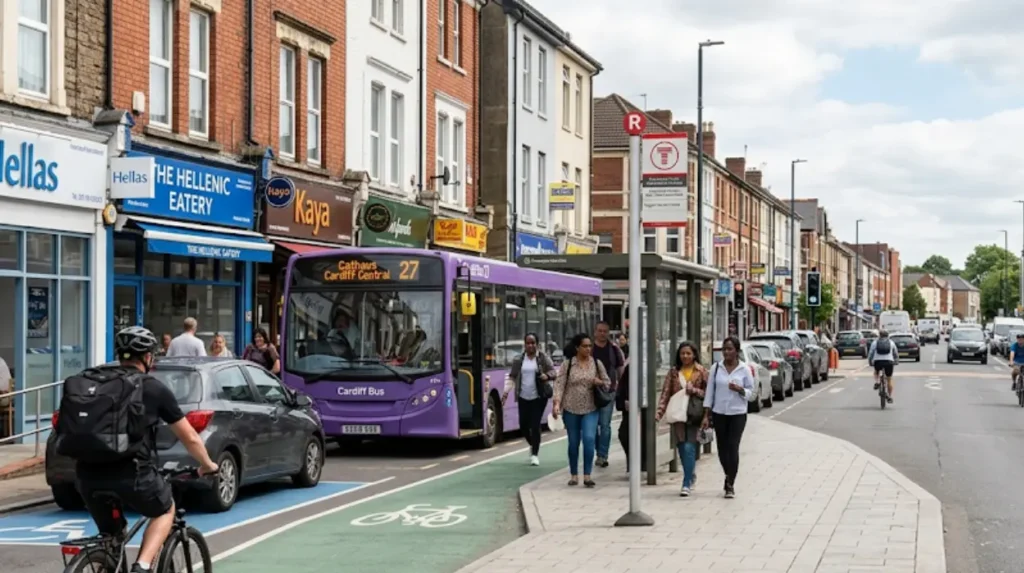
Crwys Road is accessible via Cardiff Bus routes, dedicated cycle lanes, and pedestrian walkways from Cathays Railway Station. Public parking controls and accessible storefront designs facilitate access for local diners, commuters, and delivery couriers.
The success of Crwys Road as a dining precinct relies on urban transport infrastructure managed by Cardiff Council. The street acts as a primary vector for public transport, serviced continuously by municipal bus networks connecting the northern suburbs to Cardiff Central station.
Public Transport Connectivity
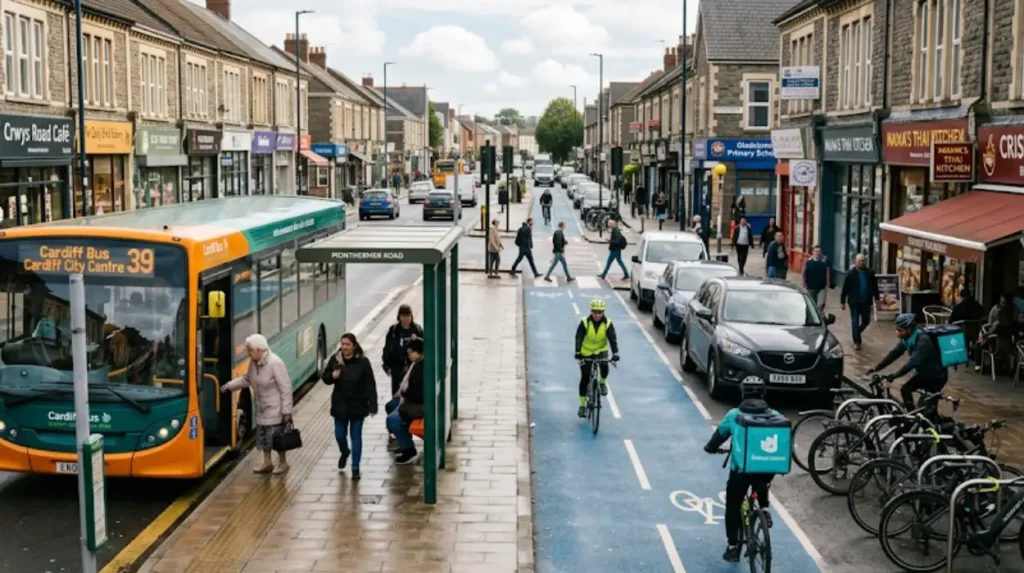
Cardiff Bus operates multiple high-frequency routes directly along Crwys Road. Key stops located at Monthermer Road and Gladstone Primary School provide direct transit links for diners arriving from the city center, Heath Park, and Lakeside. Cathays Railway Station, situated 0.4 miles to the southwest, connects the dining district to the wider Valley Lines rail network, allowing visitors from outside central Cardiff to access the area on foot.
Pedestrian and Active Travel Infrastructure
Under the Active Travel (Wales) Act 2013, Cardiff Council has implemented cycle lanes and upgraded pedestrian crossings along the A4161 corridor. Crwys Road features wide pavements, zebra crossings, and dedicated cycle parking stands installed at regular intervals. These design elements ensure safe access for pedestrians, cyclists, and third-party delivery couriers operating on bicycles and e-bikes.
Parking Regulations and Delivery Access
Vehicular access on Crwys Road is governed by controlled parking zones. Pay-and-display bays located along the main road provide short-stay parking for takeaway collection and daytime visitors. Adjacent residential side streets operate under Cardiff Council permit schemes, preventing commuter overspill while preserving access for local trade. Dedicated loading bays facilitate commercial supply deliveries during morning off-peak hours, minimizing traffic disruption on the primary arterial route.
What Is the Future Outlook for Crwys Road’s Culinary Ecosystem?
Crwys Road’s food ecosystem will evolve through commercial real estate development, low-carbon urban planning, and digital delivery integration. The street continues to attract new independent businesses while adapting to rising operational costs and changing local consumer habits.
The ongoing commercial viability of Crwys Road is tied to broader urban development policies set by Cardiff Council in its Local Development Plan (LDP). As urban densification continues within Cathays through the construction of purpose-built student accommodation (PBSA) developments, local population density will increase, sustaining demand for local food services.
Commercial property along Crwys Road remains in high demand. Commercial lease data indicates low vacancy rates across Class A3 properties, with vacant units typically reoccupied within three to six months. This rapid turnover reflects strong operator demand for flexible retail footprints within established urban corridors.
Future challenges for the street include managing rising energy tariffs, supply chain inflation, and shifting statutory regulations surrounding single-use plastics and waste management. Establishments are increasingly adopting energy-efficient kitchen infrastructure, digital inventory control, and sustainable packaging materials to maintain margin stability.
Crwys Road maintains its role as a fundamental pillar of Cardiff’s independent food landscape. Through its mix of historical architecture, demographic diversity, and culinary flexibility, the street remains a resilient commercial ecosystem capable of adapting to shifting economic and consumer trends.
What is Crwys Road in Cardiff known for?
Crwys Road is known as one of Cardiff’s busiest independent food streets, with a wide selection of restaurants, cafés, pubs, bakeries, takeaways, and coffee shops. Located in Cathays, it serves students, residents, workers, and visitors throughout the day and evening.