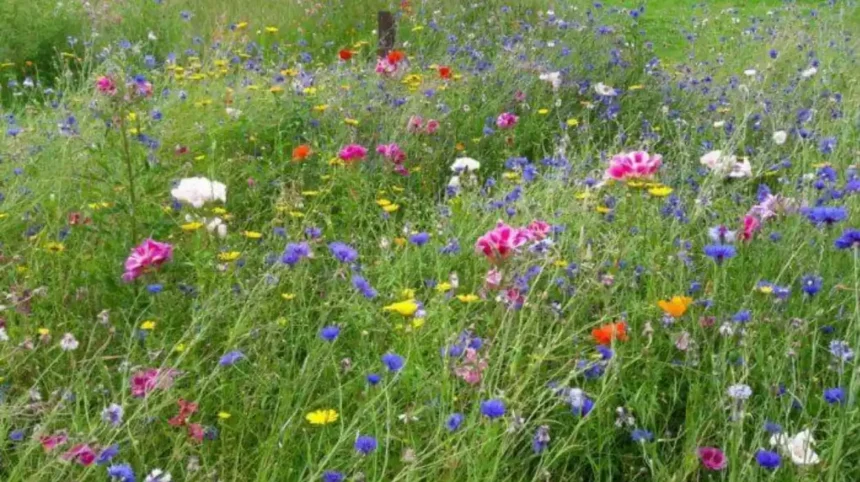
Wildflower meadows are areas of grassland managed to support flowering plants, grasses, insects and other wildlife. Across Cardiff, meadow projects are becoming an important part of urban green-space management, biodiversity protection and nature recovery. Existing examples include Bute Park Bat Meadow, Pontcanna Wild Flower Meadow and the wildflower meadow at Maltings Park, while Cardiff Council planning and parks documents have supported less frequent mowing and meadow creation in suitable open spaces.
- What are wildflower meadows and why are they important in Cardiff?
- Where can people find wildflower meadows across Cardiff?
- How are wildflower meadows managed in Cardiff?
- Which wildflowers and plants grow in Cardiff meadows?
- How do Cardiff wildflower meadows support bees and other pollinators?
- How much wildflower meadow habitat has been lost in the UK and Wales?
- How do wildflower meadows benefit Cardiff’s environment?
- How can wildflower meadows improve nature access and environmental education in Cardiff?
- How should Cardiff residents protect and enjoy wildflower meadows?
- How will wildflower meadows contribute to Cardiff’s future?
The importance of these habitats extends beyond flowers. A species-rich meadow provides nectar and pollen for bees, butterflies, hoverflies and other insects. It also provides shelter and feeding opportunities for birds, small mammals and other wildlife. Natural Resources Wales identifies semi-natural grasslands as important ecosystems for pollination, soil carbon, water regulation, recreation and biodiversity.
Cardiff’s meadow projects also reflect a wider environmental issue. The UK has lost around 97% of its wildflower meadows since the 1930s, according to Natural Resources Wales and other conservation bodies. Lowland meadow is now a rare habitat, making urban restoration increasingly significant for connecting fragmented wildlife populations.
What are wildflower meadows and why are they important in Cardiff?
Wildflower meadows are grassland habitats containing flowering plants and grasses that receive specific management. In Cardiff, they provide food, shelter and movement routes for pollinators and wildlife while adding biodiverse green space within a growing urban environment.
A wildflower meadow is not simply an area where grass grows without maintenance. A successful meadow contains a mixture of grasses and flowering plants and follows a management regime designed to maintain plant diversity. The precise plant community depends on soil type, moisture, nutrients, sunlight and historical land management.
Semi-natural grasslands in Wales are divided into broad habitat categories including acid, neutral, calcareous, marshy and calaminarian grassland. Each category develops under different combinations of geology, soil, hydrology and management.
Cardiff contains a mixture of urban parks, river corridors, former industrial land, recreational areas, cemeteries, roadside spaces and other open land. These environments create different opportunities for meadow management. A meadow beside a river has different conditions from a dry park slope or an urban roadside verge.
The ecological value comes from plant diversity and habitat structure. Flowering plants provide nectar and pollen. Taller vegetation provides shelter. Seed-producing plants provide food for birds and other animals. Soil organisms contribute to decomposition and nutrient cycling.
Wildflower meadows also contribute to ecological connectivity. In a city, wildlife habitats often occur as separate patches. Meadows can provide additional habitat between parks, gardens, woodland, waterways and other green spaces.
This function is particularly relevant in Cardiff because the city contains a network of parks and open spaces. Cardiff Council manages public parks, sports grounds, cemeteries and other public green spaces as part of its environmental responsibilities.
Where can people find wildflower meadows across Cardiff?
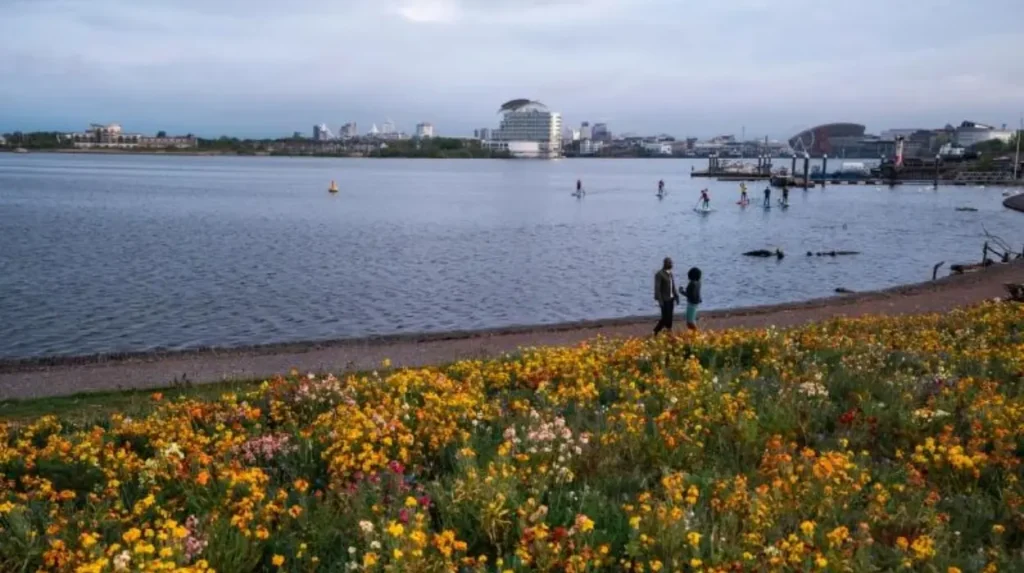
Cardiff has established and developing meadow habitats in locations including Bute Park, Pontcanna and Maltings Park. Cardiff Council documents have also identified opportunities for meadow management in other parks, cemeteries and open spaces where reduced mowing supports biodiversity.
Bute Park contains one of Cardiff’s best-known urban wildflower meadow projects. The Bute Park Bat Meadow was created in 2017 as a wildlife habitat supporting insects, pollinators, small mammals and amphibians. The meadow contains native British wildflowers and grasses including foxgloves, yarrow, Welsh poppy and hemp-agrimony.
The Bute Park project was developed by Cardiff Bat Group with support from the park and community organisations. The project included meadow creation, habitat piles and bat boxes. Its objectives included monitoring wildlife, training volunteers and improving access to nature.
Pontcanna provides another important example. The Pontcanna Wild Flower Meadow project changed the mowing cycle on land near allotments and Cardiff Riding School so existing wildflowers could develop. Cardiff Civic Society reports that the area developed plantlife including bird’s-foot trefoil, red clover and orchids.
The Pontcanna project is significant because it demonstrates that meadow creation does not always require completely new planting. Changing the management of existing grassland can allow plants already present in the soil to flower and reproduce.
Maltings Park provides a more recent example of meadow landscaping within a redesigned urban park. The park was originally laid out in 1993 on land previously occupied by warehouses and industrial buildings. A 2023 redevelopment introduced different landscape levels, with the central section containing mature trees, shrubs, grass and a wildflower meadow.
Other Cardiff locations have also featured wildflower planting and meadow proposals. Cardiff Council records from the 2010s identified Hailey Park as a location that already contained some wildflower meadows and discussed opportunities to expand meadow approaches in suitable parks. The same review recorded support for wildflower planting from local Friends groups and wildlife organisations.
Cardiff’s cemetery network has also been used for wildflower planting. Cardiff Council records from 2015 describe wildflower planting at Thornhill, Cathays and Western cemeteries as part of work intended to encourage bees in open spaces.
These locations demonstrate different approaches. Bute Park combines meadow habitat with bat conservation. Pontcanna focuses on changing mowing practices. Maltings Park incorporates a meadow into modern park landscaping. Cemeteries provide additional urban habitat where appropriate management can support flowering plants.
How are wildflower meadows managed in Cardiff?
Wildflower meadows require planned management rather than continuous mowing. Management normally allows plants to flower and set seed before cutting, followed by removal of cut vegetation. Lower soil fertility and appropriate cutting regimes help flowering plants compete with vigorous grasses and weeds.
Regular short mowing creates a different habitat from a meadow. Frequent cutting prevents many plants from completing their flowering and seed-producing cycles. Meadow management therefore uses longer periods of growth followed by carefully timed cutting.
The timing depends on the habitat and management objective. Traditional meadow systems often allow vegetation to flower and set seed before haymaking. After cutting, removing the vegetation reduces nutrient levels and prevents thick layers of dead plant material from accumulating.
Soil fertility is particularly important. Highly fertile soil encourages vigorous grasses and competitive plants such as nettles and docks. These plants can dominate flowering species when nutrients are abundant. Forest Research identifies low-fertility conditions as important for maintaining floristically rich meadow habitats.
Management can involve reducing mowing frequency, removing cuttings, controlling invasive vegetation and maintaining suitable grassland structure. Some sites also use grazing where appropriate.
Natural Resources Wales identifies under-management as one of the major causes of poor condition in semi-natural grasslands. Grazing and cutting regimes need to match the ecological characteristics of each site.
Cardiff Council’s own green infrastructure planning material has recognised the role of less frequent mowing and wildflower meadow creation in appropriate open spaces. The guidance noted that regularly mown areas remain necessary for formal recreation, road safety and locations beside paths, while other spaces can use less frequent mowing to enhance biodiversity.
This distinction is important in Cardiff’s parks. A sports pitch needs a short, safe playing surface. A formal area beside a busy footpath needs controlled vegetation. A less intensively used section of a park can support longer grass and flowering plants.
Good meadow management therefore combines recreation with biodiversity rather than applying one mowing system to every area.
Which wildflowers and plants grow in Cardiff meadows?
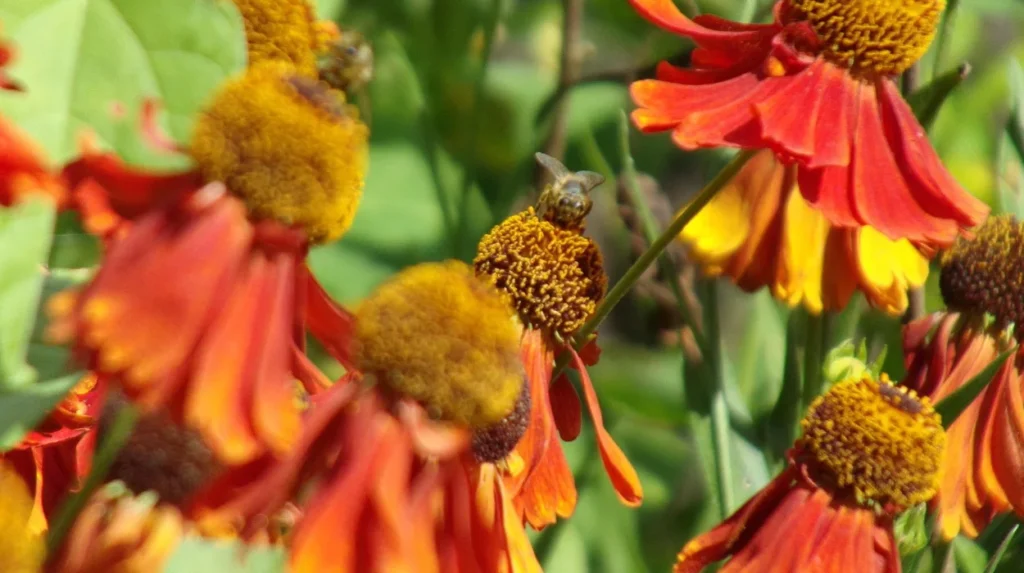
Cardiff meadows contain native and locally appropriate flowering plants adapted to grassland conditions. Recorded examples include bird’s-foot trefoil, red clover, orchids, yarrow, foxgloves, Welsh poppy and hemp-agrimony, alongside grasses that form the meadow structure.
Plant composition varies between locations. Soil chemistry, drainage, sunlight, moisture and previous land use determine which species establish successfully.
Bird’s-foot trefoil is a valuable meadow plant because its flowers provide resources for pollinating insects. Red clover is another important flowering species associated with grassland and pollinator habitat.
Orchids have been recorded at the Pontcanna meadow, demonstrating that urban meadow management can support specialist flowering plants when site conditions are suitable.
The Bute Park Bat Meadow contains foxgloves, yarrow, Welsh poppy and hemp-agrimony alongside native grasses. These plants contribute nectar, pollen and other food resources for insects.
The term “wildflower” does not mean every plant is naturally present at every Cardiff site. Meadow creation often uses seed mixes or plug plants selected for specific soil and habitat conditions. Appropriate native species provide better ecological value than ornamental species that are poorly adapted to local conditions.
Plant diversity is more important than simply achieving a colourful display. A meadow with many flowering species can provide food resources across a longer part of the growing season. Different insects use different plants and flower structures.
Natural Resources Wales identifies nectar- and pollen-rich habitats as essential resources for pollinators. Its pollinator guidance reports that 63% of Welsh butterfly species are declining and identifies habitat loss, habitat fragmentation, climate change, pesticides and changes in land management among the pressures affecting pollinators.
This makes plant selection and long-term management important parts of Cardiff’s meadow strategy.
How do Cardiff wildflower meadows support bees and other pollinators?
Wildflower meadows support pollinators by providing nectar, pollen, shelter and suitable habitat. Cardiff’s meadow projects create additional feeding areas for bees, butterflies, hoverflies and other insects, strengthening urban biodiversity and connecting wildlife habitats across the city’s green-space network.
Pollinators include bees, butterflies, moths, hoverflies, beetles and other insects that transfer pollen between flowers. They are important components of natural ecosystems and support flowering plant reproduction.
Flower-rich grassland provides concentrated food resources. Nectar supplies energy, while pollen provides proteins and other nutrients required by many insects.
Natural Resources Wales states that pollinators require flower-rich habitats containing nectar and pollen as well as spaces for nesting and hibernation. It identifies meadows, hedgerows, woodland edges, grasslands, gardens and orchards as important habitats.
The Bute Park Bat Meadow was specifically created to provide habitat for insects and pollinators while also supporting bats through increased availability of prey. The meadow contains flowering plants that provide pollen and nectar and larval food for insects.
The relationship between meadows and bats demonstrates the wider food-web effect. Flowering plants support insects. Insects provide food for insect-eating wildlife, including bats and birds.
Meadows also provide habitat continuity. A single small meadow does not replace a large natural grassland ecosystem, but multiple suitable habitats distributed across an urban area create additional opportunities for insects to feed and move.
Cardiff’s river corridors, parks, gardens, cemeteries and roadside green spaces can therefore contribute to a wider ecological network when managed appropriately.
How much wildflower meadow habitat has been lost in the UK and Wales?
Wildflower meadow habitat has experienced severe historical decline across the UK. Natural Resources Wales reports that about 97% of wildflower meadows have been lost since the Second World War, leaving species-rich grassland as a scarce and important conservation habitat.
The decline resulted from major changes in land use and agricultural management. Drainage, fertiliser use, herbicides, reseeding, intensified grazing, changes in mowing and conversion to other land uses reduced the extent of traditional species-rich grassland.
Natural Resources Wales identifies agricultural intensification, land-use change, invasive species, air pollution and climate change among continuing pressures on semi-natural grasslands.
The historical loss explains why small urban meadow projects have ecological significance. A city meadow does not recreate the full area of lost rural grassland, but it adds habitat where development has fragmented natural ecosystems.
Natural Resources Wales’ 2025 assessment states that priority grassland habitat continues to be lost and that the condition of many lowland grasslands remains poor. It also identifies the importance of grasslands for pollination, soil carbon, water regulation, recreation and biodiversity.
The UK-wide decline also explains the increased focus on restoration. Conservation projects such as Saving Our Magnificent Meadows worked across multiple regions to restore and connect flower-rich grasslands.
The programme, led by Plantlife between 2014 and 2017 with £3 million of Heritage Lottery funding, maintained, restored or expanded 3,460 hectares of grassland and enhanced more than 9,000 hectares through conservation work and advice.
Cardiff’s urban meadow projects fit into this broader movement to restore flower-rich habitats and improve ecological connectivity.
How do wildflower meadows benefit Cardiff’s environment?
Wildflower meadows benefit Cardiff through increased plant diversity, pollinator habitat, improved ecological connectivity, reduced intensive mowing and opportunities for nature-based recreation. Species-rich grasslands also support soil functions, water regulation, carbon storage and wider ecosystem resilience.
Biodiversity is the variety of living organisms within an ecosystem. A diverse meadow supports plants, insects, soil organisms, birds and mammals that interact within the same habitat.
Semi-natural grasslands provide several ecosystem services. Natural Resources Wales identifies pollination, clean air and water, soil carbon storage, water regulation, recreation and food production among their benefits.
Grassland management can also reduce the frequency of intensive mowing. This changes fuel use, machinery requirements and maintenance patterns. Cardiff Council’s earlier parks review specifically examined reduced mowing and wildflower meadows as potential management approaches, while recognising the need for additional machinery where cuttings are collected.
Meadows also provide visual variation in urban landscapes. Research cited by Natural Resources Wales shows that people value landscapes containing structural variation and abundant flowers. Flower-rich grasslands provide recreational and cultural benefits alongside ecological functions.
Flood management is another relevant function. Healthy grasslands can slow water movement and improve soil infiltration. Natural Resources Wales identifies flood regulation as one of the services provided by semi-natural grasslands, particularly in suitable floodplain environments.
The environmental value therefore extends beyond insects. Meadow restoration contributes to a wider network of plants, soil organisms, birds, mammals and ecosystem processes.
How can wildflower meadows improve nature access and environmental education in Cardiff?
Wildflower meadows provide accessible places for Cardiff residents to observe plants, insects and seasonal ecological changes. They support outdoor learning, volunteering, wildlife monitoring and community conservation while bringing biodiversity into parks and neighbourhoods used for everyday recreation.
Urban nature provides an opportunity for environmental education without requiring travel to a remote nature reserve. Meadows allow people to observe flowering periods, pollinator activity, plant identification and seasonal changes.
The Bute Park Bat Meadow project included volunteer training, wildlife monitoring and community participation. Its objectives included increasing access to nature for under-represented groups.
Cardiff’s wider park network also provides opportunities for nature trails and wildlife observation. Bute Park, for example, includes wildlife trails and other nature-focused attractions alongside its formal recreational facilities.
Schools can use meadow habitats to study ecological relationships. Students can record flowering plants, identify insects, examine pollination and compare frequently mown grass with longer meadow vegetation.
Community involvement also supports long-term conservation. Volunteers can participate in planting, meadow maintenance, species recording and wildlife surveys. These activities create local knowledge about habitat condition.
Natural Resources Wales’ grassland research highlights the educational and recreational value of flower-rich habitats and records their use for learning activities.
For Cardiff, this means meadow projects function as both ecological infrastructure and community learning spaces.
Explore More Area Guide
Hidden Nature Reserves Around Cardiff: Wildlife, Woods and Wetlands
River Taff Wildlife: Animals and Birds in Cardiff
How should Cardiff residents protect and enjoy wildflower meadows?
Cardiff residents can protect meadow habitats by staying on designated paths where required, avoiding unnecessary disturbance, controlling dogs responsibly, preventing litter and supporting local conservation projects. Respecting mowing regimes also helps plants flower, set seed and sustain wildlife.
Meadows are working habitats rather than decorative flower beds. Walking through vegetation can flatten plants, disturb insects and reduce seed production. People should therefore follow signs and designated routes at managed sites.
Dog owners also have responsibilities in Cardiff’s public spaces. Cardiff Council manages parks and open spaces under public-space rules and addresses issues including dog fouling through its Public Spaces Protection Order framework.
Dog fouling introduces nutrients into grassland. Increased nutrients favour vigorous grasses and other plants that compete with species-rich meadow plants. Removing dog waste therefore has an ecological purpose as well as a public-health benefit.
Residents should also avoid picking flowers, removing plants or disturbing habitat piles. Wildlife features such as dead vegetation, seed heads and habitat structures form part of the ecological system.
Meadow appearance also changes through the year. A recently cut meadow can look very different from a summer meadow in full flower. Cutting is part of the management process and does not necessarily indicate that a habitat has been abandoned.
People can support conservation by recording wildlife, joining local volunteering programmes and participating in community biodiversity projects.
How will wildflower meadows contribute to Cardiff’s future?
Wildflower meadows will remain an important part of Cardiff’s approach to urban biodiversity, green infrastructure and nature recovery. Expanding suitable meadow habitats, improving connectivity and maintaining effective management can strengthen pollinator resources and ecological resilience.
Cardiff’s future meadow network depends on suitable land, consistent management and ecological planning. Creating a meadow is only the first stage. Long-term cutting, nutrient management, invasive-species control and monitoring determine whether species-rich vegetation persists.
Green infrastructure refers to a planned network of natural and semi-natural spaces that provides environmental, social and ecological functions. Meadows can form part of this network alongside parks, trees, hedgerows, rivers, wetlands and gardens.
Cardiff Council’s green infrastructure guidance already recognises wildflower meadows and less frequent mowing as tools for enhancing biodiversity in suitable open spaces.
Future development also creates opportunities for habitat enhancement. Welsh Water’s Danescourt and Hailey Park project, for example, included plans for ecologically enhanced meadow, native shrub planting and a wildflower meadow as part of landscape reinstatement.
Urban development therefore does not automatically exclude biodiversity improvements. Habitat creation can form part of landscape design when ecological objectives are incorporated from the planning stage.
Natural Resources Wales’ 2025 assessment states that grassland resilience remains under pressure and that continued protection and restoration are necessary. It also identifies habitat connectivity and appropriate management as important for ecological resilience.
Cardiff’s existing examples provide a practical foundation. Bute Park demonstrates targeted wildlife meadow creation. Pontcanna demonstrates management-led restoration. Maltings Park demonstrates meadow integration into redesigned urban space. Cemetery planting demonstrates opportunities beyond conventional parks.
Together, these projects show how wildflower meadows can become a connected component of Cardiff’s green infrastructure rather than isolated patches of flowering grass.
Wildflower meadows across Cardiff therefore have significance at several levels. They conserve flowering plants, support pollinators, provide habitat for wildlife, create opportunities for environmental education and contribute to the ecological quality of urban green space. Their long-term value depends on appropriate site selection, native and locally suitable planting, reduced intensive management and consistent conservation practices.
The continued development of meadow habitats can help Cardiff respond to biodiversity decline while retaining parks and open spaces for recreation. As urban land becomes increasingly important for nature recovery, well-managed meadows provide a practical way to bring species-rich grassland into the city’s everyday environment.
Where can I find wildflower meadows in Cardiff?
Wildflower meadow areas can be found at locations including Bute Park, Pontcanna and Maltings Park, with other Cardiff parks and green spaces also using meadow-style management.