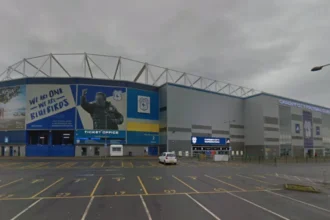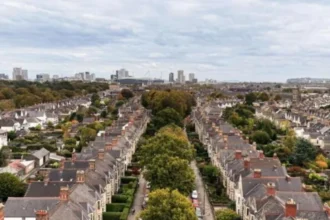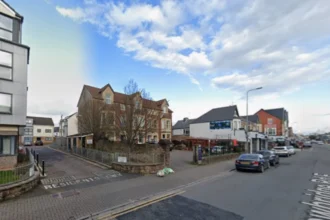
Whitchurch is a north Cardiff suburb with a long village history, established housing areas, schools, local shops and direct public transport connections. Its identity combines historic streets and community facilities with access to Cardiff city centre, nearby Rhiwbina, Llandaff North and wider north Cardiff.
- What is Whitchurch in Cardiff like for everyday living?
- How did Whitchurch develop from a village into a Cardiff suburb?
- What types of housing are available in Whitchurch Cardiff?
- What are the schools like in Whitchurch Cardiff?
- How does school admission work for families living in Whitchurch?
- How good is public transport in Whitchurch Cardiff?
- How easy is it to commute from Whitchurch to Cardiff city centre?
- Is Whitchurch suitable for families?
- What local amenities are available in Whitchurch?
- How does Whitchurch compare with nearby Rhiwbina and Llandaff North?
- What should you check before moving to Whitchurch Cardiff?
- What does the future of living in Whitchurch Cardiff look like?
The name Whitchurch derives from the English “White Church”, while the Welsh name is Yr Eglwys Newydd, meaning “The New Church”. Historical records place the settlement in the medieval period, with a church locality recorded in the 12th century. Whitchurch later developed from a rural parish into an urban suburb as Cardiff expanded.
Today, living in Whitchurch involves more than choosing a property. Housing type, school catchment, transport links, access to shops and the relationship with surrounding north Cardiff neighbourhoods all influence everyday life. Cardiff Council provides postcode-based information for school catchments and local schools, while Transport for Wales operates the railway station serving the area.
What is Whitchurch in Cardiff like for everyday living?
Whitchurch is an established north Cardiff suburb combining residential streets, local shopping, schools, green spaces, community facilities and rail and bus connections. Its village centre provides everyday services while nearby transport routes connect residents with central Cardiff.
Whitchurch sits in the northern part of Cardiff. It is closely associated with neighbouring communities including Rhiwbina, Llandaff North, Birchgrove and Coryton. The area has a distinct local centre around the main road corridor, with residential streets extending away from the commercial core.
The suburb developed substantially during the 19th and 20th centuries. Earlier Whitchurch was predominantly rural. Historical population growth followed industrial development, transport improvements and Cardiff’s wider expansion. A historical account from the University of Portsmouth records a population of 1,661 in 1851 and 2,274 in 1861, with industrial activity contributing to the increase.
Modern Whitchurch has a strong residential character. Housing includes older terraces, semi-detached homes, detached properties and later developments. The built environment therefore varies considerably between streets.
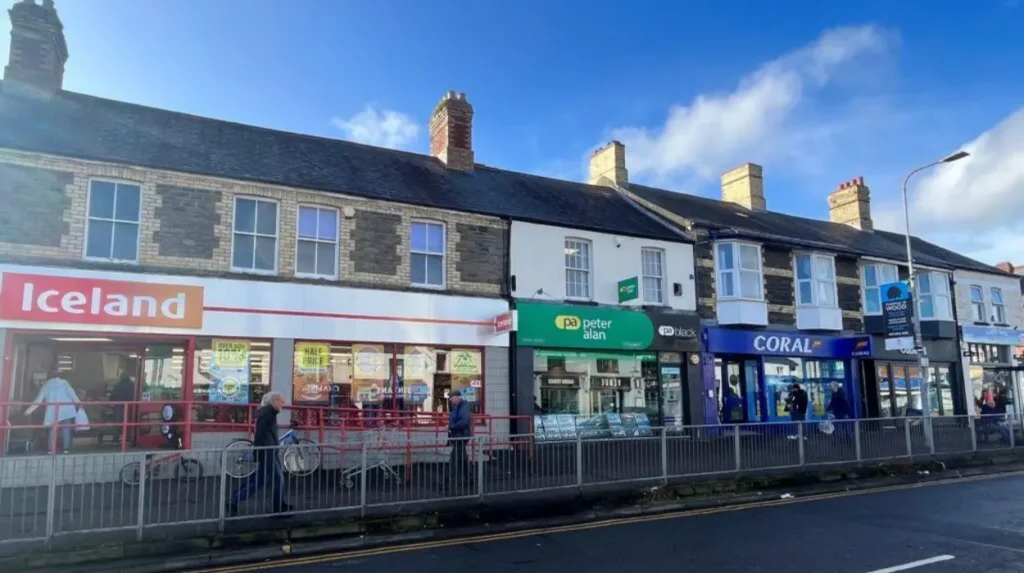
Local services are concentrated around the village centre and surrounding roads. Residents also have access to larger retail and service areas elsewhere in north Cardiff.
Whitchurch is particularly relevant to households comparing north Cardiff neighbourhoods. Its transport links, schools and established housing stock make these three factors central to any decision about moving to the area.
How did Whitchurch develop from a village into a Cardiff suburb?
Whitchurch developed from a medieval settlement into an industrial-era parish and then a suburban part of Cardiff. Its history includes medieval church connections, rural agriculture, industrial growth, expanding population, improved transport and eventual incorporation into Cardiff.
The settlement has medieval origins. Whitchurch History Cymru records 1126 as an important date because a legal document confirms the existence of Whitchurch at that time. The area was connected with Llandaff Cathedral and the development of the local church.
The historic church tradition remains important to the area’s identity. St Mary’s Church, Whitchurch, is a Grade II listed Victorian church completed in the 1880s. An earlier church existed in the locality, with records extending back to the 12th century.
Whitchurch remained predominantly rural for centuries. Farms, cottages and common land shaped the landscape. Industrialisation changed this pattern. Historical sources identify manufacturing activity, including the influence of the Melingriffith works, as an important factor in population growth.
Education also developed alongside population growth. A national school was established in Whitchurch in the 19th century, while Whitchurch High School opened in 1937. The development of schools reflects the area’s transition from a small rural parish into a substantial residential community.
Administrative change followed urban expansion. Parts of historic Whitchurch were absorbed into Cardiff during the late 19th and 20th centuries. The modern suburb is therefore the result of several phases of expansion rather than one single development.
This historical background explains why Whitchurch has a mixture of village-scale streets, Victorian buildings, established suburban housing and newer residential areas.
What types of housing are available in Whitchurch Cardiff?
Housing in Whitchurch includes Victorian and Edwardian-era properties, traditional terraces, semi-detached houses, detached homes, bungalows and later suburban developments. Property character varies by street, with older housing concentrated around historic routes and newer homes appearing across later expansion areas.
The housing stock reflects Whitchurch’s gradual expansion.
Older properties are found around the historic village core and established roads. These include traditional terraced houses and period cottages. Their layouts often reflect earlier urban development, with compact plots and established street patterns.
Semi-detached housing forms another important part of the residential landscape. These homes are associated with suburban expansion during the 20th century. Gardens, driveways and larger internal layouts distinguish many of these properties from older terraces.
Detached houses are also present. They generally occupy larger plots and appear in selected residential areas rather than forming the dominant pattern across the whole suburb.
Bungalows provide another housing category. They are relevant to households looking for single-level accommodation and to people planning longer-term housing needs.
Later developments add further variation. These properties generally reflect more recent planning standards, road layouts and energy-efficiency requirements.
Property searches should therefore focus on individual streets rather than assuming the entire suburb has one housing style. Road position, property age, plot size, parking arrangements and proximity to schools or transport all influence the practical character of a home.
Historic properties can also have different maintenance requirements from newer construction. Buyers should check surveys, title information, planning history and building condition before purchasing.
What are the schools like in Whitchurch Cardiff?
Whitchurch has access to English-medium and Welsh-medium education, including Whitchurch High School and Ysgol Gymraeg Melin Gruffydd. School admission depends on Cardiff Council’s published criteria, catchment arrangements, available places and the individual school’s admission policy.
Education is one of the most important considerations for families moving to Whitchurch.
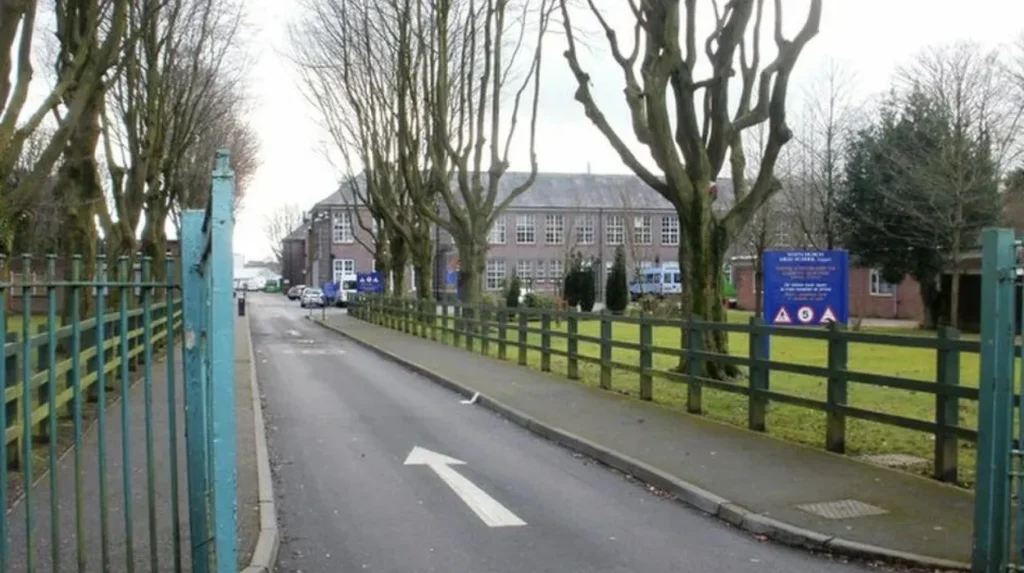
Whitchurch High School is an English-medium secondary school on Penlline Road, CF14 2XJ. Estyn, Wales’s education and training inspectorate, maintains the school’s inspection record, including a 2025 review and a 2023 inspection report.
Whitchurch High School also has specialist additional learning needs provision. Cardiff Council previously approved an increase in designated places within its specialist resource base for learners with complex learning needs from 70 to 100 places.
For Welsh-medium primary education, Ysgol Gymraeg Melin Gruffydd is located on Glan-Y-Nant Road, Whitchurch, CF14 1AP. Estyn lists the school as a Welsh-medium education provider serving the area.
School selection requires careful checking of the current catchment map. Cardiff Council states that catchment schools are not necessarily the closest schools to a home. Living within a catchment area also does not guarantee a place.
This distinction is important when purchasing property. A home marketed as being “near a school” is not automatically within that school’s catchment area.
Cardiff Council provides an online postcode-based system showing English-medium and Welsh-medium primary and secondary catchment areas. Parents should check the official catchment information for the exact property address before making a housing decision.
How does school admission work for families living in Whitchurch?
School admission in Whitchurch follows Cardiff Council’s coordinated admissions arrangements and individual school policies. Catchment status affects priority, but it does not guarantee a place. Parents should check catchment boundaries, admission numbers, application deadlines and current allocation data.
Cardiff Council recommends that parents research schools before applying. The council publishes school information, catchment maps, admission arrangements and numbers on roll. Current school information should be checked for the relevant academic year because admission arrangements can change.
Cardiff’s admissions system uses preferences. Parents rank their preferred schools rather than relying on a single choice. For secondary applications, Cardiff Council currently advises families to select five school preferences.
Catchment status is significant because children living in a school’s catchment area receive higher priority than some out-of-catchment applicants. However, Cardiff Council explicitly states that living in the catchment area does not guarantee a place.
Capacity is another factor. Cardiff Council publishes admission numbers and allocation information. For example, its 2025 primary allocation data records a published admission number of 90 for Whitchurch Primary School, with 75 places allocated in that year’s process.
The practical implication for homebuyers is straightforward. School research should happen before committing to a property.
Families should check the exact address, not simply the postcode district or neighbourhood name. They should also check the relevant school year because catchment arrangements and available places can change.
How good is public transport in Whitchurch Cardiff?
Whitchurch has a railway station on the Cardiff suburban network and bus connections linking the suburb with central Cardiff and neighbouring communities. Rail provides a direct connection toward Cardiff Queen Street and Cardiff Central through the wider Cardiff Valley network.
Public transport is a significant part of Whitchurch’s residential appeal.
Whitchurch railway station is located at Pen y Dre in the CF14 area. Transport for Wales identifies the station as an unstaffed station with ticket machines, CCTV, seating and cycle storage. It has step-free access to the platform from Pen y Dre.
The station forms part of the Cardiff suburban rail network. Transport for Wales timetable information shows services between Whitchurch and Coryton, with intermediate stops including Rhiwbina, Birchgrove and Ty Glas. Services also connect through Cardiff’s wider rail network.
Rail therefore provides an important alternative to driving for journeys toward central Cardiff.
Bus services add another layer of connectivity. Cardiff Bus routes serve Whitchurch and neighbouring north Cardiff communities. Transport for Wales information for Cardiff’s transport interchange lists routes serving Whitchurch and Llandaff North.
Public transport performance depends on the route, destination and time of day. Residents should check current timetables before planning regular commuting patterns.
Whitchurch’s location also provides road access to major north Cardiff routes. The A470 is particularly important for journeys through north Cardiff and connections toward the wider South Wales road network.
How easy is it to commute from Whitchurch to Cardiff city centre?
Commuting from Whitchurch to central Cardiff is supported by suburban rail and bus services, with the railway providing a direct route toward Cardiff Queen Street and Cardiff Central. Road journeys use Cardiff’s north-south transport corridors and vary with traffic conditions.
The rail connection is particularly relevant for commuters working around central Cardiff.
Whitchurch station connects into the Cardiff City Line and wider Cardiff rail network. Journeys can connect through Cardiff Queen Street and Cardiff Central depending on the destination and timetable.
Cardiff Queen Street is an important interchange for central Cardiff, while Cardiff Central provides connections to destinations across Wales and the wider UK rail network.
Bus travel offers additional flexibility. Bus routes connect Whitchurch with neighbouring districts and central Cardiff, allowing residents to choose services based on their workplace or education destination.
Car commuting provides another option. The A470 is one of the principal roads serving north Cardiff. Traffic conditions affect journey times, especially during weekday peak periods.
Cycling and walking are also relevant for shorter local journeys. Cardiff Council promotes active travel for school journeys and encourages walking, cycling and scooting where appropriate.
The best transport choice therefore depends on destination, working hours, parking availability and journey frequency.
Is Whitchurch suitable for families?
Whitchurch has several characteristics relevant to family households, including established residential streets, primary and secondary education, local services, public transport and access to recreational spaces. School catchment, property layout, parking and proximity to everyday facilities remain important when choosing a home.
Families often assess Whitchurch through education and housing together.
The presence of Whitchurch High School and local primary education creates an established education infrastructure. Welsh-medium provision adds another option for families seeking Welsh-language education.
Housing variety also supports different household stages. Smaller terraces suit households seeking compact accommodation, while semi-detached and detached properties provide additional bedrooms and garden space.
Local amenities reduce the need for every journey to central Cardiff. Shops, food outlets, community facilities and services are distributed around the village centre and surrounding streets.
Transport adds another family consideration. Rail and bus connections provide alternatives to car travel, while Cardiff Council operates school transport arrangements for eligible pupils.
School travel rules require particular attention. Cardiff Council states that free mainstream school transport is available to eligible pupils aged 5 to 16 who do not live within walking distance of their school, subject to the council’s policy and eligibility requirements.
Parents should therefore assess the actual journey from home to school rather than relying solely on distance measured on a map.
What local amenities are available in Whitchurch?
Whitchurch has a local shopping centre and community services that support everyday needs, including food shopping, cafés, professional services, healthcare-related facilities and community organisations. Larger retail and leisure destinations are accessible elsewhere in Cardiff.
The village centre is the main everyday commercial area.
Merthyr Road, Penlline Road and Park Road form an important corridor through Whitchurch. Local community information describes the central area as the principal shopping precinct, with additional shops and services elsewhere along the corridor.
Residents can use local businesses for routine purchases and services. The area also has community institutions such as churches and local organisations.
Whitchurch Library is part of the area’s historical civic infrastructure. Historical sources identify it as a Carnegie library dating from 1904, illustrating the importance of public facilities during the suburb’s development.
Healthcare access is supported by services across north Cardiff. Residents should identify the GP practice, dental practice, pharmacy and hospital services relevant to their individual circumstances.
For larger shopping trips, Cardiff’s wider retail network provides additional options. This means Whitchurch functions as a self-contained residential neighbourhood for everyday requirements while remaining integrated into the wider city.
How does Whitchurch compare with nearby Rhiwbina and Llandaff North?
Whitchurch, Rhiwbina and Llandaff North are neighbouring north Cardiff communities with overlapping transport, school and service networks. Whitchurch has a prominent historic village centre, while Rhiwbina is strongly associated with its Garden Village and Llandaff North has closer links to Llandaff and the River Taff.
Neighbourhood boundaries matter when comparing homes.
Rhiwbina developed partly from the historic Whitchurch parish. Its Garden Village is an important example of early 20th-century planned housing. Whitchurch History Cymru records that the Garden Village scheme began with the Cardiff Workers’ Cooperative Garden Village Society in 1911 and that 189 houses were ultimately built.
Rhiwbina therefore has a distinct planned residential identity alongside later housing.
Llandaff North sits closer to the River Taff and Llandaff. Its location provides access to different recreational and transport routes.
Whitchurch has a particularly identifiable village centre and a major secondary school. It also has its own railway station.
For property searches, comparing these neighbourhoods on individual criteria is more useful than treating them as interchangeable. Buyers should compare house type, price, catchment, station distance, bus routes, parking and local amenities.
Explore More Area Guide
Riverside Cardiff: Housing, Transport & Area Guide
Living in Splott Cardiff: Housing, Transport and Local Services
What should you check before moving to Whitchurch Cardiff?
Before moving to Whitchurch, check the exact property location, school catchment, housing condition, transport routes, parking, local services and future planning information. These factors vary between streets and can affect the practical suitability of an individual property.
The first check should be the exact address.
School catchment boundaries can change, and Cardiff Council does not guarantee admission simply because a property sits inside a catchment.
The second check should be transport. Measure the actual walking route to Whitchurch station or the nearest bus stop. Transport for Wales provides current station information and service details.
The third check should be property condition. Period homes require different inspection considerations from modern houses. Roof condition, damp, windows, insulation, electrical systems and structural issues should be assessed during the buying process.
Parking should also be checked. Some streets have different road layouts and parking arrangements, while individual properties vary in whether they have driveways, garages or allocated spaces.
Local planning information is another useful source. Cardiff Council planning records can identify proposed developments, changes of use and infrastructure projects around individual properties.
Finally, residents should assess everyday travel rather than relying only on headline transport distances. A property close to a railway station but far from the relevant bus route, school or workplace can produce a different daily routine from another property within the same postcode.
What does the future of living in Whitchurch Cardiff look like?
Whitchurch is likely to remain an established north Cardiff residential area where housing, education, transport and local services shape future demand. Continued attention to school capacity, transport infrastructure, active travel and property development will influence the suburb’s long-term character.
Whitchurch already has established urban infrastructure. Future change is therefore more likely to involve adaptation, redevelopment and improvement than wholesale creation of a new settlement.
Transport remains an important issue across Cardiff. Rail, buses, walking and cycling all form part of the city’s wider transport strategy.
Education provision will continue to require monitoring. Cardiff Council publishes current school admission information, catchment boundaries and pupil numbers, providing the main reference point for families assessing school availability.
Additional learning needs provision is also part of the education infrastructure. Cardiff Council has identified specialist provision at Whitchurch High School as part of its city-wide additional learning needs arrangements.
Housing will continue to reflect the area’s established character. Older properties, suburban homes and later developments create a diverse residential stock.
Whitchurch’s historical identity is also likely to remain relevant. Local heritage buildings, historic streets and surviving community landmarks connect the modern suburb with its earlier role as a parish and village.
For people considering living in Whitchurch Cardiff, the most useful approach is to examine the suburb at street level. Housing, school catchment and transport access differ across short distances. Official Cardiff Council school information and Transport for Wales service information provide the strongest starting points for checking current conditions.
Is Whitchurch a good area to live in Cardiff?
Whitchurch is an established north Cardiff suburb with residential streets, schools, shops, community facilities and public transport. Its railway station provides connections toward central Cardiff, while the local village centre supports everyday shopping and services.