Grangetown is one of Cardiff’s most historically significant inner-city communities. Its history reflects the transformation of south Wales from an agricultural landscape into an industrial, railway-connected and internationally linked urban society. The district developed beside the River Taff and River Ely, close to Cardiff’s expanding docks, and became increasingly urban from the middle of the nineteenth century.
- What was Grangetown like before it became an urban suburb?
- Why did Grangetown begin developing rapidly during the nineteenth century?
- When was Grangetown formally planned as a new residential district?
- How did Grangetown become part of Cardiff?
- How did transport change the history of Grangetown?
- Why is Grange Farm important to Grangetown’s history?
- How did housing shape everyday life in Victorian Grangetown?
- What role did churches and schools play in Grangetown?
- How was Grangetown connected to Cardiff’s multicultural history?
- How did industry influence Grangetown beyond the docks?
- What happened to Grangetown during the twentieth century?
- How did Grange Gardens become part of the community’s heritage?
- How did flooding affect the history of Grangetown?
- Which historic features still help explain Grangetown today?
- Why is the history of Grangetown still relevant to Cardiff?
- What is the overall historical significance of Grangetown?
The name Grangetown comes from the historic Grange estate and its farmhouse. The area remained predominantly rural for centuries. Its transformation accelerated after the construction of Penarth Road and bridges across the River Taff and River Ely during the 1850s. These transport improvements connected the district more effectively with Cardiff and Penarth and created conditions for large-scale housing development.
By 1875, Grangetown had become a suburb of Cardiff. Victorian terraces, churches, schools, shops, public houses, transport routes and industrial premises subsequently reshaped the landscape. The population expanded rapidly as workers moved into the district to find employment connected with Cardiff’s docks, railways, factories and wider industrial economy.
Grangetown also became part of Cardiff’s multicultural history. Cardiff’s port attracted sailors and workers from Britain, Ireland, Africa, the Caribbean, the Middle East and other regions. The nearby Tiger Bay and docklands became internationally connected communities. Academic research identifies Tiger Bay as one of Britain’s important historic multicultural communities.
Today, historic streets, Grange Farm, Grange Gardens, churches, surviving Victorian buildings, transport infrastructure and the relationship with Cardiff Bay provide visible evidence of the district’s past. Understanding Grangetown requires looking at its rural origins, planned development, industrial connections, community institutions, wartime experience and later regeneration.
What was Grangetown like before it became an urban suburb?
Before urban development, Grangetown consisted mainly of farmland, marshland and the historic Grange estate beside Cardiff’s rivers. Its rural character survived into the nineteenth century, when new roads, bridges, drainage, housing development and Cardiff’s industrial expansion transformed the landscape permanently.
The earliest history of Grangetown is connected with the Grange, an agricultural estate rather than a dense residential settlement. The land was farmed by tenants for centuries. The historic farmhouse later known as Grange Farm became an important surviving reminder of this rural period.
The estate eventually became associated with the Plymouth Estate. The Lewis family’s land interests passed to the Windsor family and subsequently to the Plymouth Estate. This ownership became particularly important during the nineteenth century because the estate controlled land that was increasingly valuable as Cardiff expanded.
The landscape was low lying. Parts of the district contained salt marsh, mudflats and poorly drained land associated with the Taff and Ely estuaries. This geography influenced the settlement pattern and created recurring flood problems.
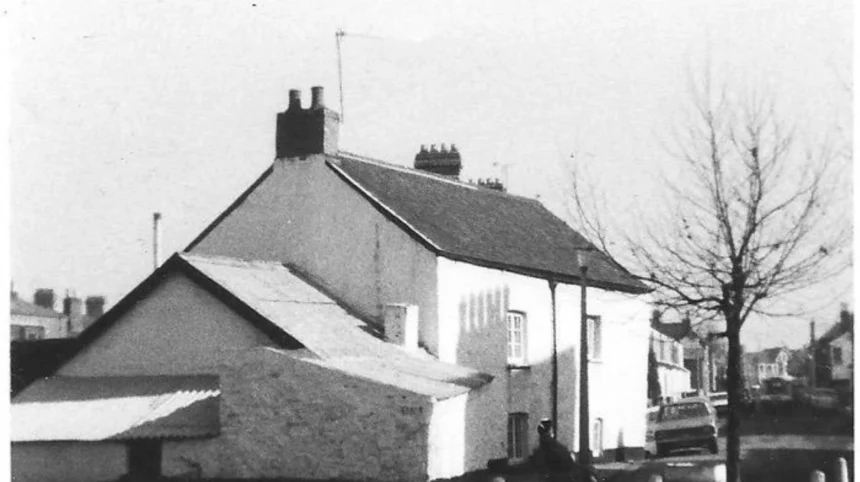
The National Library of Wales holds a historic photograph of the Old Farm in Grangetown dating from around 1905. The photograph shows the farmhouse surrounded by newer houses, demonstrating the dramatic physical transition from agricultural land to Victorian suburb.
The transformation was not sudden. Fields and rural spaces remained between Grangetown and central Cardiff even after the suburb had formally developed. Local historical research identifies separate areas including Saltmead and Lower Grange during the nineteenth century.
The historic rural character therefore provides the foundation for understanding the name and identity of Grangetown. The district was not originally created as an industrial settlement. Industrialisation arrived through Cardiff’s wider growth and subsequently changed the value and use of the land.
Why did Grangetown begin developing rapidly during the nineteenth century?
Grangetown expanded rapidly because Cardiff’s industrial economy created demand for housing, while new roads, bridges, railways and dock connections improved access. The development of Cardiff Docks and coal exports increased employment and encouraged the construction of dense residential streets across the district.
Cardiff experienced exceptionally rapid economic growth during the nineteenth century. South Wales became a major industrial region, while Cardiff developed into a major coal-exporting port.
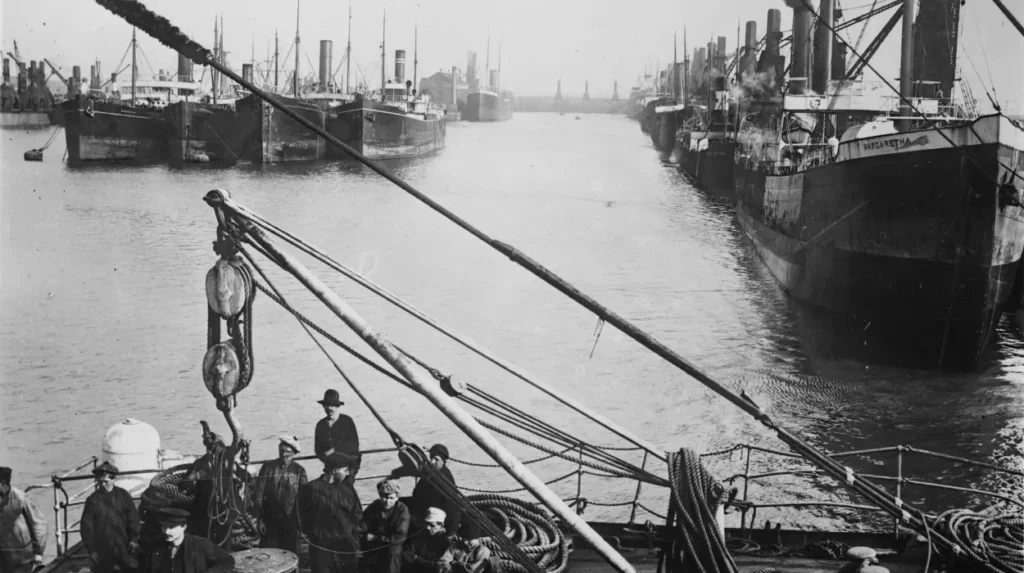
The Glamorganshire Canal connected Cardiff with Merthyr Tydfil after its completion in 1794. A canal basin connecting the route toward the sea was established in 1798. Cardiff’s dock system subsequently expanded, including West Bute Dock in 1839 and East Bute Dock in 1859.
Railways reinforced this industrial transformation. The Taff Vale Railway opened in 1841 and created a major transport connection between Cardiff and the coal-producing valleys. Railway development allowed minerals, industrial goods and people to move more efficiently.
Museum Wales records that Cardiff’s coal exports eventually reached more than 10 million tonnes in 1913, when the port reached its historic peak.
Grangetown occupied an important position immediately south of the expanding central Cardiff and dock areas. Its land therefore became attractive for residential development. Workers needed housing close to employment, while transport improvements made the district increasingly accessible.
The construction of Penarth Road and bridges across the Taff and Ely during the 1850s represented an important turning point. These routes strengthened connections between Cardiff, Grangetown and Penarth and reduced the isolation created by rivers and low-lying land.
Industrial Cardiff consequently created the economic conditions for Grangetown’s urbanisation. Housing development followed employment, transport infrastructure and expanding commercial activity.
When was Grangetown formally planned as a new residential district?
Formal residential development began in the 1850s under the Windsor estate, with a parliamentary Act obtained in 1857. Building continued through later development phases, producing streets of terraced housing that eventually transformed farmland into a densely populated Cardiff suburb.
The Windsor estate played a central role in the planned development of Grangetown. In 1857, Baroness Windsor obtained an Act of Parliament associated with the development of housing on the estate.
Local historical research records three major development phases. The first phase ran from 1857 to 1865. The second extended from 1865 to 1876. A third phase began from 1876 and continued as the suburb expanded.
Street names preserve the connection with the Windsor-Clive family and associated investors. Examples include Clive Street, Paget Street, St Fagans Street, Newport Street, Bromsgrove Street, Worcester Street, Amherst Street and Sevenoaks Street.
Clive Street became one of the principal streets of the developing district. Local historical records preserve correspondence concerning the naming of the new settlement. The name “Grangetown” was preferred because it reflected the locality of the Grange, while “Clive” was used for the principal thoroughfare.
This naming history demonstrates that Grangetown was conceived as a planned residential development rather than simply emerging through unregulated expansion.
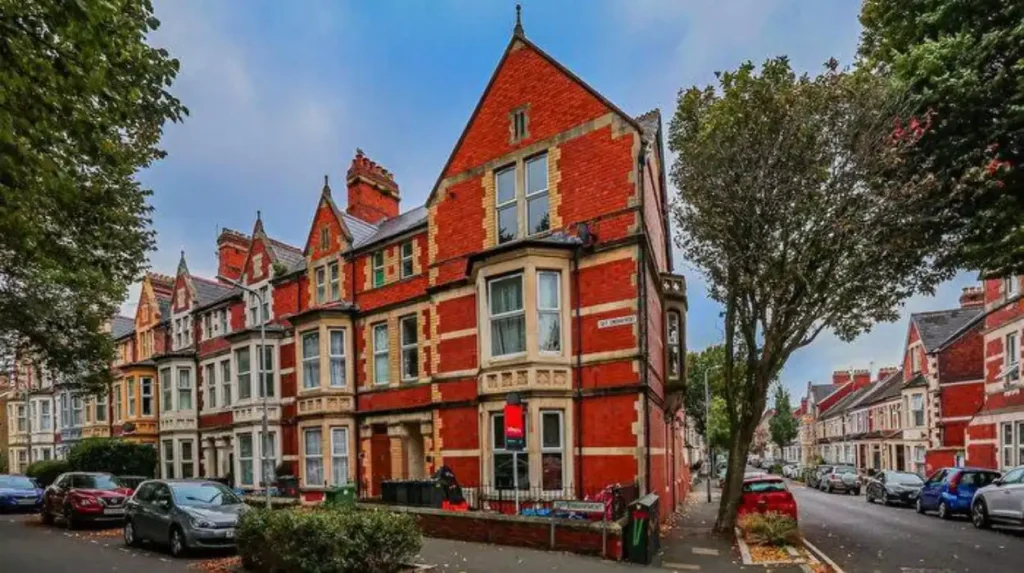
Terraced houses became the dominant architectural form. Their compact design provided accommodation for working families while allowing developers to construct large numbers of homes on relatively small plots.
The result was a recognisable Victorian urban landscape. Streets were arranged around major routes, while schools, churches, public houses and commercial premises developed alongside residential areas.
How did Grangetown become part of Cardiff?
Grangetown became a suburb of Cardiff in 1875 after a period of rapid residential expansion. Its incorporation into the urban area reflected Cardiff’s nineteenth-century growth, improved transport connections and increasing demand for housing close to docks, factories, railways and employment.
The year 1875 is a key date in the history of Grangetown. By this point, the district had developed sufficiently to be regarded as a Cardiff suburb.
Urbanisation was already well advanced. Houses had spread across areas that had previously consisted of fields and agricultural land. The district remained physically distinct in places, but its economic relationship with Cardiff had become increasingly strong.
The population continued to rise through the late nineteenth century. Local historical research records a population of approximately 17,000 in 1901, demonstrating the scale of the transformation achieved within only a few decades.
The growth created substantial pressure on local infrastructure. Schools, churches, roads, public transport and community facilities developed to serve the expanding population.
Grangetown’s location also connected it with Cardiff’s dock economy. The nearby docks required large numbers of workers across shipping, cargo handling, railway operations, engineering, manufacturing and related services.
The district therefore became a classic industrial-era suburb. Its identity was shaped by both planned housing development and the employment structure of the wider Cardiff economy.
How did transport change the history of Grangetown?
Transport transformed Grangetown by connecting the growing suburb with Cardiff, Penarth, the docks and industrial employment. Roads, bridges, railways and horse-drawn trams progressively reduced isolation and allowed residents, goods and workers to move through the district efficiently.
Transport infrastructure was fundamental to Grangetown’s development.
Penarth Road became an important route through the district. Bridges over the River Taff and River Ely strengthened connections with surrounding communities. The Clarence Road swing bridge, completed in 1890, created another important connection across the Taff.
Public transport expanded during the same period. The first horse-drawn tram between Splott and Grangetown began operating in 1881. The service connected Grangetown with Cardiff’s wider tram network and demonstrated the increasing importance of public transport in the district.
Railway development was equally significant. Cardiff’s railway system supported the industrial economy by connecting docks, factories, warehouses and residential areas.
The wider Cardiff railway network expanded alongside coal exports and industrial production. Historic railway infrastructure therefore formed part of the economic system that supported Grangetown’s population.
Transport also influenced the physical structure of the neighbourhood. Major roads became commercial corridors, while smaller streets provided residential accommodation.
The legacy remains visible today. Cardiff Council continues to identify Grangetown within its active-travel planning framework, demonstrating that transport remains central to the district’s urban structure.
Why is Grange Farm important to Grangetown’s history?
Grange Farm is important because it preserves physical evidence of Grangetown’s agricultural origins. The farmhouse survived while surrounding farmland became Victorian streets, allowing the building to demonstrate how quickly the historic Grange estate changed from rural land into an urban Cardiff neighbourhood.
Grange Farm represents one of the strongest links between modern Grangetown and its pre-industrial past.
The farmhouse existed before the surrounding streets were constructed. As residential development expanded, the agricultural landscape progressively disappeared beneath terraces, roads and public facilities.
A National Library of Wales photograph from around 1905 shows the Old Farm surrounded by newer houses. The image provides direct archival evidence of the coexistence of the historic farmhouse and the rapidly expanding suburb.
The survival of the building is particularly significant because much of the original rural landscape has disappeared.
The farmhouse also explains the origin of the district’s name. “Grangetown” refers to the Grange locality and its historic agricultural association.
The contrast between Grange Farm and the surrounding Victorian streets illustrates the scale of nineteenth-century urbanisation. The transition was not simply demographic. It changed land ownership patterns, building density, employment, transport and community organisation.
For historical research, surviving buildings such as Grange Farm provide physical evidence that complements maps, photographs, census records and estate documents.
How did housing shape everyday life in Victorian Grangetown?
Victorian housing shaped Grangetown by creating a dense working-class suburb close to Cardiff’s industrial employment. Terraced streets accommodated large numbers of families, while nearby schools, churches, shops, public houses and transport routes formed the essential infrastructure of everyday community life.
The rapid construction of terraced housing created a distinctive social environment.
Many houses were designed for working families. Their proximity to employment reduced travel requirements at a time when industrial workers depended heavily on walking, trams and railways.
Housing density also encouraged strong neighbourhood institutions. Streets developed around schools, religious buildings, shops, public houses, clubs and community organisations.
Historical census evidence reveals the diversity of the population. Irish migrants formed an important part of the community, particularly in the nineteenth century. Local historical research identifies Irish families living in Grangetown streets during the 1870s, including labourers employed in the developing industrial economy.
Economic hardship was also present. Historical poor-relief records from the 1860s document residents receiving assistance because of poverty, illness, widowhood and abandonment. These records demonstrate the economic pressures experienced by some working families during the period of rapid urbanisation.
The housing environment therefore reflected both opportunity and hardship. Employment in an expanding industrial city attracted residents, but wages, health conditions and household circumstances varied considerably.
Grangetown’s Victorian housing remains important because it provides evidence of how industrial Cardiff accommodated its expanding workforce.
What role did churches and schools play in Grangetown?
Churches and schools became essential institutions in Grangetown as the population expanded. St Patrick’s served the growing Catholic community, while St Paul’s and other institutions provided education, worship and social organisation across the developing Victorian neighbourhood.
Religious institutions were closely connected with the development of the district.
St Patrick’s Roman Catholic Church has particularly strong historical links with Grangetown’s Irish Catholic community. According to the church’s own historical record, Father Fortunatus Signini opened a school in Grangetown on 8 January 1866. The building was also used for Divine worship from 11 July 1869.
The same source records that the school served approximately 500 Catholics in the district and had average attendance of slightly more than 100 children during its early period. A permanent St Patrick’s Church opened in 1882.
St Paul’s Church represents another major element of Grangetown’s religious heritage. The church in Paget Street was consecrated in 1890 and was associated with Lord Windsor, who donated land and financial support for its construction.
Schools were equally important. They provided formal education while also serving as community institutions. Religious schools often connected education with parish life.
The development of churches and schools demonstrates that Grangetown’s expansion required more than houses. A functioning suburb needed institutions capable of supporting education, worship, welfare and social organisation.
How was Grangetown connected to Cardiff’s multicultural history?
Grangetown formed part of a wider dockland environment that brought Cardiff into contact with people from Ireland, Africa, the Caribbean, the Middle East and other regions. Its proximity to Tiger Bay placed the community within one of Britain’s historically important multicultural port districts.
Cardiff’s docks created international connections that affected communities across the southern part of the city.
Tiger Bay, immediately north of Grangetown, developed around Cardiff’s port economy. Seamen, dock workers, traders and migrants passed through or settled in the docklands.
Academic research by historian Kieran Connell documents Tiger Bay’s exceptional ethnic diversity during the twentieth century. By the 1940s, more than half of its approximately 6,000 residents were from ethnic minority backgrounds, while more than forty-five nationalities were represented in the community according to contemporary accounts discussed in the research.
The port economy explains much of this diversity. Cardiff became a major coal-exporting port, and international shipping connected the city with global labour networks.
Grangetown’s streets, workplaces and institutions consequently existed within this wider multicultural environment. The district cannot be separated from the history of Cardiff Docks, Tiger Bay and the international movement of maritime workers.
The 1919 race riots are also part of the wider history of Cardiff’s dock communities. Academic research records serious violence in Tiger Bay during the summer of 1919, reflecting tensions surrounding employment, race and post-war labour conditions.
This history is important because it places Grangetown within Cardiff’s wider international and social development rather than treating the suburb as an isolated residential district.
How did industry influence Grangetown beyond the docks?
Industry influenced Grangetown through employment, transport, manufacturing and supporting services. The district’s economy connected residents with docks, railways, engineering, construction, factories and commercial businesses, making industrial employment a defining influence on local population growth and urban development.
Cardiff’s industrial economy extended well beyond coal loading at the docks.
Railways required engineering, maintenance and operational workers. Docks required labour for cargo handling, shipping and storage. Construction companies built homes and infrastructure. Manufacturing businesses supplied industrial and domestic markets.
Grangetown developed alongside this economic network.
The Museum Wales collections contain records connected with businesses in Grangetown, including the Taff Wagon Engineering Company. Such collections demonstrate the district’s continuing relationship with railway and engineering activity.
Local building companies also became significant. E. Turner and Sons operated from Grangetown and became associated with major construction projects across Cardiff. Local historical research records the company’s role in building homes, schools and churches and its later involvement in major Cardiff civic construction.
The industrial character of Grangetown therefore involved a broad employment ecosystem.
Workers did not all work at the docks. Employment extended across construction, transport, engineering, retail, manufacturing, public services and domestic occupations.
This economic diversity helped sustain the population after the first wave of Victorian housebuilding.
What happened to Grangetown during the twentieth century?
During the twentieth century, Grangetown experienced industrial change, two world wars, economic restructuring, housing clearance and changing transport patterns. The district retained its established community identity while Cardiff gradually moved from a coal-exporting economy toward a modern service-based urban economy.
The twentieth century brought major changes to Cardiff.
Coal exports remained central during the early decades, but international energy markets and industrial restructuring gradually reduced the dominance of coal.
The First World War affected Cardiff’s port economy and labour market. Post-war employment pressures contributed to social tensions across the docklands, including the 1919 race riots documented by academic research.
The Second World War created another major period of disruption. Cardiff experienced bombing during the Blitz, and Grangetown was among the areas affected by wartime bombing.
Local historical research records substantial wartime casualties associated with Grangetown and documents civilian experiences including rationing, air raids, evacuation and factory work.
After 1945, Cardiff’s economy changed substantially. Traditional industrial employment declined, while services, administration, retail and other sectors became increasingly important.
Housing conditions also changed. Some older terraces were cleared or altered, while newer housing replaced parts of the historic built environment.
These changes created a mixture of old and new landscapes. Victorian terraces, post-war housing, modern developments and surviving historic structures now form part of Grangetown’s built environment.
How did Grange Gardens become part of the community’s heritage?
Grange Gardens became an important public space after opening in June 1895. The park was created through land associated with Lord Windsor and the Marquess of Bute and developed as a Victorian recreational facility serving the expanding Grangetown population.
Public parks were important features of Victorian urban planning.
Grange Gardens opened in June 1895. Local historical research records that the land was gifted to Cardiff by Lord Windsor and the Marquess of Bute four years earlier.
The park provided recreational space for a densely populated neighbourhood. Its facilities included a bandstand, bowling facilities and open space.
The historic character of Grange Gardens has continued into the modern period. The park includes a reconstructed bandstand, a bowling green, a children’s playground and a war memorial.
Its significance extends beyond recreation. Public parks represented an important response to the health and social pressures created by industrial urbanisation.
A densely built district needed accessible open space. Grange Gardens provided that function while also becoming a long-term community landmark.
The park therefore forms part of the wider history of how Cardiff responded to population growth and industrialisation.
How did flooding affect the history of Grangetown?
Flooding was a persistent historical problem because Grangetown developed on low-lying land near the Taff and Ely. Severe river and tidal events affected homes and roads, while drainage, embankments and later flood-defence improvements gradually reduced the vulnerability of the community.
Geography has always influenced Grangetown.
The district lies close to the River Taff and River Ely and historically included marshy, low-lying areas.
Flooding affected the developing suburb during the nineteenth century. Local historical records describe serious flooding in July 1875 after the River Ely burst its banks. Water covered substantial parts of the district, including roads used to connect Cardiff and Penarth.
Another major flood occurred in 1883, when parts of Grangetown were reportedly covered by seawater to a depth of approximately five feet.
These events affected both residents and infrastructure.
The construction of embankments and sea defences formed part of the long-term response. Drainage improvements also reduced the risks associated with the low-lying landscape.
The later development of Cardiff Bay and the Cardiff Bay Barrage changed the wider hydrological environment. Modern flood management therefore represents another stage in the long relationship between Grangetown and its rivers.
Flooding remains an important part of the historical geography of the district because it explains why some land was difficult to develop and why infrastructure investment became essential.
Which historic features still help explain Grangetown today?
Historic features including Grange Farm, Grange Gardens, Victorian terraces, churches, older street layouts and transport infrastructure preserve evidence of Grangetown’s transformation. Together, they connect the modern neighbourhood with its agricultural, industrial, religious, residential and multicultural past.
Grangetown retains a substantial collection of historical references despite extensive twentieth- and twenty-first-century change.
Grange Farm provides evidence of the agricultural estate that existed before urbanisation.
Grange Gardens represents Victorian public planning and community recreation.
St Patrick’s Church records the development of Catholic life and Irish migration. St Paul’s Church demonstrates the growth of Anglican community institutions during the Victorian period.
The street pattern also preserves the planned character of the nineteenth-century development. Clive Street and surrounding roads retain names associated with the Windsor-Clive family and the original estate development.
Railway infrastructure and major road corridors demonstrate the importance of transport in the district’s growth.
Historic photographs provide another source of evidence. The National Library of Wales holds images of Grangetown from the early twentieth century, including the Old Farm.
Cardiff Council also maintains planning and conservation information for historic buildings and areas across the city, providing an institutional framework for protecting significant parts of Cardiff’s built heritage.
These surviving features allow modern residents and visitors to understand Grangetown through its physical environment.
Explore More Area Guide
Why Roath Became Victorian Cardiff: History & Heritage 2026
Story Behind Adamsdown: Cardiff’s History 2026
Why is the history of Grangetown still relevant to Cardiff?
The history of Grangetown remains relevant because the district reflects Cardiff’s transformation from agricultural estate to industrial suburb and modern urban community. Its heritage explains present-day streets, transport routes, housing patterns, public spaces, cultural diversity and regeneration priorities.
Grangetown’s historical importance extends beyond individual buildings.
The district demonstrates how Cardiff expanded during the industrial revolution. It shows how land once used for agriculture became housing for an expanding workforce.
It also illustrates the relationship between infrastructure and urban growth. Roads, bridges, trams and railways enabled the suburb to connect with Cardiff’s economic centre and surrounding districts.
Its history also contributes to Cardiff’s multicultural identity. The proximity of the docks and Tiger Bay connected the area with international maritime migration and long-standing ethnic diversity. Academic research identifies Cardiff’s dock communities as an important case study in Britain’s history of race, migration and multicultural urban life.
The modern regeneration of Cardiff Bay adds another chapter. Former industrial areas have been transformed, while transport investment continues to reshape connections between Cardiff city centre, Butetown, the Bay and neighbouring communities.
Cardiff Council states that the first phase of Cardiff Crossrail will create a tramway connection between Cardiff Central and Cardiff Bay, with works beginning in 2026.
For Grangetown, this continuing investment reinforces the historic importance of connectivity.
The neighbourhood’s history is therefore not simply a record of the past. It explains the physical structure, social development and strategic position of the modern district.
What is the overall historical significance of Grangetown?
Grangetown’s historical significance comes from its complete transformation from rural estate to Victorian suburb, industrial community and modern Cardiff neighbourhood. Its surviving buildings, streets, parks, religious institutions and transport links preserve evidence of more than a century of urban development.
The history of Grangetown can be understood as a sequence of connected transformations.
The first stage was agricultural. The Grange existed as rural land and farmland associated with the historic estate.
The second stage was infrastructural. Roads, bridges, drainage, canals, docks and railways changed Cardiff’s economic geography.
The third stage was residential. From the 1850s, planned development created streets of terraced housing and transformed farmland into an urban settlement.
The fourth stage was civic and social. Schools, churches, parks, shops and public houses developed alongside the growing population.
The fifth stage was industrial and international. Cardiff’s docks connected the district with coal exports, shipping, migration and global labour networks.
The sixth stage was twentieth-century change. War, industrial decline, housing redevelopment and economic restructuring altered the physical and social environment.
The current stage is regeneration and heritage preservation. Modern Cardiff continues to invest in transport, public spaces and urban connections while historic buildings and landscapes provide links with earlier periods.
Grangetown therefore represents a concentrated history of Cardiff itself. Its development reflects the city’s rural origins, industrial expansion, international connections, social change and modern regeneration.
The district’s surviving heritage provides a direct record of how Cardiff became a major industrial and multicultural city. Its streets and buildings remain important historical evidence, while its continuing urban development ensures that the story of Grangetown remains part of Cardiff’s future.
When did Grangetown become part of Cardiff?
Grangetown became a suburb of Cardiff in 1875. Its expansion followed the development of roads, bridges, housing and transport links connecting the area with Cardiff and the surrounding industrial economy.